CONFERENCE & SIMULTANEOUS
INTERPRETING
Interpreting vs Translation
◦ Interpreting is the oral and translation of oral discurse, is the opposed to the oral
traslation of written texts.
◦ Is known as Sigth Translation or Traslation at Sight.
• Somes studies have indicated its use in Ancient Egypt (kurz 1985). Interpreters have
played important roles in history.
• Such as business interpreting, Conference interpreting. #COURT #COMMUNITY
INTERPRETING#and#SIGNED LANGUAGE.
Types and Modes of interpreting.
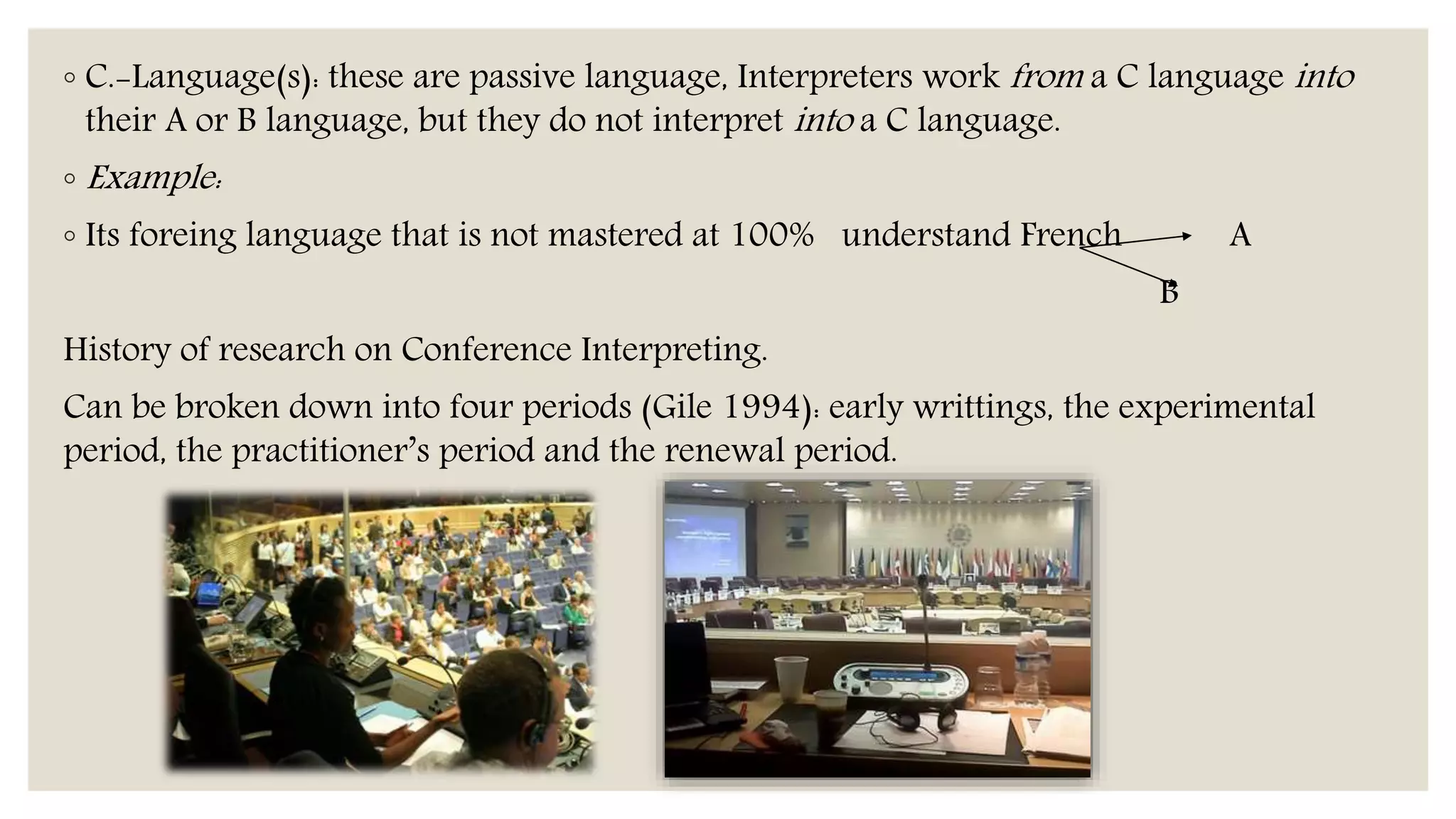
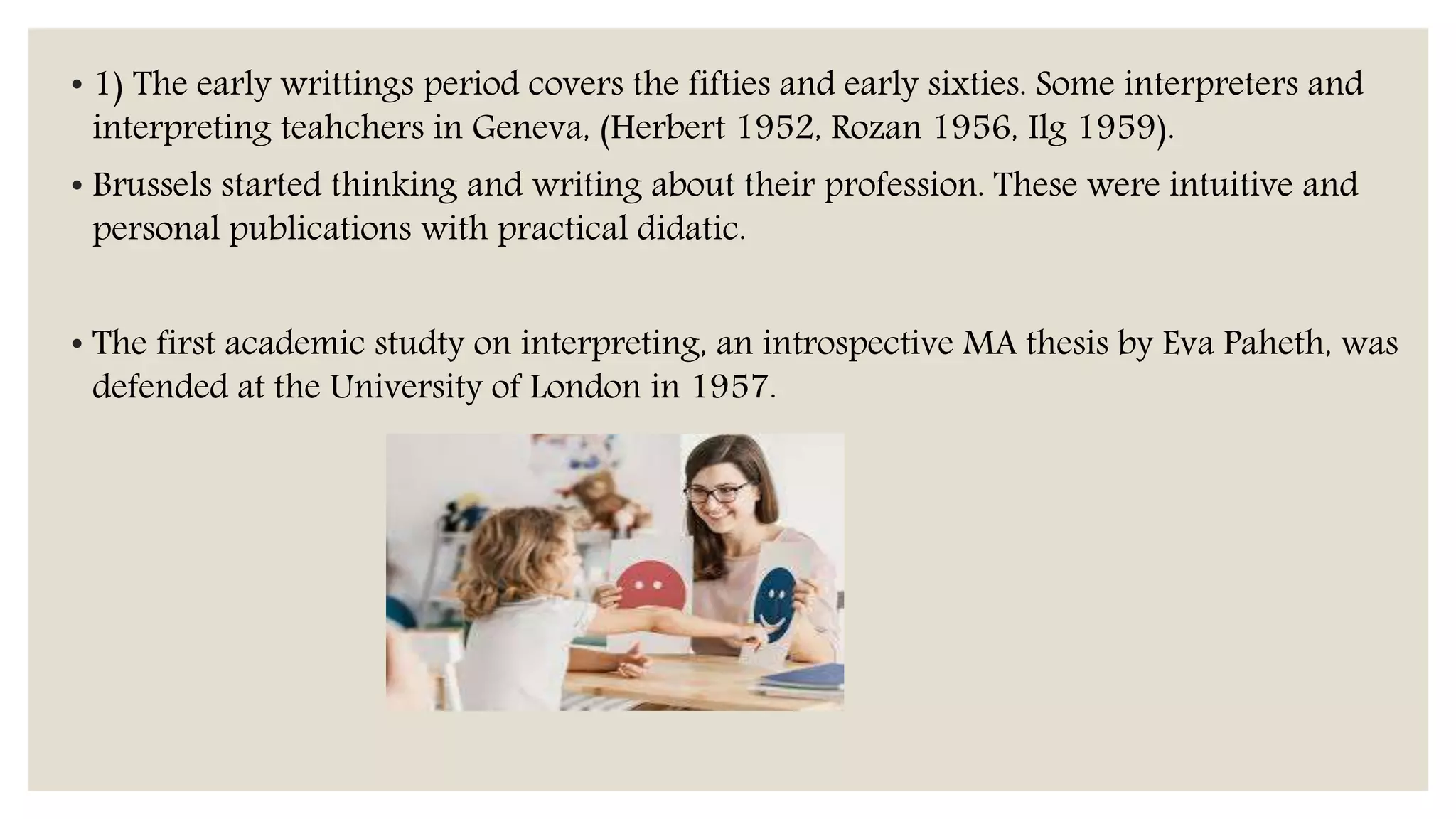
◦ Conference interpreting was born during the first World War. Is important
international meetings were held in French.
• During World War I, some high – ranking American and Bristish negotiators did not
speak French,
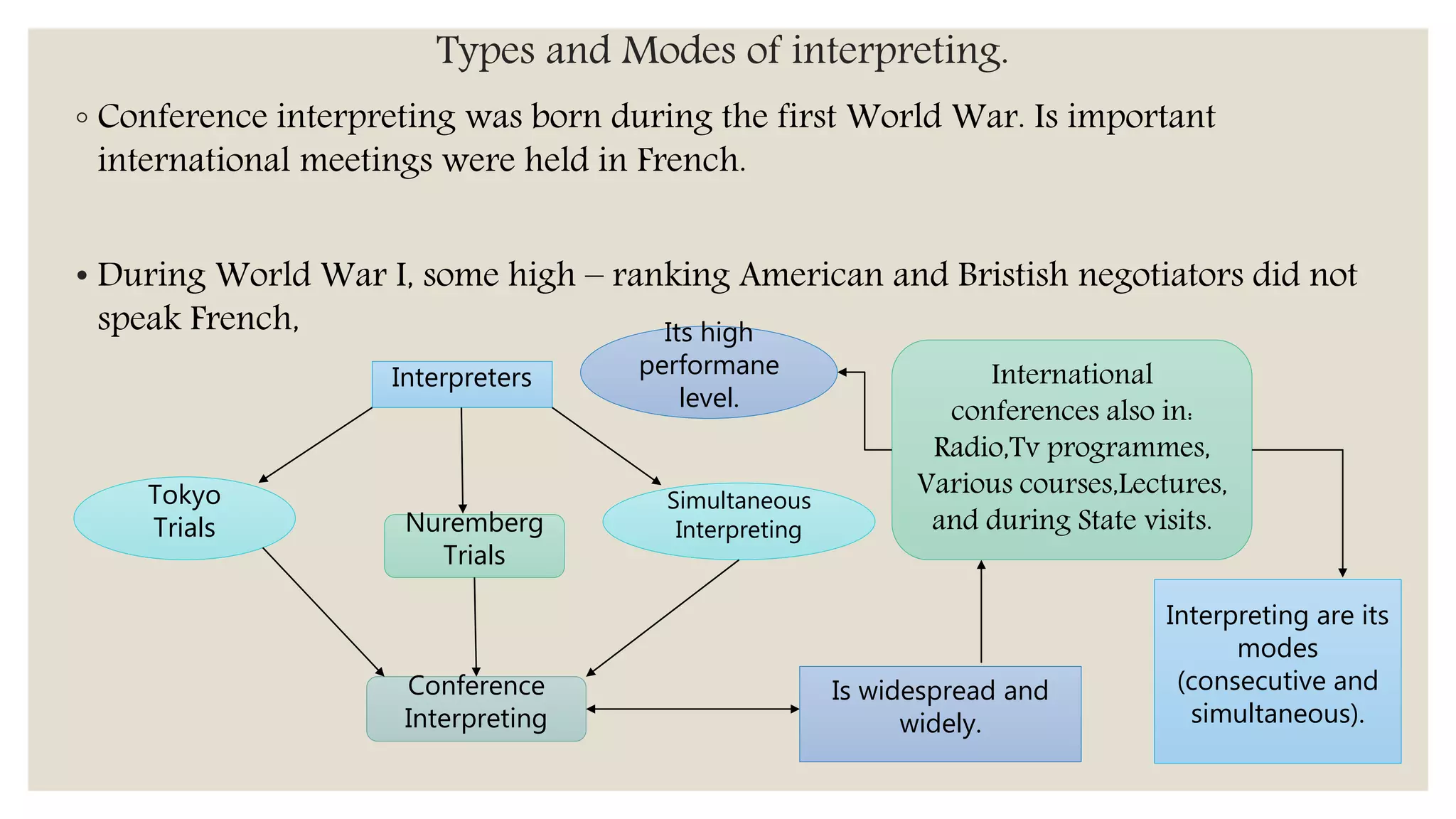
Interpreters
Simultaneous
InterpretingNuremberg
Trials
Tokyo
Trials
Conference
Interpreting
Is widespread and
widely.
International
conferences also in:
Radio,Tv programmes,
Various courses,Lectures,
and during State visits.
Interpreting are its
modes
(consecutive and
simultaneous).
Its high
performane
level.
Work of The Division of Languages.
• Most conference interpreters only have two or three working languages, divided as
follows:
• A.-Language(s) the native tongue (s) of the interpreters work into as well as out of their
A language.
Example:
Spanish – English
English – Spanish
• B.-Language (s): non - native language (s) of which the intepreters has sufficient
command but not the same level as an A language. Interpreters work into as well as out
of their B language.
• Example:
English – Spanish
Spanish – English
◦ C.-Language(s): these are passive language, Interpreters work from a C language into
their A or B language, but they do not interpret into a C language.
◦ Example:
◦ Its foreing language that is not mastered at 100% understand French A
B
History of research on Conference Interpreting.
Can be broken down into four periods (Gile 1994): early writtings, the experimental
period, the practitioner’s period and the renewal period.
• 1) The early writtings period covers the fifties and early sixties. Some interpreters and
interpreting teahchers in Geneva, (Herbert 1952, Rozan 1956, Ilg 1959).
• Brussels started thinking and writing about their profession. These were intuitive and
personal publications with practical didatic.
• The first academic studty on interpreting, an introspective MA thesis by Eva Paheth, was
defended at the University of London in 1957.
• 2)During the experimental period ( in the sixties and early seventies), a few
psycologists and psycholinguists such as Treisman, Oleron and Nanpon, Goldman –
Eisler, and Barik (see Gerver 1976) became interested in interpreting.
• Experimental studies n specific psychological and psycholinguistic aspects of
simultaneous interpreting and studied the effect on performance of variables such as
source language,speed of delivery, earvoice span. Noise, pauses in speech delivery, etc.
• Practitioners rejected both the methods and the results of such studies.

Conference & simultaneous interpreting

  • 1.
  • 2.
    Interpreting vs Translation ◦Interpreting is the oral and translation of oral discurse, is the opposed to the oral traslation of written texts. ◦ Is known as Sigth Translation or Traslation at Sight. • Somes studies have indicated its use in Ancient Egypt (kurz 1985). Interpreters have played important roles in history. • Such as business interpreting, Conference interpreting. #COURT #COMMUNITY INTERPRETING#and#SIGNED LANGUAGE.
  • 3.
    Types and Modesof interpreting. ◦ Conference interpreting was born during the first World War. Is important international meetings were held in French. • During World War I, some high – ranking American and Bristish negotiators did not speak French, Interpreters Simultaneous InterpretingNuremberg Trials Tokyo Trials Conference Interpreting Is widespread and widely. International conferences also in: Radio,Tv programmes, Various courses,Lectures, and during State visits. Interpreting are its modes (consecutive and simultaneous). Its high performane level.
  • 4.
    Work of TheDivision of Languages. • Most conference interpreters only have two or three working languages, divided as follows: • A.-Language(s) the native tongue (s) of the interpreters work into as well as out of their A language. Example: Spanish – English English – Spanish • B.-Language (s): non - native language (s) of which the intepreters has sufficient command but not the same level as an A language. Interpreters work into as well as out of their B language. • Example: English – Spanish Spanish – English
  • 5.
    ◦ C.-Language(s): theseare passive language, Interpreters work from a C language into their A or B language, but they do not interpret into a C language. ◦ Example: ◦ Its foreing language that is not mastered at 100% understand French A B History of research on Conference Interpreting. Can be broken down into four periods (Gile 1994): early writtings, the experimental period, the practitioner’s period and the renewal period.
  • 6.
    • 1) Theearly writtings period covers the fifties and early sixties. Some interpreters and interpreting teahchers in Geneva, (Herbert 1952, Rozan 1956, Ilg 1959). • Brussels started thinking and writing about their profession. These were intuitive and personal publications with practical didatic. • The first academic studty on interpreting, an introspective MA thesis by Eva Paheth, was defended at the University of London in 1957.
  • 7.
    • 2)During theexperimental period ( in the sixties and early seventies), a few psycologists and psycholinguists such as Treisman, Oleron and Nanpon, Goldman – Eisler, and Barik (see Gerver 1976) became interested in interpreting. • Experimental studies n specific psychological and psycholinguistic aspects of simultaneous interpreting and studied the effect on performance of variables such as source language,speed of delivery, earvoice span. Noise, pauses in speech delivery, etc. • Practitioners rejected both the methods and the results of such studies.