Chapter 4
Verbal Language
Communication is...
Complex process through which people
express, interpret, and coordinate
messages with others intended to
result in shared meaning.
Language
● System of symbols used by people to communicate
● Each verbal language: lexicon, a phonology, and syntax and grammar
● Language community
● Speech communities
● Idiolect
Characteristics of Language
Language is
● Arbitrary
● Abstract
● Changes over time
Semantics
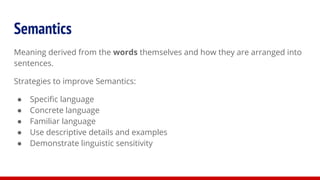
Meaning derived from the words themselves and how they are arranged into
sentences.
Strategies to improve Semantics:
● Specific language
● Concrete language
● Familiar language
● Use descriptive details and examples
● Demonstrate linguistic sensitivity
Pragmatics
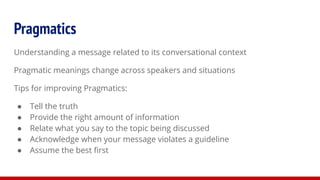
Understanding a message related to its conversational context
Pragmatic meanings change across speakers and situations
Tips for improving Pragmatics:
● Tell the truth
● Provide the right amount of information
● Relate what you say to the topic being discussed
● Acknowledge when your message violates a guideline
● Assume the best first

Chapter 4 _verbal_language

  • 1.
  • 2.
    Communication is... Complex processthrough which people express, interpret, and coordinate messages with others intended to result in shared meaning.
  • 3.
    Language ● System ofsymbols used by people to communicate ● Each verbal language: lexicon, a phonology, and syntax and grammar ● Language community ● Speech communities ● Idiolect
  • 4.
    Characteristics of Language Languageis ● Arbitrary ● Abstract ● Changes over time
  • 5.
    Semantics Meaning derived fromthe words themselves and how they are arranged into sentences. Strategies to improve Semantics: ● Specific language ● Concrete language ● Familiar language ● Use descriptive details and examples ● Demonstrate linguistic sensitivity
  • 6.
    Pragmatics Understanding a messagerelated to its conversational context Pragmatic meanings change across speakers and situations Tips for improving Pragmatics: ● Tell the truth ● Provide the right amount of information ● Relate what you say to the topic being discussed ● Acknowledge when your message violates a guideline ● Assume the best first