Lecture no. 2
Importance of class insecta
R K PANSE
Assistant Professor
Entomology
Class insecta
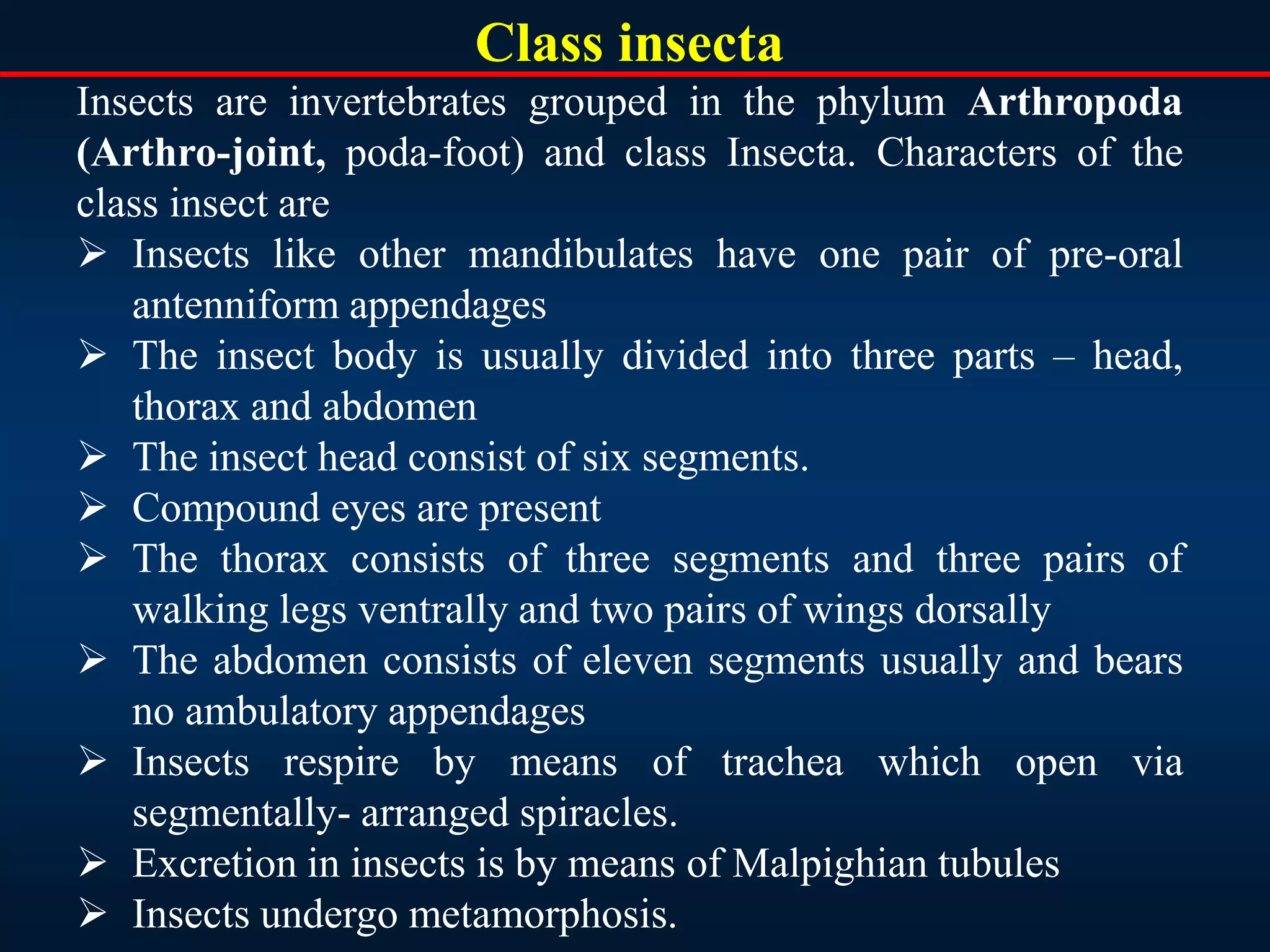
Insects are invertebrates grouped in the phylum Arthropoda
(Arthro-joint, poda-foot) and class Insecta. Characters of the
class insect are
 Insects like other mandibulates have one pair of pre-oral
antenniform appendages
 The insect body is usually divided into three parts – head,
thorax and abdomen
 The insect head consist of six segments.
 Compound eyes are present
 The thorax consists of three segments and three pairs of
walking legs ventrally and two pairs of wings dorsally
 The abdomen consists of eleven segments usually and bears
no ambulatory appendages
 Insects respire by means of trachea which open via
segmentally- arranged spiracles.
 Excretion in insects is by means of Malpighian tubules
 Insects undergo metamorphosis.
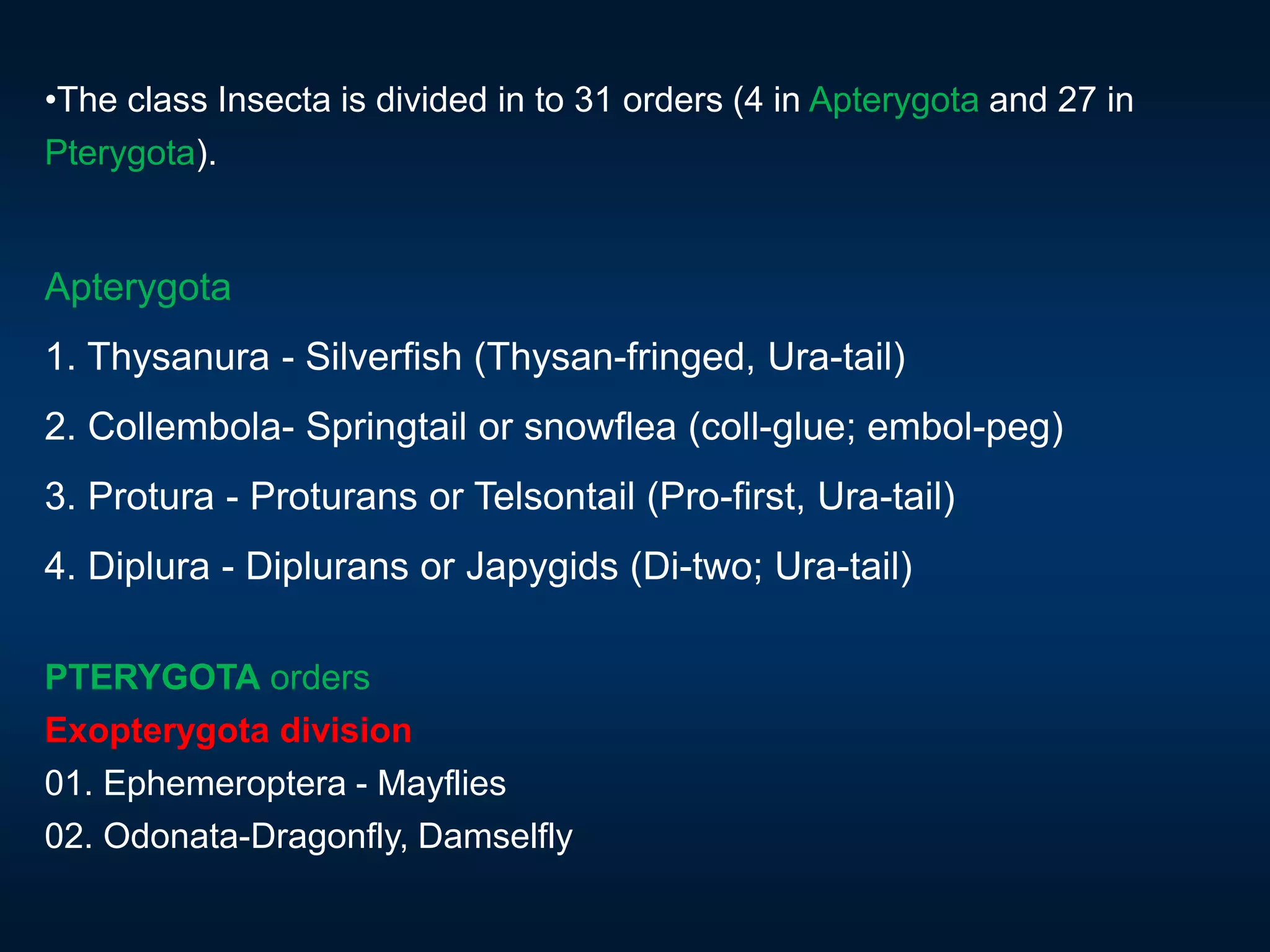
•The class Insecta is divided in to 31 orders (4 in Apterygota and 27 in
Pterygota).
Apterygota
1. Thysanura - Silverfish (Thysan-fringed, Ura-tail)
2. Collembola- Springtail or snowflea (coll-glue; embol-peg)
3. Protura - Proturans or Telsontail (Pro-first, Ura-tail)
4. Diplura - Diplurans or Japygids (Di-two; Ura-tail)
PTERYGOTA orders
Exopterygota division
01. Ephemeroptera - Mayflies
02. Odonata-Dragonfly, Damselfly
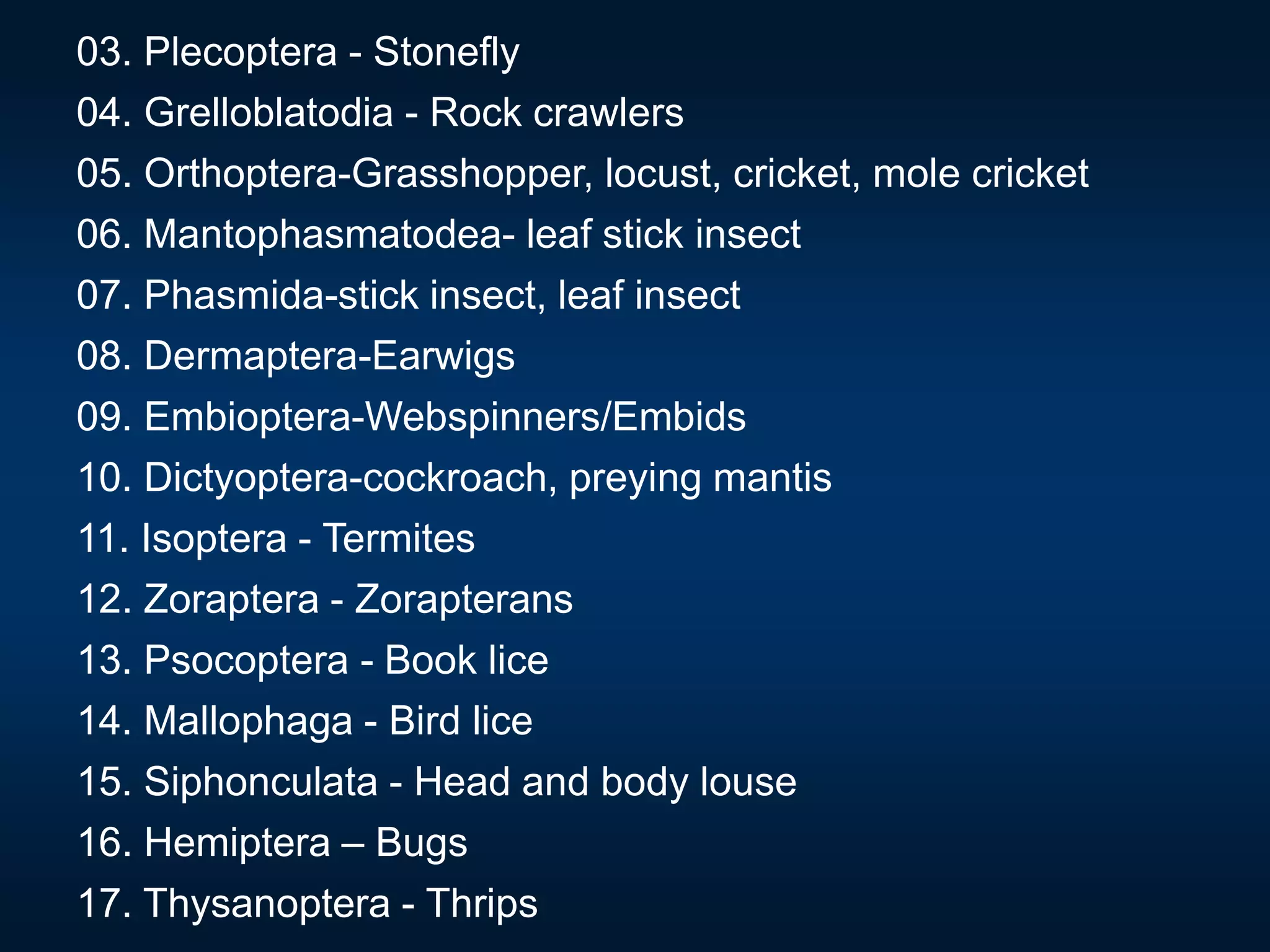
03. Plecoptera - Stonefly
04. Grelloblatodia - Rock crawlers
05. Orthoptera-Grasshopper, locust, cricket, mole cricket
06. Mantophasmatodea- leaf stick insect
07. Phasmida-stick insect, leaf insect
08. Dermaptera-Earwigs
09. Embioptera-Webspinners/Embids
10. Dictyoptera-cockroach, preying mantis
11. Isoptera - Termites
12. Zoraptera - Zorapterans
13. Psocoptera - Book lice
14. Mallophaga - Bird lice
15. Siphonculata - Head and body louse
16. Hemiptera – Bugs
17. Thysanoptera - Thrips
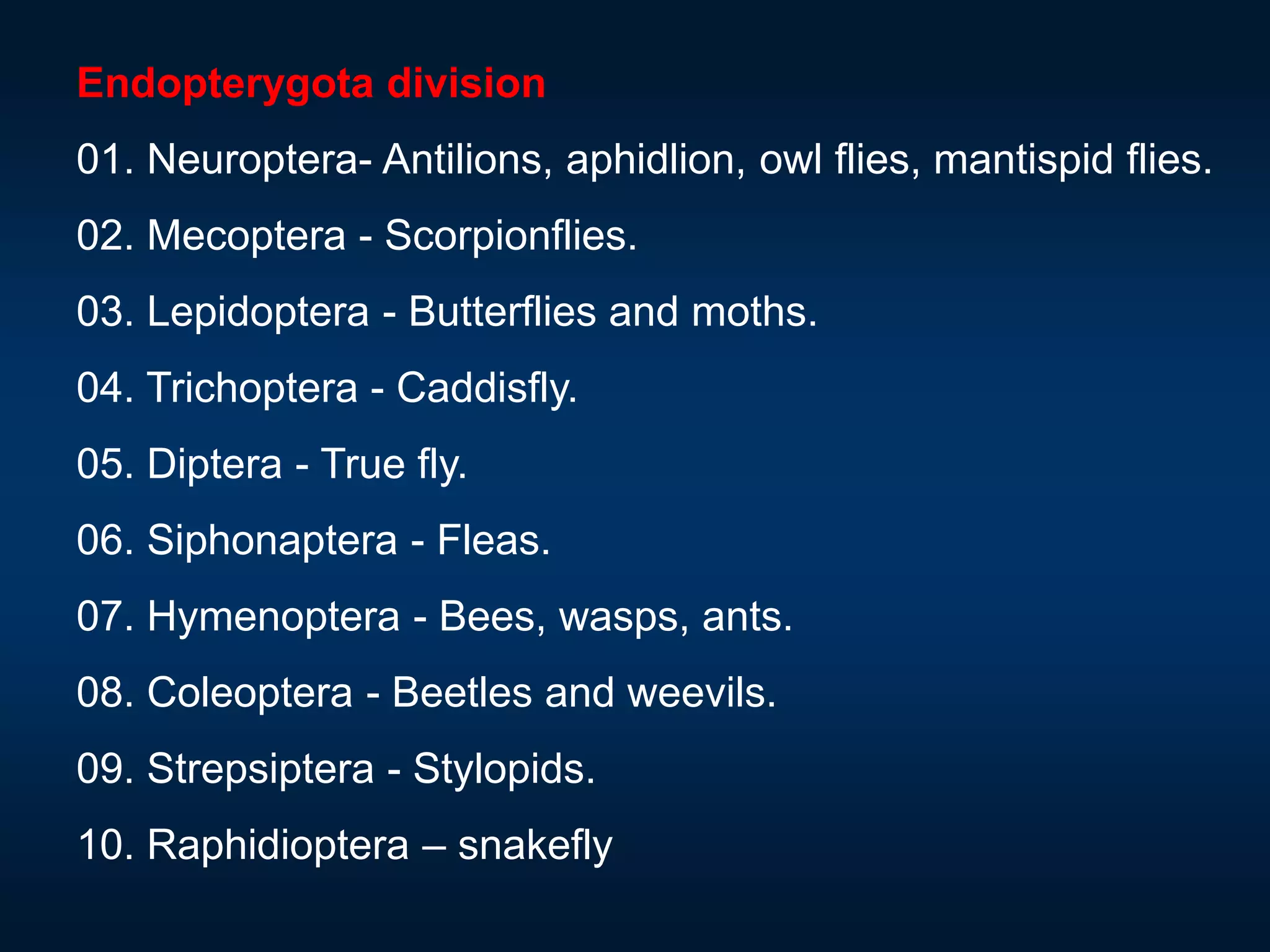
Endopterygota division
01. Neuroptera- Antilions, aphidlion, owl flies, mantispid flies.
02. Mecoptera - Scorpionflies.
03. Lepidoptera - Butterflies and moths.
04. Trichoptera - Caddisfly.
05. Diptera - True fly.
06. Siphonaptera - Fleas.
07. Hymenoptera - Bees, wasps, ants.
08. Coleoptera - Beetles and weevils.
09. Strepsiptera - Stylopids.
10. Raphidioptera – snakefly
Importance of class insecta
Beneficial Effects of Insects
 Insects pollinate flowers hence, fruit formation depends on them
 Insects form a source of food for man e.g. honey, termites,
caterpillar
 Useful materials such as silk, bee wax, etc are obtained from
insects
 Insects are important in food chains, e.g. Aquatic insects form
food for the fishes
 Insects are important as scavengers – (decomposition involving
cycling of materials)
 Insects are important tools, e.g. Drosophila is used for research
in genetics, physiology etc.
 Some insects are used to control others that are pests (Biological
Control)
 Insects have aesthetic value (e.g. Butterflies are collected for
their beauty).
Detrimental Effects of Insects
 Some insects are parasites of animals and plants e.g. Lice, and
stem- boring caterpillars.
 Some insects e.g. mosquitoes and tsetse flies are vectors of
parasitic diseases.
 Some insects e.g. bean weevils destroy crops and stored food.
 Some insects e.g. termites destroy wooden structures.
 Some insects e.g. house fly and mosquito are often nuisance to
man. The beneficial effects of insects, however, far outweigh
their adverse effects.

FEY Lec. 3 RKP_Importance of class insecta.ppt

  • 1.
    Lecture no. 2 Importanceof class insecta R K PANSE Assistant Professor Entomology
  • 2.
    Class insecta Insects areinvertebrates grouped in the phylum Arthropoda (Arthro-joint, poda-foot) and class Insecta. Characters of the class insect are  Insects like other mandibulates have one pair of pre-oral antenniform appendages  The insect body is usually divided into three parts – head, thorax and abdomen  The insect head consist of six segments.  Compound eyes are present  The thorax consists of three segments and three pairs of walking legs ventrally and two pairs of wings dorsally  The abdomen consists of eleven segments usually and bears no ambulatory appendages  Insects respire by means of trachea which open via segmentally- arranged spiracles.  Excretion in insects is by means of Malpighian tubules  Insects undergo metamorphosis.
  • 3.
    •The class Insectais divided in to 31 orders (4 in Apterygota and 27 in Pterygota). Apterygota 1. Thysanura - Silverfish (Thysan-fringed, Ura-tail) 2. Collembola- Springtail or snowflea (coll-glue; embol-peg) 3. Protura - Proturans or Telsontail (Pro-first, Ura-tail) 4. Diplura - Diplurans or Japygids (Di-two; Ura-tail) PTERYGOTA orders Exopterygota division 01. Ephemeroptera - Mayflies 02. Odonata-Dragonfly, Damselfly
  • 4.
    03. Plecoptera -Stonefly 04. Grelloblatodia - Rock crawlers 05. Orthoptera-Grasshopper, locust, cricket, mole cricket 06. Mantophasmatodea- leaf stick insect 07. Phasmida-stick insect, leaf insect 08. Dermaptera-Earwigs 09. Embioptera-Webspinners/Embids 10. Dictyoptera-cockroach, preying mantis 11. Isoptera - Termites 12. Zoraptera - Zorapterans 13. Psocoptera - Book lice 14. Mallophaga - Bird lice 15. Siphonculata - Head and body louse 16. Hemiptera – Bugs 17. Thysanoptera - Thrips
  • 5.
    Endopterygota division 01. Neuroptera-Antilions, aphidlion, owl flies, mantispid flies. 02. Mecoptera - Scorpionflies. 03. Lepidoptera - Butterflies and moths. 04. Trichoptera - Caddisfly. 05. Diptera - True fly. 06. Siphonaptera - Fleas. 07. Hymenoptera - Bees, wasps, ants. 08. Coleoptera - Beetles and weevils. 09. Strepsiptera - Stylopids. 10. Raphidioptera – snakefly
  • 6.
    Importance of classinsecta Beneficial Effects of Insects  Insects pollinate flowers hence, fruit formation depends on them  Insects form a source of food for man e.g. honey, termites, caterpillar  Useful materials such as silk, bee wax, etc are obtained from insects  Insects are important in food chains, e.g. Aquatic insects form food for the fishes  Insects are important as scavengers – (decomposition involving cycling of materials)  Insects are important tools, e.g. Drosophila is used for research in genetics, physiology etc.  Some insects are used to control others that are pests (Biological Control)  Insects have aesthetic value (e.g. Butterflies are collected for their beauty).
  • 7.
    Detrimental Effects ofInsects  Some insects are parasites of animals and plants e.g. Lice, and stem- boring caterpillars.  Some insects e.g. mosquitoes and tsetse flies are vectors of parasitic diseases.  Some insects e.g. bean weevils destroy crops and stored food.  Some insects e.g. termites destroy wooden structures.  Some insects e.g. house fly and mosquito are often nuisance to man. The beneficial effects of insects, however, far outweigh their adverse effects.