MISBAH SHABBIR
ROLL NO. 20
M.ED EVENING
TOPIC:LEARNING OBJECTIVES
AND OUTCOMES
ASSIGNED BY: DR. AMJAD ALI
LEARNING OBJECTIVES
 learning objective is a “statement
of what students will be able to do
when they have completed
instruction” (Arreola, 1998, p. 2).
LEARNING OBJECTIVES
 Clearly defined objectives form
the foundation for selecting appropriate
content, learning activities and evaluation
plans. Learning objectives allow you to:
 Plan the sequence for instruction, allocate
time to topics, assemble materials and plan
class outlines.
LEARNING OBJECTIVES
 Develop a guide to teaching allowing you to
plan different instructional methods for
presenting different parts of the content.
(e.g. small group discussions of a common
misconception).
 Facilitate various evaluation activities,
evaluating students, evaluating instruction
and even evaluating the curriculum.
LEARNING OUTCOMES
 LEARNING OUTCOMES are statements that
describe significant and essential learning
that learners have achieved and can reliably
demonstrate at the end of a course or
program
 Learning outcomes are statements of what a
student is expected to know, understand or
be able to demonstrate after completion of a
process of learning
 Objectives are intentions in measureable
terms and are stated as intentions of the
tutor
 Learning outcomes are what result from a
learning process.learning outcomes should
specify the minimum acceptable standard for
a student to be able to pass a module or
course.
COMPONENTS OF LEARNING
OBJECTIVES
 A Learning Objective has three major
components:
 A description of what the student will be able to
DO.
 The conditions under which the student will
perform the task.
 The criteria for evaluating student performance
CHARACTERISTICS OF LEARNING
OBJECTIVES
 Objectives are
 1.Related to intended outcomes, NOT
processes.
 2.Specific and measurable, NOT broad and
intangible.
 3.Concerned with students, NOT teachers.
Why use appropriate learning
objectives?
 Learning objectives are useful for Selection
of content and instructional materials.
 2.Development of instructional strategies
through instructor ingenuity.
 3.Development and selection of appropriate
assessment measures.
 4.Guiding student efforts in the learning
processes (communicating to students what
they are expected to learn)
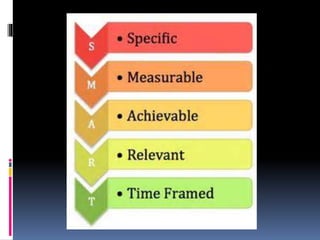
Learning objectives should
SMART attributes
How to write
learning objectives
:
 1.Include a definite, measurable verb that
signifies a demonstrable learning outcome.
 2.Make sure that each objective contains an
intended performance/behavior, conditions for
demonstrating competence, and a criterion/degree
of performance.
 3.Strive for higher order thinking (analysis,
synthesis and evaluation levels) when applicable
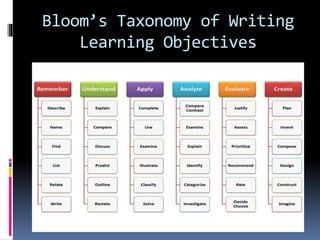
 Another useful tip for learning objectives is to
use behavioral verbs that are observable and
measurable. Fortunately, Bloom’s taxonomy
provides a list of such verbs
Bloom’s Taxonomy of Writing
Learning Objectives
Learning Objective
Learning Objective

Learning Objective

  • 1.
    MISBAH SHABBIR ROLL NO.20 M.ED EVENING TOPIC:LEARNING OBJECTIVES AND OUTCOMES ASSIGNED BY: DR. AMJAD ALI
  • 2.
    LEARNING OBJECTIVES  learningobjective is a “statement of what students will be able to do when they have completed instruction” (Arreola, 1998, p. 2).
  • 3.
    LEARNING OBJECTIVES  Clearlydefined objectives form the foundation for selecting appropriate content, learning activities and evaluation plans. Learning objectives allow you to:  Plan the sequence for instruction, allocate time to topics, assemble materials and plan class outlines.
  • 4.
    LEARNING OBJECTIVES  Developa guide to teaching allowing you to plan different instructional methods for presenting different parts of the content. (e.g. small group discussions of a common misconception).  Facilitate various evaluation activities, evaluating students, evaluating instruction and even evaluating the curriculum.
  • 5.
    LEARNING OUTCOMES  LEARNINGOUTCOMES are statements that describe significant and essential learning that learners have achieved and can reliably demonstrate at the end of a course or program
  • 6.
     Learning outcomesare statements of what a student is expected to know, understand or be able to demonstrate after completion of a process of learning
  • 7.
     Objectives areintentions in measureable terms and are stated as intentions of the tutor  Learning outcomes are what result from a learning process.learning outcomes should specify the minimum acceptable standard for a student to be able to pass a module or course.
  • 9.
    COMPONENTS OF LEARNING OBJECTIVES A Learning Objective has three major components:  A description of what the student will be able to DO.  The conditions under which the student will perform the task.  The criteria for evaluating student performance
  • 10.
    CHARACTERISTICS OF LEARNING OBJECTIVES Objectives are  1.Related to intended outcomes, NOT processes.  2.Specific and measurable, NOT broad and intangible.  3.Concerned with students, NOT teachers.
  • 12.
    Why use appropriatelearning objectives?  Learning objectives are useful for Selection of content and instructional materials.  2.Development of instructional strategies through instructor ingenuity.  3.Development and selection of appropriate assessment measures.  4.Guiding student efforts in the learning processes (communicating to students what they are expected to learn)
  • 13.
  • 15.
    How to write learningobjectives :  1.Include a definite, measurable verb that signifies a demonstrable learning outcome.  2.Make sure that each objective contains an intended performance/behavior, conditions for demonstrating competence, and a criterion/degree of performance.  3.Strive for higher order thinking (analysis, synthesis and evaluation levels) when applicable
  • 16.
     Another usefultip for learning objectives is to use behavioral verbs that are observable and measurable. Fortunately, Bloom’s taxonomy provides a list of such verbs
  • 17.
    Bloom’s Taxonomy ofWriting Learning Objectives