EVALUATION IN EDUCATION
Garima Bhati
Assistant Professor of Perspective in Education
Institute ofTeacher’s Education
Faridabad
Evaluation:
 Wider concept than testing measurement.
 Combination of quantitative and qualitative
Judgment of behavior.
 Measurement of academic and non-academic.
 It includes all the changes in a balanced
development in personality.
 It is a measurement of all the qualities related to
physical, mental, intellectual and handicraft.
Evaluation Includes:
 Evaluation of academic subjects.
 Evaluation of efficiencies.
 Evaluation of physical development.
 Evaluation of Moral development.
 Evaluation of Intellectual development.
 Evaluation interest and aptitudes.
 Evaluation of social development.
Definitions of Evaluation:
 Hanna,” Evaluation is the process of gathering
and interpreting evidence on change in the
behavior of all students as they progress
through school.”
 RalphTyler,1950,”Evaluation is the process of
determining to what extent the educational
objectives are being realized.”
 Cameron, "The process of making overall
judgment about one’s work or a whole school’s
work.”
Characteristics of Evaluation:
 Continuous process.
 Systematic Process
 Comprehensive process
 Includes academic and non-academic subjects.
 Not confined to the classroom.
 Procedure for improving the product.
 Compound objective observation
 Procedure for improving product
 Discovering the needs of an individual and designing
learning experience.
 Purpose oriented.
 To improve the educational process.
Importance of Evaluation:
 To test achievements of students
 Helpful in planning new objectives.
 Works as a motivation
 To provide scholarship
 To provide a base for admission
 To provide guidance
 To clarify objectives
 To evaluate the personality of students
 To improve curriculum.
 Helpful in classification
 Helpful in research process
Principles of Evaluation:
 Principle of continuity
 Principle of comprehensiveness
 Principle of objectives
 Principle of learning experience
 Principle of broadness
 Principle of child centered
 Principle of application
Objectives of Evaluation:
 To improve and modify.
 To test all round development of the child and his future success.
 To test material.
 To help in judging the effectiveness of the methods of teaching in
terms of the objectives.
 To test the genuineness of objectives and helps required in their
modification.
 To help in modification of curriculum.
 Scientifically co-ordination of educational methods, curriculum,
classroom teaching and testing methods.
 A bi-polar process- study the behaviour of student
- study the behaviour of teacher.
 Paves the way for dignostic teaching.
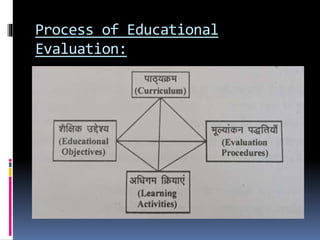
Process of Educational
Evaluation:
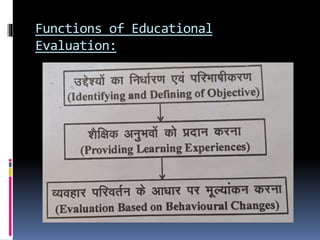
Functions of Educational
Evaluation:
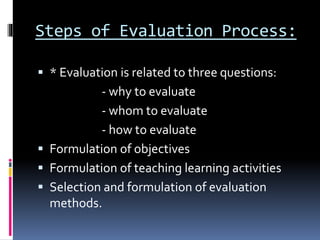
Steps of Evaluation Process:
 * Evaluation is related to three questions:
- why to evaluate
- whom to evaluate
- how to evaluate
 Formulation of objectives
 Formulation of teaching learning activities
 Selection and formulation of evaluation
methods.
Evaluation in Education

Evaluation in Education

  • 1.
    EVALUATION IN EDUCATION GarimaBhati Assistant Professor of Perspective in Education Institute ofTeacher’s Education Faridabad
  • 2.
    Evaluation:  Wider conceptthan testing measurement.  Combination of quantitative and qualitative Judgment of behavior.  Measurement of academic and non-academic.  It includes all the changes in a balanced development in personality.  It is a measurement of all the qualities related to physical, mental, intellectual and handicraft.
  • 3.
    Evaluation Includes:  Evaluationof academic subjects.  Evaluation of efficiencies.  Evaluation of physical development.  Evaluation of Moral development.  Evaluation of Intellectual development.  Evaluation interest and aptitudes.  Evaluation of social development.
  • 4.
    Definitions of Evaluation: Hanna,” Evaluation is the process of gathering and interpreting evidence on change in the behavior of all students as they progress through school.”  RalphTyler,1950,”Evaluation is the process of determining to what extent the educational objectives are being realized.”  Cameron, "The process of making overall judgment about one’s work or a whole school’s work.”
  • 5.
    Characteristics of Evaluation: Continuous process.  Systematic Process  Comprehensive process  Includes academic and non-academic subjects.  Not confined to the classroom.  Procedure for improving the product.  Compound objective observation  Procedure for improving product  Discovering the needs of an individual and designing learning experience.  Purpose oriented.  To improve the educational process.
  • 6.
    Importance of Evaluation: To test achievements of students  Helpful in planning new objectives.  Works as a motivation  To provide scholarship  To provide a base for admission  To provide guidance  To clarify objectives  To evaluate the personality of students  To improve curriculum.  Helpful in classification  Helpful in research process
  • 7.
    Principles of Evaluation: Principle of continuity  Principle of comprehensiveness  Principle of objectives  Principle of learning experience  Principle of broadness  Principle of child centered  Principle of application
  • 8.
    Objectives of Evaluation: To improve and modify.  To test all round development of the child and his future success.  To test material.  To help in judging the effectiveness of the methods of teaching in terms of the objectives.  To test the genuineness of objectives and helps required in their modification.  To help in modification of curriculum.  Scientifically co-ordination of educational methods, curriculum, classroom teaching and testing methods.  A bi-polar process- study the behaviour of student - study the behaviour of teacher.  Paves the way for dignostic teaching.
  • 9.
  • 10.
  • 11.
    Steps of EvaluationProcess:  * Evaluation is related to three questions: - why to evaluate - whom to evaluate - how to evaluate  Formulation of objectives  Formulation of teaching learning activities  Selection and formulation of evaluation methods.