UNIVERSITY OF SINDH
 INSTRUCTOR :PROFESSOR.DR. AMJAD ALI ARAIN
 SUBMITTED BY:ANILA PARVEEN
 M.ED (MORNING)
 ROLL NO 33
FACULTY OF EDUCATION
HYDERABAD,SINDH
PAKISTAN
EDUCATIONAL PSYCHOLOGY AND GUIADANCE
Learning disability and learning disorder
BY:ANILA PARVEEN
2017/M.ED/MOR/33
IDEA Definition
Learning disability (LD) is a disorder in one or
more of the basic psychological processes
involved in understanding or in using language,
spoken or written, that may manifest itself in
an imperfect ability to listen, think, speak,
read, write, spell, or to do mathematical
calculations, including conditions such as
perceptual disabilities, brain injury, minimal
brain dysfunction, dyslexia, and
developmental aphasia.
What Learning Disability Does NOT cover
Learning Disabilities does not include learning
problems due to
 visual, hearing, or motor disabilities
 mental retardation or emotional disturbance
 environmental, cultural, or economic
disadvantage
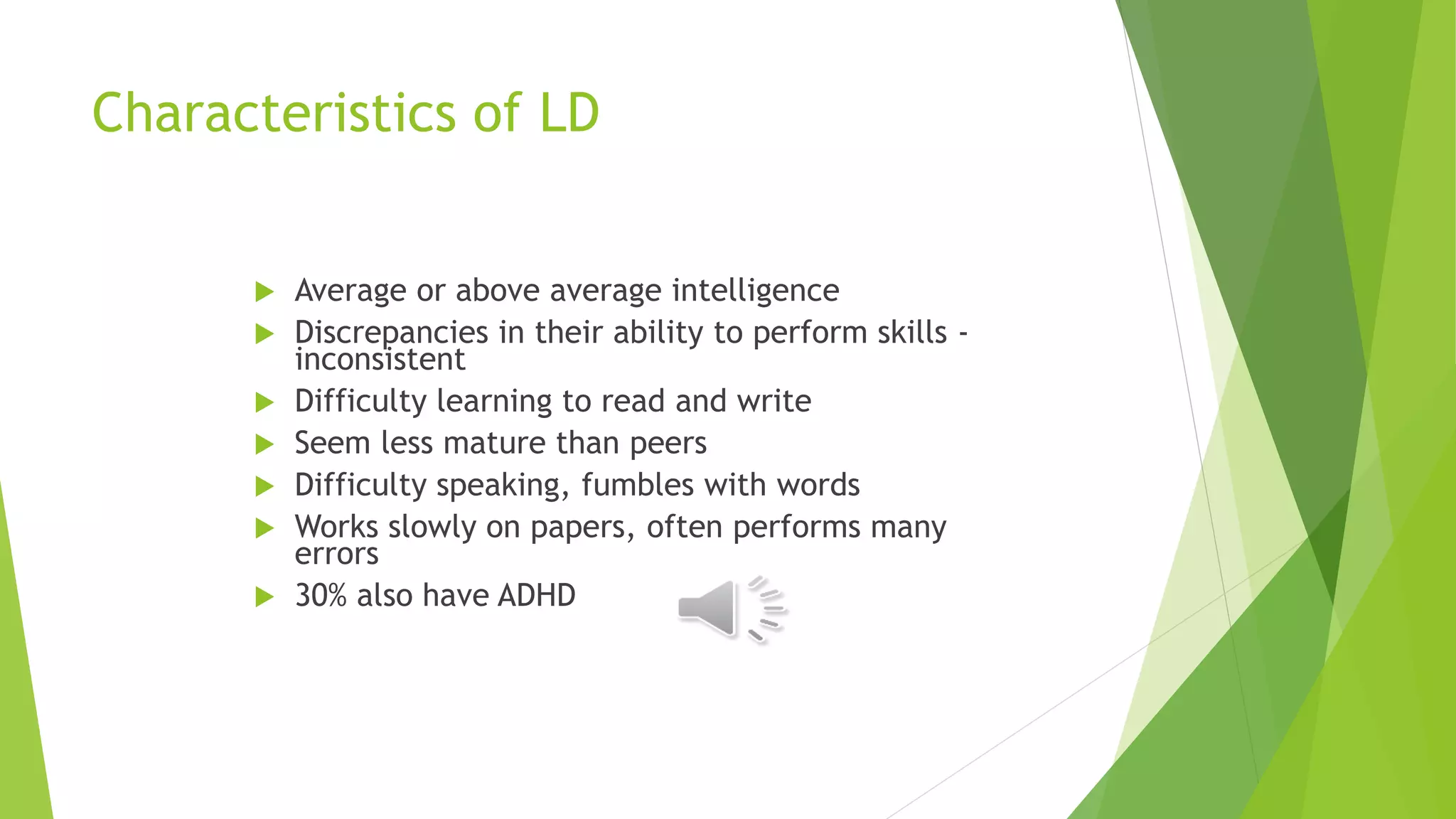
Characteristics of LD
 Average or above average intelligence
 Discrepancies in their ability to perform skills -
inconsistent
 Difficulty learning to read and write
 Seem less mature than peers
 Difficulty speaking, fumbles with words
 Works slowly on papers, often performs many
errors
 30% also have ADHD
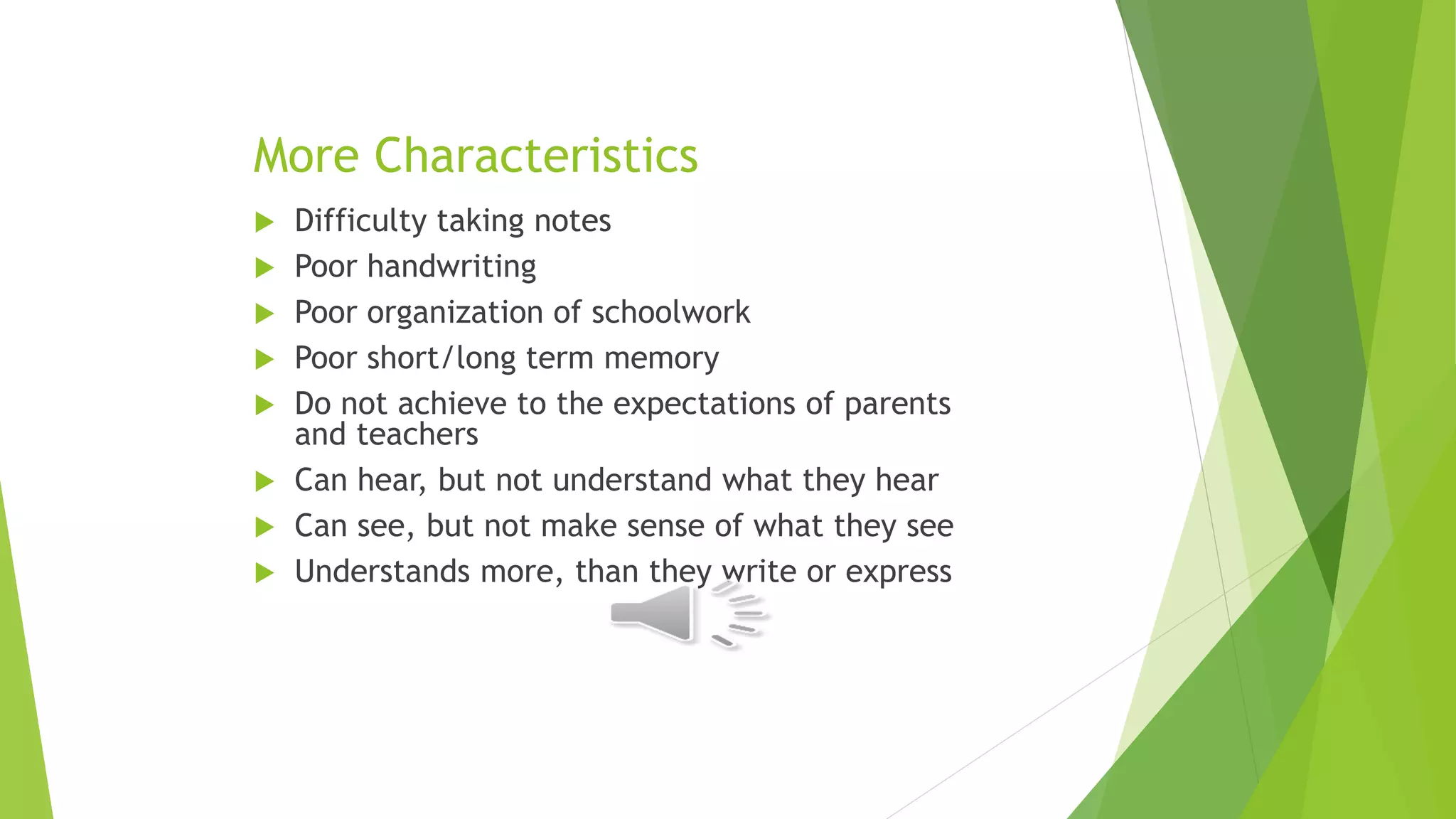
More Characteristics
 Difficulty taking notes
 Poor handwriting
 Poor organization of schoolwork
 Poor short/long term memory
 Do not achieve to the expectations of parents
and teachers
 Can hear, but not understand what they hear
 Can see, but not make sense of what they see
 Understands more, than they write or express
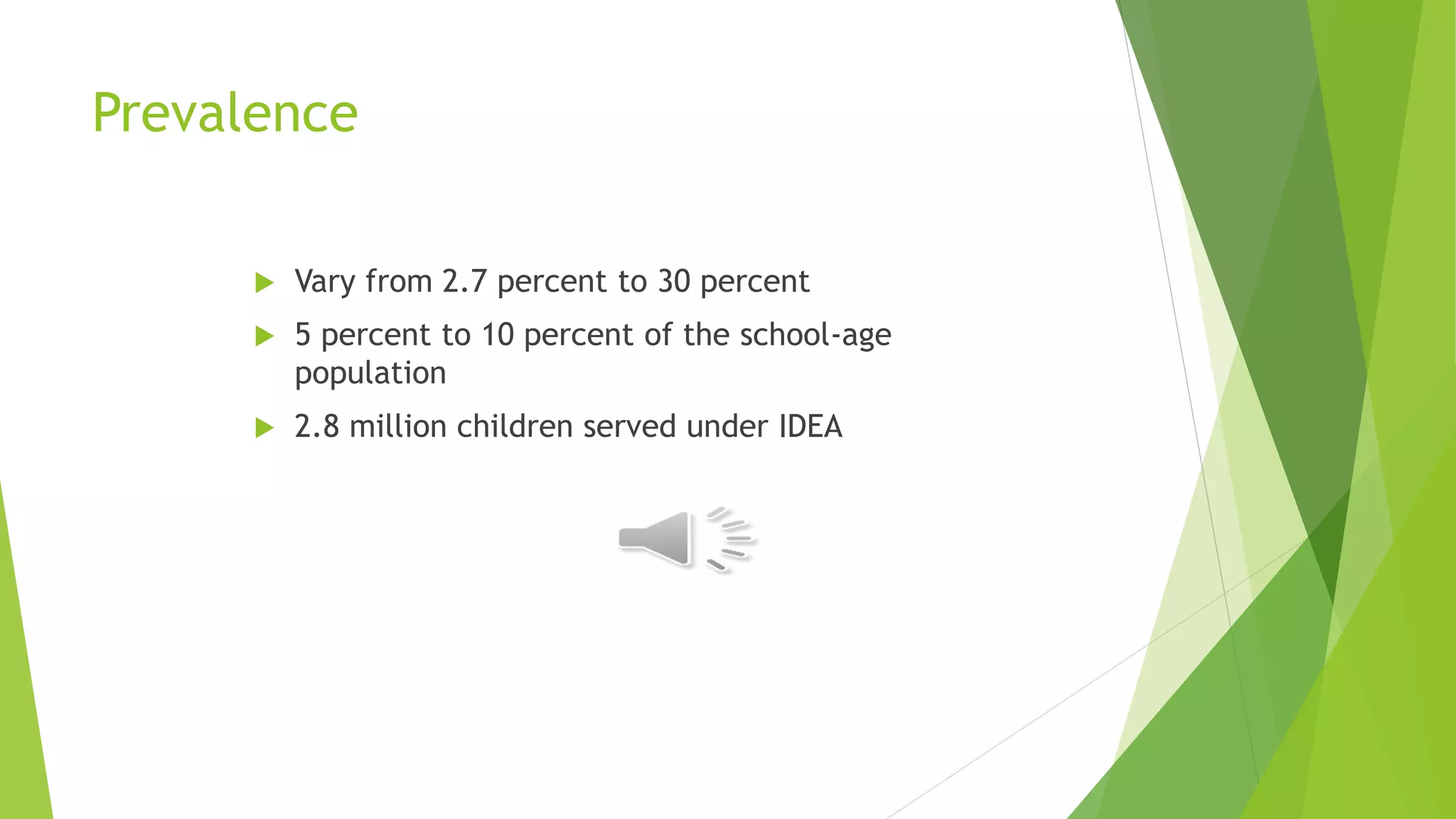
Prevalence
 Vary from 2.7 percent to 30 percent
 5 percent to 10 percent of the school-age
population
 2.8 million children served under IDEA
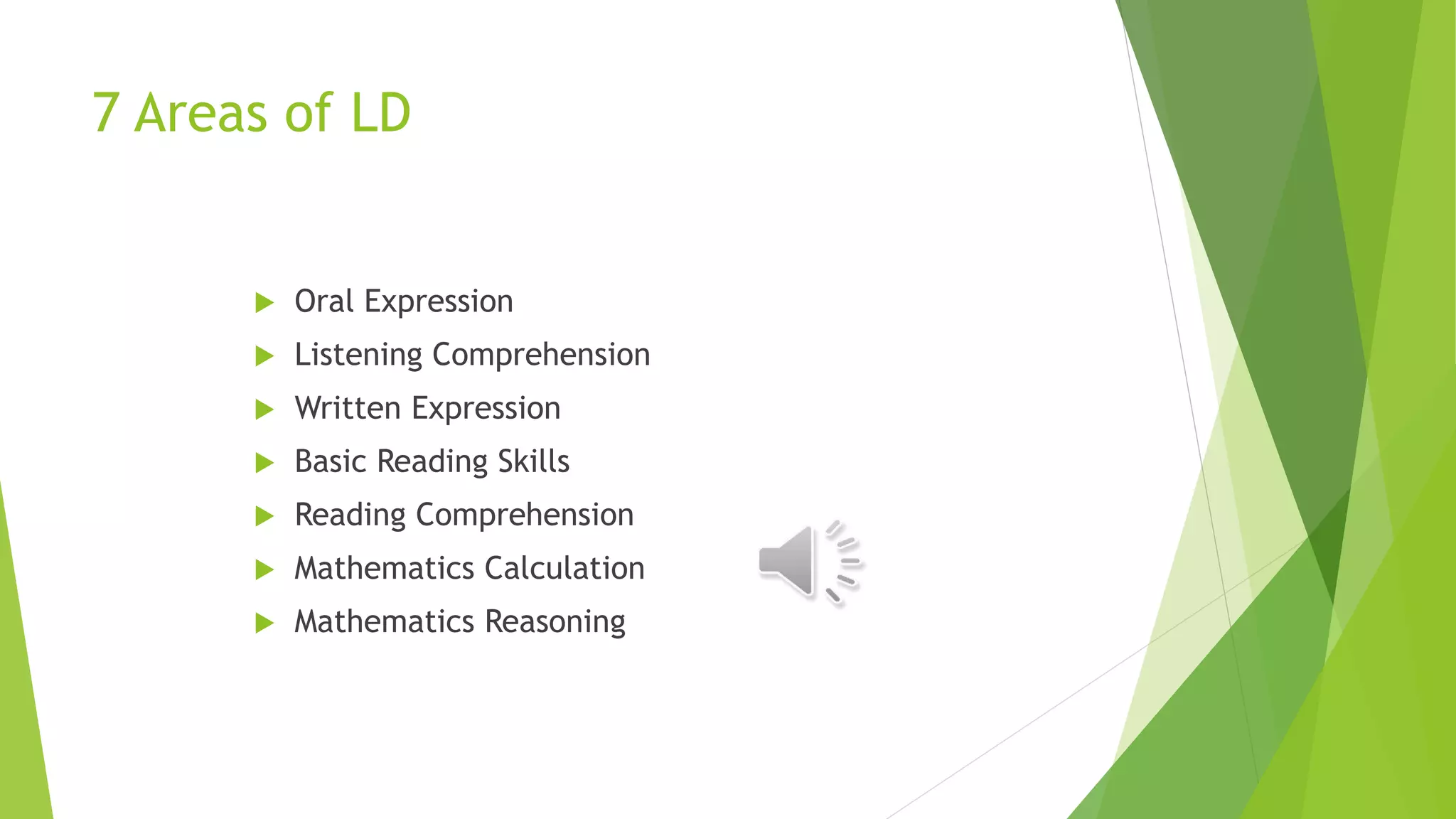
7 Areas of LD
 Oral Expression
 Listening Comprehension
 Written Expression
 Basic Reading Skills
 Reading Comprehension
 Mathematics Calculation
 Mathematics Reasoning
Definition of Learning Disorder
1) Provide a legal definition of learning disorders.
2) Describe how IQ and achievement tests are used in
determining the presence of learning disorders, and
draw the IQ bell curve.
3) Identify the 3 primary learning disorders.
4) Choose which neuropsychiatric tests are most
appropriate for assessing educational level,
visual/motor integration, adaptive skills level, memory,
executive function, and thought content.
5) Describe the differences between the 2 public laws
which provide educational support for learning
disordered children.
Reading Disorder Dyslexia
 Oral reading is characterized by distortions,
substitutions, or omissions; both oral and silent
reading are slow with comprehension errors
 Rare to find Math D/O and/or Written Expression
D/O in the absence of Reading D/O
 60 – 80% are males
 Prevalence estimated at 4% of school-aged
children
 Aggregates in families (35 – 40% have a 1st
degree relative also effected)
What does Dyslexia mean?
 Dyslexia is an unexpected difficulty with reading
in children who otherwise have the intelligence to
learn to read
 Dyslexia is not “outgrown”
 Word retrieval and identification is slowed
 Affects spoken and written language
Disorders of Written Expression
 Prevalence unknown
 Difficult to diagnose b/c standardized tests are
not particularly useful
 Generally involves a combination of difficulties
with:
 Composing written text (grammar & punctuation
errors)
 Poor paragraph organization
 Multiple spelling errors
 Excessively poor handwriting
THANK YOU
THE END

Learning Disabilities & Disorder

  • 1.
    UNIVERSITY OF SINDH INSTRUCTOR :PROFESSOR.DR. AMJAD ALI ARAIN  SUBMITTED BY:ANILA PARVEEN  M.ED (MORNING)  ROLL NO 33 FACULTY OF EDUCATION HYDERABAD,SINDH PAKISTAN
  • 2.
    EDUCATIONAL PSYCHOLOGY ANDGUIADANCE Learning disability and learning disorder BY:ANILA PARVEEN 2017/M.ED/MOR/33
  • 3.
    IDEA Definition Learning disability(LD) is a disorder in one or more of the basic psychological processes involved in understanding or in using language, spoken or written, that may manifest itself in an imperfect ability to listen, think, speak, read, write, spell, or to do mathematical calculations, including conditions such as perceptual disabilities, brain injury, minimal brain dysfunction, dyslexia, and developmental aphasia.
  • 4.
    What Learning DisabilityDoes NOT cover Learning Disabilities does not include learning problems due to  visual, hearing, or motor disabilities  mental retardation or emotional disturbance  environmental, cultural, or economic disadvantage
  • 5.
    Characteristics of LD Average or above average intelligence  Discrepancies in their ability to perform skills - inconsistent  Difficulty learning to read and write  Seem less mature than peers  Difficulty speaking, fumbles with words  Works slowly on papers, often performs many errors  30% also have ADHD
  • 6.
    More Characteristics  Difficultytaking notes  Poor handwriting  Poor organization of schoolwork  Poor short/long term memory  Do not achieve to the expectations of parents and teachers  Can hear, but not understand what they hear  Can see, but not make sense of what they see  Understands more, than they write or express
  • 7.
    Prevalence  Vary from2.7 percent to 30 percent  5 percent to 10 percent of the school-age population  2.8 million children served under IDEA
  • 8.
    7 Areas ofLD  Oral Expression  Listening Comprehension  Written Expression  Basic Reading Skills  Reading Comprehension  Mathematics Calculation  Mathematics Reasoning
  • 9.
    Definition of LearningDisorder 1) Provide a legal definition of learning disorders. 2) Describe how IQ and achievement tests are used in determining the presence of learning disorders, and draw the IQ bell curve. 3) Identify the 3 primary learning disorders. 4) Choose which neuropsychiatric tests are most appropriate for assessing educational level, visual/motor integration, adaptive skills level, memory, executive function, and thought content. 5) Describe the differences between the 2 public laws which provide educational support for learning disordered children.
  • 10.
    Reading Disorder Dyslexia Oral reading is characterized by distortions, substitutions, or omissions; both oral and silent reading are slow with comprehension errors  Rare to find Math D/O and/or Written Expression D/O in the absence of Reading D/O  60 – 80% are males  Prevalence estimated at 4% of school-aged children  Aggregates in families (35 – 40% have a 1st degree relative also effected)
  • 11.
    What does Dyslexiamean?  Dyslexia is an unexpected difficulty with reading in children who otherwise have the intelligence to learn to read  Dyslexia is not “outgrown”  Word retrieval and identification is slowed  Affects spoken and written language
  • 12.
    Disorders of WrittenExpression  Prevalence unknown  Difficult to diagnose b/c standardized tests are not particularly useful  Generally involves a combination of difficulties with:  Composing written text (grammar & punctuation errors)  Poor paragraph organization  Multiple spelling errors  Excessively poor handwriting
  • 13.