Perinatal Psychiatry
Dr. Kamal Ghimire
Postpartum disorders
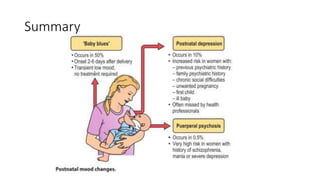
• Postpartum blues
• Postpartum depression
• Postpartum psychosis
Postpartum blues
• Occurs in 50%
• Onset: 2-6 days after delivery
• Symptoms: transient low mood, crying, irritability and worries about
coping with baby.
• self-limiting,( usually within a few days), but severe blues increase the
risk of postpartum depression.
• No specific intervention is required (apart from reassurance)
although, if symptoms do not resolve within two weeks, assess for
depression.
Postpartum depression
• Occurs in 10 % in first 6 weeks postpartum. Around 25% of which
persists for a year.
• Risk factors: - Mother: past history or family history of depression,
unemployed, uneducated.
- Relationships: unmarried, domestic violence, confiding
relationships
- Baby: premature, multiple births, ill baby.
• Clinical features are as for other depressive illness but may also include:
-guilt and anxiety concerning the baby
-feelings of inadequate mothering
-unreasonable fears for the baby’s health
-a reluctance to hold or feed the baby
-(more rarely) thoughts of harming the baby.
Management
• full psycho-social assessment (including possible risk to mother and
the baby).
• First line of treatment for mild to moderate perinatal depression is
psychological therapy and not antidepressants because of the
potential for adverse effects in the foetus or breastfeeding baby.
• In severe depression: Antidepressant.
Postpartum Psychosis
• Occurs in 0.5%. Abrupt onset 2-4 weeks post birth.
• Risk groups:
-in those with a previous episode of psychosis
- in first time mothers
-after instrumental delivery
-in those with family history of affective(mood) disorder
Symptoms: Usually affective, most depressive but up to one-third
manic
(postpartum onset of schizophrenia is relatively unusual).
Emotional lability and subjective confusion are common.
Management
• Usually requires hospitalization
• Initially : antipsychotics
• ECT( electroconvulsive therapy) is reported to be effective and
considered if antipsychotics arenot effective
Summary
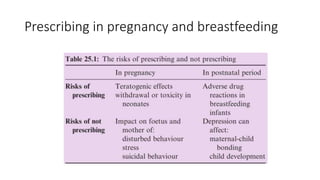
Prescribing in pregnancy and breastfeeding
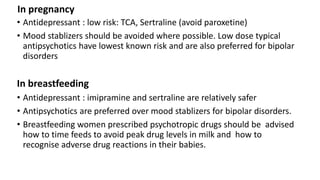
In pregnancy
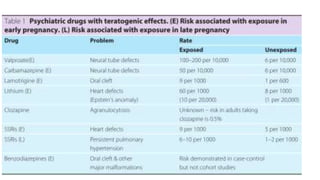
• Antidepressant : low risk: TCA, Sertraline (avoid paroxetine)
• Mood stablizers should be avoided where possible. Low dose typical
antipsychotics have lowest known risk and are also preferred for bipolar
disorders
In breastfeeding
• Antidepressant : imipramine and sertraline are relatively safer
• Antipsychotics are preferred over mood stablizers for bipolar disorders.
• Breastfeeding women prescribed psychotropic drugs should be advised
how to time feeds to avoid peak drug levels in milk and how to
recognise adverse drug reactions in their babies.
• Thank You

Perinatal psychiatry

  • 1.
  • 2.
    Postpartum disorders • Postpartumblues • Postpartum depression • Postpartum psychosis
  • 3.
    Postpartum blues • Occursin 50% • Onset: 2-6 days after delivery • Symptoms: transient low mood, crying, irritability and worries about coping with baby. • self-limiting,( usually within a few days), but severe blues increase the risk of postpartum depression. • No specific intervention is required (apart from reassurance) although, if symptoms do not resolve within two weeks, assess for depression.
  • 4.
    Postpartum depression • Occursin 10 % in first 6 weeks postpartum. Around 25% of which persists for a year. • Risk factors: - Mother: past history or family history of depression, unemployed, uneducated. - Relationships: unmarried, domestic violence, confiding relationships - Baby: premature, multiple births, ill baby. • Clinical features are as for other depressive illness but may also include: -guilt and anxiety concerning the baby -feelings of inadequate mothering -unreasonable fears for the baby’s health -a reluctance to hold or feed the baby -(more rarely) thoughts of harming the baby.
  • 5.
    Management • full psycho-socialassessment (including possible risk to mother and the baby). • First line of treatment for mild to moderate perinatal depression is psychological therapy and not antidepressants because of the potential for adverse effects in the foetus or breastfeeding baby. • In severe depression: Antidepressant.
  • 6.
    Postpartum Psychosis • Occursin 0.5%. Abrupt onset 2-4 weeks post birth. • Risk groups: -in those with a previous episode of psychosis - in first time mothers -after instrumental delivery -in those with family history of affective(mood) disorder Symptoms: Usually affective, most depressive but up to one-third manic (postpartum onset of schizophrenia is relatively unusual). Emotional lability and subjective confusion are common.
  • 7.
    Management • Usually requireshospitalization • Initially : antipsychotics • ECT( electroconvulsive therapy) is reported to be effective and considered if antipsychotics arenot effective
  • 8.
  • 9.
    Prescribing in pregnancyand breastfeeding
  • 10.
    In pregnancy • Antidepressant: low risk: TCA, Sertraline (avoid paroxetine) • Mood stablizers should be avoided where possible. Low dose typical antipsychotics have lowest known risk and are also preferred for bipolar disorders In breastfeeding • Antidepressant : imipramine and sertraline are relatively safer • Antipsychotics are preferred over mood stablizers for bipolar disorders. • Breastfeeding women prescribed psychotropic drugs should be advised how to time feeds to avoid peak drug levels in milk and how to recognise adverse drug reactions in their babies.
  • 12.