Coagulation Assays – Part 2
Larry Smith, PhD
Director, Coagulation/Hemostasis
Assistant Attending
2

Thrombophilia Testing
• Increased tendency to VTE
• Not a disease per se but may be associated with
▫ Disease  cancer
▫ Drug exposure  HRT, OCT
▫ Modifiable conditions  pregnancy, immobilization
▫ Non-modifiable conditions  age, gender

• Affects 1-2 individuals/1000 in the general population
▫ In the US
 ~2,000,000/year
 ~500,000 deaths
 Many survive with complications
3

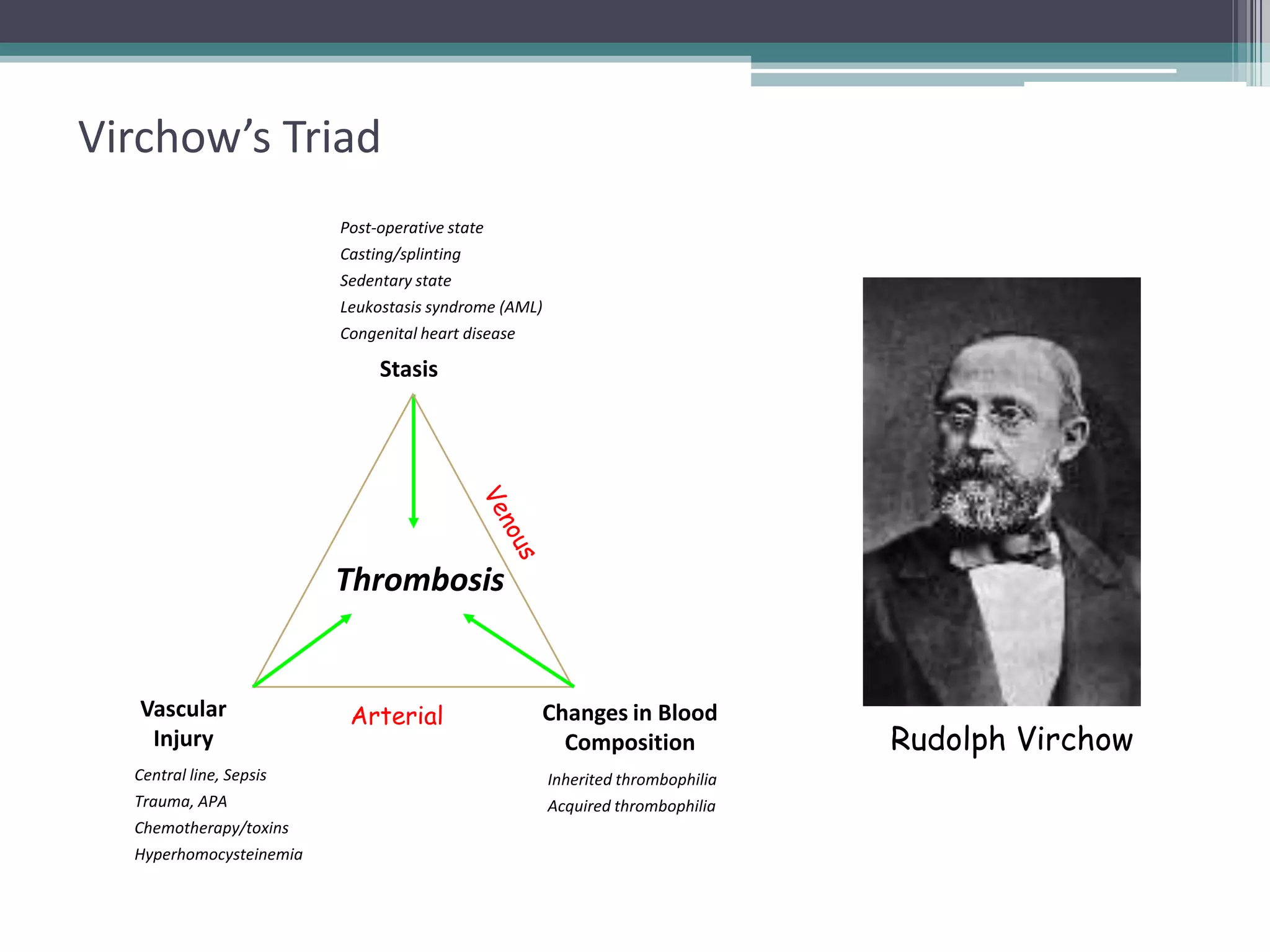
Virchow’s Triad
Post-operative state
Casting/splinting
Sedentary state
Leukostasis syndrome (AML)
Congenital heart disease

Stasis

Thrombosis

Vascular
Injury

Arterial

Changes in Blood
Composition

Central line, Sepsis

Inherited thrombophilia

Trauma, APA

Acquired thrombophilia

Chemotherapy/toxins
Hyperhomocysteinemia

Rudolph Virchow
4

Risk Factors
• Multiple risk factors—multi-factorial process
▫ Hereditary
▫ Acquired
• Multi-hit hypothesis
▫ Individual hereditary or acquired risk factors has a relatively small
individual effect
▫ Risk for thrombosis is greatly increased when two or more risk factors
combine
• Classification of Thrombophilia
▫ Congenital
▫ Acquired
 Physiologic factors
 Environmental factors
5

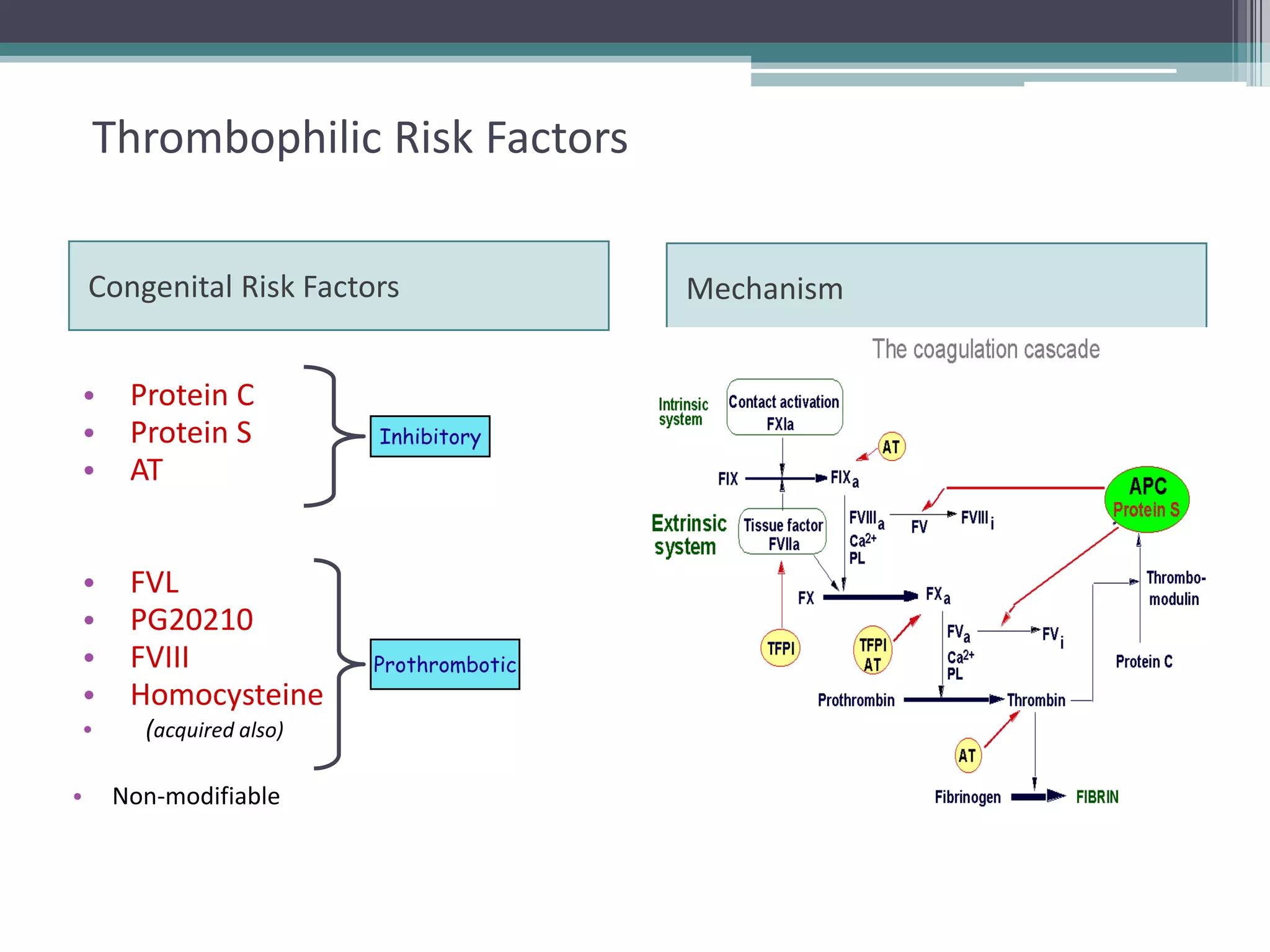
Thrombophilic Risk Factors
Congenital Risk Factors
•
•
•

Protein C
Protein S
AT

•
•
•
•

FVL
PG20210
FVIII
Homocysteine

•
•

(acquired also)
Non-modifiable

Inhibitory

Prothrombotic

Mechanism
6

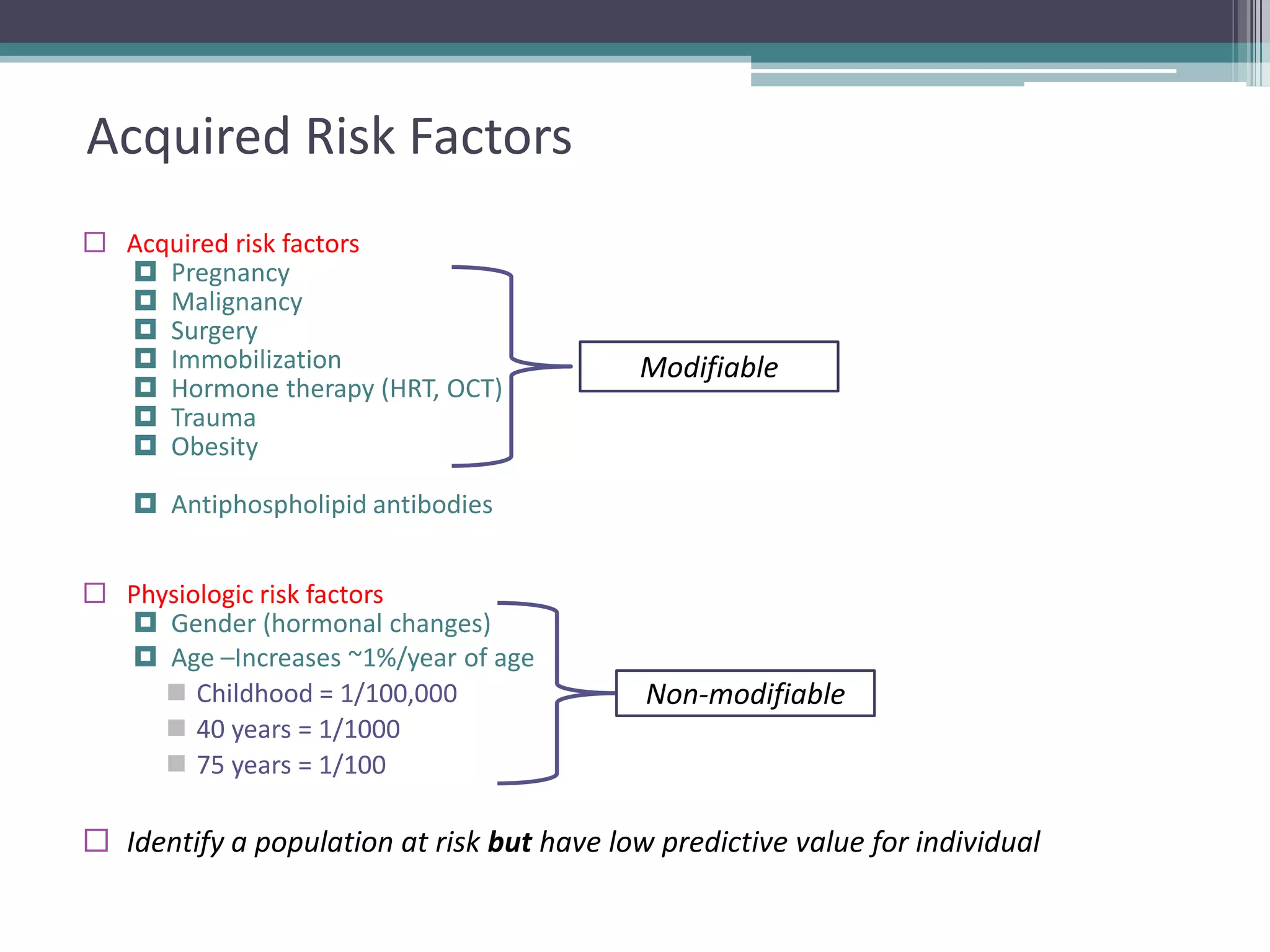
Acquired Risk Factors
 Acquired risk factors
 Pregnancy
 Malignancy
 Surgery
 Immobilization
 Hormone therapy (HRT, OCT)
 Trauma
 Obesity

Modifiable

 Antiphospholipid antibodies
 Physiologic risk factors
 Gender (hormonal changes)
 Age –Increases ~1%/year of age
 Childhood = 1/100,000
 40 years = 1/1000
 75 years = 1/100

Non-modifiable

 Identify a population at risk but have low predictive value for individual
7

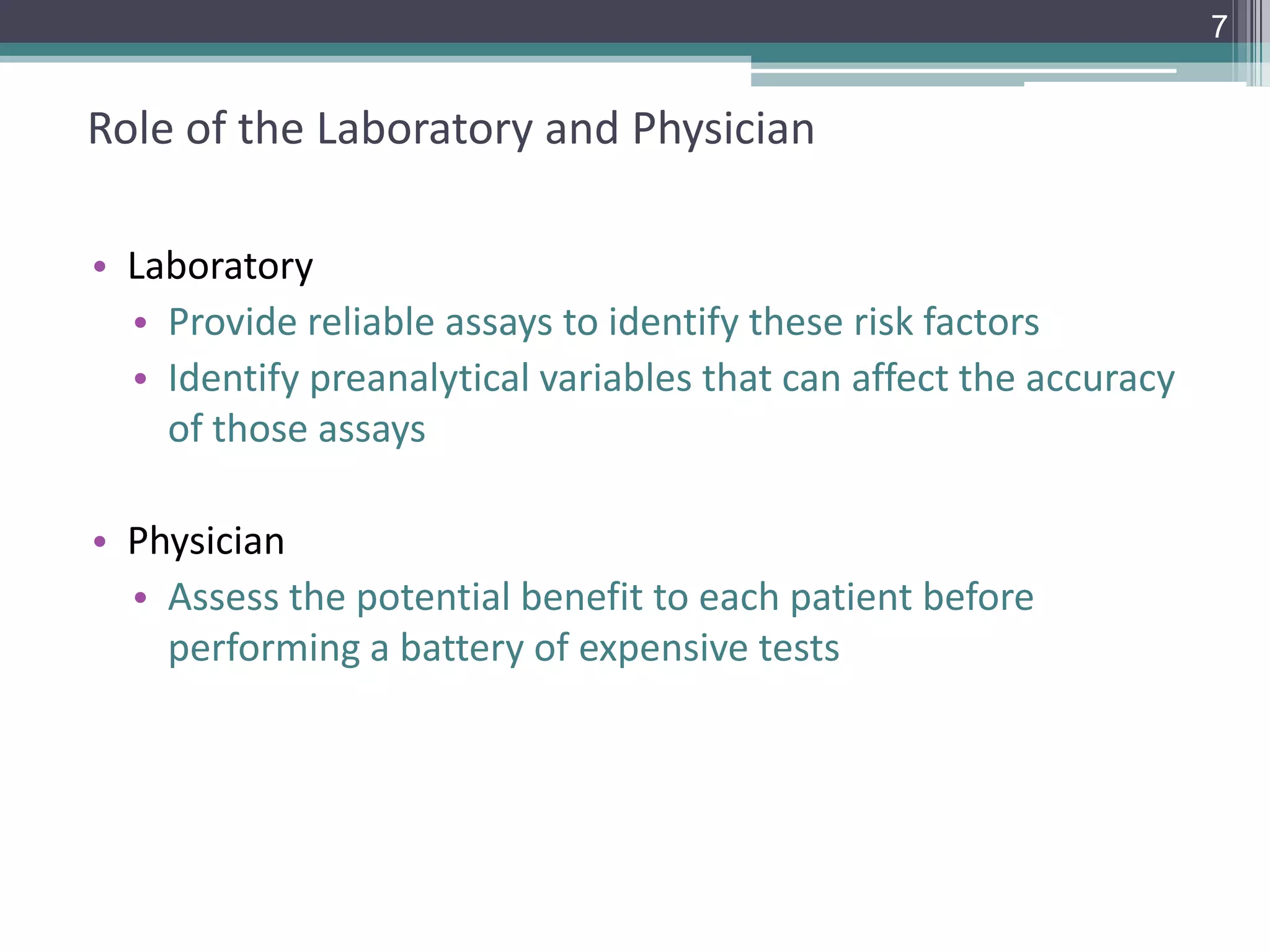
Role of the Laboratory and Physician
• Laboratory
• Provide reliable assays to identify these risk factors
• Identify preanalytical variables that can affect the accuracy
of those assays

• Physician
• Assess the potential benefit to each patient before
performing a battery of expensive tests
8

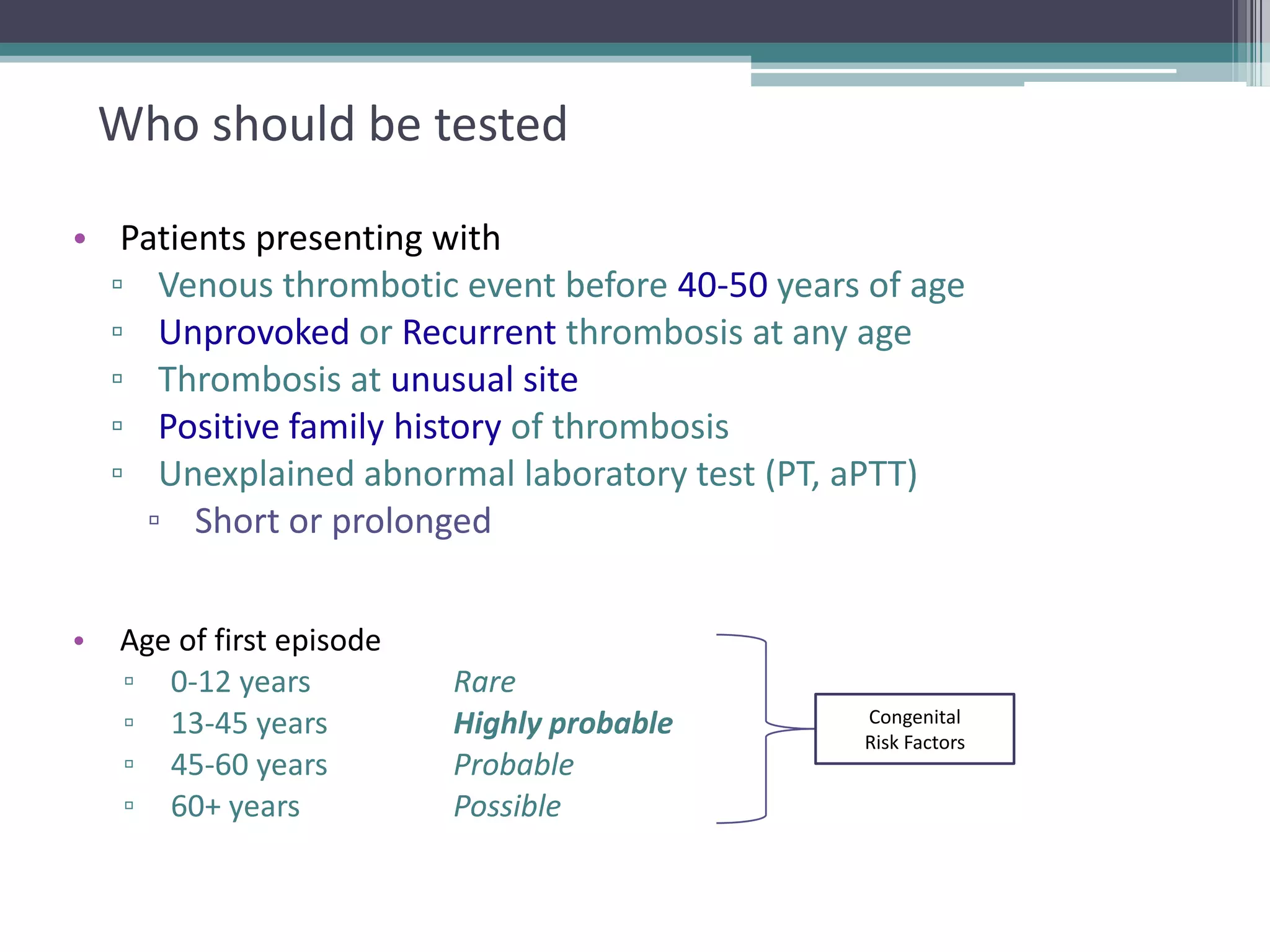
Who should be tested
• Patients presenting with
▫ Venous thrombotic event before 40-50 years of age
▫ Unprovoked or Recurrent thrombosis at any age
▫ Thrombosis at unusual site
▫ Positive family history of thrombosis
▫ Unexplained abnormal laboratory test (PT, aPTT)
▫ Short or prolonged
•

Age of first episode
▫ 0-12 years
▫ 13-45 years
▫ 45-60 years
▫ 60+ years

Rare
Highly probable
Probable
Possible

Congenital
Risk Factors
9

Testing: When and Why
• Optimal time for testing
▫ Asymptomatic
▫ Not on anticoagulant therapy
▫ Anytime for molecular testing

• Why do we test
▫ Pathologic basis for the thrombotic event
▫ Duration and intensity of therapy
▫ Prophylaxis for high risk patients
▫ To alert the patient's immediate family members to the
presence of possible inherited risk factors
10

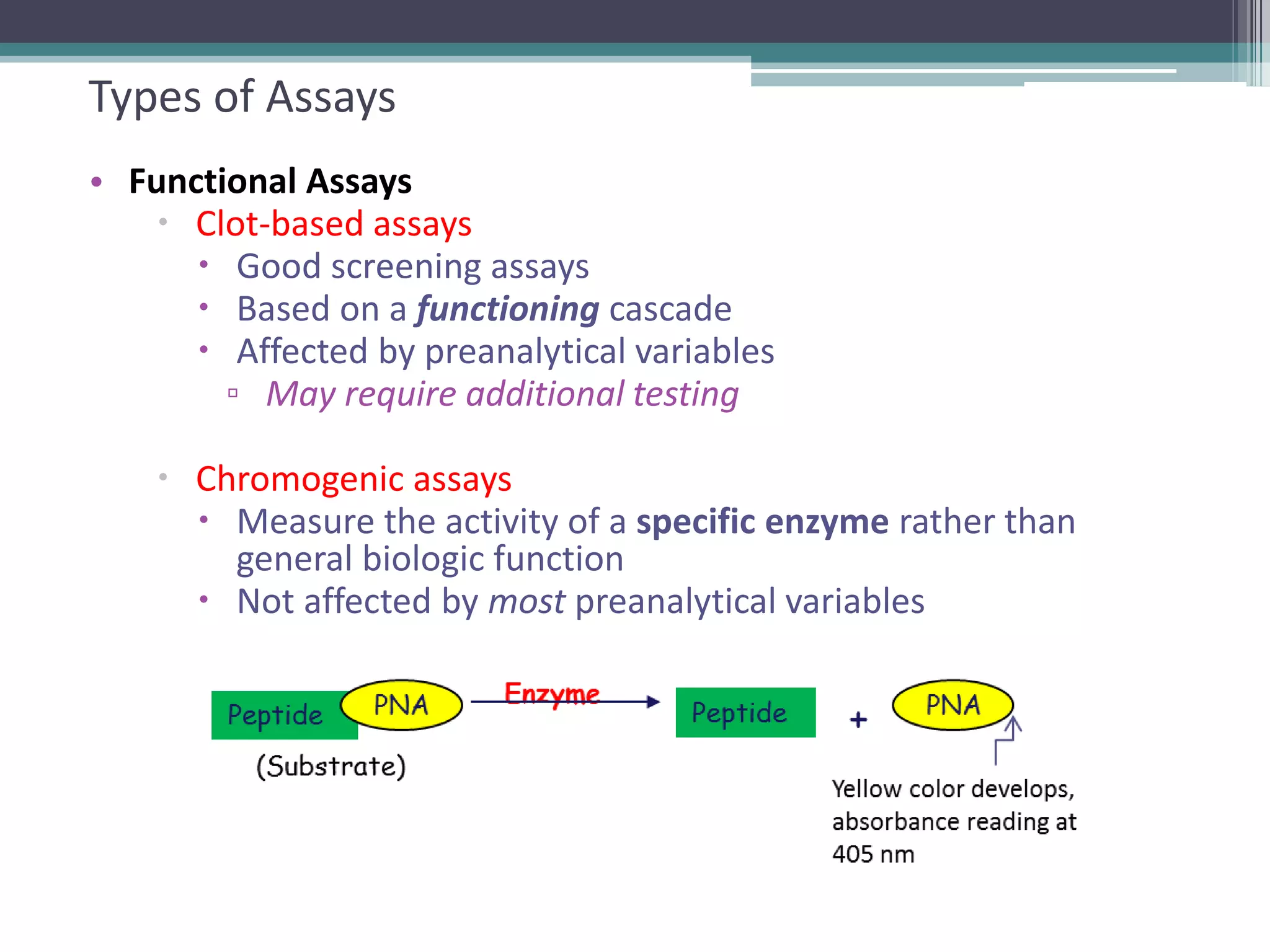
Types of Assays
• Functional Assays
 Clot-based assays
 Good screening assays
 Based on a functioning cascade
 Affected by preanalytical variables
▫ May require additional testing
 Chromogenic assays
 Measure the activity of a specific enzyme rather than
general biologic function
 Not affected by most preanalytical variables
11

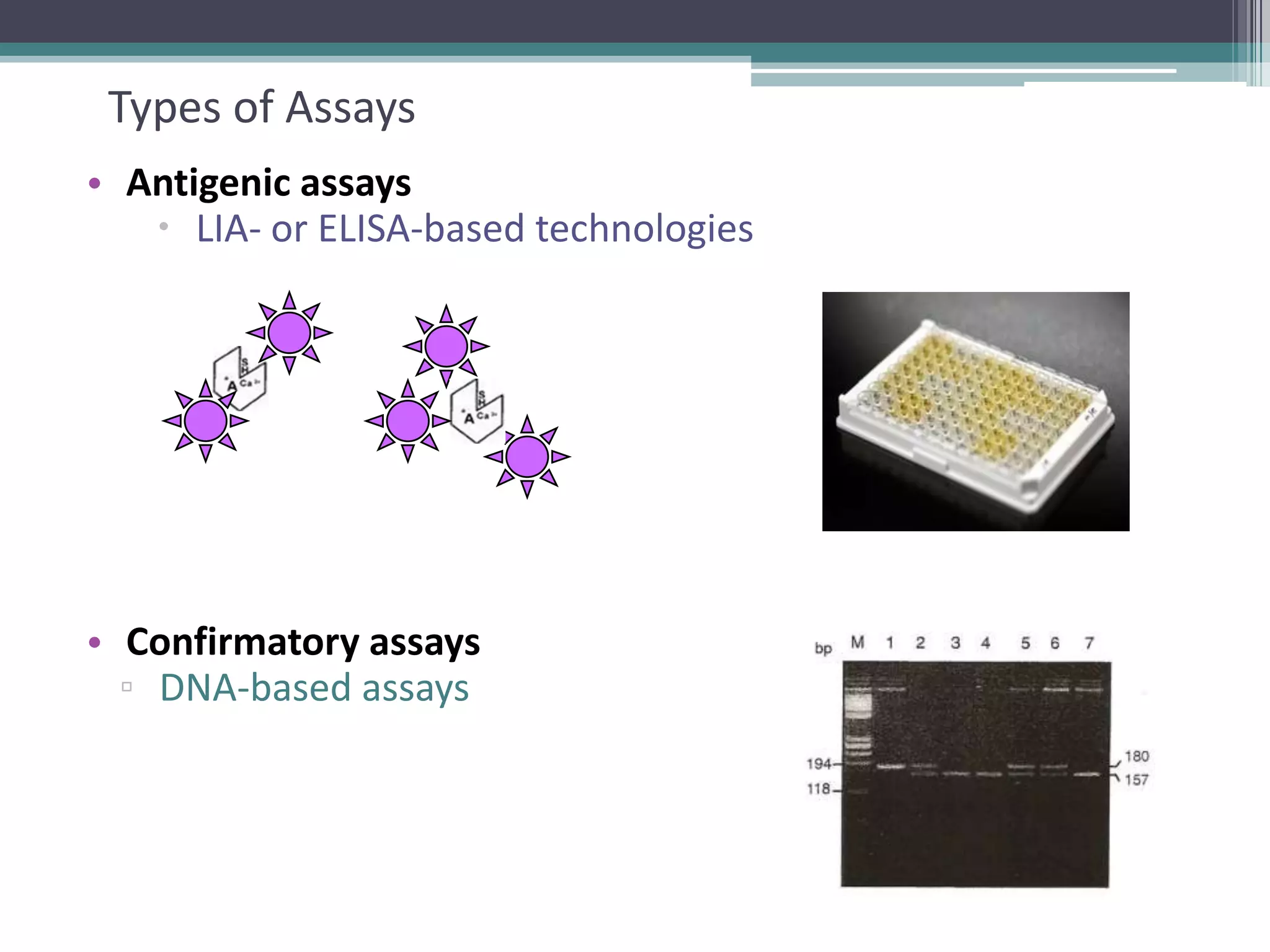
Types of Assays
• Antigenic assays
 LIA- or ELISA-based technologies

• Confirmatory assays
▫ DNA-based assays
12

Types of Deficiencies
• Type I Deficiency
 Decrease in both FUNCTION and AMOUNT of protein
present
 True deficiency
 Functional assay

• Type II Deficiency
 Identify the total AMOUNT of protein only
 Do NOT measure the function of the protein
 To identify a dysproteinemia
 Functional + Antigenic assays
13

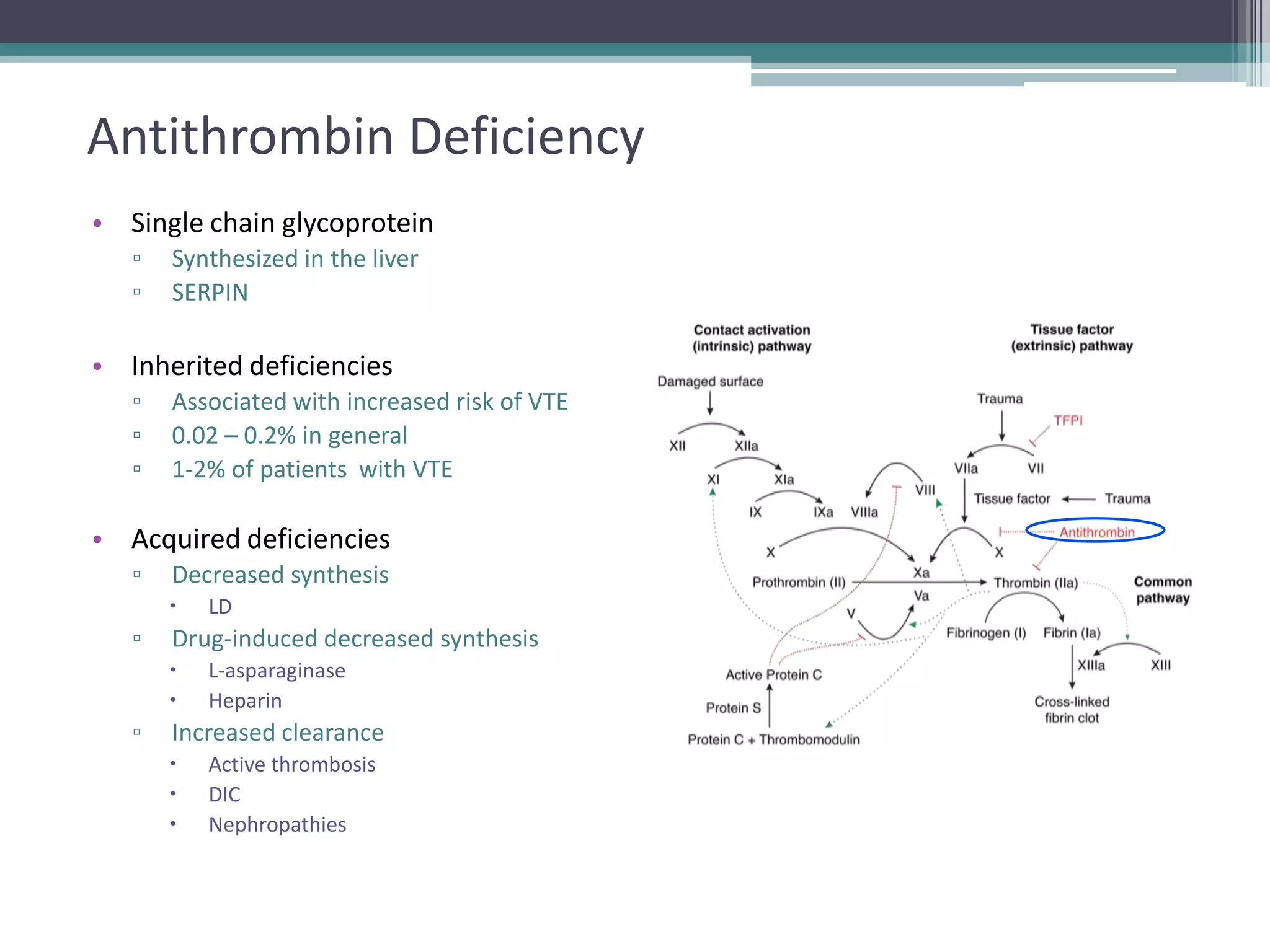
Antithrombin Deficiency
• Single chain glycoprotein
▫
▫

Synthesized in the liver
SERPIN

• Inherited deficiencies
▫
▫
▫

Associated with increased risk of VTE
0.02 – 0.2% in general
1-2% of patients with VTE

• Acquired deficiencies
▫

Decreased synthesis


▫

Drug-induced decreased synthesis



▫

LD
L-asparaginase
Heparin

Increased clearance




Active thrombosis
DIC
Nephropathies
14

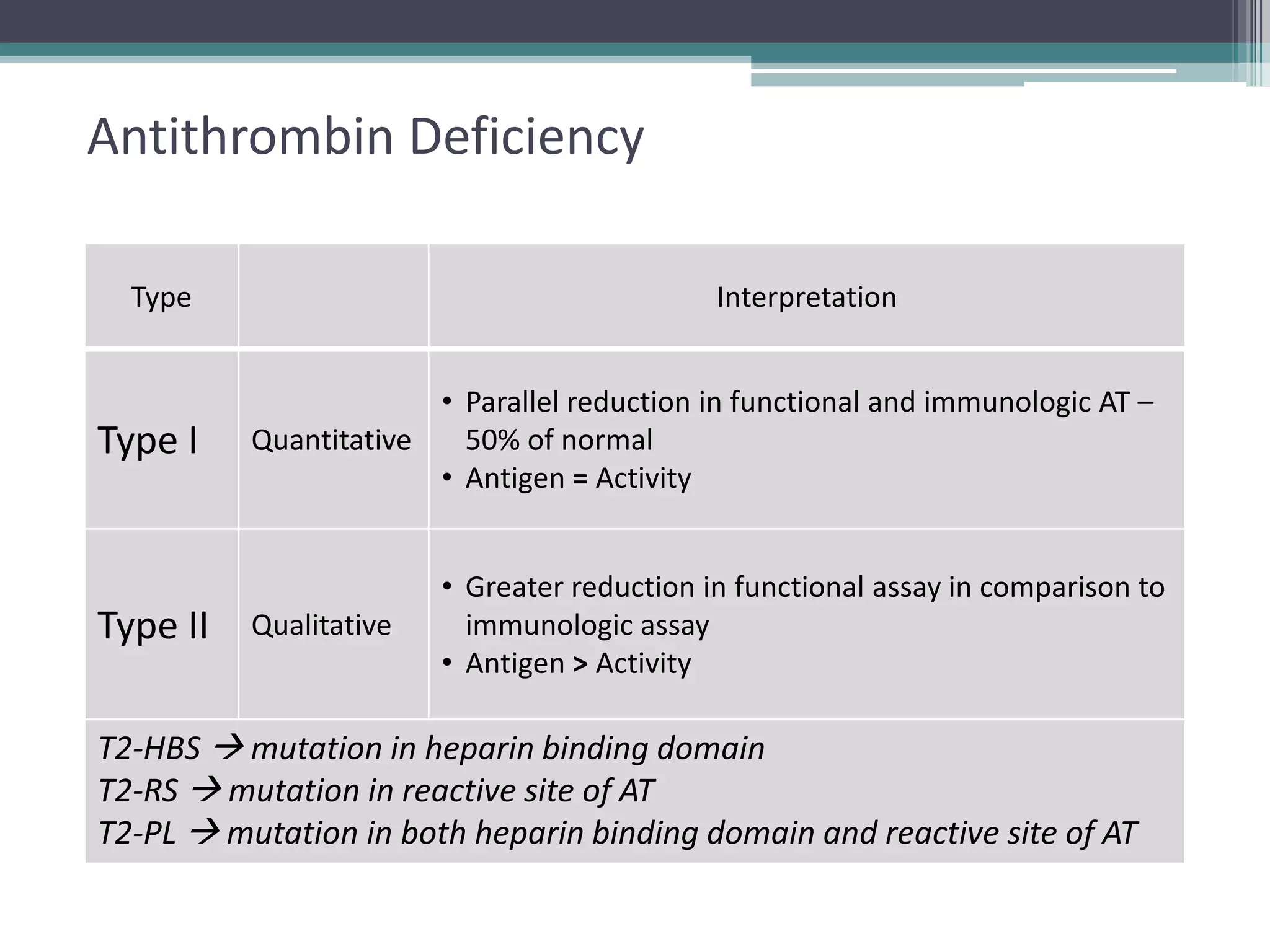
Antithrombin Deficiency
Type

Type I

Type II

Interpretation
• Parallel reduction in functional and immunologic AT –
Quantitative
50% of normal
• Antigen = Activity

Qualitative

• Greater reduction in functional assay in comparison to
immunologic assay
• Antigen > Activity

T2-HBS  mutation in heparin binding domain
T2-RS  mutation in reactive site of AT
T2-PL  mutation in both heparin binding domain and reactive site of AT
15

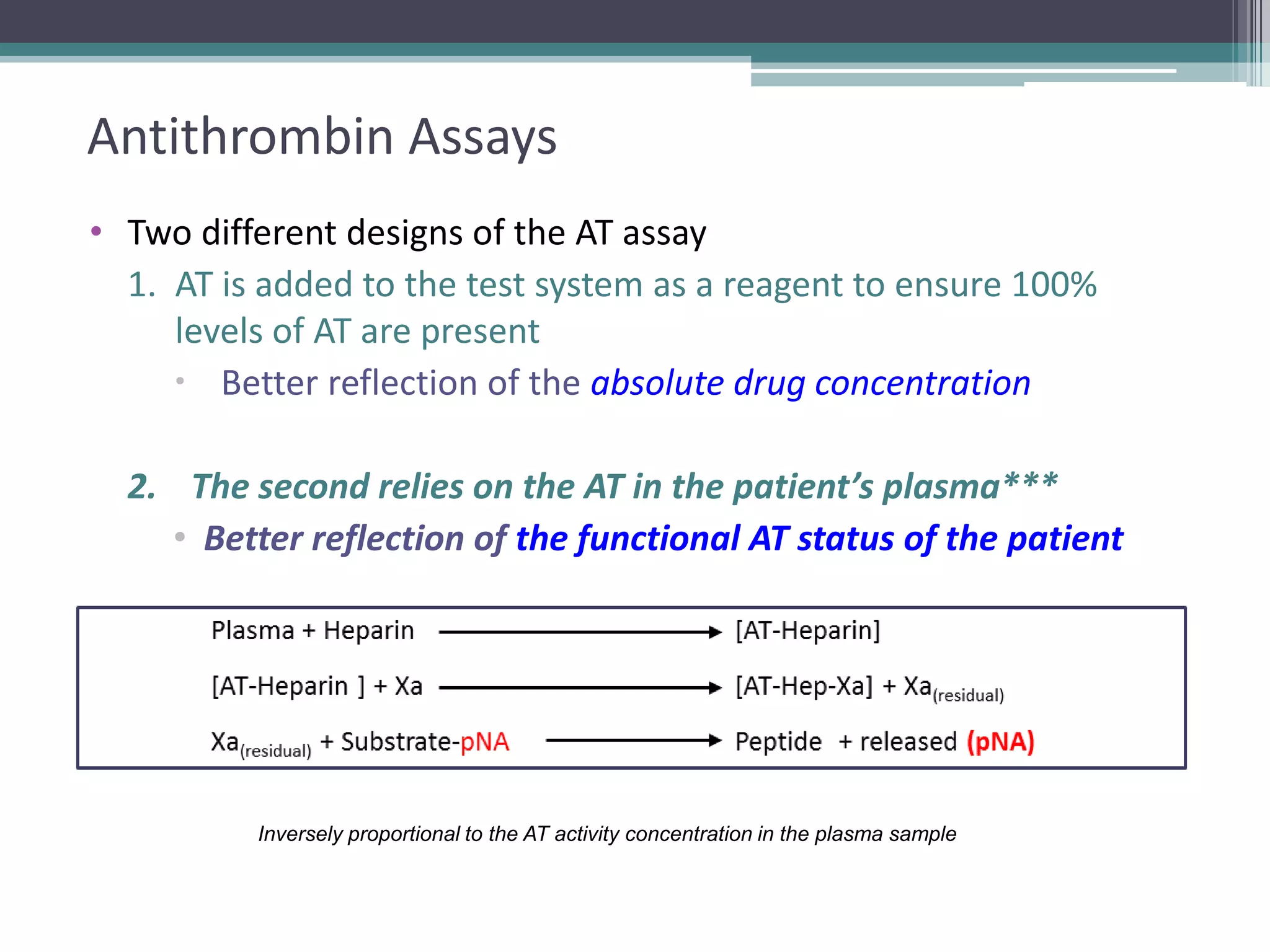
Antithrombin Assays
• Two different designs of the AT assay
1. AT is added to the test system as a reagent to ensure 100%
levels of AT are present
 Better reflection of the absolute drug concentration
2. The second relies on the AT in the patient’s plasma***
• Better reflection of the functional AT status of the patient

Inversely proportional to the AT activity concentration in the plasma sample
16

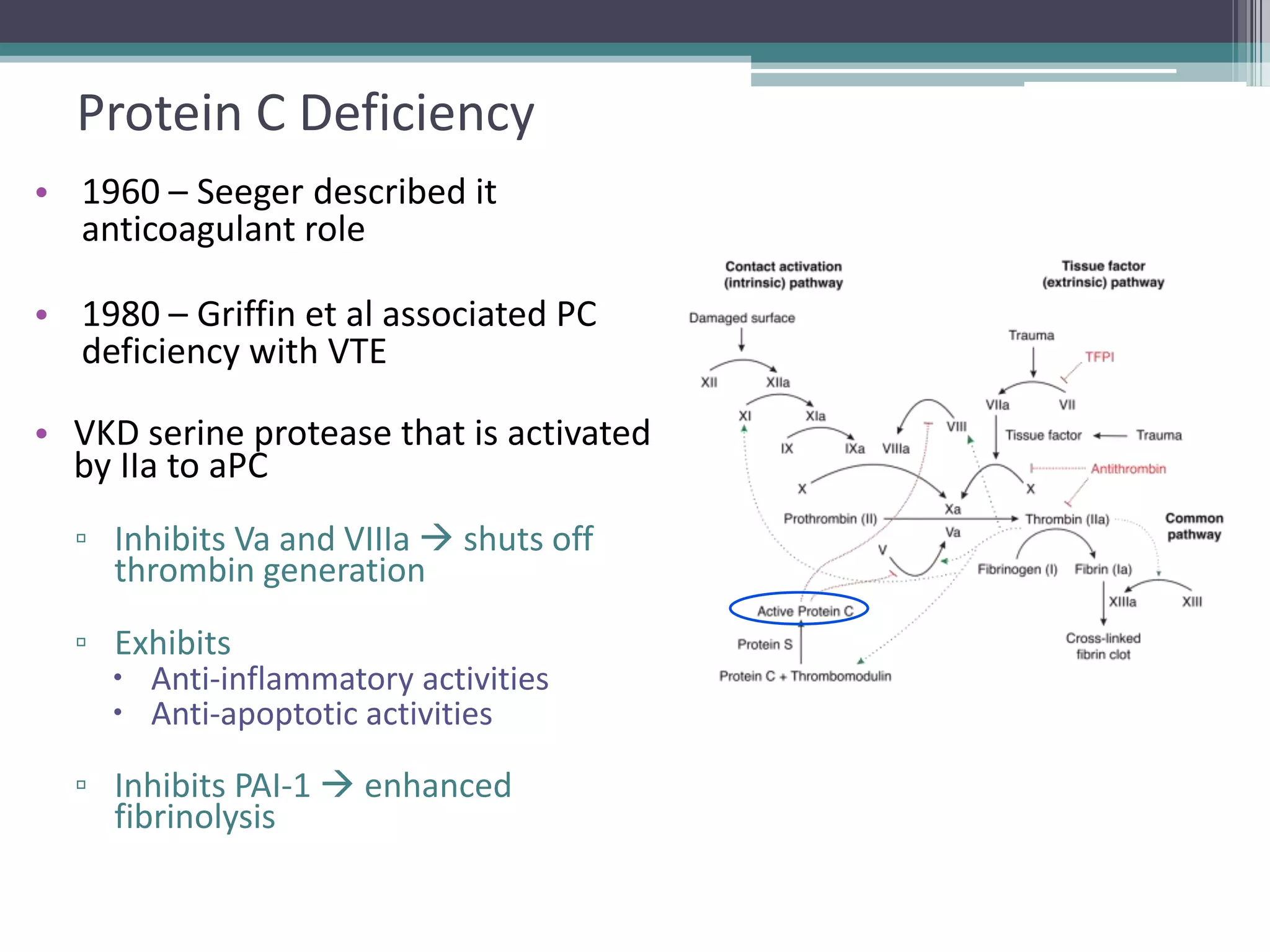
Protein C Deficiency
• 1960 – Seeger described it
anticoagulant role

• 1980 – Griffin et al associated PC
deficiency with VTE
• VKD serine protease that is activated
by IIa to aPC
▫ Inhibits Va and VIIIa  shuts off
thrombin generation
▫ Exhibits
 Anti-inflammatory activities
 Anti-apoptotic activities
▫ Inhibits PAI-1  enhanced
fibrinolysis
17

Protein C Deficiency
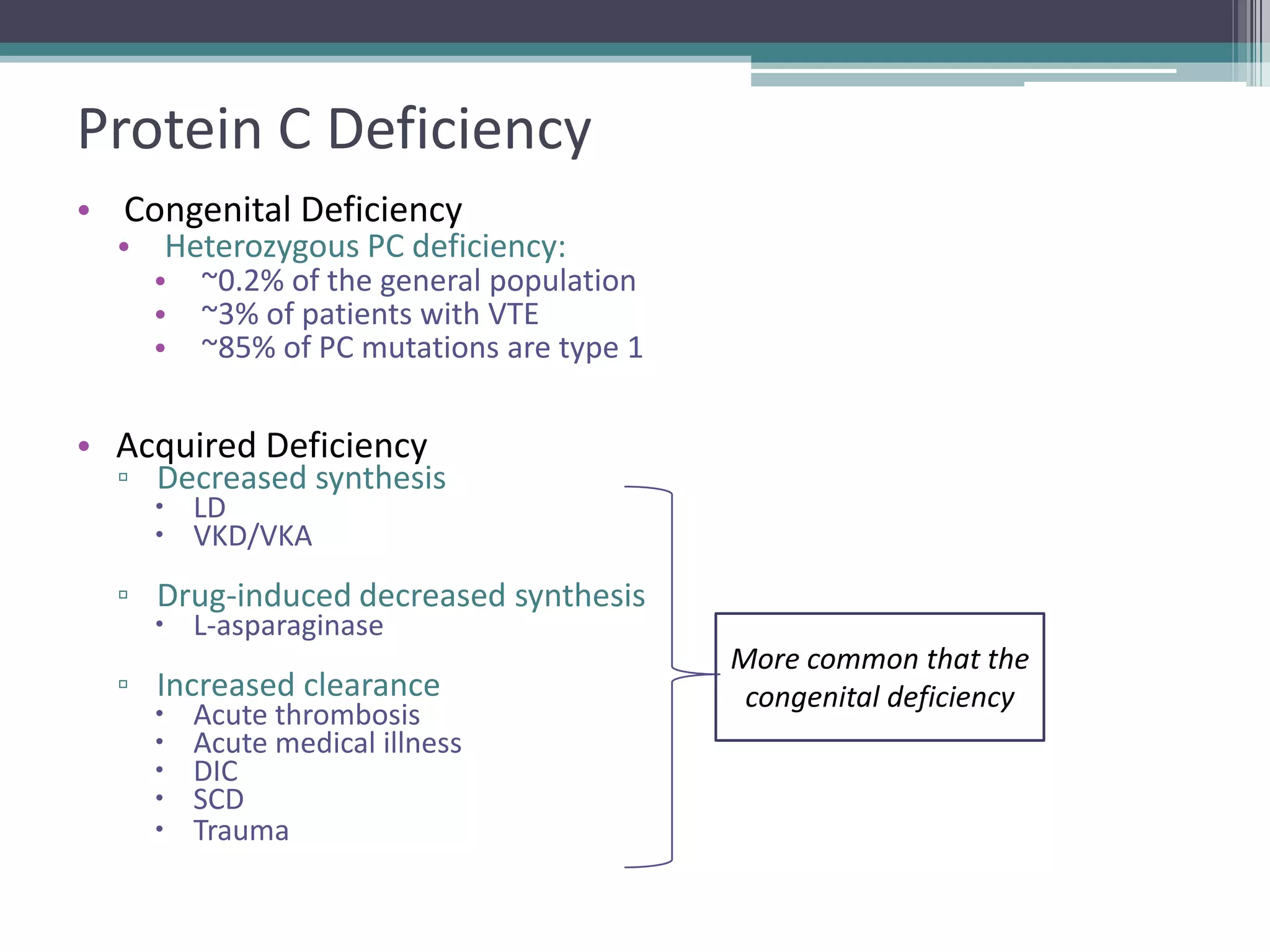
• Congenital Deficiency

• Heterozygous PC deficiency:
•
•
•

~0.2% of the general population
~3% of patients with VTE
~85% of PC mutations are type 1

• Acquired Deficiency

▫ Decreased synthesis
 LD
 VKD/VKA

▫ Drug-induced decreased synthesis
 L-asparaginase

▫ Increased clearance






Acute thrombosis
Acute medical illness
DIC
SCD
Trauma

More common that the
congenital deficiency
18

Protein C Assays
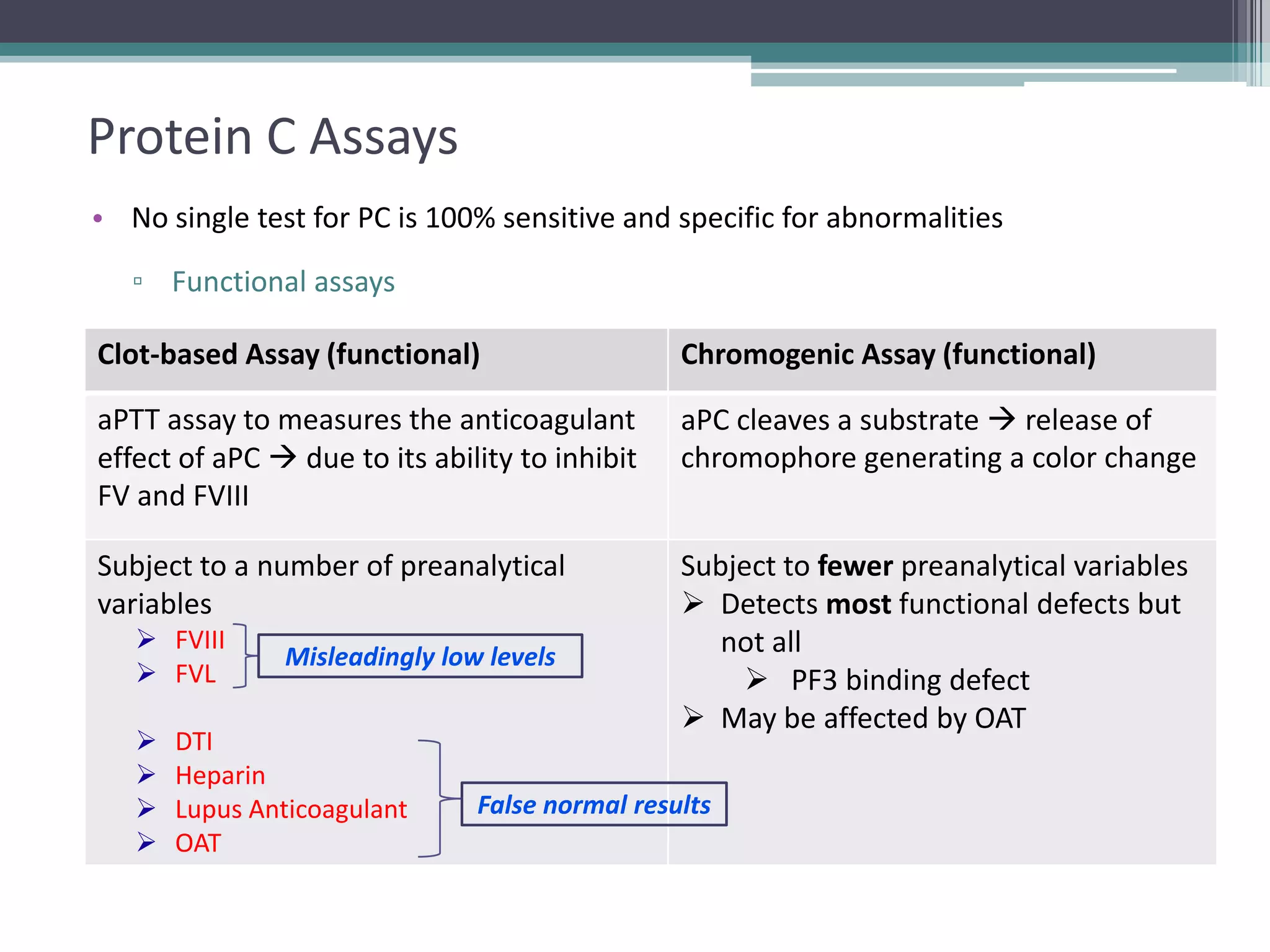
• No single test for PC is 100% sensitive and specific for abnormalities
▫ Functional assays
Clot-based Assay (functional)

Chromogenic Assay (functional)

aPTT assay to measures the anticoagulant
effect of aPC  due to its ability to inhibit
FV and FVIII

aPC cleaves a substrate  release of
chromophore generating a color change

Subject to a number of preanalytical
variables

Subject to fewer preanalytical variables
 Detects most functional defects but
not all
 PF3 binding defect
 May be affected by OAT

 FVIII
 FVL
▫





Misleadingly low levels

Antigenic assay
DTI
Heparin
Lupus Anticoagulant
OAT

False normal results
19

PC Assays
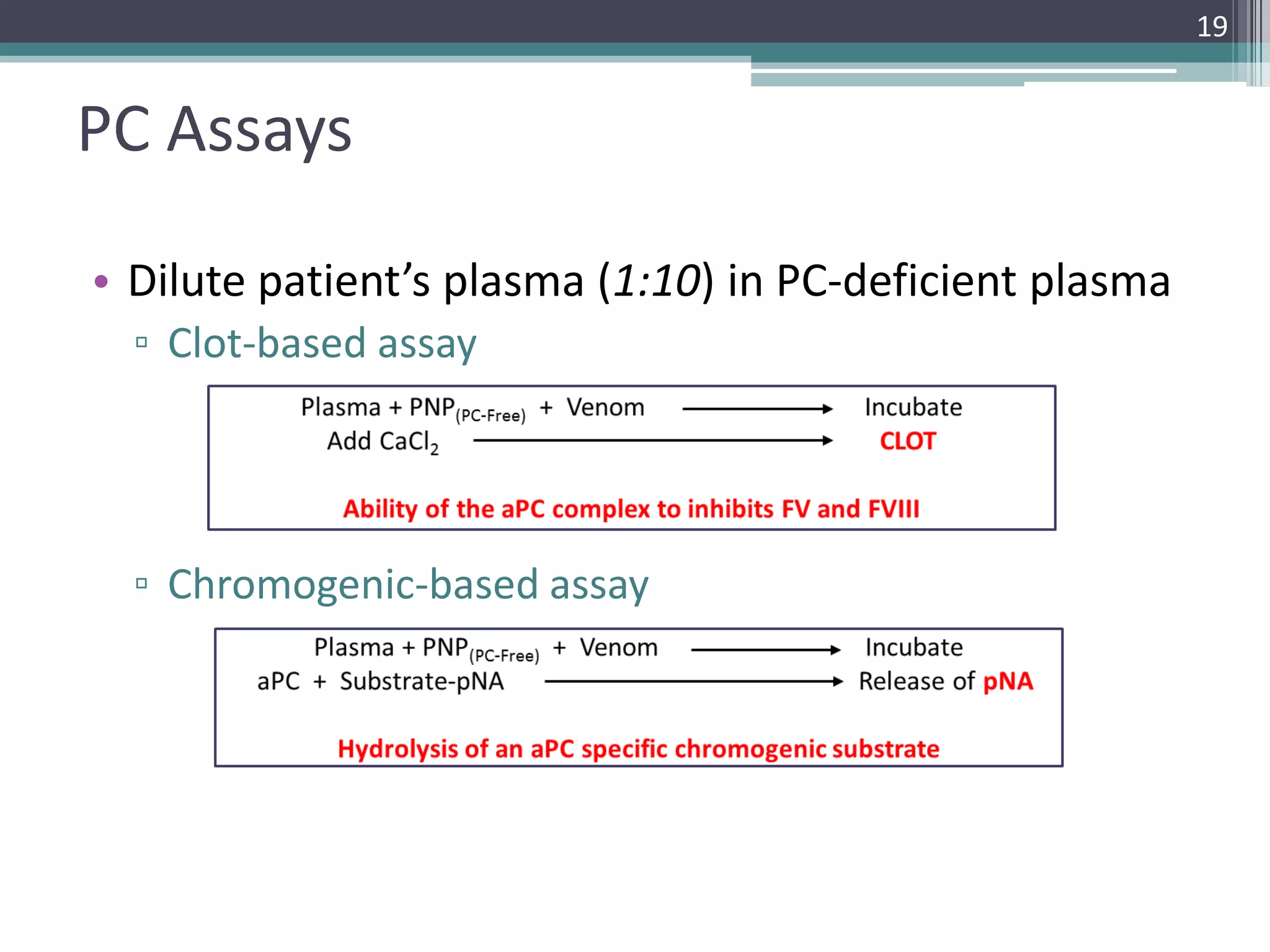
• Dilute patient’s plasma (1:10) in PC-deficient plasma
▫ Clot-based assay

▫ Chromogenic-based assay
20

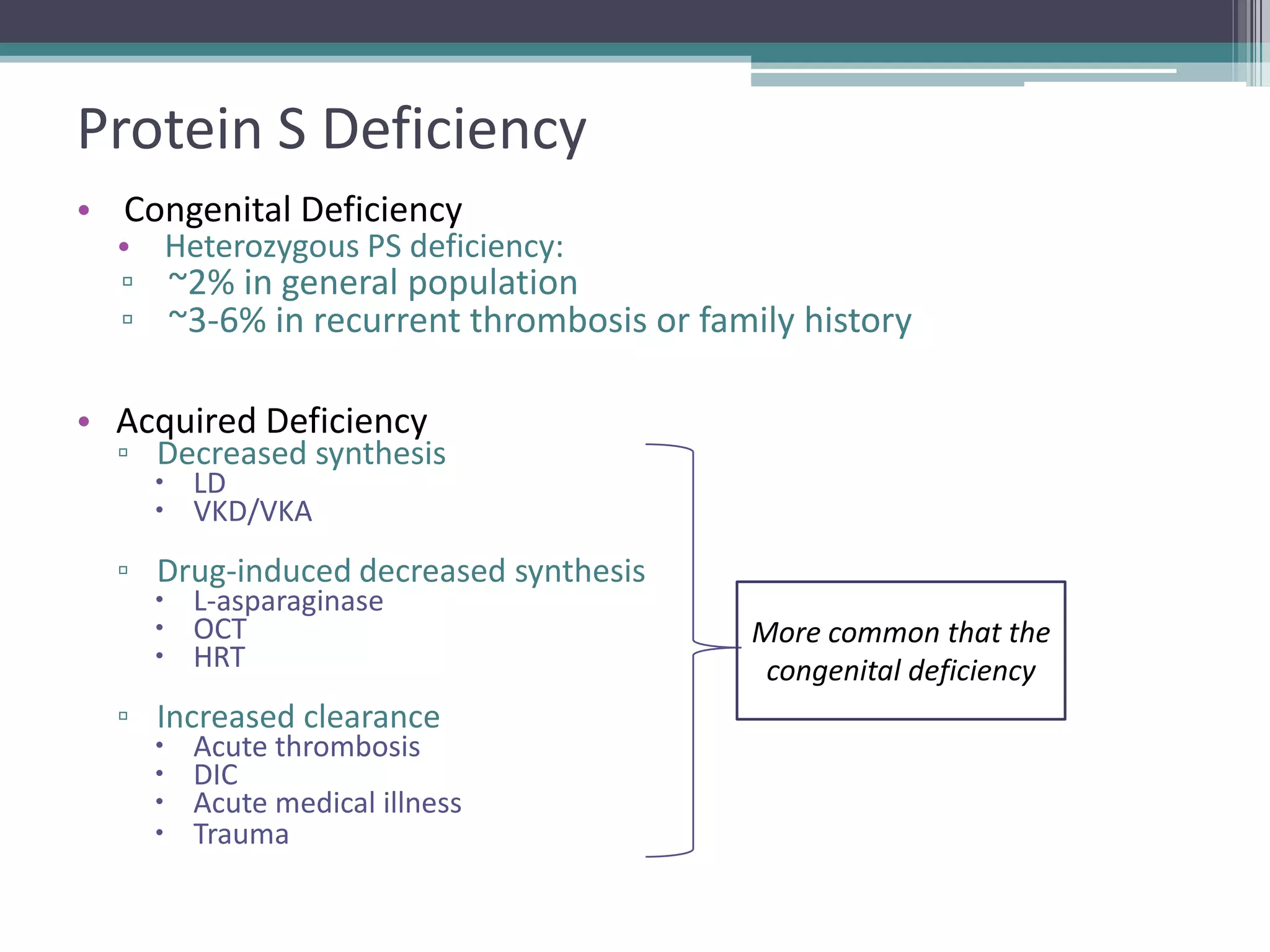
Protein S Deficiency
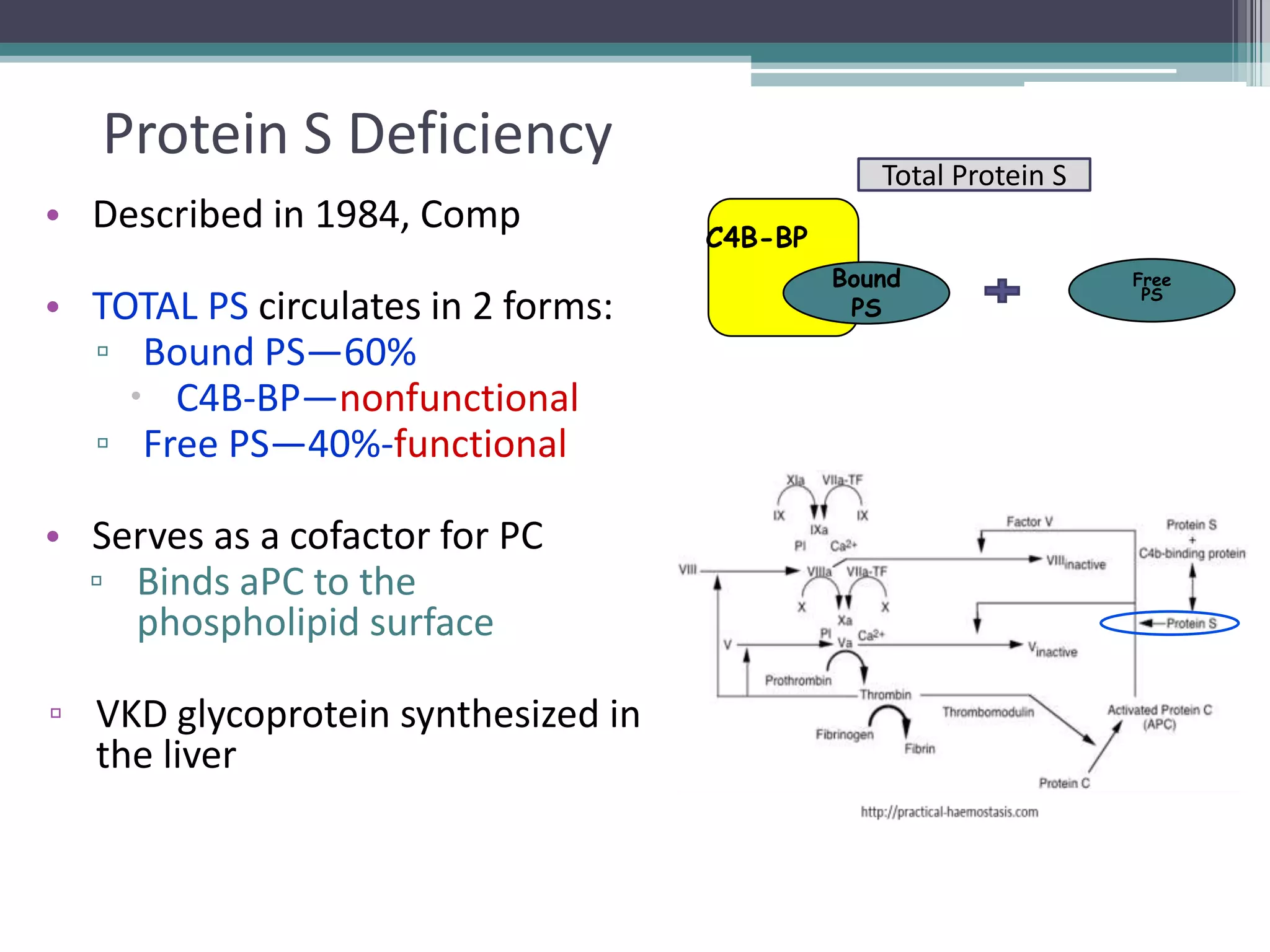
• Described in 1984, Comp

• TOTAL PS circulates in 2 forms:
▫ Bound PS—60%
 C4B-BP—nonfunctional
▫ Free PS—40%-functional
• Serves as a cofactor for PC
▫ Binds aPC to the
phospholipid surface
▫ VKD glycoprotein synthesized in
the liver

Total Protein S
C4B-BP
Bound
PS

Free
PS
21

Protein S Deficiency
• Congenital Deficiency

• Heterozygous PS deficiency:

▫ ~2% in general population
▫ ~3-6% in recurrent thrombosis or family history

• Acquired Deficiency

▫ Decreased synthesis
 LD
 VKD/VKA

▫ Drug-induced decreased synthesis
 L-asparaginase
 OCT
 HRT

▫ Increased clearance





Acute thrombosis
DIC
Acute medical illness
Trauma

More common that the
congenital deficiency
22

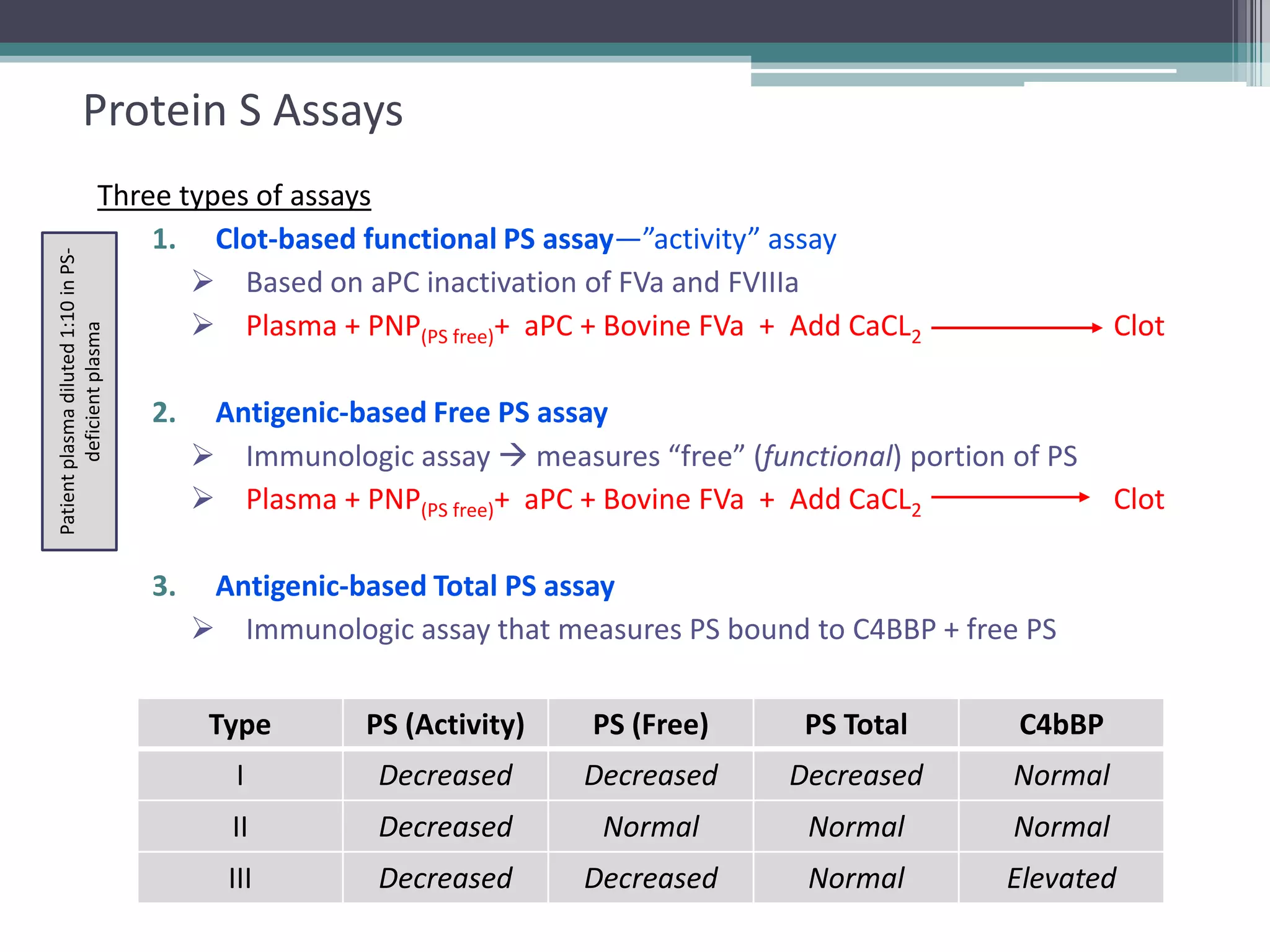
Protein S Assays
Patient plasma diluted 1:10 in PSdeficient plasma

Three types of assays
1. Clot-based functional PS assay—”activity” assay
 Based on aPC inactivation of FVa and FVIIIa
 Plasma + PNP(PS free)+ aPC + Bovine FVa + Add CaCL2
2.

3.

Clot

Antigenic-based Free PS assay
 Immunologic assay  measures “free” (functional) portion of PS
 Plasma + PNP(PS free)+ aPC + Bovine FVa + Add CaCL2

Clot

Antigenic-based Total PS assay
 Immunologic assay that measures PS bound to C4BBP + free PS
Type

PS (Activity)

PS (Free)

PS Total

C4bBP

I

Decreased

Decreased

Decreased

Normal

II

Decreased

Normal

Normal

Normal

III

Decreased

Decreased

Normal

Elevated
2323

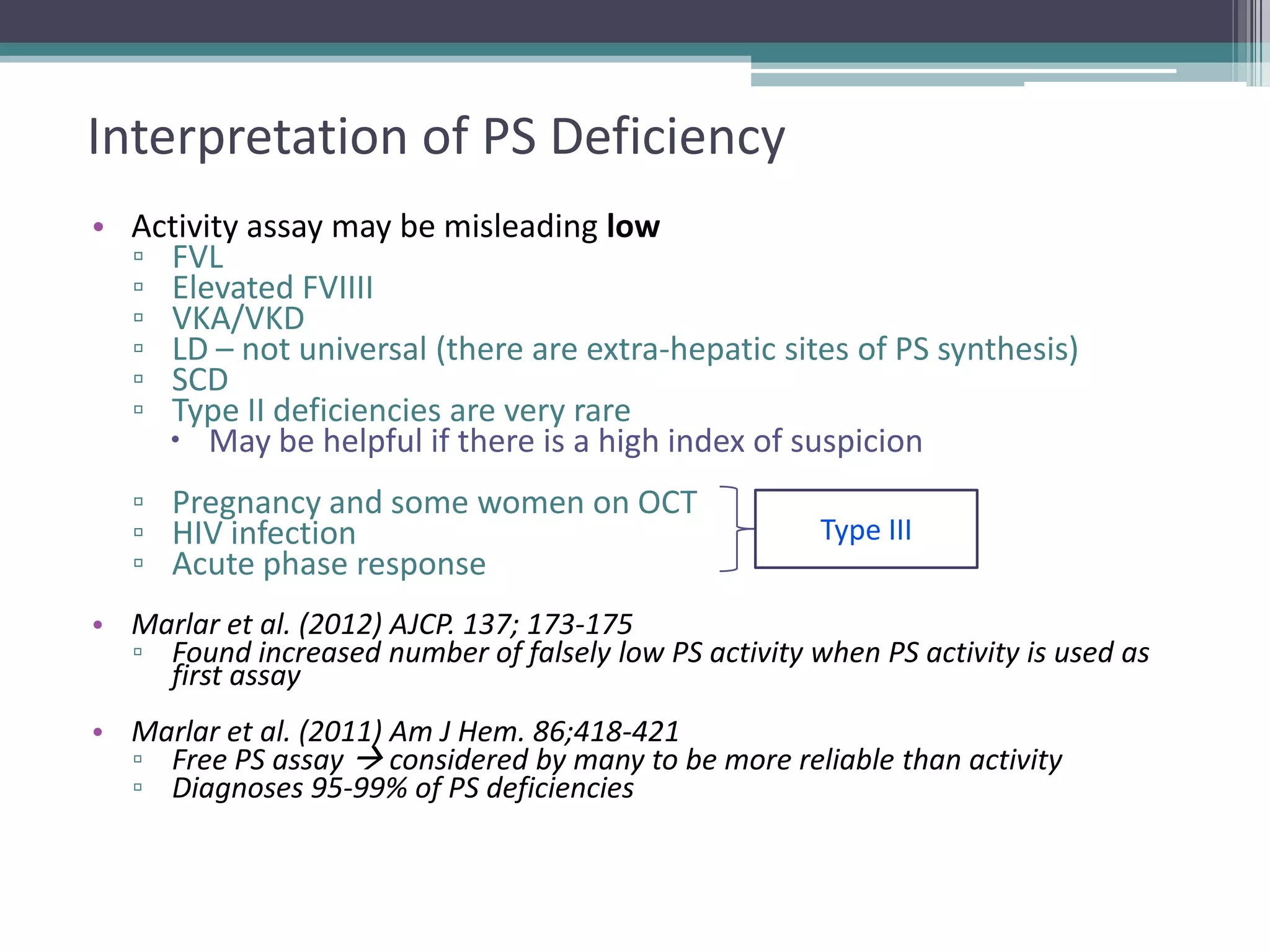
Interpretation of PS Deficiency
• Activity assay may be misleading low
▫ FVL
▫ Elevated FVIIII
▫ VKA/VKD
▫ LD – not universal (there are extra-hepatic sites of PS synthesis)
▫ SCD
▫ Type II deficiencies are very rare
 May be helpful if there is a high index of suspicion
▫ Pregnancy and some women on OCT
▫ HIV infection
▫ Acute phase response

Type III

• Marlar et al. (2012) AJCP. 137; 173-175
▫ Found increased number of falsely low PS activity when PS activity is used as
first assay
• Marlar et al. (2011) Am J Hem. 86;418-421
▫ Free PS assay  considered by many to be more reliable than activity
▫ Diagnoses 95-99% of PS deficiencies
24

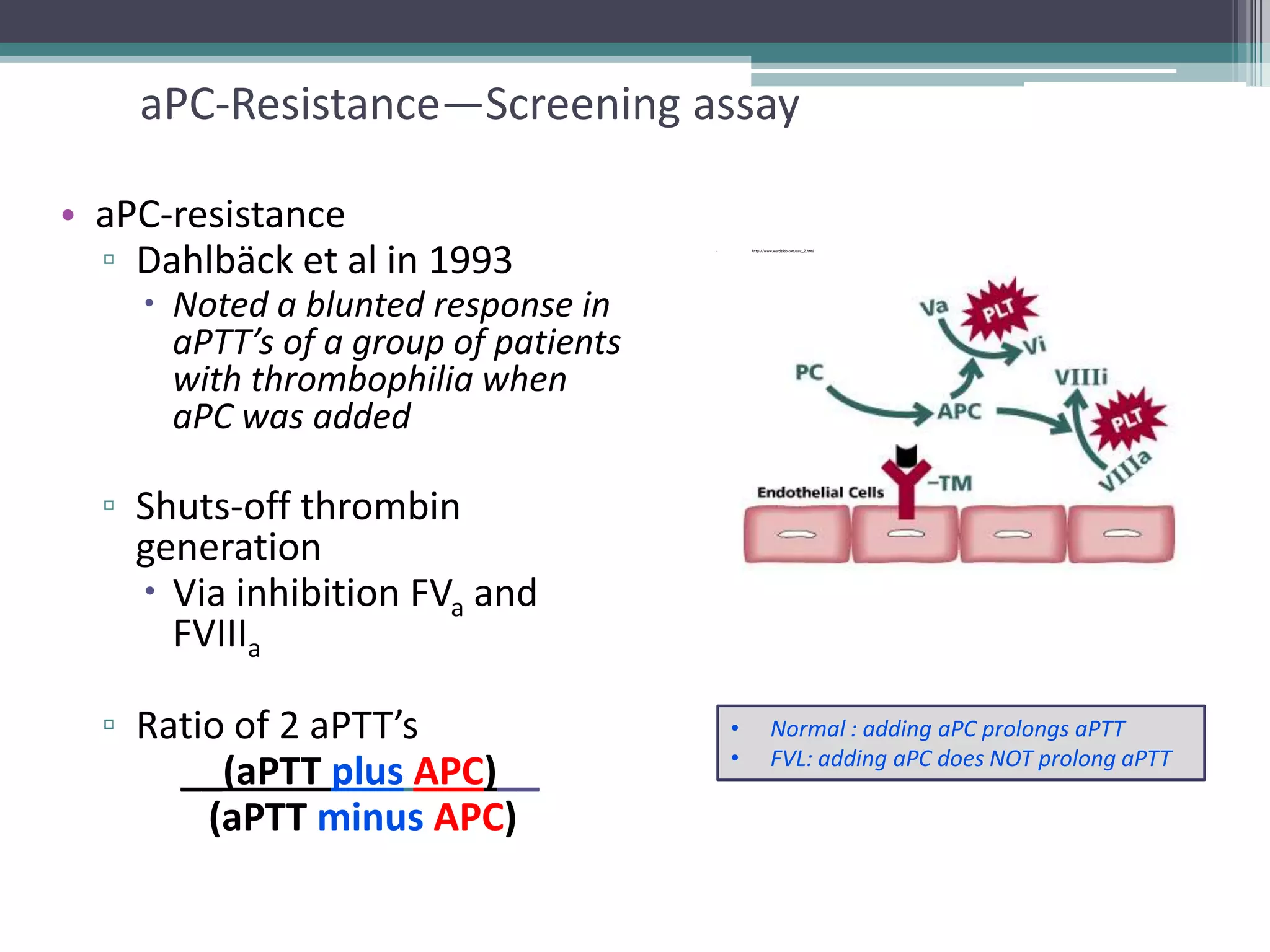
aPC-Resistance—Screening assay
• aPC-resistance
▫ Dahlbäck et al in 1993

http://www.wardelab.com/arc_2.html

•

 Noted a blunted response in
aPTT’s of a group of patients
with thrombophilia when
aPC was added

▫ Shuts-off thrombin
generation
 Via inhibition FVa and
FVIIIa
▫ Ratio of 2 aPTT’s
__(aPTT plus APC)__
(aPTT minus APC)

•
•

Normal : adding aPC prolongs aPTT
FVL: adding aPC does NOT prolong aPTT
25

aPC-Resistance—Screening assay
•

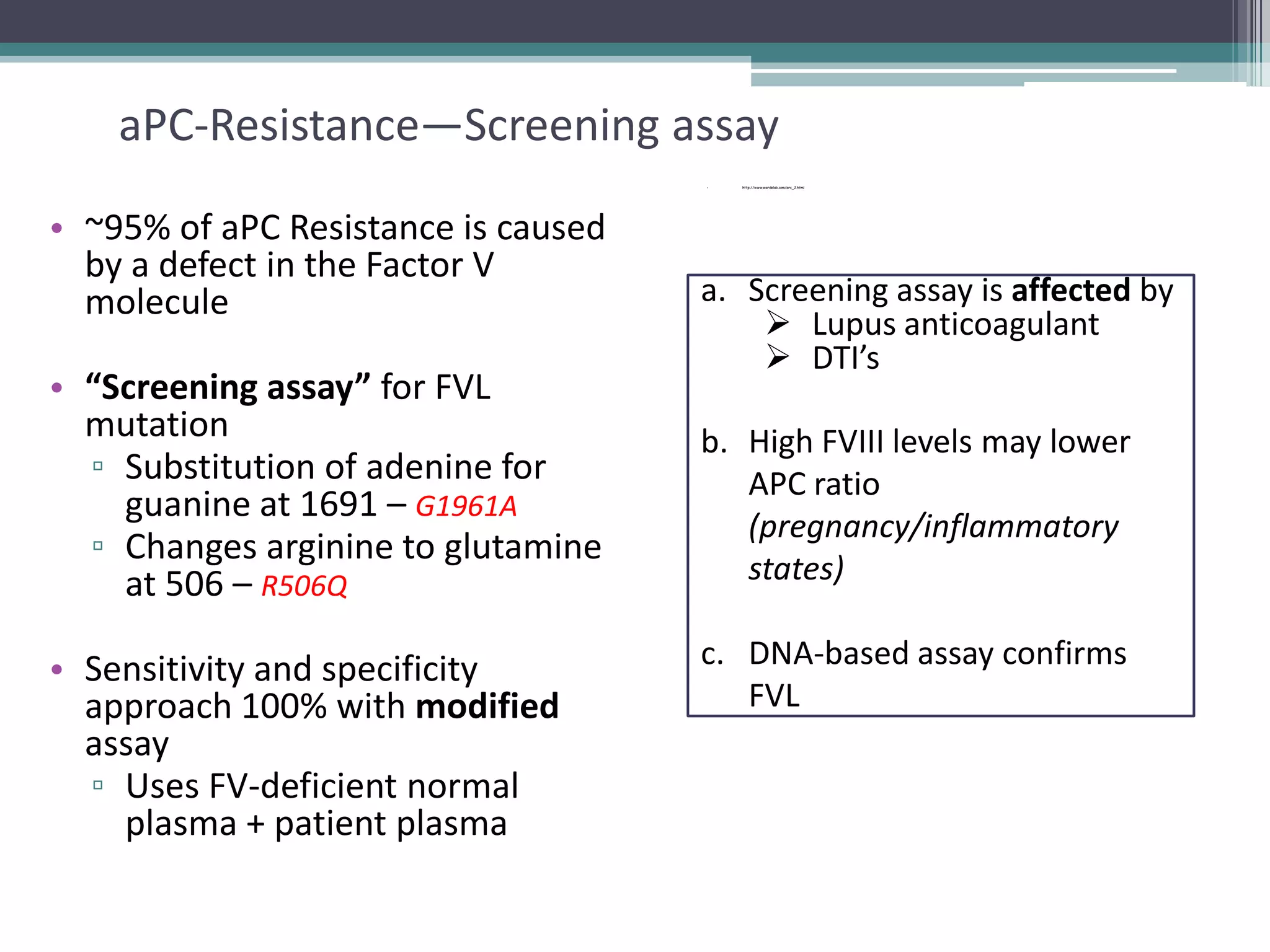
• ~95% of aPC Resistance is caused
by a defect in the Factor V
molecule
• “Screening assay” for FVL
mutation
▫ Substitution of adenine for
guanine at 1691 – G1961A
▫ Changes arginine to glutamine
at 506 – R506Q
• Sensitivity and specificity
approach 100% with modified
assay
▫ Uses FV-deficient normal
plasma + patient plasma

http://www.wardelab.com/arc_2.html

a. Screening assay is affected by
 Lupus anticoagulant
 DTI’s
b. High FVIII levels may lower
APC ratio
(pregnancy/inflammatory
states)
c. DNA-based assay confirms
FVL
26

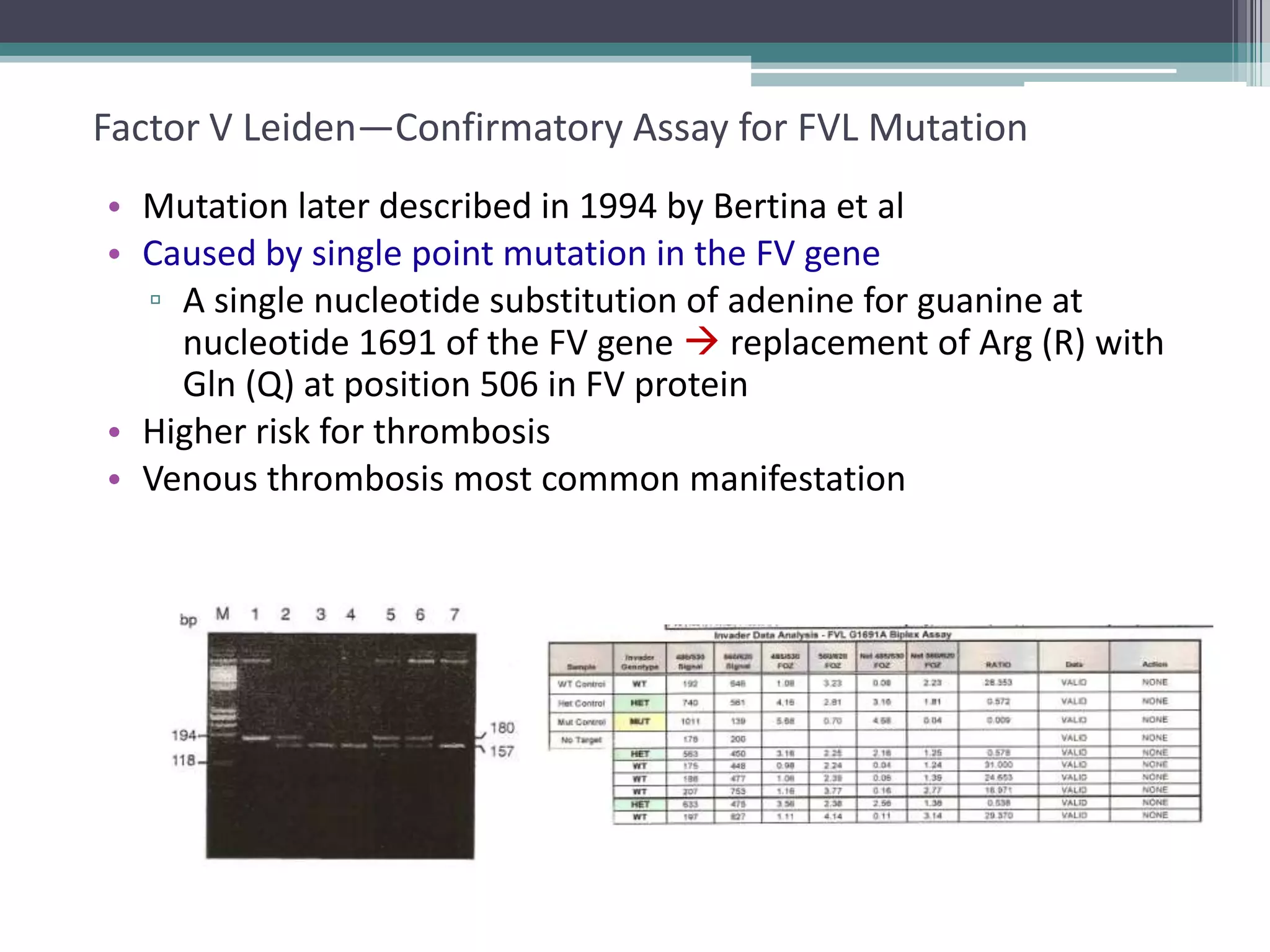
Factor V Leiden—Confirmatory Assay for FVL Mutation
• Mutation later described in 1994 by Bertina et al
• Caused by single point mutation in the FV gene
▫ A single nucleotide substitution of adenine for guanine at
nucleotide 1691 of the FV gene  replacement of Arg (R) with
Gln (Q) at position 506 in FV protein
• Higher risk for thrombosis
• Venous thrombosis most common manifestation
27

PG20210 Mutation
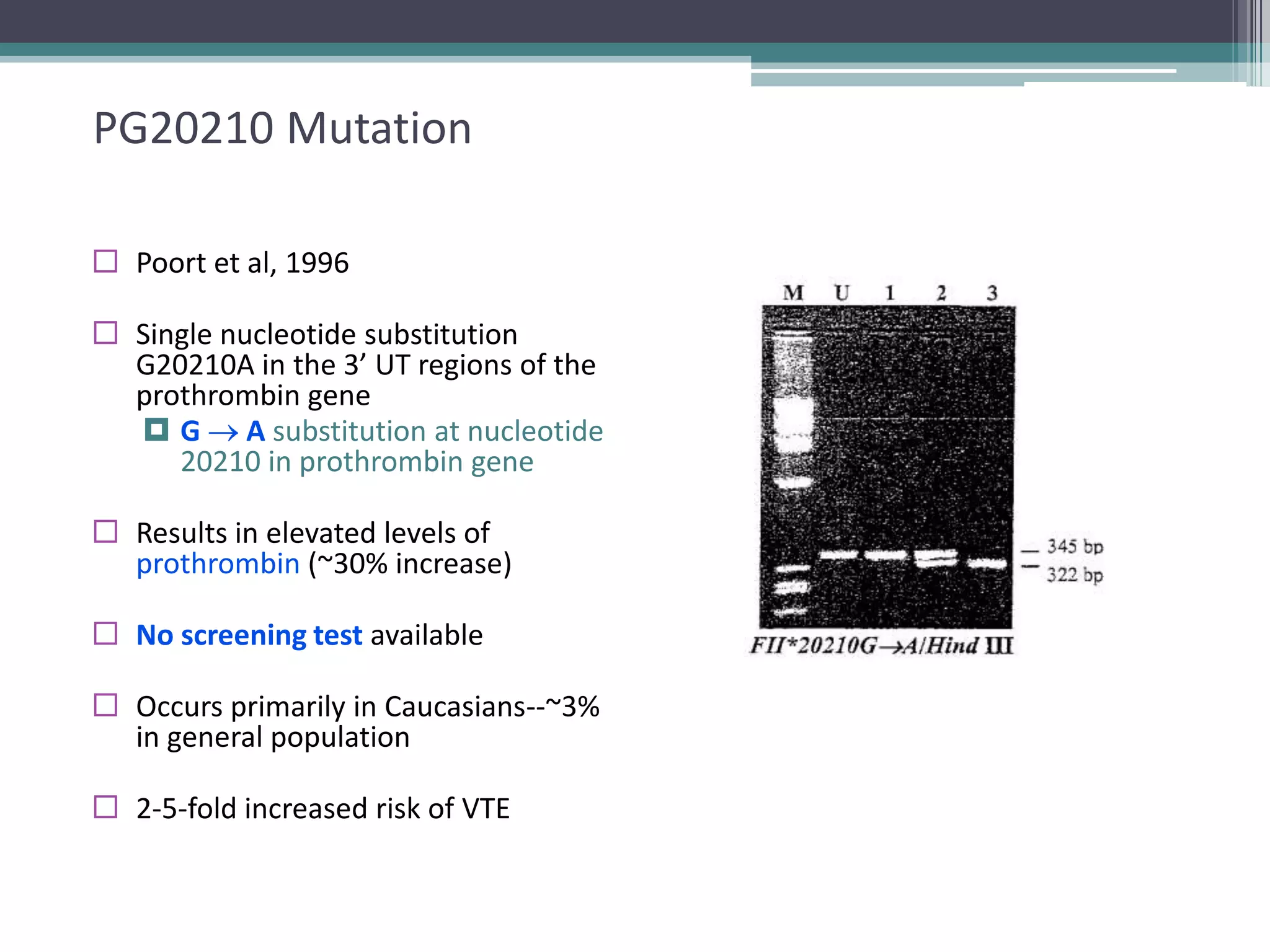
 Poort et al, 1996

 Single nucleotide substitution
G20210A in the 3’ UT regions of the
prothrombin gene
 G A substitution at nucleotide
20210 in prothrombin gene
 Results in elevated levels of
prothrombin (~30% increase)
 No screening test available
 Occurs primarily in Caucasians--~3%
in general population
 2-5-fold increased risk of VTE
28

Lupus Anticoagulant/APAs
Y
or
Prothrombin

Y Y Y

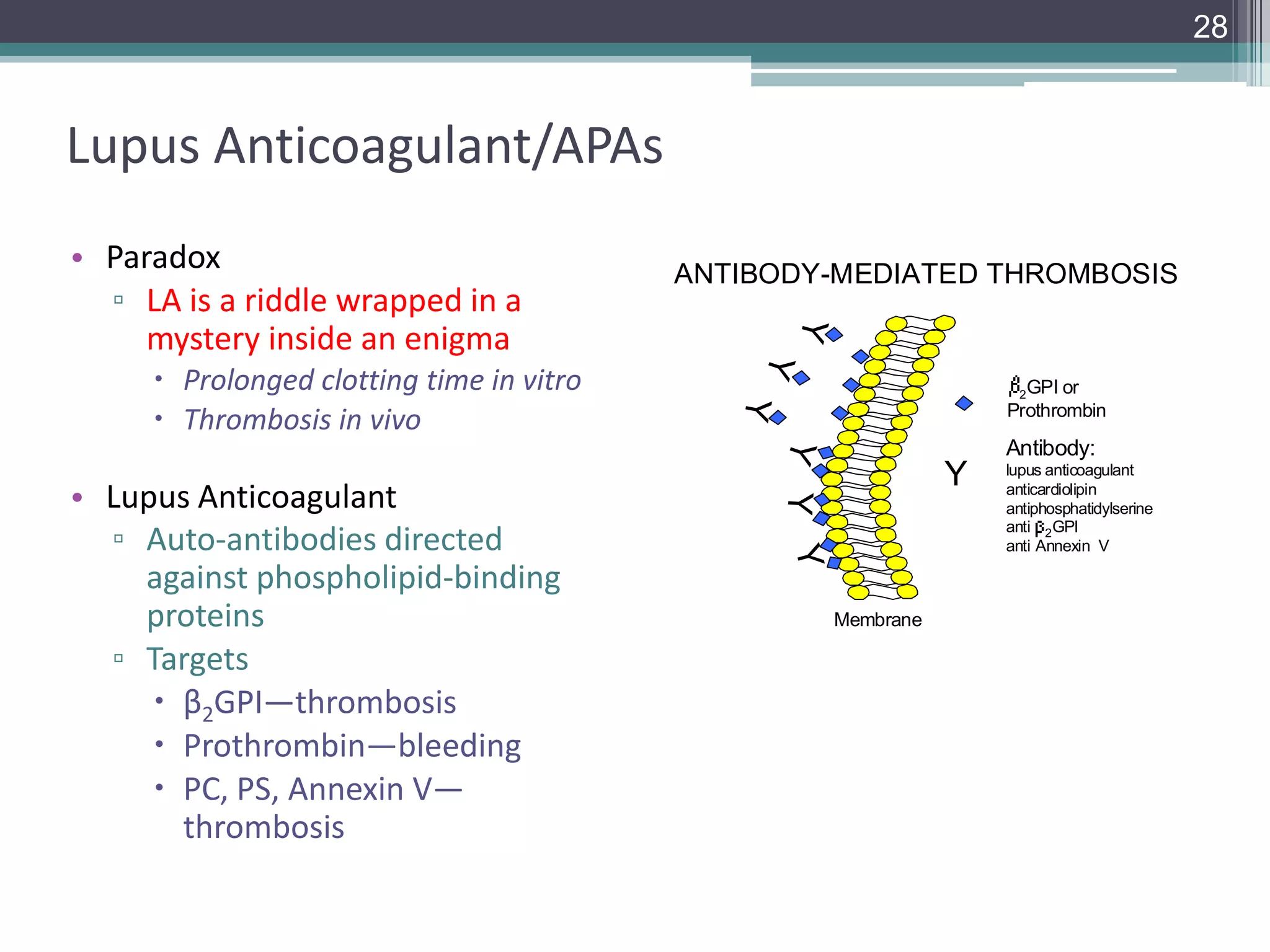
• Lupus Anticoagulant
▫ Auto-antibodies directed
against phospholipid-binding
proteins
▫ Targets
 β2GPI—thrombosis
 Prothrombin—bleeding
 PC, PS, Annexin V—
thrombosis

2 GPI

Y

 Prolonged clotting time in vitro
 Thrombosis in vivo

ANTIBODY-MEDIATED THROMBOSIS

Y

• Paradox
▫ LA is a riddle wrapped in a
mystery inside an enigma

Antibody:

Y

Membrane

lupus anticoagulant
anticardiolipin
antiphosphatidylserine
anti 2GPI
anti Annexin V
29

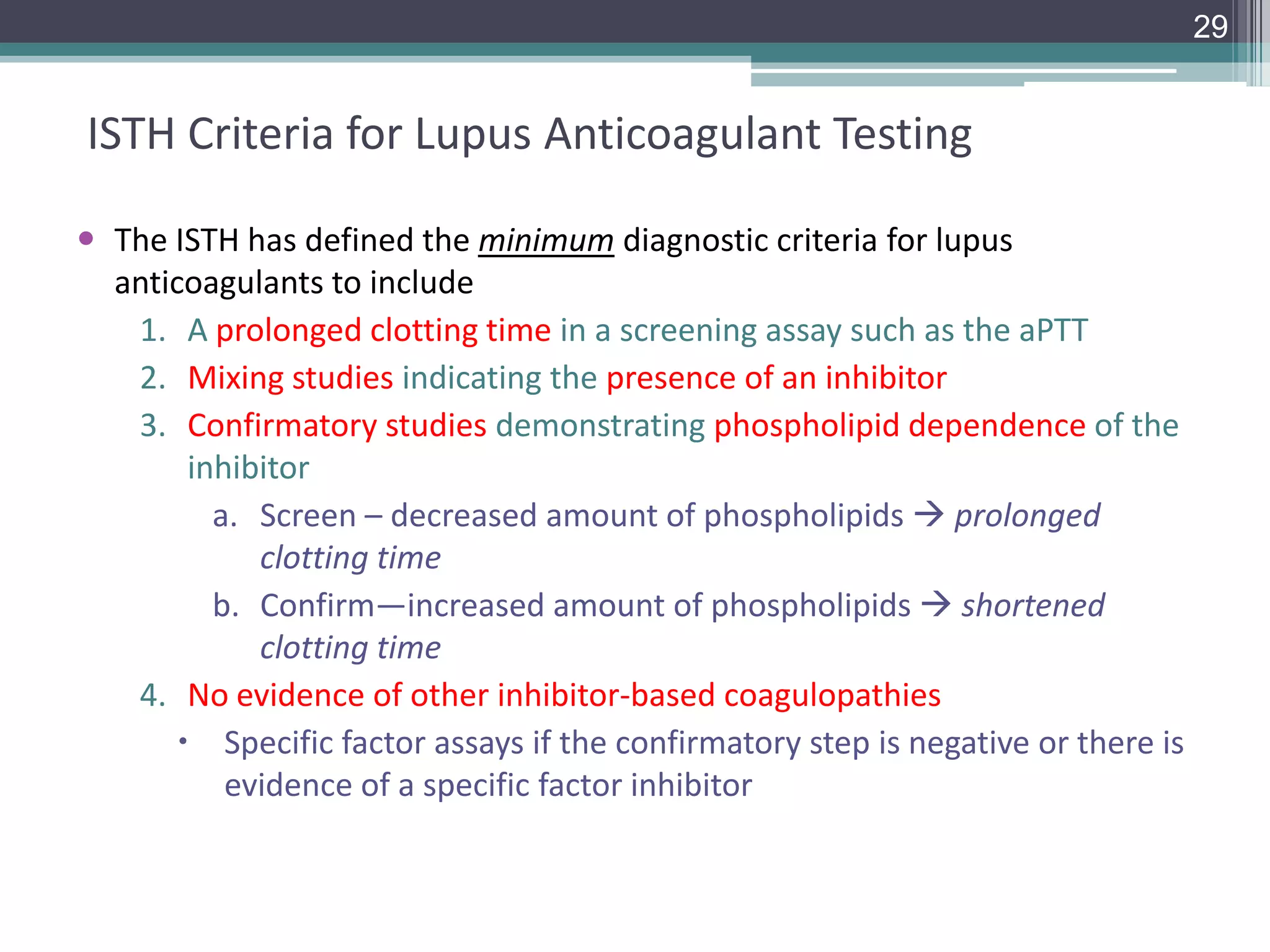
ISTH Criteria for Lupus Anticoagulant Testing
 The ISTH has defined the minimum diagnostic criteria for lupus
anticoagulants to include
1. A prolonged clotting time in a screening assay such as the aPTT
2. Mixing studies indicating the presence of an inhibitor
3. Confirmatory studies demonstrating phospholipid dependence of the
inhibitor
a. Screen – decreased amount of phospholipids  prolonged
clotting time
b. Confirm—increased amount of phospholipids  shortened
clotting time
4. No evidence of other inhibitor-based coagulopathies
 Specific factor assays if the confirmatory step is negative or there is
evidence of a specific factor inhibitor
30

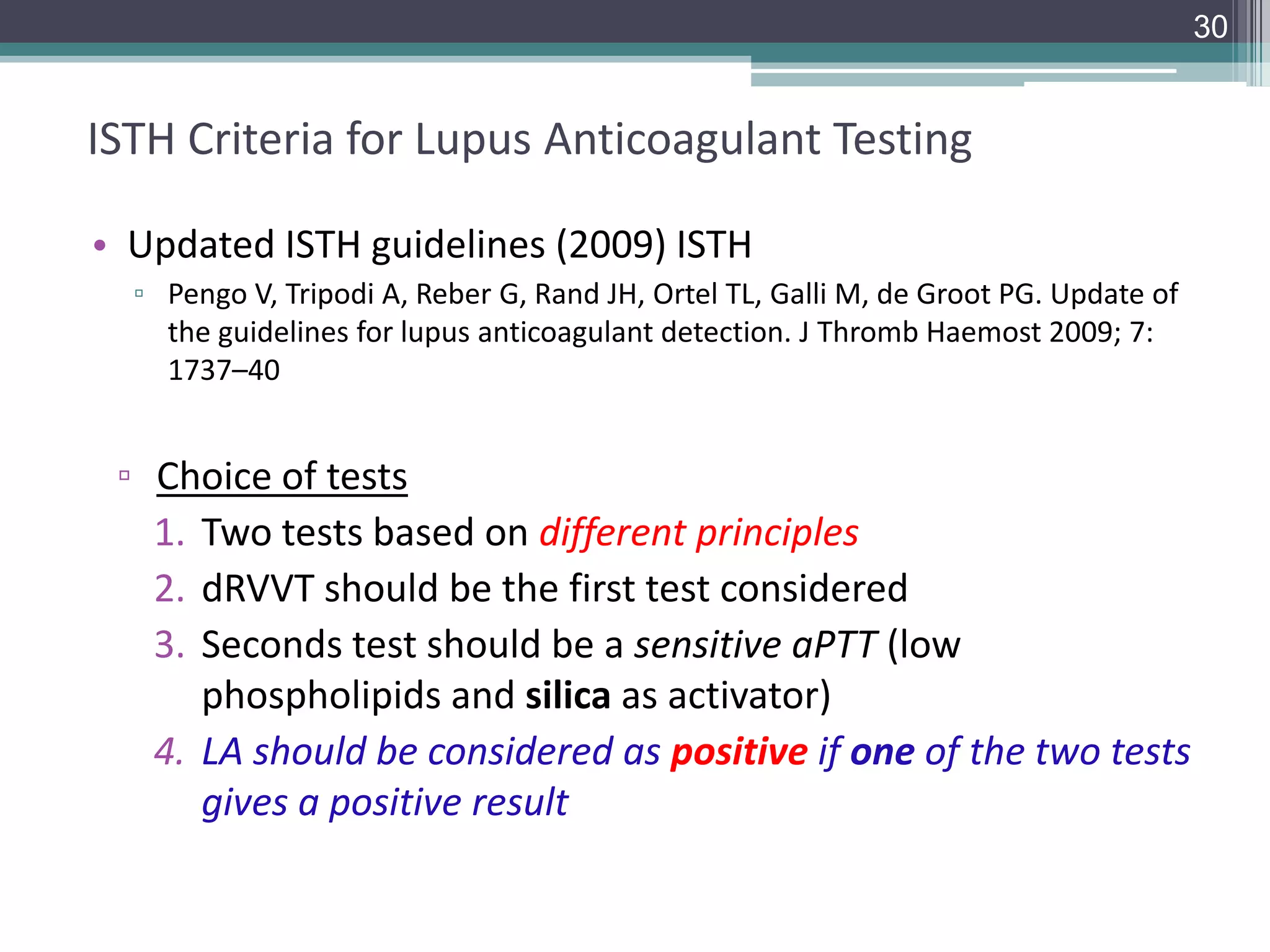
ISTH Criteria for Lupus Anticoagulant Testing
• Updated ISTH guidelines (2009) ISTH
▫ Pengo V, Tripodi A, Reber G, Rand JH, Ortel TL, Galli M, de Groot PG. Update of
the guidelines for lupus anticoagulant detection. J Thromb Haemost 2009; 7:
1737–40

▫ Choice of tests
1. Two tests based on different principles
2. dRVVT should be the first test considered
3. Seconds test should be a sensitive aPTT (low
phospholipids and silica as activator)
4. LA should be considered as positive if one of the two tests
gives a positive result
31

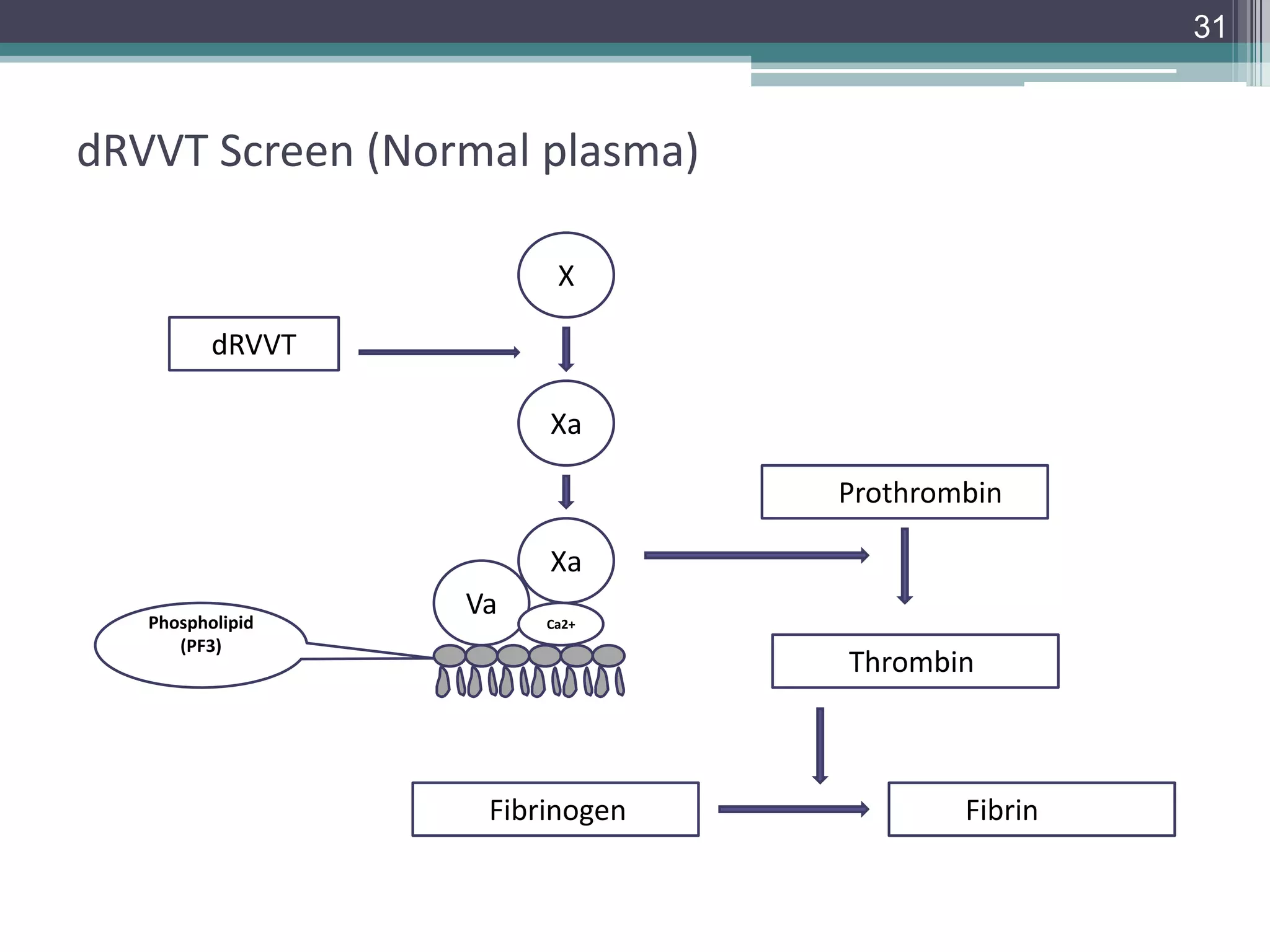
dRVVT Screen (Normal plasma)
X
dRVVT
Xa
Prothrombin
Xa
Phospholipid
(PF3)

Va

Ca2+

Thrombin

Fibrinogen

Fibrin
32

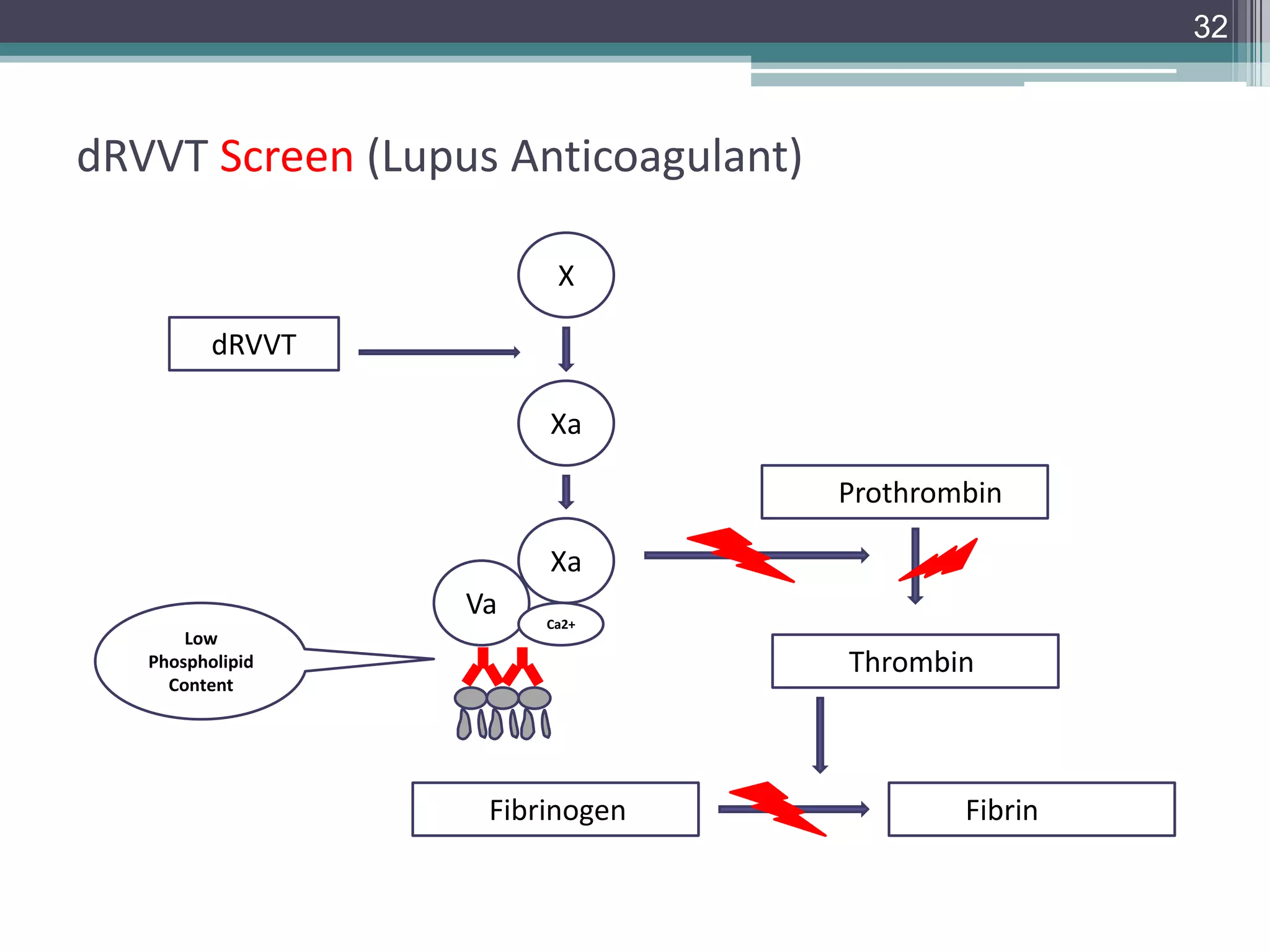
dRVVT Screen (Lupus Anticoagulant)
X
dRVVT
Xa
Prothrombin
Xa
Va
Low
Phospholipid
Content

Ca2+

Thrombin

Fibrinogen

Fibrin
33

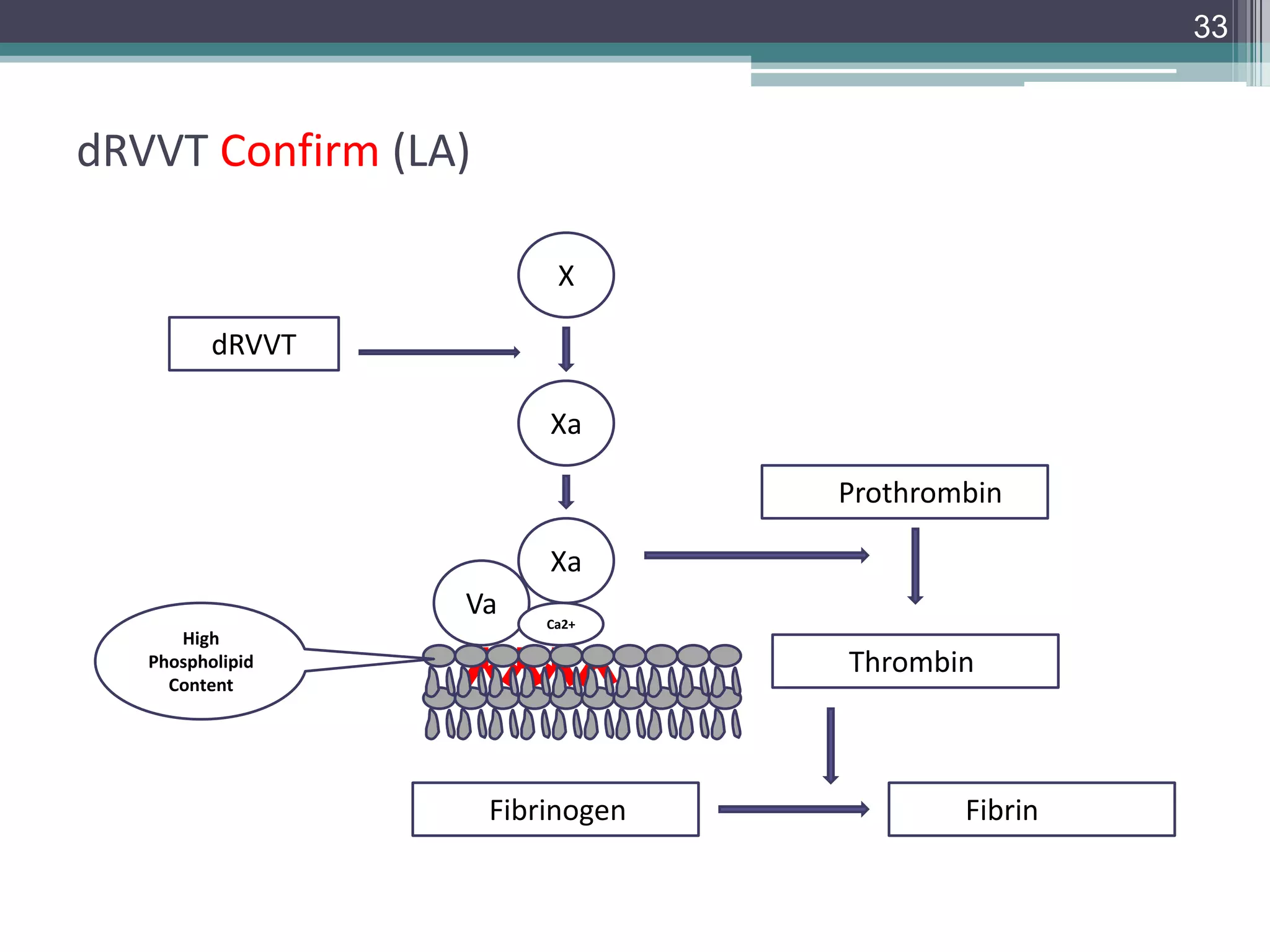
dRVVT Confirm (LA)
X
dRVVT
Xa
Prothrombin
Xa
Va
High
Phospholipid
Content

Ca2+

Thrombin

Fibrinogen

Fibrin
34

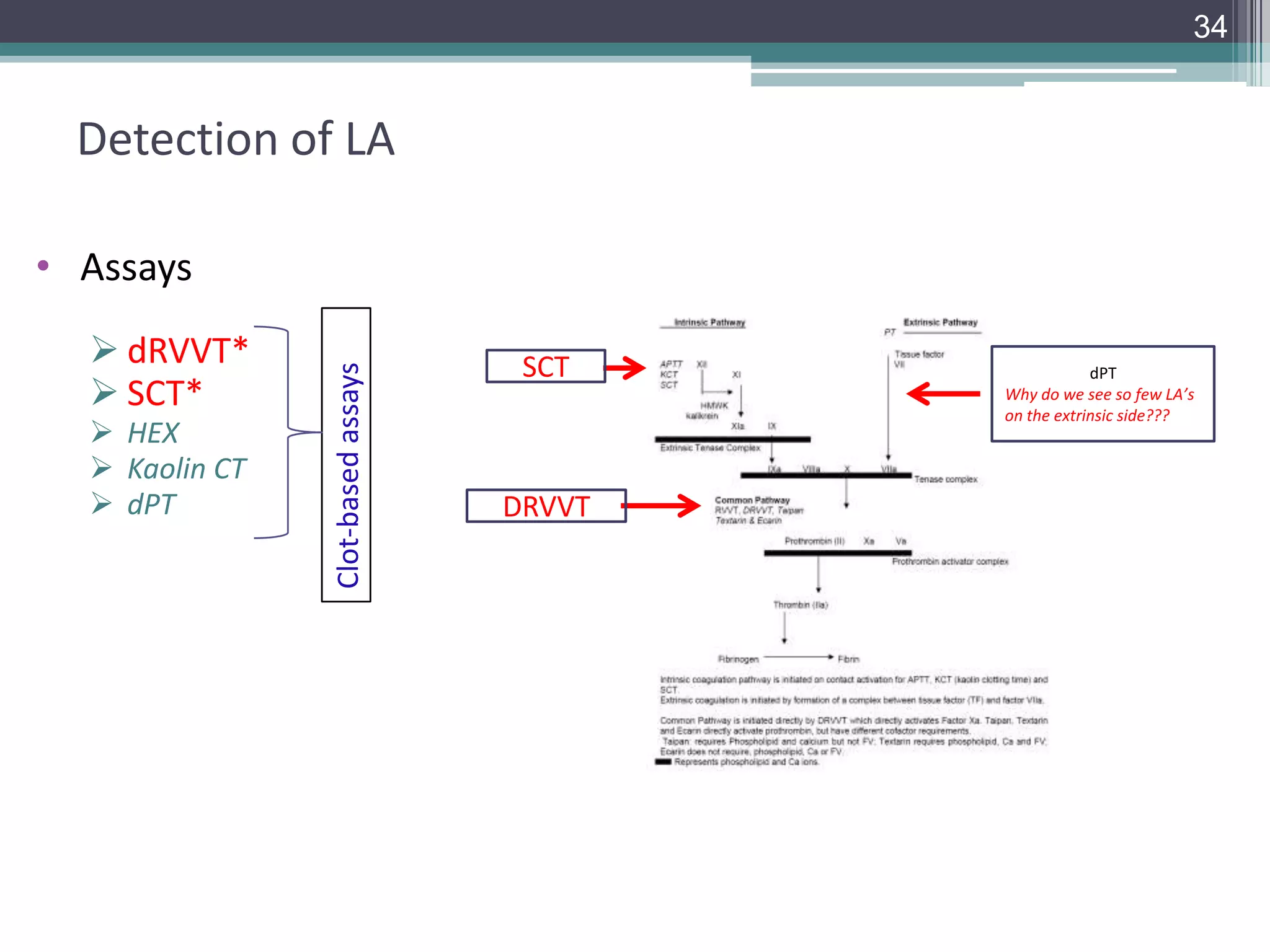
Detection of LA

 dRVVT*
 SCT*
 HEX
 Kaolin CT
 dPT

Clot-based assays

• Assays
SCT

DRVVT

dPT
Why do we see so few LA’s
on the extrinsic side???
35

Summary
• Broad menu of assays that can potentially be performed as part of a
hypercoagulable workup

• These assays help to identify risk factors that may contribute to thrombosis
• Clot-based assays should be interpreted with caution
• All of the assays have their advantages and disadvantages
▫ Chromogenic PC and Free PS assays are the assays of choice to screen for these
deficiencies
▫ ISTH Subcommittee on Thrombosis and WHO recommend Free PS to screen for
PS deficiency
Ballard RB, Marques, MB. Pathology Consultation on the Laboratory Evaluation of Thrombophilia:
When, How, and Why. Am J Clin Pathol 2012;137-553-560
36

The End
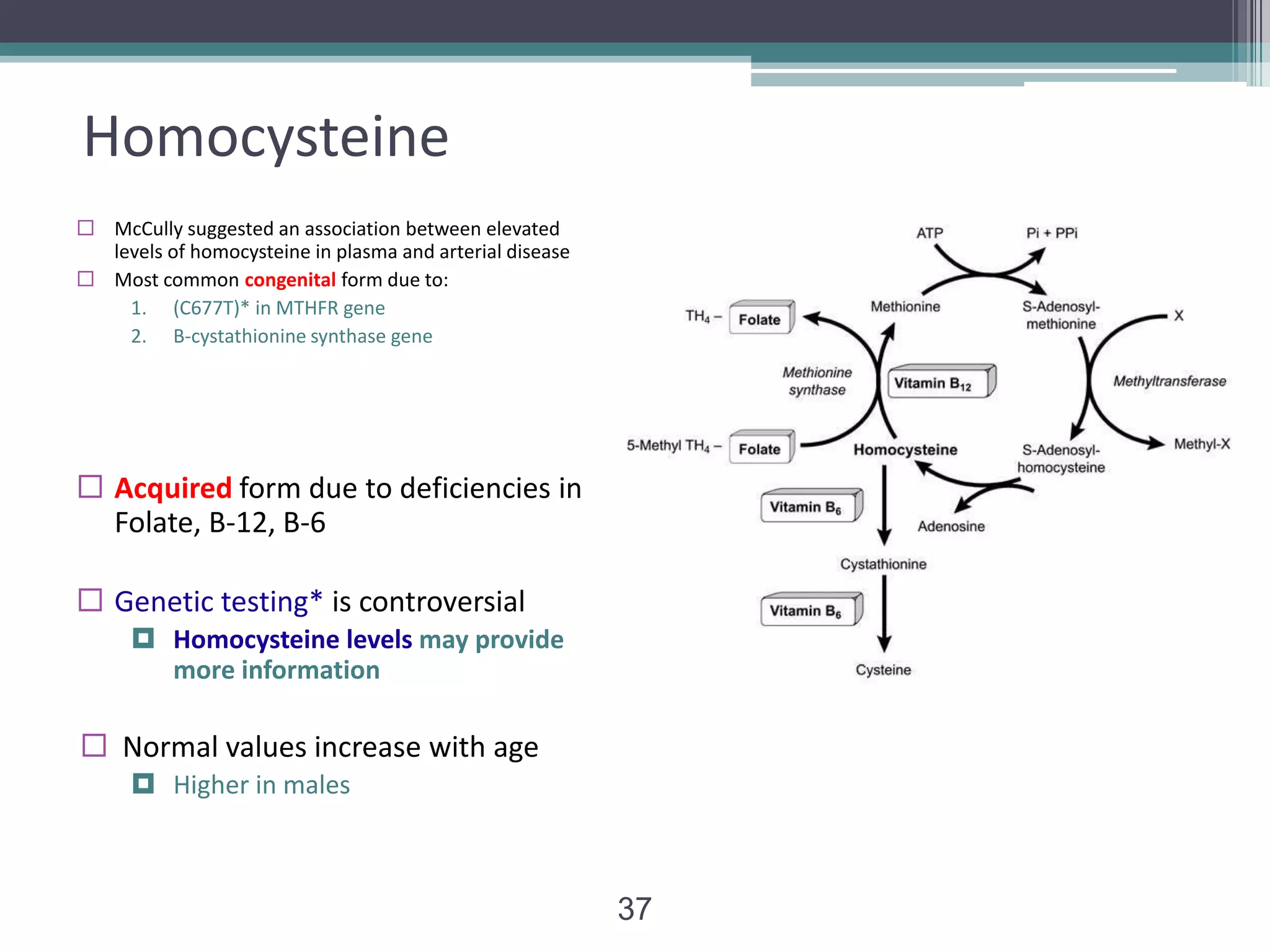
Homocysteine
 McCully suggested an association between elevated
levels of homocysteine in plasma and arterial disease
 Most common congenital form due to:
1. (C677T)* in MTHFR gene
2. B-cystathionine synthase gene

 Acquired form due to deficiencies in
Folate, B-12, B-6
 Genetic testing* is controversial
 Homocysteine levels may provide
more information

 Normal values increase with age
 Higher in males

37
38

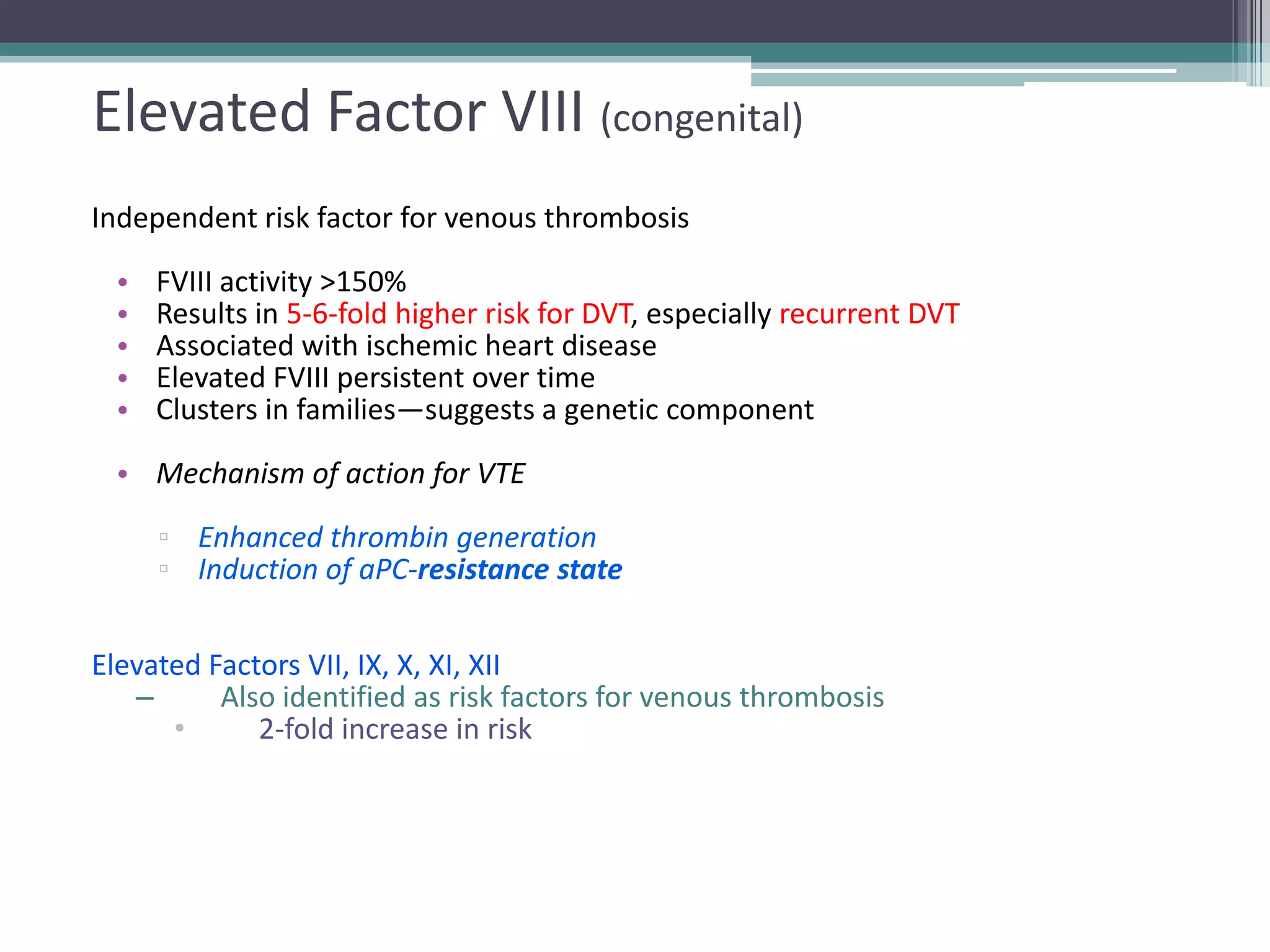
Elevated Factor VIII (congenital)
Independent risk factor for venous thrombosis
•
•
•
•
•

FVIII activity >150%
Results in 5-6-fold higher risk for DVT, especially recurrent DVT
Associated with ischemic heart disease
Elevated FVIII persistent over time
Clusters in families—suggests a genetic component

• Mechanism of action for VTE

▫ Enhanced thrombin generation
▫ Induction of aPC-resistance state
Elevated Factors VII, IX, X, XI, XII
–
Also identified as risk factors for venous thrombosis
•
2-fold increase in risk

Laboratory tests of hemostasis and coagulation system

  • 1.
    Coagulation Assays –Part 2 Larry Smith, PhD Director, Coagulation/Hemostasis Assistant Attending
  • 2.
    2 Thrombophilia Testing • Increasedtendency to VTE • Not a disease per se but may be associated with ▫ Disease  cancer ▫ Drug exposure  HRT, OCT ▫ Modifiable conditions  pregnancy, immobilization ▫ Non-modifiable conditions  age, gender • Affects 1-2 individuals/1000 in the general population ▫ In the US  ~2,000,000/year  ~500,000 deaths  Many survive with complications
  • 3.
    3 Virchow’s Triad Post-operative state Casting/splinting Sedentarystate Leukostasis syndrome (AML) Congenital heart disease Stasis Thrombosis Vascular Injury Arterial Changes in Blood Composition Central line, Sepsis Inherited thrombophilia Trauma, APA Acquired thrombophilia Chemotherapy/toxins Hyperhomocysteinemia Rudolph Virchow
  • 4.
    4 Risk Factors • Multiplerisk factors—multi-factorial process ▫ Hereditary ▫ Acquired • Multi-hit hypothesis ▫ Individual hereditary or acquired risk factors has a relatively small individual effect ▫ Risk for thrombosis is greatly increased when two or more risk factors combine • Classification of Thrombophilia ▫ Congenital ▫ Acquired  Physiologic factors  Environmental factors
  • 5.
    5 Thrombophilic Risk Factors CongenitalRisk Factors • • • Protein C Protein S AT • • • • FVL PG20210 FVIII Homocysteine • • (acquired also) Non-modifiable Inhibitory Prothrombotic Mechanism
  • 6.
    6 Acquired Risk Factors Acquired risk factors  Pregnancy  Malignancy  Surgery  Immobilization  Hormone therapy (HRT, OCT)  Trauma  Obesity Modifiable  Antiphospholipid antibodies  Physiologic risk factors  Gender (hormonal changes)  Age –Increases ~1%/year of age  Childhood = 1/100,000  40 years = 1/1000  75 years = 1/100 Non-modifiable  Identify a population at risk but have low predictive value for individual
  • 7.
    7 Role of theLaboratory and Physician • Laboratory • Provide reliable assays to identify these risk factors • Identify preanalytical variables that can affect the accuracy of those assays • Physician • Assess the potential benefit to each patient before performing a battery of expensive tests
  • 8.
    8 Who should betested • Patients presenting with ▫ Venous thrombotic event before 40-50 years of age ▫ Unprovoked or Recurrent thrombosis at any age ▫ Thrombosis at unusual site ▫ Positive family history of thrombosis ▫ Unexplained abnormal laboratory test (PT, aPTT) ▫ Short or prolonged • Age of first episode ▫ 0-12 years ▫ 13-45 years ▫ 45-60 years ▫ 60+ years Rare Highly probable Probable Possible Congenital Risk Factors
  • 9.
    9 Testing: When andWhy • Optimal time for testing ▫ Asymptomatic ▫ Not on anticoagulant therapy ▫ Anytime for molecular testing • Why do we test ▫ Pathologic basis for the thrombotic event ▫ Duration and intensity of therapy ▫ Prophylaxis for high risk patients ▫ To alert the patient's immediate family members to the presence of possible inherited risk factors
  • 10.
    10 Types of Assays •Functional Assays  Clot-based assays  Good screening assays  Based on a functioning cascade  Affected by preanalytical variables ▫ May require additional testing  Chromogenic assays  Measure the activity of a specific enzyme rather than general biologic function  Not affected by most preanalytical variables
  • 11.
    11 Types of Assays •Antigenic assays  LIA- or ELISA-based technologies • Confirmatory assays ▫ DNA-based assays
  • 12.
    12 Types of Deficiencies •Type I Deficiency  Decrease in both FUNCTION and AMOUNT of protein present  True deficiency  Functional assay • Type II Deficiency  Identify the total AMOUNT of protein only  Do NOT measure the function of the protein  To identify a dysproteinemia  Functional + Antigenic assays
  • 13.
    13 Antithrombin Deficiency • Singlechain glycoprotein ▫ ▫ Synthesized in the liver SERPIN • Inherited deficiencies ▫ ▫ ▫ Associated with increased risk of VTE 0.02 – 0.2% in general 1-2% of patients with VTE • Acquired deficiencies ▫ Decreased synthesis  ▫ Drug-induced decreased synthesis   ▫ LD L-asparaginase Heparin Increased clearance    Active thrombosis DIC Nephropathies
  • 14.
    14 Antithrombin Deficiency Type Type I TypeII Interpretation • Parallel reduction in functional and immunologic AT – Quantitative 50% of normal • Antigen = Activity Qualitative • Greater reduction in functional assay in comparison to immunologic assay • Antigen > Activity T2-HBS  mutation in heparin binding domain T2-RS  mutation in reactive site of AT T2-PL  mutation in both heparin binding domain and reactive site of AT
  • 15.
    15 Antithrombin Assays • Twodifferent designs of the AT assay 1. AT is added to the test system as a reagent to ensure 100% levels of AT are present  Better reflection of the absolute drug concentration 2. The second relies on the AT in the patient’s plasma*** • Better reflection of the functional AT status of the patient Inversely proportional to the AT activity concentration in the plasma sample
  • 16.
    16 Protein C Deficiency •1960 – Seeger described it anticoagulant role • 1980 – Griffin et al associated PC deficiency with VTE • VKD serine protease that is activated by IIa to aPC ▫ Inhibits Va and VIIIa  shuts off thrombin generation ▫ Exhibits  Anti-inflammatory activities  Anti-apoptotic activities ▫ Inhibits PAI-1  enhanced fibrinolysis
  • 17.
    17 Protein C Deficiency •Congenital Deficiency • Heterozygous PC deficiency: • • • ~0.2% of the general population ~3% of patients with VTE ~85% of PC mutations are type 1 • Acquired Deficiency ▫ Decreased synthesis  LD  VKD/VKA ▫ Drug-induced decreased synthesis  L-asparaginase ▫ Increased clearance      Acute thrombosis Acute medical illness DIC SCD Trauma More common that the congenital deficiency
  • 18.
    18 Protein C Assays •No single test for PC is 100% sensitive and specific for abnormalities ▫ Functional assays Clot-based Assay (functional) Chromogenic Assay (functional) aPTT assay to measures the anticoagulant effect of aPC  due to its ability to inhibit FV and FVIII aPC cleaves a substrate  release of chromophore generating a color change Subject to a number of preanalytical variables Subject to fewer preanalytical variables  Detects most functional defects but not all  PF3 binding defect  May be affected by OAT  FVIII  FVL ▫     Misleadingly low levels Antigenic assay DTI Heparin Lupus Anticoagulant OAT False normal results
  • 19.
    19 PC Assays • Dilutepatient’s plasma (1:10) in PC-deficient plasma ▫ Clot-based assay ▫ Chromogenic-based assay
  • 20.
    20 Protein S Deficiency •Described in 1984, Comp • TOTAL PS circulates in 2 forms: ▫ Bound PS—60%  C4B-BP—nonfunctional ▫ Free PS—40%-functional • Serves as a cofactor for PC ▫ Binds aPC to the phospholipid surface ▫ VKD glycoprotein synthesized in the liver Total Protein S C4B-BP Bound PS Free PS
  • 21.
    21 Protein S Deficiency •Congenital Deficiency • Heterozygous PS deficiency: ▫ ~2% in general population ▫ ~3-6% in recurrent thrombosis or family history • Acquired Deficiency ▫ Decreased synthesis  LD  VKD/VKA ▫ Drug-induced decreased synthesis  L-asparaginase  OCT  HRT ▫ Increased clearance     Acute thrombosis DIC Acute medical illness Trauma More common that the congenital deficiency
  • 22.
    22 Protein S Assays Patientplasma diluted 1:10 in PSdeficient plasma Three types of assays 1. Clot-based functional PS assay—”activity” assay  Based on aPC inactivation of FVa and FVIIIa  Plasma + PNP(PS free)+ aPC + Bovine FVa + Add CaCL2 2. 3. Clot Antigenic-based Free PS assay  Immunologic assay  measures “free” (functional) portion of PS  Plasma + PNP(PS free)+ aPC + Bovine FVa + Add CaCL2 Clot Antigenic-based Total PS assay  Immunologic assay that measures PS bound to C4BBP + free PS Type PS (Activity) PS (Free) PS Total C4bBP I Decreased Decreased Decreased Normal II Decreased Normal Normal Normal III Decreased Decreased Normal Elevated
  • 23.
    2323 Interpretation of PSDeficiency • Activity assay may be misleading low ▫ FVL ▫ Elevated FVIIII ▫ VKA/VKD ▫ LD – not universal (there are extra-hepatic sites of PS synthesis) ▫ SCD ▫ Type II deficiencies are very rare  May be helpful if there is a high index of suspicion ▫ Pregnancy and some women on OCT ▫ HIV infection ▫ Acute phase response Type III • Marlar et al. (2012) AJCP. 137; 173-175 ▫ Found increased number of falsely low PS activity when PS activity is used as first assay • Marlar et al. (2011) Am J Hem. 86;418-421 ▫ Free PS assay  considered by many to be more reliable than activity ▫ Diagnoses 95-99% of PS deficiencies
  • 24.
    24 aPC-Resistance—Screening assay • aPC-resistance ▫Dahlbäck et al in 1993 http://www.wardelab.com/arc_2.html •  Noted a blunted response in aPTT’s of a group of patients with thrombophilia when aPC was added ▫ Shuts-off thrombin generation  Via inhibition FVa and FVIIIa ▫ Ratio of 2 aPTT’s __(aPTT plus APC)__ (aPTT minus APC) • • Normal : adding aPC prolongs aPTT FVL: adding aPC does NOT prolong aPTT
  • 25.
    25 aPC-Resistance—Screening assay • • ~95%of aPC Resistance is caused by a defect in the Factor V molecule • “Screening assay” for FVL mutation ▫ Substitution of adenine for guanine at 1691 – G1961A ▫ Changes arginine to glutamine at 506 – R506Q • Sensitivity and specificity approach 100% with modified assay ▫ Uses FV-deficient normal plasma + patient plasma http://www.wardelab.com/arc_2.html a. Screening assay is affected by  Lupus anticoagulant  DTI’s b. High FVIII levels may lower APC ratio (pregnancy/inflammatory states) c. DNA-based assay confirms FVL
  • 26.
    26 Factor V Leiden—ConfirmatoryAssay for FVL Mutation • Mutation later described in 1994 by Bertina et al • Caused by single point mutation in the FV gene ▫ A single nucleotide substitution of adenine for guanine at nucleotide 1691 of the FV gene  replacement of Arg (R) with Gln (Q) at position 506 in FV protein • Higher risk for thrombosis • Venous thrombosis most common manifestation
  • 27.
    27 PG20210 Mutation  Poortet al, 1996  Single nucleotide substitution G20210A in the 3’ UT regions of the prothrombin gene  G A substitution at nucleotide 20210 in prothrombin gene  Results in elevated levels of prothrombin (~30% increase)  No screening test available  Occurs primarily in Caucasians--~3% in general population  2-5-fold increased risk of VTE
  • 28.
    28 Lupus Anticoagulant/APAs Y or Prothrombin Y YY • Lupus Anticoagulant ▫ Auto-antibodies directed against phospholipid-binding proteins ▫ Targets  β2GPI—thrombosis  Prothrombin—bleeding  PC, PS, Annexin V— thrombosis 2 GPI Y  Prolonged clotting time in vitro  Thrombosis in vivo ANTIBODY-MEDIATED THROMBOSIS Y • Paradox ▫ LA is a riddle wrapped in a mystery inside an enigma Antibody: Y Membrane lupus anticoagulant anticardiolipin antiphosphatidylserine anti 2GPI anti Annexin V
  • 29.
    29 ISTH Criteria forLupus Anticoagulant Testing  The ISTH has defined the minimum diagnostic criteria for lupus anticoagulants to include 1. A prolonged clotting time in a screening assay such as the aPTT 2. Mixing studies indicating the presence of an inhibitor 3. Confirmatory studies demonstrating phospholipid dependence of the inhibitor a. Screen – decreased amount of phospholipids  prolonged clotting time b. Confirm—increased amount of phospholipids  shortened clotting time 4. No evidence of other inhibitor-based coagulopathies  Specific factor assays if the confirmatory step is negative or there is evidence of a specific factor inhibitor
  • 30.
    30 ISTH Criteria forLupus Anticoagulant Testing • Updated ISTH guidelines (2009) ISTH ▫ Pengo V, Tripodi A, Reber G, Rand JH, Ortel TL, Galli M, de Groot PG. Update of the guidelines for lupus anticoagulant detection. J Thromb Haemost 2009; 7: 1737–40 ▫ Choice of tests 1. Two tests based on different principles 2. dRVVT should be the first test considered 3. Seconds test should be a sensitive aPTT (low phospholipids and silica as activator) 4. LA should be considered as positive if one of the two tests gives a positive result
  • 31.
    31 dRVVT Screen (Normalplasma) X dRVVT Xa Prothrombin Xa Phospholipid (PF3) Va Ca2+ Thrombin Fibrinogen Fibrin
  • 32.
    32 dRVVT Screen (LupusAnticoagulant) X dRVVT Xa Prothrombin Xa Va Low Phospholipid Content Ca2+ Thrombin Fibrinogen Fibrin
  • 33.
  • 34.
    34 Detection of LA dRVVT*  SCT*  HEX  Kaolin CT  dPT Clot-based assays • Assays SCT DRVVT dPT Why do we see so few LA’s on the extrinsic side???
  • 35.
    35 Summary • Broad menuof assays that can potentially be performed as part of a hypercoagulable workup • These assays help to identify risk factors that may contribute to thrombosis • Clot-based assays should be interpreted with caution • All of the assays have their advantages and disadvantages ▫ Chromogenic PC and Free PS assays are the assays of choice to screen for these deficiencies ▫ ISTH Subcommittee on Thrombosis and WHO recommend Free PS to screen for PS deficiency Ballard RB, Marques, MB. Pathology Consultation on the Laboratory Evaluation of Thrombophilia: When, How, and Why. Am J Clin Pathol 2012;137-553-560
  • 36.
  • 37.
    Homocysteine  McCully suggestedan association between elevated levels of homocysteine in plasma and arterial disease  Most common congenital form due to: 1. (C677T)* in MTHFR gene 2. B-cystathionine synthase gene  Acquired form due to deficiencies in Folate, B-12, B-6  Genetic testing* is controversial  Homocysteine levels may provide more information  Normal values increase with age  Higher in males 37
  • 38.
    38 Elevated Factor VIII(congenital) Independent risk factor for venous thrombosis • • • • • FVIII activity >150% Results in 5-6-fold higher risk for DVT, especially recurrent DVT Associated with ischemic heart disease Elevated FVIII persistent over time Clusters in families—suggests a genetic component • Mechanism of action for VTE ▫ Enhanced thrombin generation ▫ Induction of aPC-resistance state Elevated Factors VII, IX, X, XI, XII – Also identified as risk factors for venous thrombosis • 2-fold increase in risk

Editor's Notes

  • #2 This lecture is a continuation of a previous lecture on coagulation assays. Here we will discuss assays involved in thrombophilia testing.Objectives: 1) review of thrombophilia and risk factors; 2) discuss assays that identify risk factors; 3) review preanalytical variables that interfere with these assays
  • #5 As a results of Virchow’s observations, we ascribe many of the causes of thrombophilia to multiple risk factors that interact with each other to push the coagulation system over a set threshold.Risk factor  any factor, stimulus or condition that increases an individuals chances of developing thrombosis.Risk potential  the amount or capacity of a factor to contribute to the thrombotic etiology
  • #6 Congenital risk factors fall into two major groups  INHIBITORY or PROTHROMBOTICInhibitory—Proteins with decreased antithrombotic activity—quantitative deficienciesProthrombotic—Proteins with increased prothrombotic activity—qualitative deficienciesCongenital risk factors  generally due to: 1) a loss of function “mutation” or abnormality  decreased quantity, function, or diminished activation of an anticoagulant or pro-fibrinolytic factor, or 2) a gain in function “mutation” or abnormality  increased quantity or decreased inhibition or a procoagulant or anti-fibrinolytic factor
  • #7 Conditions that develop over the lifetime of an individual Secondary to an underlying disorderResult from a challengeLupus Anticoagulant / Antiphospholipid AntibodiesElevation of Factors II, VII, IX, XIThrombotic Risk Factor - any factor, stimulus, or condition which increases the chance to develop thrombosisGeneticPhysiologicAcquiredVary in their risk potentialRisk factors interact to determine potential for developing thrombosis Some are synergisticOnce threshold is approached:Thrombosis may occur with stimulusThrombotic threshold surpassed:Thrombosis develops
  • #14 Described by Eggberg in coworkers in 1963Single-chain glycoprotein, 58,200 Daltons, plasma ½-life ~ 3 daysChromosome 1 (SERPINC1) gene – wide variety of mutations have been identified
  • #16 Plasma is incubated with an excess of bovine Xa in the presence of heparin (in the patient). Heparin binds to AT  inactivation of Xa. Residual Xa left is measured by its ability to hydrolyze a chromogenic substrate (S-2765) added to the test tube. Absorbance is measured at 405nm and is inversely proportional to the AT activity concentration in the plasma sample. Some methods use Factor Xa instead of IIa in reagent. This theoretically decreases the contribution from other proteins such as heparin cofactor II. IV-heparin therapy can cause lowering of the AT level in plasma by ~25%. Not affected by HCII
  • #17 VKD serine proteaseSingle chain glycoprotein, 62KDa, produced in the liver and converted to its active form by thrombin  becomes aPC Protein C gene (PROC) located on the long arm of chromosome 2 (2q13-q14)
  • #18 VKD serine proteaseSingle chain glycoprotein, 62KDa, produced in the liver and converted to its active form by thrombin  becomes aPC Protein C gene (PROC) located on the long arm of chromosome 2 (2q13-q14)
  • #19 Clot-based assay:Clotting time of the aPTT (or PT) will be influenced by the amount of Va and VIIIa present in the reaction mixture and in turn this will be influenced by the activity of aPC. aPC is generated from the conversion of PC to aPC by Protac. So, if there is a reduction in circulating PC levels, then less aPC will be generated, less Va and VIIIa will be inactivated and the clotting times will be shorter. Chromogenic assay:Protac is added to PPP and incubated. A chromogenic substrate for aPC is added. aPC cleaves the substrate releasing pNA and the change in optical density is measured and compared to a standard reference curve. (Calcium, PF3 or coagulation activator is necessary since the test plasma serves as the only source of PC—clot formation is not necessary for this test).A note about chromogenic protein C assays: they may overestimate the true level of protein C in patients treated with oral anticoagulants like warfarin. This is because the non-carboxylated forms of protein C formed in warfarin-treated patients are also activated by Protac and can then cleave the chromogenic substrate. The chromogenic assay detects only abnormalities of PC activation (that is when protein C is converted to APC) and abnormalities of the enzymatic active site. In rare cases the patient may have defects in the part of the molecule that binds FVa and FVIIIa or the part that binds protein S or phospholipid. These defects are not detected by the chromogenic assay. Measures anticoagulant activity of APC exerted against natural substrates – FVa & FVIIIa. Argument for clotting based assays – measures natural substrate. Chromogenic based – measures amidolytic activity against synthetic substrate. Argument against clotting based assays – many interfering substances. Argument for chromogenic – fewer interfering substances, but not natural substrate. Rare reported mutations that affect catalytic site which can not be detected by chromogenic assays. Venom is Protac.
  • #20 Protein C assays can be clotting or chromogenic. The clotting assay is widely used, though the chromogenic assay is the method of choice. A note about chromogenic protein C assays: they may overestimate the true level of protein C in patients treated with oral anticoagulants like warfarin. This is because the non-carboxylated forms of protein C formed in warfarin-treated patients are also activated by Protac and can then cleave the chromogenic substrate. The chromogenic assay detects only abnormalities of PC activation (that is when protein C is converted to APC) and abnormalities of the enzymatic active site. In rare cases the patient may have defects in the part of the molecule that binds FVa and FVIIIa or the part that binds protein S or phospholipid. These defects are not detected by the chromogenic assay. Measures anticoagulant activity of APC exerted against natural substrates – FVa & FVIIIa. Argument for clotting based assays – measures natural substrate. Chromogenic based – measures amidolytic activity against synthetic substrate. Argument against clotting based assays – many interfering substances. Argument for chromogenic – fewer interfering substances, but not natural substrate. Rare reported mutations that affect catalytic site which can not be detected by chromogenic assays. Venom is Protac.
  • #21 Protein S, APC’s cofactor, circulates in the plasma free or bound to the complement protein C4b binding protein. 40% of protein S is in the free, functionally active form, which is what APC binds to. Binding affinity of C4BP high, therefore all C4BP molecules will be bound to PS. C4BP is an acute phase reactant. PEG precipitation takes out form bound to C4bBP. Free form in the supernatant. The gene (PROS1) located in chromosome 3 (3p11.1-3p11.2)
  • #22 VKD serine proteaseSingle chain glycoprotein, 62KDa, produced in the liver and converted to its active form by thrombin  becomes aPC Protein C gene (PROC) located on the long arm of chromosome 2 (2q13-q14)
  • #23 Functional assay – measures on the FREE (physiologically-active) PS.Free PS – monoclonal ab directed against PS epitopes that are not accessible in the bound form and these are usually the residues that are involved in the binding to C4BBP. Second assay involves used PEG to separate the bound PS from C4BBP and then measures the free PS.Total PS – measures both PS bound to C4BBP and the Free form of PSThere is a good correlation between FPS antigen (LIA) assay and functional PS activity so many labs choose only to measure FPS. HOWEVER, this may miss some rare cases in which the immunological PS level is normal but there is a functional abnormality (i.e. a true Type 2 deficiency).
  • #24 In SCD PS may bind to sickle cells, however, PS is not decreased during sickle cell crisis.
  • #39 Activated FVIII acts as a cofactor to FIXa in the activation of coagulation Factor X. It has recently been found that when FVIII levels are chronically above 1.5 IU/ml, or 150%, it becomes a risk for thrombosis, in particular for recurrent thrombosis