Dr Ruhul Amin
Assistant Registrar
Dept of Medicine ,JRRMCH
Cardiac markers:
Intracellular enzymes/Proteins released to blood following cardiac muscle damage and
showing serial concentrational change with an initial rise and subsequent fall in plasma.
These are clinical laboratory tests useful in the detection of AMI or minor myocardial injury.
Cardiac markers are most useful when individuals have nondiagnostic ECG tracings. The
most commonly available tests, including CK iso enzymes, LD, SGOT, myoglobin and
cardiac troponins.
Use;
1. Diagnostic
2. Prognostic
3. Risk stratification
Types of Cardiac Markers
1. Frequently used clinically
cTnI AST Myoglobin
CK LDH
2. Less frequently used clinically
hsCRP Pro BNP Homocysteine fibrinogen
Characteristics of Ideal Cardiac Marker
• Cardio specific and high cone. in myocardium
• Absent (or trace) in blood normally
• Quantity released proportional to the extent of injury
• Stable and persist for reasonable period in blood
• Easy to measure
• Not expensive
• Released rapidly and completely after myocardial injury
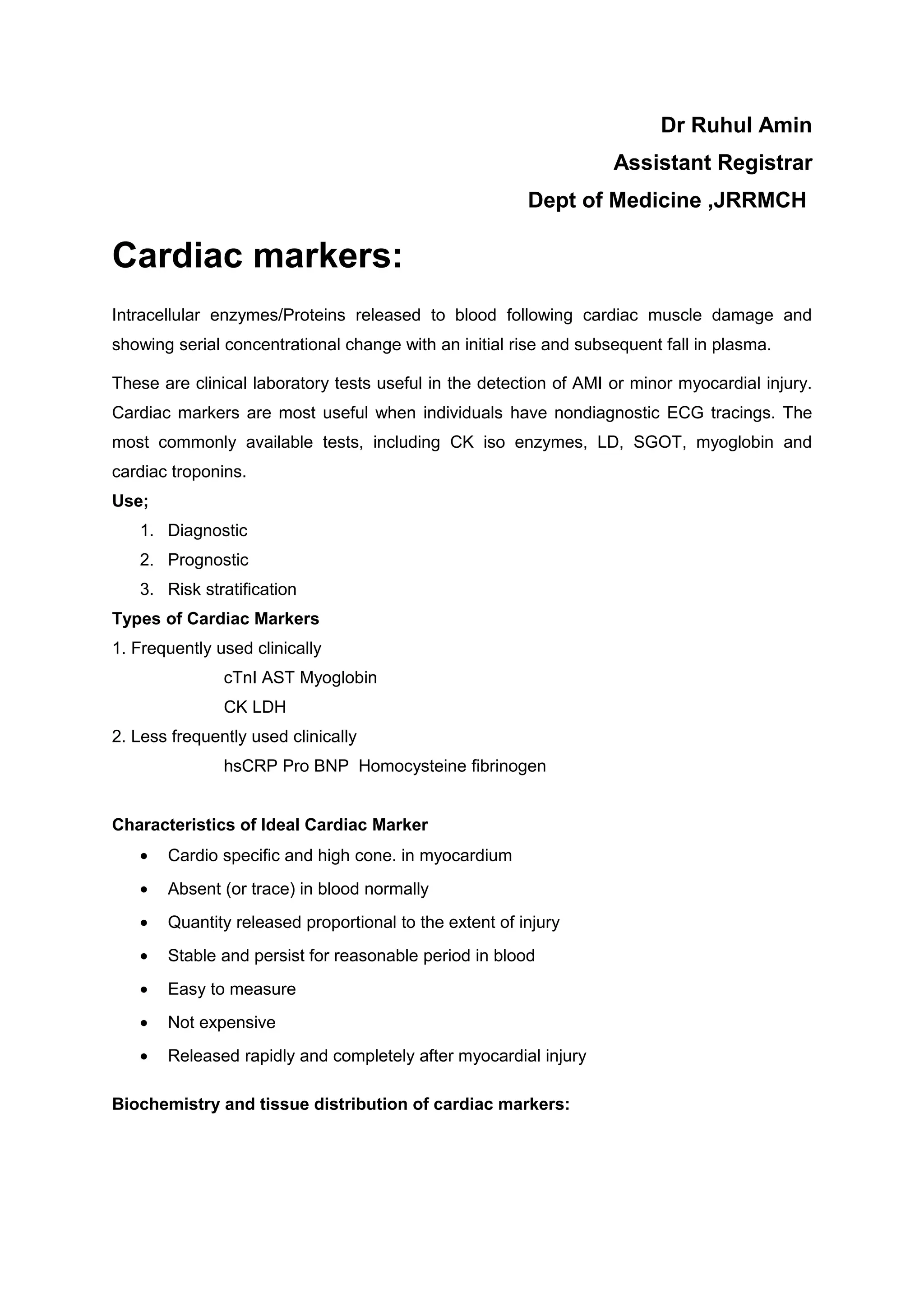
Biochemistry and tissue distribution of cardiac markers:
Although the cardiac markers are all myocardial proteins, they differ in this location within the
myocyte release after damage and clearance form the serum. Because they are markers of
myocardial damage the biochemistry of each is considered separately.
The time sequence of changes on plasma after myocardial infarction:
Markers Starts to rise
(hour)
Time after infarction of
peak elevation (hour)
Duration of rise
(days)
Ck-MB
Ck- (total)
SGOT (AST)
LD, LD-1
Myoglobin
TroponinI
4-8
4-6
6-8
12-24
1-3
4-6
24-48
24-48
24-48
48-72
6-9
24-48
2-3
3-4
4-6
7-12
1
7-14
Creatinine kinace:
CK catalyzes the formation of phosphocreatine from creatine and adenosine triphosphate.
(ATP). Several molecular forms (iso enzyme) of CK exist. They differ in their Michaels
constant and PH
optima, but the physiological significance of this is unknown. Each of the
this iso enzymes of CK is composed of two polypeptide chains.
Ck as Cardiac Marker
* Isoenzymes:
1. CK1 (CK-BB) - Brain
Smooth muscle of GIT
2. CK2 (CK-MB) – Heart (15 –40%, rest CK-MM)
[half life = 12 hr] Sk. Muscle
3. CK3 (CK-MM) -Sk. Muscle (97%, rest CK-MB)
[half life > 12 hr] Heart
Isoforms of CK-MB
1. CK-MB2 (Tissue form)
2. CK-MB1 (Serum form)
MB2/MB1 = 1.0 or < 1.0 [if > 1.5 MI]
CK Index: CK-MB x 100 [ if 4 – 25% MI]
CK
All plasma enzyme activities (including that of CK-MB) may be normal until at least four
hours after the onset of chest pain due to myocardial infarction; blood should not be taken
for enzyme assay until this time bas elapsed. If the initial plasma CK activity is normal, a
second sample should be taken about four to six hours later. Once the diagnosis bas been
confirmed further blood sampling is rarely required.
The indications for thrombolytic treatment which must be given early after an infarction are
usually based on the clinical presentation and ECG changes; they very rarely depend on the
measurement of plasma CKMB enzyem.
Raised CK activities:
1) Physiological- Neo natal period
Few days after parturition
2) CK-BB - CVA
Head injury
CK-MB - MI
CKMM - Duchenee-sex linked muscular dystrophy
Viral myositis
SGOT (AST):
Transaminases: AST (glutamate oxaloacetate transaminase GOT) is present on high
concentration on cells of cardiac and skeletal muscle, liver, kidney and erythrocytes.
Damage to any of these tissues may increase plasma AST levels.
Causes of raised plasma AST activates:
• Artefactual – due to haemolysis
• Physiological – during neonatal period.
• Marked increase (10 to 100 times).
Circulatory failure with shock and hypoxia.
myocardial infarction
acute viral or toxic hepatitis
• Moderate increase:
Cirrhosis
Infectious mononucleosis
Cholestatic jaundice
Malignant infiltration of the liver
Skeletal muscle disease
After trauma or surgery (especially after cardiac surgery)
Severe hemolytic episodes.
LDH (LD-1):
At least five isoenzymes exist, composed of four subunit peptides of two distinct types,
designated M (for muscle) and H (for heart). LD-1 (H4) moves the fastest toward the anode,
whereas LD-5 LD(M4) is closest to the cathode on an electrophoretic gel. LD- 1 is found in
the highest concentrations in the heart, kidney (cortex), and red blood cells. LD-5 is found in
the highest concentrations in liver and skeletal muscle. The hybrid LD isoenzymes LD-2
(H3M), LD-3 (H2M2), and LD-4 (HM3) also are found in the heart, kidneys, RBCs, and several
other tissues.
The LD-1 increase over LD-2 in serum after AMI (the so called flipped pattern, in which the
LD-1/ LD-2 ratio becomes > 1.0) has a clinical sensitivity of about 75% in individuals
suspected of having sustained an AMI.
Raised plasma total LD activity:
 Art factual:
Haemolysis
 Marked increase (more than 5 times the upper reference limit in adults): Circulatory
filure with ‘shock’ and hypoxia;
myocardial infarction.
Some haematological disorders. In blood diseases such as megaloblastic anaemia,
acute leukaemias and Lymphomas, very high levels (up to 20 times the upper
reference limit in adults) may be found.
Myoglobin:
Myoglobin in an oxygen-binding protein of cardiac and skeletal muscle. The protein’s low
molecular weight and cytoplasmic location probably account for its early appearance in the
circulation after muscle injury. Increases in serum myoglobin occur after trauma to either
skeletal or cardiac muscle, as in crush injuries or AMI. Serum myoglobin methods are unable
to distinguish the tissue of origin. Even minor injury to skeletal muscle may result in an
elevated concentration of serum myoglobin, which may lead to the misdiagnosis of AMI.
The major advantage offered by myoglobin as a serum marker for myocardial injury it is
released early from damage cells. Serum concentrations of myogloin rise above the
reference interval as early as 1 hour after the occurrence of an AMI, with peak activity in the
range of 4 to 12 hours (demonstrating 90 % to 100 % sensitivity). This peak suggests that
serum myoglobin reflects the early course of myocardial necrosis. Myoglobin is cleared
rapidly and thus has a substantially reduced clinical sensitivity after 12 hours. The role for
myoglobin in the detection of AMI is within the first 0 to 4 hours, the time period in which CK-
2 and cardiac troponin are still within their reference intervals. However, the measurement of
serum myoglobin has not been used extensively in clinical laboratories for the routine
analysis of AMI. The main reason has been the poor clinical specificity (usually <80 %) of
the protein caused by the large quantities or myoglobin found in skeletal muscle.
The best use of early serum myoglobin measurements after admission to emergency
departments is as a negative predictor of AMI. If myoglobin concentrations remain
unchanged and within the reference interval on multiple, early sampling within 2 to 4 hours
after the onset of chest pain, certainty is 100 % that muscle (either cardiac or skeletal) injury
has not occurred recently.
TROPONIN
After the loss of integrity of cardiac myocyte membranes, intracellular m acromolecules
(cardiacbiologic markers) diffuse into the cardiac interstitium,lymphatics, and
microvasculature; eventually, they are detected in the peripheral circulation. The release
kinetics of the various cardiac biologic markers depend in part on their location in the
myocyte, their molecular weight, and the route by which they are cleared from the
circulation. Cardiac-specific troponins are useful not only vecause they come close to
fulfilling many of the criteria for an ideal biologic marker, but also because they convey
prognostic information and can help frame therapeutic decisions regarding patients with
acute coronary syndromes. The troponin complex regulates the contraction of striated
muscle and consists of three subunits: troponin C, which binds to calcium ions; troponin I,
which binds to actin and inhibits actin–myosin interactions; and troponin T, which binds to
tropomyosin, thereby attaching the troponin complex to the thin filament. Although both
troponin T and troponin I are present in cardiac and skeletal muscle, they are encoded by
different genes in the two types of muscle, yielding proteins that are immunologically distinct.
Assays that are based on high-affinity antibodies and are specific for cardiac troponin T and
cardiac troponin I are now available. (Since the amino acid sequence of cardiac troponin C
and skeletal troponin C is the same, no such assays have been developed for the C
component.)
Normally, cardiac troponin T and cardiac troponin I are not detectable in the blood of healthy
persons. Release of these troponins can occur when myocytes are damaged by a variety of
conditions such as trauma, exposure to toxins, inflammation, and necrosis due to occlusion
of a portion of the coronary vasculature. The majority of cardiac troponin T and cardiac
troponin I is bound to myofilaments, and the remainder is free in the cytosol. When myocyte
damage occurs, the cytosolic pool is released first, followed by a more protracted release
from stores bound to deteriorating myofilaments. Microinfarction can produce elevations of
cardiac troponin T and cardiac troponin I in the peripheral blood that are not associated with
elevations of the MB fraction of creatine kinase (CK-MB).
The deference between cardiac troponin T and cardiac troponin I is that cardiac troponin I
has never been expressed in normal, regenerating or diseased human or animal skeletal
muscle. However, small amounts of cTnT are made by skeletal muscle during human fetal
development, in regenerating muscle, and in diseased muscle. Thus cTnT has been found in
skeletal muscle specimens obtained from individuals with muscular dystrophy, polymyositis
and chronic renal disease.
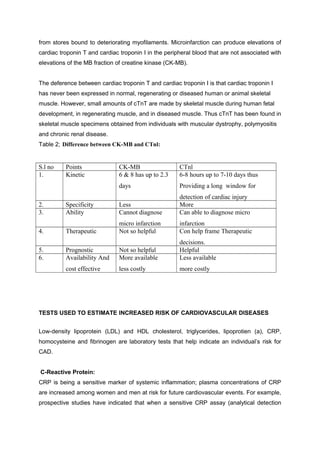
Table 2; Difference between CK-MB and CTnl:
S.l no Points CK-MB CTnl
1. Kinetic 6 & 8 has up to 2.3
days
6-8 hours up to 7-10 days thus
Providing a long window for
detection of cardiac injury
2. Specificity Less More
3. Ability Cannot diagnose
micro infarction
Can able to diagnose micro
infarction
4. Therapeutic Not so helpful Con help frame Therapeutic
decisions.
5. Prognostic Not so helpful Helpful
6. Availability And
cost effective
More available
less costly
Less available
more costly
TESTS USED TO ESTIMATE INCREASED RISK OF CARDIOVASCULAR DISEASES
Low-density lipoprotein (LDL) and HDL cholesterol, triglycerides, lipoprotien (a), CRP,
homocysteine and fibrinogen are laboratory tests that help indicate an individual’s risk for
CAD.
C-Reactive Protein:
CRP is being a sensitive marker of systemic inflammation; plasma concentrations of CRP
are increased among women and men at risk for future cardiovascular events. For example,
prospective studies have indicated that when a sensitive CRP assay (analytical detection
limit of 0.05 mg/L and upper reference limit of 0.20 mg/L) is used to measure CRP
concentrations, individuals with increased baseline concentrations of CRP are at increased
risk for AMI and stroke. This increased risk is associated also with individuals who are older,
smoke, have symptomatic angina, or have had previous AMIs, In addition, the predictive
value of CRP testing appears to add to those of total and HDL cholesterol measurements,
This information suggests that screening with a method sensitive for CRP concentrations
may play a role in cardiovascular risk prediction.
Homocysteine:
Homocysteine is a amino acid and a part of the synthetic pathway from methionine to
cysteine. Most free homocysteine rapidly forms disulfide bridgs with itself and free sulfhydryl
group on proteins. Total homocysteine is usually less than 15 µmol/L in plasma collected
from fasting individuals. In rare cases an inborn error of homocysteine metabolism causes
plasma levels to exceed 100 µmol /L. Affected individuals develop CAD in their teens. Mildly
elevated levels increase the risk of CAD. Homocysteine may cause direct injury to the
vascular endothelium or may be merely a marker of atherosclerosis. Ingestion of vitamins
B12, B6 and folate at doses greater them the daily recommendations sometimes
can lower homocysteine levels. Unlike in cases of hyperlipidemia, population screening for
hyperhomocysteinemia is not recommended, but testing of individuals from families with
unexplained premature CAD is useful.
proBNP
Chronic heart failure, most commonly caused by left ventricular dysfunction, is a clinical
syndrome resulting from reduced heart pumping capacity. The plasma levels of both BNP
and Nt-proBNP are markedly increased in subjects with left ventricular dysfunction, and
correlate well with the New York Heart Association functional classification of heart failure.
Nt-proBNP shown advantages over BNP as a biochemical marker because of its longer half-
life, better in vitro stability, reduced intra-individual fluctuation and higher circulating
concentration.
Determation of NT-proBNP levels in plasma can be useful in identifying patients with chronic
heart failure, assessing the severity, predicting increased morbidity and monitoring the
therapeutic response.
Fibrinogen
Is a glycoprotein of a molecular weight of approximately 340 000 daltons, present at a
concentration in the range of 2 to 4 g/1 (200 – 400 mg/dl) (5).It is synthesis in the liver (1.7 to
5 g/dat)(4) and by megakaryocytes (5). The synthesis of fibrinogen is controlled by the gene
which codes for the & chain synthesis (5). Due to the existence of a genetic polymorphism
for this gene, the plasma level of faibrinogen varies according to the individuals (5). The half
–life of fibrinogen is about 3-5 days.
An increase of fibrinogen level is found in cases of diabetes, inflammatory syndromes,
obesity (8); a decrease of the fibrinogen level is observed in DIC, fibrinogenolysis (5).
Furthermore, fibrinogen seems to be involved in the pathogen city of thrombotic
cardiovascular events (7,8).
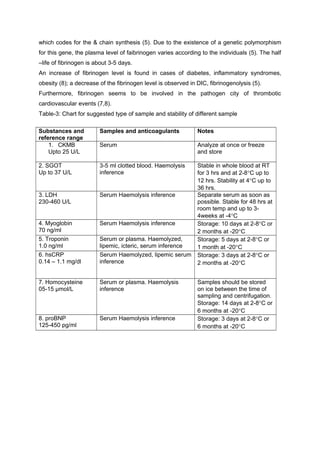
Table-3: Chart for suggested type of sample and stability of different sample
Substances and
reference range
Samples and anticoagulants Notes
1. CKMB
Upto 25 U/L
Serum Analyze at once or freeze
and store
2. SGOT
Up to 37 U/L
3-5 ml clotted blood. Haemolysis
inference
Stable in whole blood at RT
for 3 hrs and at 2-8°C up to
12 hrs. Stability at 4°C up to
36 hrs.
3. LDH
230-460 U/L
Serum Haemolysis inference Separate serum as soon as
possible. Stable for 48 hrs at
room temp and up to 3-
4weeks at -4°C
4. Myoglobin
70 ng/ml
Serum Haemolysis inference Storage: 10 days at 2-8°C or
2 months at -20°C
5. Troponin
1.0 ng/ml
Serum or plasma. Haemolyzed,
lipemic, icteric, serum inference
Storage: 5 days at 2-8°C or
1 month at -20°C
6. hsCRP
0.14 – 1.1 mg/dl
Serum Haemolyzed, lipemic serum
inference
Storage: 3 days at 2-8°C or
2 months at -20°C
7. Homocysteine
05-15 µmol/L
Serum or plasma. Haemolysis
inference
Samples should be stored
on ice between the time of
sampling and centrifugation.
Storage: 14 days at 2-8°C or
6 months at -20°C
8. proBNP
125-450 pg/ml
Serum Haemolysis inference Storage: 3 days at 2-8°C or
6 months at -20°C

Cardiac markers

  • 1.
    Dr Ruhul Amin AssistantRegistrar Dept of Medicine ,JRRMCH Cardiac markers: Intracellular enzymes/Proteins released to blood following cardiac muscle damage and showing serial concentrational change with an initial rise and subsequent fall in plasma. These are clinical laboratory tests useful in the detection of AMI or minor myocardial injury. Cardiac markers are most useful when individuals have nondiagnostic ECG tracings. The most commonly available tests, including CK iso enzymes, LD, SGOT, myoglobin and cardiac troponins. Use; 1. Diagnostic 2. Prognostic 3. Risk stratification Types of Cardiac Markers 1. Frequently used clinically cTnI AST Myoglobin CK LDH 2. Less frequently used clinically hsCRP Pro BNP Homocysteine fibrinogen Characteristics of Ideal Cardiac Marker • Cardio specific and high cone. in myocardium • Absent (or trace) in blood normally • Quantity released proportional to the extent of injury • Stable and persist for reasonable period in blood • Easy to measure • Not expensive • Released rapidly and completely after myocardial injury Biochemistry and tissue distribution of cardiac markers:
  • 2.
    Although the cardiacmarkers are all myocardial proteins, they differ in this location within the myocyte release after damage and clearance form the serum. Because they are markers of myocardial damage the biochemistry of each is considered separately. The time sequence of changes on plasma after myocardial infarction: Markers Starts to rise (hour) Time after infarction of peak elevation (hour) Duration of rise (days) Ck-MB Ck- (total) SGOT (AST) LD, LD-1 Myoglobin TroponinI 4-8 4-6 6-8 12-24 1-3 4-6 24-48 24-48 24-48 48-72 6-9 24-48 2-3 3-4 4-6 7-12 1 7-14 Creatinine kinace: CK catalyzes the formation of phosphocreatine from creatine and adenosine triphosphate. (ATP). Several molecular forms (iso enzyme) of CK exist. They differ in their Michaels constant and PH optima, but the physiological significance of this is unknown. Each of the this iso enzymes of CK is composed of two polypeptide chains. Ck as Cardiac Marker * Isoenzymes: 1. CK1 (CK-BB) - Brain Smooth muscle of GIT 2. CK2 (CK-MB) – Heart (15 –40%, rest CK-MM) [half life = 12 hr] Sk. Muscle 3. CK3 (CK-MM) -Sk. Muscle (97%, rest CK-MB) [half life > 12 hr] Heart Isoforms of CK-MB 1. CK-MB2 (Tissue form) 2. CK-MB1 (Serum form) MB2/MB1 = 1.0 or < 1.0 [if > 1.5 MI] CK Index: CK-MB x 100 [ if 4 – 25% MI] CK All plasma enzyme activities (including that of CK-MB) may be normal until at least four hours after the onset of chest pain due to myocardial infarction; blood should not be taken
  • 3.
    for enzyme assayuntil this time bas elapsed. If the initial plasma CK activity is normal, a second sample should be taken about four to six hours later. Once the diagnosis bas been confirmed further blood sampling is rarely required. The indications for thrombolytic treatment which must be given early after an infarction are usually based on the clinical presentation and ECG changes; they very rarely depend on the measurement of plasma CKMB enzyem. Raised CK activities: 1) Physiological- Neo natal period Few days after parturition 2) CK-BB - CVA Head injury CK-MB - MI CKMM - Duchenee-sex linked muscular dystrophy Viral myositis SGOT (AST): Transaminases: AST (glutamate oxaloacetate transaminase GOT) is present on high concentration on cells of cardiac and skeletal muscle, liver, kidney and erythrocytes. Damage to any of these tissues may increase plasma AST levels. Causes of raised plasma AST activates: • Artefactual – due to haemolysis • Physiological – during neonatal period. • Marked increase (10 to 100 times). Circulatory failure with shock and hypoxia. myocardial infarction acute viral or toxic hepatitis • Moderate increase: Cirrhosis Infectious mononucleosis Cholestatic jaundice Malignant infiltration of the liver Skeletal muscle disease After trauma or surgery (especially after cardiac surgery) Severe hemolytic episodes. LDH (LD-1): At least five isoenzymes exist, composed of four subunit peptides of two distinct types, designated M (for muscle) and H (for heart). LD-1 (H4) moves the fastest toward the anode, whereas LD-5 LD(M4) is closest to the cathode on an electrophoretic gel. LD- 1 is found in
  • 4.
    the highest concentrationsin the heart, kidney (cortex), and red blood cells. LD-5 is found in the highest concentrations in liver and skeletal muscle. The hybrid LD isoenzymes LD-2 (H3M), LD-3 (H2M2), and LD-4 (HM3) also are found in the heart, kidneys, RBCs, and several other tissues. The LD-1 increase over LD-2 in serum after AMI (the so called flipped pattern, in which the LD-1/ LD-2 ratio becomes > 1.0) has a clinical sensitivity of about 75% in individuals suspected of having sustained an AMI. Raised plasma total LD activity:  Art factual: Haemolysis  Marked increase (more than 5 times the upper reference limit in adults): Circulatory filure with ‘shock’ and hypoxia; myocardial infarction. Some haematological disorders. In blood diseases such as megaloblastic anaemia, acute leukaemias and Lymphomas, very high levels (up to 20 times the upper reference limit in adults) may be found. Myoglobin: Myoglobin in an oxygen-binding protein of cardiac and skeletal muscle. The protein’s low molecular weight and cytoplasmic location probably account for its early appearance in the circulation after muscle injury. Increases in serum myoglobin occur after trauma to either skeletal or cardiac muscle, as in crush injuries or AMI. Serum myoglobin methods are unable to distinguish the tissue of origin. Even minor injury to skeletal muscle may result in an elevated concentration of serum myoglobin, which may lead to the misdiagnosis of AMI. The major advantage offered by myoglobin as a serum marker for myocardial injury it is released early from damage cells. Serum concentrations of myogloin rise above the reference interval as early as 1 hour after the occurrence of an AMI, with peak activity in the range of 4 to 12 hours (demonstrating 90 % to 100 % sensitivity). This peak suggests that serum myoglobin reflects the early course of myocardial necrosis. Myoglobin is cleared rapidly and thus has a substantially reduced clinical sensitivity after 12 hours. The role for myoglobin in the detection of AMI is within the first 0 to 4 hours, the time period in which CK- 2 and cardiac troponin are still within their reference intervals. However, the measurement of serum myoglobin has not been used extensively in clinical laboratories for the routine analysis of AMI. The main reason has been the poor clinical specificity (usually <80 %) of the protein caused by the large quantities or myoglobin found in skeletal muscle.
  • 5.
    The best useof early serum myoglobin measurements after admission to emergency departments is as a negative predictor of AMI. If myoglobin concentrations remain unchanged and within the reference interval on multiple, early sampling within 2 to 4 hours after the onset of chest pain, certainty is 100 % that muscle (either cardiac or skeletal) injury has not occurred recently. TROPONIN After the loss of integrity of cardiac myocyte membranes, intracellular m acromolecules (cardiacbiologic markers) diffuse into the cardiac interstitium,lymphatics, and microvasculature; eventually, they are detected in the peripheral circulation. The release kinetics of the various cardiac biologic markers depend in part on their location in the myocyte, their molecular weight, and the route by which they are cleared from the circulation. Cardiac-specific troponins are useful not only vecause they come close to fulfilling many of the criteria for an ideal biologic marker, but also because they convey prognostic information and can help frame therapeutic decisions regarding patients with acute coronary syndromes. The troponin complex regulates the contraction of striated muscle and consists of three subunits: troponin C, which binds to calcium ions; troponin I, which binds to actin and inhibits actin–myosin interactions; and troponin T, which binds to tropomyosin, thereby attaching the troponin complex to the thin filament. Although both troponin T and troponin I are present in cardiac and skeletal muscle, they are encoded by different genes in the two types of muscle, yielding proteins that are immunologically distinct. Assays that are based on high-affinity antibodies and are specific for cardiac troponin T and cardiac troponin I are now available. (Since the amino acid sequence of cardiac troponin C and skeletal troponin C is the same, no such assays have been developed for the C component.) Normally, cardiac troponin T and cardiac troponin I are not detectable in the blood of healthy persons. Release of these troponins can occur when myocytes are damaged by a variety of conditions such as trauma, exposure to toxins, inflammation, and necrosis due to occlusion of a portion of the coronary vasculature. The majority of cardiac troponin T and cardiac troponin I is bound to myofilaments, and the remainder is free in the cytosol. When myocyte damage occurs, the cytosolic pool is released first, followed by a more protracted release
  • 6.
    from stores boundto deteriorating myofilaments. Microinfarction can produce elevations of cardiac troponin T and cardiac troponin I in the peripheral blood that are not associated with elevations of the MB fraction of creatine kinase (CK-MB). The deference between cardiac troponin T and cardiac troponin I is that cardiac troponin I has never been expressed in normal, regenerating or diseased human or animal skeletal muscle. However, small amounts of cTnT are made by skeletal muscle during human fetal development, in regenerating muscle, and in diseased muscle. Thus cTnT has been found in skeletal muscle specimens obtained from individuals with muscular dystrophy, polymyositis and chronic renal disease. Table 2; Difference between CK-MB and CTnl: S.l no Points CK-MB CTnl 1. Kinetic 6 & 8 has up to 2.3 days 6-8 hours up to 7-10 days thus Providing a long window for detection of cardiac injury 2. Specificity Less More 3. Ability Cannot diagnose micro infarction Can able to diagnose micro infarction 4. Therapeutic Not so helpful Con help frame Therapeutic decisions. 5. Prognostic Not so helpful Helpful 6. Availability And cost effective More available less costly Less available more costly TESTS USED TO ESTIMATE INCREASED RISK OF CARDIOVASCULAR DISEASES Low-density lipoprotein (LDL) and HDL cholesterol, triglycerides, lipoprotien (a), CRP, homocysteine and fibrinogen are laboratory tests that help indicate an individual’s risk for CAD. C-Reactive Protein: CRP is being a sensitive marker of systemic inflammation; plasma concentrations of CRP are increased among women and men at risk for future cardiovascular events. For example, prospective studies have indicated that when a sensitive CRP assay (analytical detection
  • 7.
    limit of 0.05mg/L and upper reference limit of 0.20 mg/L) is used to measure CRP concentrations, individuals with increased baseline concentrations of CRP are at increased risk for AMI and stroke. This increased risk is associated also with individuals who are older, smoke, have symptomatic angina, or have had previous AMIs, In addition, the predictive value of CRP testing appears to add to those of total and HDL cholesterol measurements, This information suggests that screening with a method sensitive for CRP concentrations may play a role in cardiovascular risk prediction. Homocysteine: Homocysteine is a amino acid and a part of the synthetic pathway from methionine to cysteine. Most free homocysteine rapidly forms disulfide bridgs with itself and free sulfhydryl group on proteins. Total homocysteine is usually less than 15 µmol/L in plasma collected from fasting individuals. In rare cases an inborn error of homocysteine metabolism causes plasma levels to exceed 100 µmol /L. Affected individuals develop CAD in their teens. Mildly elevated levels increase the risk of CAD. Homocysteine may cause direct injury to the vascular endothelium or may be merely a marker of atherosclerosis. Ingestion of vitamins B12, B6 and folate at doses greater them the daily recommendations sometimes can lower homocysteine levels. Unlike in cases of hyperlipidemia, population screening for hyperhomocysteinemia is not recommended, but testing of individuals from families with unexplained premature CAD is useful. proBNP Chronic heart failure, most commonly caused by left ventricular dysfunction, is a clinical syndrome resulting from reduced heart pumping capacity. The plasma levels of both BNP and Nt-proBNP are markedly increased in subjects with left ventricular dysfunction, and correlate well with the New York Heart Association functional classification of heart failure. Nt-proBNP shown advantages over BNP as a biochemical marker because of its longer half- life, better in vitro stability, reduced intra-individual fluctuation and higher circulating concentration. Determation of NT-proBNP levels in plasma can be useful in identifying patients with chronic heart failure, assessing the severity, predicting increased morbidity and monitoring the therapeutic response. Fibrinogen Is a glycoprotein of a molecular weight of approximately 340 000 daltons, present at a concentration in the range of 2 to 4 g/1 (200 – 400 mg/dl) (5).It is synthesis in the liver (1.7 to 5 g/dat)(4) and by megakaryocytes (5). The synthesis of fibrinogen is controlled by the gene
  • 8.
    which codes forthe & chain synthesis (5). Due to the existence of a genetic polymorphism for this gene, the plasma level of faibrinogen varies according to the individuals (5). The half –life of fibrinogen is about 3-5 days. An increase of fibrinogen level is found in cases of diabetes, inflammatory syndromes, obesity (8); a decrease of the fibrinogen level is observed in DIC, fibrinogenolysis (5). Furthermore, fibrinogen seems to be involved in the pathogen city of thrombotic cardiovascular events (7,8). Table-3: Chart for suggested type of sample and stability of different sample Substances and reference range Samples and anticoagulants Notes 1. CKMB Upto 25 U/L Serum Analyze at once or freeze and store 2. SGOT Up to 37 U/L 3-5 ml clotted blood. Haemolysis inference Stable in whole blood at RT for 3 hrs and at 2-8°C up to 12 hrs. Stability at 4°C up to 36 hrs. 3. LDH 230-460 U/L Serum Haemolysis inference Separate serum as soon as possible. Stable for 48 hrs at room temp and up to 3- 4weeks at -4°C 4. Myoglobin 70 ng/ml Serum Haemolysis inference Storage: 10 days at 2-8°C or 2 months at -20°C 5. Troponin 1.0 ng/ml Serum or plasma. Haemolyzed, lipemic, icteric, serum inference Storage: 5 days at 2-8°C or 1 month at -20°C 6. hsCRP 0.14 – 1.1 mg/dl Serum Haemolyzed, lipemic serum inference Storage: 3 days at 2-8°C or 2 months at -20°C 7. Homocysteine 05-15 µmol/L Serum or plasma. Haemolysis inference Samples should be stored on ice between the time of sampling and centrifugation. Storage: 14 days at 2-8°C or 6 months at -20°C 8. proBNP 125-450 pg/ml Serum Haemolysis inference Storage: 3 days at 2-8°C or 6 months at -20°C