UNIT II
FLUID KINEMATICS
By
G.Adharsh
Department of civil engineering
• Branch of fluid mechanics which deals with
response of fluids in motion without
considering forces and energies in them
TYPES OF FLUID FLOW
• STEADY AND UNSTEADY FLOW
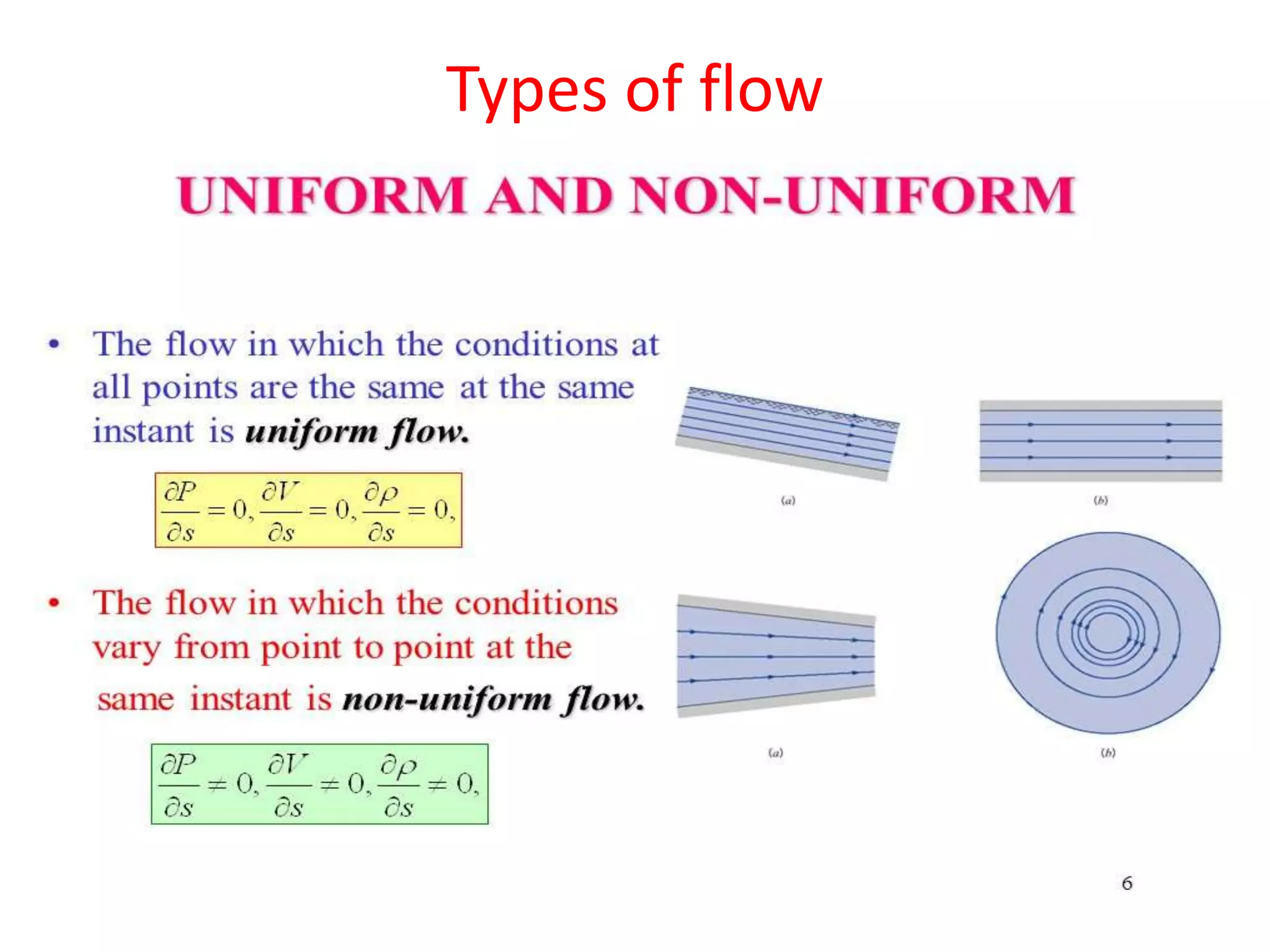
• UNIFORM AND NON-UNIFORM FLOW
• LAMINAR AND TURBULENT FLOW
• COMPRESSIBLE AND INCOMPRESSIBLE FLOW
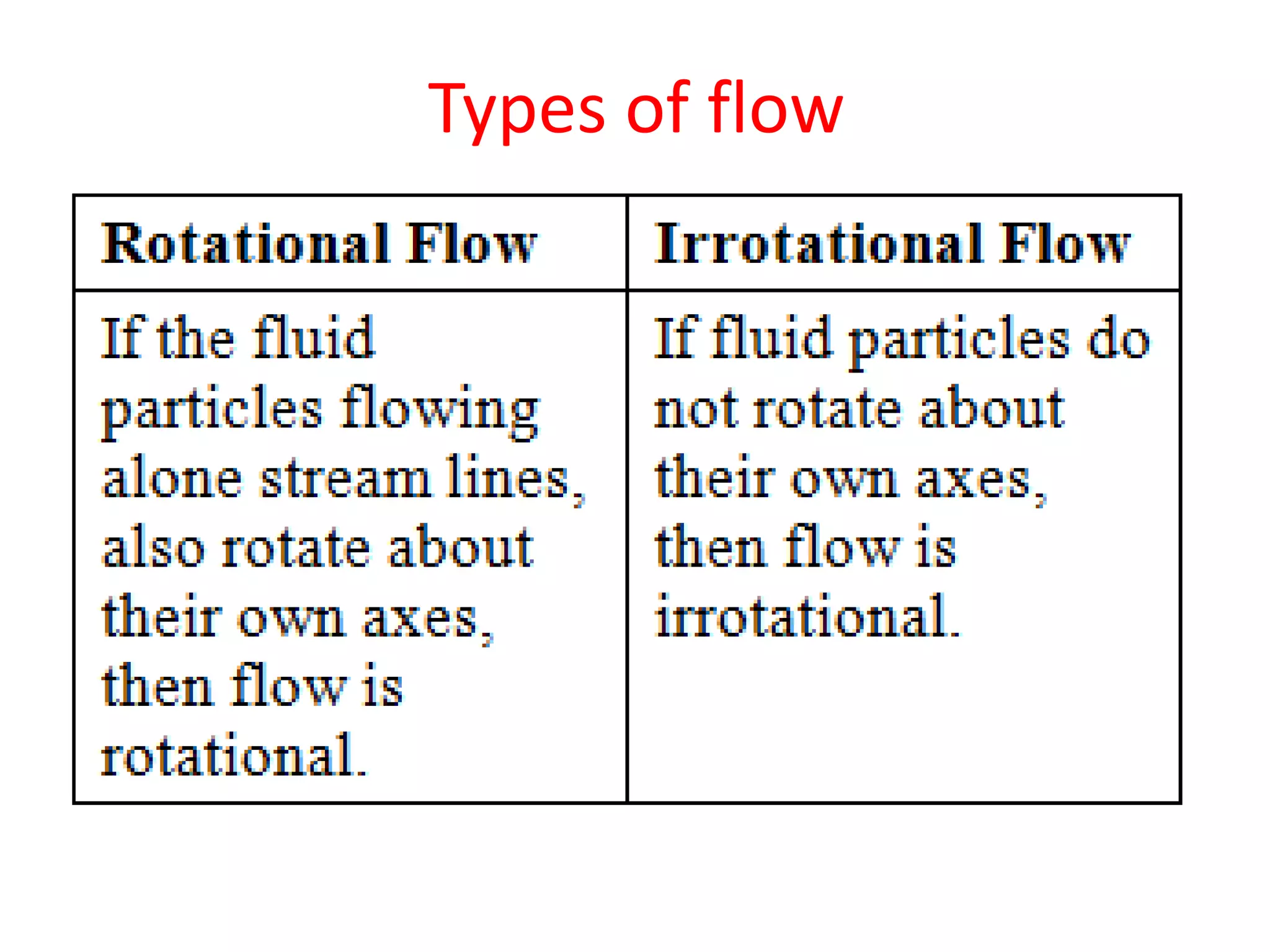
• ROTATIONAL AND IRROTATIONAL FLOWS
• ONE, TWO AND THREE DIMENSIONAL FLOWS
Types of flow
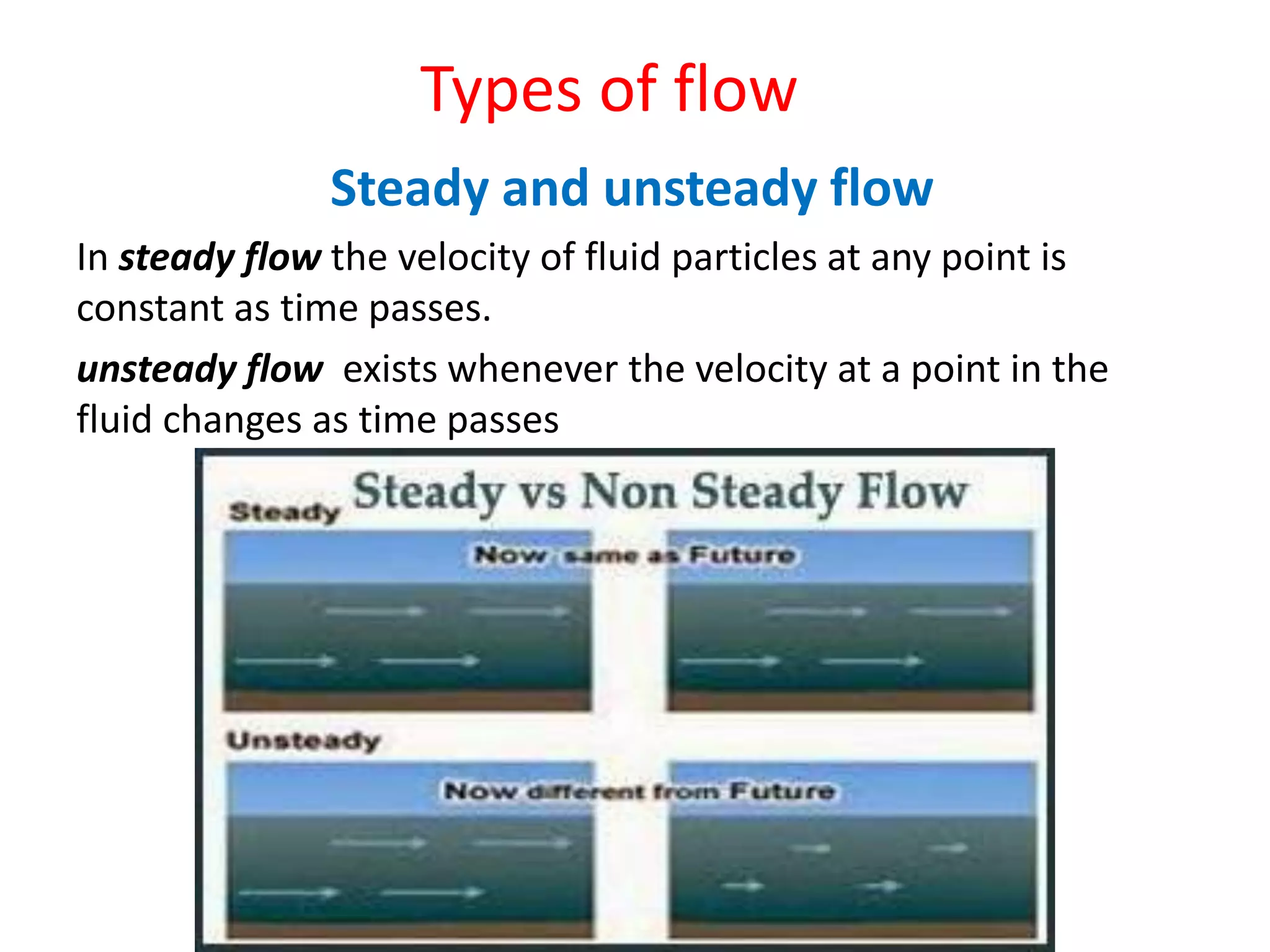
Steady and unsteady flow
In steady flow the velocity of fluid particles at any point is
constant as time passes.
unsteady flow exists whenever the velocity at a point in the
fluid changes as time passes
Types of flow
Types of flow
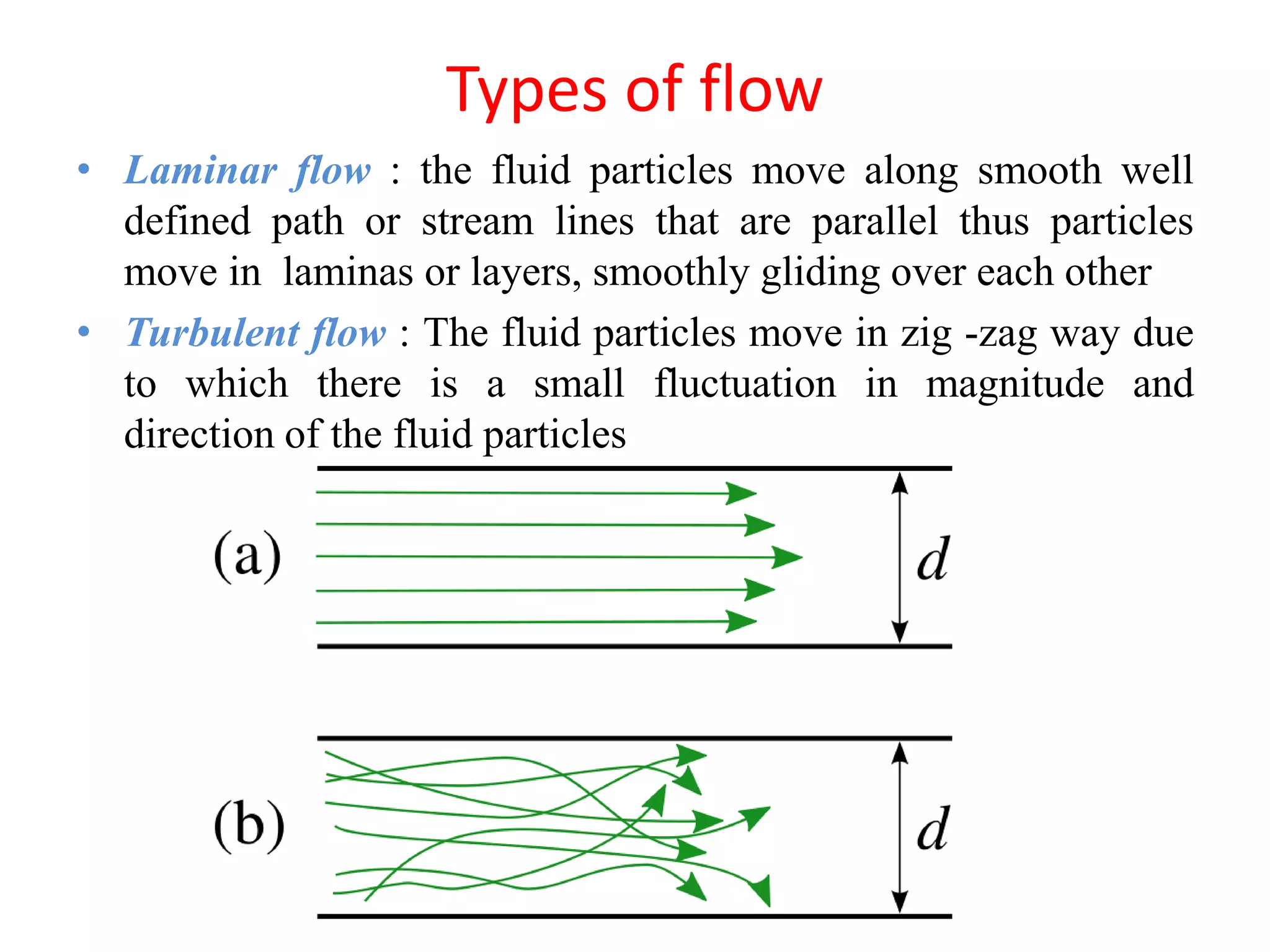
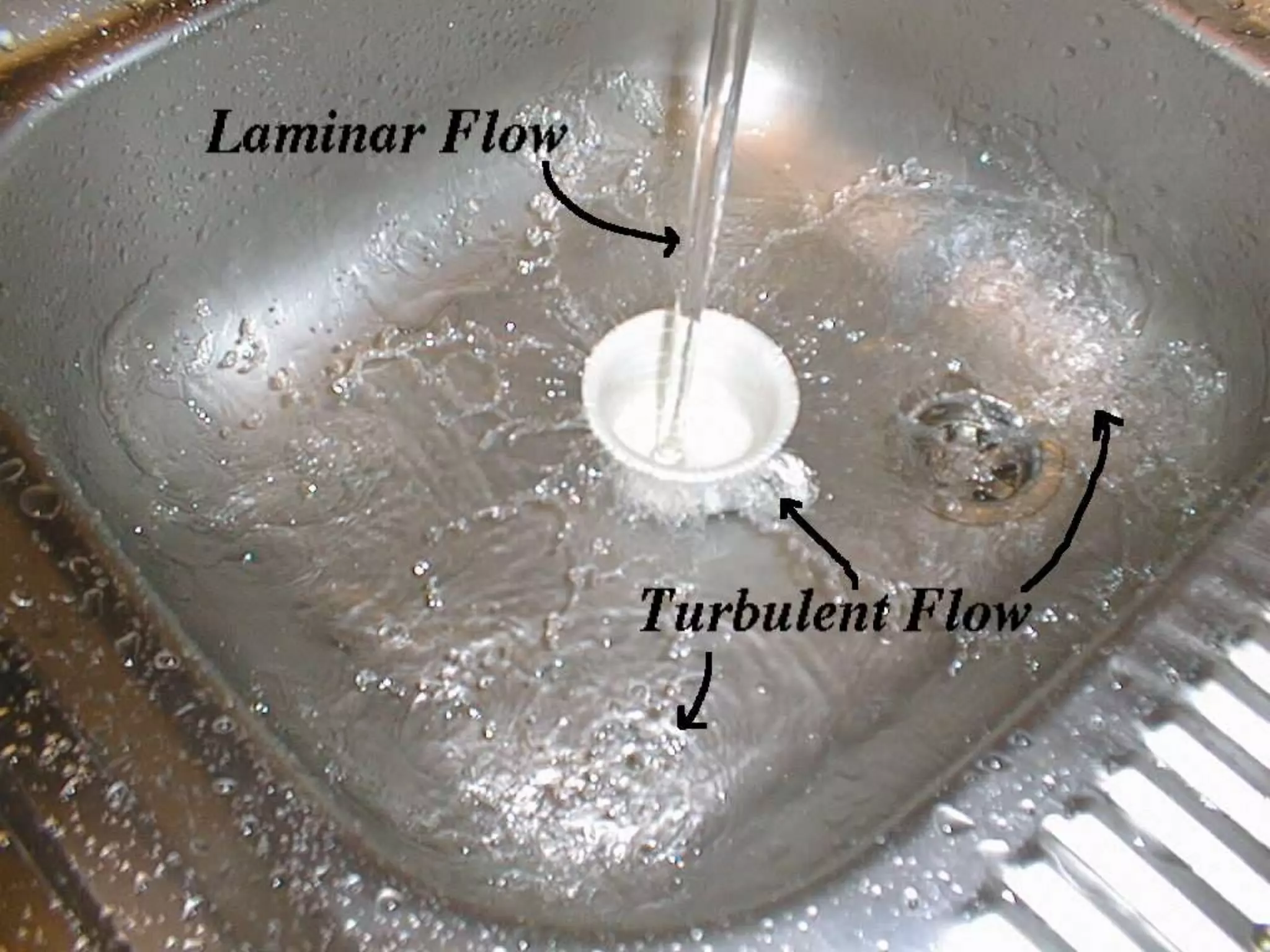
• Laminar flow : the fluid particles move along smooth well
defined path or stream lines that are parallel thus particles
move in laminas or layers, smoothly gliding over each other
• Turbulent flow : The fluid particles move in zig -zag way due
to which there is a small fluctuation in magnitude and
direction of the fluid particles
Types of flow
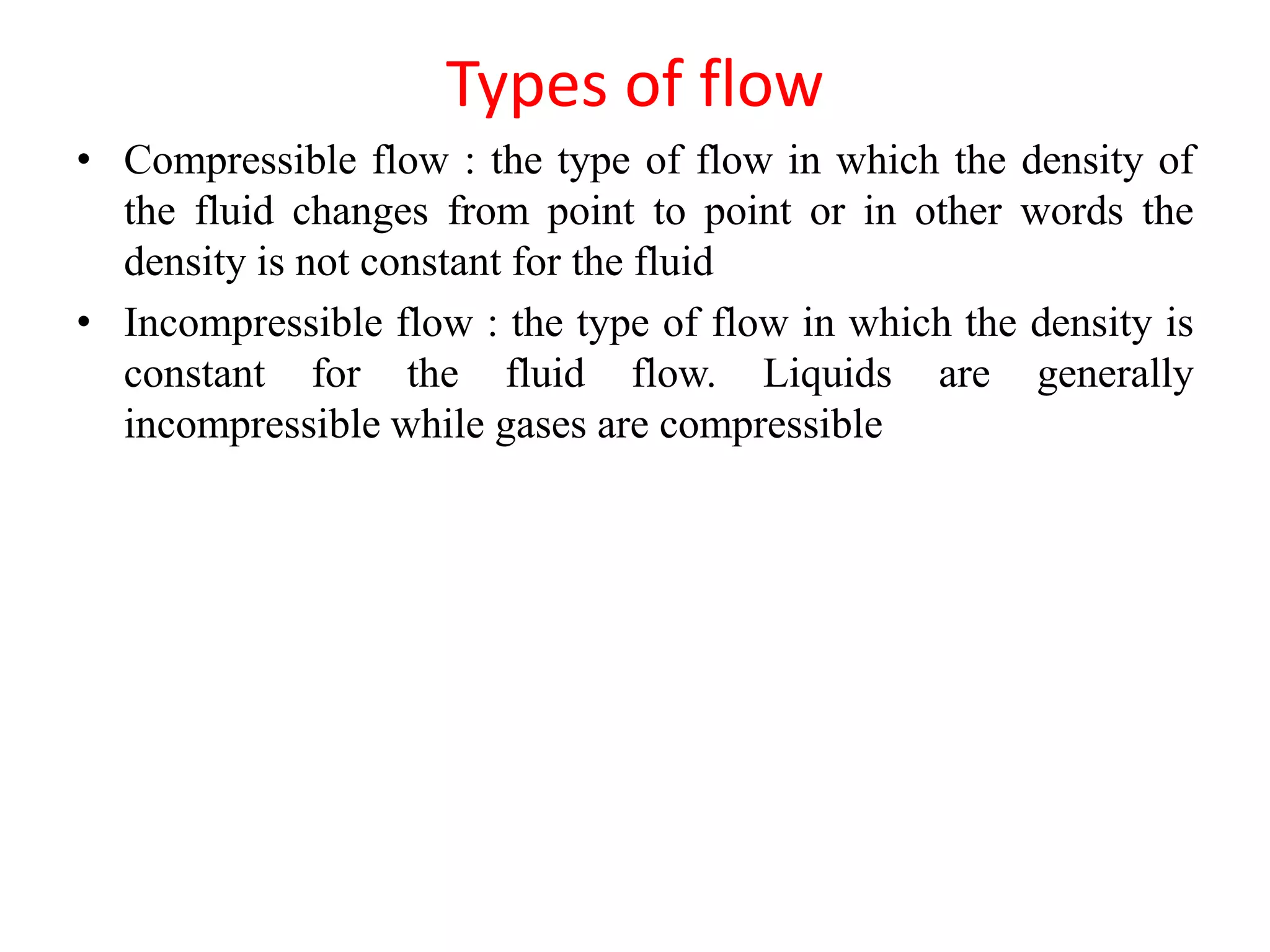
• Compressible flow : the type of flow in which the density of
the fluid changes from point to point or in other words the
density is not constant for the fluid
• Incompressible flow : the type of flow in which the density is
constant for the fluid flow. Liquids are generally
incompressible while gases are compressible
Types of flow
Types of flow
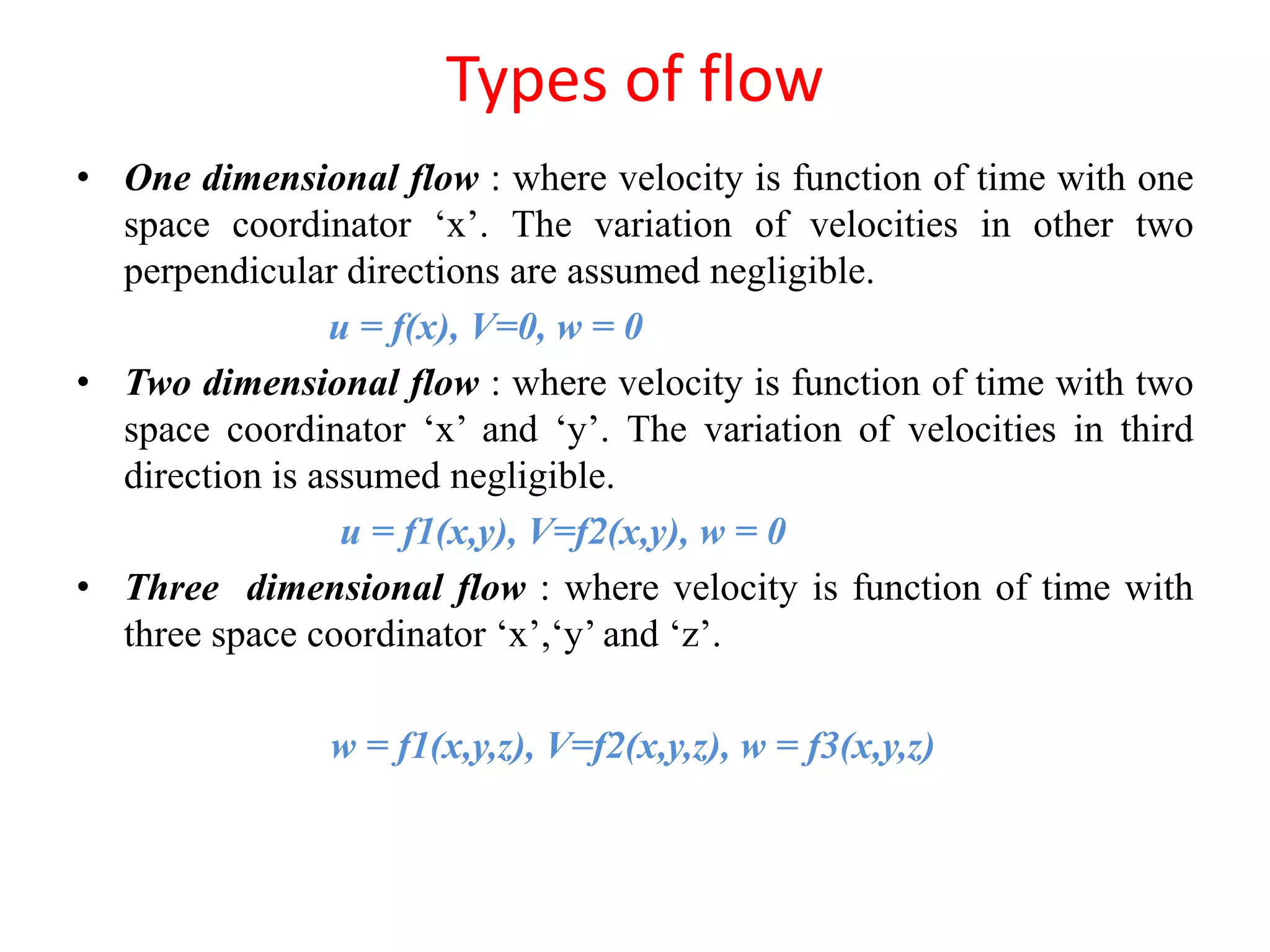
• One dimensional flow : where velocity is function of time with one
space coordinator ‘x’. The variation of velocities in other two
perpendicular directions are assumed negligible.
u = f(x), V=0, w = 0
• Two dimensional flow : where velocity is function of time with two
space coordinator ‘x’ and ‘y’. The variation of velocities in third
direction is assumed negligible.
u = f1(x,y), V=f2(x,y), w = 0
• Three dimensional flow : where velocity is function of time with
three space coordinator ‘x’,‘y’ and ‘z’.
w = f1(x,y,z), V=f2(x,y,z), w = f3(x,y,z)
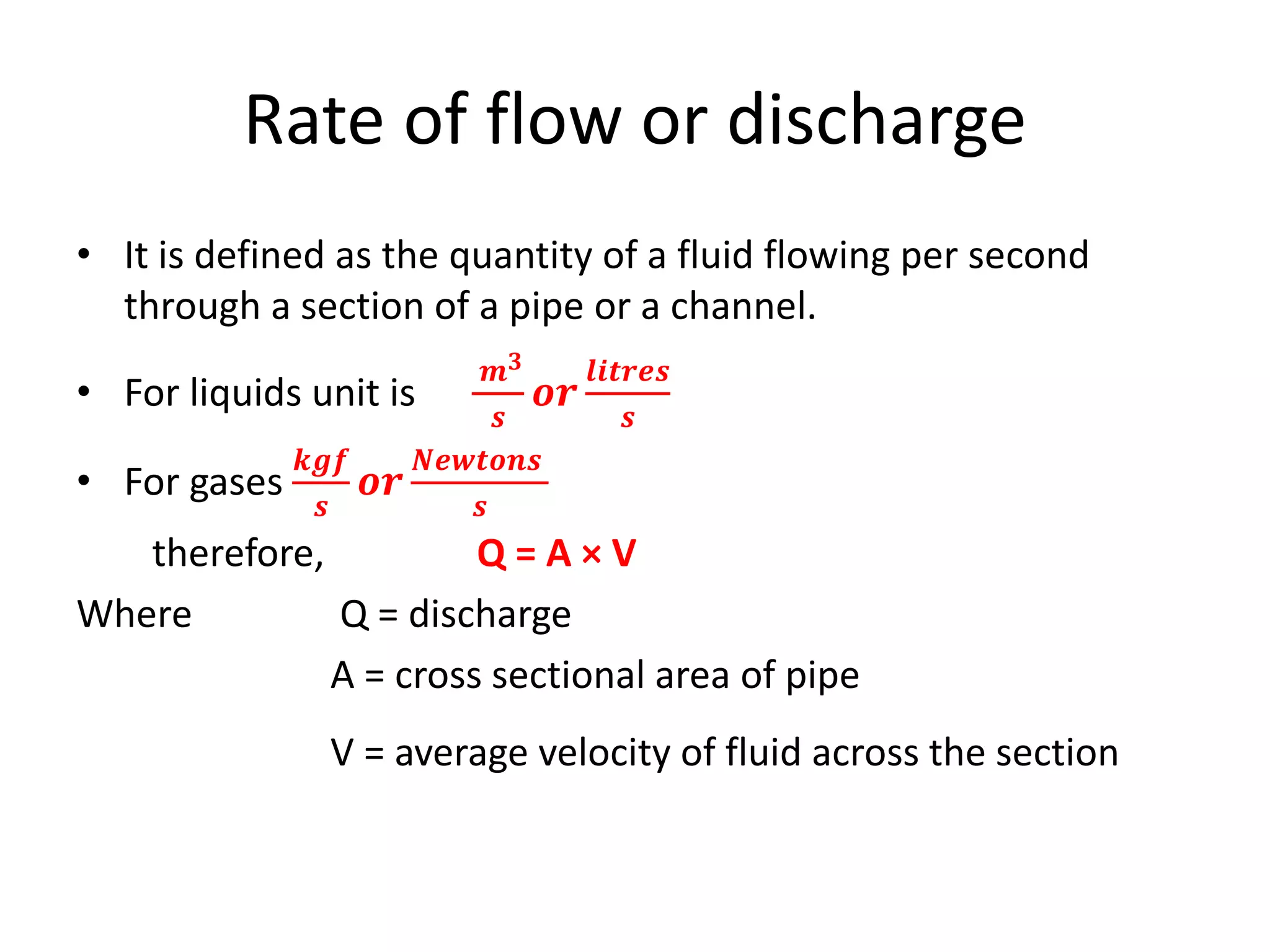
Rate of flow or discharge
• It is defined as the quantity of a fluid flowing per second
through a section of a pipe or a channel.
• For liquids unit is
𝒎 𝟑
𝒔
𝒐𝒓
𝒍𝒊𝒕𝒓𝒆𝒔
𝒔
• For gases
𝒌𝒈𝒇
𝒔
𝒐𝒓
𝑵𝒆𝒘𝒕𝒐𝒏𝒔
𝒔
therefore, Q = A × V
Where Q = discharge
A = cross sectional area of pipe
V = average velocity of fluid across the section

kinematics of fluids basics

  • 1.
  • 2.
    • Branch offluid mechanics which deals with response of fluids in motion without considering forces and energies in them
  • 3.
    TYPES OF FLUIDFLOW • STEADY AND UNSTEADY FLOW • UNIFORM AND NON-UNIFORM FLOW • LAMINAR AND TURBULENT FLOW • COMPRESSIBLE AND INCOMPRESSIBLE FLOW • ROTATIONAL AND IRROTATIONAL FLOWS • ONE, TWO AND THREE DIMENSIONAL FLOWS
  • 4.
    Types of flow Steadyand unsteady flow In steady flow the velocity of fluid particles at any point is constant as time passes. unsteady flow exists whenever the velocity at a point in the fluid changes as time passes
  • 5.
  • 6.
    Types of flow •Laminar flow : the fluid particles move along smooth well defined path or stream lines that are parallel thus particles move in laminas or layers, smoothly gliding over each other • Turbulent flow : The fluid particles move in zig -zag way due to which there is a small fluctuation in magnitude and direction of the fluid particles
  • 8.
    Types of flow •Compressible flow : the type of flow in which the density of the fluid changes from point to point or in other words the density is not constant for the fluid • Incompressible flow : the type of flow in which the density is constant for the fluid flow. Liquids are generally incompressible while gases are compressible
  • 9.
  • 10.
    Types of flow •One dimensional flow : where velocity is function of time with one space coordinator ‘x’. The variation of velocities in other two perpendicular directions are assumed negligible. u = f(x), V=0, w = 0 • Two dimensional flow : where velocity is function of time with two space coordinator ‘x’ and ‘y’. The variation of velocities in third direction is assumed negligible. u = f1(x,y), V=f2(x,y), w = 0 • Three dimensional flow : where velocity is function of time with three space coordinator ‘x’,‘y’ and ‘z’. w = f1(x,y,z), V=f2(x,y,z), w = f3(x,y,z)
  • 11.
    Rate of flowor discharge • It is defined as the quantity of a fluid flowing per second through a section of a pipe or a channel. • For liquids unit is 𝒎 𝟑 𝒔 𝒐𝒓 𝒍𝒊𝒕𝒓𝒆𝒔 𝒔 • For gases 𝒌𝒈𝒇 𝒔 𝒐𝒓 𝑵𝒆𝒘𝒕𝒐𝒏𝒔 𝒔 therefore, Q = A × V Where Q = discharge A = cross sectional area of pipe V = average velocity of fluid across the section