What are clouds?What are clouds?
A cloud is a large collection of very
tiny droplets of water or ice
crystals. The droplets are so small
and light that they can float in the
air.
Why do clouds float?
A cloud is made up of liquid water droplets.
A cloud forms when air is heated by the
sun. As it rises, it slowly cools it reaches the
saturation point and water condenses,
forming a cloud. As long as the cloud and
the air that its made of is warmer than the
outside air around it, it floats!
CloudsClouds
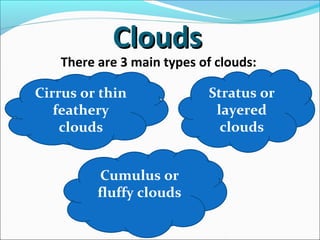
There are 3 main types of clouds:
Cumulus or
fluffy clouds
Stratus or
layered
clouds
Cirrus or thin
feathery
clouds
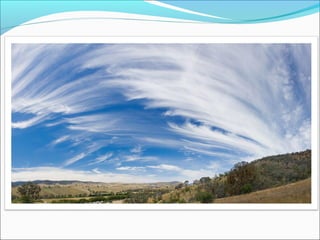
Cirrus Clouds
Are the most common of the
high clouds. They are composed of ice and are
thin, wispy clouds blown in high winds into long
streamers. Cirrus clouds are usually white and
predict fair to pleasant weather. By watching the
movement of cirrus clouds you can tell from which
direction weather is approaching. When you see
cirrus clouds, it usually indicates that a change in
the weather will occur within 24 hours.
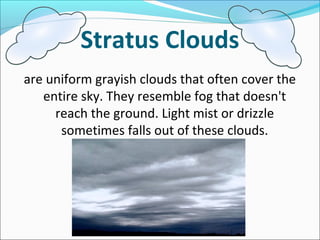
Stratus Clouds
are uniform grayish clouds that often cover the
entire sky. They resemble fog that doesn't
reach the ground. Light mist or drizzle
sometimes falls out of these clouds.
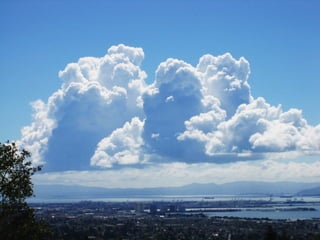
Cumulus Clouds
are white, puffy clouds that look like pieces of
floating cotton. Cumulus clouds are often
called "fair-weather clouds". The base of
each cloud is flat and the top of each cloud
has rounded towers. When the top of the
cumulus clouds resemble the head of a
cauliflower, it is called cumulus congestus or
towering cumulus. These clouds grow
upward and they can develop into giant
cumulonimbus clouds, which are
thunderstorm clouds.
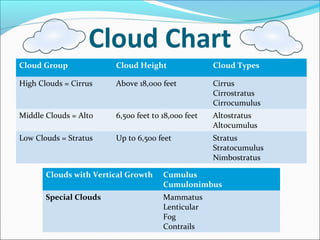
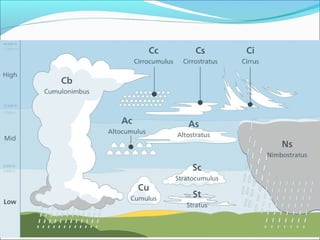
Cloud Chart
Cloud Group Cloud Height Cloud Types
High Clouds = Cirrus Above 18,000 feet Cirrus
Cirrostratus
Cirrocumulus
Middle Clouds = Alto 6,500 feet to 18,000 feet Altostratus
Altocumulus
Low Clouds = Stratus Up to 6,500 feet Stratus
Stratocumulus
Nimbostratus
Clouds with Vertical Growth Cumulus
Cumulonimbus
Special Clouds Mammatus
Lenticular
Fog
Contrails
The Importance of Clouds
Clouds help regulate Earth's energy balance by
reflecting and scattering solar radiation and by
absorbing Earth's infrared energy.
Clouds are required for precipitation to occur and,
hence are an essential part of the hydrologic cycle.
Clouds indicate what type of atmospheric processes are
occurring (e.g., cumulus clouds indicate surface heating
and atmospheric turbulence).
Clouds help redistribute extra heat from the equator
toward the poles.
References
https://www.google.com/search?
q=clouds&biw=1366&bih=624&source=lnms&tbm=isch&sa
=X&ved=0ahUKEwixqOqjlu3NAhVHNpQKHbtGCE0Q_A
UIBigB#imgrc=_
https://www.google.com/search?
biw=1366&bih=624&tbm=isch&q=clouds+clipart&sa=X
&ved=0ahUKEwir8paml-
3NAhXGkJQKHSrFAPUQhyYIHQ&dpr=1#imgrc=WZW
IVB52x_MJRM%3A
https://en.wikipedia.org/wiki/List_of_cloud_types
http://www.weatherwizkids.com/weather-clouds.htm

Kinds of Clouds

  • 2.
    What are clouds?Whatare clouds? A cloud is a large collection of very tiny droplets of water or ice crystals. The droplets are so small and light that they can float in the air.
  • 3.
    Why do cloudsfloat? A cloud is made up of liquid water droplets. A cloud forms when air is heated by the sun. As it rises, it slowly cools it reaches the saturation point and water condenses, forming a cloud. As long as the cloud and the air that its made of is warmer than the outside air around it, it floats!
  • 4.
    CloudsClouds There are 3main types of clouds: Cumulus or fluffy clouds Stratus or layered clouds Cirrus or thin feathery clouds
  • 5.
    Cirrus Clouds Are themost common of the high clouds. They are composed of ice and are thin, wispy clouds blown in high winds into long streamers. Cirrus clouds are usually white and predict fair to pleasant weather. By watching the movement of cirrus clouds you can tell from which direction weather is approaching. When you see cirrus clouds, it usually indicates that a change in the weather will occur within 24 hours.
  • 7.
    Stratus Clouds are uniformgrayish clouds that often cover the entire sky. They resemble fog that doesn't reach the ground. Light mist or drizzle sometimes falls out of these clouds.
  • 8.
    Cumulus Clouds are white,puffy clouds that look like pieces of floating cotton. Cumulus clouds are often called "fair-weather clouds". The base of each cloud is flat and the top of each cloud has rounded towers. When the top of the cumulus clouds resemble the head of a cauliflower, it is called cumulus congestus or towering cumulus. These clouds grow upward and they can develop into giant cumulonimbus clouds, which are thunderstorm clouds.
  • 10.
    Cloud Chart Cloud GroupCloud Height Cloud Types High Clouds = Cirrus Above 18,000 feet Cirrus Cirrostratus Cirrocumulus Middle Clouds = Alto 6,500 feet to 18,000 feet Altostratus Altocumulus Low Clouds = Stratus Up to 6,500 feet Stratus Stratocumulus Nimbostratus Clouds with Vertical Growth Cumulus Cumulonimbus Special Clouds Mammatus Lenticular Fog Contrails
  • 12.
    The Importance ofClouds Clouds help regulate Earth's energy balance by reflecting and scattering solar radiation and by absorbing Earth's infrared energy. Clouds are required for precipitation to occur and, hence are an essential part of the hydrologic cycle. Clouds indicate what type of atmospheric processes are occurring (e.g., cumulus clouds indicate surface heating and atmospheric turbulence). Clouds help redistribute extra heat from the equator toward the poles.
  • 13.