Introduction to
Kerberos
Tomek Kopczyński
www.sparkbit.pl
Kerberos is a computer network authentication protocol which works on
the basis of 'tickets' to allow nodes communicating over a non-secure
network to prove their identity to one another in a secure manner.
[Wikipedia]
What is Kerberos?
www.sparkbit.pl
Basic information
Developed on Massachusetts Institute of Technology (MIT)
Windows 2000 and later are using Kerberos as a default
authentication mechanism (although over Microsoft’s own
implementation)
Kerberos is built into Active Directory solution
UNIX-based operating systems have tools for authenticating over
Kerberos
Kerberos main use case is to provide SSO service in untrusted
networks
1
2
3
4
5
www.sparkbit.pl
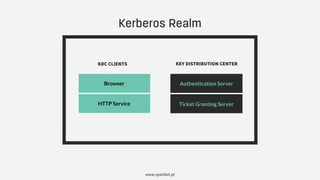
Kerberos Realm
HTTP Service
Browser
Ticket Granting Server
Authentication Server
KDC CLIENTS KEY DISTRIBUTION CENTER
www.sparkbit.pl
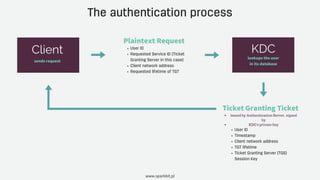
The authentication process
Client
sends request
KDC
lookups the user
in its database
User ID
Requested Service ID (Ticket
Granting Server in this case)
Client network address
Requested lifetime of TGT
Plaintext Request
Ticket Granting Ticket
User ID
Timestamp
Client network address
TGT lifetime
Ticket Granting Server (TGS)
Session Key
issued by Authentication Server, signed
by
KDC's private key
www.sparkbit.pl
Successful authentication in Kerberos,
leads to authorization.
Kerberos authorization part I
Lorem ipsum dolor sit
amet, adipiscing elit,
sed diam nummy.
42 31
checks the Service ID
in its database
decrypts TGT and if it's
successful, Client is
granted access to
Service
issues a Service Ticket (signed by TGS
session key) which contains:
HTTP service ID
Timestamp
Ticket lifetime
HTTP service session key
Client KDC KDC KDC
To be able to authorize
with a service, Client sends
the Ticket Granting Ticket
with a Service ID to KDC
This is the moment when a trust
between Client and Service is
established
www.sparkbit.pl
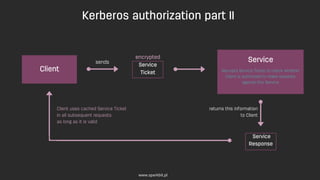
Kerberos authorization part II
Client
Service
decrypts Service Ticket to check whether
Client is authorized to make requests
against this Service
encrypted
Service
Ticket
Service
Response
sends
returns this information
to Client
www.sparkbit.pl
Client uses cached Service Ticket
in all subsequent requests
as long as it is valid
Kerberos important notes
Target service does not have to talk to KDC during authorization
process
Authentication in Kerberos is ensured implicitly: important
information is sent encrypted and protocol will authorize Client if
those messages can be decrypted
Passwords are never stored in clear text and are not sent over the
network
www.sparkbit.pl
Kerberos in HTTP - SPNEGO
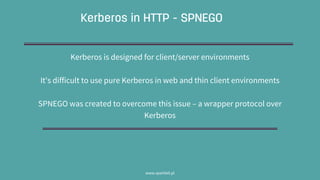
Kerberos is designed for client/server environments
It's difficult to use pure Kerberos in web and thin client environments
SPNEGO was created to overcome this issue –a wrapper protocol over
Kerberos
www.sparkbit.pl
SPNEGO
www.sparkbit.pl
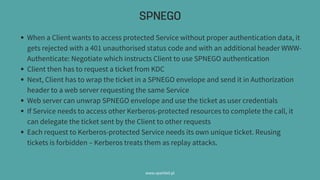
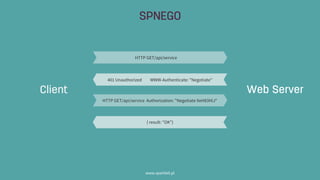
When a Client wants to access protected Service without proper authentication data, it
gets rejected with a 401 unauthorised status code and with an additional header WWW-
Authenticate: Negotiate which instructs Client to use SPNEGO authentication
Client then has to request a ticket from KDC
Next, Client has to wrap the ticket in a SPNEGO envelope and send it in Authorization
header to a web server requesting the same Service
Web server can unwrap SPNEGO envelope and use the ticket as user credentials
If Service needs to access other Kerberos-protected resources to complete the call, it
can delegate the ticket sent by the Client to other requests
Each request to Kerberos-protected Service needs its own unique ticket. Reusing
tickets is forbidden –Kerberos treats them as replay attacks.
SPNEGO
www.sparkbit.pl
HTTP GET/api/service
401 Unauthorized WWW-Authenticate: "Negotiate"
HTTP GET/api/service Authorization: "Negotiate XeH83HiJ"
{result: "OK"}
Client Web Server
Kerberos limitation
www.sparkbit.pl
KDC is a single point of failure, though it can be mitigated by using
multiple servers
Kerberos has strict time limitations on difference between clocks on hosts
taking part in the process
Kerberos cannot be used in scenarios where clients come from outside of
the domain (typical Internet use case)
Problematic creating staged environment: single-domain vs separate
domain for each environment
Summary
www.sparkbit.pl
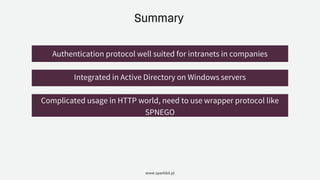
Authentication protocol well suited for intranets in companies
Integrated in Active Directory on Windows servers
Complicated usage in HTTP world, need to use wrapper protocol like
SPNEGO
Thank you for your time.
Take care!
www.sparkbit.pl

Kerberos

  • 1.
  • 2.
    Kerberos is acomputer network authentication protocol which works on the basis of 'tickets' to allow nodes communicating over a non-secure network to prove their identity to one another in a secure manner. [Wikipedia] What is Kerberos? www.sparkbit.pl
  • 3.
    Basic information Developed onMassachusetts Institute of Technology (MIT) Windows 2000 and later are using Kerberos as a default authentication mechanism (although over Microsoft’s own implementation) Kerberos is built into Active Directory solution UNIX-based operating systems have tools for authenticating over Kerberos Kerberos main use case is to provide SSO service in untrusted networks 1 2 3 4 5 www.sparkbit.pl
  • 4.
    Kerberos Realm HTTP Service Browser TicketGranting Server Authentication Server KDC CLIENTS KEY DISTRIBUTION CENTER www.sparkbit.pl
  • 5.
    The authentication process Client sendsrequest KDC lookups the user in its database User ID Requested Service ID (Ticket Granting Server in this case) Client network address Requested lifetime of TGT Plaintext Request Ticket Granting Ticket User ID Timestamp Client network address TGT lifetime Ticket Granting Server (TGS) Session Key issued by Authentication Server, signed by KDC's private key www.sparkbit.pl
  • 6.
    Successful authentication inKerberos, leads to authorization.
  • 7.
    Kerberos authorization partI Lorem ipsum dolor sit amet, adipiscing elit, sed diam nummy. 42 31 checks the Service ID in its database decrypts TGT and if it's successful, Client is granted access to Service issues a Service Ticket (signed by TGS session key) which contains: HTTP service ID Timestamp Ticket lifetime HTTP service session key Client KDC KDC KDC To be able to authorize with a service, Client sends the Ticket Granting Ticket with a Service ID to KDC This is the moment when a trust between Client and Service is established www.sparkbit.pl
  • 8.
    Kerberos authorization partII Client Service decrypts Service Ticket to check whether Client is authorized to make requests against this Service encrypted Service Ticket Service Response sends returns this information to Client www.sparkbit.pl Client uses cached Service Ticket in all subsequent requests as long as it is valid
  • 9.
    Kerberos important notes Targetservice does not have to talk to KDC during authorization process Authentication in Kerberos is ensured implicitly: important information is sent encrypted and protocol will authorize Client if those messages can be decrypted Passwords are never stored in clear text and are not sent over the network www.sparkbit.pl
  • 10.
    Kerberos in HTTP- SPNEGO Kerberos is designed for client/server environments It's difficult to use pure Kerberos in web and thin client environments SPNEGO was created to overcome this issue –a wrapper protocol over Kerberos www.sparkbit.pl
  • 11.
    SPNEGO www.sparkbit.pl When a Clientwants to access protected Service without proper authentication data, it gets rejected with a 401 unauthorised status code and with an additional header WWW- Authenticate: Negotiate which instructs Client to use SPNEGO authentication Client then has to request a ticket from KDC Next, Client has to wrap the ticket in a SPNEGO envelope and send it in Authorization header to a web server requesting the same Service Web server can unwrap SPNEGO envelope and use the ticket as user credentials If Service needs to access other Kerberos-protected resources to complete the call, it can delegate the ticket sent by the Client to other requests Each request to Kerberos-protected Service needs its own unique ticket. Reusing tickets is forbidden –Kerberos treats them as replay attacks.
  • 12.
    SPNEGO www.sparkbit.pl HTTP GET/api/service 401 UnauthorizedWWW-Authenticate: "Negotiate" HTTP GET/api/service Authorization: "Negotiate XeH83HiJ" {result: "OK"} Client Web Server
  • 13.
    Kerberos limitation www.sparkbit.pl KDC isa single point of failure, though it can be mitigated by using multiple servers Kerberos has strict time limitations on difference between clocks on hosts taking part in the process Kerberos cannot be used in scenarios where clients come from outside of the domain (typical Internet use case) Problematic creating staged environment: single-domain vs separate domain for each environment
  • 14.
    Summary www.sparkbit.pl Authentication protocol wellsuited for intranets in companies Integrated in Active Directory on Windows servers Complicated usage in HTTP world, need to use wrapper protocol like SPNEGO
  • 15.
    Thank you foryour time. Take care! www.sparkbit.pl