Kerberos Introduction

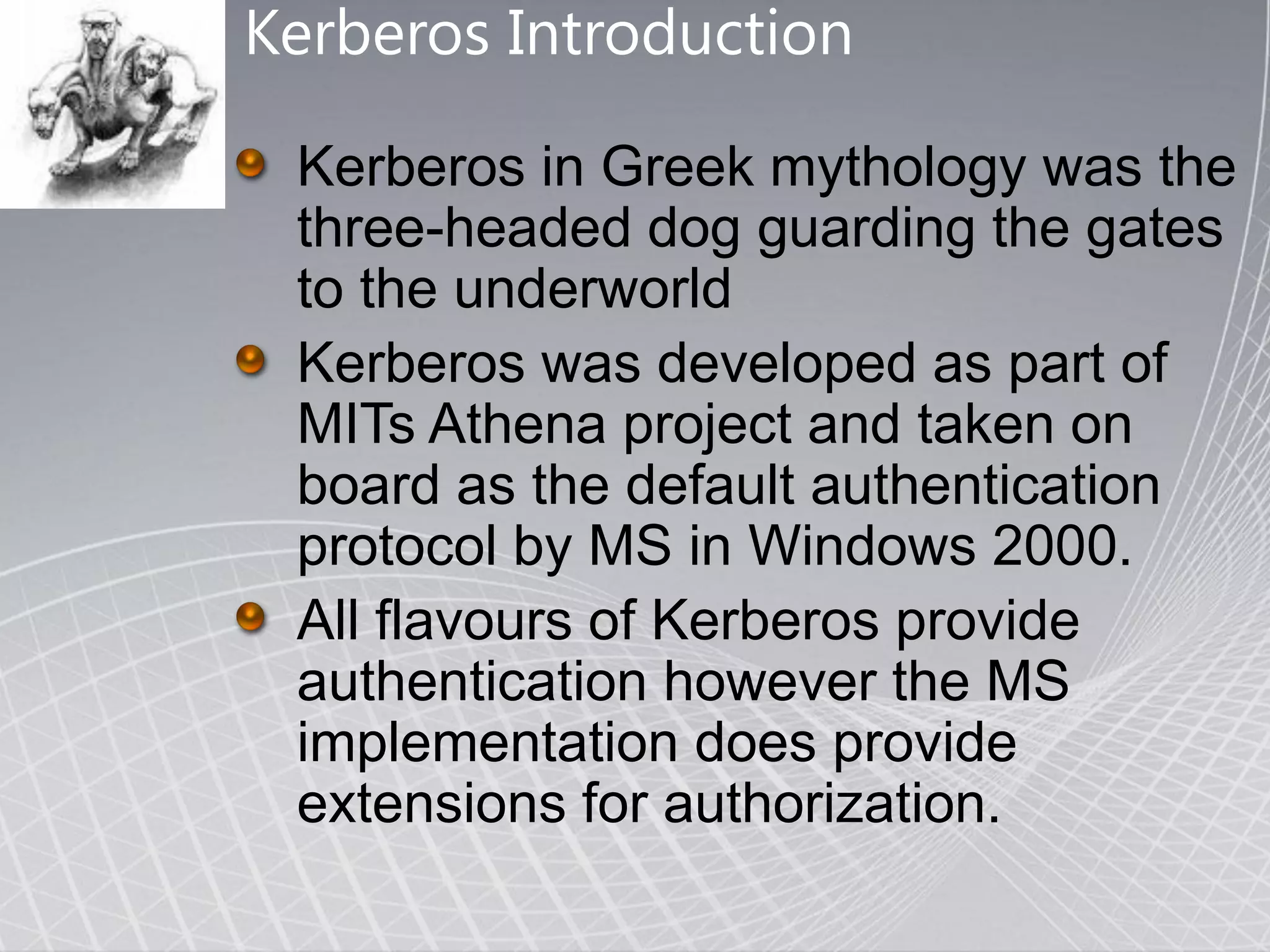
 Kerberos in Greek mythology was the
 three-headed dog guarding the gates
 to the underworld
 Kerberos was developed as part of
 MITs Athena project and taken on
 board as the default authentication
 protocol by MS in Windows 2000.
 All flavours of Kerberos provide
 authentication however the MS
 implementation does provide
 extensions for authorization.
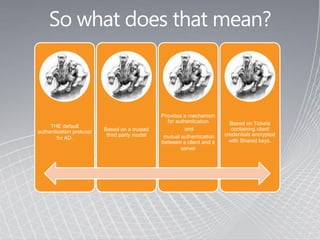
So what does that mean?


                                               Provides a mechanism
                                                 for authentication       Based on Tickets
     THE default
                          Based on a trusted             and               containing client
authentication protocol
                           third party model    mutual authentication   credentials encrypted
        for AD.
                                               between a client and a     with Shared keys.
                                                       server
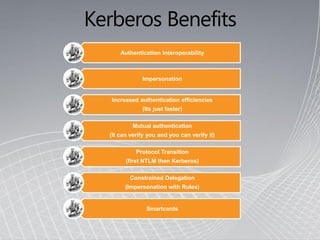
Authentication Interoperability


            Impersonation


Increased authentication efficiencies
            (Its just faster)

        Mutual authentication
(It can verify you and you can verify it)

          Protocol Transition
      (first NTLM then Kerberos)

       Constrained Delegation
      (Impersonation with Rules)


              Smartcards
The KDC
• KDC trusted 3rd party, provides scalability
• KDC made up of 2 sub services
  •(AS) Authentication Service,
  •(TGS) Ticket Granting Service
•The KDC holds a copy of each entities Master
Key (Symmetric Crypto)
•The KDC issues the Keys, encrypted with the
Master Key to each entity
WWW.K2.COM


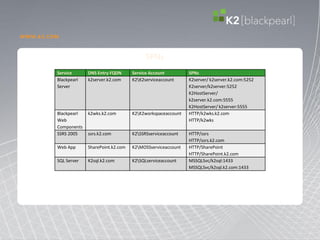
                                                SPNs
         Service      DNS Entry FQDN      Service Account         SPNs
         Blackpearl   k2server.k2.com     K2K2serviceaccount     K2server/ k2server.k2.com:5252
         Server                                                   K2server/k2server:5252
                                                                  K2HostServer/
                                                                  k2server.k2.com:5555
                                                                  K2HostServer/ k2server:5555
         Blackpearl   k2wks.k2.com        K2K2workspaceaccount   HTTP/k2wks.k2.com
         Web                                                      HTTP/k2wks
         Components
         SSRS 2005    ssrs.k2.com         K2SSRSserviceaccount   HTTP/ssrs
                                                                  HTTP/ssrs.k2.com
         Web App      SharePoint.k2.com   K2MOSSserviceaccount   HTTP/SharePoint
                                                                  HTTP/SharePoint.k2.com
         SQL Server   K2sql.k2.com        K2SQLserviceaccount    MSSQLSvc/k2sql:1433
                                                                  MSSQLSvc/k2sql.k2.com:1433
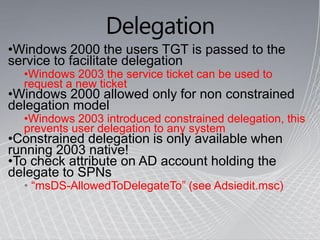
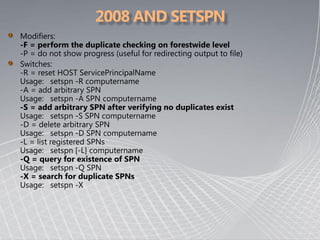
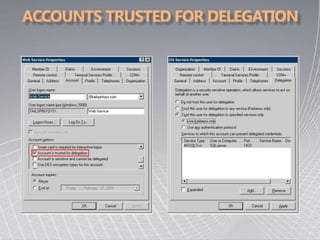
Delegation
•Windows 2000 the users TGT is passed to the
service to facilitate delegation
  •Windows 2003 the service ticket can be used to
  request a new ticket
•Windows 2000 allowed only for non constrained
delegation model
  •Windows 2003 introduced constrained delegation, this
  prevents user delegation to any system
•Constrained delegation is only available when
running 2003 native!
•To check attribute on AD account holding the
delegate to SPNs
  • “msDS-AllowedToDelegateTo” (see Adsiedit.msc)
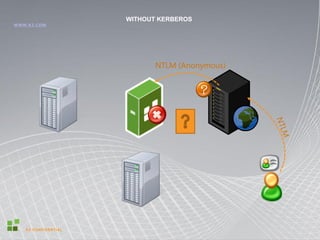
WITHOUT KERBEROS
WWW.K2.COM


                            NTLM (Anonymous)


   K2 CONFIDENTIAL
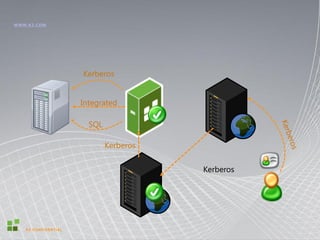
WWW.K2.COM


                     Kerberos


                     Integrated

                       SQL

                             Kerberos


                                        Kerberos


   K2 CONFIDENTIAL
1. Plan
2. Understand all the services in play and how they will talk
   amongst each other
3. Get service accounts for each service (best practice
   should be 1 per a service!)
4. Get machine A NAME records and any Host Headers in
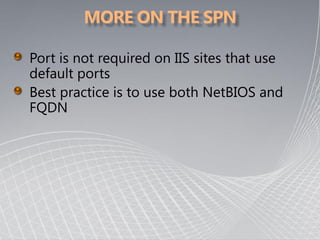
   IIS (Use A NAME records and avoid port numbers in
   HTTP requests)
5. Generate required SPNs (Script?)
6. Enable user accounts for delegation
7. Determine the Delegation
8. Is PT required?
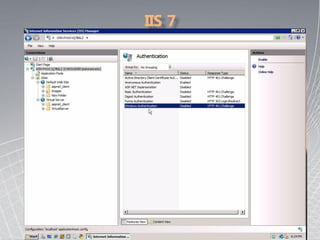
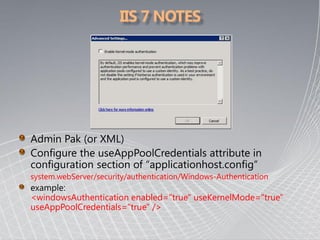
system.webServer/security/authentication/Windows-Authentication

<windowsAuthentication enabled="true" useKernelMode="true"
useAppPoolCredentials="true" />
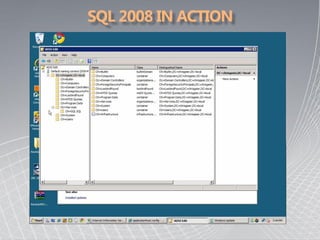
MSSQLSvc/FQDN:[port | instancename],

MSSQLSvc/FQDN:port | MSSQLSvc/FQDN
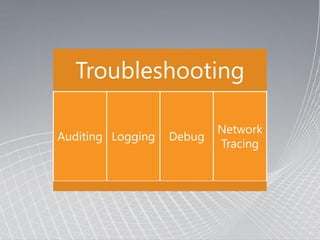
Troubleshooting

                           Network
Auditing Logging   Debug
                           Tracing
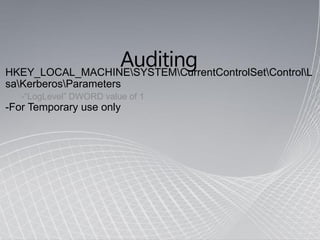
Auditing
HKEY_LOCAL_MACHINESYSTEMCurrentControlSetControlL
saKerberosParameters
   -“LogLevel” DWORD value of 1
-For Temporary use only
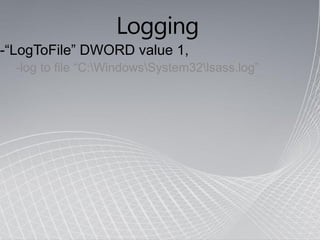
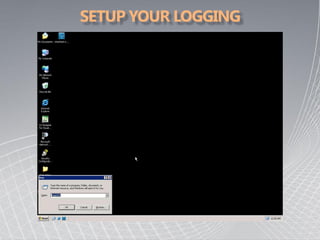
Logging
-“LogToFile” DWORD value 1,
  -log to file “C:WindowsSystem32lsass.log”
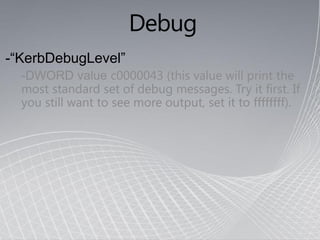
Debug
-“KerbDebugLevel”
  -DWORD value c0000043 (this value will print the
  most standard set of debug messages. Try it first. If
  you still want to see more output, set it to ffffffff).
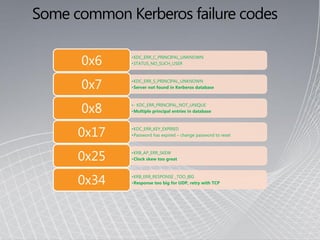
Some common Kerberos failure codes

      0x6    •KDC_ERR_C_PRINCIPAL_UNKNOWN
             •STATUS_NO_SUCH_USER


      0x7    •KDC_ERR_S_PRINCIPAL_UNKNOWN
             •Server not found in Kerberos database


      0x8    •- KDC_ERR_PRINCIPAL_NOT_UNIQUE
             •Multiple principal entries in database


      0x17   •KDC_ERR_KEY_EXPIRED
             •Password has expired – change password to reset


      0x25   •KRB_AP_ERR_SKEW
             •Clock skew too great


      0x34   •KRB_ERR_RESPONSE _TOO_BIG
             •Response too big for UDP, retry with TCP
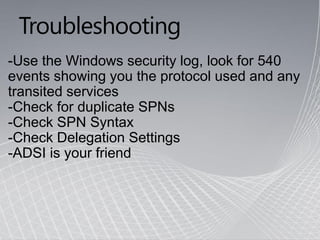
Troubleshooting
-Use the Windows security log, look for 540
events showing you the protocol used and any
transited services
-Check for duplicate SPNs
-Check SPN Syntax
-Check Delegation Settings
-ADSI is your friend
Multiforest
-Kerberos since 2003 is supported across
forests via the use of forest level trust
introduced in Windows 2003
-Delegation across forests is not supported
-FQDNs required to resolve across forests
-Root hints used to find target KDC
http://technet.microsoft.com/en-us/library/bb742516.aspx

Kerberos presentation

  • 1.
    Kerberos Introduction Kerberosin Greek mythology was the three-headed dog guarding the gates to the underworld Kerberos was developed as part of MITs Athena project and taken on board as the default authentication protocol by MS in Windows 2000. All flavours of Kerberos provide authentication however the MS implementation does provide extensions for authorization.
  • 2.
    So what doesthat mean? Provides a mechanism for authentication Based on Tickets THE default Based on a trusted and containing client authentication protocol third party model mutual authentication credentials encrypted for AD. between a client and a with Shared keys. server
  • 4.
    Authentication Interoperability Impersonation Increased authentication efficiencies (Its just faster) Mutual authentication (It can verify you and you can verify it) Protocol Transition (first NTLM then Kerberos) Constrained Delegation (Impersonation with Rules) Smartcards
  • 6.
    The KDC • KDCtrusted 3rd party, provides scalability • KDC made up of 2 sub services •(AS) Authentication Service, •(TGS) Ticket Granting Service •The KDC holds a copy of each entities Master Key (Symmetric Crypto) •The KDC issues the Keys, encrypted with the Master Key to each entity
  • 8.
    WWW.K2.COM SPNs Service DNS Entry FQDN Service Account SPNs Blackpearl k2server.k2.com K2K2serviceaccount K2server/ k2server.k2.com:5252 Server K2server/k2server:5252 K2HostServer/ k2server.k2.com:5555 K2HostServer/ k2server:5555 Blackpearl k2wks.k2.com K2K2workspaceaccount HTTP/k2wks.k2.com Web HTTP/k2wks Components SSRS 2005 ssrs.k2.com K2SSRSserviceaccount HTTP/ssrs HTTP/ssrs.k2.com Web App SharePoint.k2.com K2MOSSserviceaccount HTTP/SharePoint HTTP/SharePoint.k2.com SQL Server K2sql.k2.com K2SQLserviceaccount MSSQLSvc/k2sql:1433 MSSQLSvc/k2sql.k2.com:1433
  • 10.
    Delegation •Windows 2000 theusers TGT is passed to the service to facilitate delegation •Windows 2003 the service ticket can be used to request a new ticket •Windows 2000 allowed only for non constrained delegation model •Windows 2003 introduced constrained delegation, this prevents user delegation to any system •Constrained delegation is only available when running 2003 native! •To check attribute on AD account holding the delegate to SPNs • “msDS-AllowedToDelegateTo” (see Adsiedit.msc)
  • 13.
    WITHOUT KERBEROS WWW.K2.COM NTLM (Anonymous) K2 CONFIDENTIAL
  • 14.
    WWW.K2.COM Kerberos Integrated SQL Kerberos Kerberos K2 CONFIDENTIAL
  • 16.
    1. Plan 2. Understandall the services in play and how they will talk amongst each other 3. Get service accounts for each service (best practice should be 1 per a service!) 4. Get machine A NAME records and any Host Headers in IIS (Use A NAME records and avoid port numbers in HTTP requests) 5. Generate required SPNs (Script?) 6. Enable user accounts for delegation 7. Determine the Delegation 8. Is PT required?
  • 26.
  • 28.
  • 30.
    Troubleshooting Network Auditing Logging Debug Tracing
  • 31.
    Auditing HKEY_LOCAL_MACHINESYSTEMCurrentControlSetControlL saKerberosParameters -“LogLevel” DWORD value of 1 -For Temporary use only
  • 32.
    Logging -“LogToFile” DWORD value1, -log to file “C:WindowsSystem32lsass.log”
  • 33.
    Debug -“KerbDebugLevel” -DWORDvalue c0000043 (this value will print the most standard set of debug messages. Try it first. If you still want to see more output, set it to ffffffff).
  • 34.
    Some common Kerberosfailure codes 0x6 •KDC_ERR_C_PRINCIPAL_UNKNOWN •STATUS_NO_SUCH_USER 0x7 •KDC_ERR_S_PRINCIPAL_UNKNOWN •Server not found in Kerberos database 0x8 •- KDC_ERR_PRINCIPAL_NOT_UNIQUE •Multiple principal entries in database 0x17 •KDC_ERR_KEY_EXPIRED •Password has expired – change password to reset 0x25 •KRB_AP_ERR_SKEW •Clock skew too great 0x34 •KRB_ERR_RESPONSE _TOO_BIG •Response too big for UDP, retry with TCP
  • 35.
    Troubleshooting -Use the Windowssecurity log, look for 540 events showing you the protocol used and any transited services -Check for duplicate SPNs -Check SPN Syntax -Check Delegation Settings -ADSI is your friend
  • 39.
    Multiforest -Kerberos since 2003is supported across forests via the use of forest level trust introduced in Windows 2003 -Delegation across forests is not supported -FQDNs required to resolve across forests -Root hints used to find target KDC
  • 40.