Ana Bugallo & Julia Martínez, 3ºA.
- INDEX:
1. Explanation of this energy.
2. How these power plants work.
3. Advantages and disadvantages.
4. Hydroelectric power plants in Galicia and Spain.
5. Hydroelectric power plants in Europe and the
   world.
6. Conclusions.
7. Bibliography.
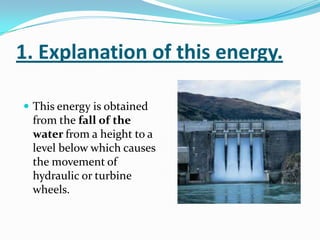
1. Explanation of this energy.

 This energy is obtained
 from the fall of the
 water from a height to a
 level below which causes
 the movement of
 hydraulic or turbine
 wheels.
1. Explanation of this energy.


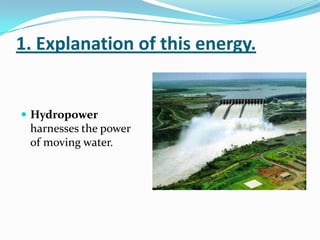
 Hydropower
 harnesses the power
 of moving water.
2. Working of this power plant.
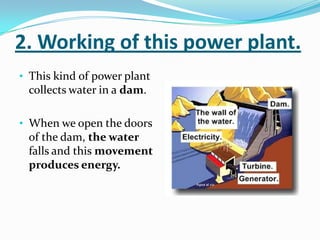
• This kind of power plant
 collects water in a dam.

• When we open the doors
 of the dam, the water
 falls and this movement
 produces energy.
2. Working of this power plant.
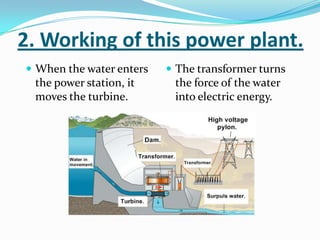
 When the water enters    The transformer turns
 the power station, it     the force of the water
 moves the turbine.        into electric energy.
3. Advantages and disadvantages.
ADVANTAGES.
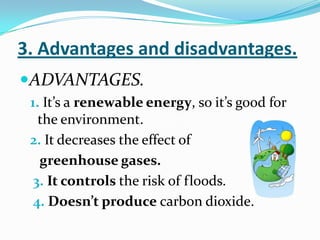
 1. It’s a renewable energy, so it’s good for
   the environment.
 2. It decreases the effect of
   greenhouse gases.
  3. It controls the risk of floods.
  4. Doesn’t produce carbon dioxide.
(ADVANTAGES)
5. High energy yield.
6. It is completely safe for people, animals or
  property.
7. It doesn’t generate heat or emits
  pollutants.
8. It’s autoctonous, avoiding exterior
  imports.
3. Advantages and disadvantages.
DISADVANTAGES.
1. The construction of dams can flood
   towns and cities.
2. Destruction of nature.
3. Alteration of ecosystems.
4. Loss of fertile land.
(DISADVANTAGES)
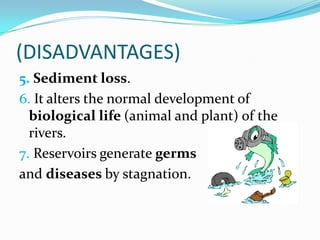
5. Sediment loss.
6. It alters the normal development of
  biological life (animal and plant) of the
  rivers.
7. Reservoirs generate germs
and diseases by stagnation.
4. Hydroelectric power plants in
Galicia and Spain.
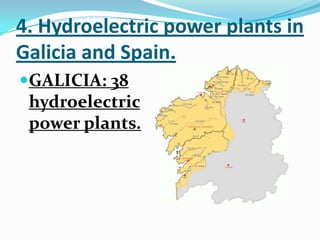
GALICIA: 38
 hydroelectric
 power plants.
Galician hydroelectric power
plants
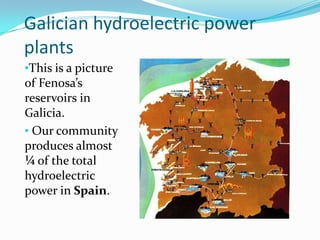
•This is a picture
of Fenosa’s
reservoirs in
Galicia.
• Our community
produces almost
¼ of the total
hydroelectric
power in Spain.
Galician hydroelectric Power
Plants
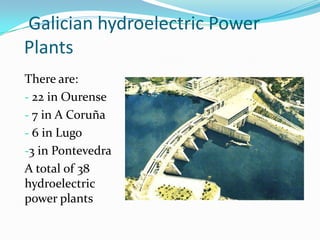
There are:
- 22 in Ourense
- 7 in A Coruña
- 6 in Lugo
-3 in Pontevedra
A total of 38
hydroelectric
power plants
San Sebastián II hydroelectric
power plant.
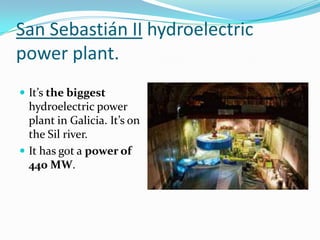
 It’s the biggest
  hydroelectric power
  plant in Galicia. It’s on
  the Sil river.
 It has got a power of
  440 MW.
Spanish hydroelectric power plants

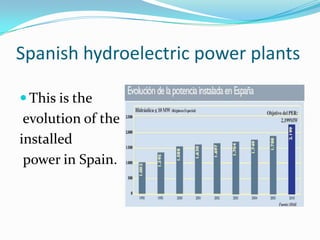
 This is the
 evolution of the
installed
 power in Spain.
Spanish Hydroelectric Power Plants
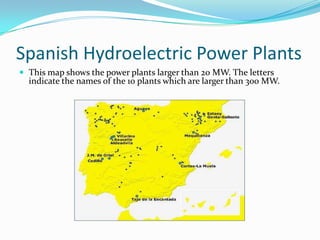
 This map shows the power plants larger than 20 MW. The letters
  indicate the names of the 10 plants which are larger than 300 MW.
5. Hydroelectric power plants in
Europe and the world.
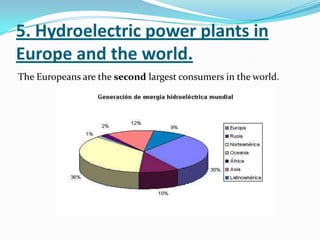
The Europeans are the second largest consumers in the world.
6. Conclusions.
 We think these power plants are a good
 idea because, recently, they have built mini
 hydro plants, more respectful with the
 environment and beneficial for
 technological progress, achieving a good
 performance and a reasonable economic
 viability.
7. Bibliography.
 http://educasitios2008.educ.ar/aula156/hidraulica/
 http://renovasenergias.blogspot.com.es/2008/11/venta
  jas-y-desventajas-de-la-energa_25.html
 http://twenergy.com/energia-hidraulica/ventajas-de-
  la-energia-hidraulica-433
 http://es.wikipedia.org/wiki/Energ%C3%ADa_hidr%C
  3%A1ulica
 http://augasdegalicia.xunta.es/es/1.4.htm
7. Bibliography.
 http://www.ejecutivos.es/noticia/33490/Empresas/IBE
 RDROLA-finaliza-con-exito-las-pruebas-de-puesta-
 en-marcha-de-la-central-de-San-Sebastian-II.html

Hydroelectric Power Plants by Ana Bugallo and Julia Martínez

  • 1.
    Ana Bugallo &Julia Martínez, 3ºA.
  • 2.
    - INDEX: 1. Explanationof this energy. 2. How these power plants work. 3. Advantages and disadvantages. 4. Hydroelectric power plants in Galicia and Spain. 5. Hydroelectric power plants in Europe and the world. 6. Conclusions. 7. Bibliography.
  • 3.
    1. Explanation ofthis energy.  This energy is obtained from the fall of the water from a height to a level below which causes the movement of hydraulic or turbine wheels.
  • 4.
    1. Explanation ofthis energy.  Hydropower harnesses the power of moving water.
  • 5.
    2. Working ofthis power plant. • This kind of power plant collects water in a dam. • When we open the doors of the dam, the water falls and this movement produces energy.
  • 6.
    2. Working ofthis power plant.  When the water enters  The transformer turns the power station, it the force of the water moves the turbine. into electric energy.
  • 7.
    3. Advantages anddisadvantages. ADVANTAGES. 1. It’s a renewable energy, so it’s good for the environment. 2. It decreases the effect of greenhouse gases. 3. It controls the risk of floods. 4. Doesn’t produce carbon dioxide.
  • 8.
    (ADVANTAGES) 5. High energyyield. 6. It is completely safe for people, animals or property. 7. It doesn’t generate heat or emits pollutants. 8. It’s autoctonous, avoiding exterior imports.
  • 9.
    3. Advantages anddisadvantages. DISADVANTAGES. 1. The construction of dams can flood towns and cities. 2. Destruction of nature. 3. Alteration of ecosystems. 4. Loss of fertile land.
  • 10.
    (DISADVANTAGES) 5. Sediment loss. 6.It alters the normal development of biological life (animal and plant) of the rivers. 7. Reservoirs generate germs and diseases by stagnation.
  • 11.
    4. Hydroelectric powerplants in Galicia and Spain. GALICIA: 38 hydroelectric power plants.
  • 12.
    Galician hydroelectric power plants •Thisis a picture of Fenosa’s reservoirs in Galicia. • Our community produces almost ¼ of the total hydroelectric power in Spain.
  • 13.
    Galician hydroelectric Power Plants Thereare: - 22 in Ourense - 7 in A Coruña - 6 in Lugo -3 in Pontevedra A total of 38 hydroelectric power plants
  • 14.
    San Sebastián IIhydroelectric power plant.  It’s the biggest hydroelectric power plant in Galicia. It’s on the Sil river.  It has got a power of 440 MW.
  • 15.
    Spanish hydroelectric powerplants  This is the evolution of the installed power in Spain.
  • 16.
    Spanish Hydroelectric PowerPlants  This map shows the power plants larger than 20 MW. The letters indicate the names of the 10 plants which are larger than 300 MW.
  • 17.
    5. Hydroelectric powerplants in Europe and the world. The Europeans are the second largest consumers in the world.
  • 18.
    6. Conclusions.  Wethink these power plants are a good idea because, recently, they have built mini hydro plants, more respectful with the environment and beneficial for technological progress, achieving a good performance and a reasonable economic viability.
  • 19.
    7. Bibliography.  http://educasitios2008.educ.ar/aula156/hidraulica/ http://renovasenergias.blogspot.com.es/2008/11/venta jas-y-desventajas-de-la-energa_25.html  http://twenergy.com/energia-hidraulica/ventajas-de- la-energia-hidraulica-433  http://es.wikipedia.org/wiki/Energ%C3%ADa_hidr%C 3%A1ulica  http://augasdegalicia.xunta.es/es/1.4.htm
  • 20.
    7. Bibliography.  http://www.ejecutivos.es/noticia/33490/Empresas/IBE RDROLA-finaliza-con-exito-las-pruebas-de-puesta- en-marcha-de-la-central-de-San-Sebastian-II.html