Made By:
Farheen Jawaid
Arisha Anwer
Aiesha Jaweed
Masjah
WHAT IS RENEWABLE
ENERGY?
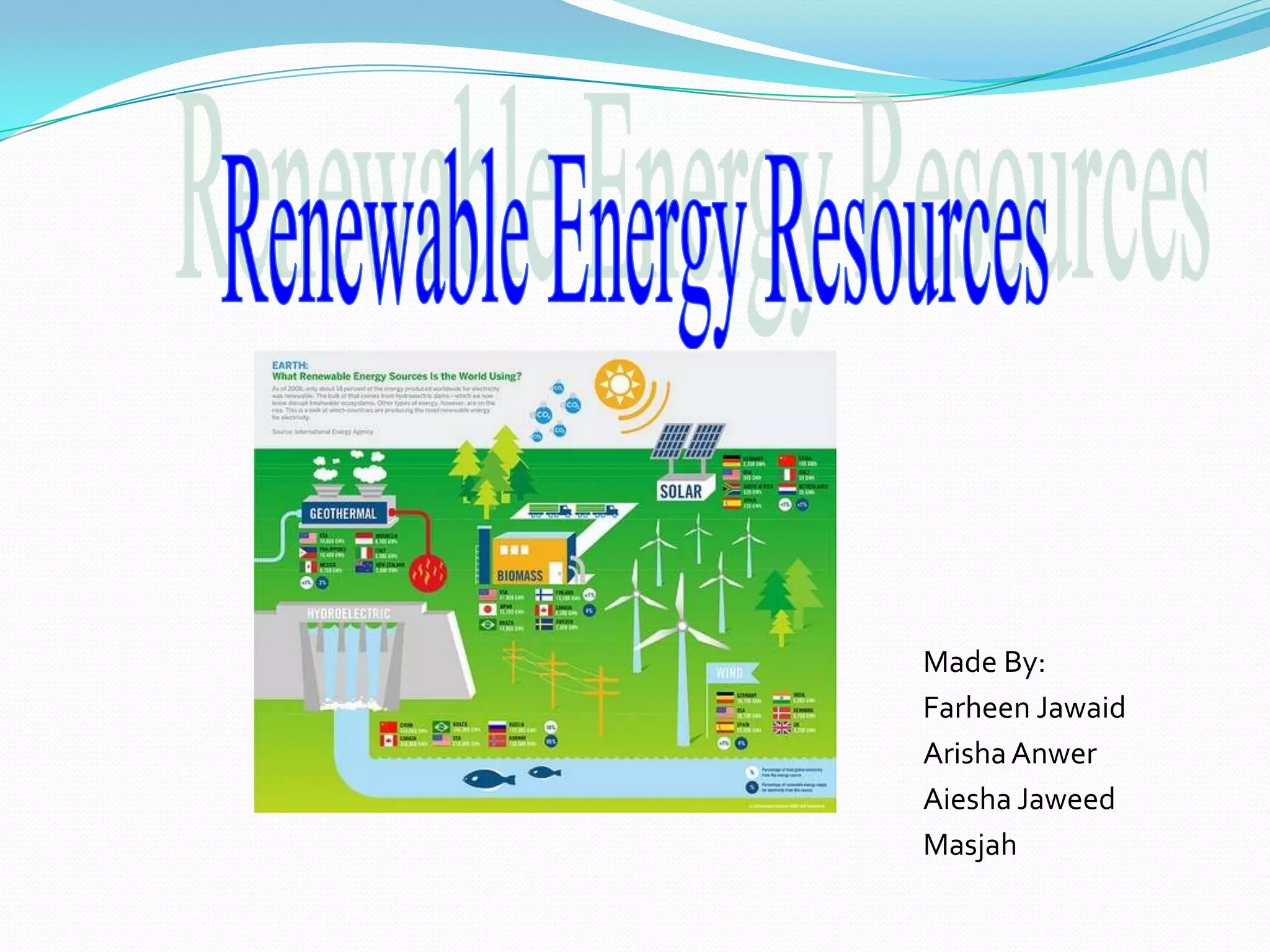
Renewable energy is energy generated from
natural resources—such as sunlight, wind,
rain, tides and geothermal heat—which are
renewable (naturally replenished).
Renewable energy technologies range from
solar power, wind power,
hydroelectricity/micro hydro, biomass and
biofuels for transportation.
What is Hydropower
 Hydropower refers to energy, mostly electric,
which is derived from water in motion. This power
is harnessed and used to drive mechanical devices.
The main advantage of this form of energy is that

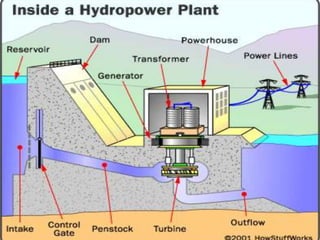
it is clean and renewable. Hydropower plants are
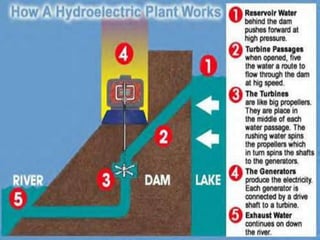
actually based on a rather simple concept -- water
flowing through a dam turns a turbine, which
turns a generator.
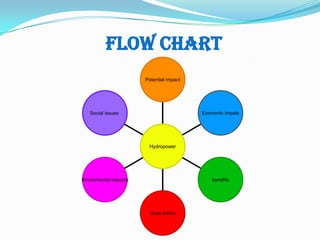
Flow Chart
Potential impact

Economic impats

Social issues

Hydropower

Enviromental impacts

benefits

Draw backs
SOCIAL ISSUES
 Relocating people from the reservoir area is the
most challenging social aspect of hydropower,
leading to significant concerns regarding local
culture, religious beliefs, and effects associated
with inundating burial sites. While there can never
be a 100 percent satisfactory solution to
involuntary resettlement, enormous progress has
been made in the way the problem is handled.
Environmental Impacts
 Hydroelectric power includes both massive

hydroelectric dams and small run-of-the-river plants.
Large-scale hydroelectric dams continue to be built in
many parts of the world (including China and Brazil),
but it is unlikely that new facilities will be added to the
existing U.S. fleet in the future.
 Instead, the future of hydroelectric power in the
United States will likely involve increased capacity at
current dams and new run-of-the-river projects. There
are environmental impacts at both types of plants.
Advantages
1. Once a dam is constructed, electricity can be produced at a
constant rate.
2. If electricity is not needed, the sluice gates can be shut,
stopping electricity generation. The water can be saved for
use another time when electricity demand is high.
3. Dams are designed to last many decades and so can
contribute to the generation of electricity for many years /
decades.
4. The lake that forms behind the dam can be used for water
sports and leisure / pleasure activities. Often large dams
become tourist attractions in their own right.
5. The lake's water can be used for irrigation purposes.
Disadvantages
1. Dams are extremely expensive to build and must be built to
a very high standard.
2. The high cost of dam construction means that they must
operate for many decades to become profitable.
3. The flooding of large areas of land means that the natural
environment is destroyed.
4. People living in villages and towns that are in the valley to
be flooded, must move out. This means that they lose their
farms and businesses. In some countries, people are
forcibly removed so that hydro-power schemes can go
ahead.
5. The building of large dams can cause serious geological
damage. For example, the building of the Hoover Dam in
the USA triggered a number of earth quakes and has
depressed the earth’s surface at its location.
SIGNIFICANCE
Hydropower stands as the most significant renewable
energy source. It uses the single but very powerful
energy force of moving water. By some comparison, it
competes with the energy produced by fossil fuels and
nuclear power, but is considered much cleaner and
more simplistic. Hydropower remains popular even in
third-world countries, which do not have the resources
to build expensive nuclear generating stations.
Hydropower does not pollute the atmosphere or
environment.
Facts
 Hydropower uses the energy of moving water for a variety
of useful applications.
 Hydroelectricity generates electricity by harnessing the
gravitational force of falling water.
 In 2006, hydroelectricity supplied around 20% of the
world’s electricity.
 Most hydroelectric power stations use water held in dams
to drive turbines and generators which turn mechanical
energy into electrical energy.
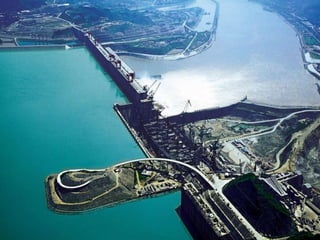
 The largest hydroelectric power station in the world is the
Three Gorges Dam in China.
Types of Hydropower
 Impoundment

An impoundment facility, typically a large hydropower system,
uses a dam to store river water in a reservoir. The water may be
released either to meet changing electricity needs or to maintain
a constant reservoir level.
 Diversion
A diversion, sometimes called run-of-river, facility channels a
portion of a river through a canal or penstock. It may not require
the use of a dam.
 Pumped Storage
When the demand for electricity is low, a pumped storage facility
stores energy by pumping water from a lower reservoir to an
upper reservoir. During periods of high electrical demand, the
water is released back to the lower reservoir to generate
electricity.
Economic Impacts
Large dams have long been promoted as providing
"cheap" hydropower and water supply. Today, we know
better. The costs and poor performance of large dams
were in the past largely concealed by the public
agencies that built and operated the projects. Dams
consistently cost more and take longer to build than
projected. In general, the larger a hydro project is, the
larger its construction cost overrun in percentage
terms.
Environmental Impacts
 The IHA (International Hydropower Association)
Working Group on Environmental Impact
Assessment (EIA) calls for impact assessment to be
an integral part of the multidisciplinary planning

approach, and to include a strong element of
public consultation. EIAs should cover both
positive and negative impacts both upstream and
downstream of a proposed project.
Bibliography
Weblinks:
 Google.com
 http://pbs.gov.pk/content/what-are-major-sectoreconomy-pakistan
 http://environment.nationalgeographic.com/environ
ment/energy/great-energy-challenge/worldelectricity-mix/

Hydro power ppt

  • 1.
    Made By: Farheen Jawaid ArishaAnwer Aiesha Jaweed Masjah
  • 2.
    WHAT IS RENEWABLE ENERGY? Renewableenergy is energy generated from natural resources—such as sunlight, wind, rain, tides and geothermal heat—which are renewable (naturally replenished). Renewable energy technologies range from solar power, wind power, hydroelectricity/micro hydro, biomass and biofuels for transportation.
  • 3.
    What is Hydropower Hydropower refers to energy, mostly electric, which is derived from water in motion. This power is harnessed and used to drive mechanical devices. The main advantage of this form of energy is that it is clean and renewable. Hydropower plants are actually based on a rather simple concept -- water flowing through a dam turns a turbine, which turns a generator.
  • 5.
    Flow Chart Potential impact Economicimpats Social issues Hydropower Enviromental impacts benefits Draw backs
  • 6.
    SOCIAL ISSUES  Relocatingpeople from the reservoir area is the most challenging social aspect of hydropower, leading to significant concerns regarding local culture, religious beliefs, and effects associated with inundating burial sites. While there can never be a 100 percent satisfactory solution to involuntary resettlement, enormous progress has been made in the way the problem is handled.
  • 8.
    Environmental Impacts  Hydroelectricpower includes both massive hydroelectric dams and small run-of-the-river plants. Large-scale hydroelectric dams continue to be built in many parts of the world (including China and Brazil), but it is unlikely that new facilities will be added to the existing U.S. fleet in the future.  Instead, the future of hydroelectric power in the United States will likely involve increased capacity at current dams and new run-of-the-river projects. There are environmental impacts at both types of plants.
  • 10.
    Advantages 1. Once adam is constructed, electricity can be produced at a constant rate. 2. If electricity is not needed, the sluice gates can be shut, stopping electricity generation. The water can be saved for use another time when electricity demand is high. 3. Dams are designed to last many decades and so can contribute to the generation of electricity for many years / decades. 4. The lake that forms behind the dam can be used for water sports and leisure / pleasure activities. Often large dams become tourist attractions in their own right. 5. The lake's water can be used for irrigation purposes.
  • 11.
    Disadvantages 1. Dams areextremely expensive to build and must be built to a very high standard. 2. The high cost of dam construction means that they must operate for many decades to become profitable. 3. The flooding of large areas of land means that the natural environment is destroyed. 4. People living in villages and towns that are in the valley to be flooded, must move out. This means that they lose their farms and businesses. In some countries, people are forcibly removed so that hydro-power schemes can go ahead. 5. The building of large dams can cause serious geological damage. For example, the building of the Hoover Dam in the USA triggered a number of earth quakes and has depressed the earth’s surface at its location.
  • 12.
    SIGNIFICANCE Hydropower stands asthe most significant renewable energy source. It uses the single but very powerful energy force of moving water. By some comparison, it competes with the energy produced by fossil fuels and nuclear power, but is considered much cleaner and more simplistic. Hydropower remains popular even in third-world countries, which do not have the resources to build expensive nuclear generating stations. Hydropower does not pollute the atmosphere or environment.
  • 13.
    Facts  Hydropower usesthe energy of moving water for a variety of useful applications.  Hydroelectricity generates electricity by harnessing the gravitational force of falling water.  In 2006, hydroelectricity supplied around 20% of the world’s electricity.  Most hydroelectric power stations use water held in dams to drive turbines and generators which turn mechanical energy into electrical energy.  The largest hydroelectric power station in the world is the Three Gorges Dam in China.
  • 15.
    Types of Hydropower Impoundment An impoundment facility, typically a large hydropower system, uses a dam to store river water in a reservoir. The water may be released either to meet changing electricity needs or to maintain a constant reservoir level.  Diversion A diversion, sometimes called run-of-river, facility channels a portion of a river through a canal or penstock. It may not require the use of a dam.  Pumped Storage When the demand for electricity is low, a pumped storage facility stores energy by pumping water from a lower reservoir to an upper reservoir. During periods of high electrical demand, the water is released back to the lower reservoir to generate electricity.
  • 16.
    Economic Impacts Large damshave long been promoted as providing "cheap" hydropower and water supply. Today, we know better. The costs and poor performance of large dams were in the past largely concealed by the public agencies that built and operated the projects. Dams consistently cost more and take longer to build than projected. In general, the larger a hydro project is, the larger its construction cost overrun in percentage terms.
  • 17.
    Environmental Impacts  TheIHA (International Hydropower Association) Working Group on Environmental Impact Assessment (EIA) calls for impact assessment to be an integral part of the multidisciplinary planning approach, and to include a strong element of public consultation. EIAs should cover both positive and negative impacts both upstream and downstream of a proposed project.
  • 18.
    Bibliography Weblinks:  Google.com  http://pbs.gov.pk/content/what-are-major-sectoreconomy-pakistan http://environment.nationalgeographic.com/environ ment/energy/great-energy-challenge/worldelectricity-mix/