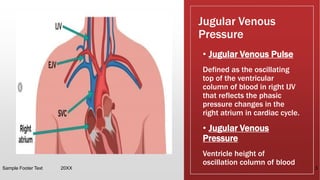
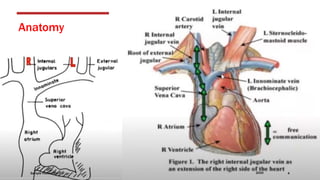
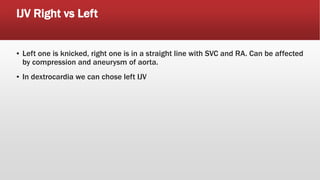
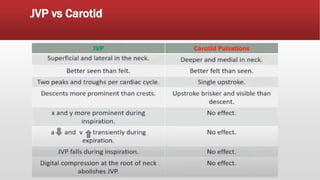
This document provides an overview of jugular venous pressure (JVP) measurement and interpretation. It discusses JVP anatomy, physiology, measurement techniques, normal and abnormal waveforms, and clinical significance in various cardiac conditions. Key points include:
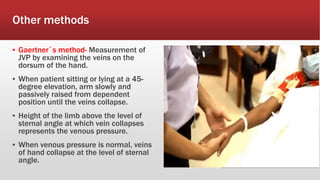
- JVP reflects right atrial pressure and is measured by observing neck vein pulsations.
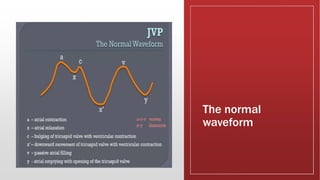
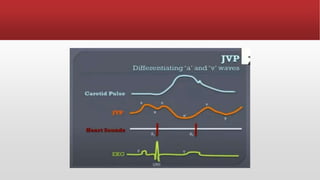
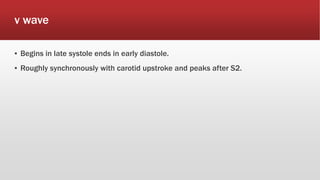
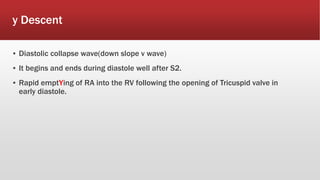
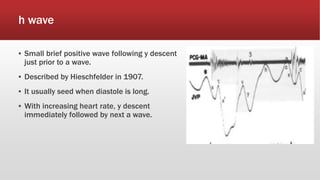
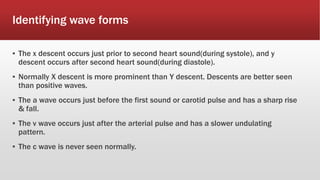
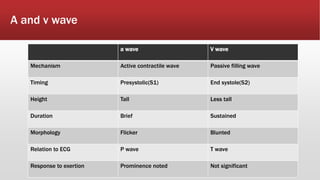
- The normal JVP waveform has a, x, c, x', v, and y waves that correlate with atrial and ventricular filling and contraction.
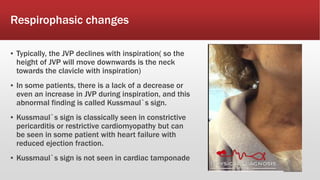
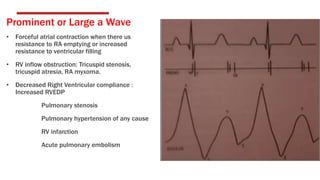
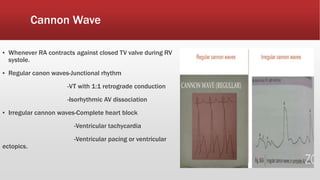
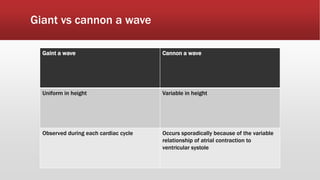
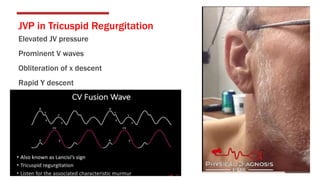
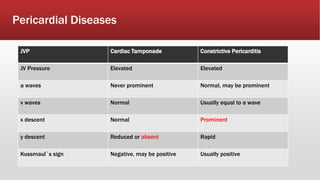
- Elevated or prominent waves, rapid y descent, and abnormal respiratory changes provide clues about underlying heart issues like tricuspid regurgitation, constrictive pericarditis, pulmonary hypertension, and right heart











![Abnormalities of x Descent
▪ Absent x descent- TR [Blunting of x descent early
sign of TR]
▪ Prominent x descent- Presence of atrial relaxation
with intact tricuspid valve and food RV contraction.
-Vigorous RV contraction- Cardiac
tamponade, Constrictive pericarditis
-RV overload-ASD](https://image.slidesharecdn.com/jugularvenouspressurejvp-230610151326-17d712a7/85/Jugular-Venous-Pressure-jvp-pptx-37-320.jpg)






![[Int. med] jugular venous pressure from SIMS Lahore](https://cdn.slidesharecdn.com/ss_thumbnails/ttnn2w5hsv594ygpbtvp-signature-b01672da1ecf8b94befb115319b147a085de390b8cb403389bce6c156545fbb5-poli-150815171701-lva1-app6892-thumbnail.jpg?width=640&height=640&fit=bounds)


