 Job design integrates work content, rewards and the
 qualifications required for each job in a way that meets
 the needs of employees and the organization.
Traditional Job design
 Taylors’ scientific management
1. Time study
2. Motion study
3. Fatigue study
Motivational Job Design
 Core job characteristics
    Skill variety, Task identity, Task significance
     Autonomy, Feedback
 Psychological characteristics
  Meaningfulness, Responsibility, Knowledge of result
 Personal and work outcomes
   MPS = skill variety + task identity + task significance
                             3
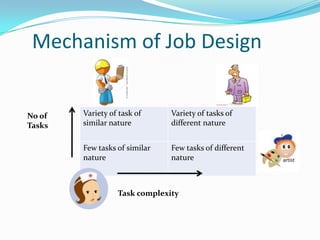
Mechanism of Job Design


No of   Variety of task of     Variety of tasks of
Tasks   similar nature         different nature


        Few tasks of similar   Few tasks of different
        nature                 nature


                  Task complexity
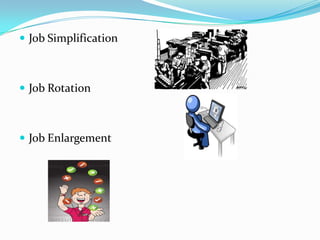
 Job Simplification


 Job Rotation


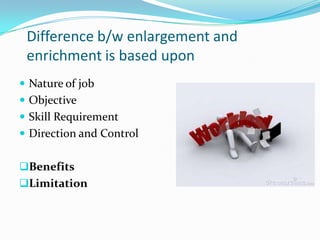
 Job Enlargement
Job Enrichment

           Job Enrichment           Job Enrichment + Job
Focus of                            Enlargement
Depth
           Routine Job              Job Enlargement


                            No. of Task
Difference b/w enlargement and
 enrichment is based upon
 Nature of job
 Objective
 Skill Requirement
 Direction and Control


Benefits
Limitation
 To give the means, ability and authority


Various approaches:
1. Helping
2. Allowing more control
3. Providing success role model
4. Social role model
Empowerment process
 Recalling Depowering and empowering experiences


 Discussing reasons for depowerment


 Choosing one issue at a time


 Identifying potential power bases


 Developing and implementing action plans
Barriers of empowerment

 Organizational structure

 Tight control system

 Inadequate delegation of authority
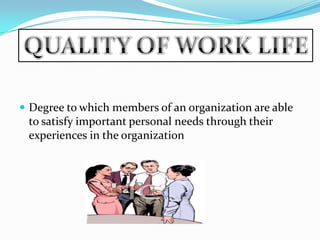
 Degree to which members of an organization are able
 to satisfy important personal needs through their
 experiences in the organization
Common approaches

  1.   Flexibility in work schedule
  2.   Autonomous Work Group
  3.   Job Enrichment
  4.   Opportunity for growth
  5.   Participation
  6.   communication
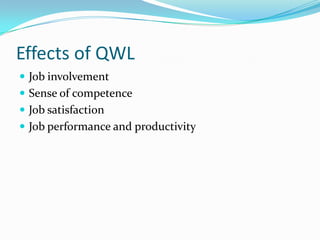
Effects of QWL
 Job involvement
 Sense of competence
 Job satisfaction
 Job performance and productivity
 The amount of pleasure associated with a job
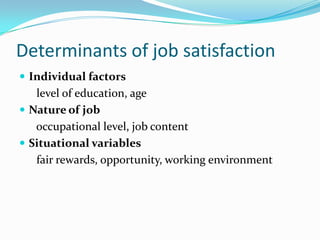
Determinants of job satisfaction
 Individual factors
   level of education, age
 Nature of job
   occupational level, job content
 Situational variables
   fair rewards, opportunity, working environment
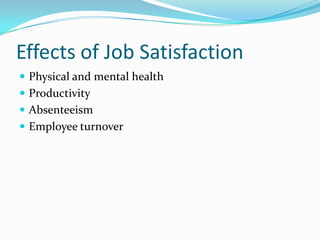
Effects of Job Satisfaction
 Physical and mental health
 Productivity
 Absenteeism
 Employee turnover
THANK YOU

Job design

  • 2.
     Job designintegrates work content, rewards and the qualifications required for each job in a way that meets the needs of employees and the organization.
  • 3.
    Traditional Job design Taylors’ scientific management 1. Time study 2. Motion study 3. Fatigue study
  • 4.
    Motivational Job Design Core job characteristics Skill variety, Task identity, Task significance Autonomy, Feedback  Psychological characteristics Meaningfulness, Responsibility, Knowledge of result  Personal and work outcomes MPS = skill variety + task identity + task significance 3
  • 5.
    Mechanism of JobDesign No of Variety of task of Variety of tasks of Tasks similar nature different nature Few tasks of similar Few tasks of different nature nature Task complexity
  • 6.
     Job Simplification Job Rotation  Job Enlargement
  • 7.
    Job Enrichment Job Enrichment Job Enrichment + Job Focus of Enlargement Depth Routine Job Job Enlargement No. of Task
  • 8.
    Difference b/w enlargementand enrichment is based upon  Nature of job  Objective  Skill Requirement  Direction and Control Benefits Limitation
  • 9.
     To givethe means, ability and authority Various approaches: 1. Helping 2. Allowing more control 3. Providing success role model 4. Social role model
  • 10.
    Empowerment process  RecallingDepowering and empowering experiences  Discussing reasons for depowerment  Choosing one issue at a time  Identifying potential power bases  Developing and implementing action plans
  • 11.
    Barriers of empowerment Organizational structure  Tight control system  Inadequate delegation of authority
  • 12.
     Degree towhich members of an organization are able to satisfy important personal needs through their experiences in the organization
  • 13.
    Common approaches 1. Flexibility in work schedule 2. Autonomous Work Group 3. Job Enrichment 4. Opportunity for growth 5. Participation 6. communication
  • 14.
    Effects of QWL Job involvement  Sense of competence  Job satisfaction  Job performance and productivity
  • 15.
     The amountof pleasure associated with a job
  • 16.
    Determinants of jobsatisfaction  Individual factors level of education, age  Nature of job occupational level, job content  Situational variables fair rewards, opportunity, working environment
  • 17.
    Effects of JobSatisfaction  Physical and mental health  Productivity  Absenteeism  Employee turnover
  • 18.