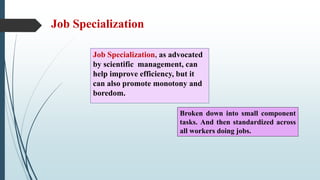
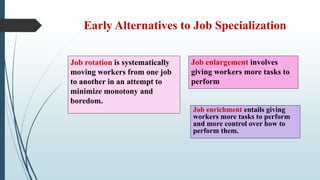
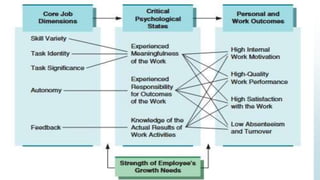
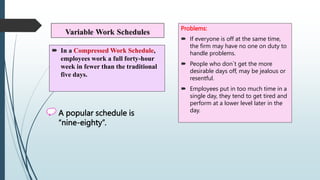
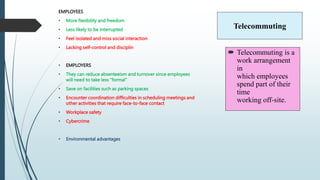
Job design and flexible work arrangements can be used to motivate employees and improve performance. Job design theories emphasize how core job dimensions like skill variety, task identity, and autonomy impact an employee's psychological state and outcomes. Flexible work arrangements give employees more control over their schedules through methods like flextime, compressed work weeks, telecommuting, and job sharing. While flexibility can boost motivation, managers must address challenges in coordination, isolation, and work-life balance.