HP – COMPAQ: A Failed Merger?Annadurai Anbarasu
Contents Background HP & Compaq
 Why Merger ? Reasons?
 Does it make sense? Positives and Negatives of Merger
 Merger Strategy
 Challenges  & SWOT Analysis
 Achieved Benefits for Shareholders and Customers
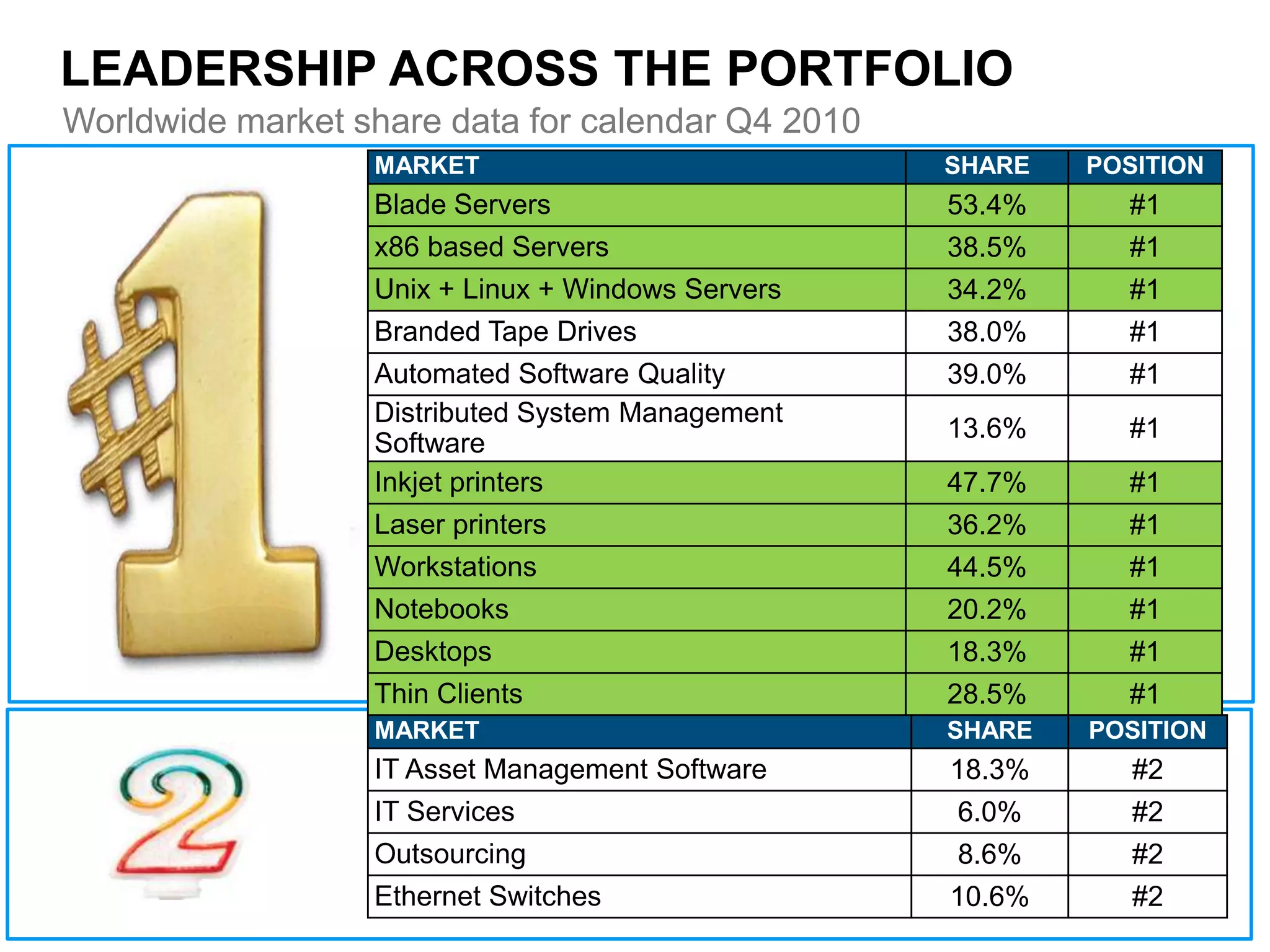
 Present status – Leadership across portfolio
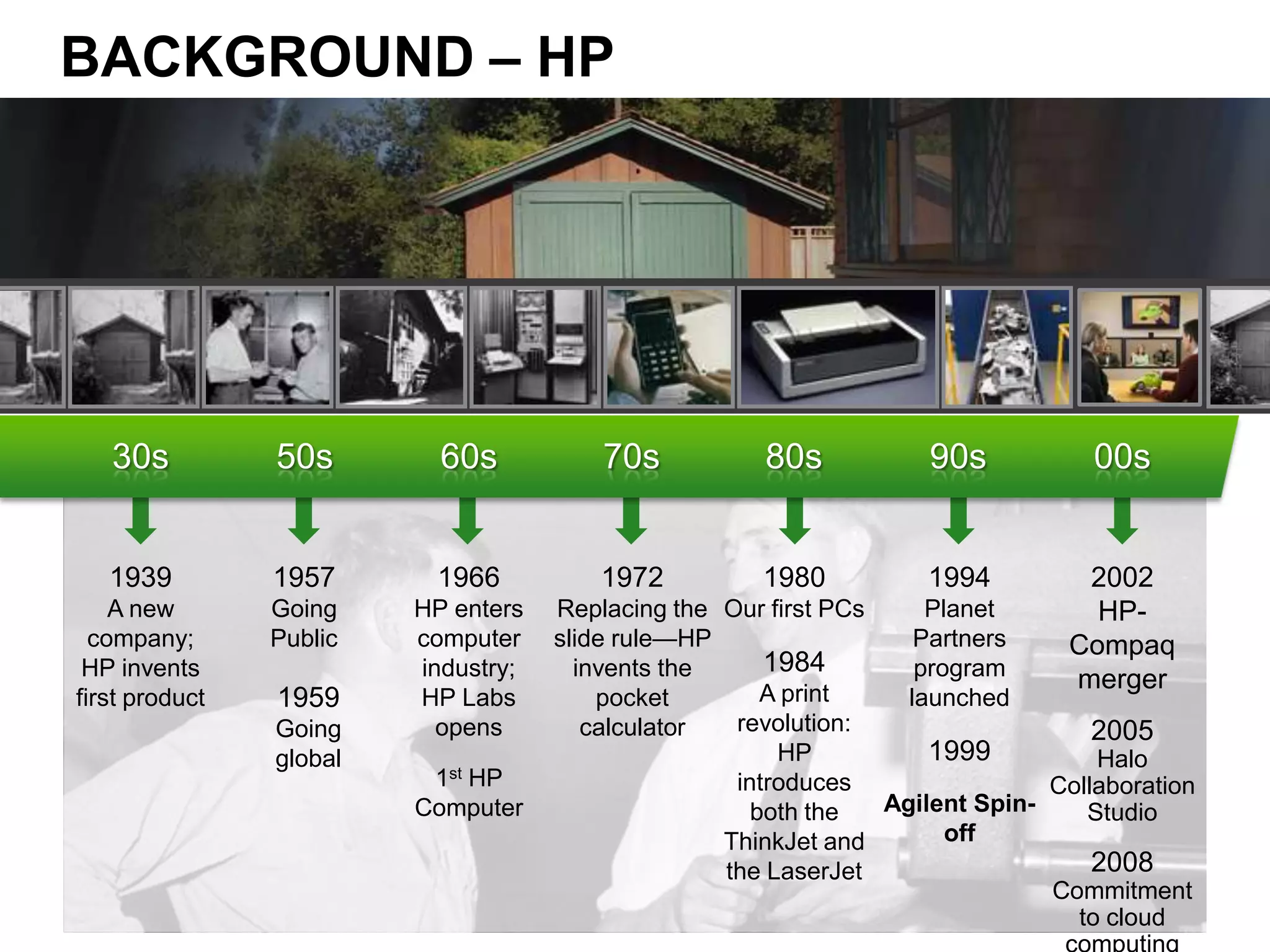
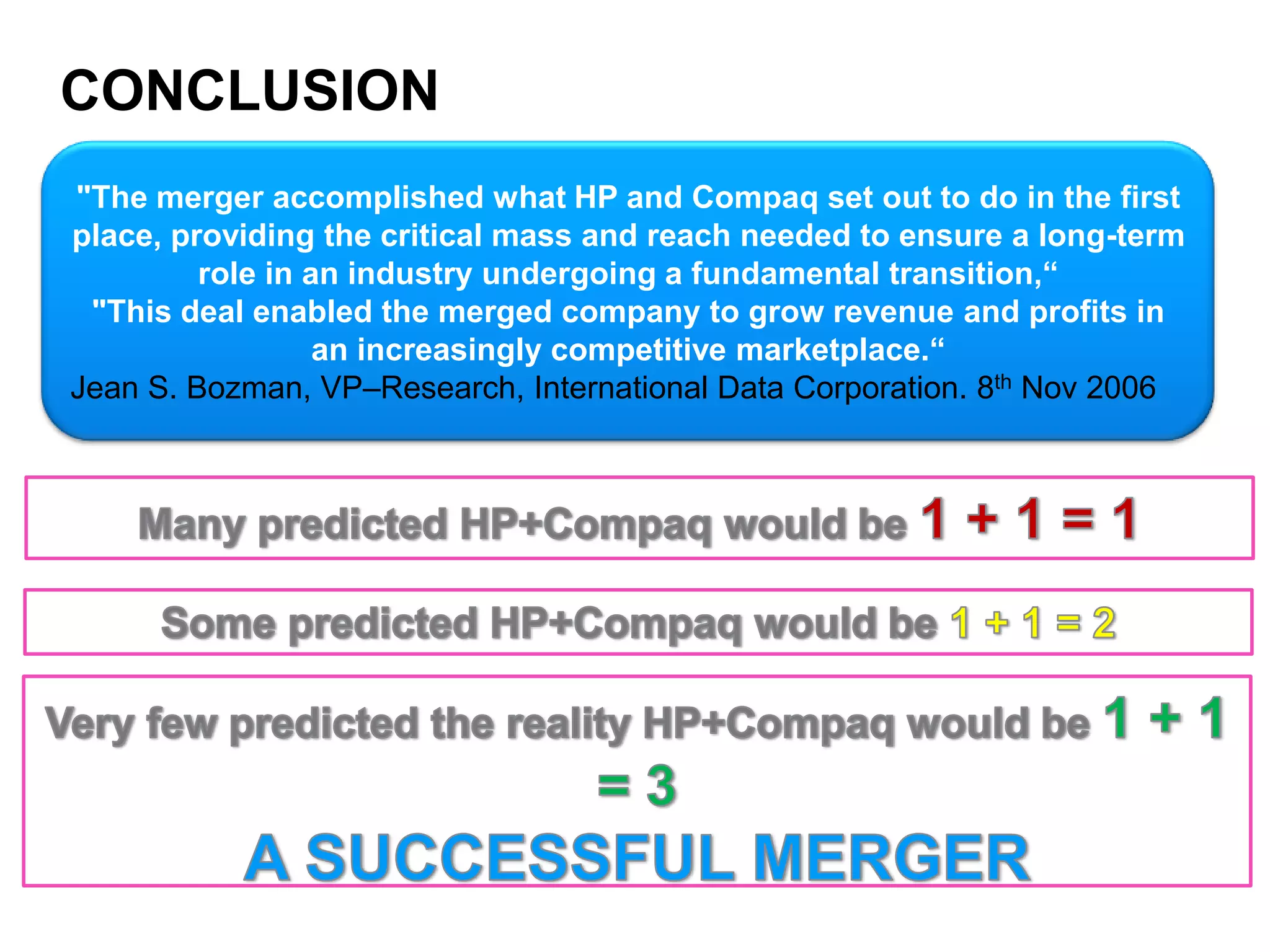
 ConclusionBackground – HP30s00s90s80s70s60s50s1939 A new company; HP inventsfirst product1994Planet Partners program launched1999Agilent Spin-off1957Going Public1966 HP enters computer industry;HP Labs opens1st HP Computer1972 Replacing the slide rule—HP invents the pocket calculator1980 Our first PCs1984 A print revolution: HP introduces both the ThinkJet and the LaserJet2002HP-Compaq merger2005Halo Collaboration Studio2008Commitment to cloud computing1959Going global
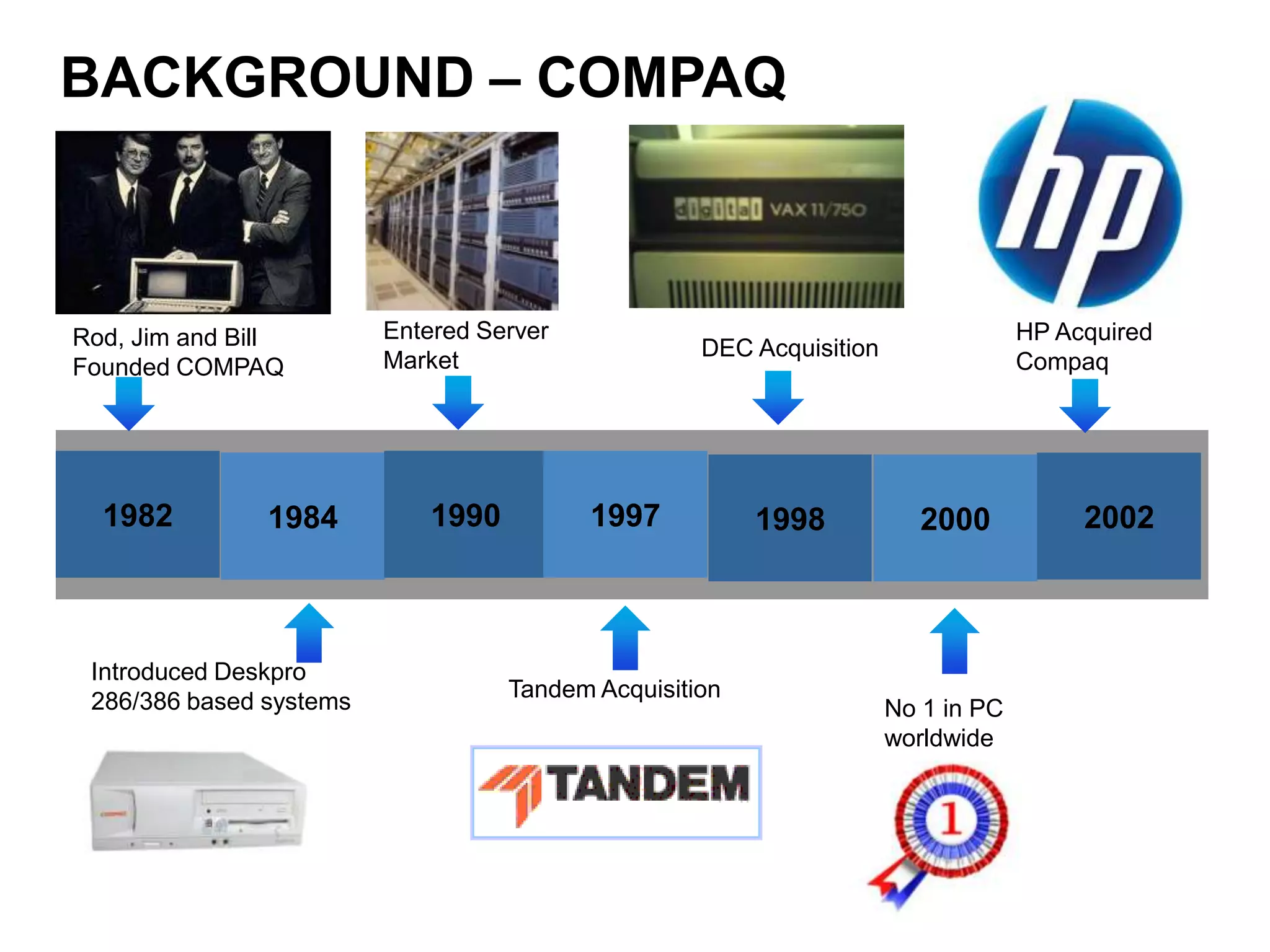
Background – CompaqEntered Server MarketHP Acquired CompaqRod, Jim and Bill Founded COMPAQDEC Acquisition1982199019971984200219982000Introduced Deskpro 286/386 based systemsTandem AcquisitionNo 1 in PC worldwide
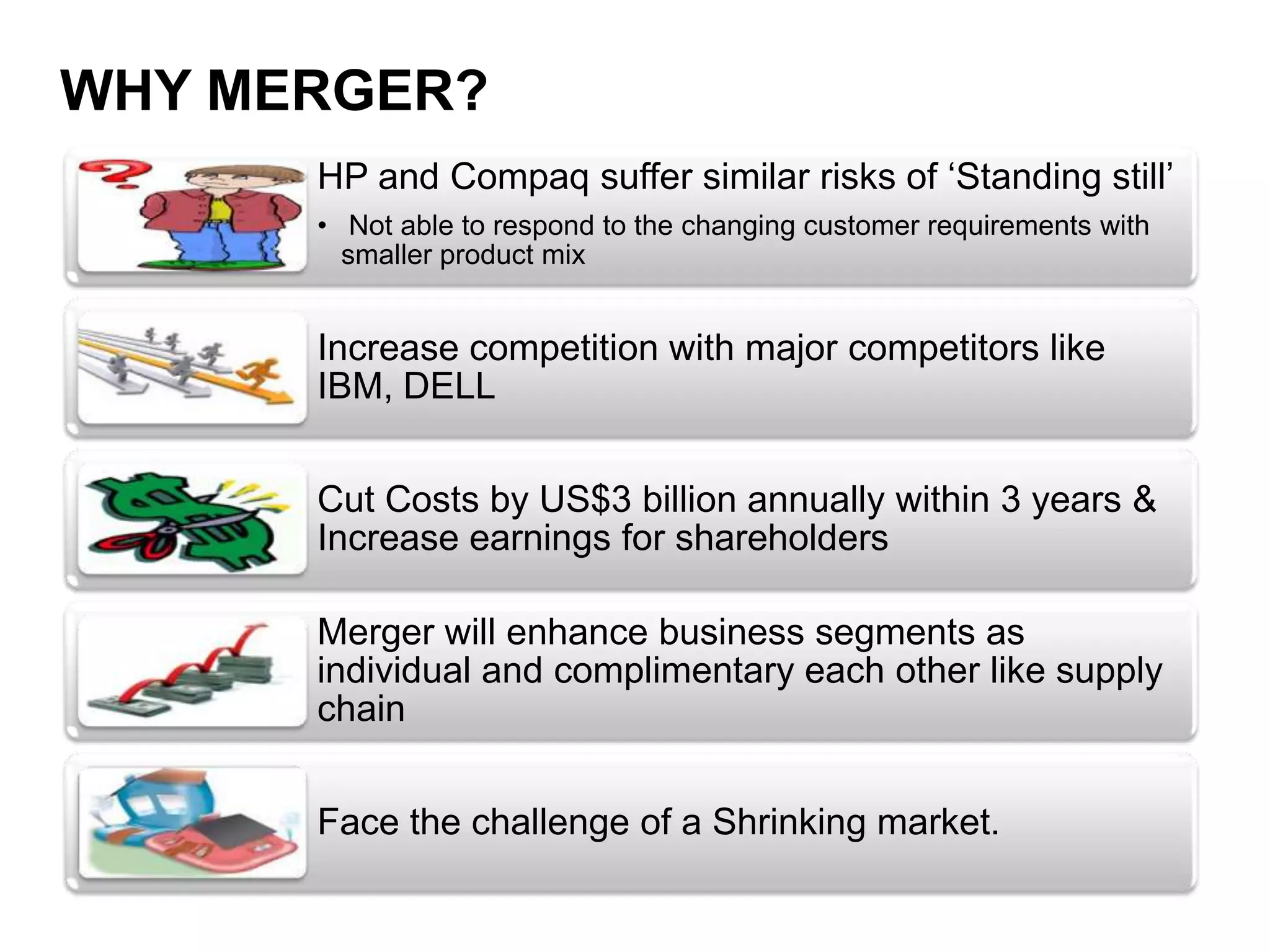
Why Merger?
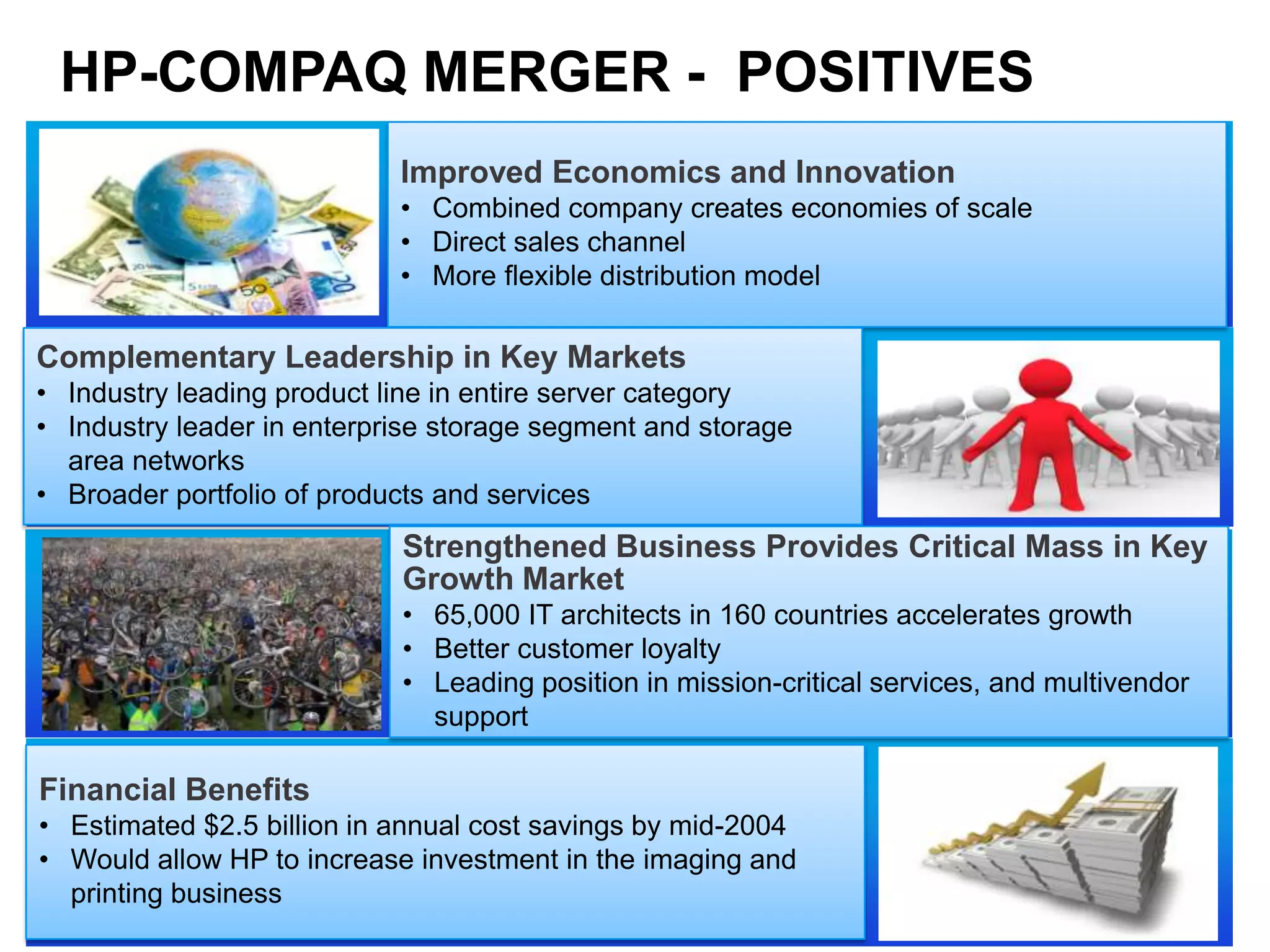
HP-COMPAQ Merger -  PositivesImproved Economics and InnovationCombined company creates economies of scale
Direct sales channel
More flexible distribution modelComplementary Leadership in Key MarketsIndustry leading product line in entire server category
Industry leader in enterprise storage segment and storage area networks
Broader portfolio of products and servicesStrengthened Business Provides Critical Mass in Key Growth Market65,000 IT architects in 160 countries accelerates growth
Better customer loyalty
Leading position in mission-critical services, and multivendor supportFinancial BenefitsEstimated $2.5 billion in annual cost savings by mid-2004
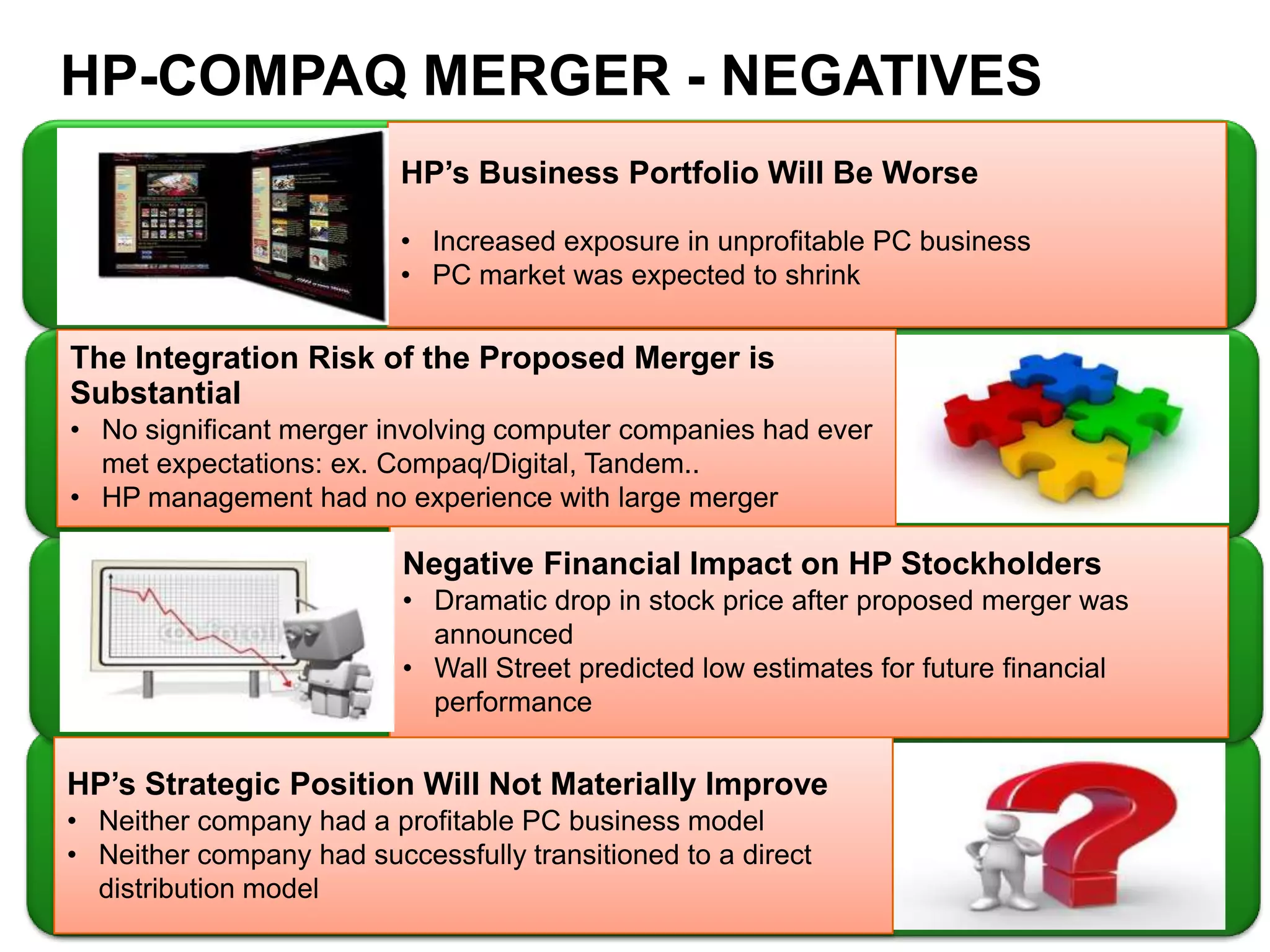
Would allow HP to increase investment in the imaging and printing businessHP-COMPAQ Merger - Negatives HP’s Business Portfolio Will Be WorseIncreased exposure in unprofitable PC business

Hp compaq a failure or success

  • 1.
    HP – COMPAQ:A Failed Merger?Annadurai Anbarasu
  • 2.
  • 3.
    Why Merger? Reasons?
  • 4.
    Does itmake sense? Positives and Negatives of Merger
  • 5.
  • 6.
    Challenges & SWOT Analysis
  • 7.
    Achieved Benefitsfor Shareholders and Customers
  • 8.
    Present status– Leadership across portfolio
  • 9.
    ConclusionBackground –HP30s00s90s80s70s60s50s1939 A new company; HP inventsfirst product1994Planet Partners program launched1999Agilent Spin-off1957Going Public1966 HP enters computer industry;HP Labs opens1st HP Computer1972 Replacing the slide rule—HP invents the pocket calculator1980 Our first PCs1984 A print revolution: HP introduces both the ThinkJet and the LaserJet2002HP-Compaq merger2005Halo Collaboration Studio2008Commitment to cloud computing1959Going global
  • 10.
    Background – CompaqEnteredServer MarketHP Acquired CompaqRod, Jim and Bill Founded COMPAQDEC Acquisition1982199019971984200219982000Introduced Deskpro 286/386 based systemsTandem AcquisitionNo 1 in PC worldwide
  • 11.
  • 12.
    HP-COMPAQ Merger - PositivesImproved Economics and InnovationCombined company creates economies of scale
  • 13.
  • 14.
    More flexible distributionmodelComplementary Leadership in Key MarketsIndustry leading product line in entire server category
  • 15.
    Industry leader inenterprise storage segment and storage area networks
  • 16.
    Broader portfolio ofproducts and servicesStrengthened Business Provides Critical Mass in Key Growth Market65,000 IT architects in 160 countries accelerates growth
  • 17.
  • 18.
    Leading position inmission-critical services, and multivendor supportFinancial BenefitsEstimated $2.5 billion in annual cost savings by mid-2004
  • 19.
    Would allow HPto increase investment in the imaging and printing businessHP-COMPAQ Merger - Negatives HP’s Business Portfolio Will Be WorseIncreased exposure in unprofitable PC business
  • 20.
    PC market wasexpected to shrinkThe Integration Risk of the Proposed Merger is SubstantialNo significant merger involving computer companies had ever met expectations: ex. Compaq/Digital, Tandem..
  • 21.
    HP management hadno experience with large mergerNegative Financial Impact on HP StockholdersDramatic drop in stock price after proposed merger was announced
  • 22.
    Wall Street predictedlow estimates for future financial performanceHP’s Strategic Position Will Not Materially ImproveNeither company had a profitable PC business model
  • 23.
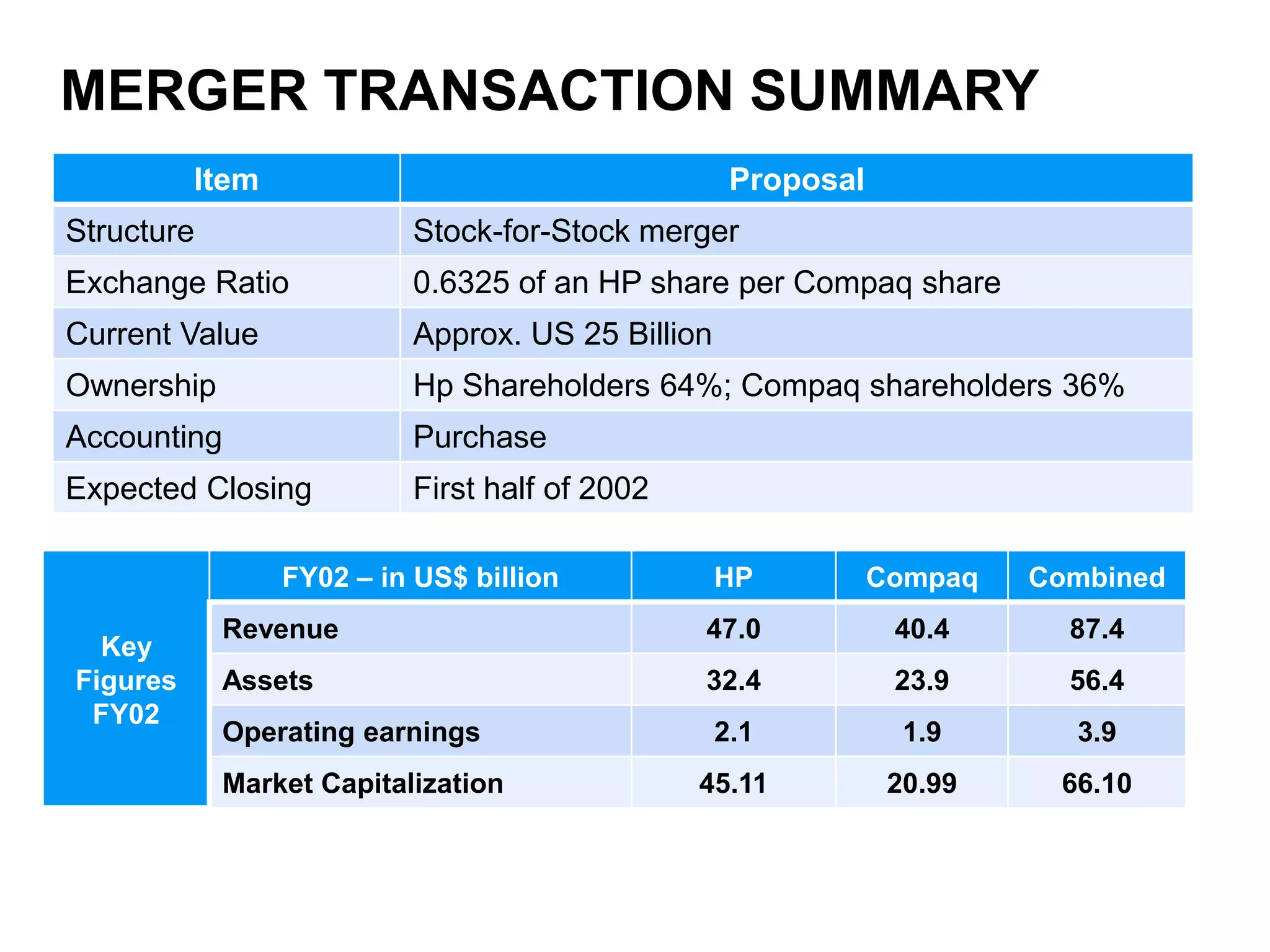
    Neither company hadsuccessfully transitioned to a direct distribution modelMERGER TRANSACTION SUMMARY
  • 24.
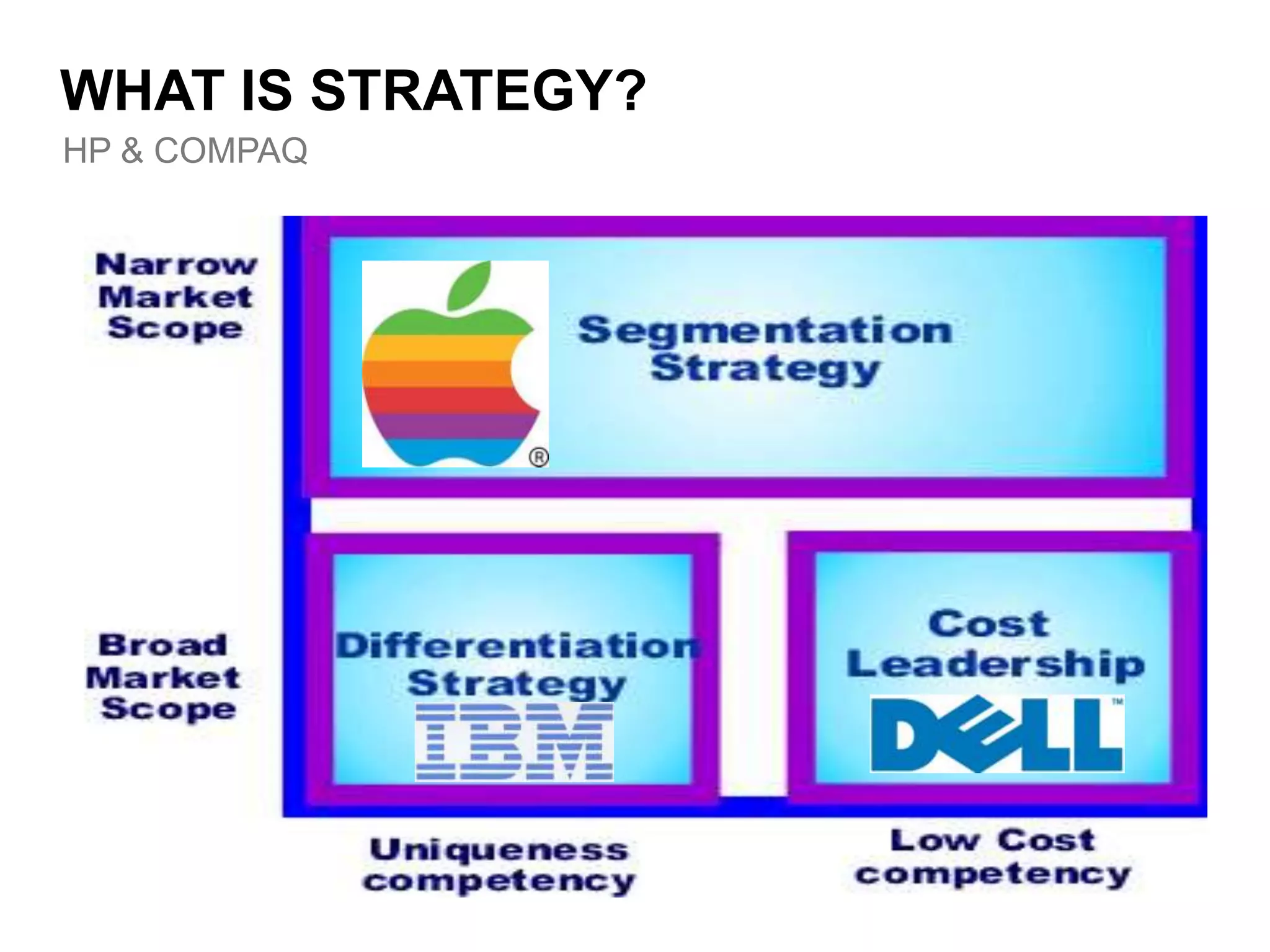
    HP & COMPAQWhatis strategy?
  • 25.
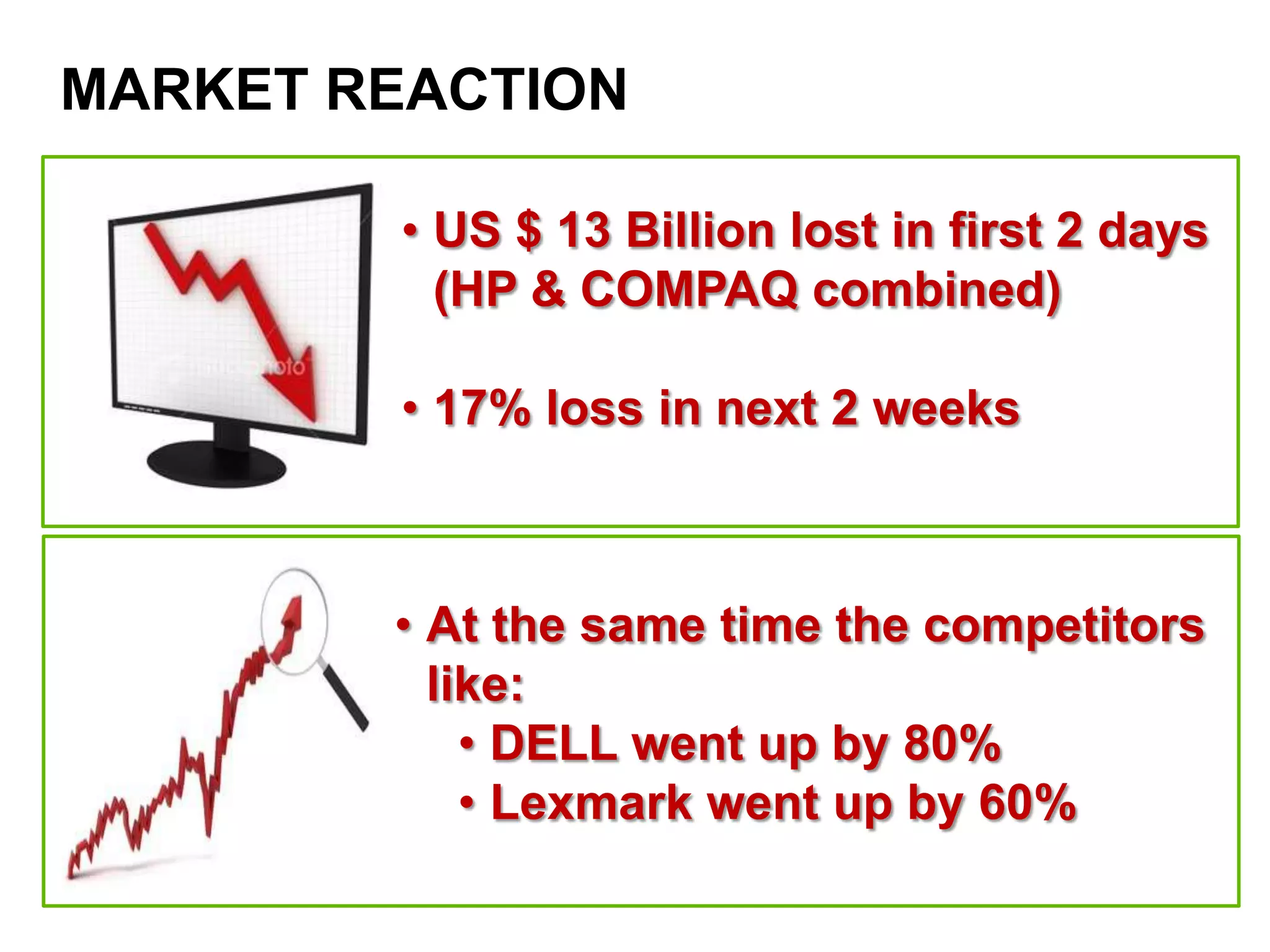
    Market reactionUS $13 Billion lost in first 2 days (HP & COMPAQ combined)
  • 26.
    17% loss innext 2 weeks
  • 27.
    At the sametime the competitors like:
  • 28.
  • 29.
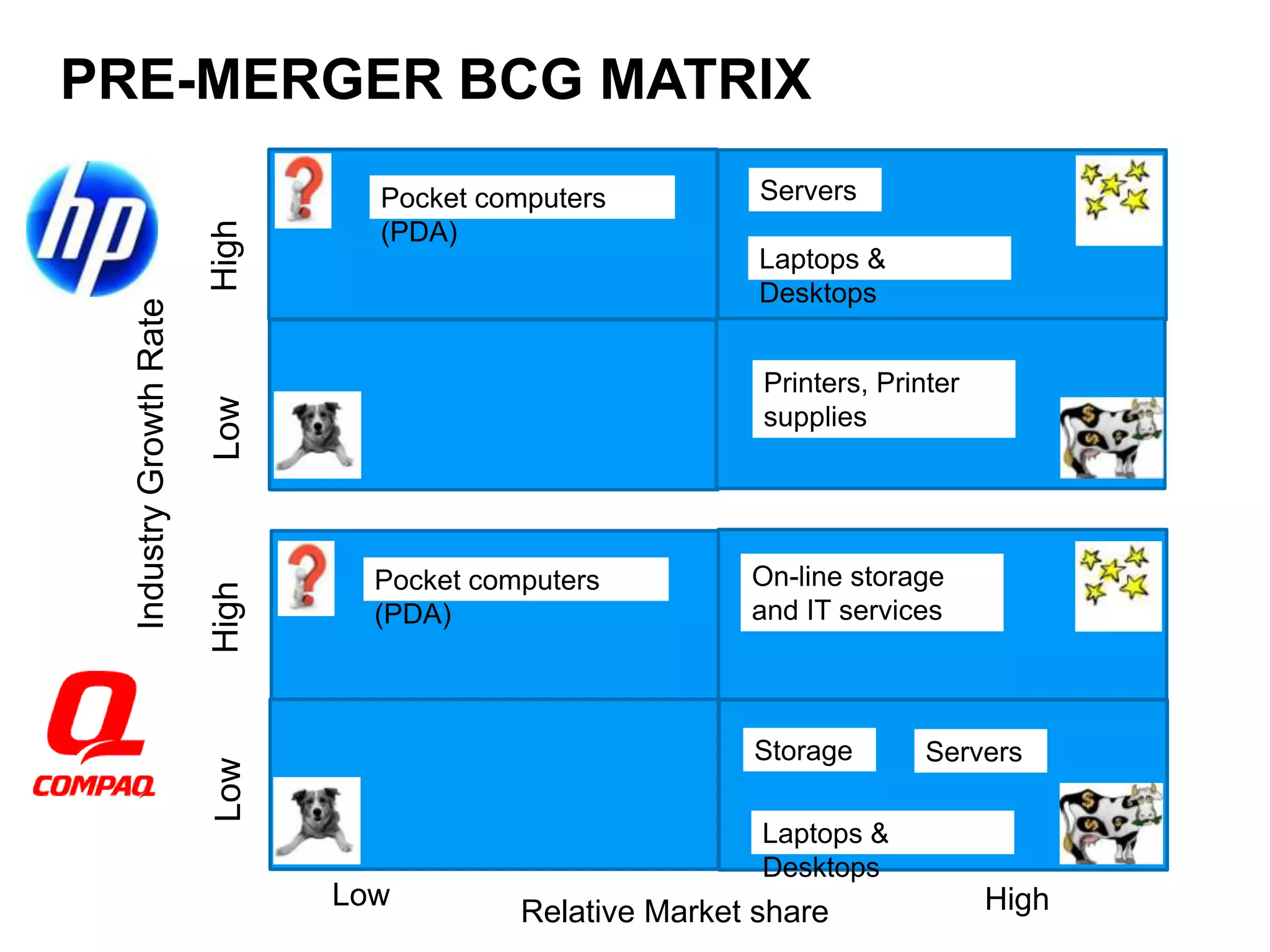
    Lexmark went upby 60%Pre-merger BCG matrixHighServersPocket computers (PDA)Laptops & DesktopsIndustry Growth RateLowPrinters, Printer suppliesHighOn-line storage and IT servicesPocket computers (PDA)LowStorageServersLaptops & DesktopsLowHighRelative Market share
  • 30.
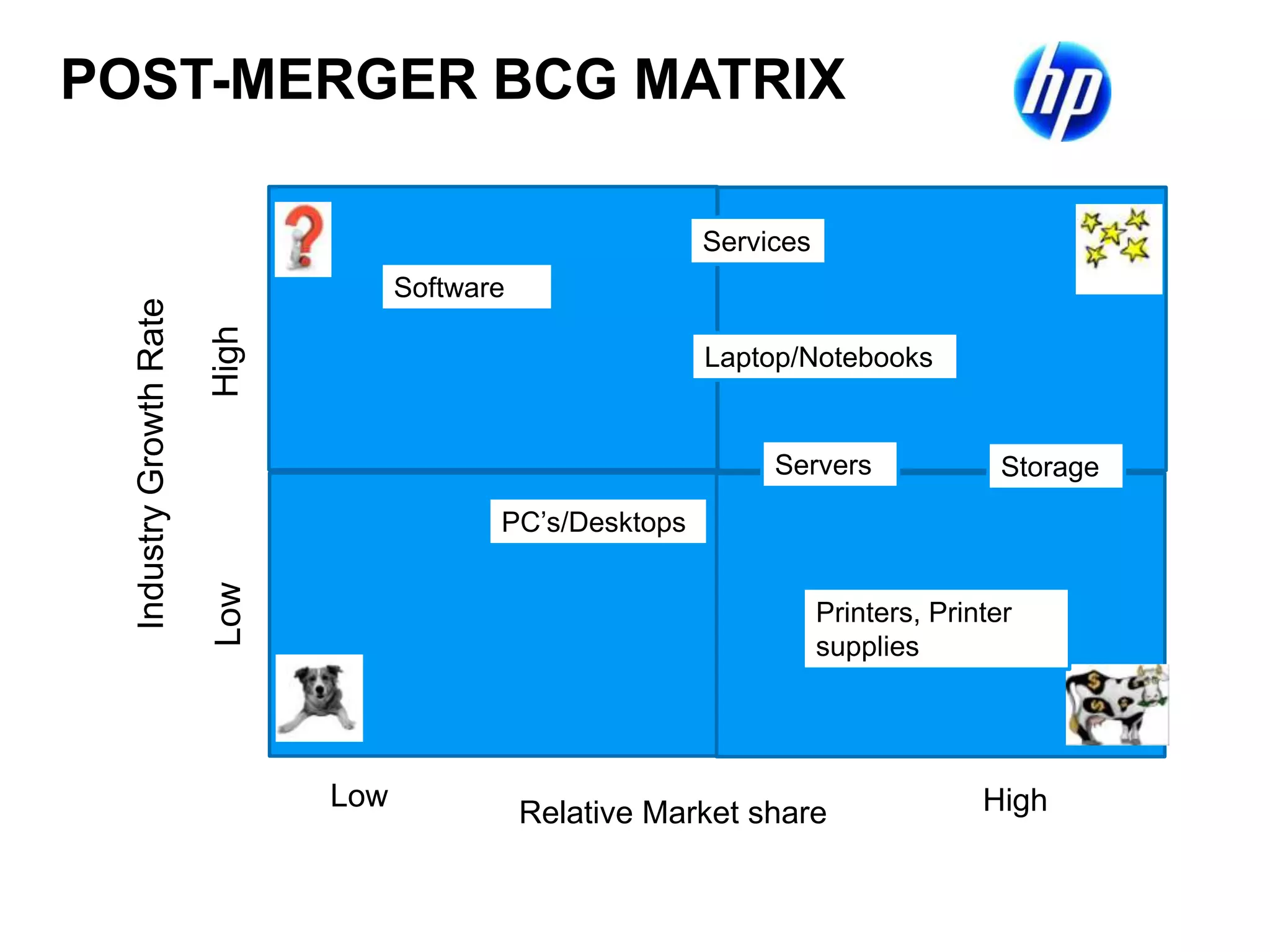
    Post-merger BCG matrixServicesSoftwareHighIndustryGrowth RateLaptop/NotebooksServersStoragePC’s/DesktopsLowPrinters, Printer suppliesLowHighRelative Market share
  • 31.
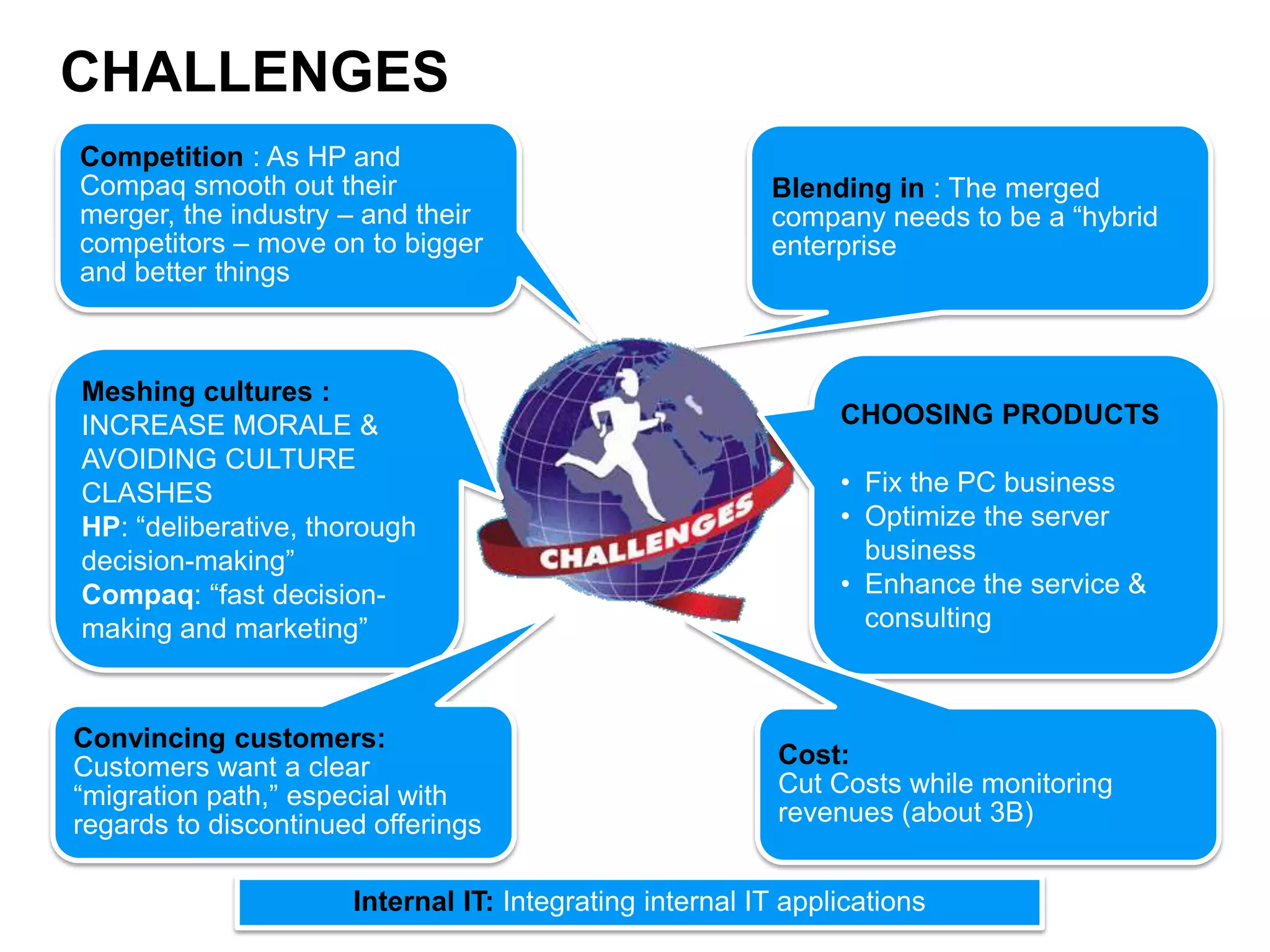
    ChallengesCompetition : AsHP and Compaq smooth out their merger, the industry – and their competitors – move on to bigger and better thingsBlending in : The merged company needs to be a “hybrid enterpriseMeshing cultures : INCREASE MORALE & AVOIDING CULTURE CLASHESHP: “deliberative, thorough decision-making”Compaq: “fast decision-making and marketing”CHOOSING PRODUCTSFix the PC business
  • 32.
  • 33.
    Enhance the service& consultingConvincing customers: Customers want a clear “migration path,” especial with regards to discontinued offeringsCost: Cut Costs while monitoring revenues (about 3B)Internal IT: Integrating internal IT applications
  • 34.
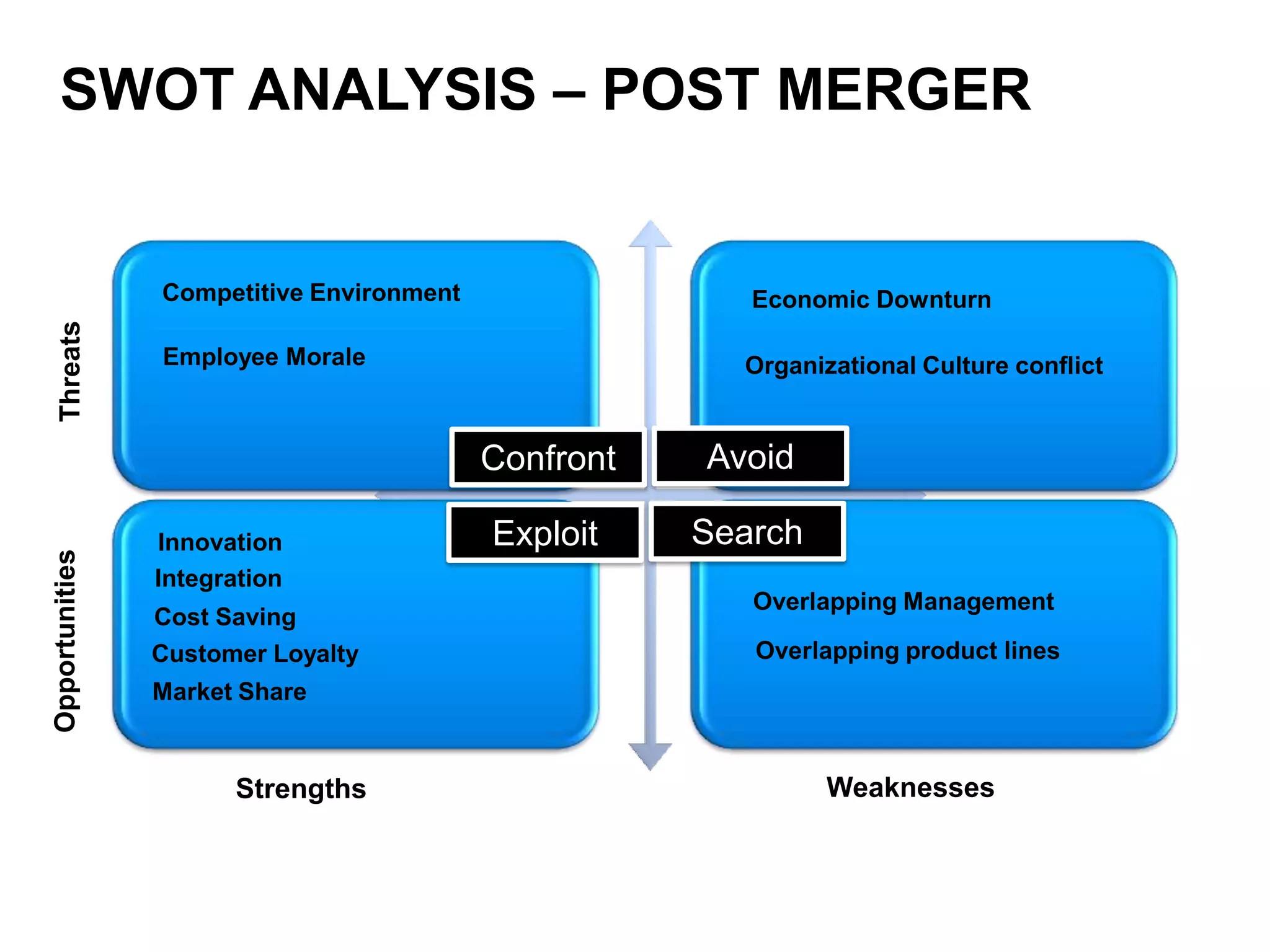
    Swot analysis –post mergerThreatsCompetitive EnvironmentEconomic DownturnEmployee MoraleOrganizational Culture conflictAvoidConfrontOpportunitiesSearchExploitInnovationIntegrationOverlapping ManagementCost SavingOverlapping product linesCustomer LoyaltyMarket ShareWeaknessesStrengths
  • 35.
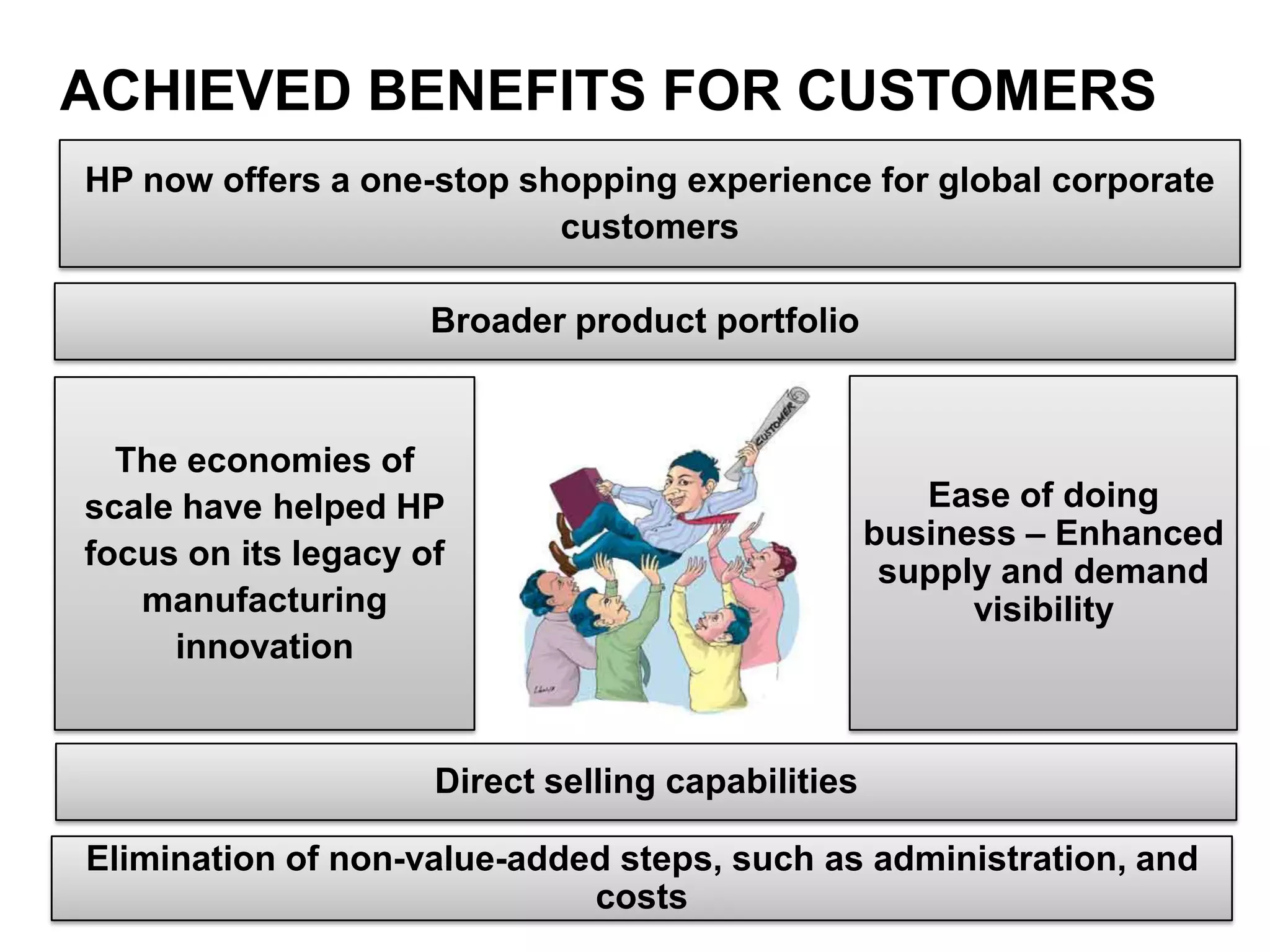
    Achieved Benefits forcustomersHP now offers a one-stop shopping experience for global corporate customersBroader product portfolioEase of doing business– Enhanced supply and demand visibilityThe economies of scale have helped HP focus on its legacy of manufacturing innovationDirect selling capabilitiesElimination of non-value-added steps, such as administration, and costs
  • 36.
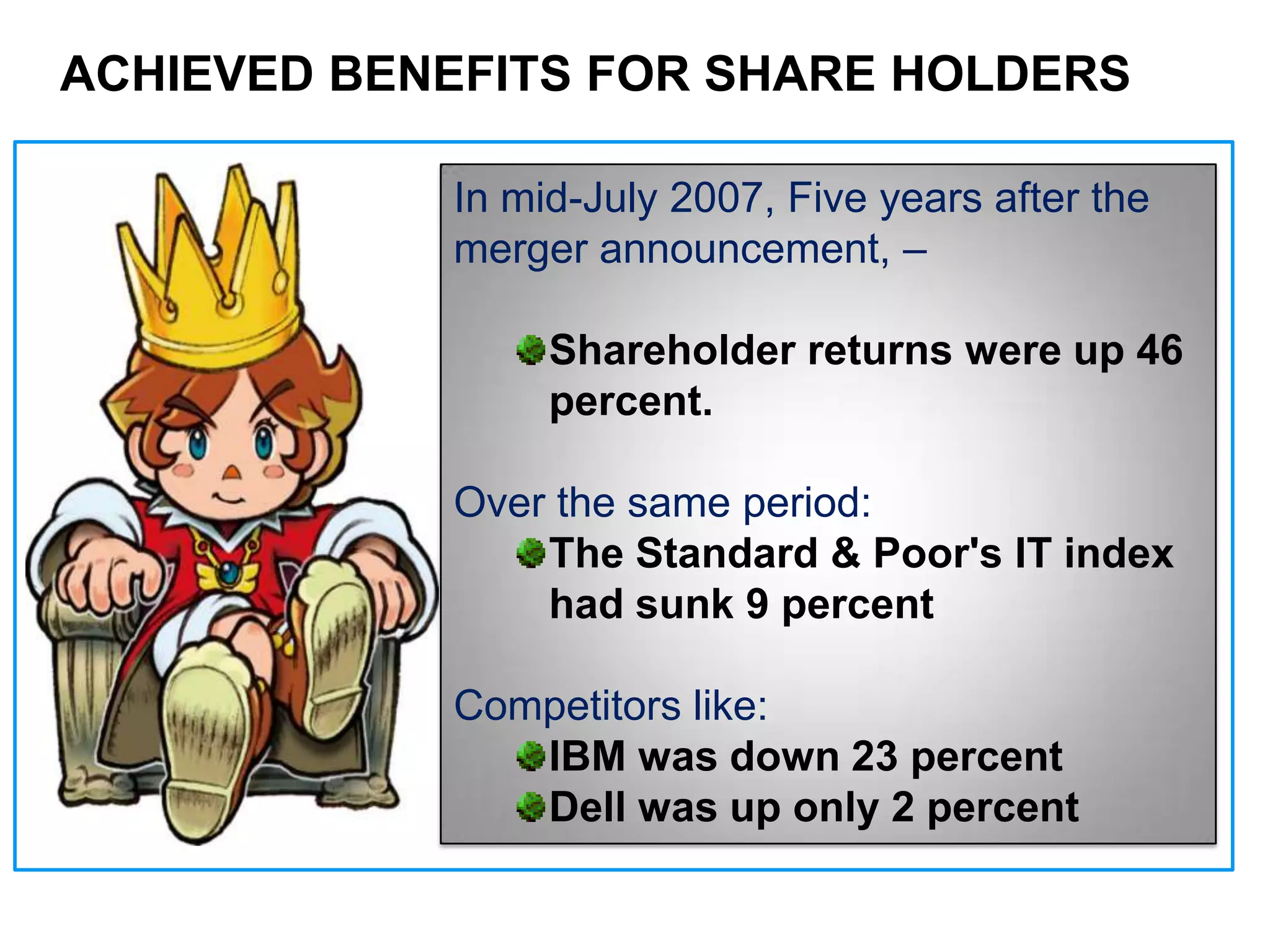
    Achieved Benefits forShare holdersIn mid-July 2007, Five years after the merger announcement, – Shareholder returns were up 46 percent. Over the same period:The Standard & Poor's IT index had sunk 9 percent Competitors like:IBM was down 23 percentDell was up only 2 percent
  • 37.
    LEADERSHIP ACROSS THEPORTFOLIOWorldwide market share data for calendar Q4 2010
  • 38.
    Conclusion"The merger accomplishedwhat HP and Compaq set out to do in the first place, providing the critical mass and reach needed to ensure a long-term role in an industry undergoing a fundamental transition,“ "This deal enabled the merged company to grow revenue and profits in an increasingly competitive marketplace.“Jean S. Bozman, VP–Research, International Data Corporation. 8th Nov 2006Many predicted HP+Compaq would be 1 + 1 = 1Some predicted HP+Compaq would be 1 + 1 = 2Very few predicted the reality HP+Compaq would be 1 + 1 = 3A SUCCESSFUL MERGER
  • 39.