Job Design


             Pradeep
             Singha
Job Design
 Job design involves conscious efforts to
 organize
    task, duties and responsibilities in to a unit of
 work
    to achieve certain objectives. Job design
Easierjob design new jobs than redesign
 follows to
existing
    analysis.
   jobs.
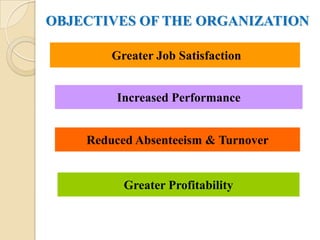
OBJECTIVES OF THE ORGANIZATION

        Greater Job Satisfaction


         Increased Performance


    Reduced Absenteeism & Turnover


          Greater Profitability
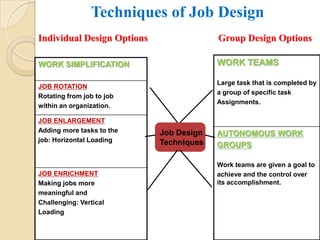
Techniques of Job Design
Individual Design Options                Group Design Options

WORK SIMPLIFICATION                      WORK TEAMS

                                         Large task that is completed by
JOB ROTATION
                                         a group of specific task
Rotating from job to job
                                         Assignments.
within an organization.

JOB ENLARGEMENT
Adding more tasks to the    Job Design   AUTONOMOUS WORK
job: Horizontal Loading     Techniques   GROUPS

                                         Work teams are given a goal to
JOB ENRICHMENT                           achieve and the control over
Making jobs more                         its accomplishment.
meaningful and
Challenging: Vertical
Loading
Factors Affecting Job Design
Organizational Factor
Environmental Factor
Behavioral Factor
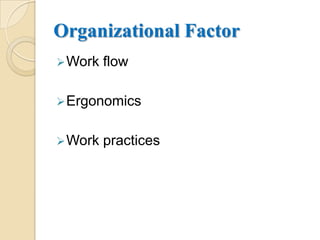
Organizational Factor
 Work   flow

 Ergonomics


 Work   practices
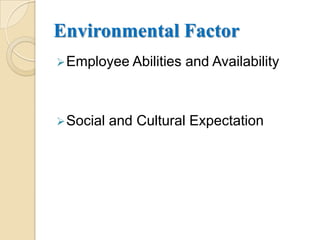
Environmental Factor
 Employee Abilities   and Availability


 Social   and Cultural Expectation
Behavioral Factor

 Feedback


 Use   of abilities

 Variety
Common Techniques
Specialization
Job enlargement
Job enrichment
Job rotation
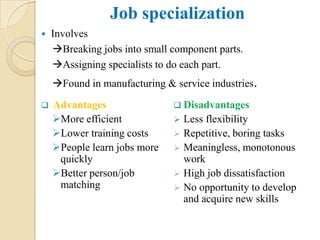
Job specialization
   Involves
    Breaking jobs into small component parts.
    Assigning specialists to do each part.
    Found in manufacturing & service industries.

   Advantages                 Disadvantages
    More efficient            Less flexibility
    Lower training costs      Repetitive, boring tasks
    People learn jobs more    Meaningless, monotonous
     quickly                    work
    Better person/job         High job dissatisfaction
     matching                  No opportunity to develop
                                and acquire new skills
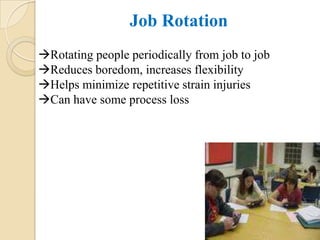
Job Rotation
Rotating people periodically from job to job
Reduces boredom, increases flexibility
Helps minimize repetitive strain injuries
Can have some process loss
Job Enrichment Strategies
   Empowering employees
    giving employees more autonomy
    feeling of control and self-efficacy

   Forming natural work units
    completing an entire task
    assigning employees to specific clients

   Establishing client relationships
    employees put in direct contact with clients
Current Trends in Job Design
   Flextime

   Compressed Workweek

   Job Sharing

   Telecommuting
CASE
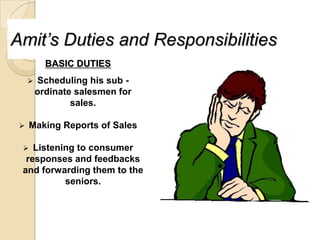
Amit’s Duties and Responsibilities
           BASIC DUTIES
        Scheduling his sub -
         ordinate salesmen for
                 sales.

    Making Reports of Sales

   Listening to consumer
  responses and feedbacks
 and forwarding them to the
           seniors.
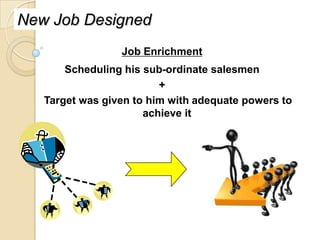
New Job Designed
                 Job Enrichment
       Scheduling his sub-ordinate salesmen
                         +
   Target was given to him with adequate powers to
                      achieve it
New Job Designed
                 Job Enlargement
Listening to consumer responses and feedbacks and
            forwarding them to the seniors.
                        +
Trained to guide and suggest unsatisfied consumers.
Employee Satisfaction is Organization’s
               Success
Job design

Job design

  • 1.
    Job Design Pradeep Singha
  • 2.
    Job Design Jobdesign involves conscious efforts to organize task, duties and responsibilities in to a unit of work to achieve certain objectives. Job design Easierjob design new jobs than redesign follows to existing analysis. jobs.
  • 3.
    OBJECTIVES OF THEORGANIZATION Greater Job Satisfaction Increased Performance Reduced Absenteeism & Turnover Greater Profitability
  • 4.
    Techniques of JobDesign Individual Design Options Group Design Options WORK SIMPLIFICATION WORK TEAMS Large task that is completed by JOB ROTATION a group of specific task Rotating from job to job Assignments. within an organization. JOB ENLARGEMENT Adding more tasks to the Job Design AUTONOMOUS WORK job: Horizontal Loading Techniques GROUPS Work teams are given a goal to JOB ENRICHMENT achieve and the control over Making jobs more its accomplishment. meaningful and Challenging: Vertical Loading
  • 5.
    Factors Affecting JobDesign Organizational Factor Environmental Factor Behavioral Factor
  • 6.
    Organizational Factor  Work flow  Ergonomics  Work practices
  • 7.
    Environmental Factor  EmployeeAbilities and Availability  Social and Cultural Expectation
  • 8.
    Behavioral Factor  Feedback Use of abilities  Variety
  • 9.
  • 10.
    Job specialization  Involves Breaking jobs into small component parts. Assigning specialists to do each part. Found in manufacturing & service industries.  Advantages  Disadvantages More efficient  Less flexibility Lower training costs  Repetitive, boring tasks People learn jobs more  Meaningless, monotonous quickly work Better person/job  High job dissatisfaction matching  No opportunity to develop and acquire new skills
  • 11.
    Job Rotation Rotating peopleperiodically from job to job Reduces boredom, increases flexibility Helps minimize repetitive strain injuries Can have some process loss
  • 12.
    Job Enrichment Strategies  Empowering employees giving employees more autonomy feeling of control and self-efficacy  Forming natural work units completing an entire task assigning employees to specific clients  Establishing client relationships employees put in direct contact with clients
  • 13.
    Current Trends inJob Design  Flextime  Compressed Workweek  Job Sharing  Telecommuting
  • 14.
  • 15.
    Amit’s Duties andResponsibilities BASIC DUTIES  Scheduling his sub - ordinate salesmen for sales.  Making Reports of Sales  Listening to consumer responses and feedbacks and forwarding them to the seniors.
  • 16.
    New Job Designed Job Enrichment Scheduling his sub-ordinate salesmen + Target was given to him with adequate powers to achieve it
  • 17.
    New Job Designed Job Enlargement Listening to consumer responses and feedbacks and forwarding them to the seniors. + Trained to guide and suggest unsatisfied consumers.
  • 18.
    Employee Satisfaction isOrganization’s Success