Organizational Commitment
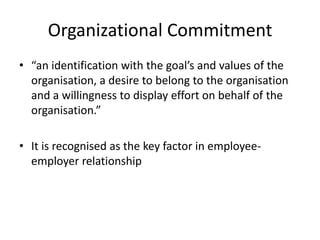
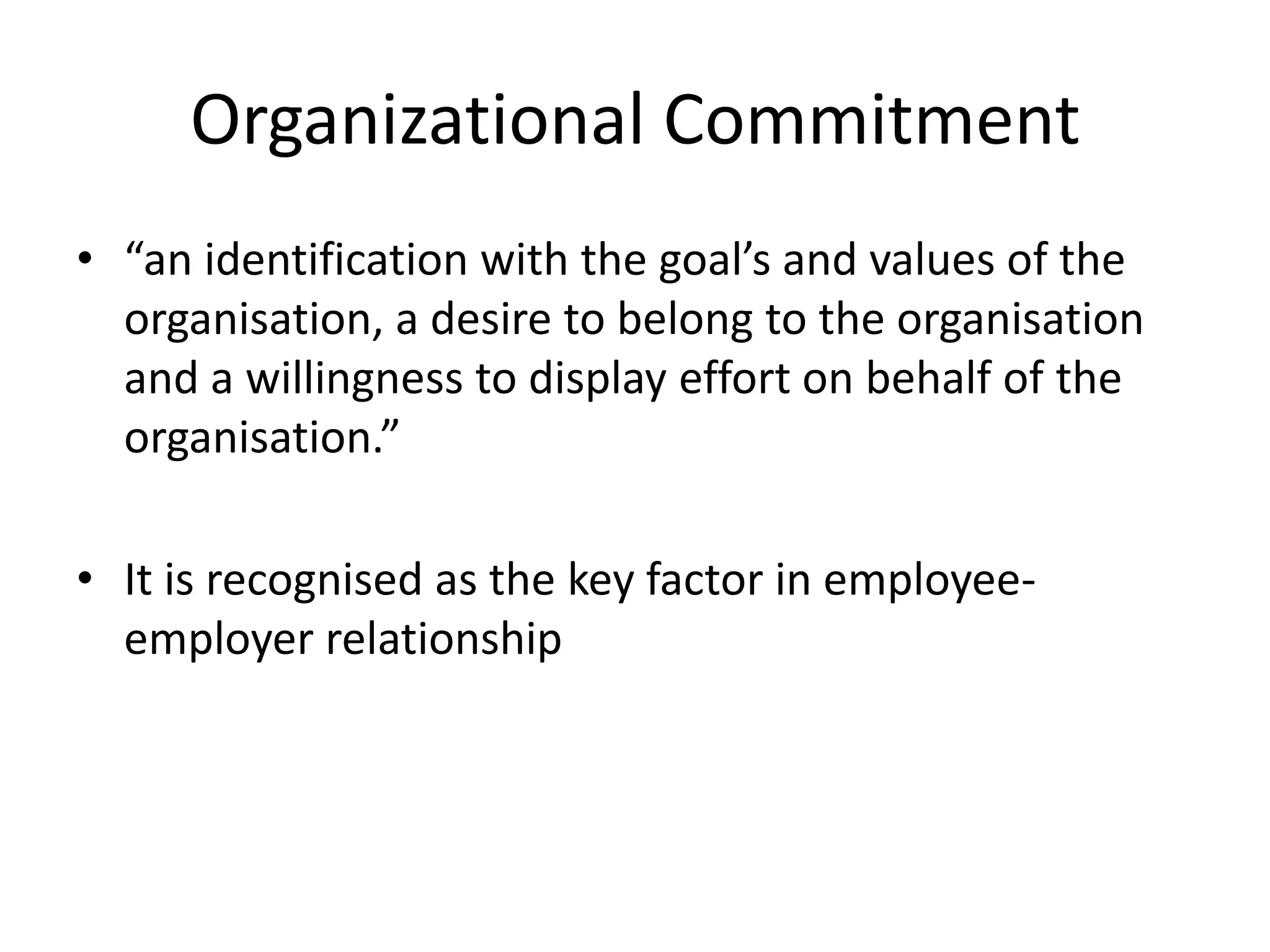
• “an identification with the goal’s and values of the
  organisation, a desire to belong to the organisation
  and a willingness to display effort on behalf of the
  organisation.”

• It is recognised as the key factor in employee-
  employer relationship
Discussion Question
• What creates a desire to remain a
  member of an organization?
Feelings ..
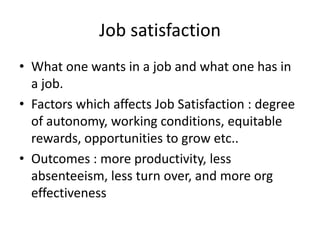
Job satisfaction
• What one wants in a job and what one has in
  a job.
• Factors which affects Job Satisfaction : degree
  of autonomy, working conditions, equitable
  rewards, opportunities to grow etc..
• Outcomes : more productivity, less
  absenteeism, less turn over, and more org
  effectiveness
Motivation
• Motivation is a process that starts with
  physiological or psychological deficiency or
  need that activates behaviour or drive that is
  aimed at a goal or incentive.
• Motivated employees help organizations to
  survive and it becomes more productive
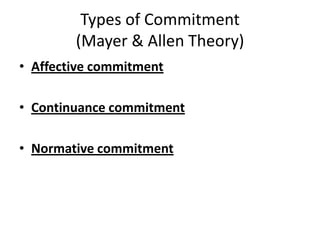
Types of Commitment
        (Mayer & Allen Theory)
• Affective commitment

• Continuance commitment

• Normative commitment
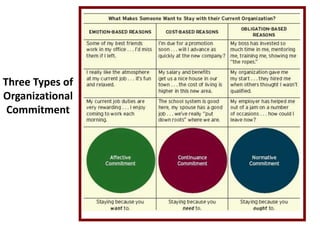
Three Types of
Organizational
 Commitment
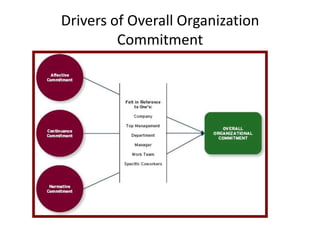
Drivers of Overall Organization
         Commitment
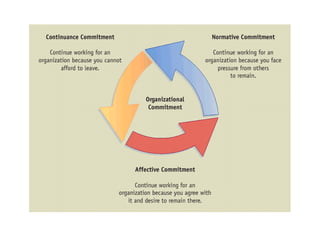
Affective Commitment
• Employees who feel a sense of affective
  commitment identify with the
  organization, accept that organization’s goals
  and values, and are more willing to exert extra
  effort on behalf of the organization.
Continuance Commitment
• Continuance commitment exists when there is
  a profit associated with staying and a cost
  associated with leaving.
• Tends to create a more passive form of loyalty.
Normative Commitment

• The sense that people should stay with their
  current employers may result from personal
  work philosophies or more general codes of
  right and wrong developed over the course of
  their lives.
• Build a sense of obligation-based commitment
  among employees.
Discussion Questions
• Which type of organizational commitment
  (affective, continuance, or normative) do you
  think is most important to the majority of
  employees?

• Which do you think is most important to you?
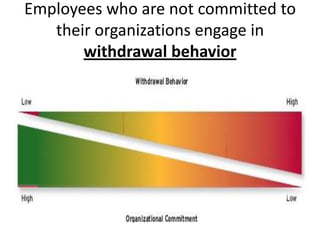
Employees who are not committed to
   their organizations engage in
       withdrawal behavior
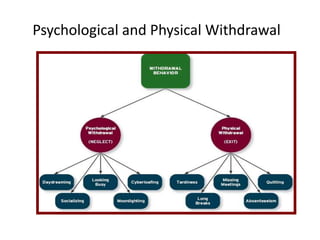
Psychological and Physical Withdrawal
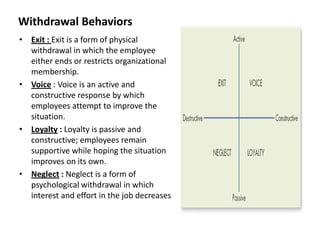
Withdrawal Behaviors
• Exit : Exit is a form of physical
  withdrawal in which the employee
  either ends or restricts organizational
  membership.
• Voice : Voice is an active and
  constructive response by which
  employees attempt to improve the
  situation.
• Loyalty : Loyalty is passive and
  constructive; employees remain
  supportive while hoping the situation
  improves on its own.
• Neglect : Neglect is a form of
  psychological withdrawal in which
  interest and effort in the job decreases
Conclusion
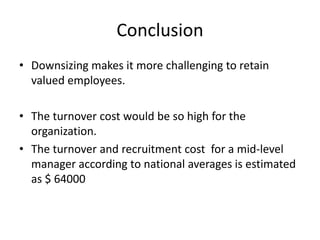
• Downsizing makes it more challenging to retain
  valued employees.

• The turnover cost would be so high for the
  organization.
• The turnover and recruitment cost for a mid-level
  manager according to national averages is estimated
  as $ 64000
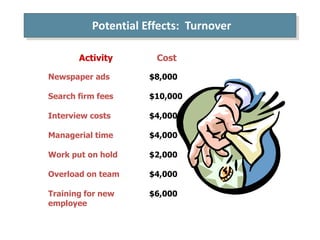
Potential Effects: Turnover

       Activity       Cost

Newspaper ads        $8,000

Search firm fees     $10,000

Interview costs      $4,000

Managerial time      $4,000

Work put on hold     $2,000

Overload on team     $4,000

Training for new     $6,000
employee
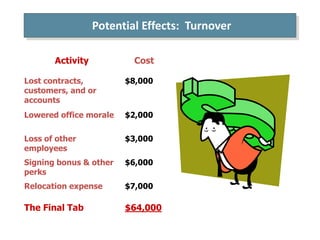
Potential Effects: Turnover

       Activity           Cost

Lost contracts,         $8,000
customers, and or
accounts
Lowered office morale   $2,000

Loss of other           $3,000
employees
Signing bonus & other   $6,000
perks
Relocation expense      $7,000

The Final Tab           $64,000
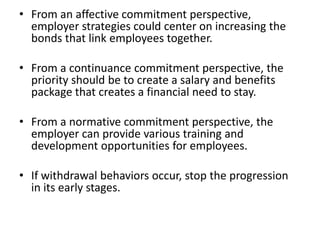
• From an affective commitment perspective,
  employer strategies could center on increasing the
  bonds that link employees together.

• From a continuance commitment perspective, the
  priority should be to create a salary and benefits
  package that creates a financial need to stay.

• From a normative commitment perspective, the
  employer can provide various training and
  development opportunities for employees.

• If withdrawal behaviors occur, stop the progression
  in its early stages.
Employee commitment in IT sector
• The overall Job satisfaction was measured
  using the 15-item questionnaire
• Job security, interest, opportunity for
  advancement, appreciation, company policy
  and management practises...
• intrinsic aspects of
  job, salary, supervision, social aspects of job,
• Working
  conditions, communication, hours, ease, bene
  fits ,and fair treatment
• organizational commitment was measured
  using the revised Organizational
  Commitment Scales (Meyer, Allen and Smith
  1993) that is,
• The Affective Commitment Scale (ACS), the
  Continuance Commitment Scale (CCS) and the
  Normative Commitment Scale (NCS)
Findings of the survey
• The level of organizational commitment was
  moderate, with relatively higher variability in
  affective commitment.
• The employees are staying back with the
  organization because of the cost of leaving
  the organisation
• IT employees were showing only a moderate
  level of job satisfaction.
• highest satisfaction levels were
• related to the social aspects of the job, working
  conditions (excluding working hours), interest
  (from intrinsic aspects of the job), job
  security, communication, and ease of the job (as
  an intrinsic aspect of the job)
• lowest satisfaction levels for working
  hours, supervision, appreciation from
  management, and salary
• i.e. employees are dissatisfied with the
  working hours, supervision, appreciation from
  management and the salary they are getting.
• The most important motivational factors for IT
  employees were good wages,
  promotion/growth, job security, interesting
  work, and appreciation of work.

• Correlation : job satisfaction vs affective
  commitment and normative – Positive

• This indicates that higher the level of job
  satisfaction greater the level of affective
  commitment and normative commitment
• Organizational commitment was highest for IT
  professionals in the 40 - 50 yr. age group.
• In particular, commitment was lowest for IT
  professionals in the 30 - 40 yr age group
• no significant difference in organizational
  commitment between men and women IT
  professionals
• But significant difference in commitment
  between married and single IT professionals.
• If an IT organization can give importance to
  salary, benefits, fair treatment, opportunities
  and supervision it can reduce employee
  turnover and can increase affective
  commitment of its employees.
• The most important challenge of an
  organization is to retain the talented work
  force.
• It should motivate the employees which
  results in better job satisfaction and thereby
  improve the organizational commitment

Organizational commitment presntn arjun

  • 1.
    Organizational Commitment • “anidentification with the goal’s and values of the organisation, a desire to belong to the organisation and a willingness to display effort on behalf of the organisation.” • It is recognised as the key factor in employee- employer relationship
  • 2.
    Discussion Question • Whatcreates a desire to remain a member of an organization?
  • 3.
  • 4.
    Job satisfaction • Whatone wants in a job and what one has in a job. • Factors which affects Job Satisfaction : degree of autonomy, working conditions, equitable rewards, opportunities to grow etc.. • Outcomes : more productivity, less absenteeism, less turn over, and more org effectiveness
  • 5.
    Motivation • Motivation isa process that starts with physiological or psychological deficiency or need that activates behaviour or drive that is aimed at a goal or incentive. • Motivated employees help organizations to survive and it becomes more productive
  • 6.
    Types of Commitment (Mayer & Allen Theory) • Affective commitment • Continuance commitment • Normative commitment
  • 8.
  • 9.
    Drivers of OverallOrganization Commitment
  • 10.
    Affective Commitment • Employeeswho feel a sense of affective commitment identify with the organization, accept that organization’s goals and values, and are more willing to exert extra effort on behalf of the organization.
  • 11.
    Continuance Commitment • Continuancecommitment exists when there is a profit associated with staying and a cost associated with leaving. • Tends to create a more passive form of loyalty.
  • 12.
    Normative Commitment • Thesense that people should stay with their current employers may result from personal work philosophies or more general codes of right and wrong developed over the course of their lives. • Build a sense of obligation-based commitment among employees.
  • 13.
    Discussion Questions • Whichtype of organizational commitment (affective, continuance, or normative) do you think is most important to the majority of employees? • Which do you think is most important to you?
  • 14.
    Employees who arenot committed to their organizations engage in withdrawal behavior
  • 15.
  • 16.
    Withdrawal Behaviors • Exit: Exit is a form of physical withdrawal in which the employee either ends or restricts organizational membership. • Voice : Voice is an active and constructive response by which employees attempt to improve the situation. • Loyalty : Loyalty is passive and constructive; employees remain supportive while hoping the situation improves on its own. • Neglect : Neglect is a form of psychological withdrawal in which interest and effort in the job decreases
  • 17.
    Conclusion • Downsizing makesit more challenging to retain valued employees. • The turnover cost would be so high for the organization. • The turnover and recruitment cost for a mid-level manager according to national averages is estimated as $ 64000
  • 18.
    Potential Effects: Turnover Activity Cost Newspaper ads $8,000 Search firm fees $10,000 Interview costs $4,000 Managerial time $4,000 Work put on hold $2,000 Overload on team $4,000 Training for new $6,000 employee
  • 19.
    Potential Effects: Turnover Activity Cost Lost contracts, $8,000 customers, and or accounts Lowered office morale $2,000 Loss of other $3,000 employees Signing bonus & other $6,000 perks Relocation expense $7,000 The Final Tab $64,000
  • 20.
    • From anaffective commitment perspective, employer strategies could center on increasing the bonds that link employees together. • From a continuance commitment perspective, the priority should be to create a salary and benefits package that creates a financial need to stay. • From a normative commitment perspective, the employer can provide various training and development opportunities for employees. • If withdrawal behaviors occur, stop the progression in its early stages.
  • 21.
    Employee commitment inIT sector • The overall Job satisfaction was measured using the 15-item questionnaire • Job security, interest, opportunity for advancement, appreciation, company policy and management practises... • intrinsic aspects of job, salary, supervision, social aspects of job, • Working conditions, communication, hours, ease, bene fits ,and fair treatment
  • 22.
    • organizational commitmentwas measured using the revised Organizational Commitment Scales (Meyer, Allen and Smith 1993) that is, • The Affective Commitment Scale (ACS), the Continuance Commitment Scale (CCS) and the Normative Commitment Scale (NCS)
  • 23.
    Findings of thesurvey • The level of organizational commitment was moderate, with relatively higher variability in affective commitment. • The employees are staying back with the organization because of the cost of leaving the organisation • IT employees were showing only a moderate level of job satisfaction.
  • 24.
    • highest satisfactionlevels were • related to the social aspects of the job, working conditions (excluding working hours), interest (from intrinsic aspects of the job), job security, communication, and ease of the job (as an intrinsic aspect of the job) • lowest satisfaction levels for working hours, supervision, appreciation from management, and salary • i.e. employees are dissatisfied with the working hours, supervision, appreciation from management and the salary they are getting.
  • 25.
    • The mostimportant motivational factors for IT employees were good wages, promotion/growth, job security, interesting work, and appreciation of work. • Correlation : job satisfaction vs affective commitment and normative – Positive • This indicates that higher the level of job satisfaction greater the level of affective commitment and normative commitment
  • 26.
    • Organizational commitmentwas highest for IT professionals in the 40 - 50 yr. age group. • In particular, commitment was lowest for IT professionals in the 30 - 40 yr age group • no significant difference in organizational commitment between men and women IT professionals • But significant difference in commitment between married and single IT professionals.
  • 27.
    • If anIT organization can give importance to salary, benefits, fair treatment, opportunities and supervision it can reduce employee turnover and can increase affective commitment of its employees. • The most important challenge of an organization is to retain the talented work force. • It should motivate the employees which results in better job satisfaction and thereby improve the organizational commitment