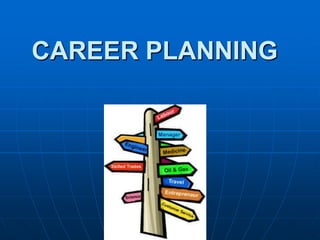
CAREER PLANNING
Team Members

Bhavna Dhapola       10
Anushri Parkar       33
Kilpa Sangoi         46
Jean Fernandes       12
Adelbert Fernandes   11
Introduction
   Career: Herbert Simon defines career as
    “an honourable occupation with one
    normally takes up during his/her youth
    with the expectation of advancement and
    pursues it until retirement
   Career planning and development is a
    means by which an organisation can
    sustain or increase its employees
    productivity and at the same time
    preparing them for a changing world.
     According to Milkovich and Boudreau
    Career development   =     Career management + Career planning
Objective of career planning

   Identifying and making clear opportunities
    available.
   To reduce employee turnover.
   To Increase productivity.
   To identify the career stages and enhance
    the motivational level.
   To achieve the organisation’s goal by
    providing the employees paths to reach
    higher order needs.
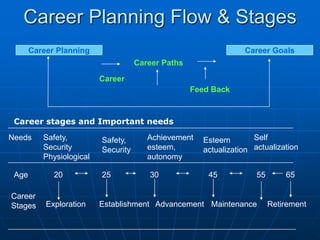
Career Planning Flow & Stages
       Career Planning                                            Career Goals
                                     Career Paths

                          Career
                                                    Feed Back


 Career stages and Important needs
Needs     Safety,         Safety,       Achievement    Esteem        Self
          Security        Security      esteem,        actualization actualization
          Physiological                 autonomy

 Age         20           25            30              45            55       65

Career
Stages     Exploration    Establishment Advancement Maintenance            Retirement
Scope Of Career Planning

   Human Resource forecasting and planning
   Career Information
   Career Counseling
   Career Pathing
   Skill Assessment training
   Succession Planning
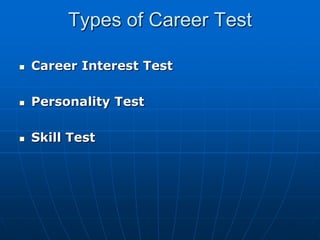
Types of Career Test

   Career Interest Test

   Personality Test

   Skill Test
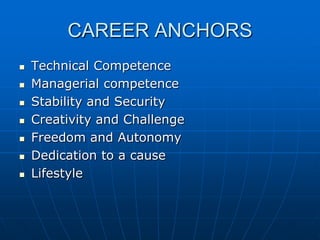
CAREER ANCHORS
   Technical Competence
   Managerial competence
   Stability and Security
   Creativity and Challenge
   Freedom and Autonomy
   Dedication to a cause
   Lifestyle
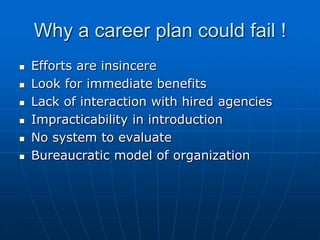
Why a career plan could fail !
   Efforts are insincere
   Look for immediate benefits
   Lack of interaction with hired agencies
   Impracticability in introduction
   No system to evaluate
   Bureaucratic model of organization
Importance of career planning

   Involvement of the employer and
    employee
   Employees need to be aware of the
    organizational opportunities.
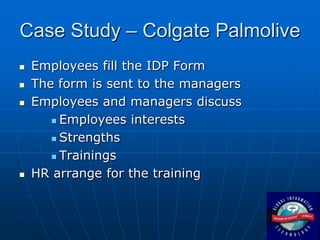
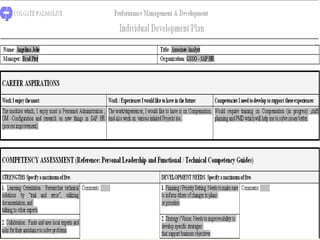
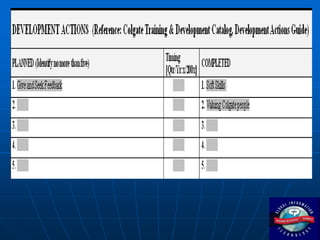
Case Study – Colgate Palmolive
   Employees fill the IDP Form
   The form is sent to the managers
   Employees and managers discuss
        Employees interests

        Strengths

        Trainings

   HR arrange for the training
Cadbury – Case study
   Early Career

   Mid Career

   Senior career
Early Career
   First 5 years of employment
   Management skills training
   Internal- short term placements
   Workshops
   Mentoring

Aim – Understanding of Business structure.
Mid Career
   Team Management trainings
   Strategic leadership trainings
   International opportunities
   Ongoing career dialogues

Aim – Equip with capability to lead teams,
  develop and deliver business stratergies
Senior Level
   Highest level
   Approximately 150 members globally
   Global leadership conference
   Executive development programme
   External expert coaching

Aim – Support personal leadership styles to
  set   business stratergies.
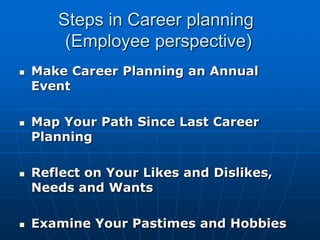
Steps in Career planning
        (Employee perspective)
   Make Career Planning an Annual
    Event

   Map Your Path Since Last Career
    Planning

   Reflect on Your Likes and Dislikes,
    Needs and Wants

   Examine Your Pastimes and Hobbies
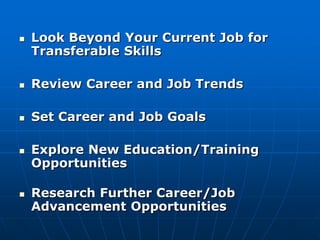
   Look Beyond Your Current Job for
    Transferable Skills

   Review Career and Job Trends

   Set Career and Job Goals

   Explore New Education/Training
    Opportunities

   Research Further Career/Job
    Advancement Opportunities
Thank You

career planning

  • 1.
  • 2.
    Team Members Bhavna Dhapola 10 Anushri Parkar 33 Kilpa Sangoi 46 Jean Fernandes 12 Adelbert Fernandes 11
  • 3.
    Introduction  Career: Herbert Simon defines career as “an honourable occupation with one normally takes up during his/her youth with the expectation of advancement and pursues it until retirement  Career planning and development is a means by which an organisation can sustain or increase its employees productivity and at the same time preparing them for a changing world. According to Milkovich and Boudreau Career development = Career management + Career planning
  • 4.
    Objective of careerplanning  Identifying and making clear opportunities available.  To reduce employee turnover.  To Increase productivity.  To identify the career stages and enhance the motivational level.  To achieve the organisation’s goal by providing the employees paths to reach higher order needs.
  • 5.
    Career Planning Flow& Stages Career Planning Career Goals Career Paths Career Feed Back Career stages and Important needs Needs Safety, Safety, Achievement Esteem Self Security Security esteem, actualization actualization Physiological autonomy Age 20 25 30 45 55 65 Career Stages Exploration Establishment Advancement Maintenance Retirement
  • 6.
    Scope Of CareerPlanning  Human Resource forecasting and planning  Career Information  Career Counseling  Career Pathing  Skill Assessment training  Succession Planning
  • 7.
    Types of CareerTest  Career Interest Test  Personality Test  Skill Test
  • 8.
    CAREER ANCHORS  Technical Competence  Managerial competence  Stability and Security  Creativity and Challenge  Freedom and Autonomy  Dedication to a cause  Lifestyle
  • 9.
    Why a careerplan could fail !  Efforts are insincere  Look for immediate benefits  Lack of interaction with hired agencies  Impracticability in introduction  No system to evaluate  Bureaucratic model of organization
  • 10.
    Importance of careerplanning  Involvement of the employer and employee  Employees need to be aware of the organizational opportunities.
  • 11.
    Case Study –Colgate Palmolive  Employees fill the IDP Form  The form is sent to the managers  Employees and managers discuss  Employees interests  Strengths  Trainings  HR arrange for the training
  • 14.
    Cadbury – Casestudy  Early Career  Mid Career  Senior career
  • 15.
    Early Career  First 5 years of employment  Management skills training  Internal- short term placements  Workshops  Mentoring Aim – Understanding of Business structure.
  • 16.
    Mid Career  Team Management trainings  Strategic leadership trainings  International opportunities  Ongoing career dialogues Aim – Equip with capability to lead teams, develop and deliver business stratergies
  • 17.
    Senior Level  Highest level  Approximately 150 members globally  Global leadership conference  Executive development programme  External expert coaching Aim – Support personal leadership styles to set business stratergies.
  • 18.
    Steps in Careerplanning (Employee perspective)  Make Career Planning an Annual Event  Map Your Path Since Last Career Planning  Reflect on Your Likes and Dislikes, Needs and Wants  Examine Your Pastimes and Hobbies
  • 19.
    Look Beyond Your Current Job for Transferable Skills  Review Career and Job Trends  Set Career and Job Goals  Explore New Education/Training Opportunities  Research Further Career/Job Advancement Opportunities
  • 20.