Office Administration
     2nd edition
  Brenda A. Potter, CPC
Patient Reception and
     Registration
Changes in Healthcare Service
 Extended hours beyond 9 to 5
 Large clinics have branch locations
 Health care promotes services
Exceptional Patient Service
 Providing best possible assistance
 “Going the extra mile”
 Wouldn’t you want the same for yourself or your
  family?
 Always ask, “What is best for the patient?”
Why Provide Exceptional Service?
 The service that is provided to patients reflects
  the level of caring and commitment of the medical
  office staff
 Exceptional service makes patients more
  confident about services provided in the office.
Basics of Exceptional Service
 Everyone must be committed to exceptional
  service
 Patients ARE customers!
 Patients are #1!!
Patient Informational Materials
 Can include
   Services offered
   Directory of phone numbers and addresses
   Directions to facility
 A must for new patients
 But not a substitute for personal communication
 with a patient
Getting the Office Ready
 Many things happen before the office opens
   Deactivate alarm systems at entrances; unlock front
    door when ready to receive patients
   Secured entrances may require employees to swipe
    name badge
   Obtain charts for the day’s appointments
   Start and check office equipment
   Turn on television or music system
   Count cash drawer
Welcoming Patients
 Patient should be acknowledged immediately
 Avoid personal comments about patient’s
 appearance
Patient Registration
 Every patient – new or established – should go
  through registration process
 Registration is a vital step in the billing process
 Existing patients will need registration verified
 New patients will take longer than existing
  patients because a new record is created
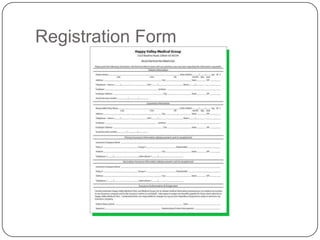
Registration Form
Information Gathered at Registration
 Patient’s personal information – name, address, DOB,
    phone
   Guarantor’s information – name, address, DOB,
    phone
   Patient’s insurance – name, address, phone, policy
    and group number
   Patient’s referral information – has the patient been
    referred to the office by another healthcare provider?
   Emergency contact
     Sometimes someone not living with the patient
 Authorizations
   Release of medical information to insurance company
   Assignment of insurance benefits to be sent to physician
Patient History Form
 Review of
   Patient’s past medical history
   Allergies and other pertinent medical information
   Family history
Notice of Privacy Practices
 Informs patient about how the patient’s health
 information may be used
Confidentiality and Registration
 Pay attention to volume of speech
 Don’t repeat reason for patient’s visit
 Registration stations should be partitioned
Reception Area
 Reception area or lobby, NOT waiting room
Layout and Design of the Reception Area
 Welcoming atmosphere         Refreshments
 Adequate traffic             Wheelchair
    patterns – consider ADA    Coat-rack
   Appropriate seating        Wastebasket
    arrangement                Clock
   Television or music (or    Restroom
    both)                      Reception area must be
   Reading material           maintained by front
                               desk staff
   Something for kids
Emergency Situations
 Emergency – when a patient’s health may be
  adversely affected if immediate action is not
  taken; possibly even life threatening
 Recognize potential emergencies
Common Medical Emergencies
 Chest pain           Head injury
 Seizure               syncope
 Respiratory          Psychotic episode
  distress             Eye injury
 Diabetic episodes    Burns
 Profuse,
  uncontrolled
  bleeding
What the Medical Administrative Assistant
Should Do in an Emergency
 Get the patient to a physician or nurse as soon as
    possible
   Use a wheelchair to transport patient
   Use 911 if necessary
   Protect the patient’s privacy as much as possible
   Follow the physicians established protocol
   Locate family members if necessary
Other Situations
 Fractures
 Acutely ill or uncomfortable patients

J 1 patient reception and registration

  • 1.
    Office Administration 2nd edition Brenda A. Potter, CPC
  • 2.
  • 3.
    Changes in HealthcareService  Extended hours beyond 9 to 5  Large clinics have branch locations  Health care promotes services
  • 4.
    Exceptional Patient Service Providing best possible assistance  “Going the extra mile”  Wouldn’t you want the same for yourself or your family?  Always ask, “What is best for the patient?”
  • 5.
    Why Provide ExceptionalService?  The service that is provided to patients reflects the level of caring and commitment of the medical office staff  Exceptional service makes patients more confident about services provided in the office.
  • 6.
    Basics of ExceptionalService  Everyone must be committed to exceptional service  Patients ARE customers!  Patients are #1!!
  • 7.
    Patient Informational Materials Can include  Services offered  Directory of phone numbers and addresses  Directions to facility  A must for new patients  But not a substitute for personal communication with a patient
  • 8.
    Getting the OfficeReady  Many things happen before the office opens  Deactivate alarm systems at entrances; unlock front door when ready to receive patients  Secured entrances may require employees to swipe name badge  Obtain charts for the day’s appointments  Start and check office equipment  Turn on television or music system  Count cash drawer
  • 9.
    Welcoming Patients  Patientshould be acknowledged immediately  Avoid personal comments about patient’s appearance
  • 10.
    Patient Registration  Everypatient – new or established – should go through registration process  Registration is a vital step in the billing process  Existing patients will need registration verified  New patients will take longer than existing patients because a new record is created
  • 11.
  • 12.
    Information Gathered atRegistration  Patient’s personal information – name, address, DOB, phone  Guarantor’s information – name, address, DOB, phone  Patient’s insurance – name, address, phone, policy and group number  Patient’s referral information – has the patient been referred to the office by another healthcare provider?  Emergency contact  Sometimes someone not living with the patient  Authorizations  Release of medical information to insurance company  Assignment of insurance benefits to be sent to physician
  • 13.
    Patient History Form Review of  Patient’s past medical history  Allergies and other pertinent medical information  Family history
  • 14.
    Notice of PrivacyPractices  Informs patient about how the patient’s health information may be used
  • 15.
    Confidentiality and Registration Pay attention to volume of speech  Don’t repeat reason for patient’s visit  Registration stations should be partitioned
  • 16.
    Reception Area  Receptionarea or lobby, NOT waiting room
  • 17.
    Layout and Designof the Reception Area  Welcoming atmosphere  Refreshments  Adequate traffic  Wheelchair patterns – consider ADA  Coat-rack  Appropriate seating  Wastebasket arrangement  Clock  Television or music (or  Restroom both)  Reception area must be  Reading material maintained by front desk staff  Something for kids
  • 18.
    Emergency Situations  Emergency– when a patient’s health may be adversely affected if immediate action is not taken; possibly even life threatening  Recognize potential emergencies
  • 19.
    Common Medical Emergencies Chest pain  Head injury  Seizure syncope  Respiratory  Psychotic episode distress  Eye injury  Diabetic episodes  Burns  Profuse, uncontrolled bleeding
  • 20.
    What the MedicalAdministrative Assistant Should Do in an Emergency  Get the patient to a physician or nurse as soon as possible  Use a wheelchair to transport patient  Use 911 if necessary  Protect the patient’s privacy as much as possible  Follow the physicians established protocol  Locate family members if necessary
  • 21.
    Other Situations  Fractures Acutely ill or uncomfortable patients