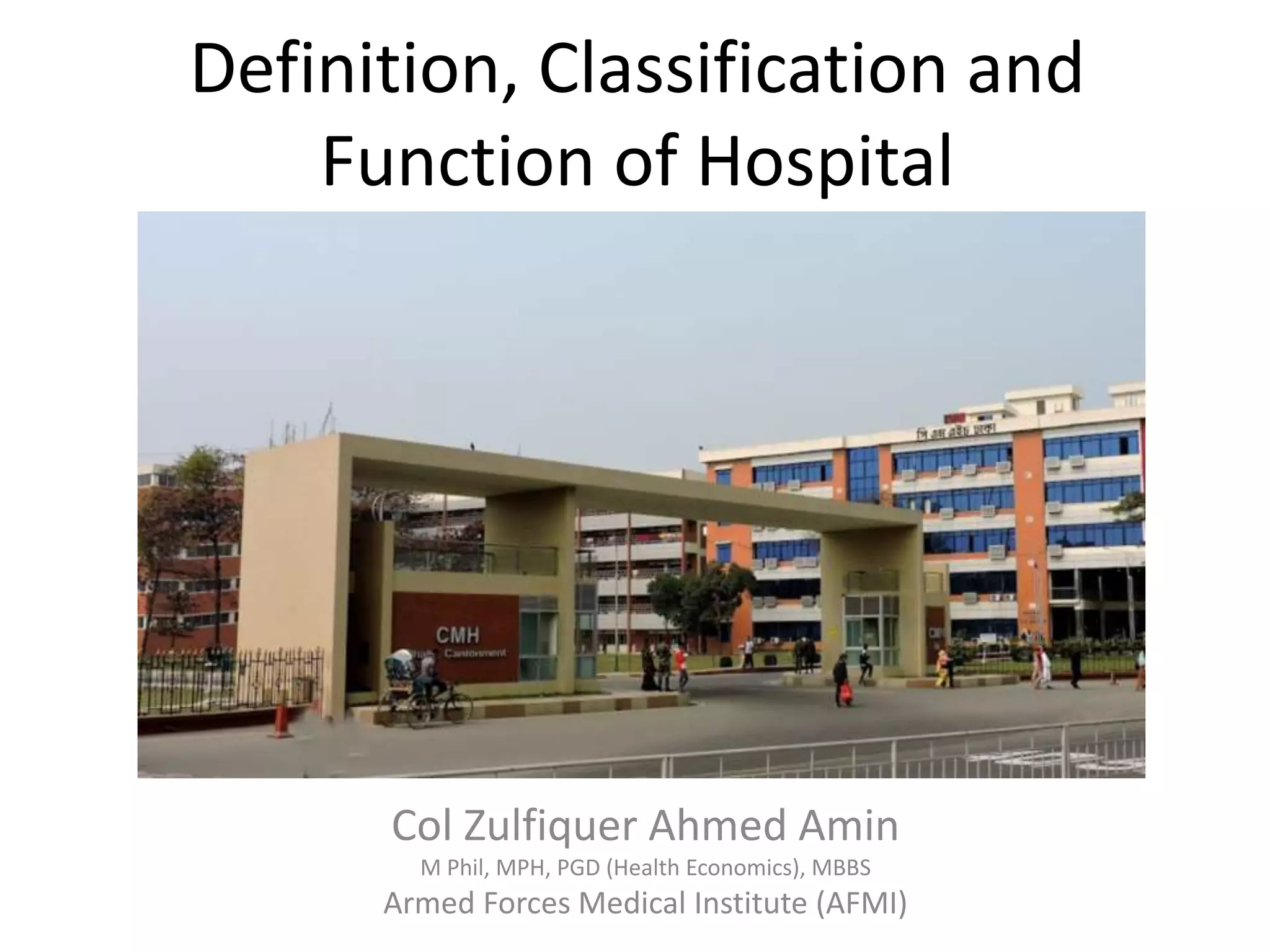
Definition, Classification and
Function of Hospital
Col Zulfiquer Ahmed Amin
M Phil, MPH, PGD (Health Economics), MBBS
Armed Forces Medical Institute (AFMI)
Definition of Hospital
WHO Expert Committee, 1963:
‘A hospital is a residential establishment which
provides short-term and long-term medical care
consisting of observational, diagnostic,
therapeutic and rehabilitative services for
persons suffering or suspected to be suffering
from a disease or injury and for parturients. It
may or may not also provide services for
ambulatory patients on an out-patient basis’.
WHO expert committee, 1956:
‘The hospital is an integral part of a social and
medical organization, the function of which is to
provide for the population complete healthcare,
both curative and preventive, and whose out-
patient services reach out to the family in its
home environment; the hospital is also a centre
for the training of health workers and for bio-
social research’.
Classification of Hospital
1. Basing on Objective
a. General hospitals
b. Special hospitals
c. Teaching cum Research Hospital
2. Basing on Administration, ownership, control or financial income
a. Governmental or public
b. Non-governmental or private
c. Semi Govt Hospital
d. Voluntary Agency Hospitals
3. Basing on Length of Stay
a. Short-term or short-stay hospitals (Stay less than 30 days)
b. Long-term or long-stay hospitals: (Stay more than 30 days)
4. Depending on Type of Medical Staff
a. Closed-staff hospital:
b. Open-staff hospital:
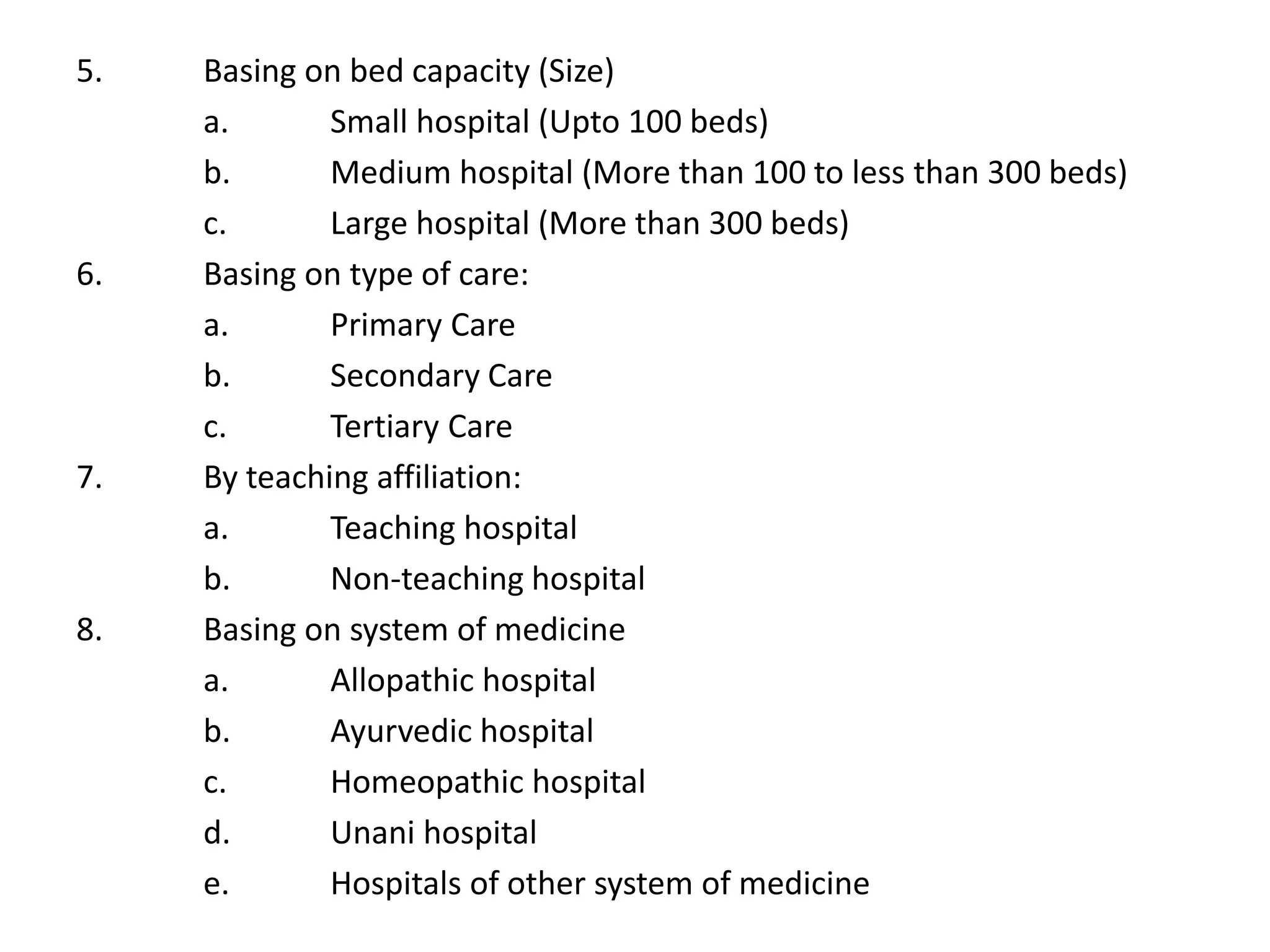
5. Basing on bed capacity (Size)
a. Small hospital (Upto 100 beds)
b. Medium hospital (More than 100 to less than 300 beds)
c. Large hospital (More than 300 beds)
6. Basing on type of care:
a. Primary Care
b. Secondary Care
c. Tertiary Care
7. By teaching affiliation:
a. Teaching hospital
b. Non-teaching hospital
8. Basing on system of medicine
a. Allopathic hospital
b. Ayurvedic hospital
c. Homeopathic hospital
d. Unani hospital
e. Hospitals of other system of medicine
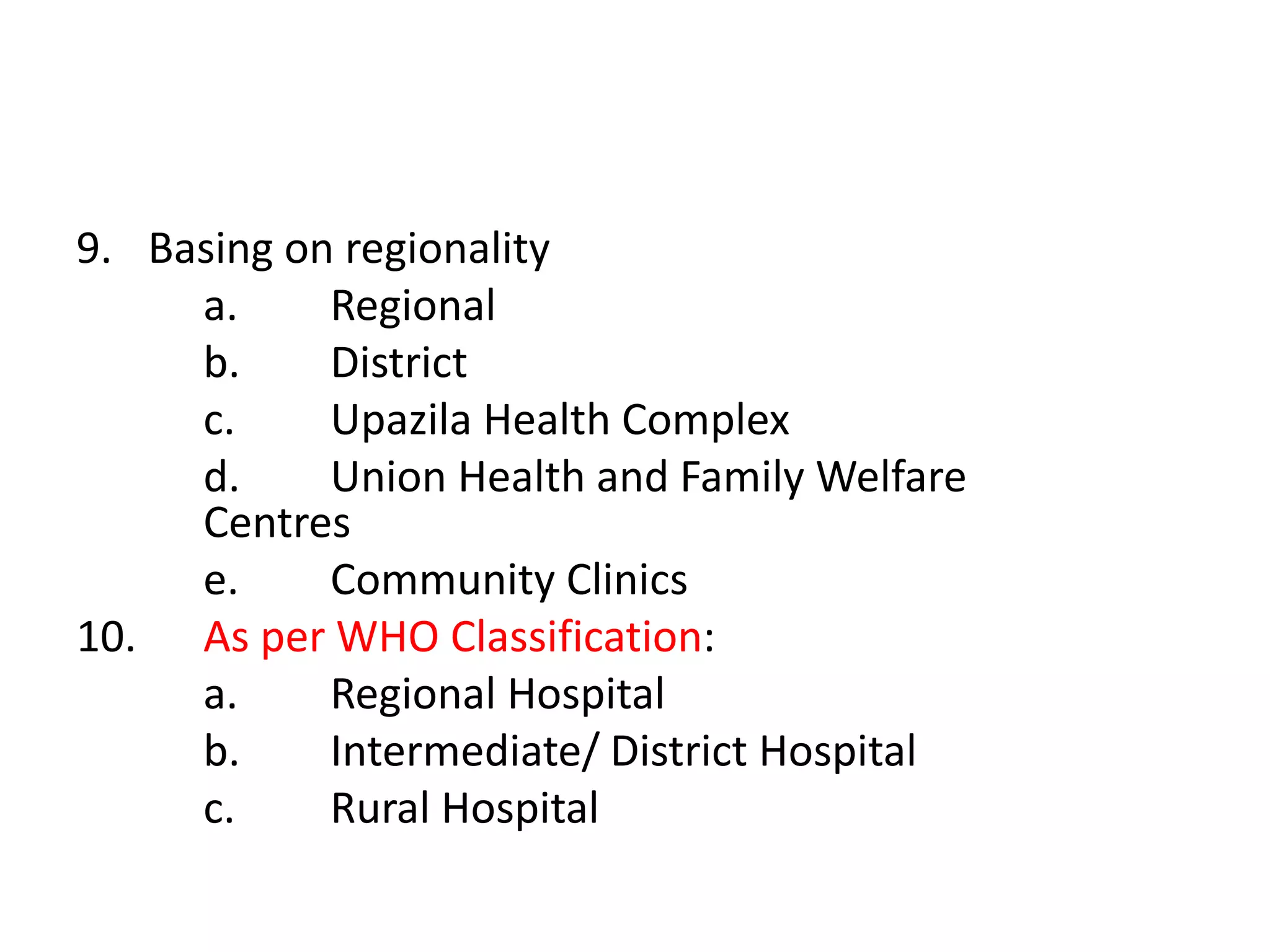
9. Basing on regionality
a. Regional
b. District
c. Upazila Health Complex
d. Union Health and Family Welfare
Centres
e. Community Clinics
10. As per WHO Classification:
a. Regional Hospital
b. Intermediate/ District Hospital
c. Rural Hospital
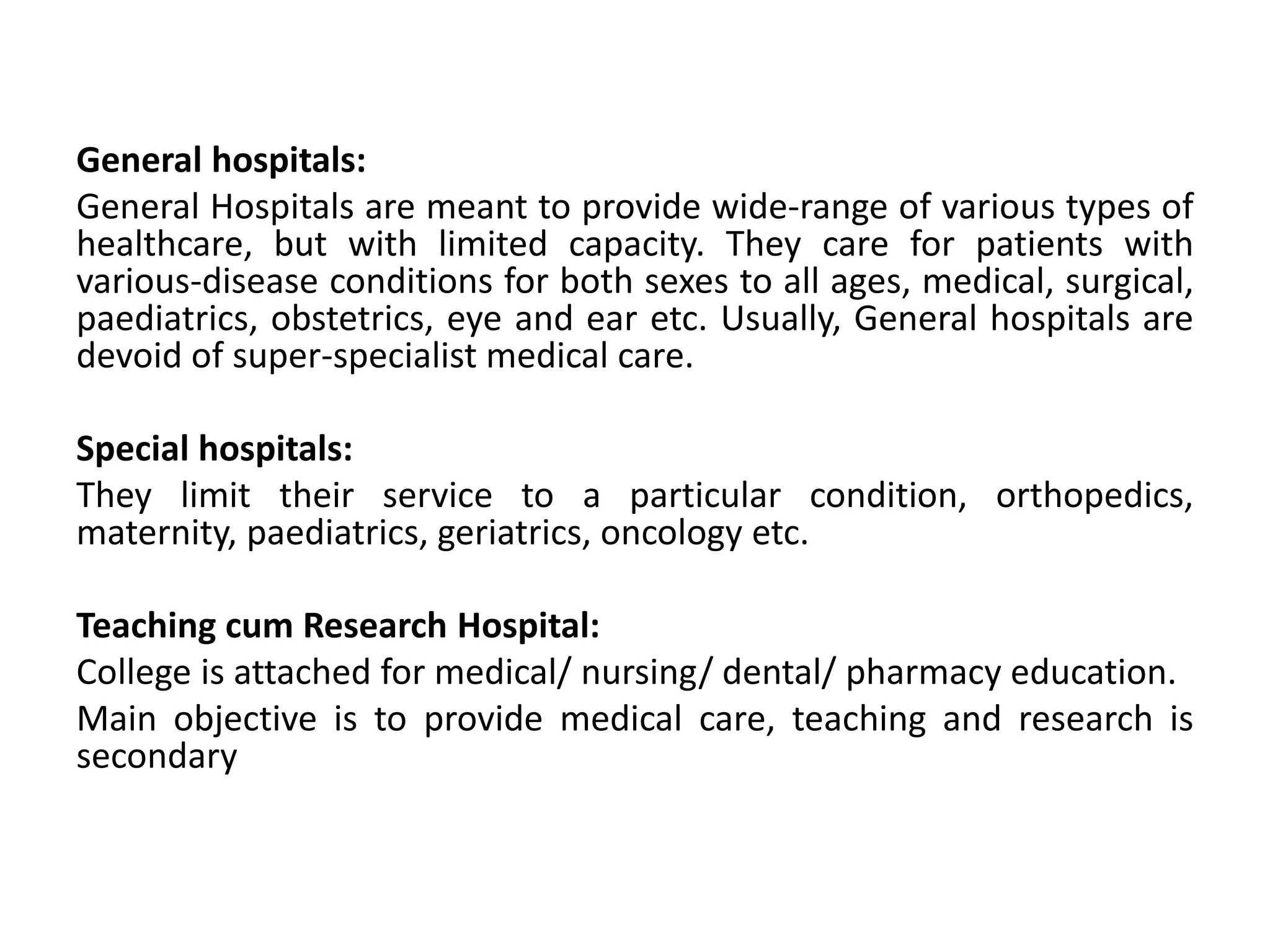
General hospitals:
General Hospitals are meant to provide wide-range of various types of
healthcare, but with limited capacity. They care for patients with
various-disease conditions for both sexes to all ages, medical, surgical,
paediatrics, obstetrics, eye and ear etc. Usually, General hospitals are
devoid of super-specialist medical care.
Special hospitals:
They limit their service to a particular condition, orthopedics,
maternity, paediatrics, geriatrics, oncology etc.
Teaching cum Research Hospital:
College is attached for medical/ nursing/ dental/ pharmacy education.
Main objective is to provide medical care, teaching and research is
secondary
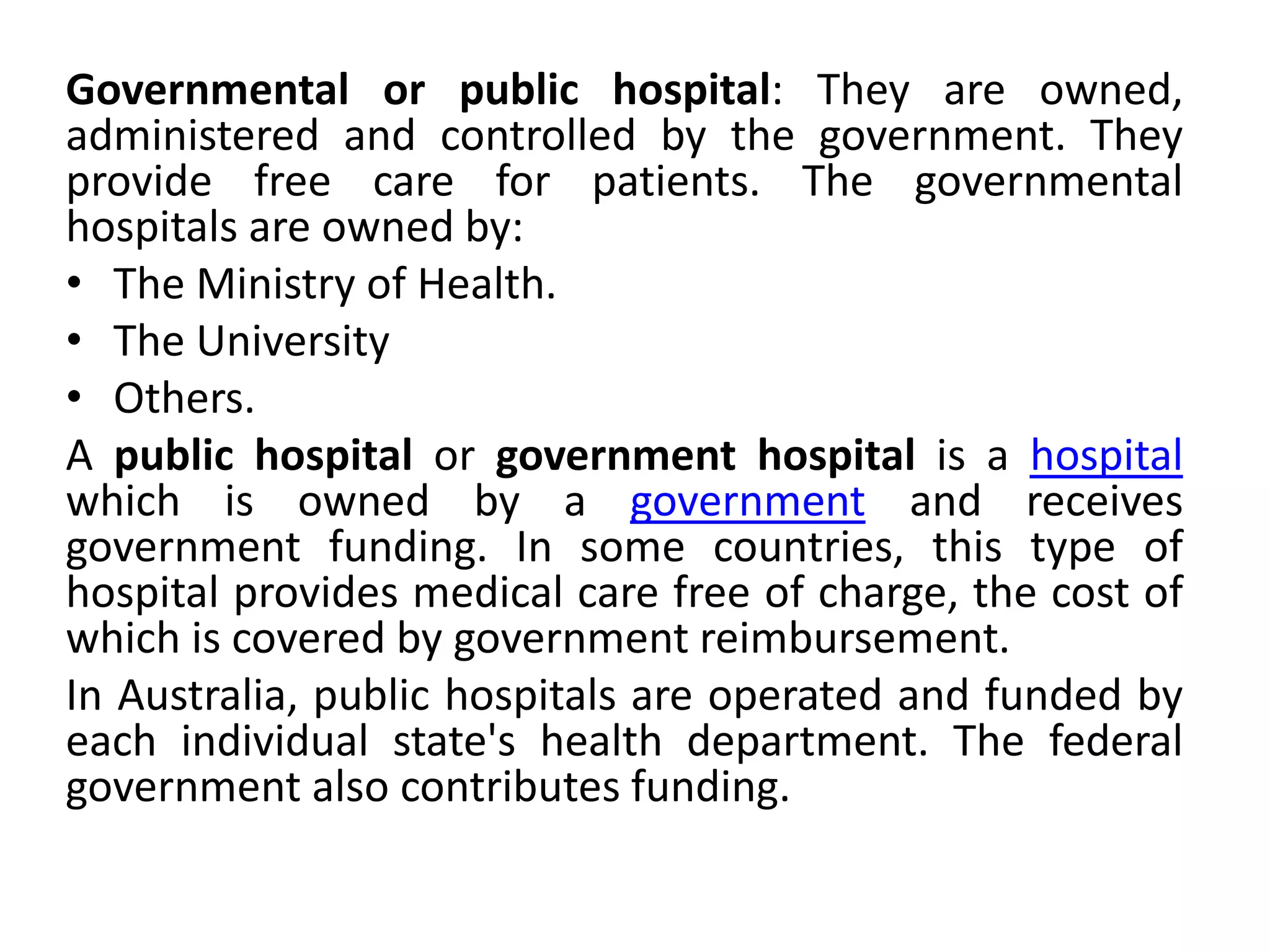
Governmental or public hospital: They are owned,
administered and controlled by the government. They
provide free care for patients. The governmental
hospitals are owned by:
• The Ministry of Health.
• The University
• Others.
A public hospital or government hospital is a hospital
which is owned by a government and receives
government funding. In some countries, this type of
hospital provides medical care free of charge, the cost of
which is covered by government reimbursement.
In Australia, public hospitals are operated and funded by
each individual state's health department. The federal
government also contributes funding.
Private Hospital:
Privately owned or controlled by an individual or group of
physicians or citizens or by private organization. eg, Square
Hospital.
Purpose is to provide services for profit making.
Semi Govt Hospital:
Hospitals run both by the govt and private entity. eg Cantt Board
Hospital.
Corporate Hospital
Hospitals which are public limited companies
formed under the companies act. Run on
commercial lines. eg, Apollo
Voluntary Agency Hospital: Not for profit
hospitals by the Voluntary Organizations. eg,
HOPE Foundation Fistula Hospital
Short-term or short-stay hospitals:
These are hospitals where over 90% of all patients admitted stay
less than 30 days.
Long-term or long-stay hospitals:
These are hospitals where over 90% of all patients admitted stay
30 days or more, i.e. mental hospital.
Closed-staff hospital:
Physicians are held responsible for all medical activities in the
hospital including the diagnosis and treatment of patient fee
paying and emergency.
Open-staff hospital:
This type of hospital permits other physicians in the community
to admit and treat patients to the hospital' and treat them.
Open Staff Hospital: Open medical staff, which
means any physician can request to practice at
the facility, regardless of their hospital
affiliation.
Close Staff Hospital: A closed hospital system is
one in which all doctors are on staff, and also
doctors that aren't on staff may not have access
or privileges at said hospital.
According to Level of Care:
Primary Care Hospital
Primary care is the day-to-day healthcare given by
a health care provider. Typically this provider acts as
the first contact and principal point of continuing
care for patients within a healthcare system, and
coordinates other specialist care that the patient
may need.
Provides mostly basic health care. It is generally
regarded as the ‘gateway’ to receiving more
specialist care.
eg, Upazila Health Complex
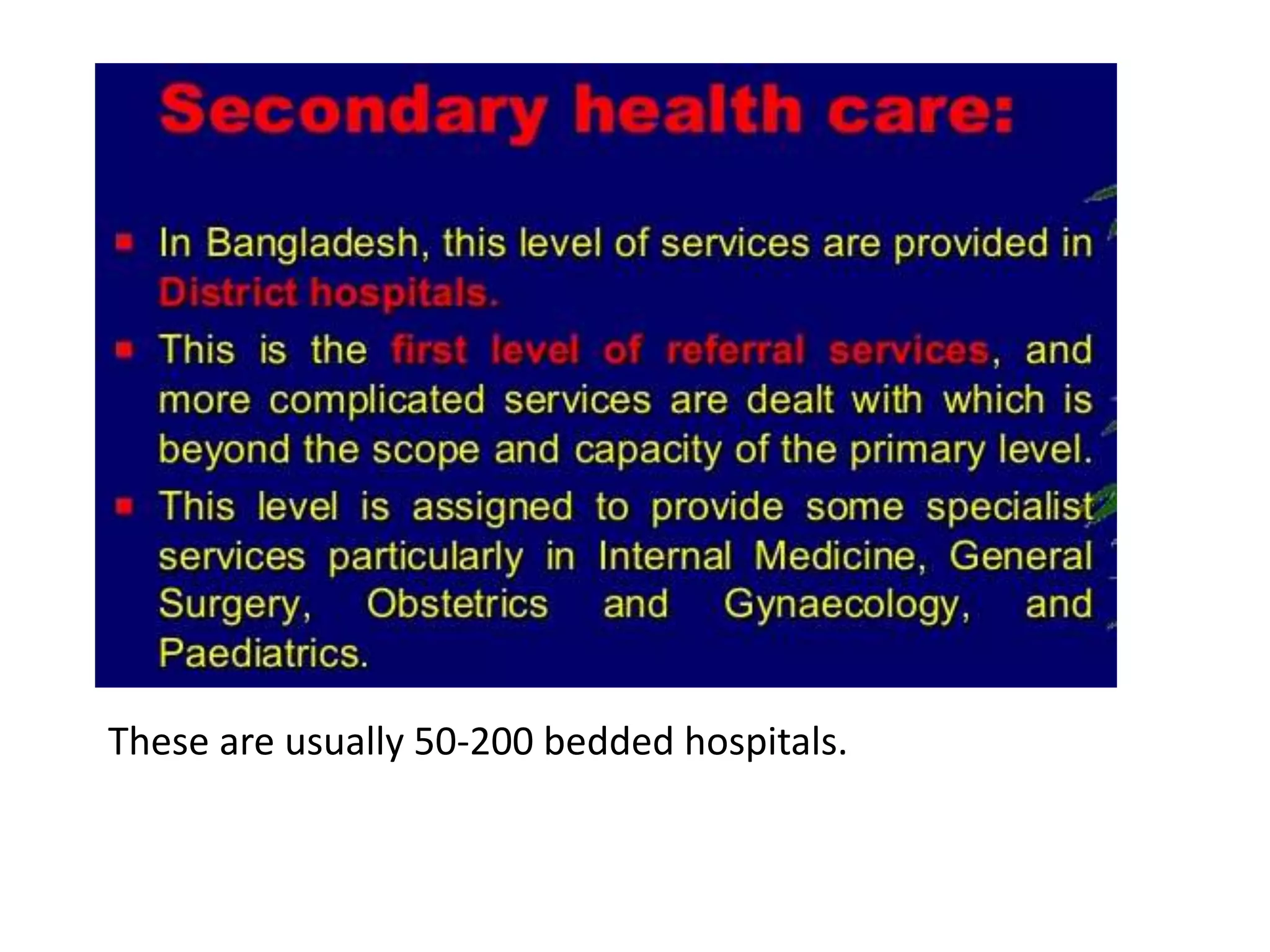
These are usually 50-200 bedded hospitals.
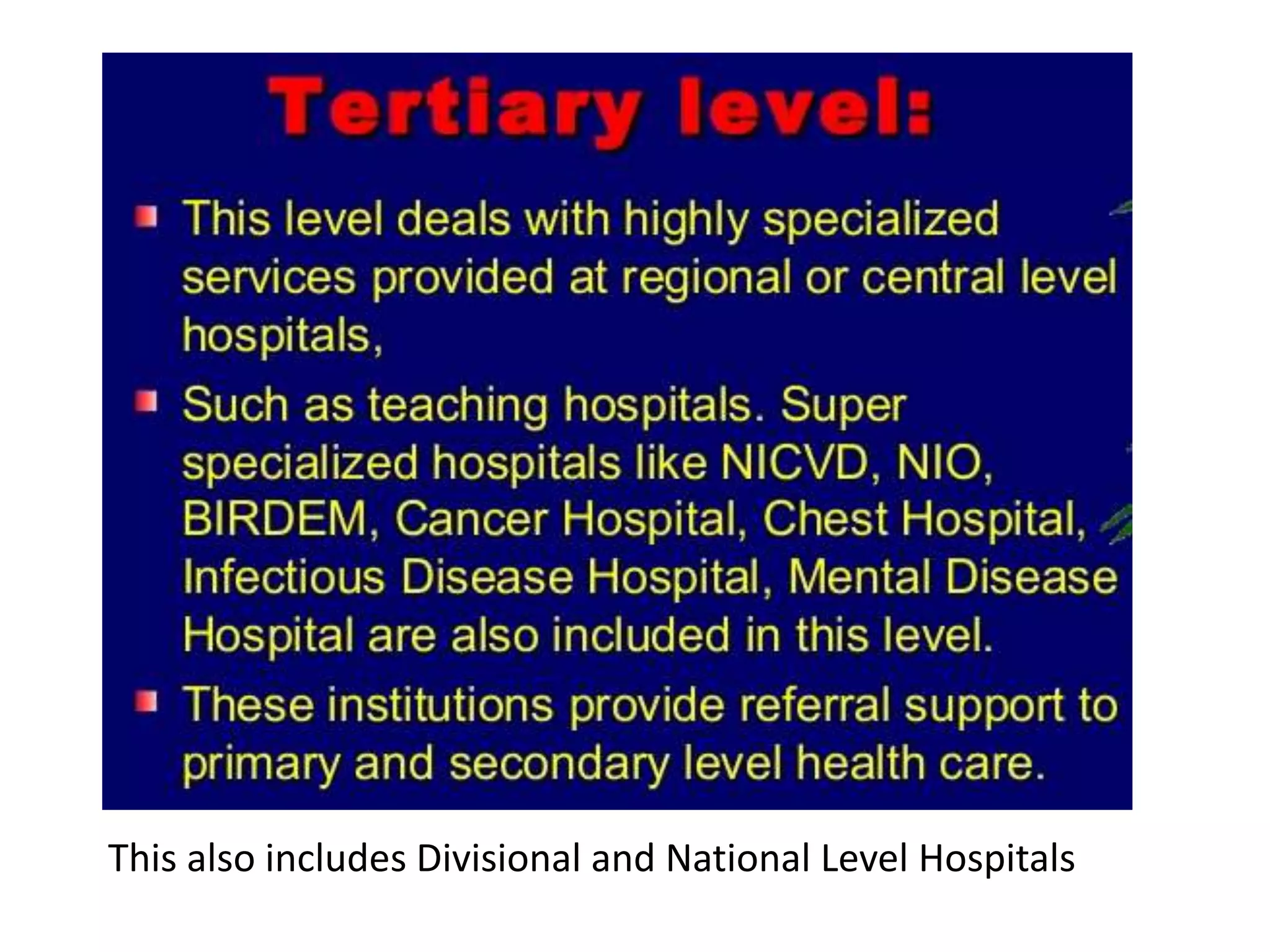
This also includes Divisional and National Level Hospitals
WHO Classification (Expert Committee 1957)
Regional Hospital:
Provides complex range of treatment and highly specialized services.
Serves a larger area than a local hospital. Example- Govt Medical
College Hospital
Intermediate/ District Hospital:
A district hospital typically is the major health care facility in its locality
(For Bangladesh in a district level). Specialty services in major
disciplines (eg, Medicne, Surgery, Gynae etc)
Rural Hospital:
Remote hospitals with small number of beds and limited service
capacity. It should have 20-100 beds. Upazila Health Complex in
Bangladesh
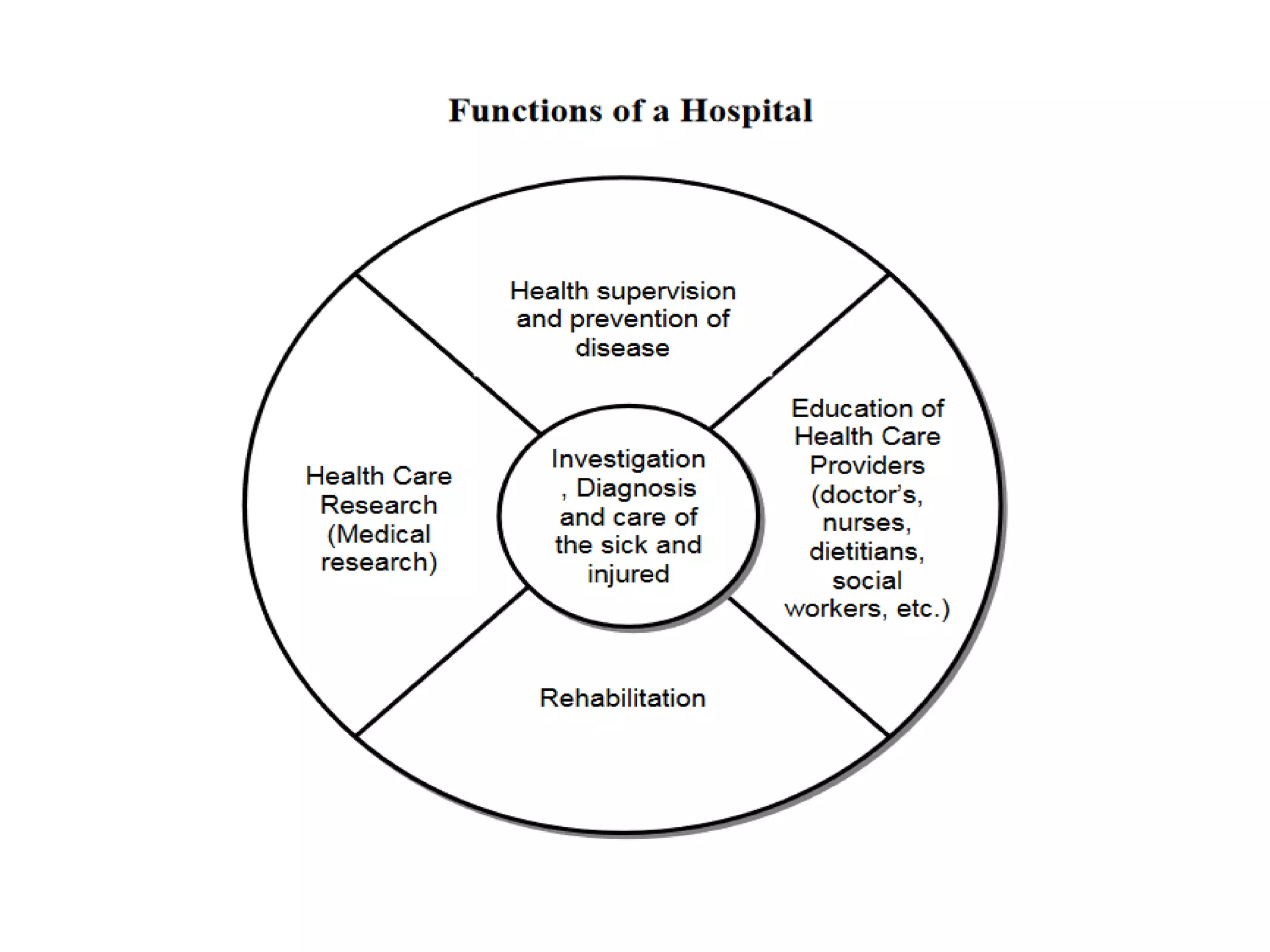
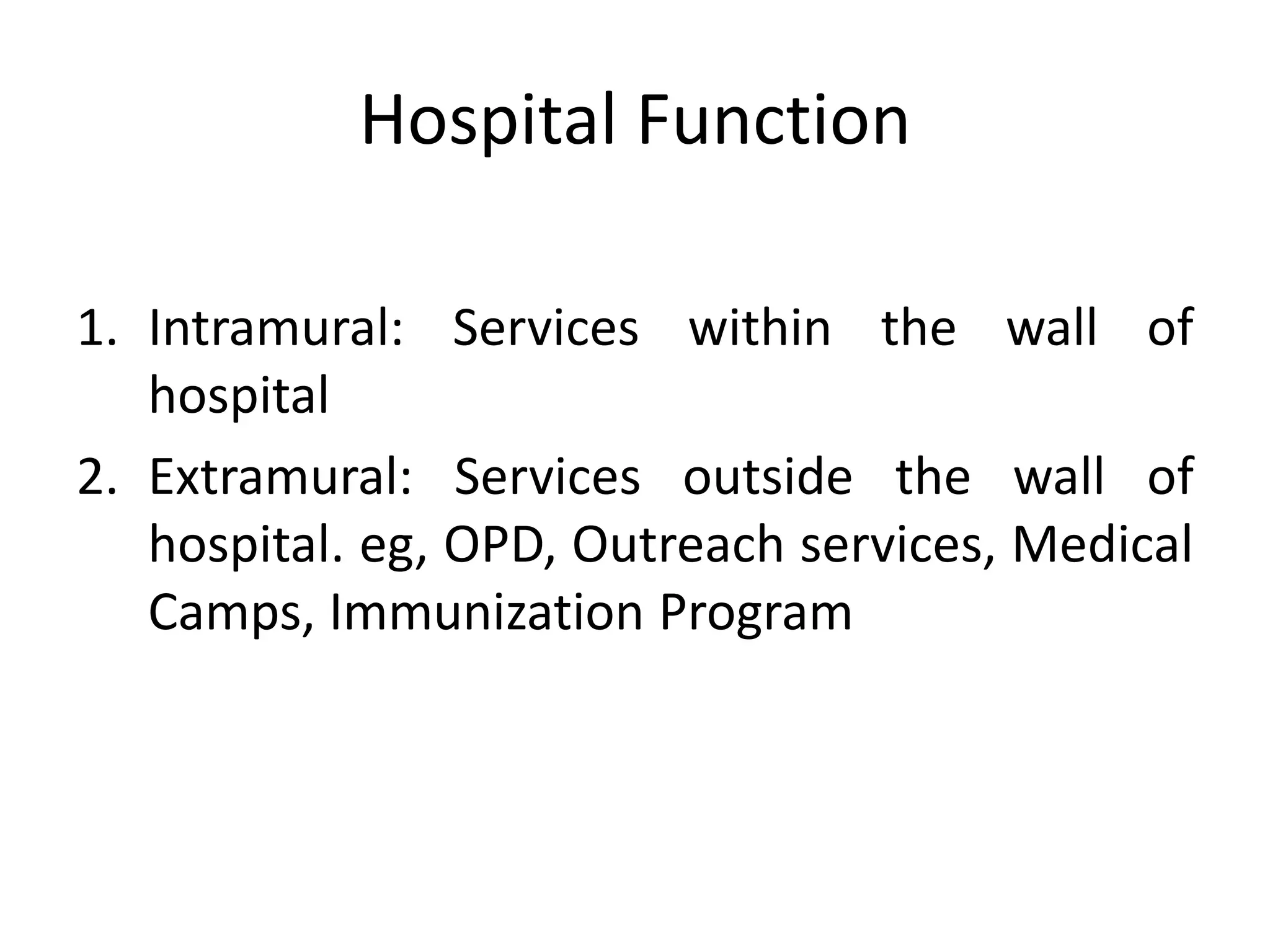
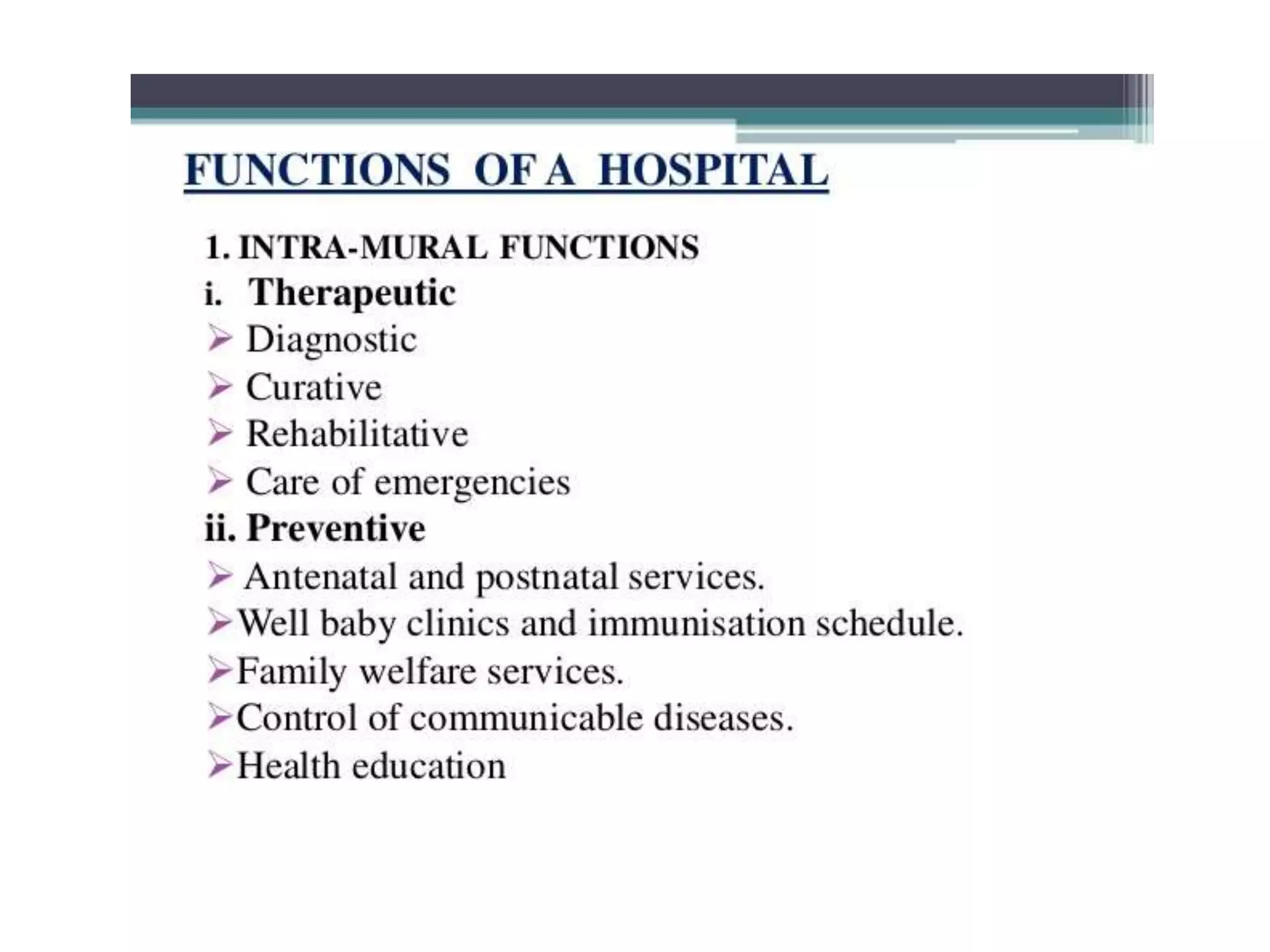
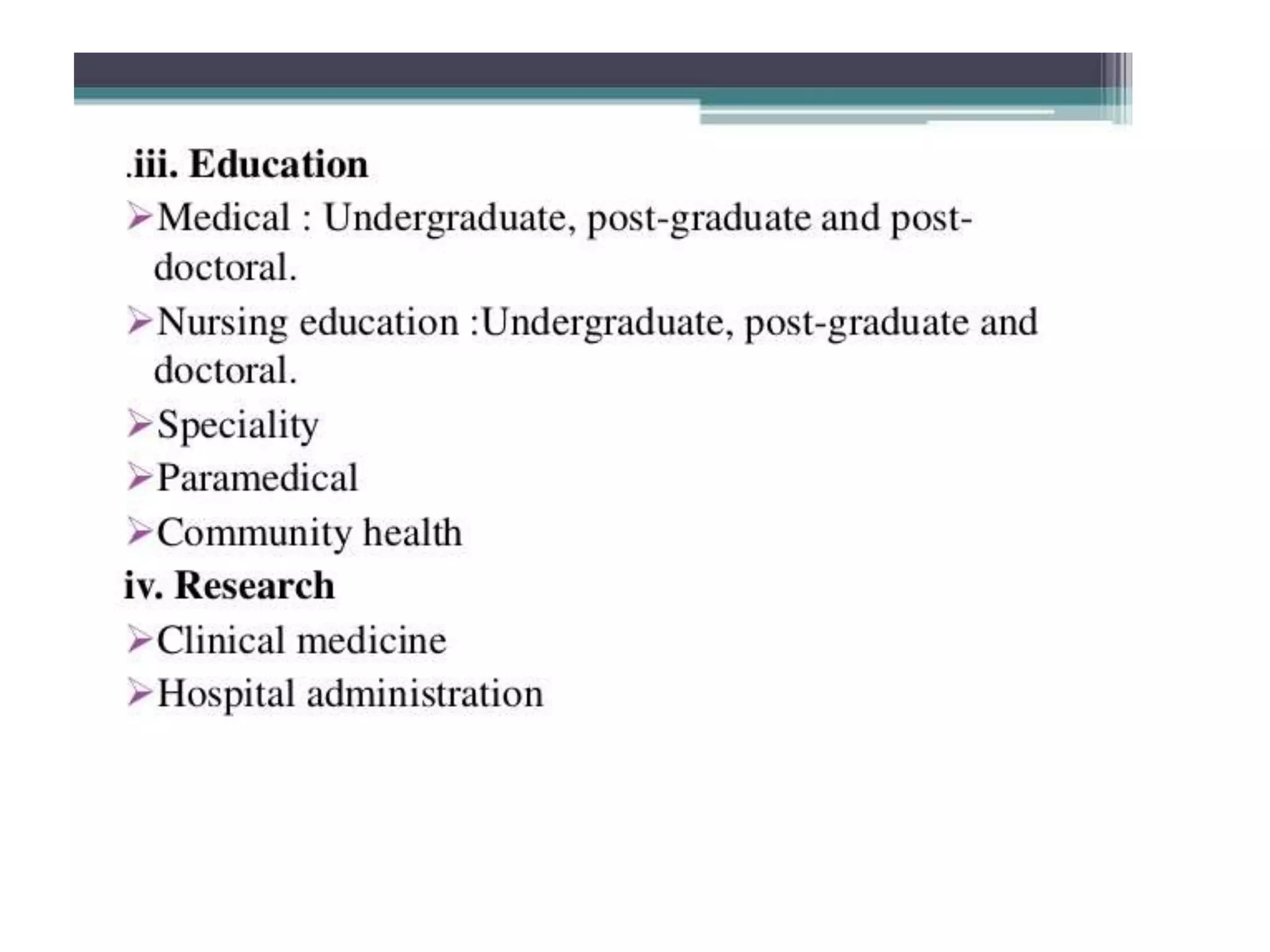
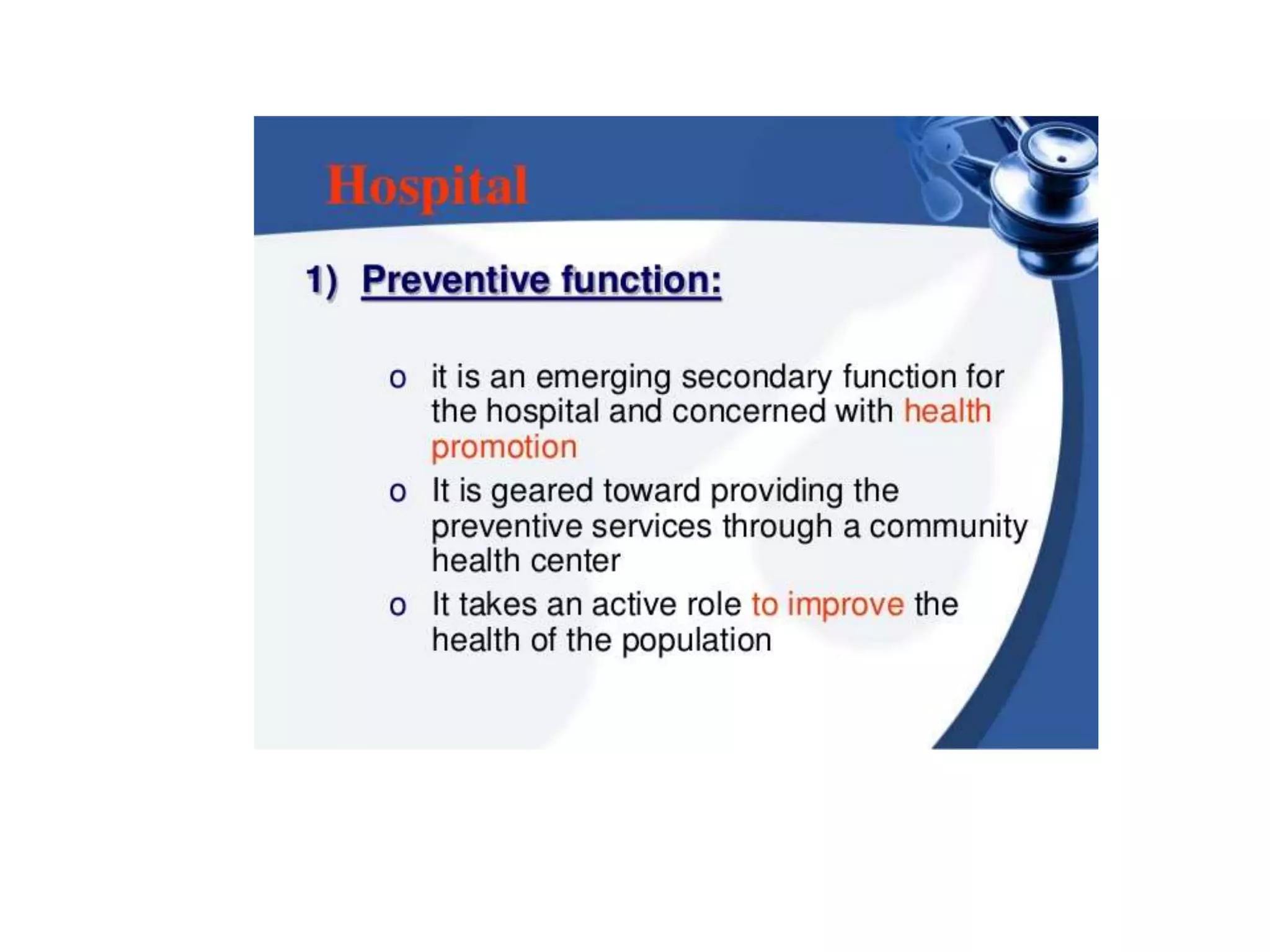
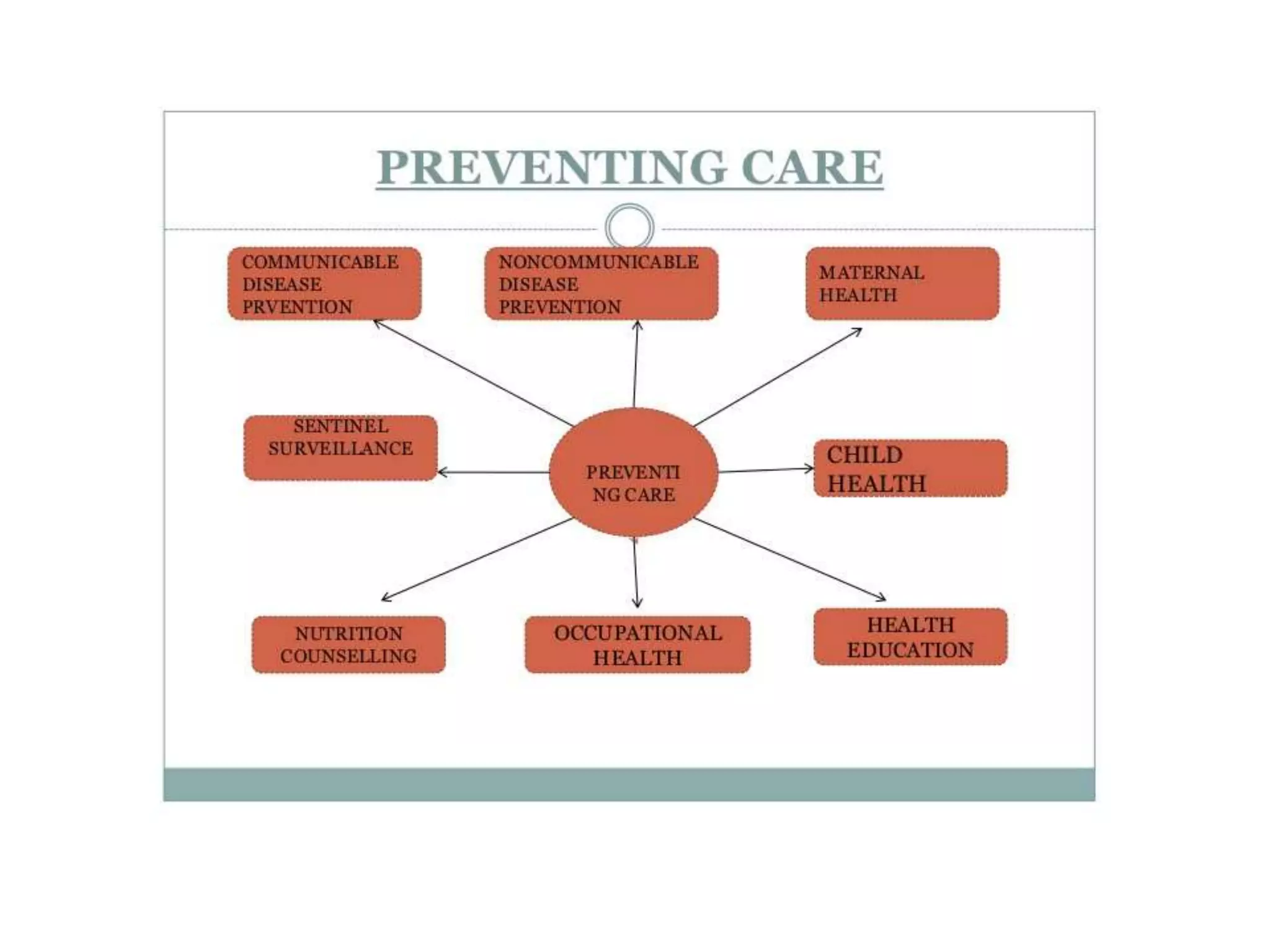
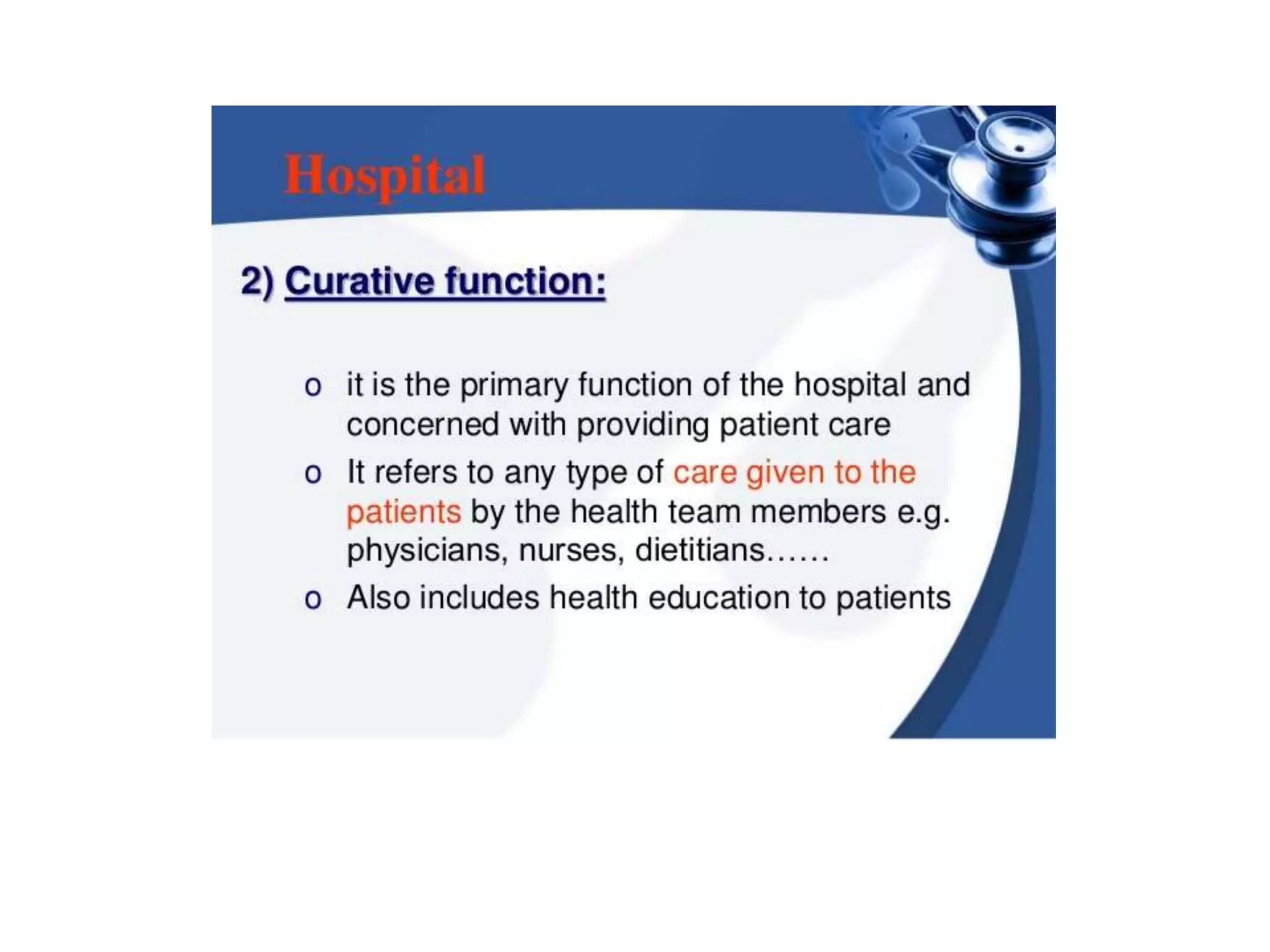
Hospital Function
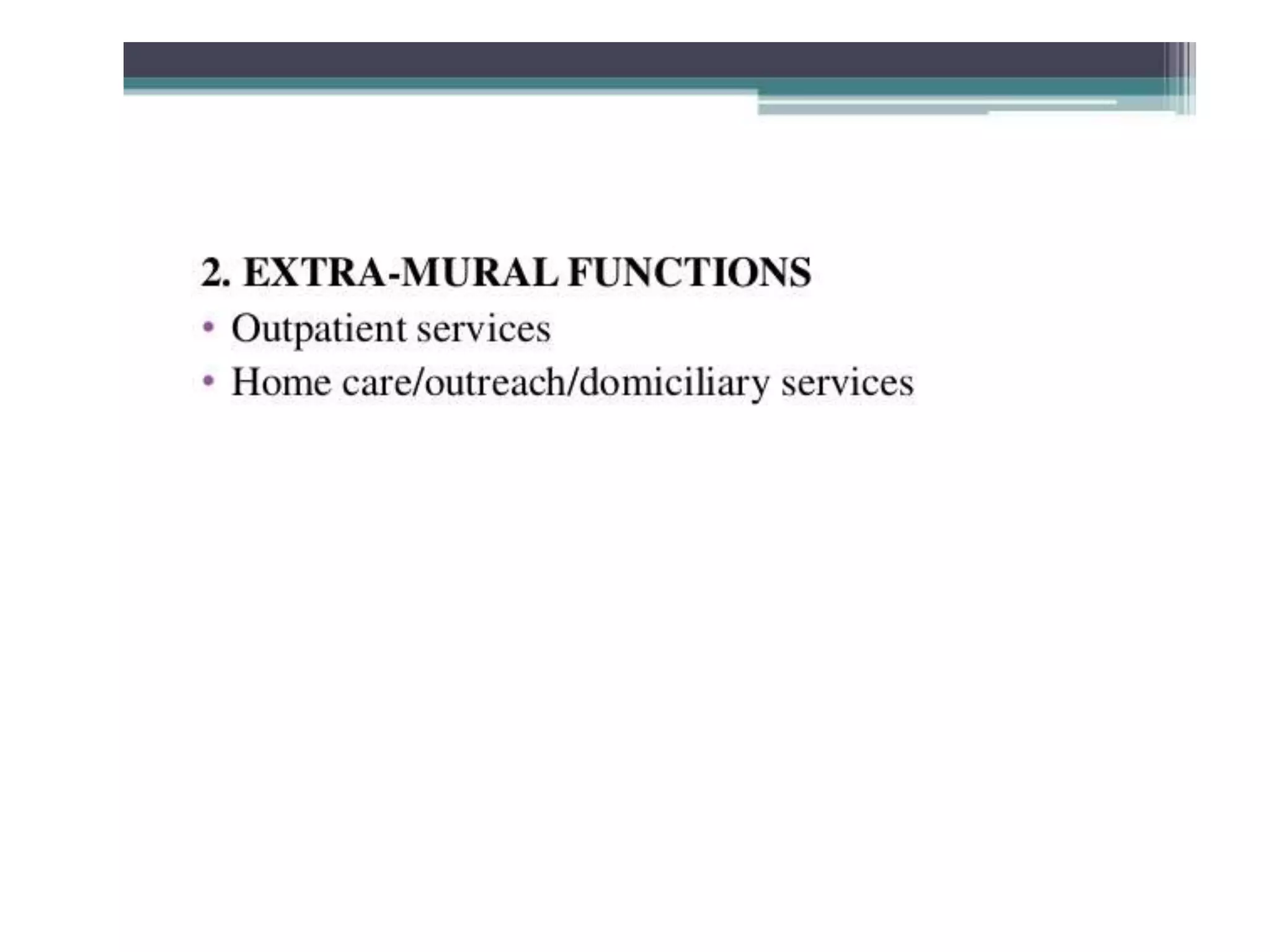
1. Intramural: Services within the wall of
hospital
2. Extramural: Services outside the wall of
hospital. eg, OPD, Outreach services, Medical
Camps, Immunization Program
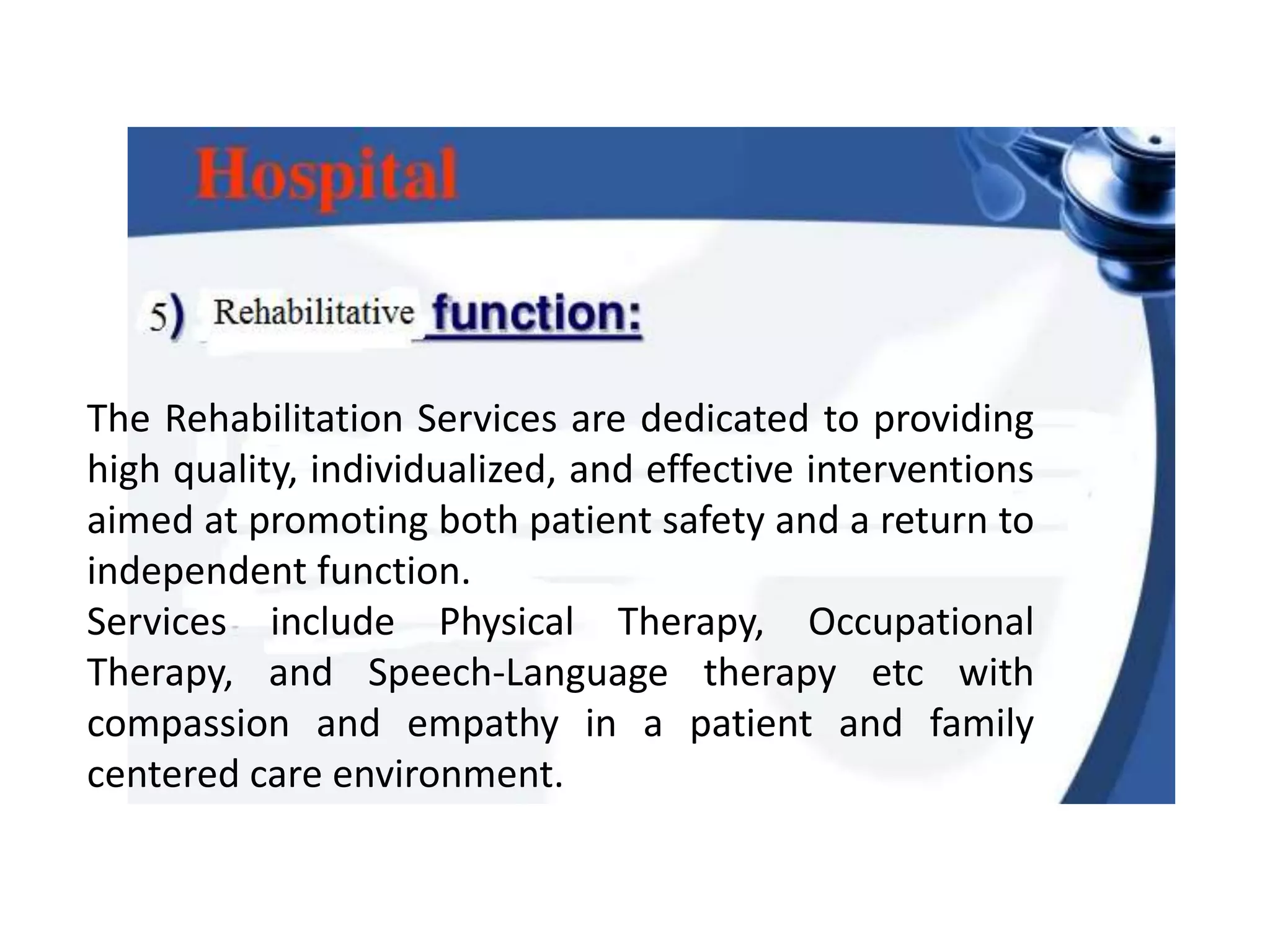
The Rehabilitation Services are dedicated to providing
high quality, individualized, and effective interventions
aimed at promoting both patient safety and a return to
independent function.
Services include Physical Therapy, Occupational
Therapy, and Speech-Language therapy etc with
compassion and empathy in a patient and family
centered care environment.
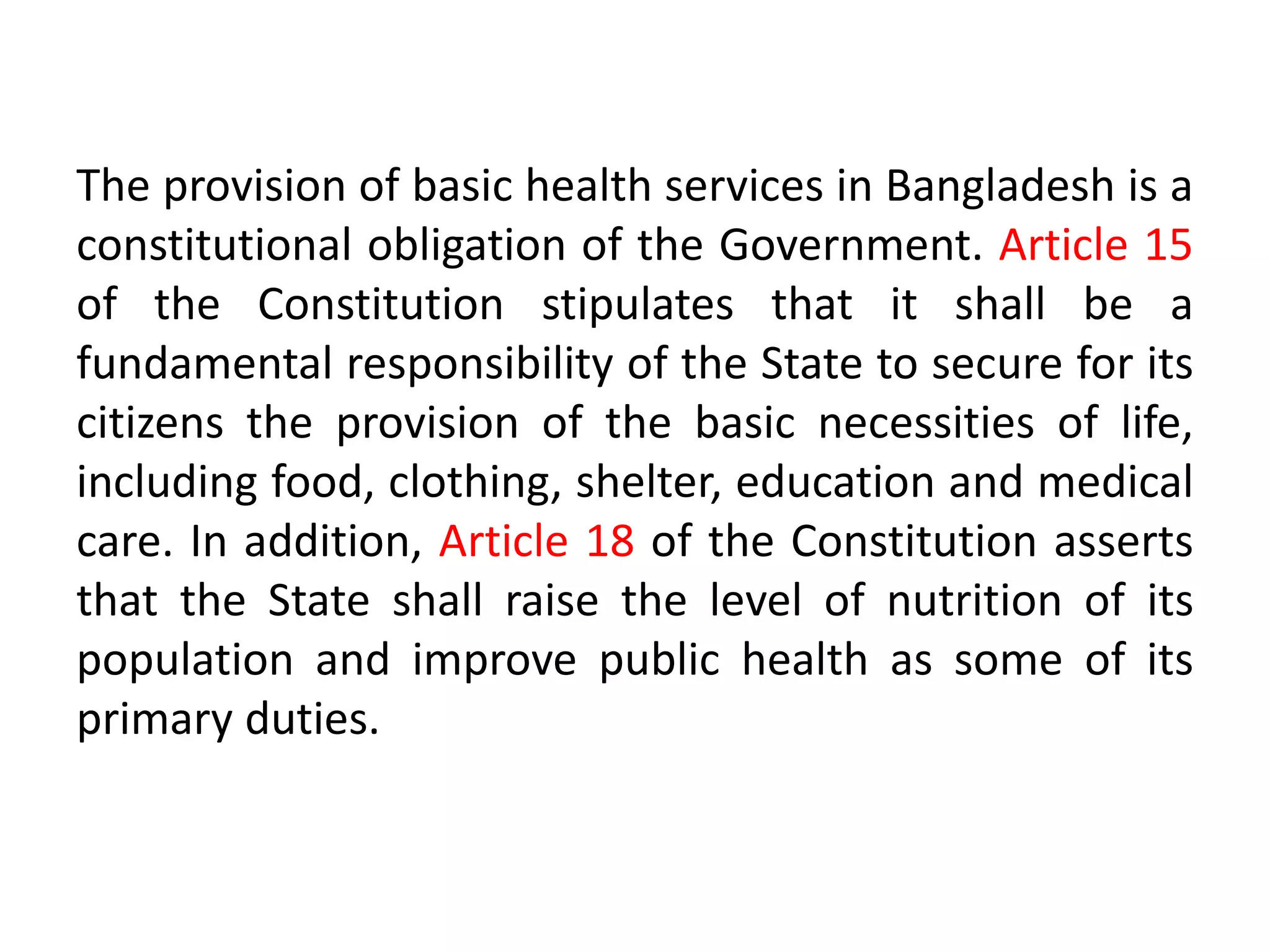
The provision of basic health services in Bangladesh is a
constitutional obligation of the Government. Article 15
of the Constitution stipulates that it shall be a
fundamental responsibility of the State to secure for its
citizens the provision of the basic necessities of life,
including food, clothing, shelter, education and medical
care. In addition, Article 18 of the Constitution asserts
that the State shall raise the level of nutrition of its
population and improve public health as some of its
primary duties.

Definition, Classification and Function of Hospital

  • 1.
    Definition, Classification and Functionof Hospital Col Zulfiquer Ahmed Amin M Phil, MPH, PGD (Health Economics), MBBS Armed Forces Medical Institute (AFMI)
  • 2.
    Definition of Hospital WHOExpert Committee, 1963: ‘A hospital is a residential establishment which provides short-term and long-term medical care consisting of observational, diagnostic, therapeutic and rehabilitative services for persons suffering or suspected to be suffering from a disease or injury and for parturients. It may or may not also provide services for ambulatory patients on an out-patient basis’.
  • 3.
    WHO expert committee,1956: ‘The hospital is an integral part of a social and medical organization, the function of which is to provide for the population complete healthcare, both curative and preventive, and whose out- patient services reach out to the family in its home environment; the hospital is also a centre for the training of health workers and for bio- social research’.
  • 4.
    Classification of Hospital 1.Basing on Objective a. General hospitals b. Special hospitals c. Teaching cum Research Hospital 2. Basing on Administration, ownership, control or financial income a. Governmental or public b. Non-governmental or private c. Semi Govt Hospital d. Voluntary Agency Hospitals 3. Basing on Length of Stay a. Short-term or short-stay hospitals (Stay less than 30 days) b. Long-term or long-stay hospitals: (Stay more than 30 days) 4. Depending on Type of Medical Staff a. Closed-staff hospital: b. Open-staff hospital:
  • 5.
    5. Basing onbed capacity (Size) a. Small hospital (Upto 100 beds) b. Medium hospital (More than 100 to less than 300 beds) c. Large hospital (More than 300 beds) 6. Basing on type of care: a. Primary Care b. Secondary Care c. Tertiary Care 7. By teaching affiliation: a. Teaching hospital b. Non-teaching hospital 8. Basing on system of medicine a. Allopathic hospital b. Ayurvedic hospital c. Homeopathic hospital d. Unani hospital e. Hospitals of other system of medicine
  • 6.
    9. Basing onregionality a. Regional b. District c. Upazila Health Complex d. Union Health and Family Welfare Centres e. Community Clinics 10. As per WHO Classification: a. Regional Hospital b. Intermediate/ District Hospital c. Rural Hospital
  • 7.
    General hospitals: General Hospitalsare meant to provide wide-range of various types of healthcare, but with limited capacity. They care for patients with various-disease conditions for both sexes to all ages, medical, surgical, paediatrics, obstetrics, eye and ear etc. Usually, General hospitals are devoid of super-specialist medical care. Special hospitals: They limit their service to a particular condition, orthopedics, maternity, paediatrics, geriatrics, oncology etc. Teaching cum Research Hospital: College is attached for medical/ nursing/ dental/ pharmacy education. Main objective is to provide medical care, teaching and research is secondary
  • 8.
    Governmental or publichospital: They are owned, administered and controlled by the government. They provide free care for patients. The governmental hospitals are owned by: • The Ministry of Health. • The University • Others. A public hospital or government hospital is a hospital which is owned by a government and receives government funding. In some countries, this type of hospital provides medical care free of charge, the cost of which is covered by government reimbursement. In Australia, public hospitals are operated and funded by each individual state's health department. The federal government also contributes funding.
  • 9.
    Private Hospital: Privately ownedor controlled by an individual or group of physicians or citizens or by private organization. eg, Square Hospital. Purpose is to provide services for profit making. Semi Govt Hospital: Hospitals run both by the govt and private entity. eg Cantt Board Hospital.
  • 10.
    Corporate Hospital Hospitals whichare public limited companies formed under the companies act. Run on commercial lines. eg, Apollo Voluntary Agency Hospital: Not for profit hospitals by the Voluntary Organizations. eg, HOPE Foundation Fistula Hospital
  • 11.
    Short-term or short-stayhospitals: These are hospitals where over 90% of all patients admitted stay less than 30 days. Long-term or long-stay hospitals: These are hospitals where over 90% of all patients admitted stay 30 days or more, i.e. mental hospital. Closed-staff hospital: Physicians are held responsible for all medical activities in the hospital including the diagnosis and treatment of patient fee paying and emergency. Open-staff hospital: This type of hospital permits other physicians in the community to admit and treat patients to the hospital' and treat them.
  • 12.
    Open Staff Hospital:Open medical staff, which means any physician can request to practice at the facility, regardless of their hospital affiliation. Close Staff Hospital: A closed hospital system is one in which all doctors are on staff, and also doctors that aren't on staff may not have access or privileges at said hospital.
  • 13.
    According to Levelof Care: Primary Care Hospital Primary care is the day-to-day healthcare given by a health care provider. Typically this provider acts as the first contact and principal point of continuing care for patients within a healthcare system, and coordinates other specialist care that the patient may need. Provides mostly basic health care. It is generally regarded as the ‘gateway’ to receiving more specialist care. eg, Upazila Health Complex
  • 14.
    These are usually50-200 bedded hospitals.
  • 15.
    This also includesDivisional and National Level Hospitals
  • 16.
    WHO Classification (ExpertCommittee 1957) Regional Hospital: Provides complex range of treatment and highly specialized services. Serves a larger area than a local hospital. Example- Govt Medical College Hospital Intermediate/ District Hospital: A district hospital typically is the major health care facility in its locality (For Bangladesh in a district level). Specialty services in major disciplines (eg, Medicne, Surgery, Gynae etc) Rural Hospital: Remote hospitals with small number of beds and limited service capacity. It should have 20-100 beds. Upazila Health Complex in Bangladesh
  • 18.
    Hospital Function 1. Intramural:Services within the wall of hospital 2. Extramural: Services outside the wall of hospital. eg, OPD, Outreach services, Medical Camps, Immunization Program
  • 27.
    The Rehabilitation Servicesare dedicated to providing high quality, individualized, and effective interventions aimed at promoting both patient safety and a return to independent function. Services include Physical Therapy, Occupational Therapy, and Speech-Language therapy etc with compassion and empathy in a patient and family centered care environment.
  • 32.
    The provision ofbasic health services in Bangladesh is a constitutional obligation of the Government. Article 15 of the Constitution stipulates that it shall be a fundamental responsibility of the State to secure for its citizens the provision of the basic necessities of life, including food, clothing, shelter, education and medical care. In addition, Article 18 of the Constitution asserts that the State shall raise the level of nutrition of its population and improve public health as some of its primary duties.