Front Office Administration
       2nd edition
     Brenda A. Potter, CPC
Appointment Scheduling
A Well-managed Appointment
Schedule
 Provides optimal availability of services for
    patients
   Maximizes use of facility resources
   Avoids excessive downtime
   Reduces waiting time for patients
   Maximizes number of patients a physician can
    serve
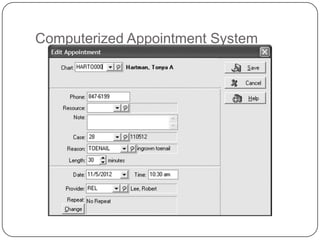
Computerized Appointment System
 Most offices today use a computerized
  appointment system
 Advantages
   More than one user can access system
   Prompts for essential appointment information
   Makes updated schedules available quickly
   Interfaces with registration, billing, and insurance
    functions
   Several open appointments may be viewed at one
    time
   Appointment information may be quickly retrieved
Computerized Appointment System
 Concerns
  Plan for computer down time
  Backup of computer information
  Equipment and software may be costly
  Training necessary for employees
Manual Appointment System
 Appointments must be written in book with pencil
 Only one person at a time may use appointment
  book
 Canceling appointments is cumbersome
 More than one book necessary for several
  physicians
Scheduling Methods
 Type of practice determines standard
  appointment length
 Specialists usually require longer appoints
 Primary care physicians may schedule
  appointments every 10 or 15 minutes
 New patients require longer appointments
Double-booking Appointments
 Scheduling one appointment at the same time as
  another
 Double-booked appointment is usually an urgent
  care appointment
Walk-in Patients
 Patient who arrives at clinic without an
  appointment
 ALWAYS check with practitioners before
  accepting them.
Walk-in Clinics
 Urgent care facility
 Often accept ONLY walk-in patients
 Often open extended hours
Group (Block) Scheduling
 Multiple patients scheduled at the same time
Series Of Appointments
 Patient with multiple appointments at the same
 time
   Example:
     Hair Removal
     Allergy or Botox injections

 Best to schedule on same day of week at same
 time
   Example:
     Appointments scheduled for Tuesdays at 1:00 PM
Multiple Appointments
 Patient is seeing multiple providers for treatment
 Try to schedule on same day for convenience of
  patient
 Make sure medical record is available for each
  provider
Appointment Parameters
 Practitioner’s preference
 Many MDs like variety
 Restrict number of procedures if necessary
 Availability of equipment and resources
 Discuss with practitioners on how many:
   Tattoo removal cases.
   Advanced hair removal cases.
Setting the Schedule
 Block off days the office is closed
 Block off practitioners’ unavailable days and times
 Block off meetings, personal appointments
Advance Booking
 How far in advance?
 Send appointment reminders
Appointment Components
 Name
 Reason
   Determine length of appt
   Use standard abbreviations
   Do not enter potentially embarrassing terms
 Daytime telephone number of patient
 Medical record number or DOB
Prioritizing Appointments
 Nature of patient’s problem will determine when
  patient is scheduled
 Ask patient when he/she would like to come in to
  the office
 If unsure about severity of patient’s
  problem, medical staff may need to triage
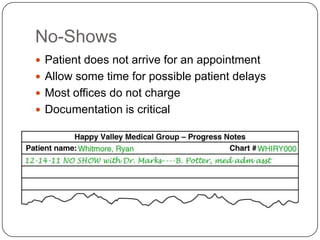
No-Shows
 Patient does not arrive for an appointment
 Allow some time for possible patient delays
 Most offices do not charge
 Documentation is critical
Canceled and Rescheduled
Appointments
 If possible, document in patient’s record
 If rescheduled, may not need to document
Ancillary and Referral Appointments
 Ancillary – Appointments made with other
  departments in health facility
 Referral – Patient referred to another
  provider, such as specialist
   Document in patient’s record
Surgical Appointments
 Obtain type of procedure to be performed
 Obtain insurance approval for procedure
 Ensure patient has appointment for pre-op
  physical
 Patient phoned day before surgery with
  instructions
Pharmaceutical and Other Sales Persons
 Pharmaceutical reps meet with providers and
  staff on a regular basis
 Most sales persons will be required to make an
  appointment
Posting the Schedule
 How often is update needed?
 Confidentiality concerns – schedules CANNOT be
 viewed by patient
Appointment Reminders
 Should a reminder be done for every
  appointment?
 Telephone reminders
   When should you call?
   Should you leave a message?
 Written reminders – forms or letters
Planning for the Unexpected
 Minimize impact if possible
 Notify patients as soon as possible
 Patients may wait or reschedule

I appointment schduleing

  • 1.
    Front Office Administration 2nd edition Brenda A. Potter, CPC
  • 2.
  • 3.
    A Well-managed Appointment Schedule Provides optimal availability of services for patients  Maximizes use of facility resources  Avoids excessive downtime  Reduces waiting time for patients  Maximizes number of patients a physician can serve
  • 4.
  • 5.
    Computerized Appointment System Most offices today use a computerized appointment system  Advantages  More than one user can access system  Prompts for essential appointment information  Makes updated schedules available quickly  Interfaces with registration, billing, and insurance functions  Several open appointments may be viewed at one time  Appointment information may be quickly retrieved
  • 6.
    Computerized Appointment System Concerns  Plan for computer down time  Backup of computer information  Equipment and software may be costly  Training necessary for employees
  • 7.
    Manual Appointment System Appointments must be written in book with pencil  Only one person at a time may use appointment book  Canceling appointments is cumbersome  More than one book necessary for several physicians
  • 8.
    Scheduling Methods  Typeof practice determines standard appointment length  Specialists usually require longer appoints  Primary care physicians may schedule appointments every 10 or 15 minutes  New patients require longer appointments
  • 9.
    Double-booking Appointments  Schedulingone appointment at the same time as another  Double-booked appointment is usually an urgent care appointment
  • 10.
    Walk-in Patients  Patientwho arrives at clinic without an appointment  ALWAYS check with practitioners before accepting them.
  • 11.
    Walk-in Clinics  Urgentcare facility  Often accept ONLY walk-in patients  Often open extended hours
  • 12.
    Group (Block) Scheduling Multiple patients scheduled at the same time
  • 13.
    Series Of Appointments Patient with multiple appointments at the same time  Example:  Hair Removal  Allergy or Botox injections  Best to schedule on same day of week at same time  Example:  Appointments scheduled for Tuesdays at 1:00 PM
  • 14.
    Multiple Appointments  Patientis seeing multiple providers for treatment  Try to schedule on same day for convenience of patient  Make sure medical record is available for each provider
  • 15.
    Appointment Parameters  Practitioner’spreference  Many MDs like variety  Restrict number of procedures if necessary  Availability of equipment and resources  Discuss with practitioners on how many:  Tattoo removal cases.  Advanced hair removal cases.
  • 16.
    Setting the Schedule Block off days the office is closed  Block off practitioners’ unavailable days and times  Block off meetings, personal appointments
  • 17.
    Advance Booking  Howfar in advance?  Send appointment reminders
  • 18.
    Appointment Components  Name Reason  Determine length of appt  Use standard abbreviations  Do not enter potentially embarrassing terms  Daytime telephone number of patient  Medical record number or DOB
  • 19.
    Prioritizing Appointments  Natureof patient’s problem will determine when patient is scheduled  Ask patient when he/she would like to come in to the office  If unsure about severity of patient’s problem, medical staff may need to triage
  • 20.
    No-Shows  Patient doesnot arrive for an appointment  Allow some time for possible patient delays  Most offices do not charge  Documentation is critical
  • 21.
    Canceled and Rescheduled Appointments If possible, document in patient’s record  If rescheduled, may not need to document
  • 22.
    Ancillary and ReferralAppointments  Ancillary – Appointments made with other departments in health facility  Referral – Patient referred to another provider, such as specialist  Document in patient’s record
  • 23.
    Surgical Appointments  Obtaintype of procedure to be performed  Obtain insurance approval for procedure  Ensure patient has appointment for pre-op physical  Patient phoned day before surgery with instructions
  • 24.
    Pharmaceutical and OtherSales Persons  Pharmaceutical reps meet with providers and staff on a regular basis  Most sales persons will be required to make an appointment
  • 25.
    Posting the Schedule How often is update needed?  Confidentiality concerns – schedules CANNOT be viewed by patient
  • 26.
    Appointment Reminders  Shoulda reminder be done for every appointment?  Telephone reminders  When should you call?  Should you leave a message?  Written reminders – forms or letters
  • 27.
    Planning for theUnexpected  Minimize impact if possible  Notify patients as soon as possible  Patients may wait or reschedule