Islam Teachings and History of the Religion
The Beginning Muhammad Born in Mecca in 570 AD Often meditated in the hills near the city One day, the angel Gabriel came to him and spoke, giving him teachings The Koran :  the words the angel Gabriel spoke to Muhammad, the holy book of Islam
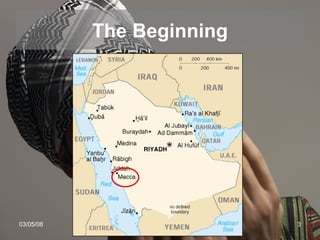
The Beginning
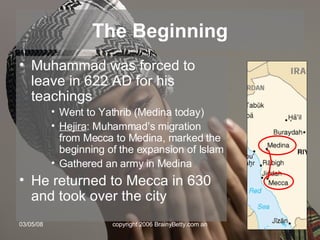
The Beginning Muhammad was forced to leave in 622 AD for his teachings Went to Yathrib (Medina today) Hejira : Muhammad’s migration from Mecca to Medina, marked the beginning of the expansion of Islam Gathered an army in Medina He returned to Mecca in 630 and took over the city
Teachings of Islam The Five Pillars of Islam Proclaim belief in one God, Allah, and his prophet Muhammad Pray 5 times a day, facing Mecca Charity to the poor and elderly Fast during the month of Ramadan (holy month) Hajj : pilgrimage to Mecca at least once in life
The 6 th  pillar? Jihad : has at least two meanings An inner battle to achieve peace An outer battle to defend Islam Teachings of Islam
The Koran and its teachings The book must be handled carefully People of the Book :  Jews and Christians Muslims are required to treat them with tolerance Share all the Jewish prophets Muslims believe Jesus was a prophet, but not the messiah Muhammad is the last prophet, and all that he said was fully correct Teachings of Islam
Teachings of Islam The Koran and its teachings Muslims must live lawful, moral lives Everyone is equal Islam borrows much from Judaism and Christianity, while adding its own elements
History of Islam Caliph : leader of Islam Politics and religion are one in Islam Sunnis and Shiites These two sects stem from a disagreement about the caliph Who should become caliph after Muhammad?
Sunnis and Shiites Shiites :  Believed Muhammad’s son-in-law, Ali, was the successor Only descendents of Ali could be caliph Sunnis : Believe any true Muslim can be caliph History of Islam
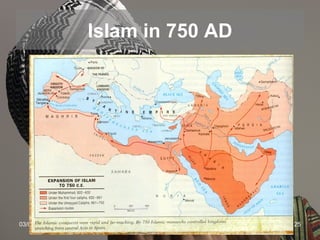
Early Islamic dynasties sent armies throughout the Middle East, converting along the way History of Islam
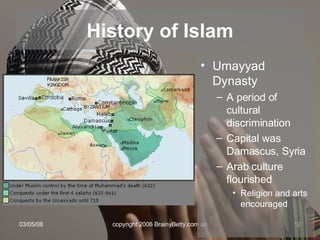
Umayyad Dynasty A period of cultural discrimination Capital was Damascus, Syria Arab culture flourished Religion and arts encouraged History of Islam
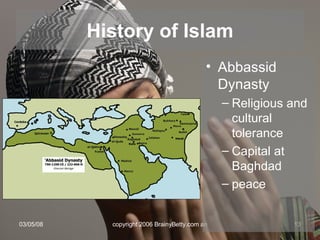
Abbassid Dynasty Religious and cultural tolerance Capital at Baghdad peace History of Islam
Throughout history, a respect for learning allowed Islamic civilization to grow and prosper Islam was the major rival to Western Civilization by the time of imperialism History of Islam
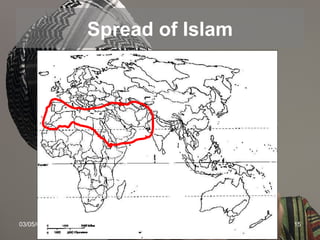
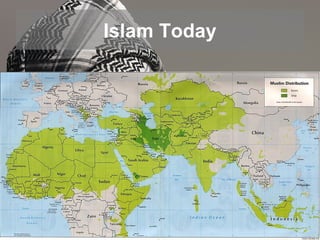
Spread of Islam
Foreign Invaders The borders of the Muslim empire were always changing Starting in the year 1000, waves of foreign invaders flooded the Middle East, but were never able to fully take over the civilization Strong Muslim armies Most invaders were either already Muslim, or converted to Islam History of Islam
Seljuks Turkish Muslims Lived in the Iranian Plateau Captured Baghdad and weakened the current Byzantine empire History of Islam
Mongols Came from Central Asia Took Baghdad from the Seljuks and destroyed it in 1258 AD Continued to raid the Muslim civilization for 100 years Many eventually converted to Islam and blended into Middle Eastern culture History of Islam
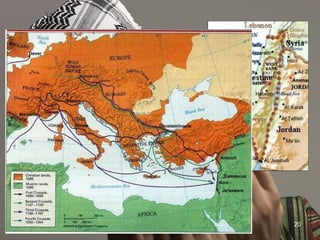
The Crusades Crusade : holy war Christian Pope called a crusade against Muslims in 1095 AD The goal was to capture Palestine, “the holy land” There were 6 crusades Some were successful, others failed Had only a limited effect on the Middle East History of Islam
 
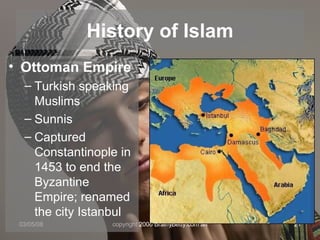
Ottoman Empire Turkish speaking Muslims Sunnis Captured Constantinople in 1453 to end the Byzantine Empire; renamed the city Istanbul History of Islam
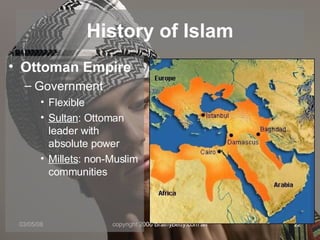
History of Islam Ottoman Empire Government Flexible Sultan : Ottoman leader with absolute power Millets : non-Muslim communities
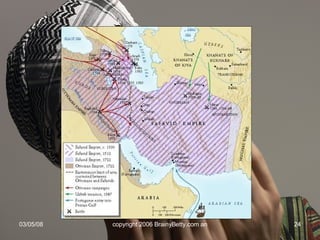
Safavid Empire In present day Iran Shiites Rivals to the Ottomans Islamic Republic of Iran today is mostly Shiite History of Islam
 
Islam in 750 AD
Islam Today
Review Beginning of Islam: Muhammad Teachings of the Koran 5 Pillars of Islam: a 6 th  pillar? History and Spread of Islam Umayyad and Abbassid Dynasties Seljuks, Mongols, Crusades Ottoman and Safavid Empires Vocabulary: Koran, hejira, hajj, jihad, People of the Book, caliph, Sunni, Shiite, crusade, sultan, millets

Islam

  • 1.
    Islam Teachings andHistory of the Religion
  • 2.
    The Beginning MuhammadBorn in Mecca in 570 AD Often meditated in the hills near the city One day, the angel Gabriel came to him and spoke, giving him teachings The Koran : the words the angel Gabriel spoke to Muhammad, the holy book of Islam
  • 3.
  • 4.
    The Beginning Muhammadwas forced to leave in 622 AD for his teachings Went to Yathrib (Medina today) Hejira : Muhammad’s migration from Mecca to Medina, marked the beginning of the expansion of Islam Gathered an army in Medina He returned to Mecca in 630 and took over the city
  • 5.
    Teachings of IslamThe Five Pillars of Islam Proclaim belief in one God, Allah, and his prophet Muhammad Pray 5 times a day, facing Mecca Charity to the poor and elderly Fast during the month of Ramadan (holy month) Hajj : pilgrimage to Mecca at least once in life
  • 6.
    The 6 th pillar? Jihad : has at least two meanings An inner battle to achieve peace An outer battle to defend Islam Teachings of Islam
  • 7.
    The Koran andits teachings The book must be handled carefully People of the Book : Jews and Christians Muslims are required to treat them with tolerance Share all the Jewish prophets Muslims believe Jesus was a prophet, but not the messiah Muhammad is the last prophet, and all that he said was fully correct Teachings of Islam
  • 8.
    Teachings of IslamThe Koran and its teachings Muslims must live lawful, moral lives Everyone is equal Islam borrows much from Judaism and Christianity, while adding its own elements
  • 9.
    History of IslamCaliph : leader of Islam Politics and religion are one in Islam Sunnis and Shiites These two sects stem from a disagreement about the caliph Who should become caliph after Muhammad?
  • 10.
    Sunnis and ShiitesShiites : Believed Muhammad’s son-in-law, Ali, was the successor Only descendents of Ali could be caliph Sunnis : Believe any true Muslim can be caliph History of Islam
  • 11.
    Early Islamic dynastiessent armies throughout the Middle East, converting along the way History of Islam
  • 12.
    Umayyad Dynasty Aperiod of cultural discrimination Capital was Damascus, Syria Arab culture flourished Religion and arts encouraged History of Islam
  • 13.
    Abbassid Dynasty Religiousand cultural tolerance Capital at Baghdad peace History of Islam
  • 14.
    Throughout history, arespect for learning allowed Islamic civilization to grow and prosper Islam was the major rival to Western Civilization by the time of imperialism History of Islam
  • 15.
  • 16.
    Foreign Invaders Theborders of the Muslim empire were always changing Starting in the year 1000, waves of foreign invaders flooded the Middle East, but were never able to fully take over the civilization Strong Muslim armies Most invaders were either already Muslim, or converted to Islam History of Islam
  • 17.
    Seljuks Turkish MuslimsLived in the Iranian Plateau Captured Baghdad and weakened the current Byzantine empire History of Islam
  • 18.
    Mongols Came fromCentral Asia Took Baghdad from the Seljuks and destroyed it in 1258 AD Continued to raid the Muslim civilization for 100 years Many eventually converted to Islam and blended into Middle Eastern culture History of Islam
  • 19.
    The Crusades Crusade: holy war Christian Pope called a crusade against Muslims in 1095 AD The goal was to capture Palestine, “the holy land” There were 6 crusades Some were successful, others failed Had only a limited effect on the Middle East History of Islam
  • 20.
  • 21.
    Ottoman Empire Turkishspeaking Muslims Sunnis Captured Constantinople in 1453 to end the Byzantine Empire; renamed the city Istanbul History of Islam
  • 22.
    History of IslamOttoman Empire Government Flexible Sultan : Ottoman leader with absolute power Millets : non-Muslim communities
  • 23.
    Safavid Empire Inpresent day Iran Shiites Rivals to the Ottomans Islamic Republic of Iran today is mostly Shiite History of Islam
  • 24.
  • 25.
  • 26.
  • 27.
    Review Beginning ofIslam: Muhammad Teachings of the Koran 5 Pillars of Islam: a 6 th pillar? History and Spread of Islam Umayyad and Abbassid Dynasties Seljuks, Mongols, Crusades Ottoman and Safavid Empires Vocabulary: Koran, hejira, hajj, jihad, People of the Book, caliph, Sunni, Shiite, crusade, sultan, millets