Downloaded 149 times


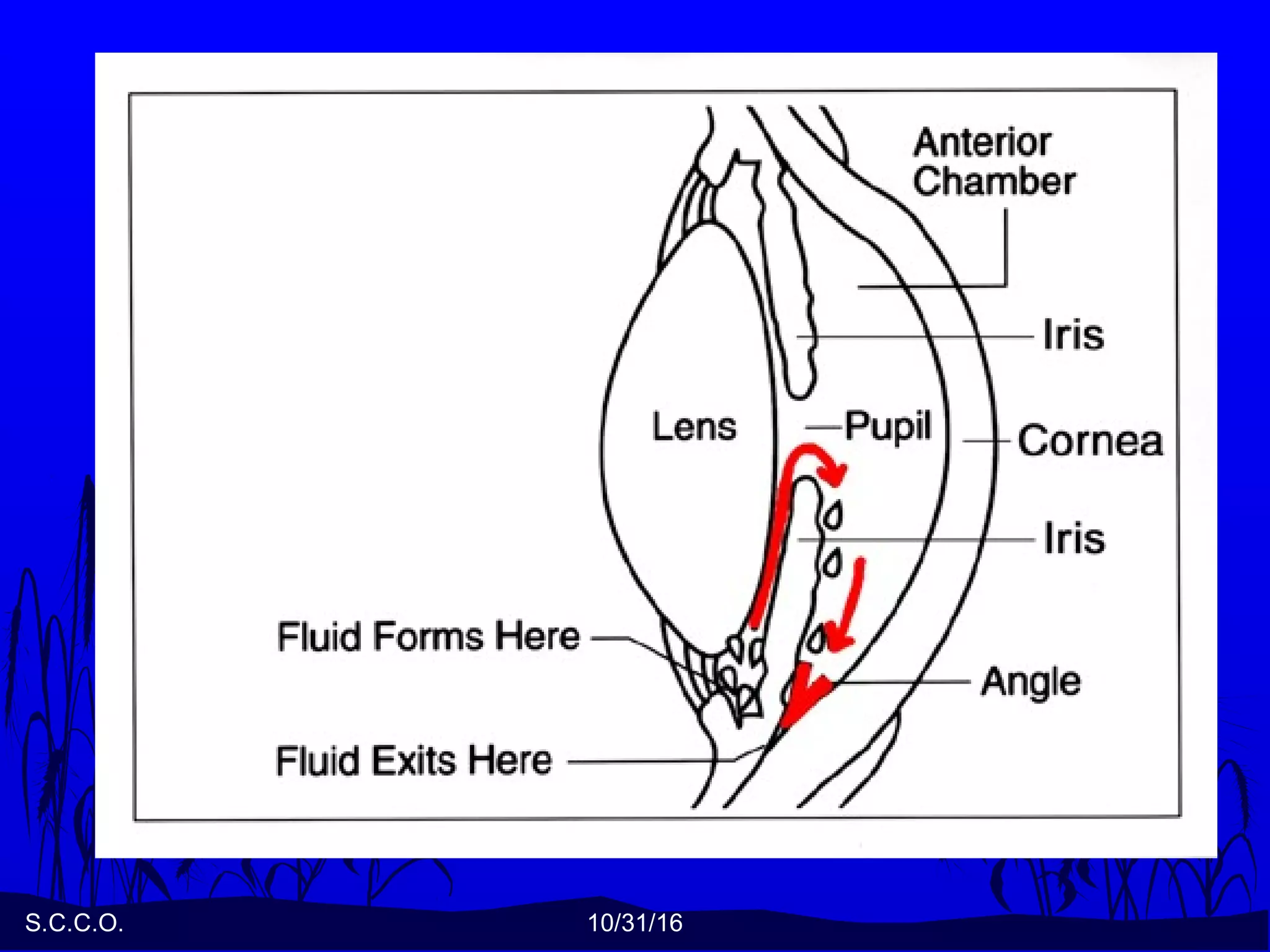


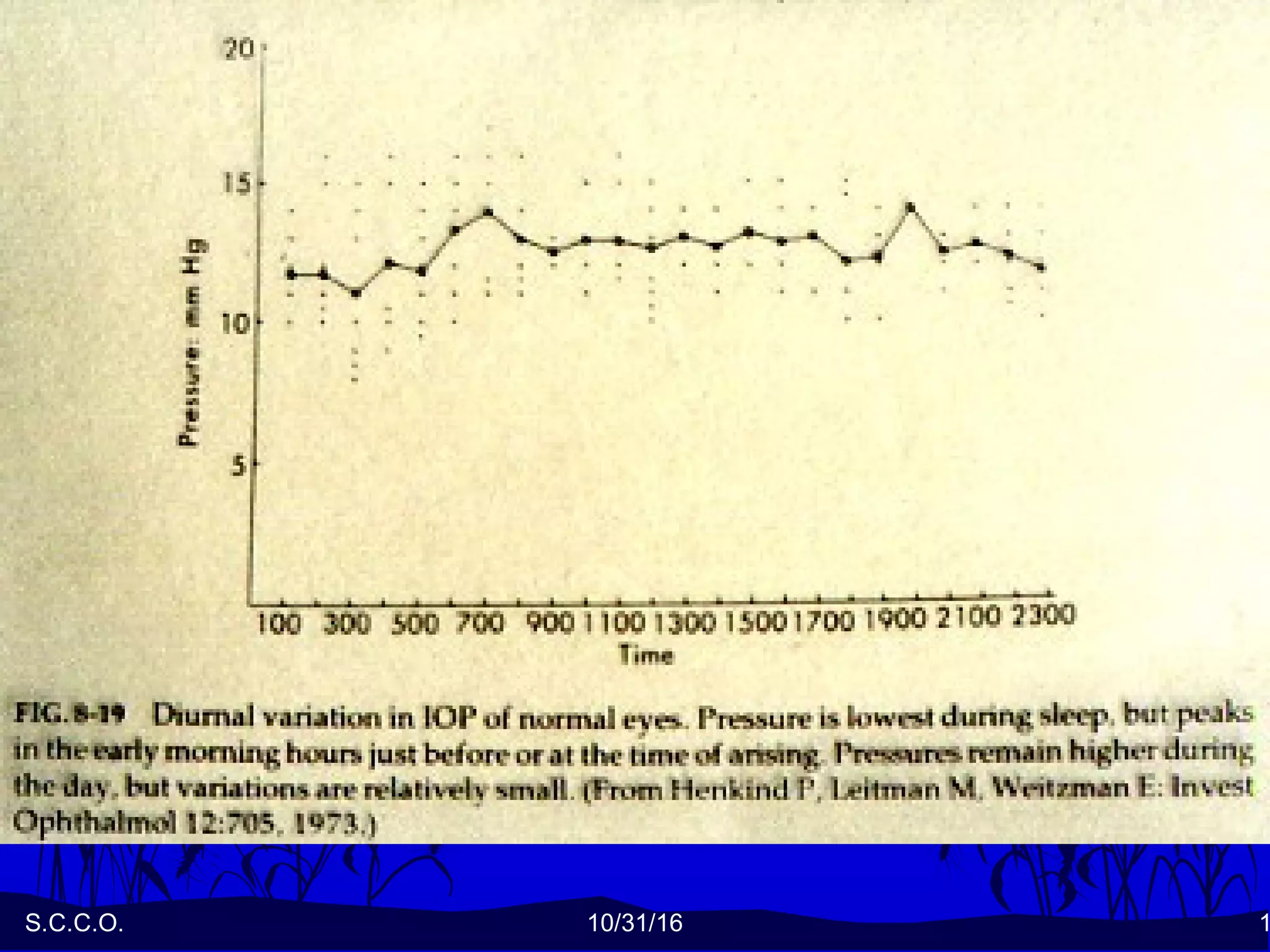
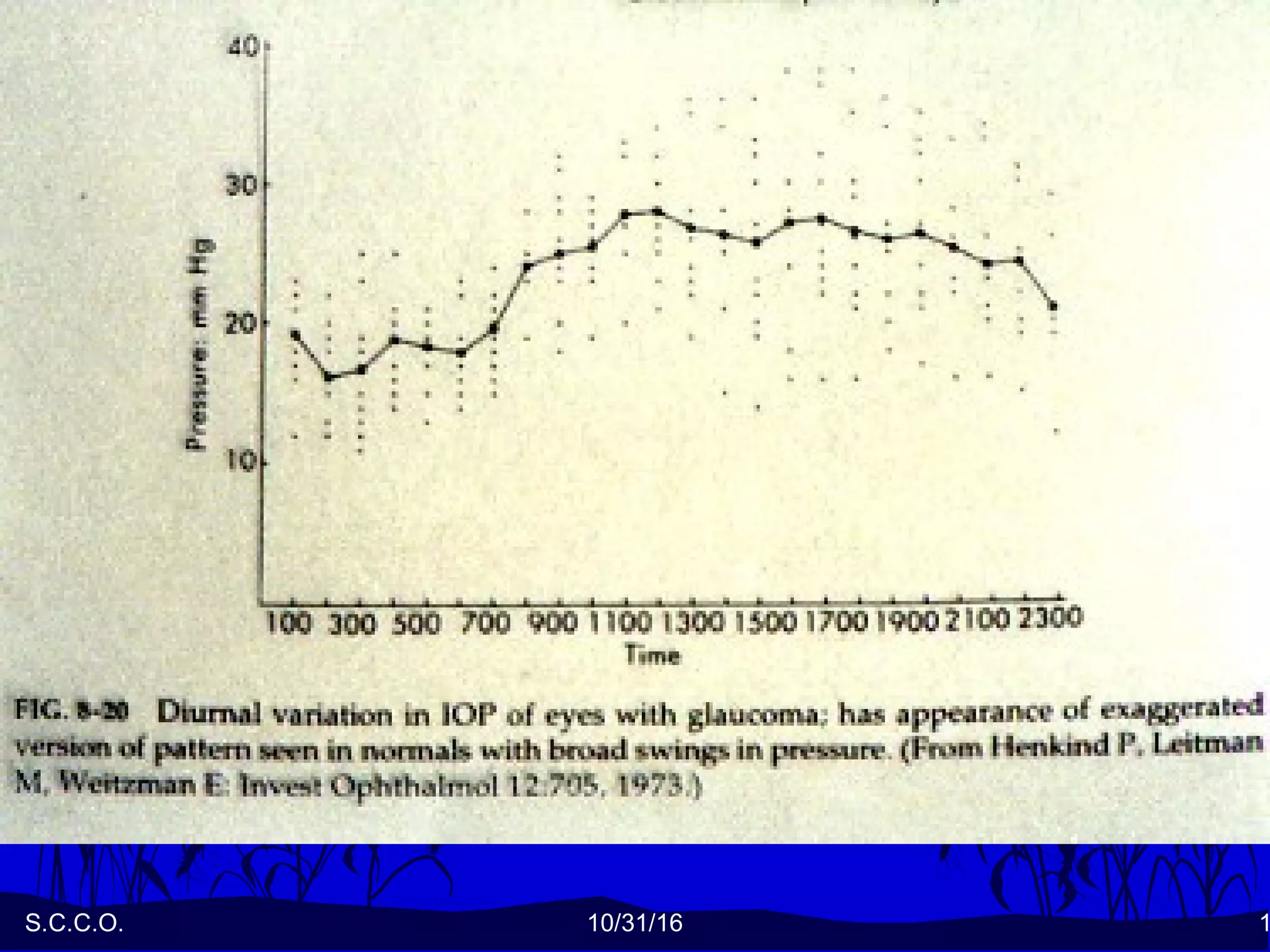
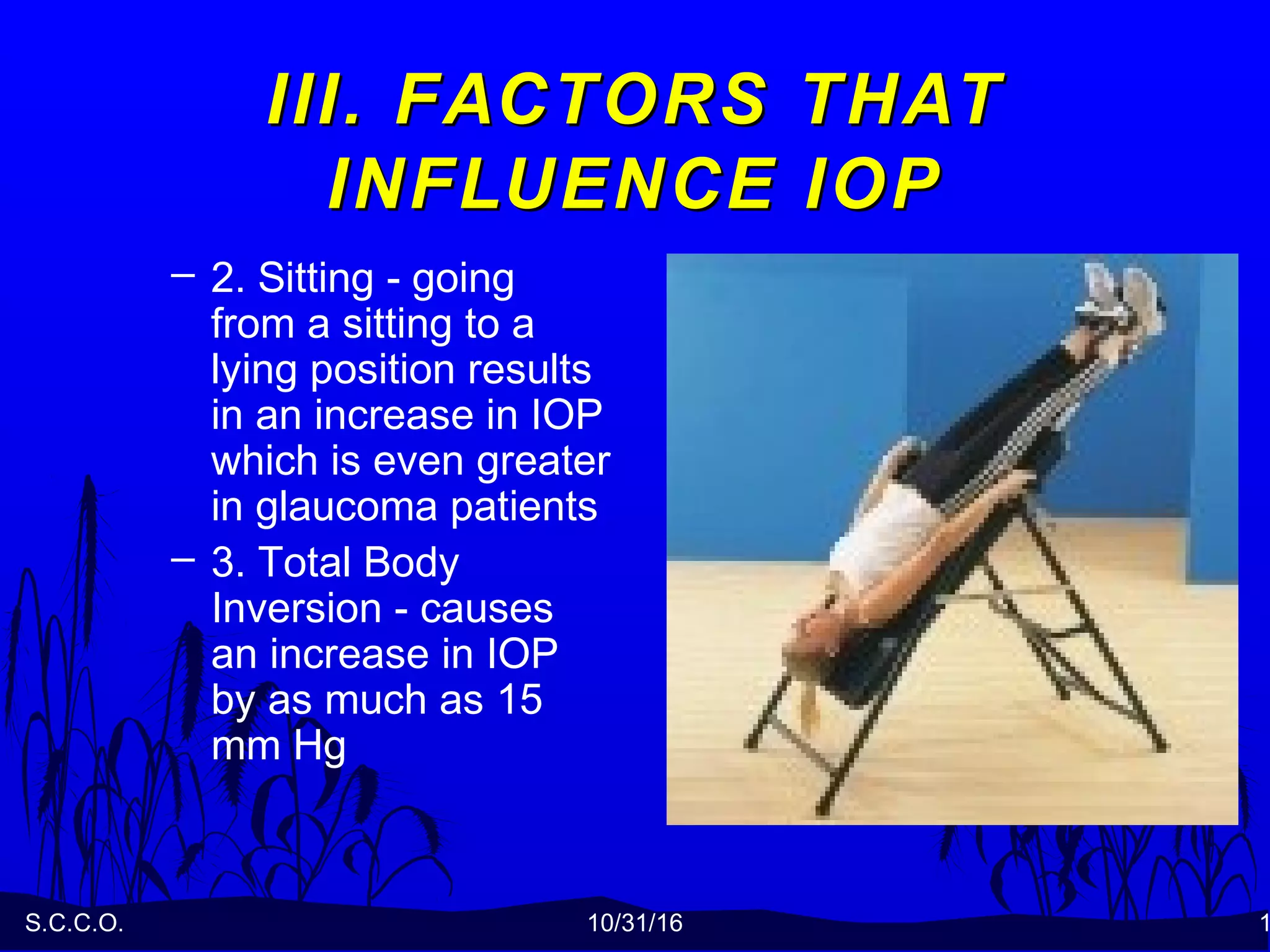


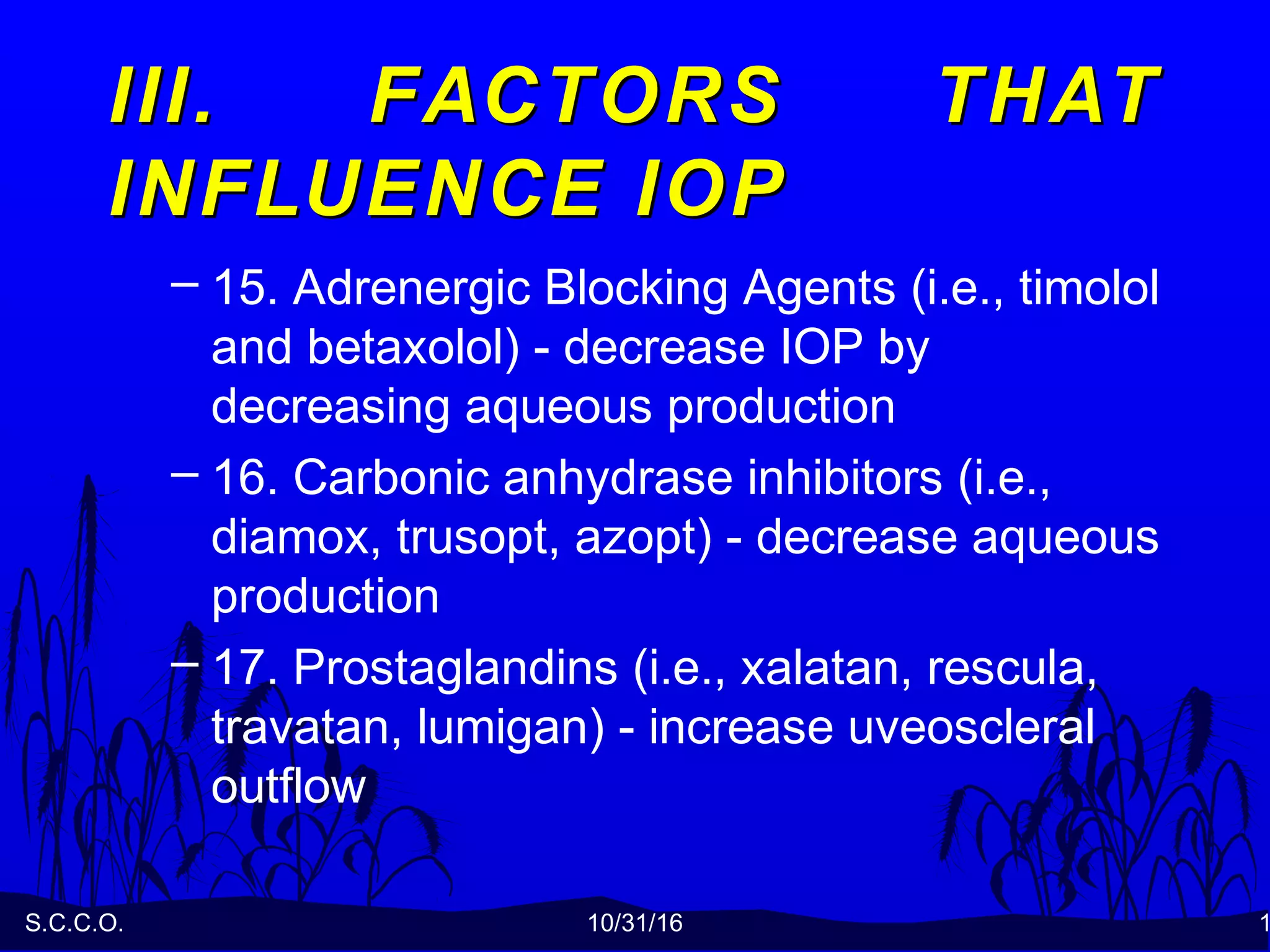


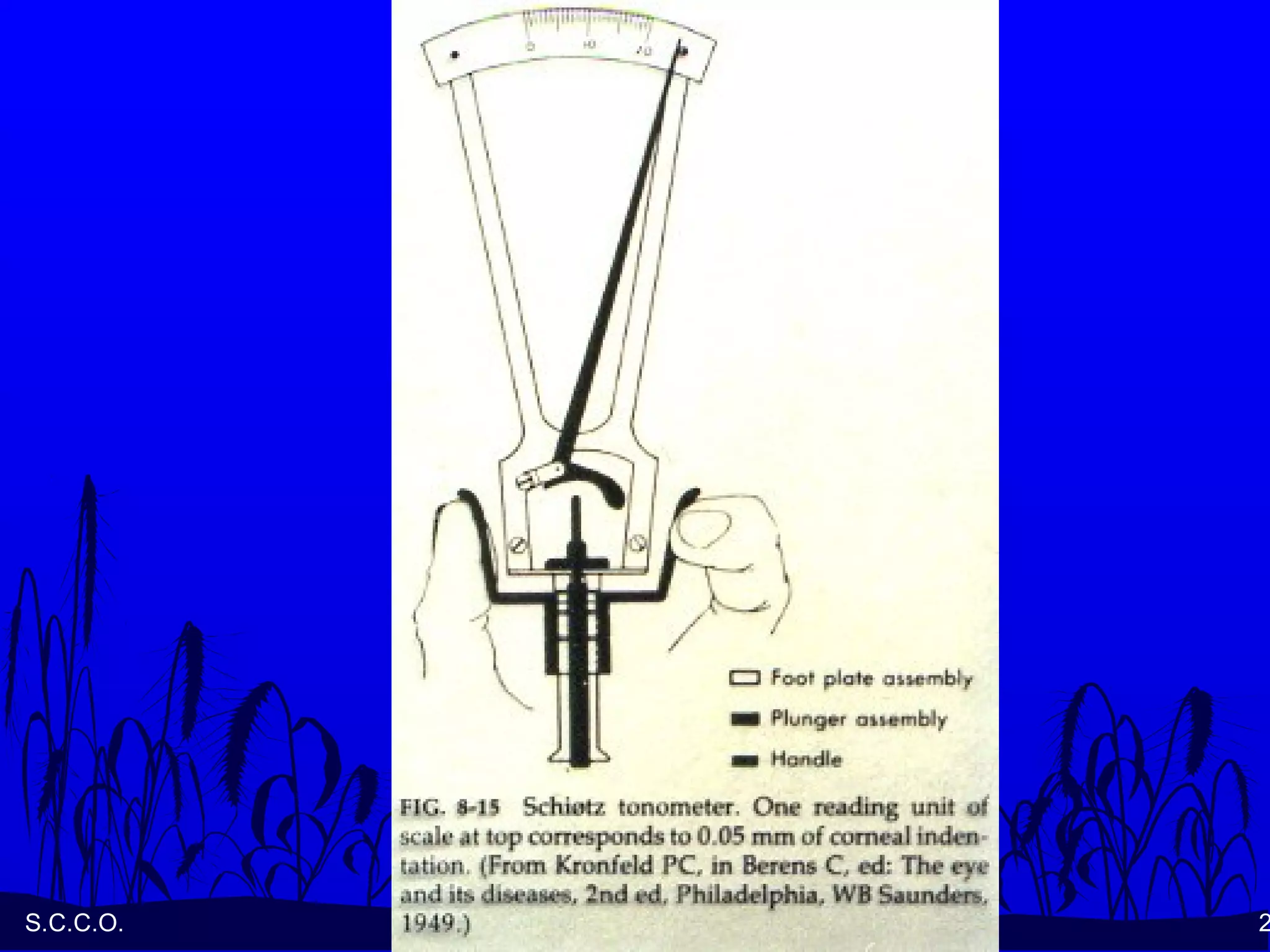
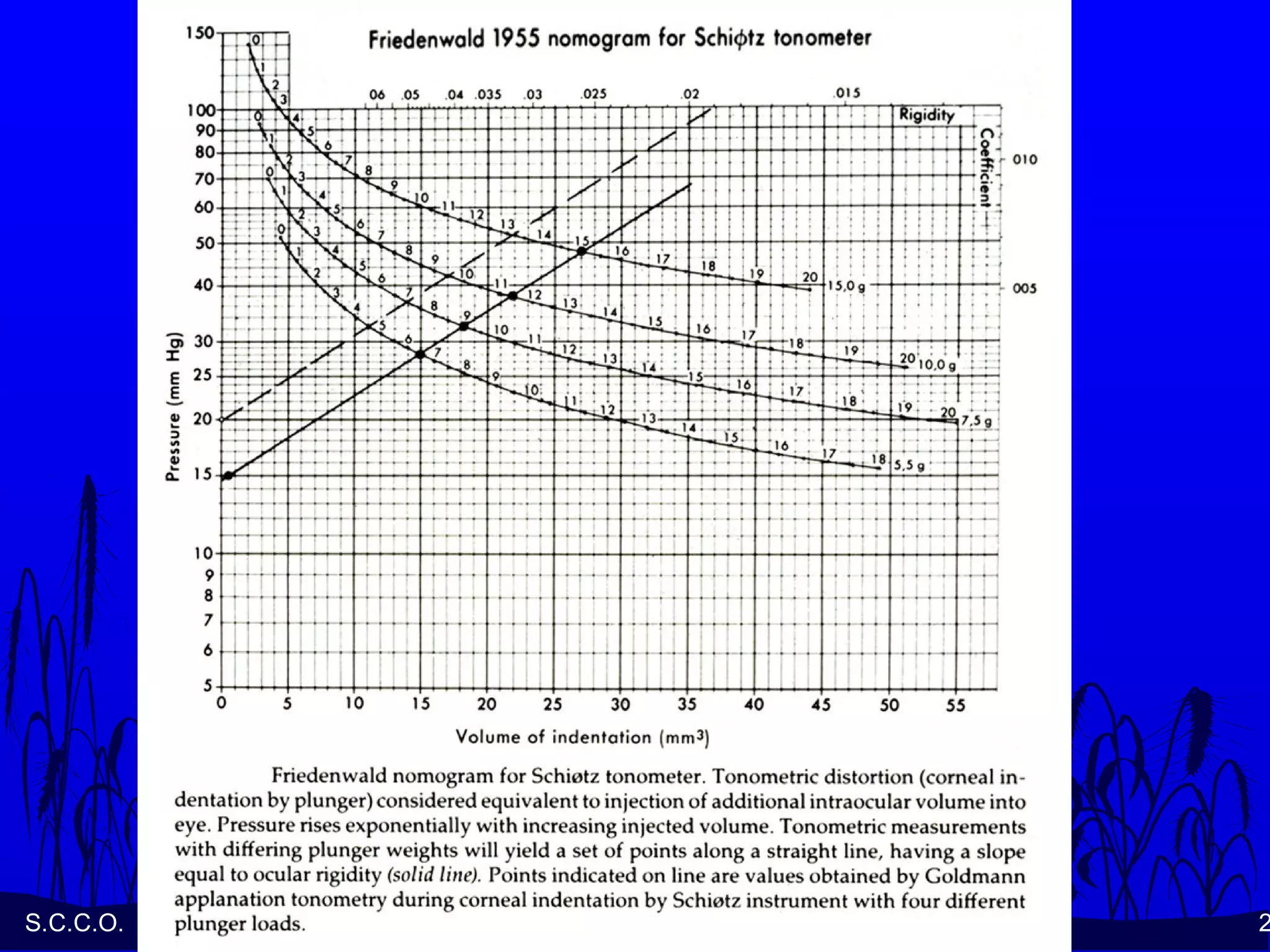
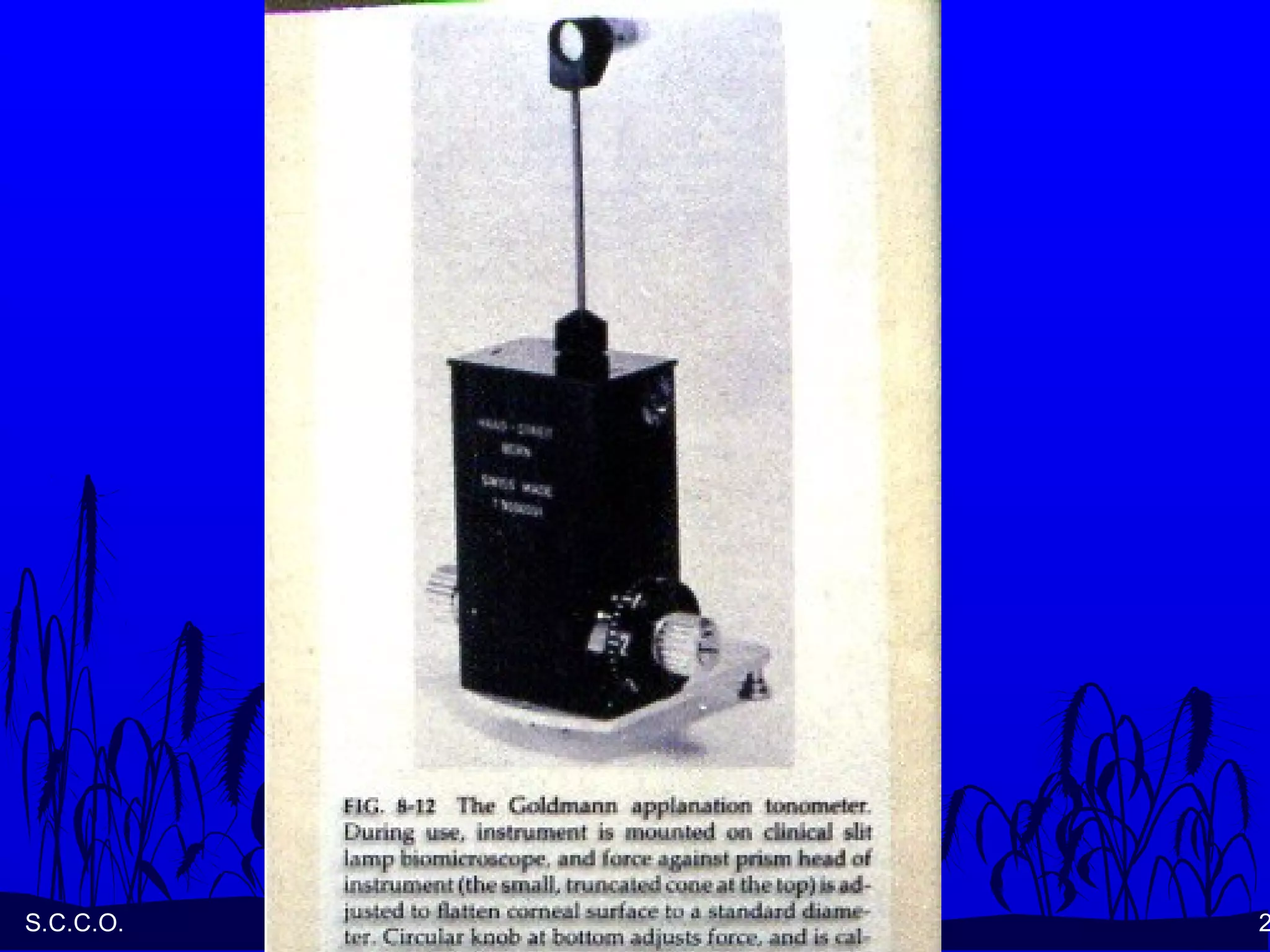
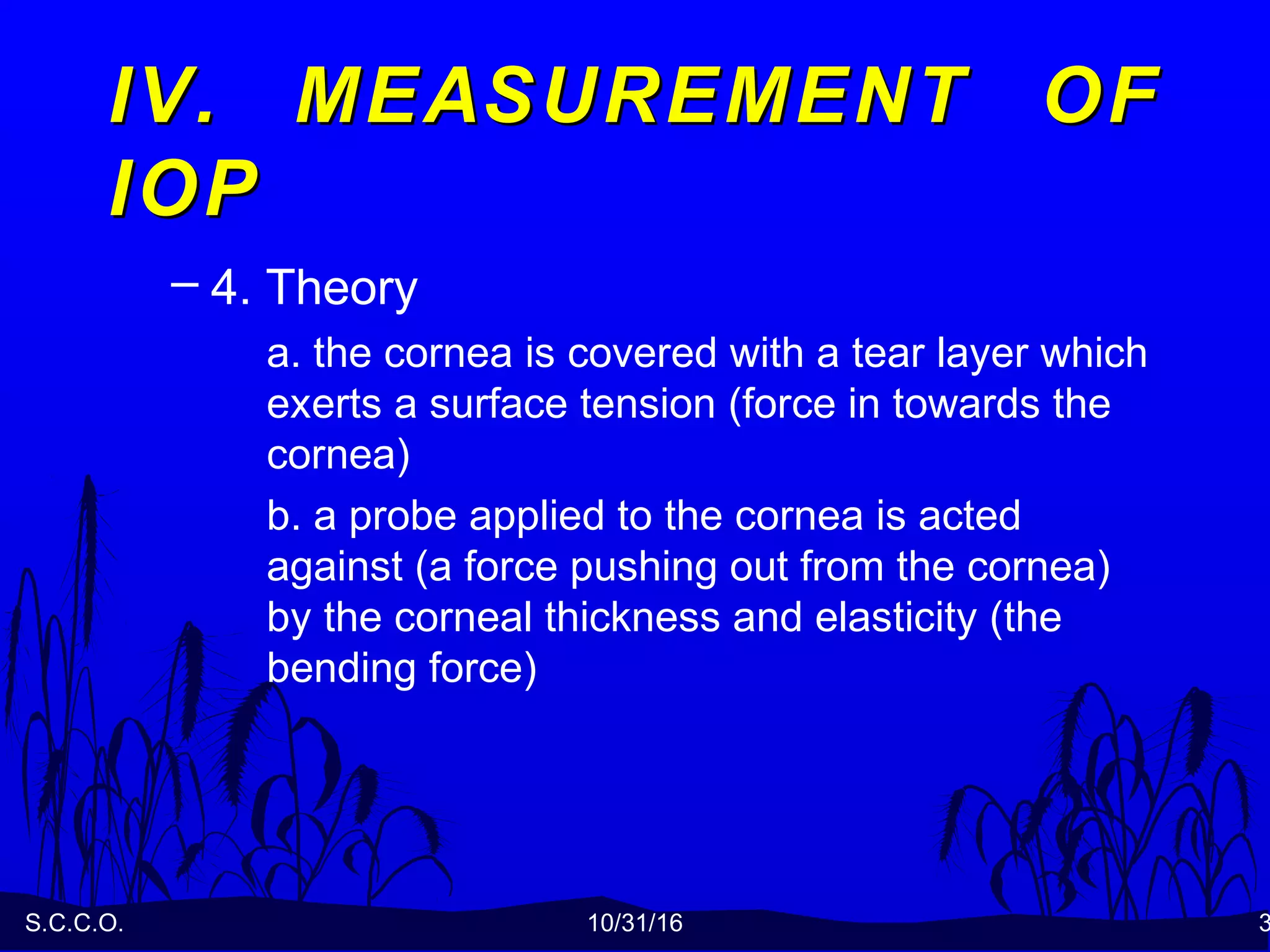
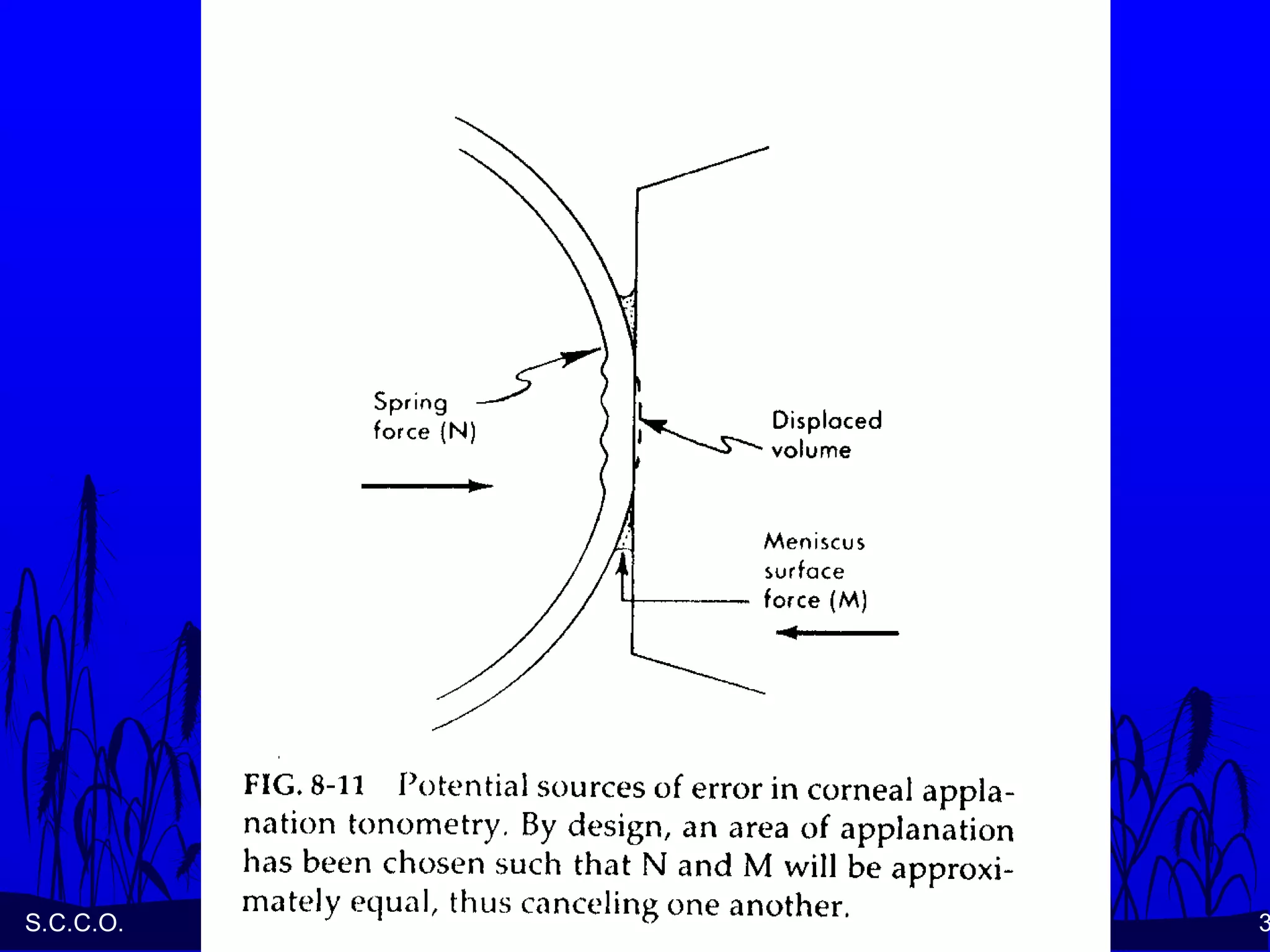


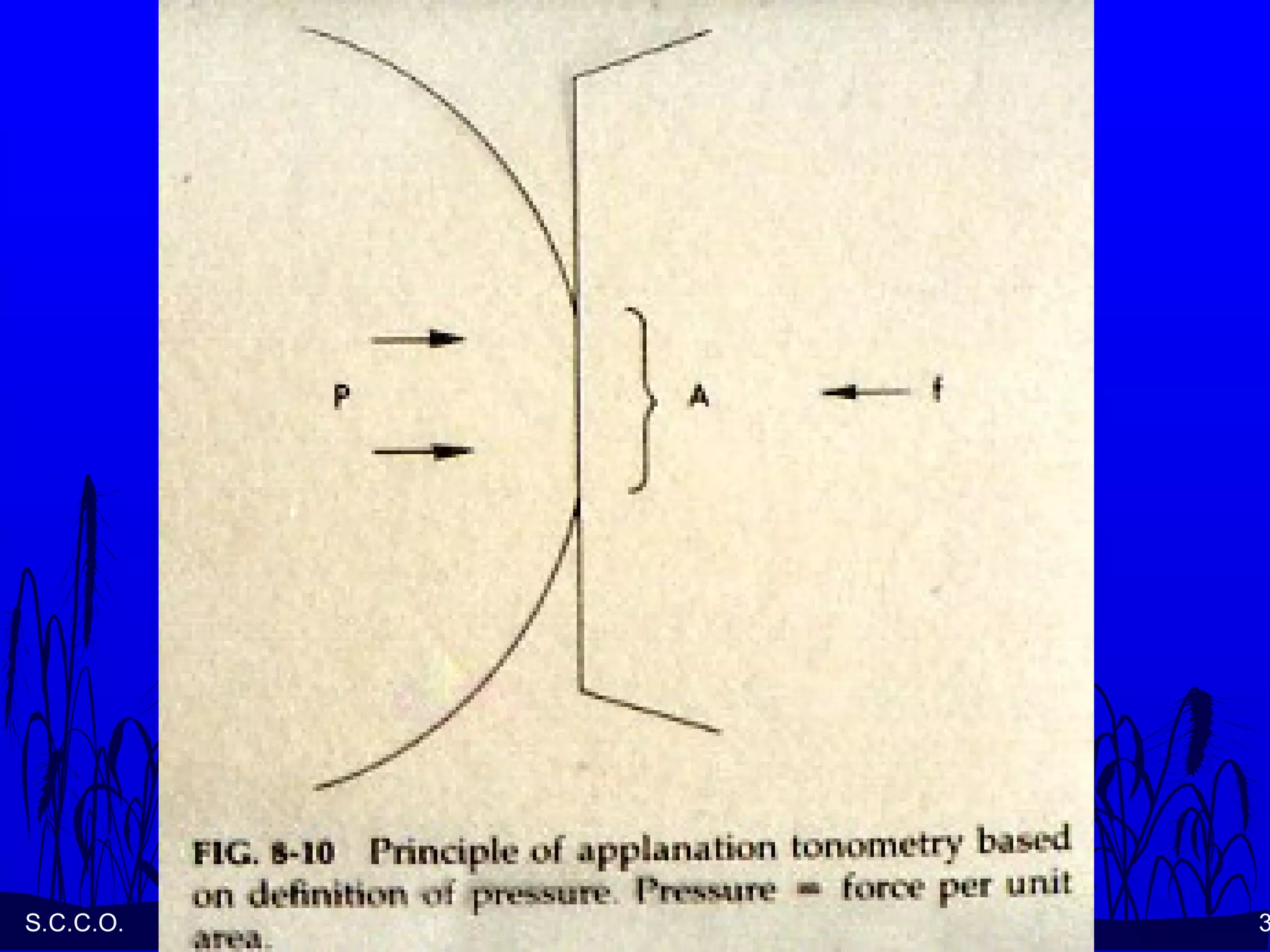
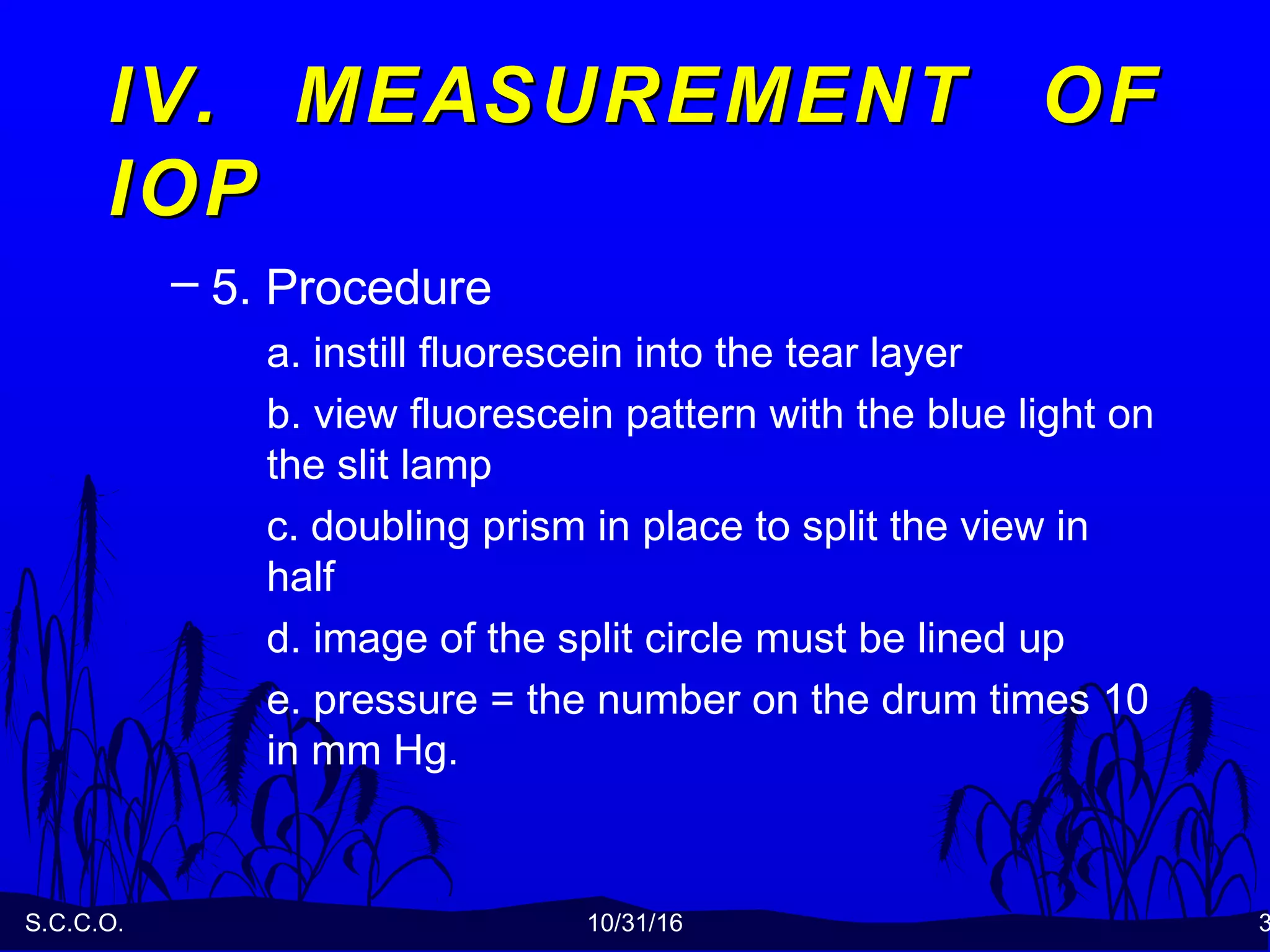



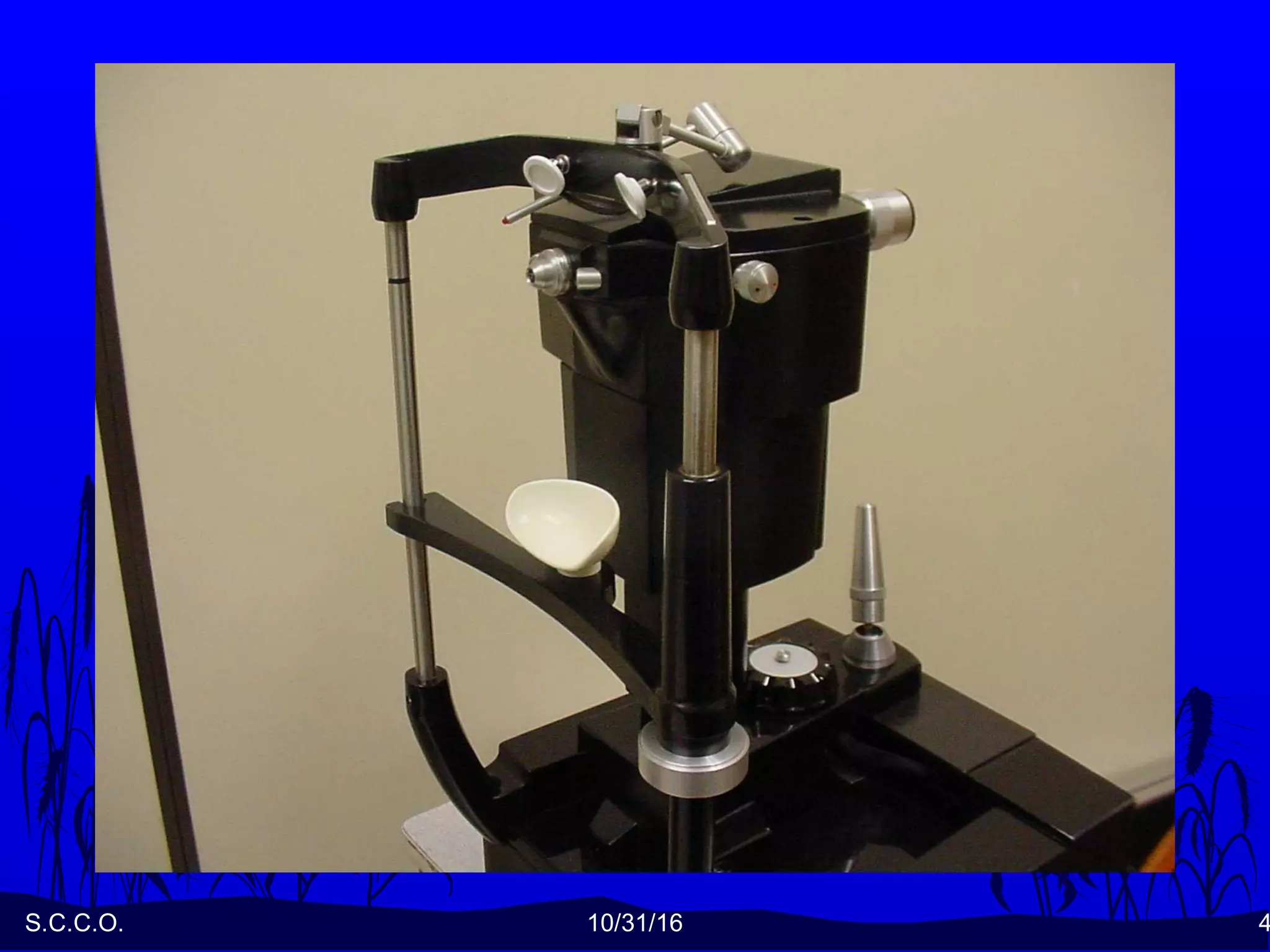



This document defines intraocular pressure and discusses how it is produced and measured. It also outlines factors that influence IOP both long and short term. IOP is produced by a balance between aqueous humor production and outflow, and is normally between 10.5-20.5 mmHg. It can be measured directly via manometry or indirectly using tonometry methods like Schiotz, Goldmann, or non-contact tonometry. High IOP over time can lead to glaucoma, characterized by optic nerve damage and visual field loss.


