Downloaded 1,301 times
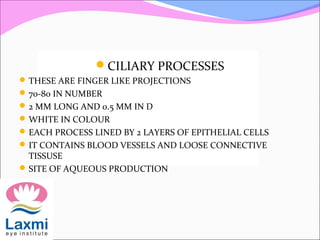
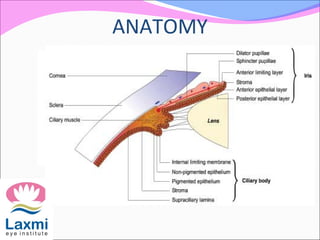
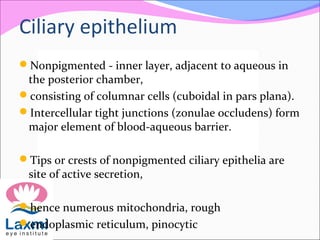
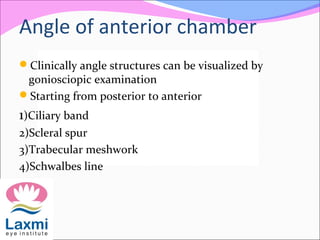
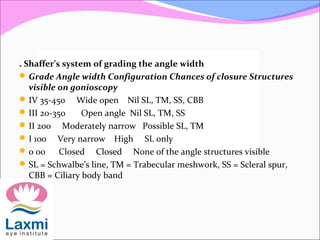
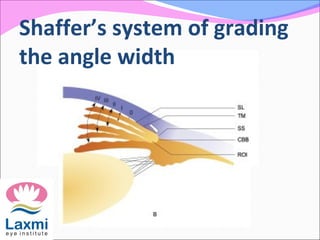


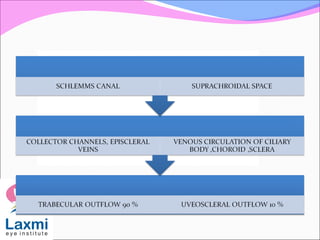


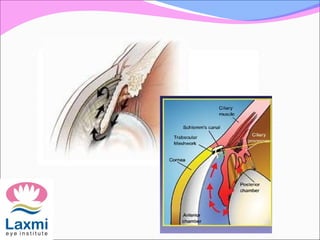
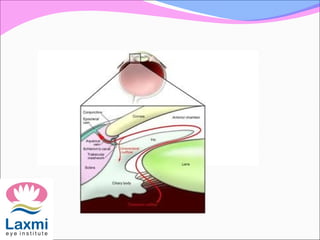
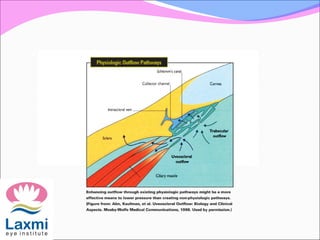

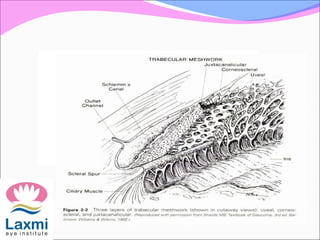
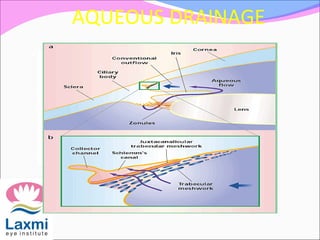
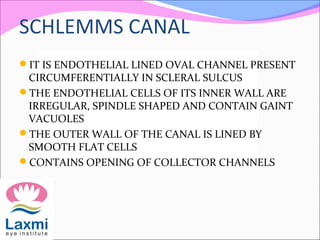
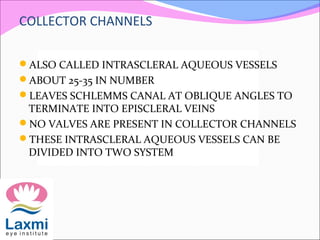


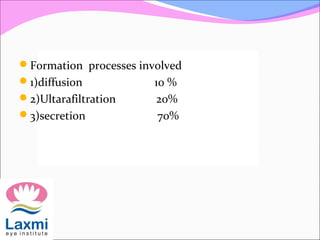

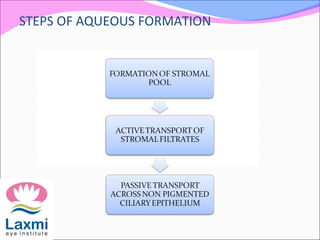
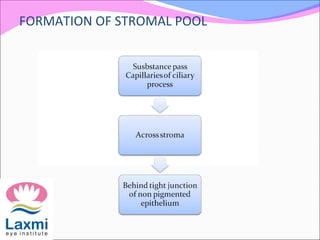

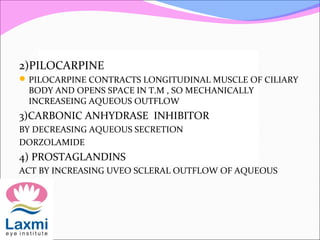

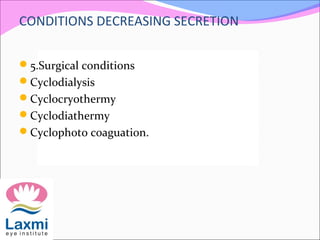
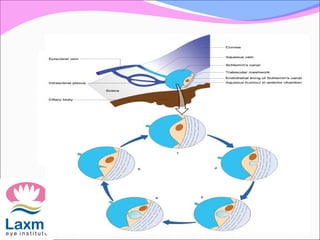

The document discusses the anatomy and physiology of aqueous humor dynamics. It describes the structures involved in aqueous humor formation, which occurs primarily through active transport by the non-pigmented ciliary epithelium. These include the iris, ciliary body, trabecular meshwork, Schlemm's canal, and collector channels. Aqueous humor is formed at a rate of around 2.3 μl/min through diffusion, ultrafiltration and secretion across the ciliary epithelium. Various factors influence aqueous humor production and outflow through the trabecular meshwork into episcleral veins.


![Hypothalamus short notes on location, function and disorders by Dr. Neha [PT]...](https://cdn.slidesharecdn.com/ss_thumbnails/hypothalamusbydr-260124142231-2b48143d-thumbnail.jpg?width=640&height=640&fit=bounds)


