Invitation to the Life Span
                  by Kathleen Stassen Berger


       Chapter 2 – Genes and Prenatal
                Development


PowerPoint Slides developed by
Martin Wolfger and Michael James
Ivy Tech Community College-Bloomington
The Beginning of Life
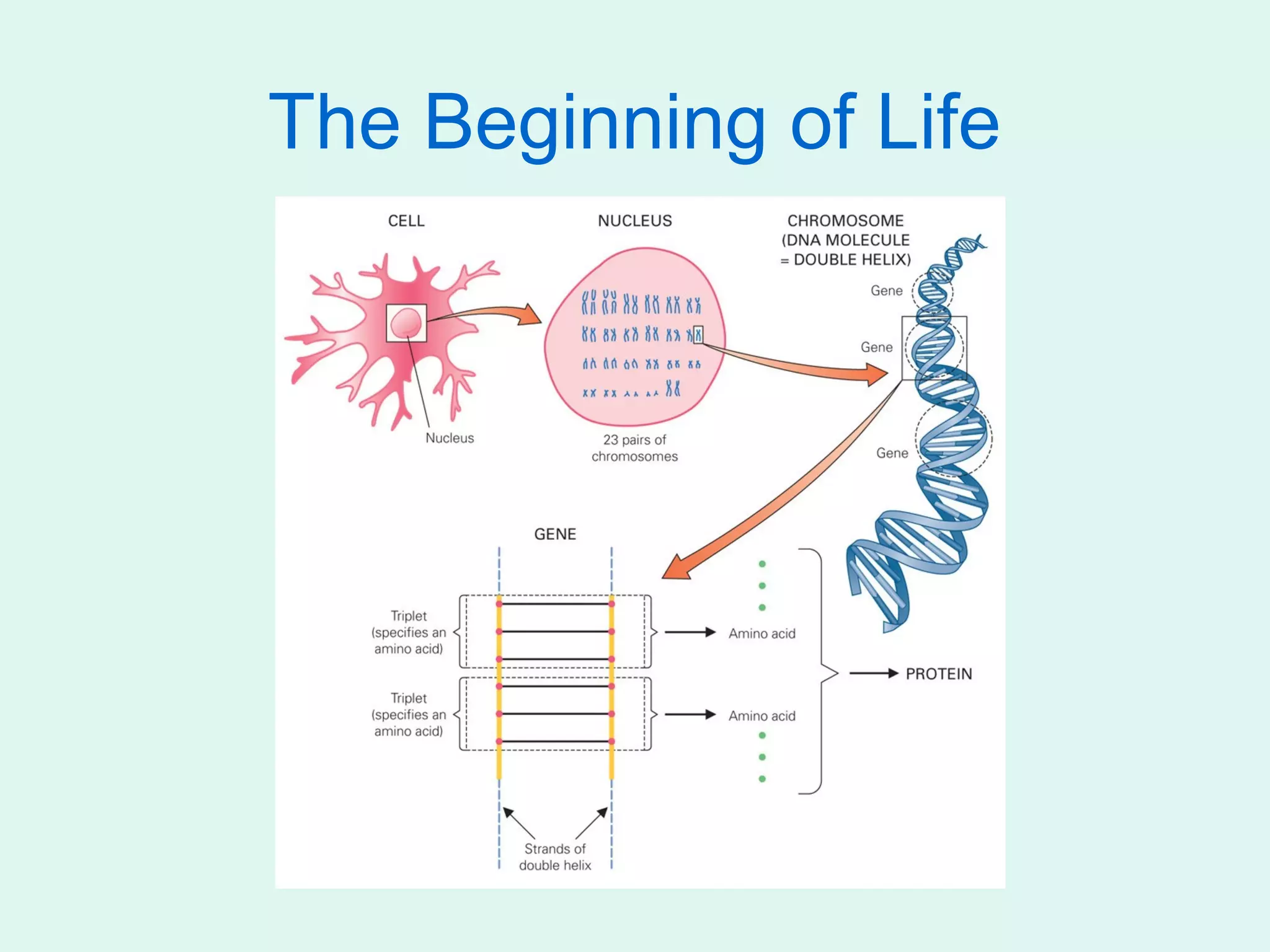
• DNA (deoxyribonucleic acid):
  – Molecule that contains the chemical
    instructions for cells to manufacture various
    proteins
  – Promotes growth and sustains life
• Chromosomes:
  – Molecules of DNA
  – DNA consists of 46 chromosomes arranged in
    23 pairs
The Beginning of Life
• Gametes:
  – Reproductive cells (sperm and ova)
  – Each gamete consists of 23 chromosomes.
• Zygote:
  – Two gametes (sperm and ovum) combine and produce
    a new individual with 23 chromosomes from each
    parent.
• Genes:
  – Specific sections of a chromosome that carry
    instructions via four chemicals.
  – Chemicals are organized in four pairs (AT, TA, CG,
    GC).
  – Each person has about 3 billion pairs.
The Beginning of Life
Genetic Variations and Similarities
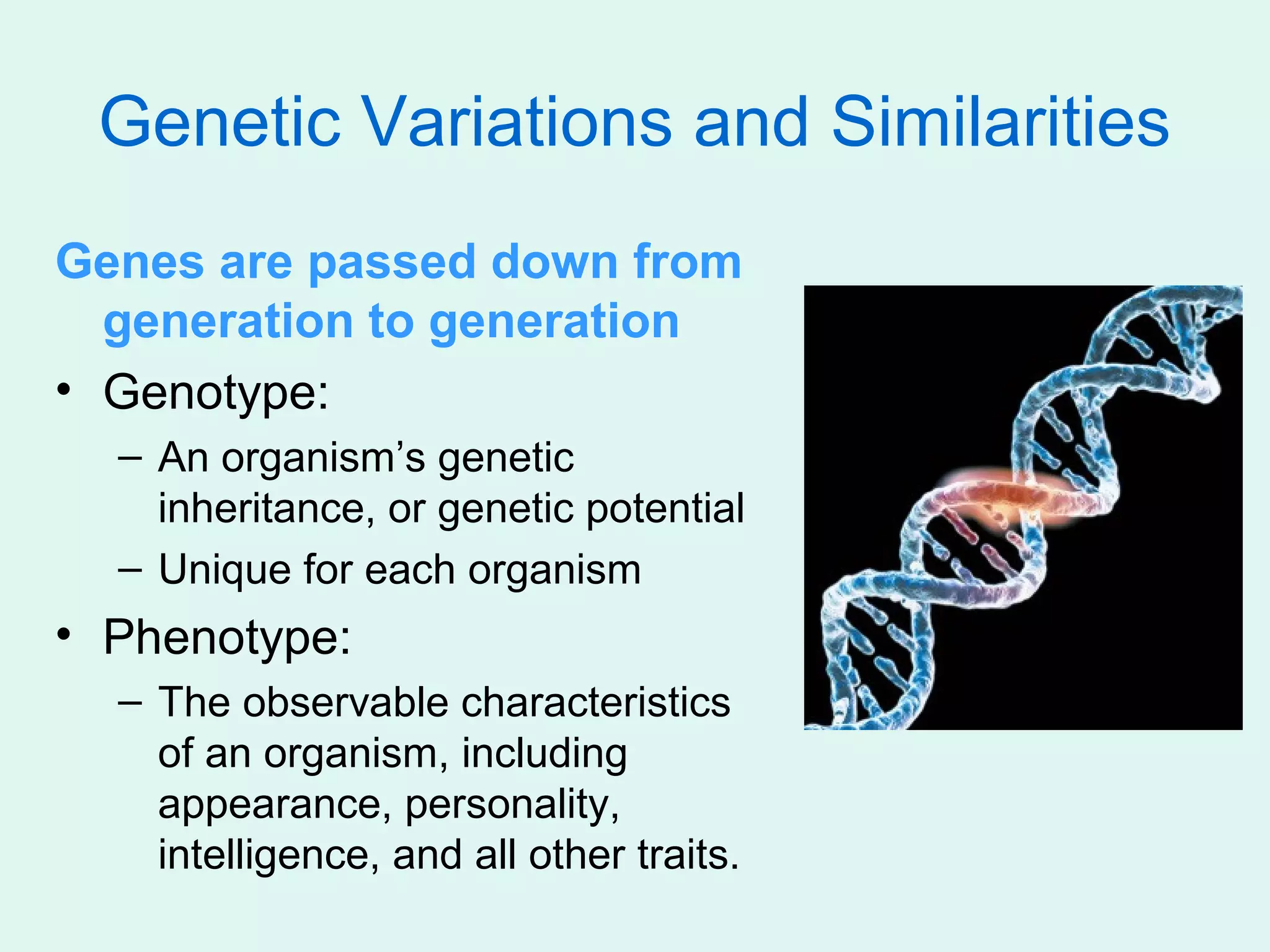
Genes are passed down from
  generation to generation
• Genotype:
  – An organism’s genetic
    inheritance, or genetic potential
  – Unique for each organism
• Phenotype:
  – The observable characteristics
    of an organism, including
    appearance, personality,
    intelligence, and all other traits.
Genetic Variations and Similarities
• Many genes are identical for every human
  being.
• Some genes vary slightly in their codes from
  one person to another.
• Allele:
  – Variation of a gene or any of the possible forms in
    which a gene for a particular trait can occur.
  – Effects of variations vary greatly from causing life-
    threatening conditions to having no detectable effect
    at all.
The Human Genome
• Genetic Diversity
  – Distinguishes each person
  – Allows the human species to adapt to pressures of
    the environment (e.g. climate changes, illnesses).
• Genome:
  – The full set of genes that are the instructions to make
    an individual member of a certain species
     • Similarity between two people: 99.5%
     • Similarity between humans and chimpanzees: 98%
     • Similarity between humans and every other
       mammal: 90+%
Human Genome Project and
           HapMap
• Human Genome Project:
  – Found “only” about 20,000 genes in humans
  – Exact number is unknown
• HapMap:
  – International project trying to spot all
    variations in the human genome
  – Found 11 million variations among the
    3 billion chemical pairs
Siblings and Twins
•   Sibling Similarities
    –   Each sibling gets abut 10,000 genes from each
        parent.
    –   Millions of variations and billions of combinations
        are possible.
    –   Full siblings are not necessarily alike.
•   Monozygotic (identical) twins:
    –   Originate from one zygote that splits apart very
        early in development.
    –   Incomplete split results in conjoined twins.
    –   Same genotype but slight variations in phenotype
        are possible due to environmental influences.
Siblings and Twins
• Dizygotic (fraternal) twins
  – Result from fertilization of two separate ova by
    two separate sperm.
  – Dizygotic twins have half their genes in
    common and occur twice as often as
    monozygotic twins.
  – Incidence is genetic and varies by ethnicity
    and age.
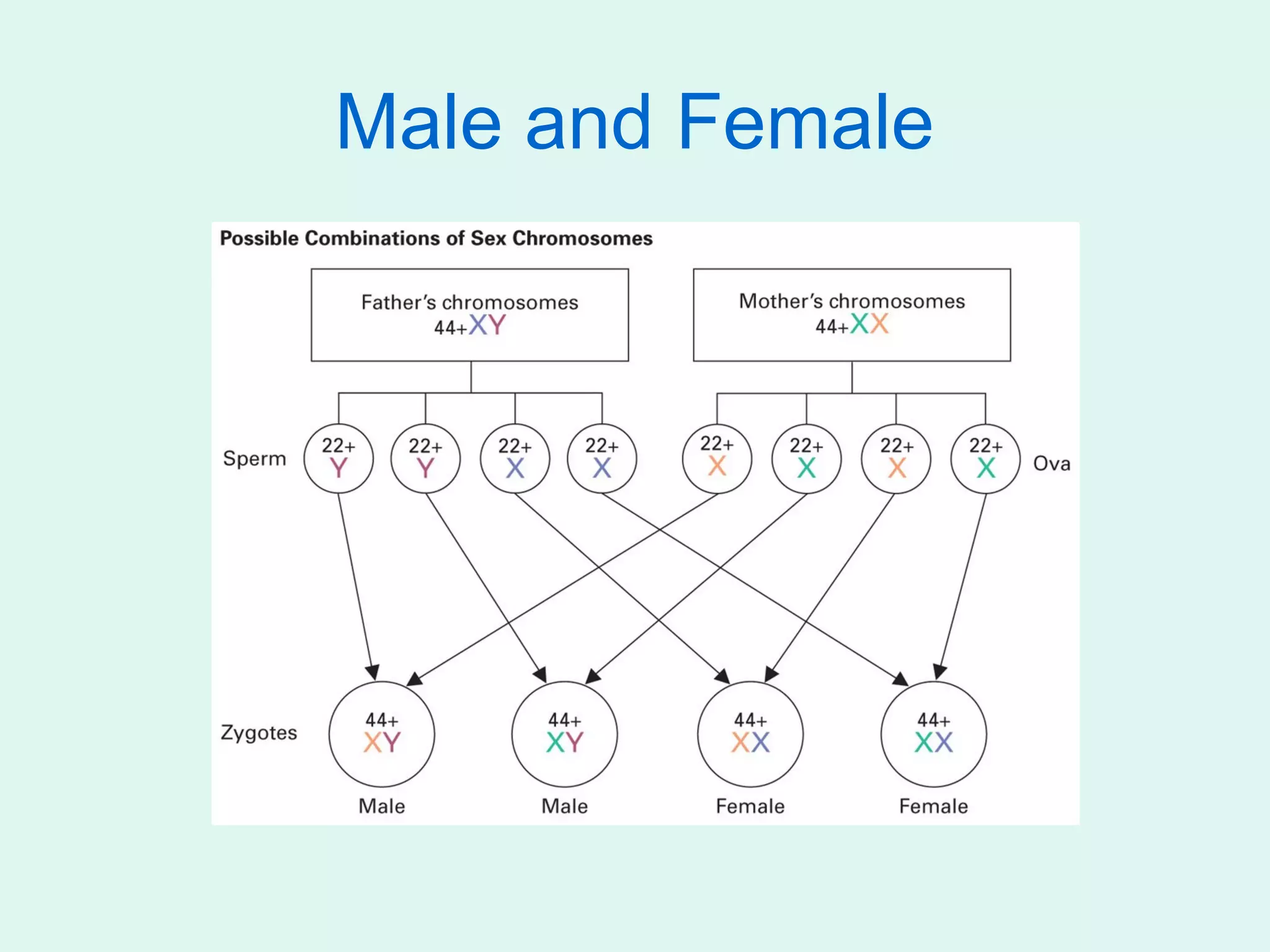
Male and Female
• Humans usually possess 46
  chromosomes.
  – 44 autosomes and 2 sex chromosomes
  – Females: XX
  – Males: XY
  – Sex of offspring depends on whether the
    father’s Y sperm or X sperm fertilizes the
    ovum.
Male and Female
Genetic Interactions
• Almost every trait is:
  – polygenic (affected by many genes)
  – multifactorial (influenced by many factors)

• Regulator genes
  – Direct the interactions of other genes,
    controlling their genetic expression,
    duplication, and transcription
  – Responsible for differences between species
Additive Heredity
• Additive genes
  – Genes that add something to some aspect of
    the phenotype
  – Effects of additive genes add up to make the
    phenotype
  – Example: Height is affected by the
    contributions of about 100 genes
Dominant-Recessive Heredity
• Dominant gene is far more influential than the
  recessive gene (non-additive).
• Dominant gene can completely control the
  phenotype with no noticeable effect of recessive
  gene.
  – Genes for blood type B and Rh-positive blood are
    dominant.
• Effect of recessive genes can sometimes be
  noticed.
  – Dominant brown eye gene and recessive blue eye
    gene can result in hazel eyes.
Carrier
• A person whose genotype includes a gene
  that is not expressed in the phenotype
  – Unexpressed gene occurs in half of the
    carrier’s gametes and is passed on to half of
    the carrier’s offspring
  – Offspring can be carrier or express the gene
    in the phenotype (e.g. when unexpressed
    gene is inherited by both parents)
Heritability
• Statistical term that indicates what portion
  of the variation in a particular trait within a
  particular population is inherited.
  – Example: 90% of the height differences
    among children of the same age is genetic.
• Environment can affect the expression of
  inherited genes.
Genetic Problems
a) Chromosomal Abnormalities

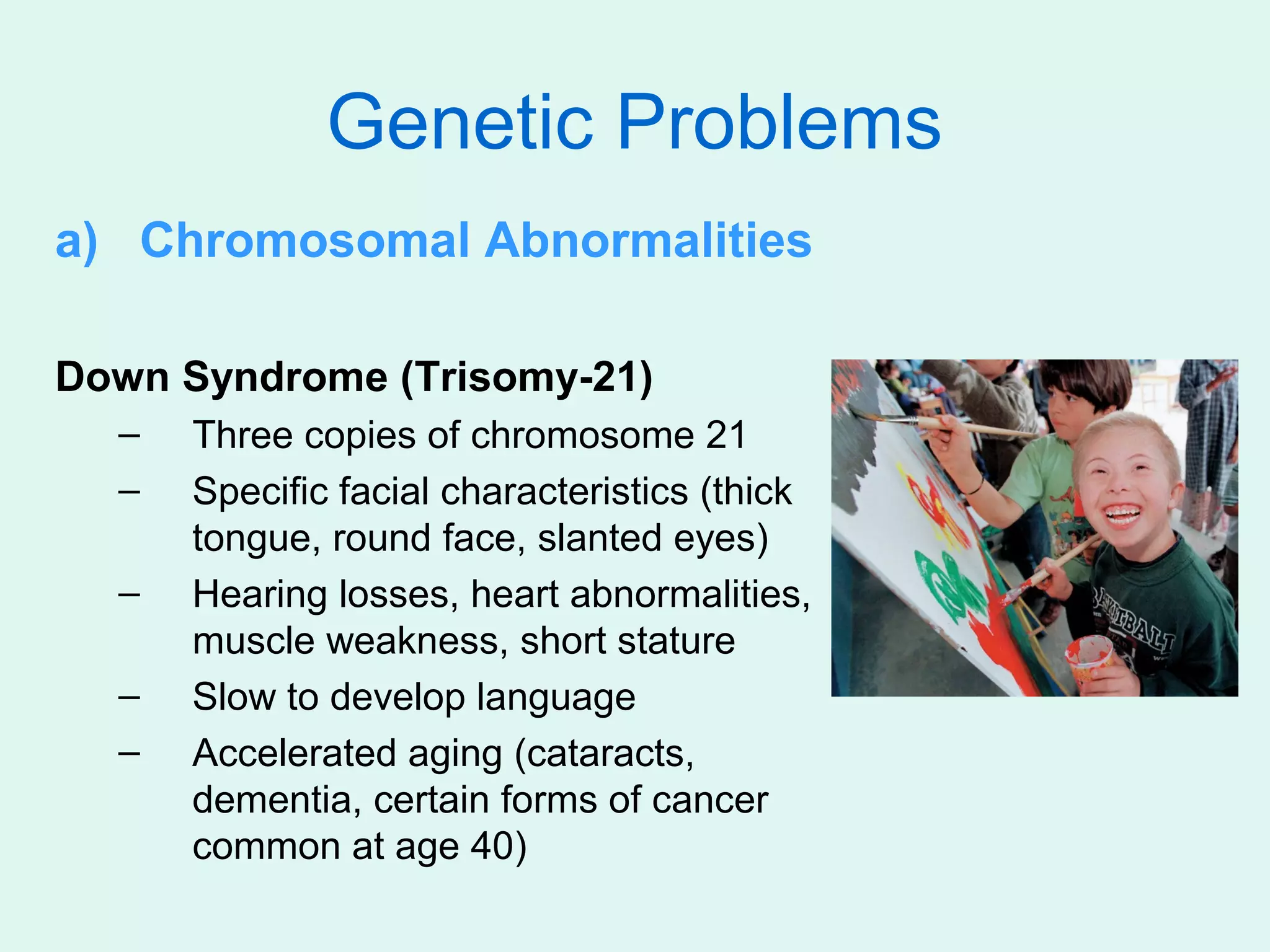
Down Syndrome (Trisomy-21)
  –   Three copies of chromosome 21
  –   Specific facial characteristics (thick
      tongue, round face, slanted eyes)
  –   Hearing losses, heart abnormalities,
      muscle weakness, short stature
  –   Slow to develop language
  –   Accelerated aging (cataracts,
      dementia, certain forms of cancer
      common at age 40)
Genetic Problems
b) Abnormalities of the Sex Chromosomes
•   Turner Syndrome (X only):
    –   Unusually short, underdeveloped female organs,
        infertile
    –   Slow to develop
    –   Problems in spatial understanding
•   Klinefelter Syndrome (XXY):
    –   Symptoms include learning problems and infertility
    –   Boy’s penis does not grow during puberty and fat
        accumulates around the breast area
    –   Sometimes not recognized until adulthood
Genetic Problems
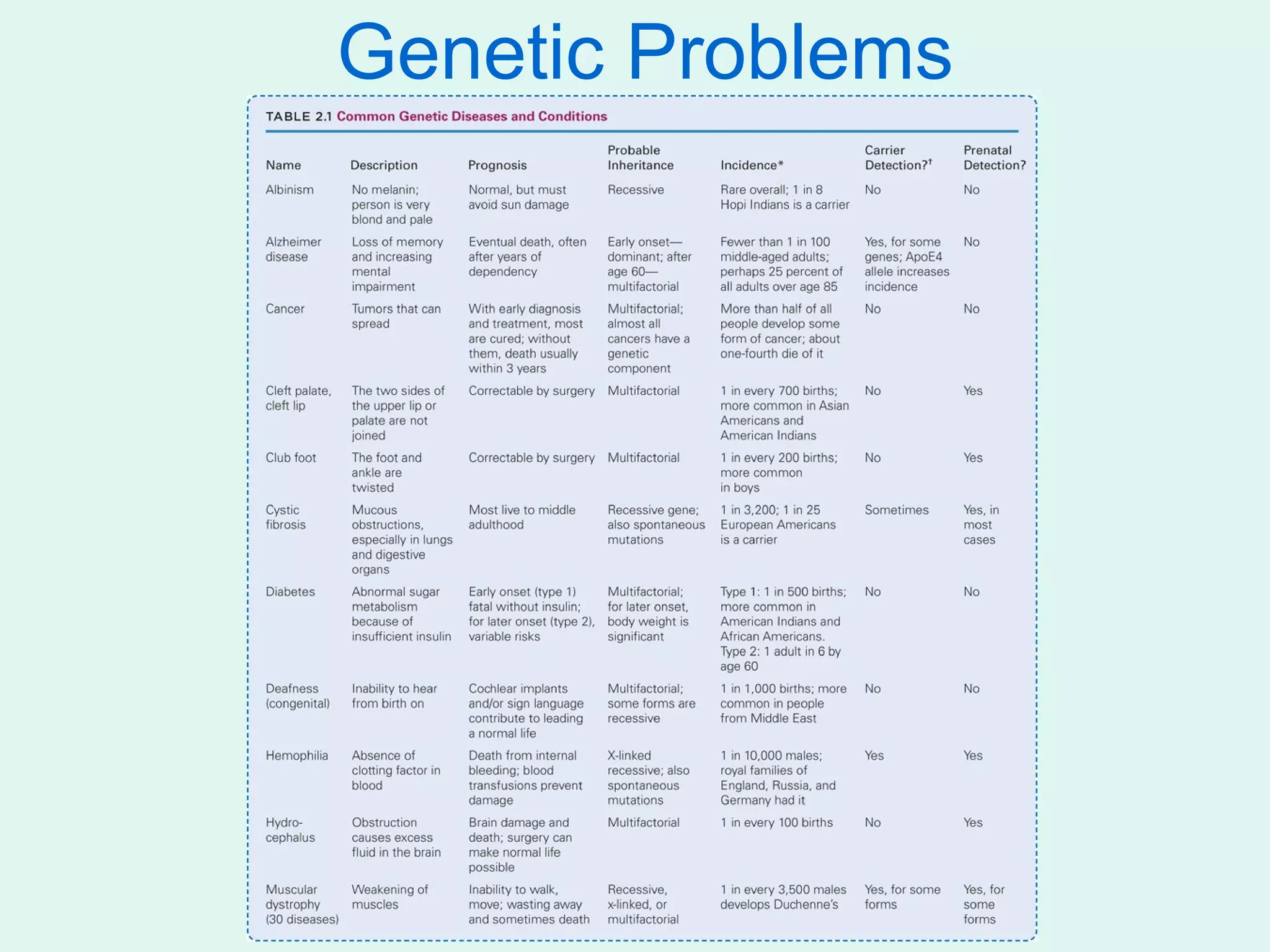
•        Gene Disorders
a)       Dominant Disorders
•        Half of the offspring of parents with a dominant
         disorder will have the disorder.
•        Most dominant disorders begin in adulthood (fatal
         dominant childhood conditions cannot be passed on).
•        Many dominant disorders have relatively mild or
         variable symptoms.
•        Tourette syndrome
     –     Some who inherit the dominant gene exhibit uncontrollable tics
           and explosive outbursts
     –     Most have milder, barely noticeable symptoms
Genetic Problems
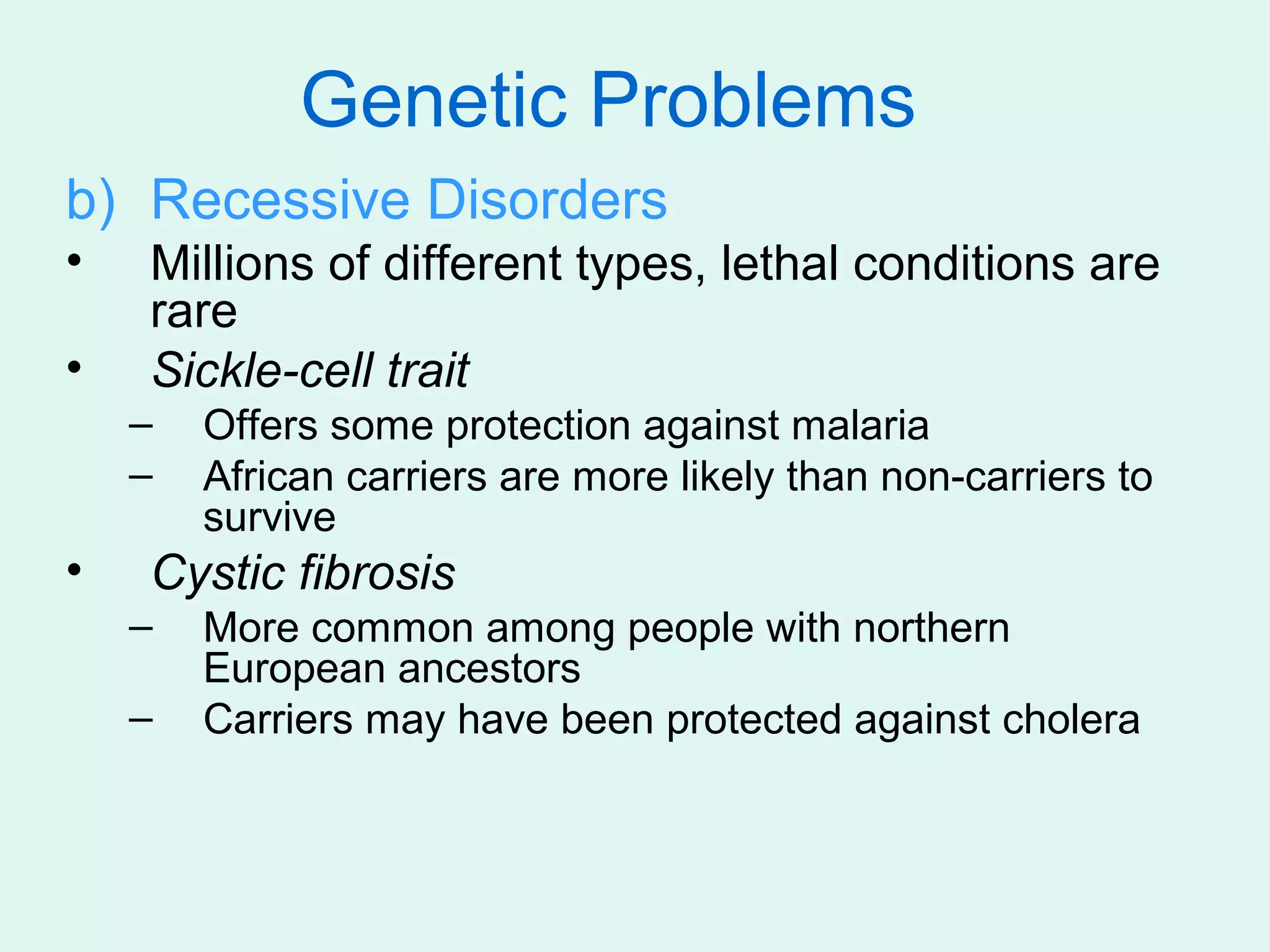
b) Recessive Disorders
•   Millions of different types, lethal conditions are
    rare
•   Sickle-cell trait
    –   Offers some protection against malaria
    –   African carriers are more likely than non-carriers to
        survive
•   Cystic fibrosis
    –   More common among people with northern
        European ancestors
    –   Carriers may have been protected against cholera
Genetic Problems
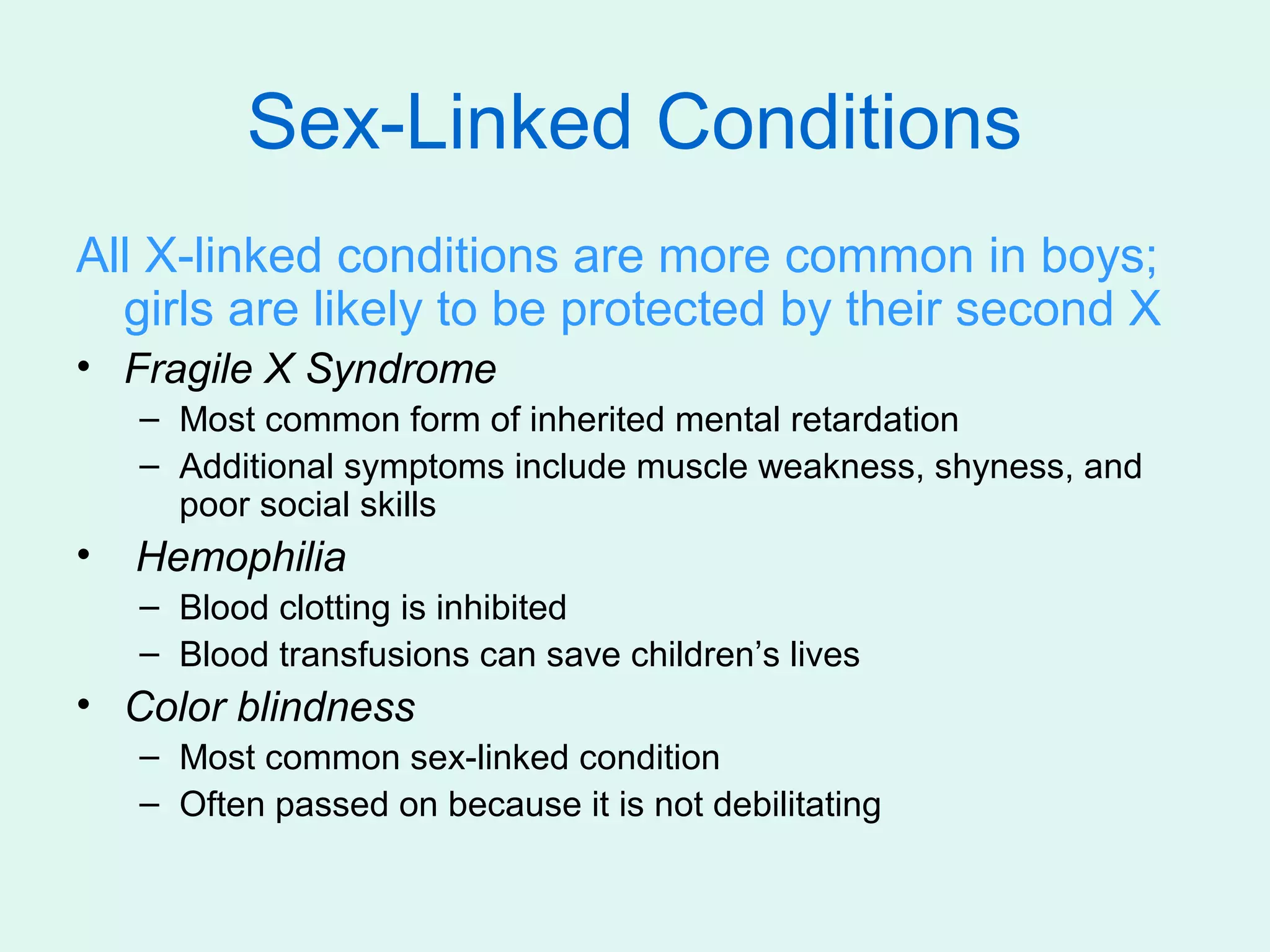
Sex-Linked Conditions
All X-linked conditions are more common in boys;
  girls are likely to be protected by their second X
• Fragile X Syndrome
    – Most common form of inherited mental retardation
    – Additional symptoms include muscle weakness, shyness, and
      poor social skills
•   Hemophilia
    – Blood clotting is inhibited
    – Blood transfusions can save children’s lives
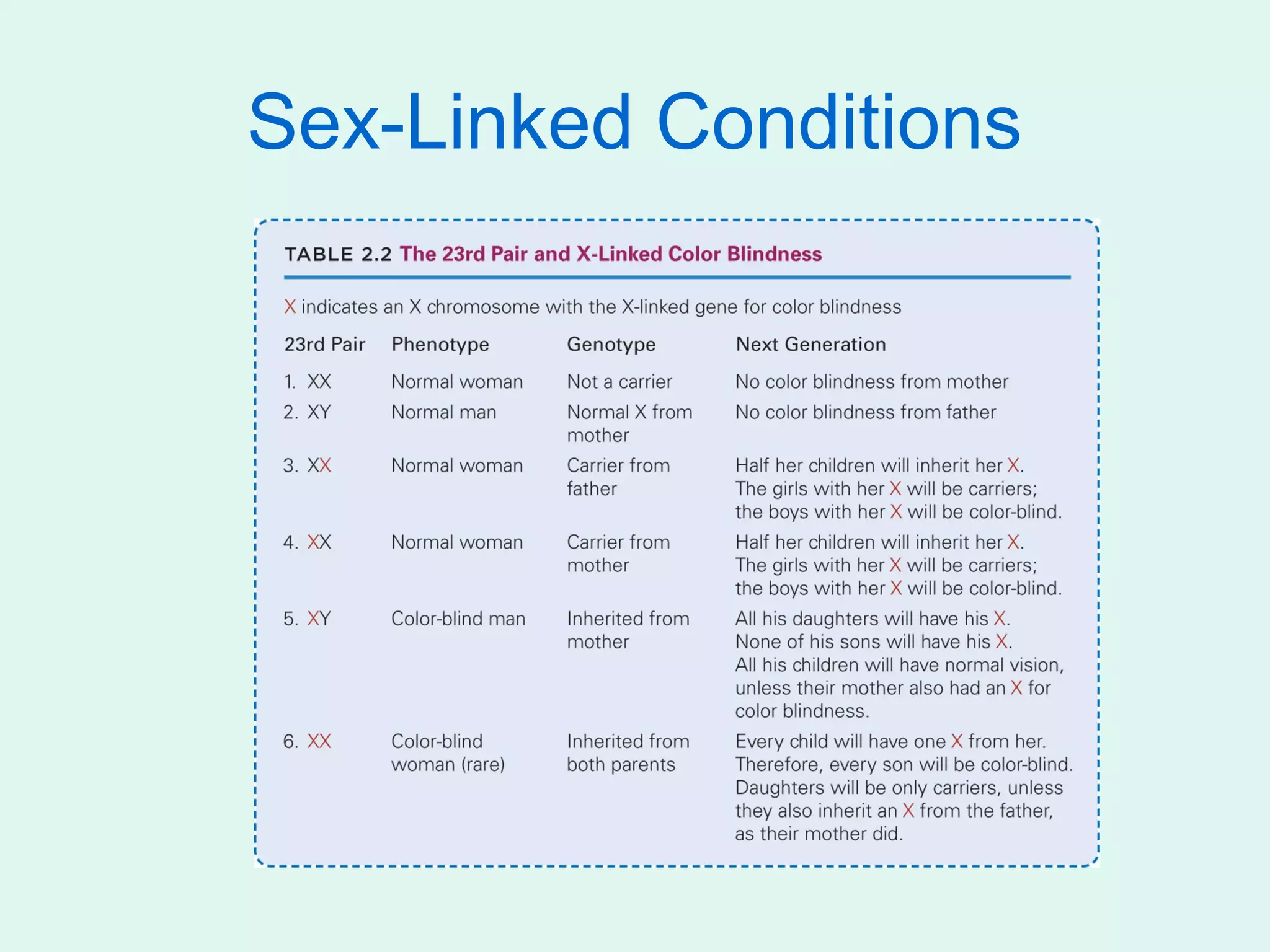
• Color blindness
    – Most common sex-linked condition
    – Often passed on because it is not debilitating
Sex-Linked Conditions
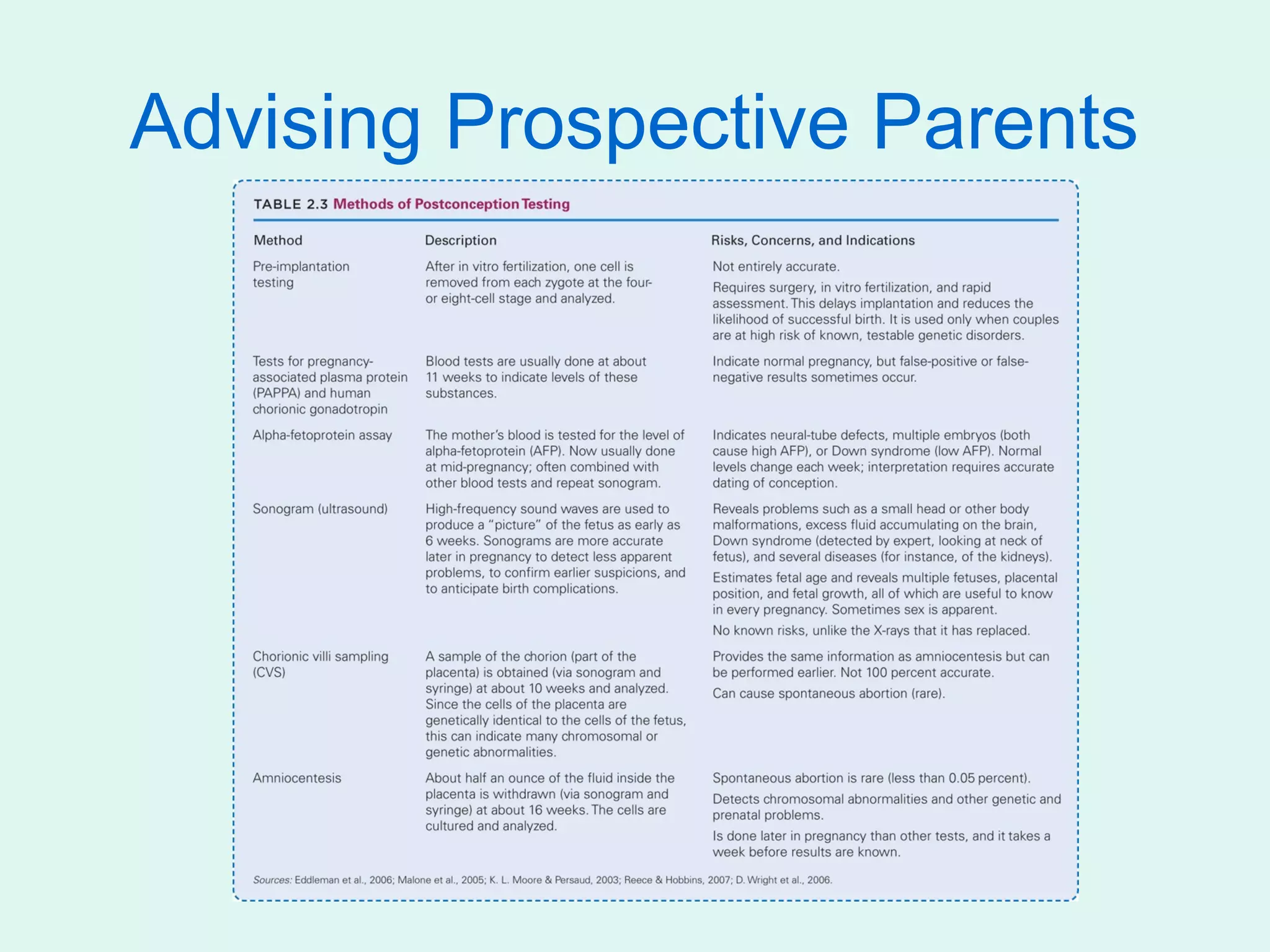
Advising Prospective Parents
•   Genetic Counseling
    – Consultation and testing by trained professionals
    – Enables prospective parents to learn about their
      genetic heritage, including harmful conditions that
      may be passed on to their offspring
•   Ethical Guidelines
    – Test results are kept confidential
    – Decisions regarding sterilization, adoption, abortion,
      or carrying a pregnancy to term are made by the
      clients
Advising Prospective Parents
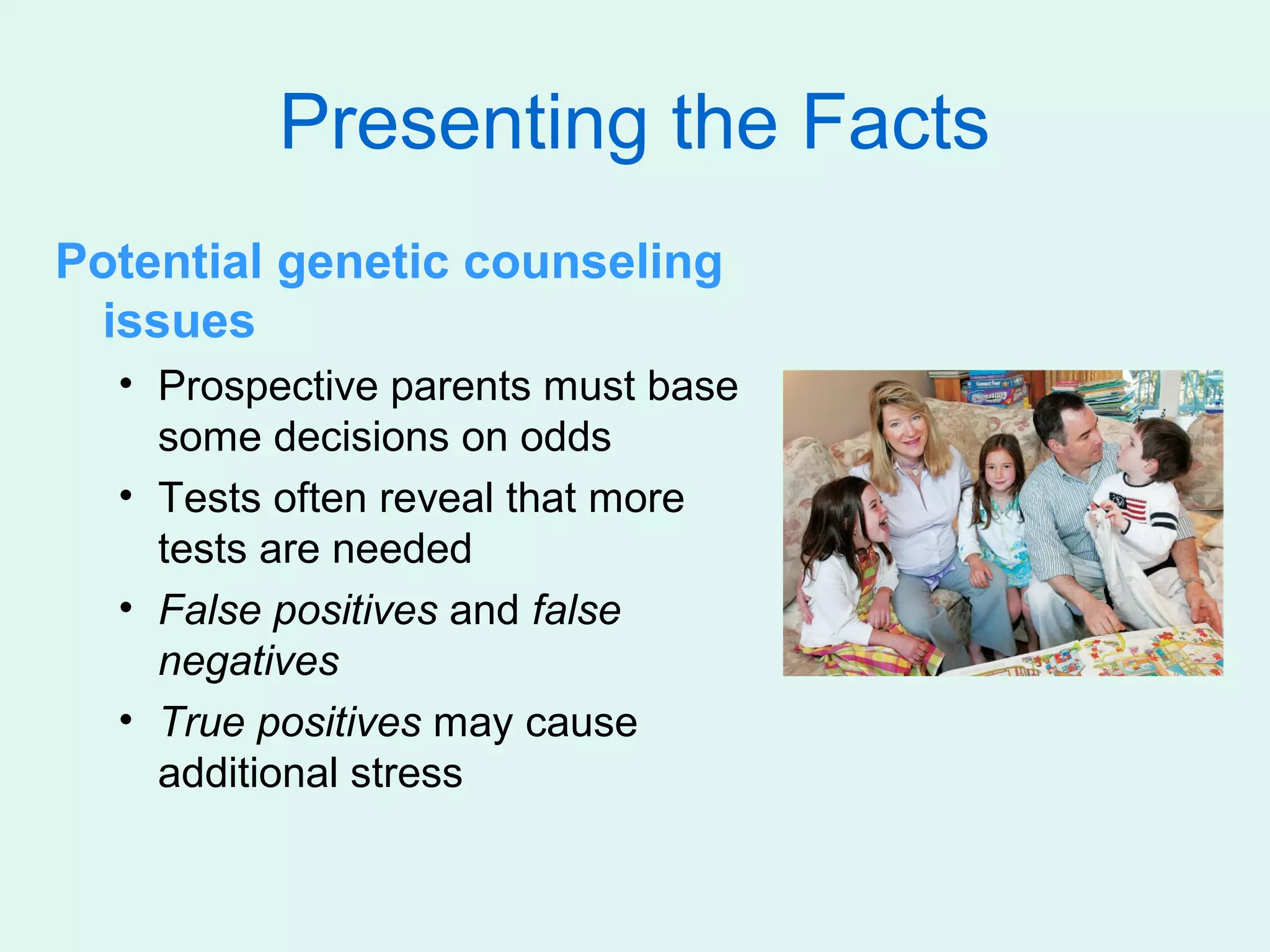
Presenting the Facts
Potential genetic counseling
 issues
  • Prospective parents must base
    some decisions on odds
  • Tests often reveal that more
    tests are needed
  • False positives and false
    negatives
  • True positives may cause
    additional stress
PKU: A Success Story
Phenylketonuria (PKU)
  • Recessive condition
  • Results in inability to metabolize
    phenylalanine (amino acid found in many
    foods)
  • Buildup of phenylalanine causes brain
    damage, progressive mental retardation, and
    other symptoms
  • Early testing and a special diet usually results
    in normal development
From Zygote to Newborn
Three main periods of prenatal development
  1. Germinal Period (first two weeks after
     conception): rapid cell division and beginning of
     cell differentiation
  2. Embryonic Period (3rd through 8th week): basic
     forms of all body structures develop
  3. Fetal Period (9th week until birth): fetus grows in
     size and matures in functioning
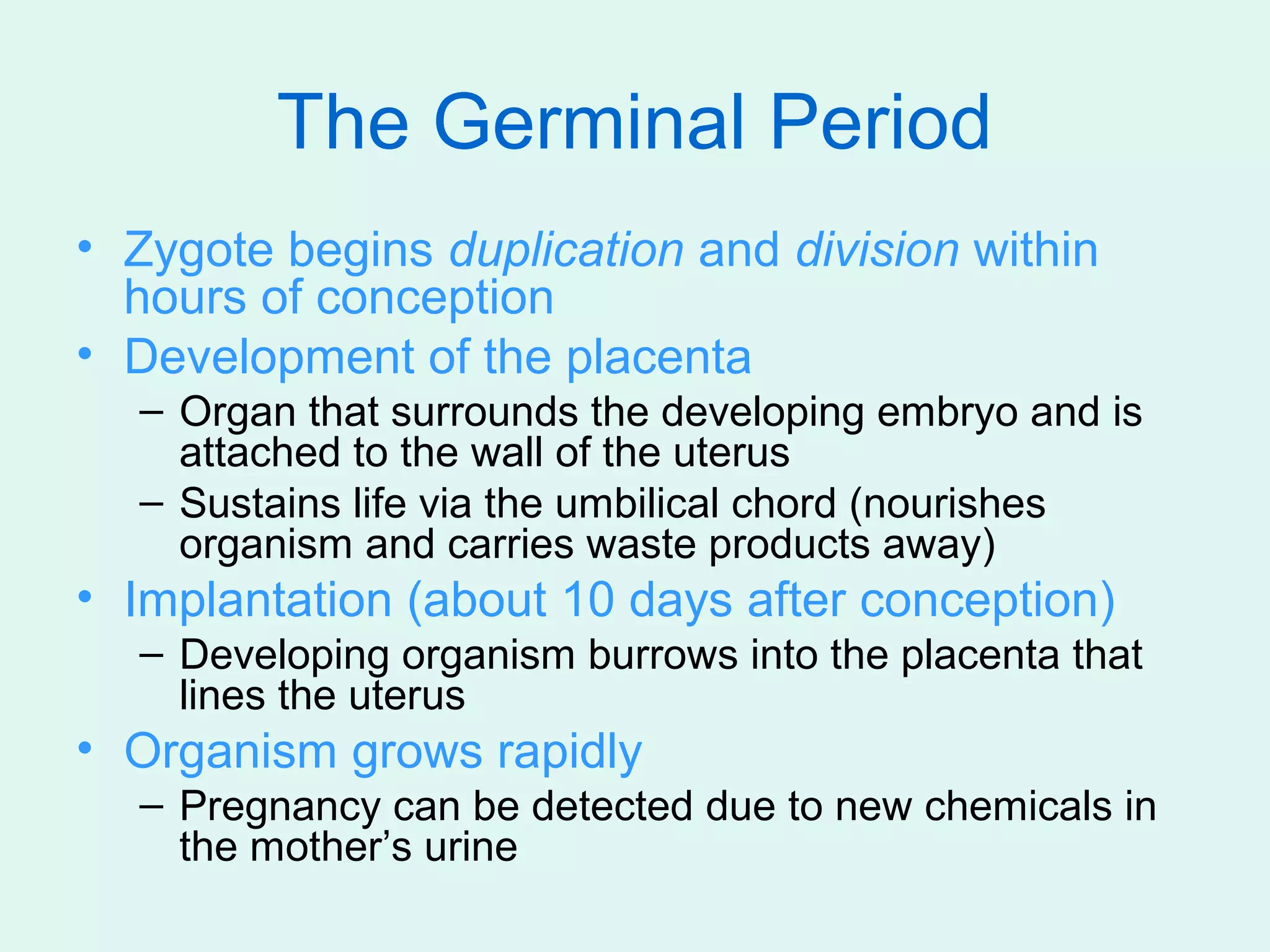
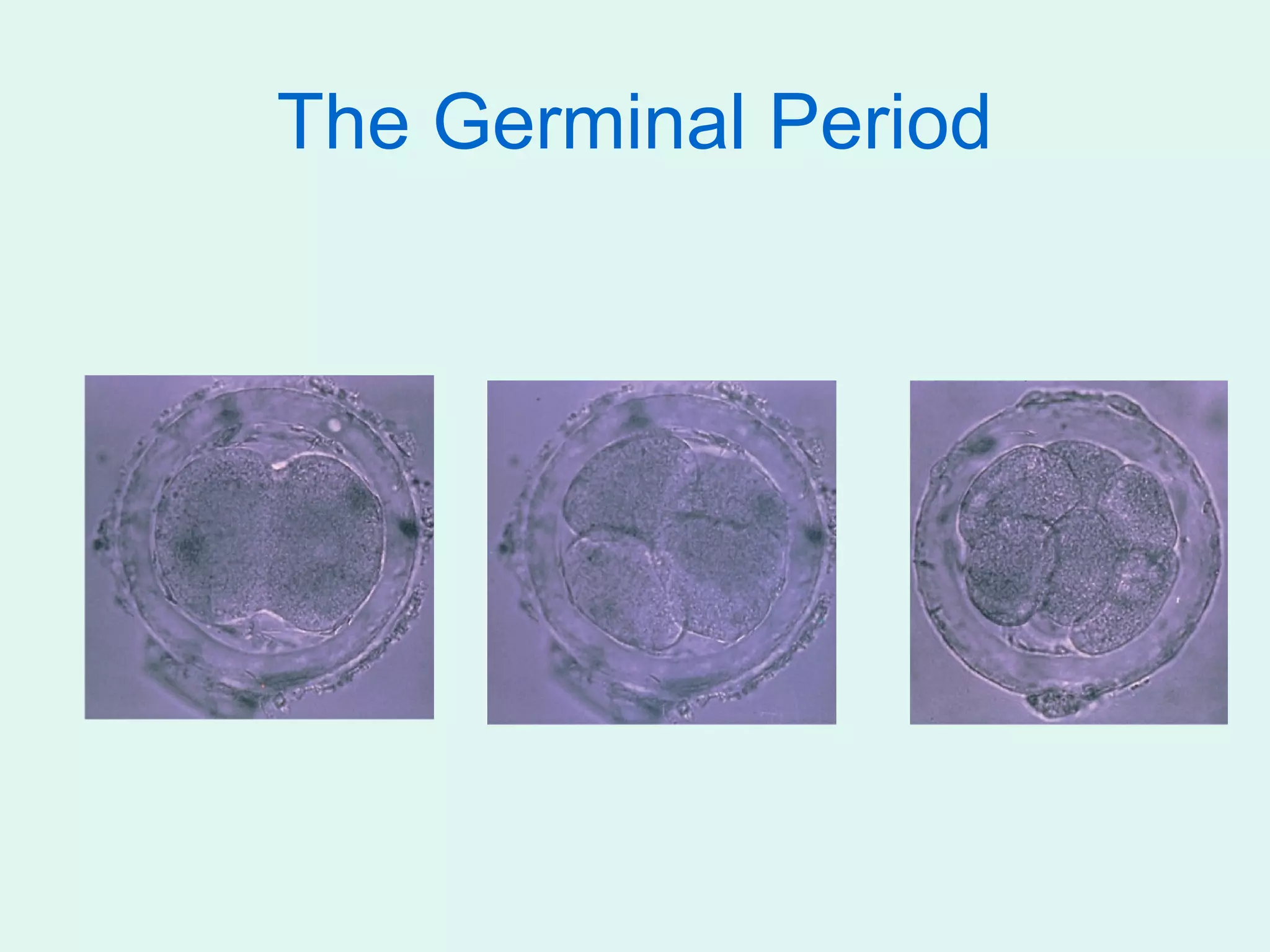
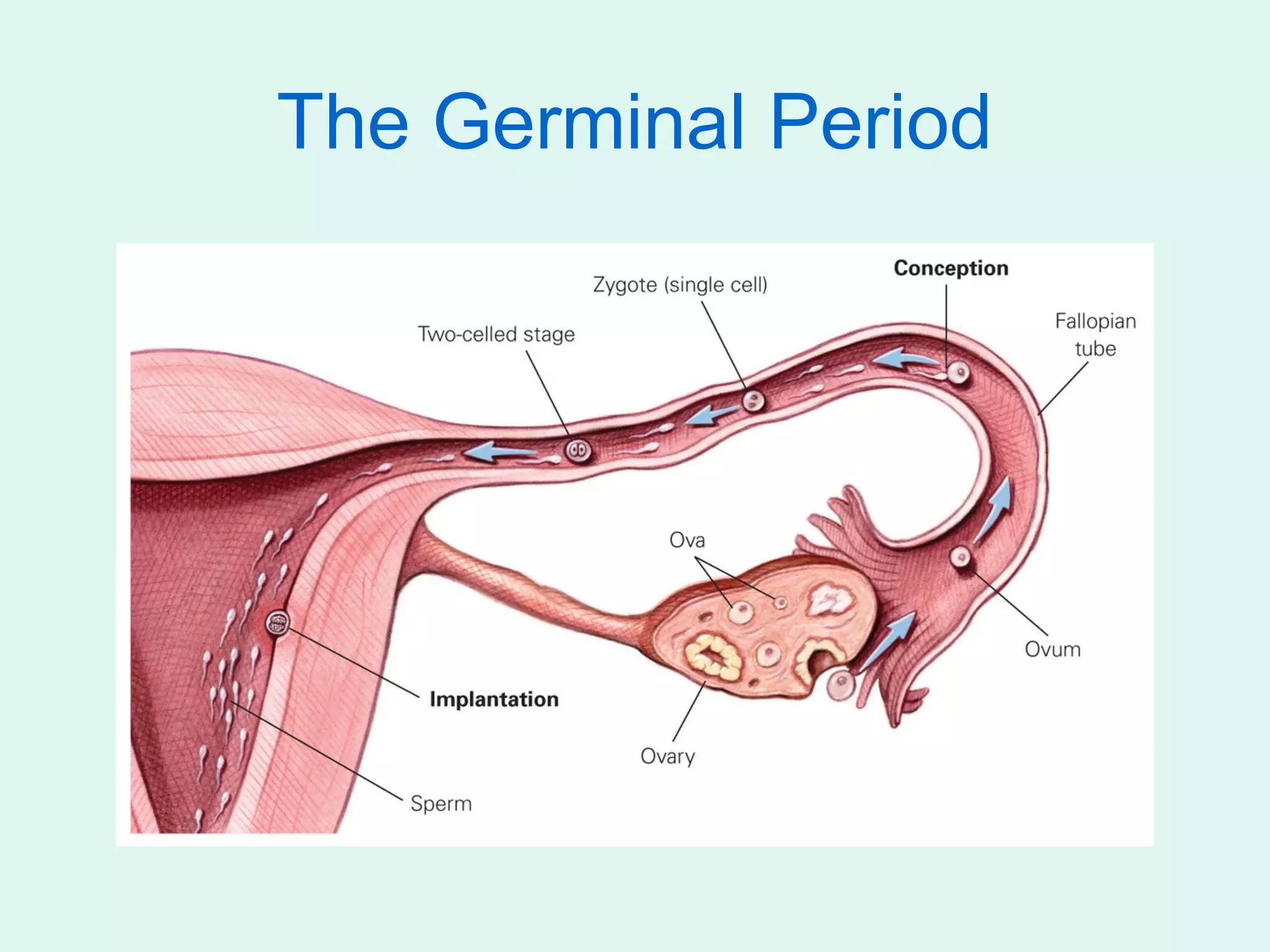
The Germinal Period
• Zygote begins duplication and division within
  hours of conception
• Development of the placenta
  – Organ that surrounds the developing embryo and is
    attached to the wall of the uterus
  – Sustains life via the umbilical chord (nourishes
    organism and carries waste products away)
• Implantation (about 10 days after conception)
  – Developing organism burrows into the placenta that
    lines the uterus
• Organism grows rapidly
  – Pregnancy can be detected due to new chemicals in
    the mother’s urine
The Germinal Period
The Germinal Period
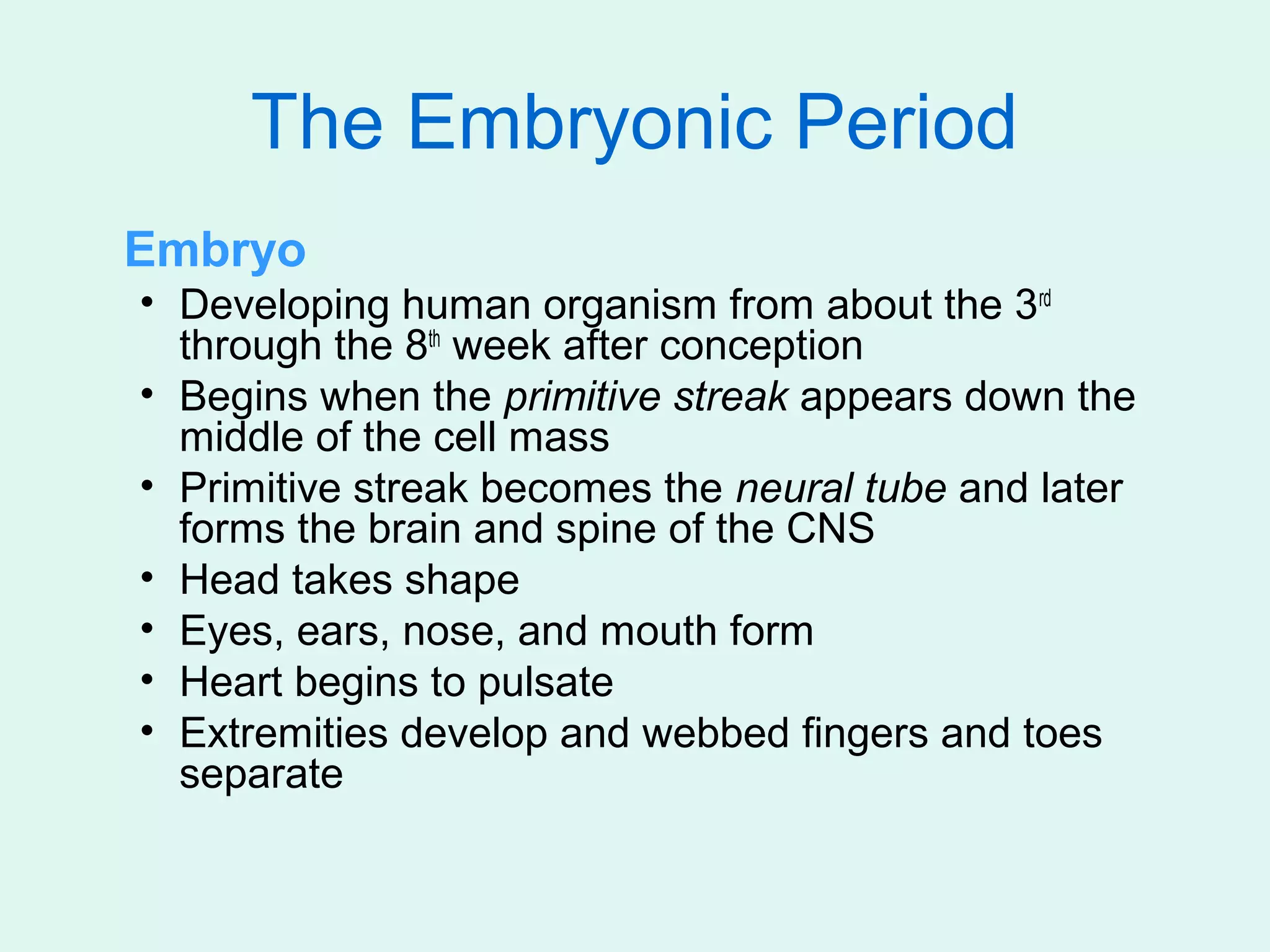
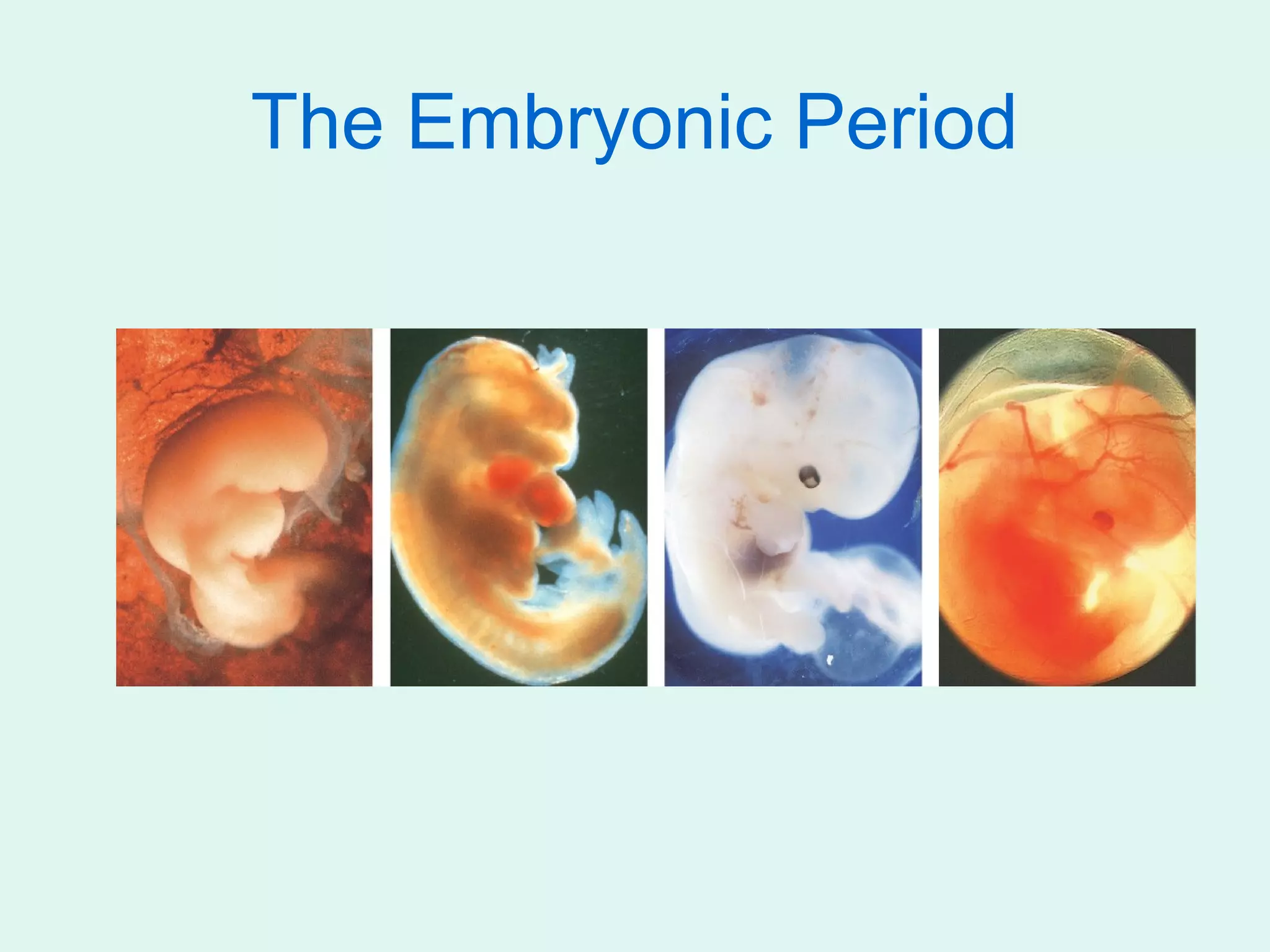
The Embryonic Period
Embryo
• Developing human organism from about the 3rd
  through the 8th week after conception
• Begins when the primitive streak appears down the
  middle of the cell mass
• Primitive streak becomes the neural tube and later
  forms the brain and spine of the CNS
• Head takes shape
• Eyes, ears, nose, and mouth form
• Heart begins to pulsate
• Extremities develop and webbed fingers and toes
  separate
The Embryonic Period
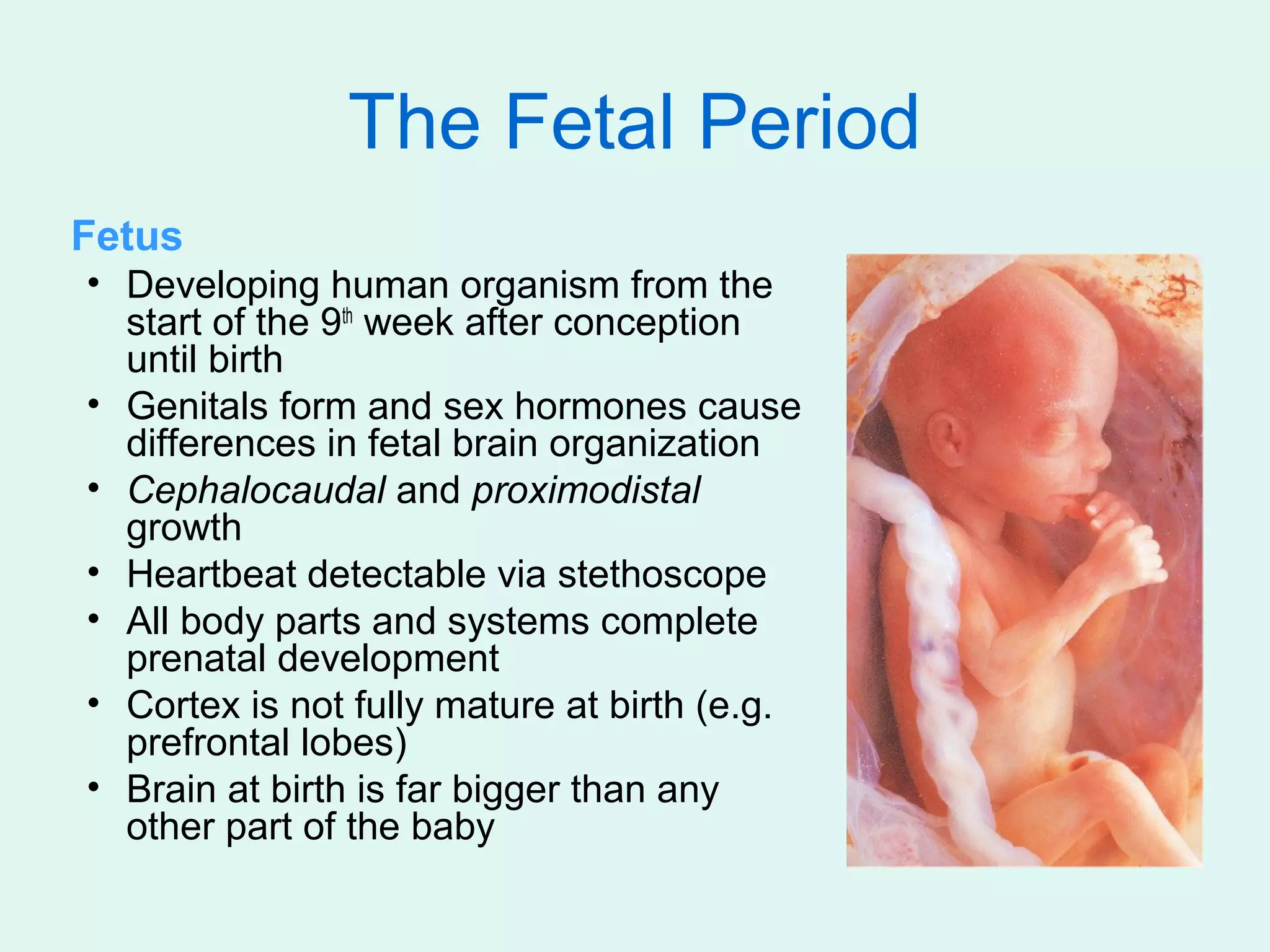
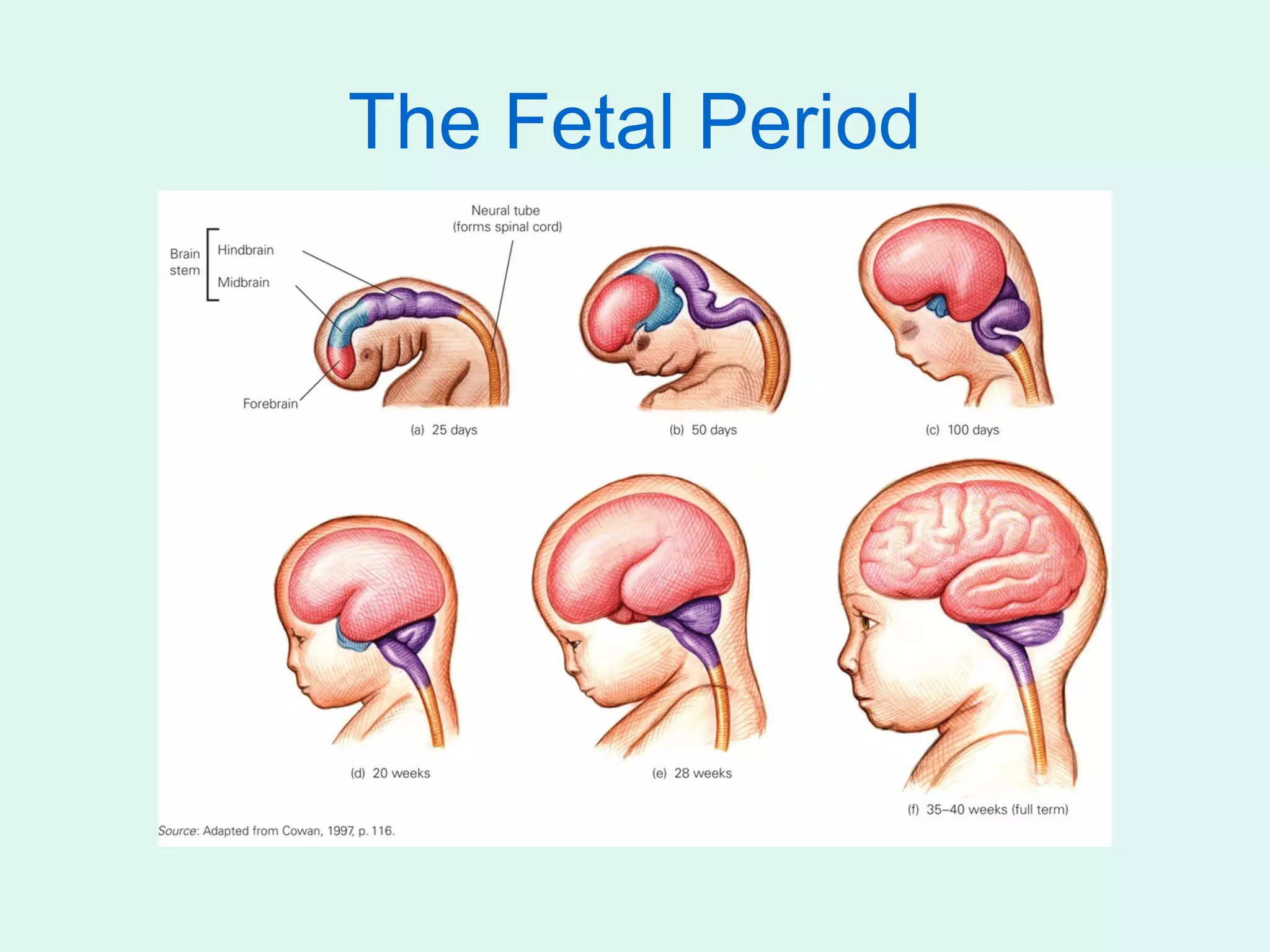
The Fetal Period
Fetus
• Developing human organism from the
  start of the 9th week after conception
  until birth
• Genitals form and sex hormones cause
  differences in fetal brain organization
• Cephalocaudal and proximodistal
  growth
• Heartbeat detectable via stethoscope
• All body parts and systems complete
  prenatal development
• Cortex is not fully mature at birth (e.g.
  prefrontal lobes)
• Brain at birth is far bigger than any
  other part of the baby
The Fetal Period
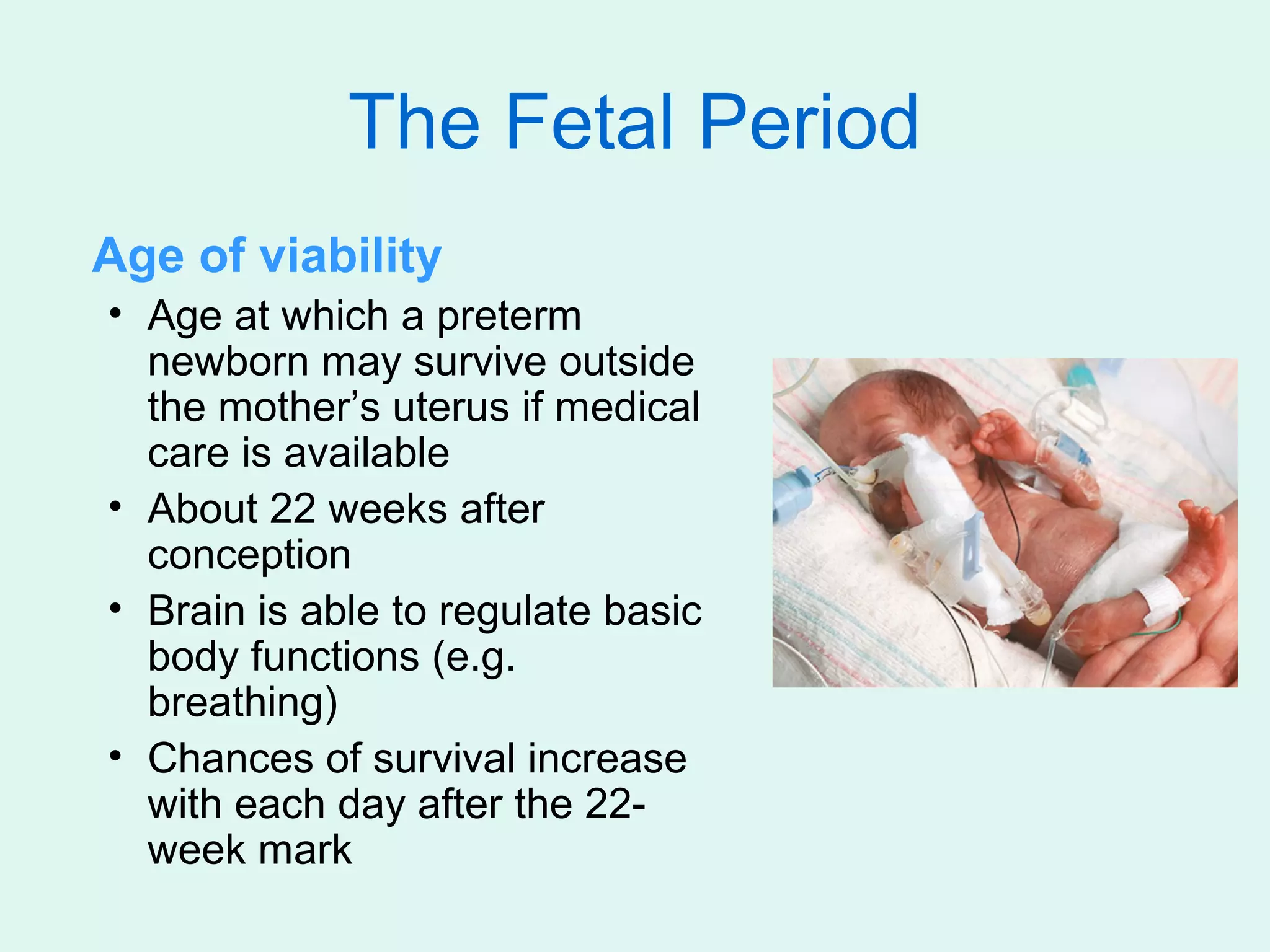
Age of viability
• Age at which a preterm
  newborn may survive outside
  the mother’s uterus if medical
  care is available
• About 22 weeks after
  conception
• Brain is able to regulate basic
  body functions (e.g.
  breathing)
• Chances of survival increase
  with each day after the 22-
  week mark
The Fetal Period
Birth
• Fetal brain signals the release of hormones to
  trigger the female’s uterine muscles
• Labor begins
  – Average duration for firstborn babies: 12 hours
  – Quicker labor for later-born babies
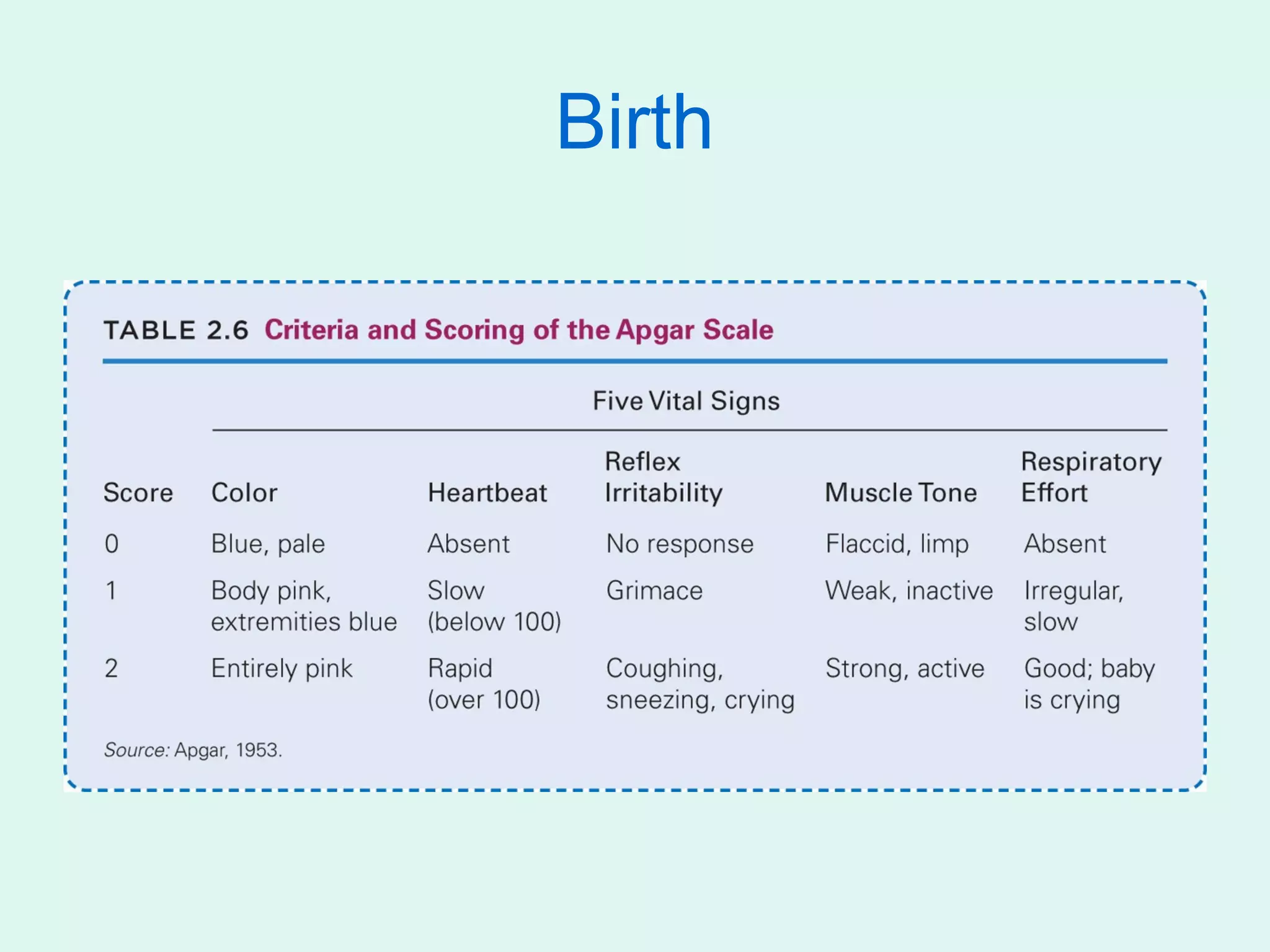
• Apgar scale
  – Quick assessment of newborn’s heart rate, breathing,
    muscle tone, color, and reflexes
  – Completed twice (1 minute and 5 minutes after birth)
  – Score of 0, 1, or 2 in each category
  – Desired score: 7 or above
Birth
Traditional and Modern Birthing
              Practices
• Home births
• Hospital births
• Doula
  – Woman who helps with labor, delivery, breast-
    feeding, and newborn care
  – May be related to lower rate of cesarean
    sections
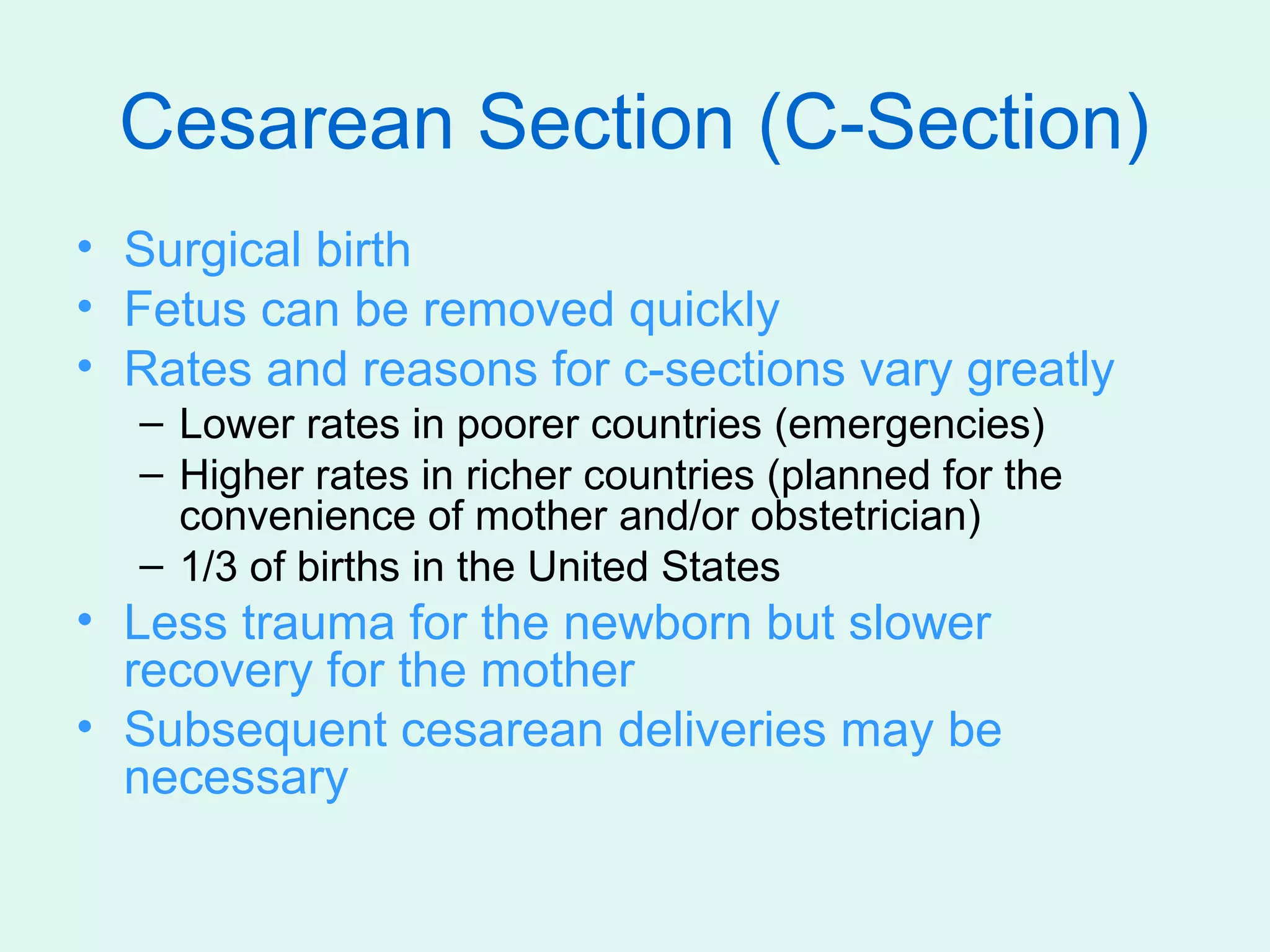
Cesarean Section (C-Section)
• Surgical birth
• Fetus can be removed quickly
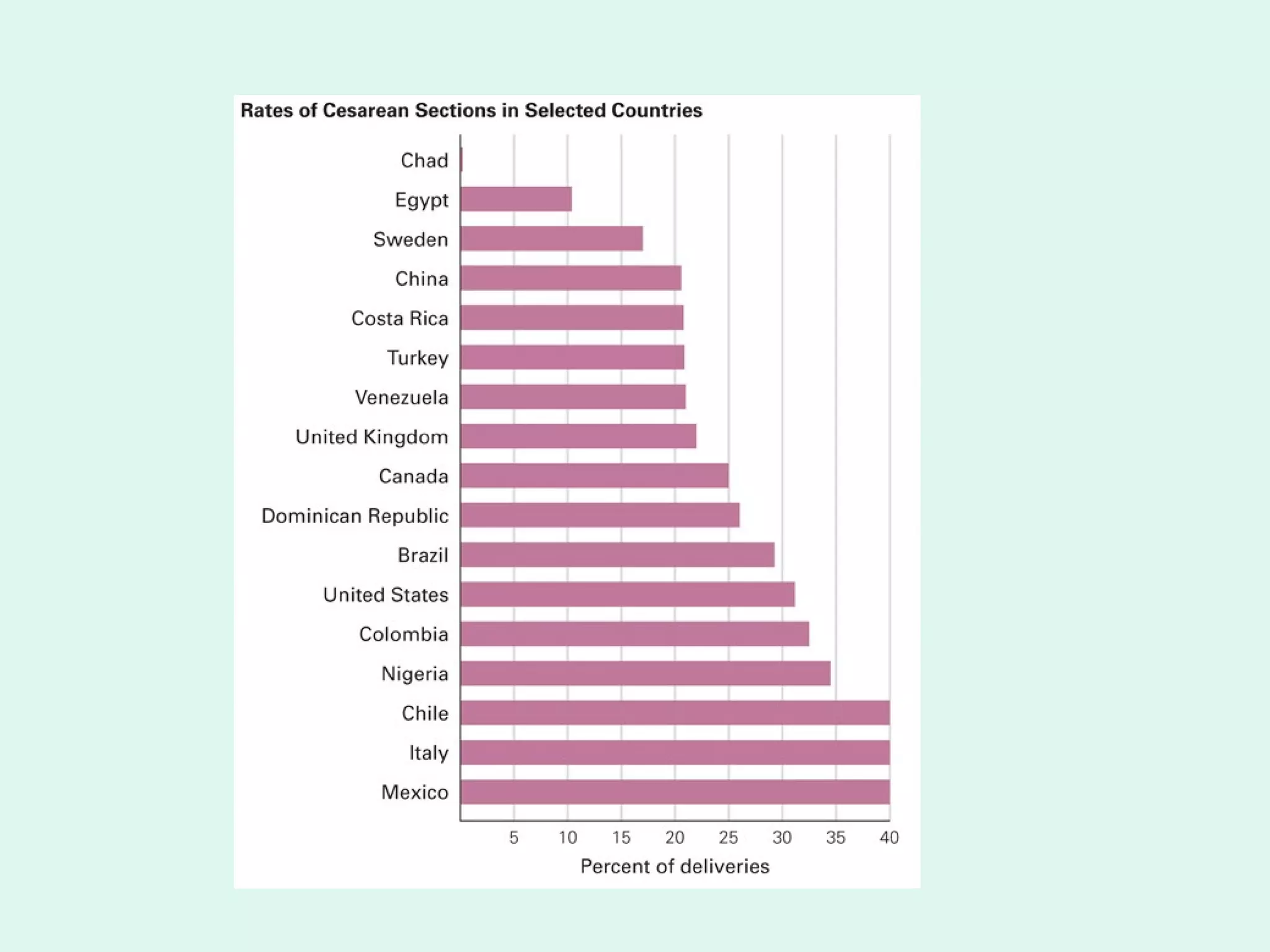
• Rates and reasons for c-sections vary greatly
  – Lower rates in poorer countries (emergencies)
  – Higher rates in richer countries (planned for the
    convenience of mother and/or obstetrician)
  – 1/3 of births in the United States
• Less trauma for the newborn but slower
  recovery for the mother
• Subsequent cesarean deliveries may be
  necessary
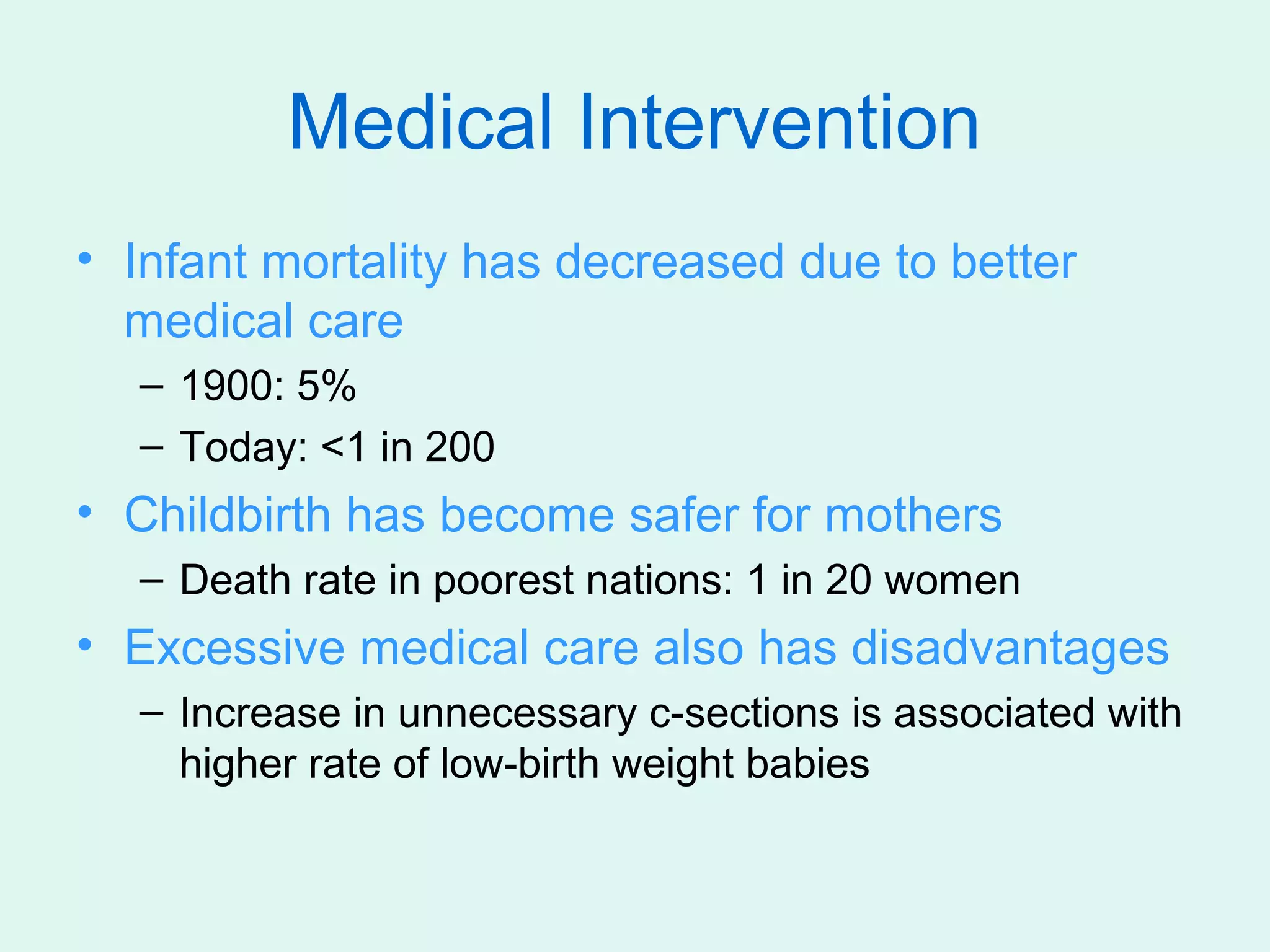
Medical Intervention
• Infant mortality has decreased due to better
  medical care
  – 1900: 5%
  – Today: <1 in 200
• Childbirth has become safer for mothers
  – Death rate in poorest nations: 1 in 20 women
• Excessive medical care also has disadvantages
  – Increase in unnecessary c-sections is associated with
    higher rate of low-birth weight babies
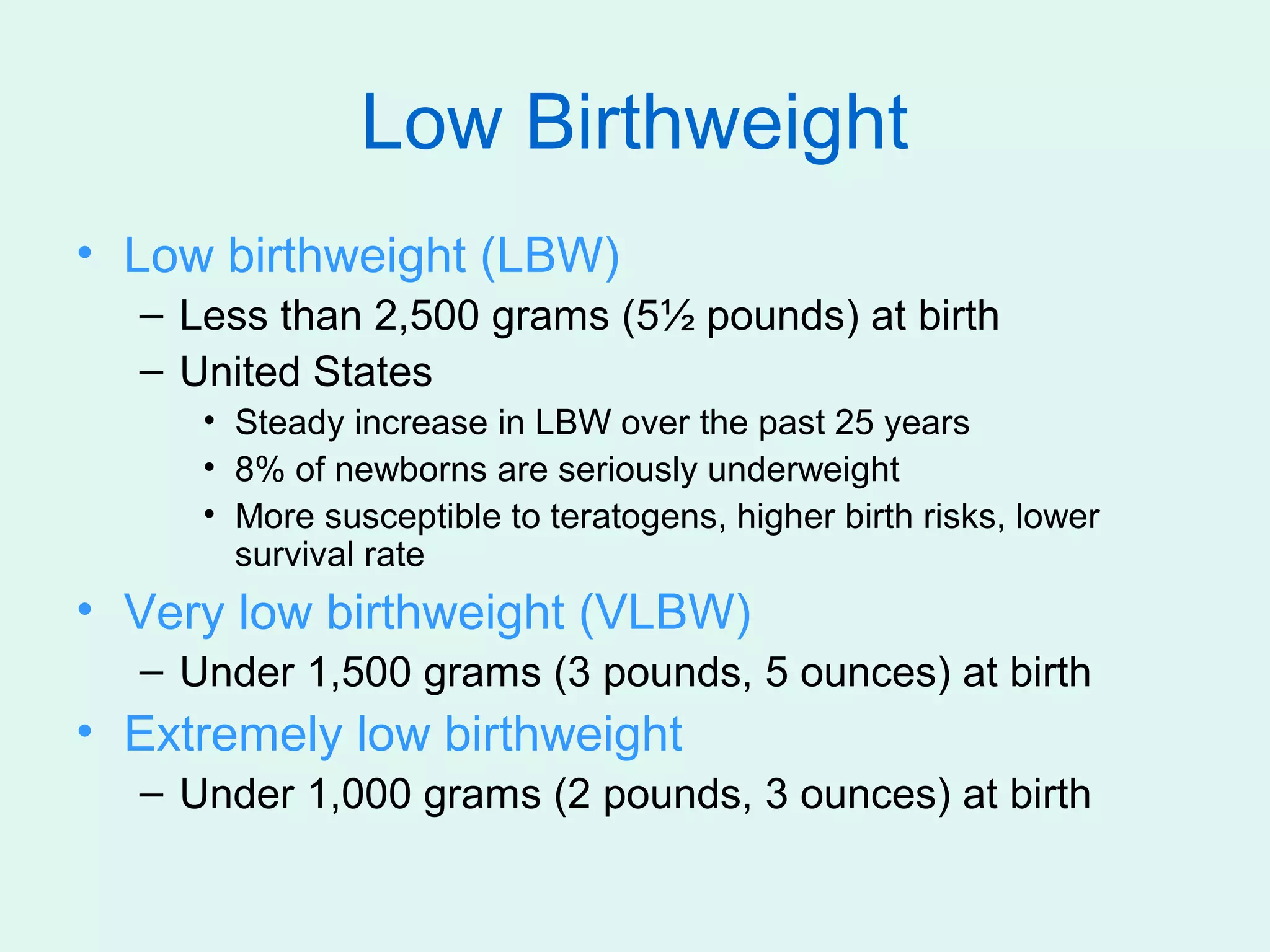
Low Birthweight
• Low birthweight (LBW)
  – Less than 2,500 grams (5½ pounds) at birth
  – United States
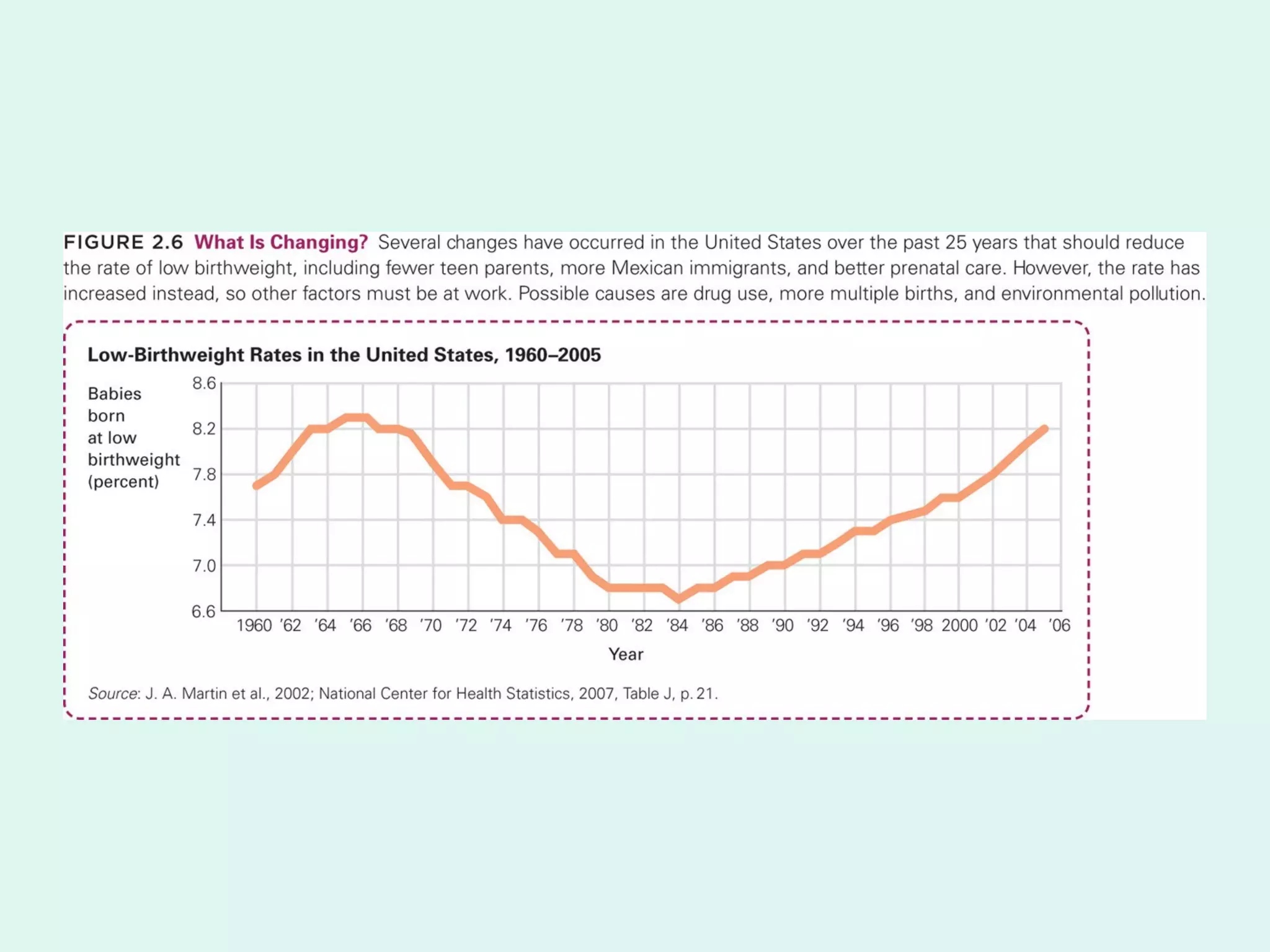
     • Steady increase in LBW over the past 25 years
     • 8% of newborns are seriously underweight
     • More susceptible to teratogens, higher birth risks, lower
       survival rate
• Very low birthweight (VLBW)
  – Under 1,500 grams (3 pounds, 5 ounces) at birth
• Extremely low birthweight
  – Under 1,000 grams (2 pounds, 3 ounces) at birth
Preterm or Slow Growing?
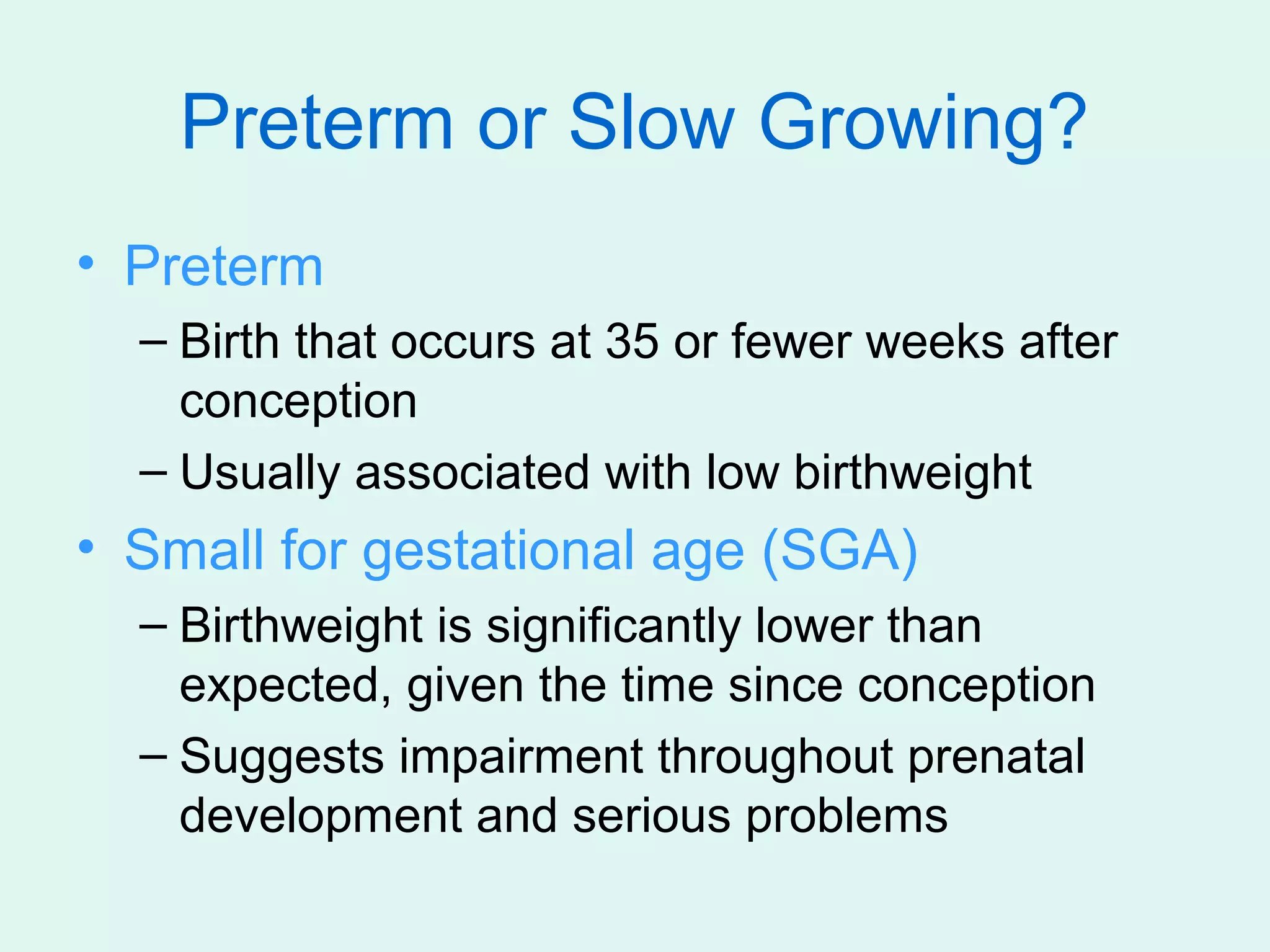
• Preterm
  – Birth that occurs at 35 or fewer weeks after
    conception
  – Usually associated with low birthweight
• Small for gestational age (SGA)
  – Birthweight is significantly lower than
    expected, given the time since conception
  – Suggests impairment throughout prenatal
    development and serious problems
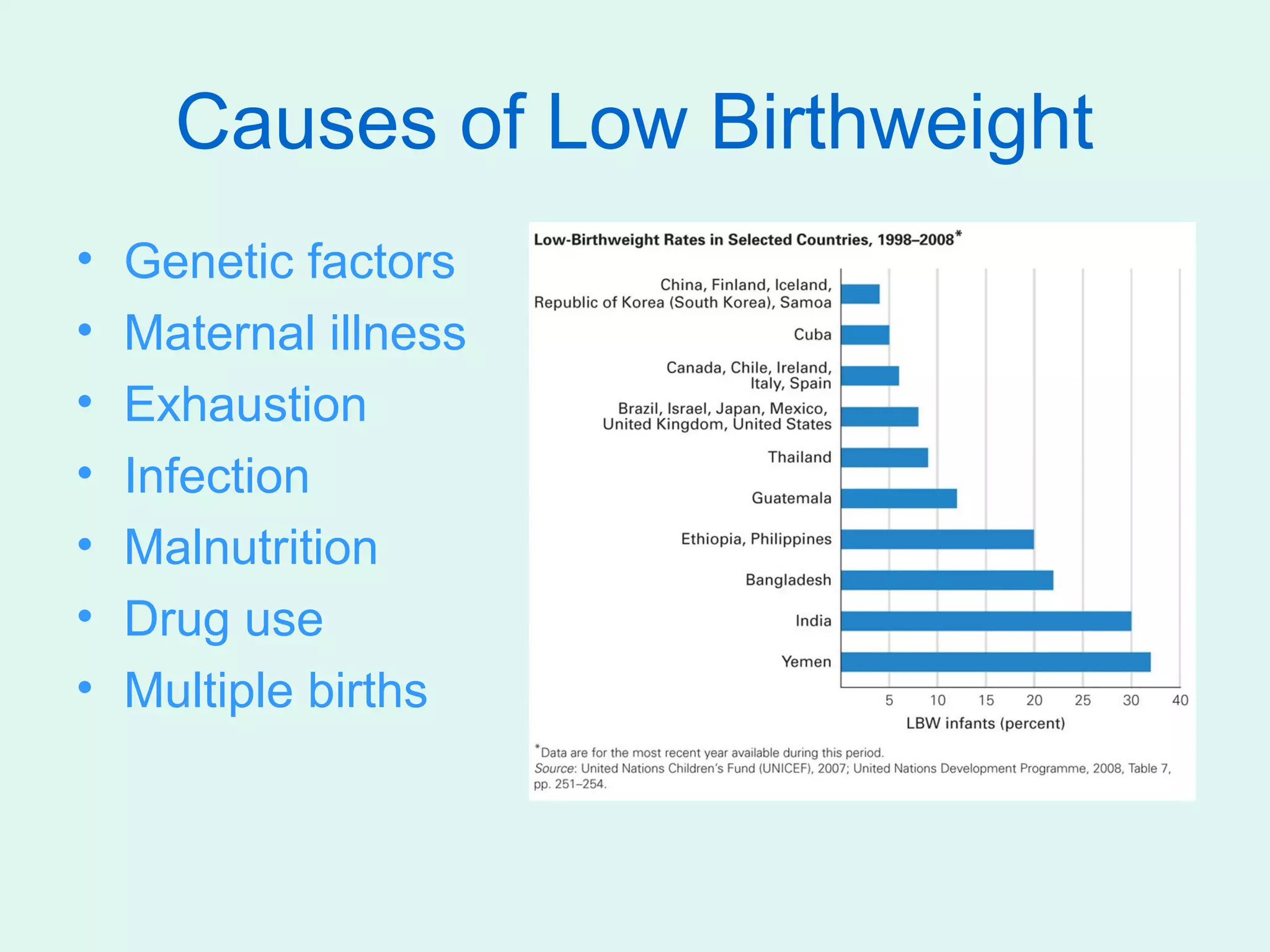
Causes of Low Birthweight
•   Genetic factors
•   Maternal illness
•   Exhaustion
•   Infection
•   Malnutrition
•   Drug use
•   Multiple births
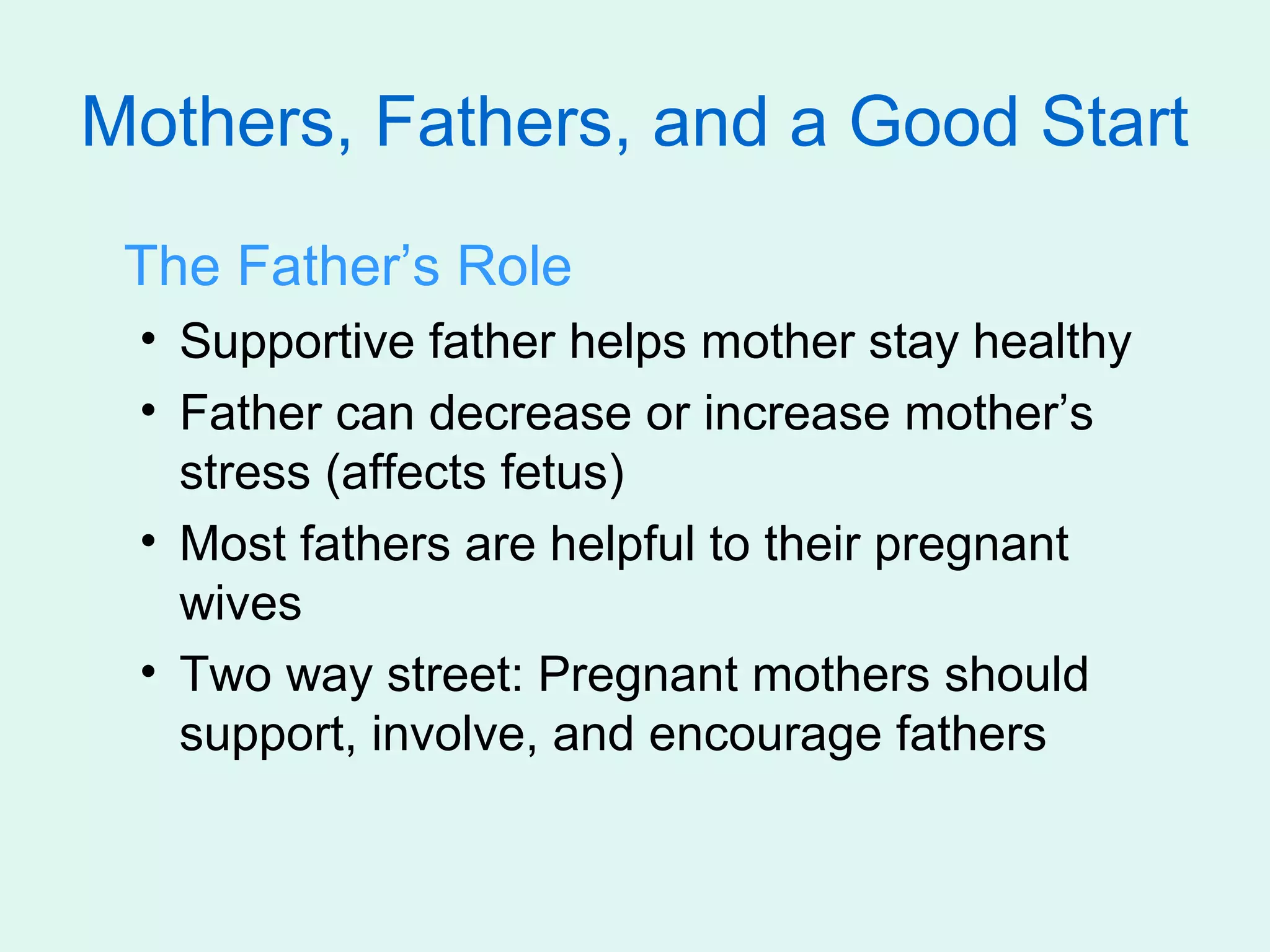
Mothers, Fathers, and a Good Start
 The Father’s Role
 • Supportive father helps mother stay healthy
 • Father can decrease or increase mother’s
   stress (affects fetus)
 • Most fathers are helpful to their pregnant
   wives
 • Two way street: Pregnant mothers should
   support, involve, and encourage fathers
The Importance of Close Contact
• Birth complications can have lingering impact on
  later life
• Mothers and fathers should help with early
  caregiving if newborn must stay in the hospital
• Kangaroo care
  – Child-care technique in which the mother of a low-
    birthweight infant holds the baby between her breasts
  – Allows baby to hear mother’s heartbeat and feel her
    body heat
  – Research confirms beneficial effects
Postpartum Depression
• Sadness and inadequacy felt by 8-15% of new
  mothers in the days and weeks after giving birth
• Symptoms range from baby blues to postpartum
  psychosis
• Depressed mothers find baby care burdensome
  and may think about mistreating the infant
• Paternal involvement can have beneficial effect
  – Some fathers are depressed themselves
• Causes for Postpartum Depression vary
Bonding
Parent-Infant Bond
  • The strong, loving connection that forms as
    parents hold, examine, and feed the newborn
  • Early skin-to-skin contact is not essential
  • Cross-fostering in monkeys
    – Newborns are removed from their mothers and
      raised by another female or male
    – Strong and beneficial relationship sometimes
      develops
Nature, Nurture, and the Phenotype
     Four general research conclusions
1.   Genes affect every aspect of human behavior
2.   Nongenetic influences begin at conception and
     continue lifelong, sometimes altering genetic
     instructions
3.   Most environmental influences on children raised in the
     same home are NOT shared, partly because parents
     treat each child differently
4.   Children , adolescents, and adults “niche-pick,”
     choosing environments that are compatible with their
     genetic inheritance
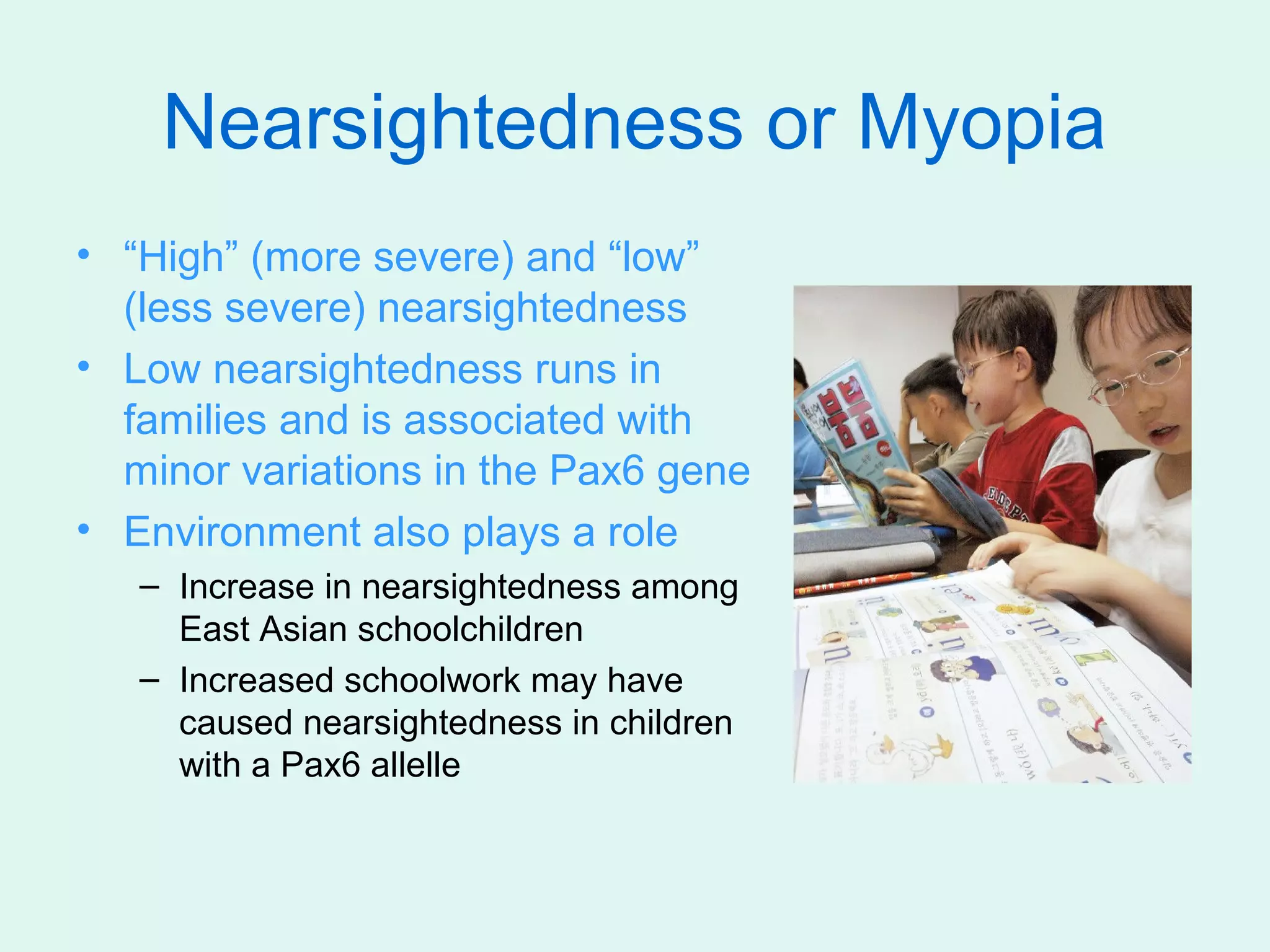
Nearsightedness or Myopia
• “High” (more severe) and “low”
  (less severe) nearsightedness
• Low nearsightedness runs in
  families and is associated with
  minor variations in the Pax6 gene
• Environment also plays a role
   – Increase in nearsightedness among
     East Asian schoolchildren
   – Increased schoolwork may have
     caused nearsightedness in children
     with a Pax6 allelle
Alcoholism
• Alcoholism probably has a genetic basis
  – Genes can cause an overpowering addictive pull in
    some people
  – Environmental conditions can modify the genetic
    effects
  – Nature and nurture must combine to create an
    alcoholic
• Fetal Alcohol Syndrome (FAS)
  – A cluster of birth defects that may occur in the child of
    a woman who drinks alcohol while pregnant
  – Includes abnormal facial characteristics, slow physical
    growth, and retarded mental development
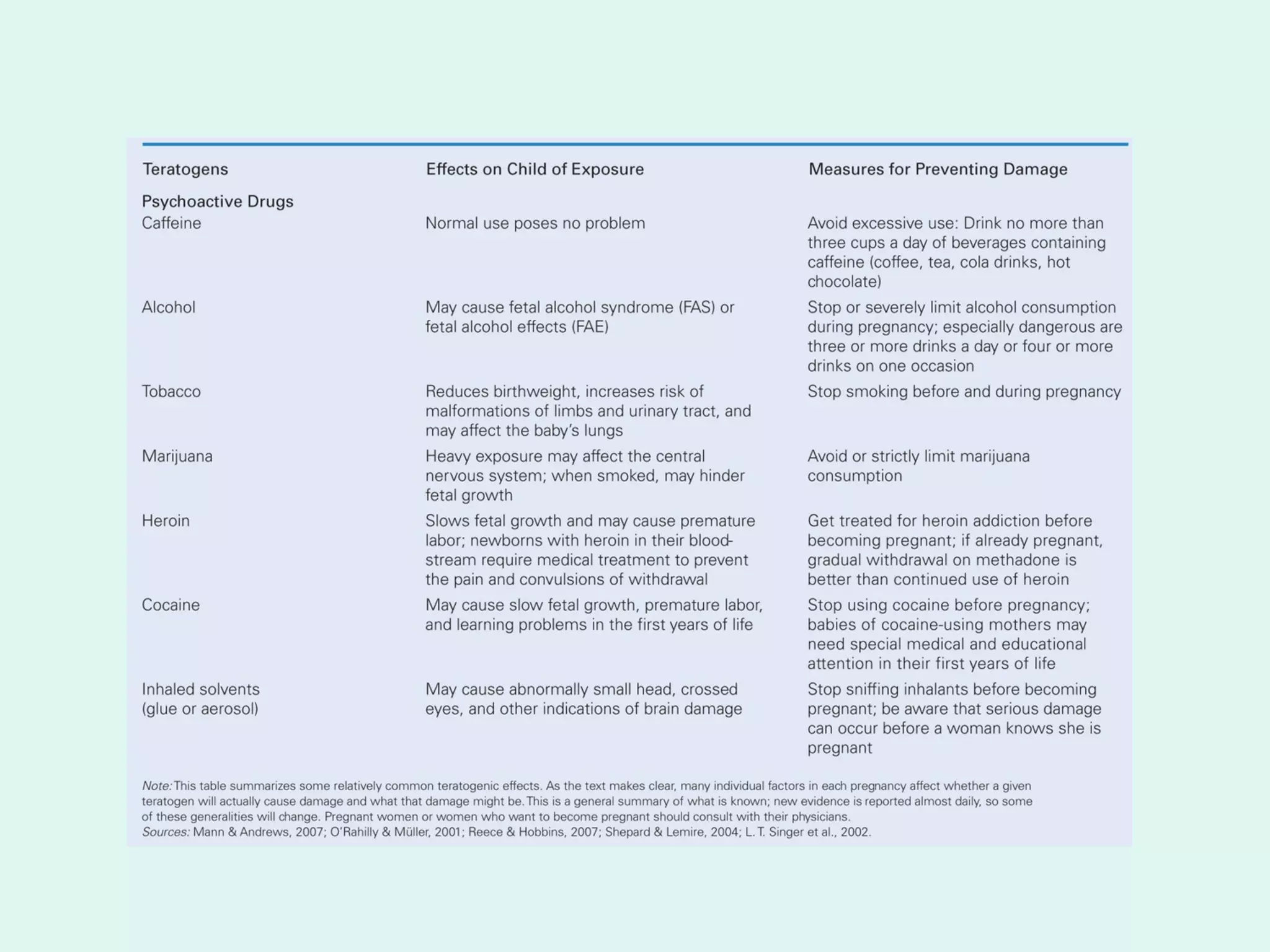
Prenatal Teratogens
• Substances and conditions that can impair
  prenatal development and result in birth defects
  or even death
• Not all teratogens can be avoided
• Structural abnormalities are obvious at birth
• Behavioral teratogens
  – Affect the child’s developing brain
  – Can cause developmental retardation, hyperactivity,
    and learning disabilities
  – Effects do not become evident for months or years
Significant Factors
1. Genetic Vulnerability
•       Some zygotes carry genes that make them
        vulnerable
    •     Certain genes increase likelihood of cleft lip in
          Japanese people
•       Some women do not metabolize folic acid well
    •     Increases rates of neural-tube defects (e.g. spina
          bifida)
    •     Folic acid was added to many foods in the United
          States and Canada and rates have decreased
Significant Factors
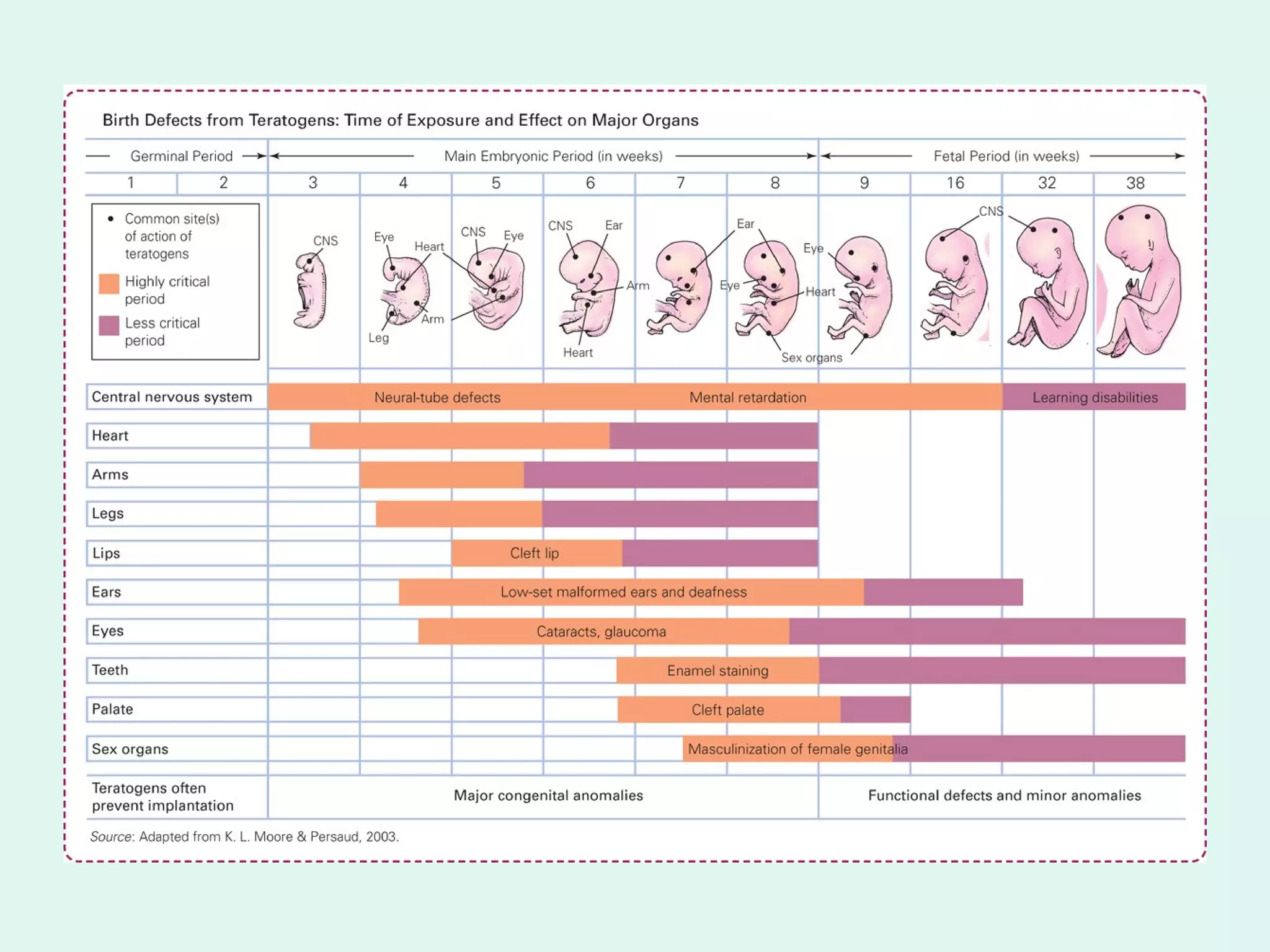
2. Timing of Exposure
•  Critical period: time when a body part
   develops
  – First two months for structural abnormalities
  – Often before woman knows she is pregnant
  – Time when most spontaneous abortions
      occur
• Sensitive period: time when teratogens can
   interfere with recent growth
Significant Factors
3. Amount of Exposure
•       Threshold effect: Certain teratogens are relatively
        harmless until exposure reaches a certain level
•       Bisphenol A (BPA)
    –     Chemical compound used to make clear plastic
    –     Small doses are harmless but threshold for humans is
          unknown
    –     Pregnant mothers should avoid plastic containers and
          dishware
•       Prescription drugs
•       Vitamin A
    –     High doses can be harmful
Resolving Uncertainties
• Pregnancy does not have to be an
  anxious time
• Good prenatal care can
  – teach women what they can do to have
    healthy babies
  – save lives
  – reassure parents that all is well
Ch02

Ch02

  • 1.
    Invitation to theLife Span by Kathleen Stassen Berger Chapter 2 – Genes and Prenatal Development PowerPoint Slides developed by Martin Wolfger and Michael James Ivy Tech Community College-Bloomington
  • 2.
    The Beginning ofLife • DNA (deoxyribonucleic acid): – Molecule that contains the chemical instructions for cells to manufacture various proteins – Promotes growth and sustains life • Chromosomes: – Molecules of DNA – DNA consists of 46 chromosomes arranged in 23 pairs
  • 3.
    The Beginning ofLife • Gametes: – Reproductive cells (sperm and ova) – Each gamete consists of 23 chromosomes. • Zygote: – Two gametes (sperm and ovum) combine and produce a new individual with 23 chromosomes from each parent. • Genes: – Specific sections of a chromosome that carry instructions via four chemicals. – Chemicals are organized in four pairs (AT, TA, CG, GC). – Each person has about 3 billion pairs.
  • 4.
  • 5.
    Genetic Variations andSimilarities Genes are passed down from generation to generation • Genotype: – An organism’s genetic inheritance, or genetic potential – Unique for each organism • Phenotype: – The observable characteristics of an organism, including appearance, personality, intelligence, and all other traits.
  • 6.
    Genetic Variations andSimilarities • Many genes are identical for every human being. • Some genes vary slightly in their codes from one person to another. • Allele: – Variation of a gene or any of the possible forms in which a gene for a particular trait can occur. – Effects of variations vary greatly from causing life- threatening conditions to having no detectable effect at all.
  • 7.
    The Human Genome •Genetic Diversity – Distinguishes each person – Allows the human species to adapt to pressures of the environment (e.g. climate changes, illnesses). • Genome: – The full set of genes that are the instructions to make an individual member of a certain species • Similarity between two people: 99.5% • Similarity between humans and chimpanzees: 98% • Similarity between humans and every other mammal: 90+%
  • 8.
    Human Genome Projectand HapMap • Human Genome Project: – Found “only” about 20,000 genes in humans – Exact number is unknown • HapMap: – International project trying to spot all variations in the human genome – Found 11 million variations among the 3 billion chemical pairs
  • 9.
    Siblings and Twins • Sibling Similarities – Each sibling gets abut 10,000 genes from each parent. – Millions of variations and billions of combinations are possible. – Full siblings are not necessarily alike. • Monozygotic (identical) twins: – Originate from one zygote that splits apart very early in development. – Incomplete split results in conjoined twins. – Same genotype but slight variations in phenotype are possible due to environmental influences.
  • 10.
    Siblings and Twins •Dizygotic (fraternal) twins – Result from fertilization of two separate ova by two separate sperm. – Dizygotic twins have half their genes in common and occur twice as often as monozygotic twins. – Incidence is genetic and varies by ethnicity and age.
  • 11.
    Male and Female •Humans usually possess 46 chromosomes. – 44 autosomes and 2 sex chromosomes – Females: XX – Males: XY – Sex of offspring depends on whether the father’s Y sperm or X sperm fertilizes the ovum.
  • 12.
  • 13.
    Genetic Interactions • Almostevery trait is: – polygenic (affected by many genes) – multifactorial (influenced by many factors) • Regulator genes – Direct the interactions of other genes, controlling their genetic expression, duplication, and transcription – Responsible for differences between species
  • 14.
    Additive Heredity • Additivegenes – Genes that add something to some aspect of the phenotype – Effects of additive genes add up to make the phenotype – Example: Height is affected by the contributions of about 100 genes
  • 15.
    Dominant-Recessive Heredity • Dominantgene is far more influential than the recessive gene (non-additive). • Dominant gene can completely control the phenotype with no noticeable effect of recessive gene. – Genes for blood type B and Rh-positive blood are dominant. • Effect of recessive genes can sometimes be noticed. – Dominant brown eye gene and recessive blue eye gene can result in hazel eyes.
  • 16.
    Carrier • A personwhose genotype includes a gene that is not expressed in the phenotype – Unexpressed gene occurs in half of the carrier’s gametes and is passed on to half of the carrier’s offspring – Offspring can be carrier or express the gene in the phenotype (e.g. when unexpressed gene is inherited by both parents)
  • 17.
    Heritability • Statistical termthat indicates what portion of the variation in a particular trait within a particular population is inherited. – Example: 90% of the height differences among children of the same age is genetic. • Environment can affect the expression of inherited genes.
  • 18.
    Genetic Problems a) ChromosomalAbnormalities Down Syndrome (Trisomy-21) – Three copies of chromosome 21 – Specific facial characteristics (thick tongue, round face, slanted eyes) – Hearing losses, heart abnormalities, muscle weakness, short stature – Slow to develop language – Accelerated aging (cataracts, dementia, certain forms of cancer common at age 40)
  • 19.
    Genetic Problems b) Abnormalitiesof the Sex Chromosomes • Turner Syndrome (X only): – Unusually short, underdeveloped female organs, infertile – Slow to develop – Problems in spatial understanding • Klinefelter Syndrome (XXY): – Symptoms include learning problems and infertility – Boy’s penis does not grow during puberty and fat accumulates around the breast area – Sometimes not recognized until adulthood
  • 20.
    Genetic Problems • Gene Disorders a) Dominant Disorders • Half of the offspring of parents with a dominant disorder will have the disorder. • Most dominant disorders begin in adulthood (fatal dominant childhood conditions cannot be passed on). • Many dominant disorders have relatively mild or variable symptoms. • Tourette syndrome – Some who inherit the dominant gene exhibit uncontrollable tics and explosive outbursts – Most have milder, barely noticeable symptoms
  • 21.
    Genetic Problems b) RecessiveDisorders • Millions of different types, lethal conditions are rare • Sickle-cell trait – Offers some protection against malaria – African carriers are more likely than non-carriers to survive • Cystic fibrosis – More common among people with northern European ancestors – Carriers may have been protected against cholera
  • 22.
  • 23.
    Sex-Linked Conditions All X-linkedconditions are more common in boys; girls are likely to be protected by their second X • Fragile X Syndrome – Most common form of inherited mental retardation – Additional symptoms include muscle weakness, shyness, and poor social skills • Hemophilia – Blood clotting is inhibited – Blood transfusions can save children’s lives • Color blindness – Most common sex-linked condition – Often passed on because it is not debilitating
  • 24.
  • 25.
    Advising Prospective Parents • Genetic Counseling – Consultation and testing by trained professionals – Enables prospective parents to learn about their genetic heritage, including harmful conditions that may be passed on to their offspring • Ethical Guidelines – Test results are kept confidential – Decisions regarding sterilization, adoption, abortion, or carrying a pregnancy to term are made by the clients
  • 26.
  • 27.
    Presenting the Facts Potentialgenetic counseling issues • Prospective parents must base some decisions on odds • Tests often reveal that more tests are needed • False positives and false negatives • True positives may cause additional stress
  • 28.
    PKU: A SuccessStory Phenylketonuria (PKU) • Recessive condition • Results in inability to metabolize phenylalanine (amino acid found in many foods) • Buildup of phenylalanine causes brain damage, progressive mental retardation, and other symptoms • Early testing and a special diet usually results in normal development
  • 29.
    From Zygote toNewborn Three main periods of prenatal development 1. Germinal Period (first two weeks after conception): rapid cell division and beginning of cell differentiation 2. Embryonic Period (3rd through 8th week): basic forms of all body structures develop 3. Fetal Period (9th week until birth): fetus grows in size and matures in functioning
  • 30.
    The Germinal Period •Zygote begins duplication and division within hours of conception • Development of the placenta – Organ that surrounds the developing embryo and is attached to the wall of the uterus – Sustains life via the umbilical chord (nourishes organism and carries waste products away) • Implantation (about 10 days after conception) – Developing organism burrows into the placenta that lines the uterus • Organism grows rapidly – Pregnancy can be detected due to new chemicals in the mother’s urine
  • 31.
  • 32.
  • 33.
    The Embryonic Period Embryo •Developing human organism from about the 3rd through the 8th week after conception • Begins when the primitive streak appears down the middle of the cell mass • Primitive streak becomes the neural tube and later forms the brain and spine of the CNS • Head takes shape • Eyes, ears, nose, and mouth form • Heart begins to pulsate • Extremities develop and webbed fingers and toes separate
  • 34.
  • 35.
    The Fetal Period Fetus •Developing human organism from the start of the 9th week after conception until birth • Genitals form and sex hormones cause differences in fetal brain organization • Cephalocaudal and proximodistal growth • Heartbeat detectable via stethoscope • All body parts and systems complete prenatal development • Cortex is not fully mature at birth (e.g. prefrontal lobes) • Brain at birth is far bigger than any other part of the baby
  • 36.
    The Fetal Period Ageof viability • Age at which a preterm newborn may survive outside the mother’s uterus if medical care is available • About 22 weeks after conception • Brain is able to regulate basic body functions (e.g. breathing) • Chances of survival increase with each day after the 22- week mark
  • 37.
  • 38.
    Birth • Fetal brainsignals the release of hormones to trigger the female’s uterine muscles • Labor begins – Average duration for firstborn babies: 12 hours – Quicker labor for later-born babies • Apgar scale – Quick assessment of newborn’s heart rate, breathing, muscle tone, color, and reflexes – Completed twice (1 minute and 5 minutes after birth) – Score of 0, 1, or 2 in each category – Desired score: 7 or above
  • 39.
  • 40.
    Traditional and ModernBirthing Practices • Home births • Hospital births • Doula – Woman who helps with labor, delivery, breast- feeding, and newborn care – May be related to lower rate of cesarean sections
  • 41.
    Cesarean Section (C-Section) •Surgical birth • Fetus can be removed quickly • Rates and reasons for c-sections vary greatly – Lower rates in poorer countries (emergencies) – Higher rates in richer countries (planned for the convenience of mother and/or obstetrician) – 1/3 of births in the United States • Less trauma for the newborn but slower recovery for the mother • Subsequent cesarean deliveries may be necessary
  • 43.
    Medical Intervention • Infantmortality has decreased due to better medical care – 1900: 5% – Today: <1 in 200 • Childbirth has become safer for mothers – Death rate in poorest nations: 1 in 20 women • Excessive medical care also has disadvantages – Increase in unnecessary c-sections is associated with higher rate of low-birth weight babies
  • 44.
    Low Birthweight • Lowbirthweight (LBW) – Less than 2,500 grams (5½ pounds) at birth – United States • Steady increase in LBW over the past 25 years • 8% of newborns are seriously underweight • More susceptible to teratogens, higher birth risks, lower survival rate • Very low birthweight (VLBW) – Under 1,500 grams (3 pounds, 5 ounces) at birth • Extremely low birthweight – Under 1,000 grams (2 pounds, 3 ounces) at birth
  • 46.
    Preterm or SlowGrowing? • Preterm – Birth that occurs at 35 or fewer weeks after conception – Usually associated with low birthweight • Small for gestational age (SGA) – Birthweight is significantly lower than expected, given the time since conception – Suggests impairment throughout prenatal development and serious problems
  • 47.
    Causes of LowBirthweight • Genetic factors • Maternal illness • Exhaustion • Infection • Malnutrition • Drug use • Multiple births
  • 48.
    Mothers, Fathers, anda Good Start The Father’s Role • Supportive father helps mother stay healthy • Father can decrease or increase mother’s stress (affects fetus) • Most fathers are helpful to their pregnant wives • Two way street: Pregnant mothers should support, involve, and encourage fathers
  • 49.
    The Importance ofClose Contact • Birth complications can have lingering impact on later life • Mothers and fathers should help with early caregiving if newborn must stay in the hospital • Kangaroo care – Child-care technique in which the mother of a low- birthweight infant holds the baby between her breasts – Allows baby to hear mother’s heartbeat and feel her body heat – Research confirms beneficial effects
  • 50.
    Postpartum Depression • Sadnessand inadequacy felt by 8-15% of new mothers in the days and weeks after giving birth • Symptoms range from baby blues to postpartum psychosis • Depressed mothers find baby care burdensome and may think about mistreating the infant • Paternal involvement can have beneficial effect – Some fathers are depressed themselves • Causes for Postpartum Depression vary
  • 51.
    Bonding Parent-Infant Bond • The strong, loving connection that forms as parents hold, examine, and feed the newborn • Early skin-to-skin contact is not essential • Cross-fostering in monkeys – Newborns are removed from their mothers and raised by another female or male – Strong and beneficial relationship sometimes develops
  • 52.
    Nature, Nurture, andthe Phenotype Four general research conclusions 1. Genes affect every aspect of human behavior 2. Nongenetic influences begin at conception and continue lifelong, sometimes altering genetic instructions 3. Most environmental influences on children raised in the same home are NOT shared, partly because parents treat each child differently 4. Children , adolescents, and adults “niche-pick,” choosing environments that are compatible with their genetic inheritance
  • 53.
    Nearsightedness or Myopia •“High” (more severe) and “low” (less severe) nearsightedness • Low nearsightedness runs in families and is associated with minor variations in the Pax6 gene • Environment also plays a role – Increase in nearsightedness among East Asian schoolchildren – Increased schoolwork may have caused nearsightedness in children with a Pax6 allelle
  • 54.
    Alcoholism • Alcoholism probablyhas a genetic basis – Genes can cause an overpowering addictive pull in some people – Environmental conditions can modify the genetic effects – Nature and nurture must combine to create an alcoholic • Fetal Alcohol Syndrome (FAS) – A cluster of birth defects that may occur in the child of a woman who drinks alcohol while pregnant – Includes abnormal facial characteristics, slow physical growth, and retarded mental development
  • 55.
    Prenatal Teratogens • Substancesand conditions that can impair prenatal development and result in birth defects or even death • Not all teratogens can be avoided • Structural abnormalities are obvious at birth • Behavioral teratogens – Affect the child’s developing brain – Can cause developmental retardation, hyperactivity, and learning disabilities – Effects do not become evident for months or years
  • 57.
    Significant Factors 1. GeneticVulnerability • Some zygotes carry genes that make them vulnerable • Certain genes increase likelihood of cleft lip in Japanese people • Some women do not metabolize folic acid well • Increases rates of neural-tube defects (e.g. spina bifida) • Folic acid was added to many foods in the United States and Canada and rates have decreased
  • 58.
    Significant Factors 2. Timingof Exposure • Critical period: time when a body part develops – First two months for structural abnormalities – Often before woman knows she is pregnant – Time when most spontaneous abortions occur • Sensitive period: time when teratogens can interfere with recent growth
  • 60.
    Significant Factors 3. Amountof Exposure • Threshold effect: Certain teratogens are relatively harmless until exposure reaches a certain level • Bisphenol A (BPA) – Chemical compound used to make clear plastic – Small doses are harmless but threshold for humans is unknown – Pregnant mothers should avoid plastic containers and dishware • Prescription drugs • Vitamin A – High doses can be harmful
  • 61.
    Resolving Uncertainties • Pregnancydoes not have to be an anxious time • Good prenatal care can – teach women what they can do to have healthy babies – save lives – reassure parents that all is well

Editor's Notes

  • #2 These colors actually are a template design in PPT, but match the scheme of the book…do you agree? If so, this will be an easy formatting task. The cover has been revised to reflect the new title “Invitation to the Life Span”. I’ve been waiting to get it, that’s why this slide has been delayed getting to you…but I didn’t want to wait any longer. So the cover needs to be swapped in/out when it arrives. Lastly, I got rid of the chapter outline…as it’s repetitive. Do you agree?