Myers’ PSYCHOLOGY
              (7th Ed)


       Chapter 3
 The Nature and Nurture
      Of Behavior
     James A. McCubbin, PhD
       Clemson University

        Worth Publishers
Genes: Our Biological
Blueprint
 Chromosomes
   threadlike structures made of DNA that
    contain the genes
 DNA (deoxyribonucleic acid)
   complex molecule containing the genetic
    information that makes up the chromosomes
   has two strands-forming a “double helix”--held
    together by bonds between pairs of
    nucleotides
Genes: Our Biological
Blueprint
 Genes
   biochemical units of heredity that make up the
    chromosomes
   a segment of DNA capable of synthesizing a
    protein
 Genome
   the complete instructions for making an
    organism
   consisting of all the genetic material in its
    chromosomes
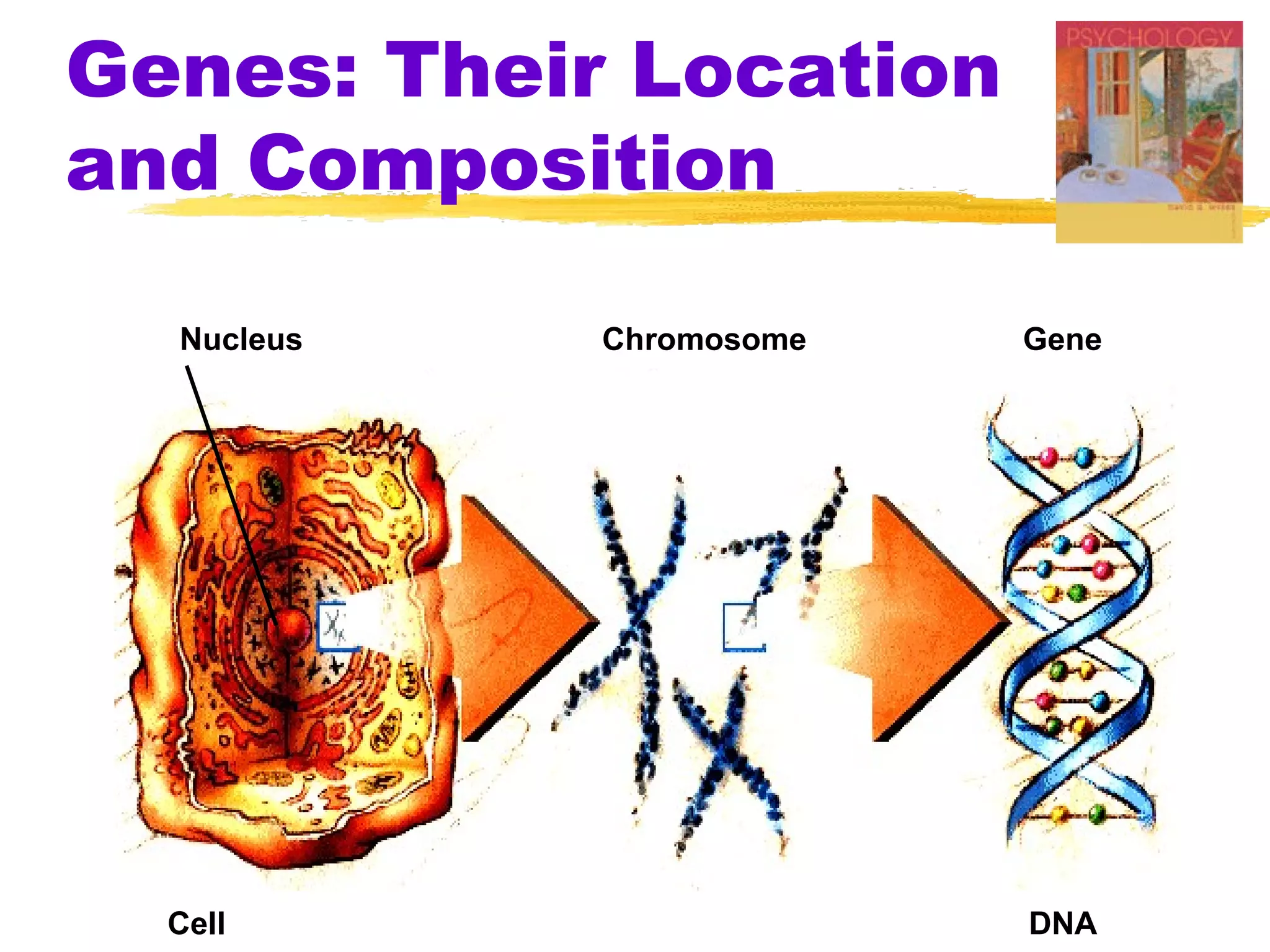
Genes: Their Location
and Composition

  Nucleus   Chromosome   Gene


  Cell                   DNA
Evolutionary Psychology

  Natural Selection
    the principle that, among the range of
     inherited trait variations, those that lead to
     increased reproduction and survival will most
     likely be passed on to succeeding generations
  Mutations
    random errors in gene replication that lead to a
     change in the sequence of nucleotides
    the source of all genetic diversity
Evolutionary Psychology

 Evolutionary Psychology
   the study of the evolution of behavior
    and the mind, using the principles of
    natural selection
 Gender
   in psychology, the characteristics,
    whether biologically or socially
    influenced, by which people define male
    and female
Evolutionary Psychology
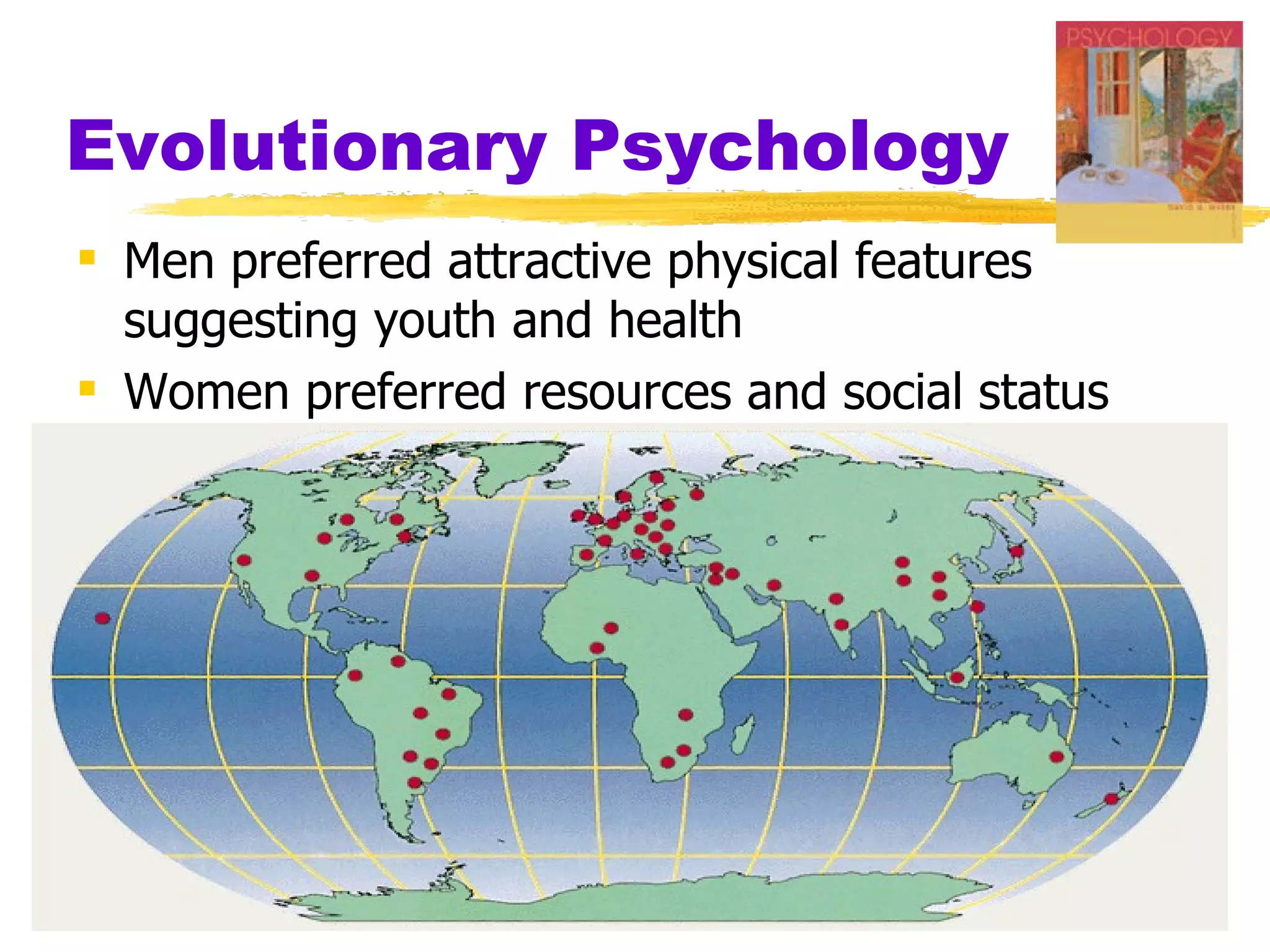
 Men preferred attractive physical features
  suggesting youth and health
 Women preferred resources and social status
Behavior Genetics
 Behavior Genetics
   study of the relative power and limits of
    genetic and environmental influences on
    behavior
 Environment
   every nongenetic influence, from
    prenatal nutrition to the people and
    things around us
Behavior Genetics
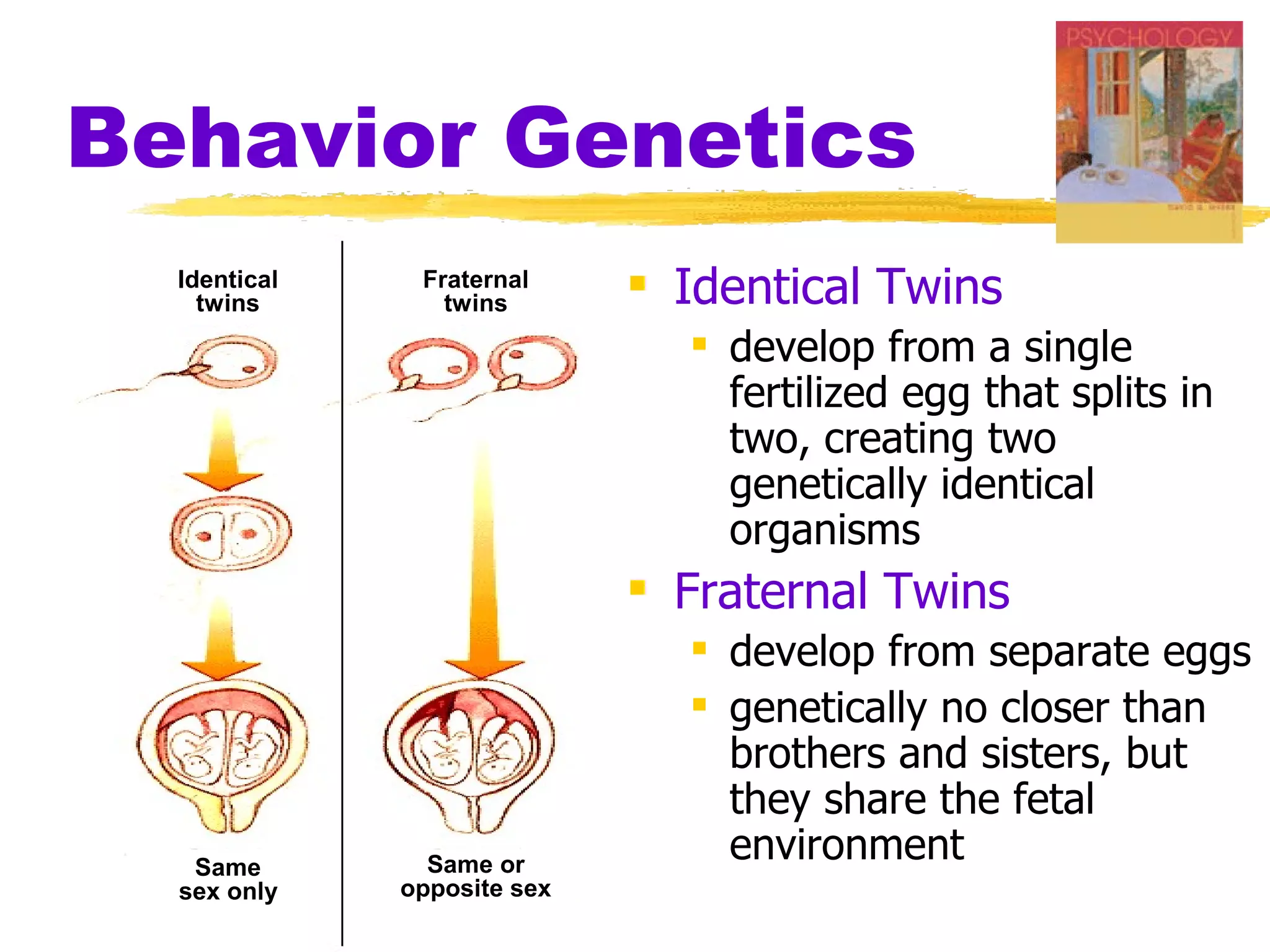
  Identical
    twins
               Fraternal
                 twins        Identical Twins
                                develop from a single
                                 fertilized egg that splits in
                                 two, creating two
                                 genetically identical
                                 organisms
                              Fraternal Twins
                                develop from separate eggs
                                genetically no closer than
                                 brothers and sisters, but
                                 they share the fetal
   Same         Same or
                                 environment
  sex only    opposite sex
Behavior Genetics
 Temperament
   a person’s characteristic emotional
    reactivity and intensity
 Heritability
   the proportion of variation among
    individuals that we can attribute to
    genes
   may vary, depending on the range of
    populations and environments studied
Behavior Genetics
 Interaction
   the dependence of the effect of one
    factor (such as environment) on another
    factor (such as heredity)
 Molecular Genetics
   the subfield of biology that studies the
    molecular structure and function of
    genes
Environmental
Influence
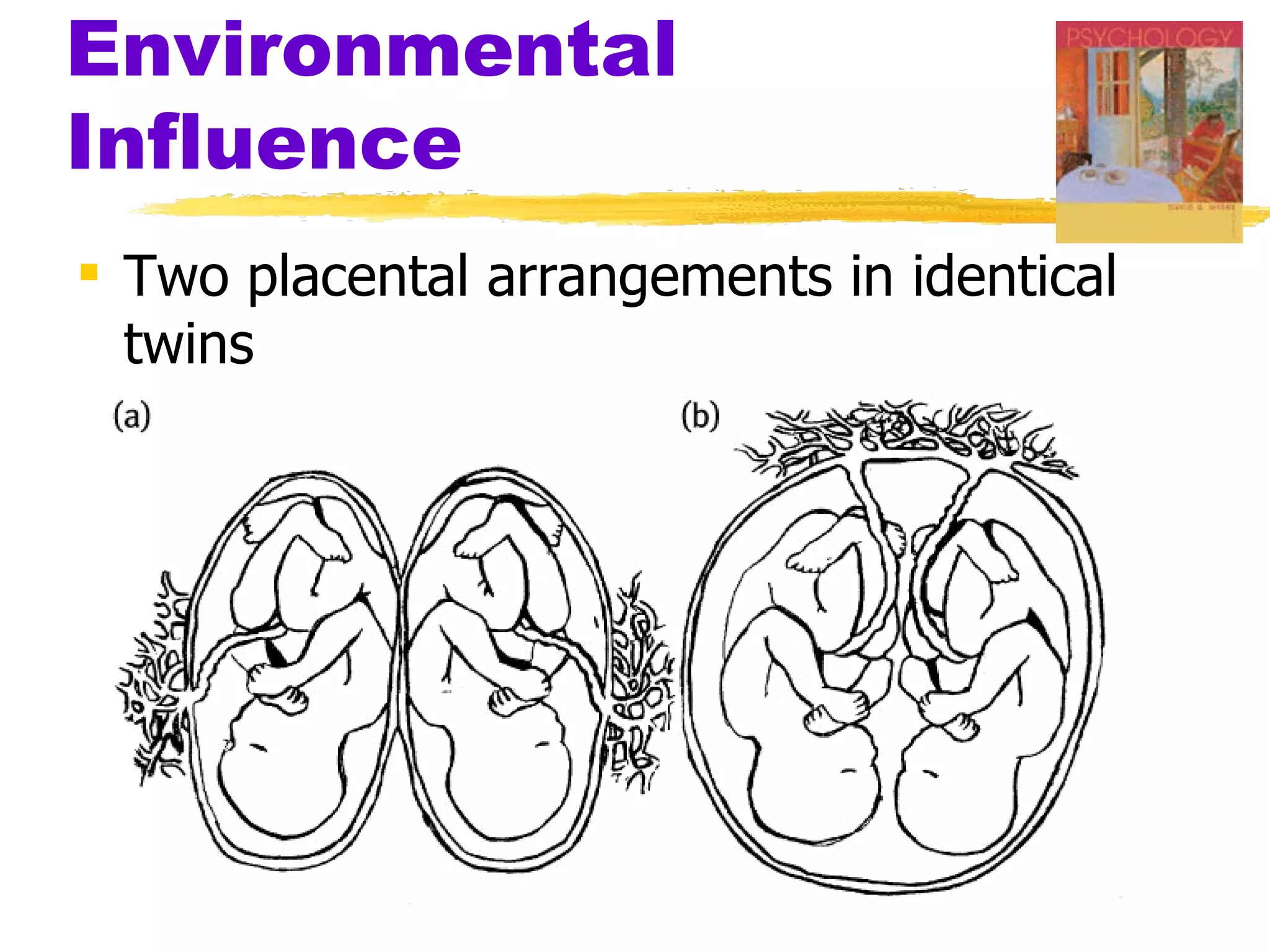
 Two placental arrangements in identical
  twins
Environmental
 Influence
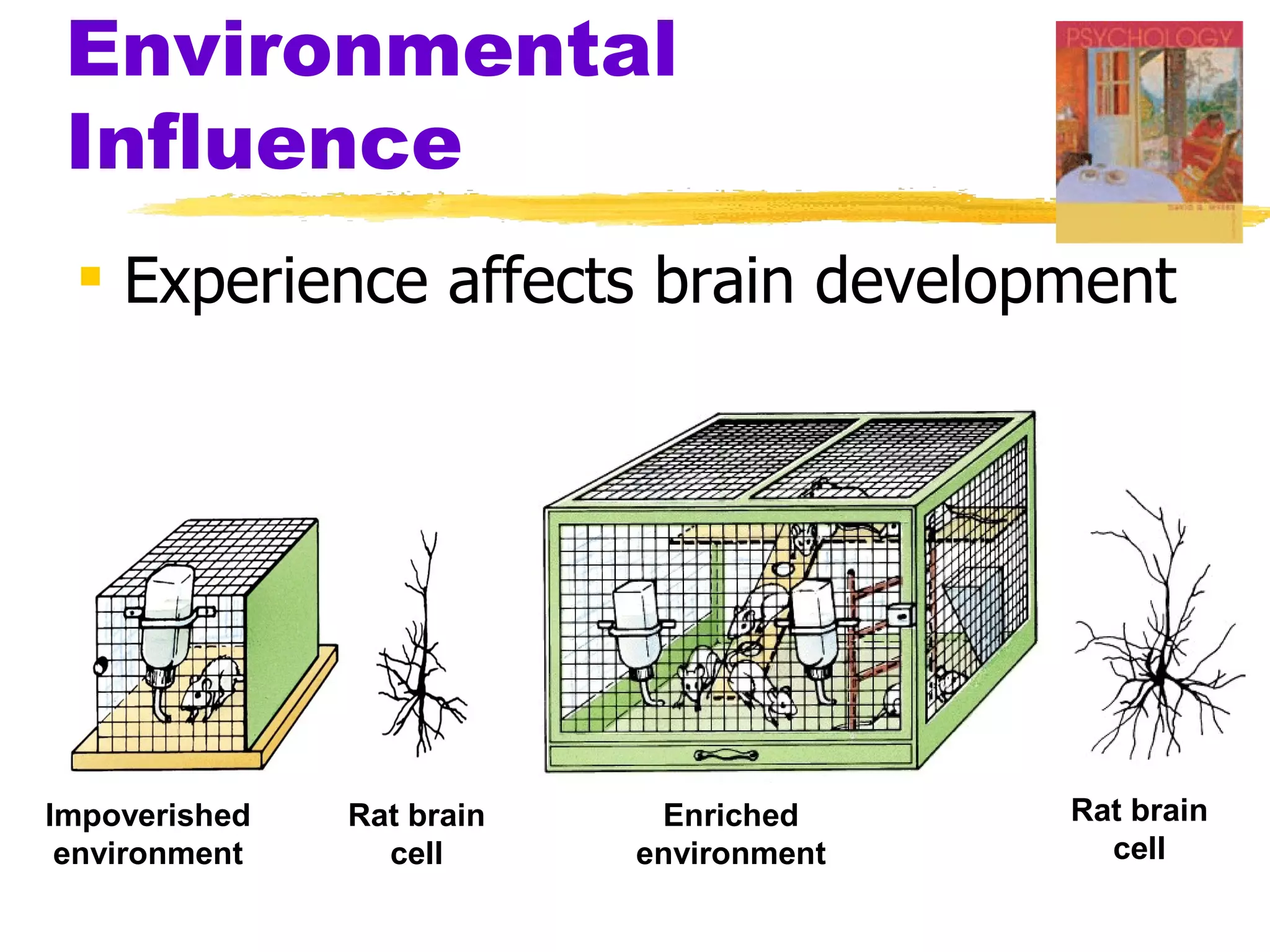
  Experience affects brain development


Impoverished   Rat brain    Enriched     Rat brain
 environment     cell      environment     cell
Environmental
Influence
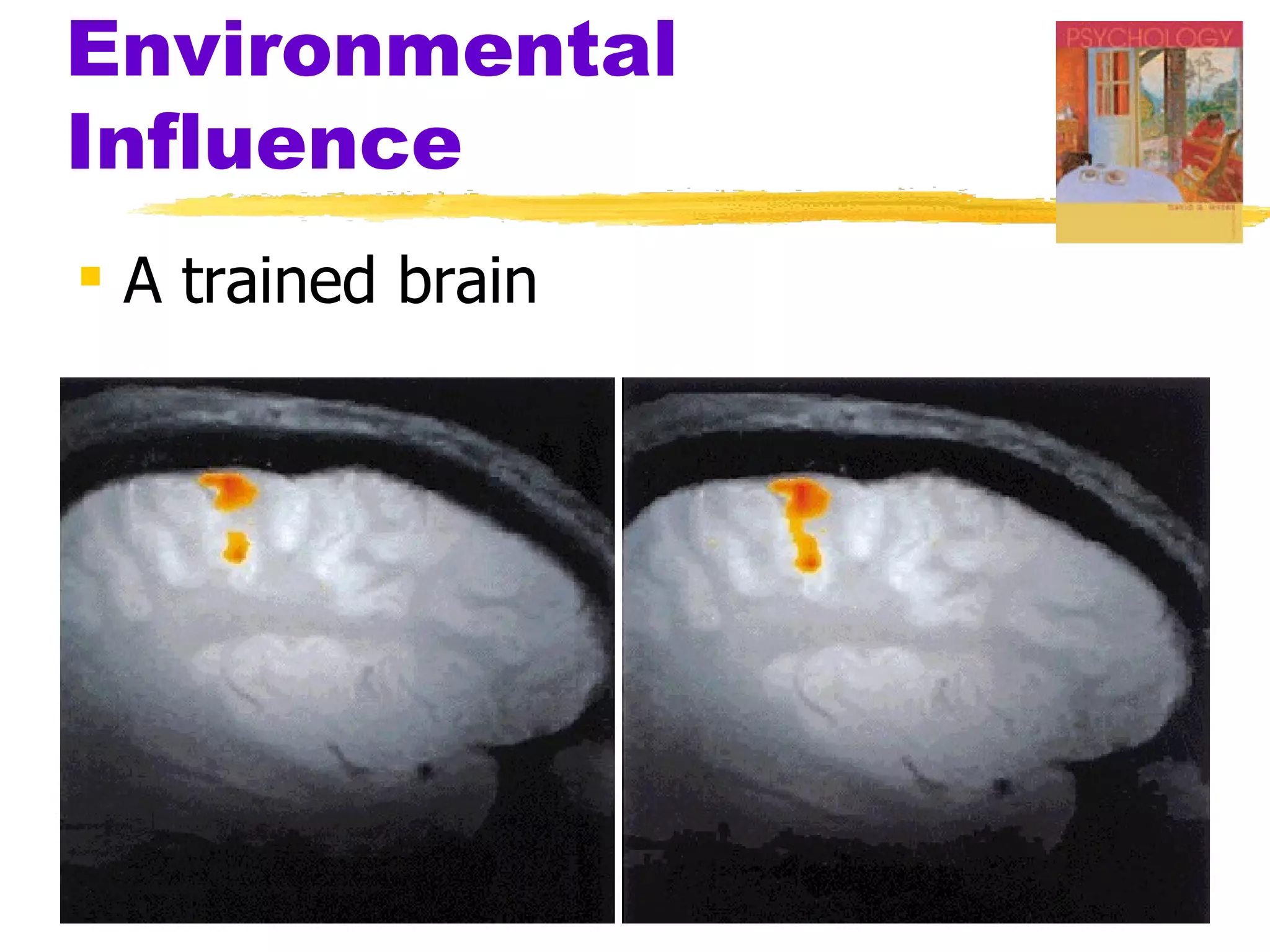
 A trained brain
Environmental
Influence
 Culture
   the enduring behaviors, ideas, attitudes,
    and traditions shared by a large group of
    people and transmitted from one
    generation to the next
 Norm
   an understood rule for accepted and
    expected behavior
Environmental
Influence
 Personal Space
   the buffer zone we like to maintain
    around our bodies
 Memes
   self-replicating ideas, fashions, and
    innovations passed from person to
    person
The Nature and
Nurture of Gender
 X Chromosome
   the sex chromosome found in both men and
    women
   females have two; males have one
   an X chromosome from each parent produces
    a female child
 Y Chromosome
   the sex chromosome found only in men
   when paired with an X chromosome from the
    mother, it produces a male child
The Nature and
Nurture of Gender
 Testosterone
   the most important of the male sex hormones
   both males and females have it
   additional testosterone in males stimulates
      growth of male sex organs in the fetus
      development of male sex characteristics during
       puberty
 Role
   a set of expectations (norms) about a social position
   defining how those in the position ought to behave
The Nature and
Nurture of Gender
  Gender Role
    a set of expected behaviors for males and
     females
  Gender Identity
    one’s sense of being male or female
  Gender-typing
    the acquisition of a traditional masculine or
     feminine role
The Nature and
Nurture of Gender
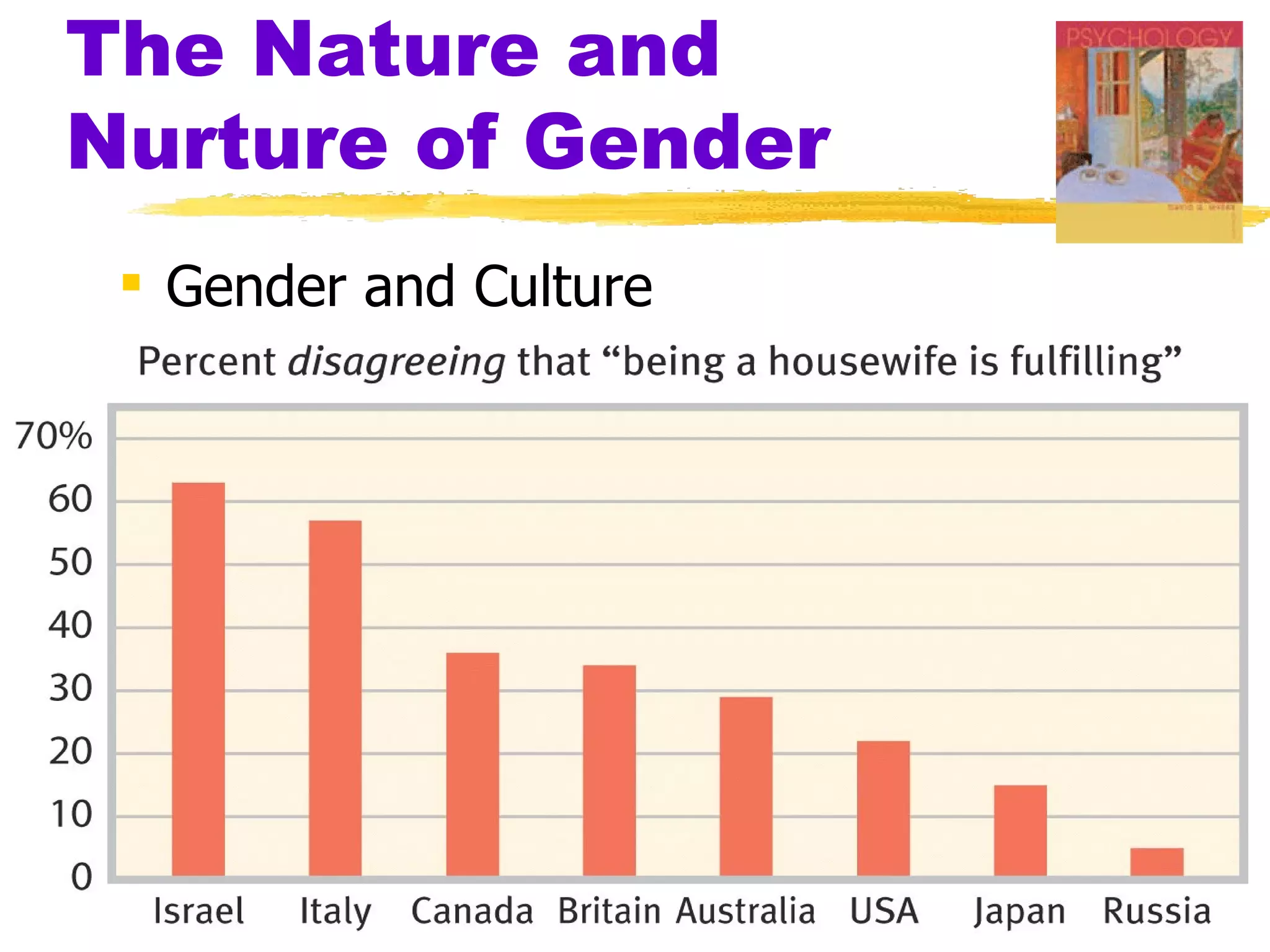
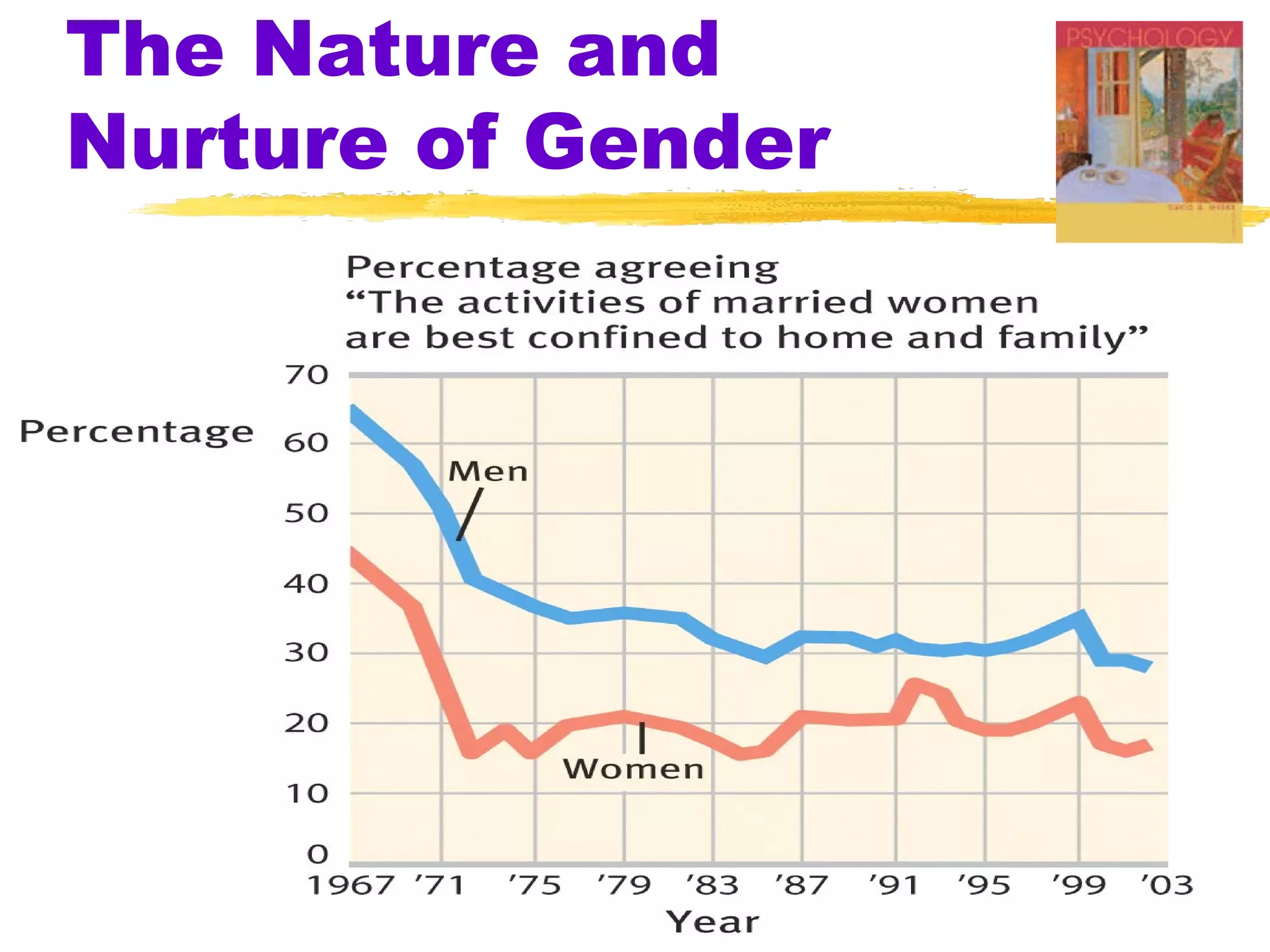
  Gender and Culture
The Nature and
Nurture of Gender
The Nature and
Nurture of Gender
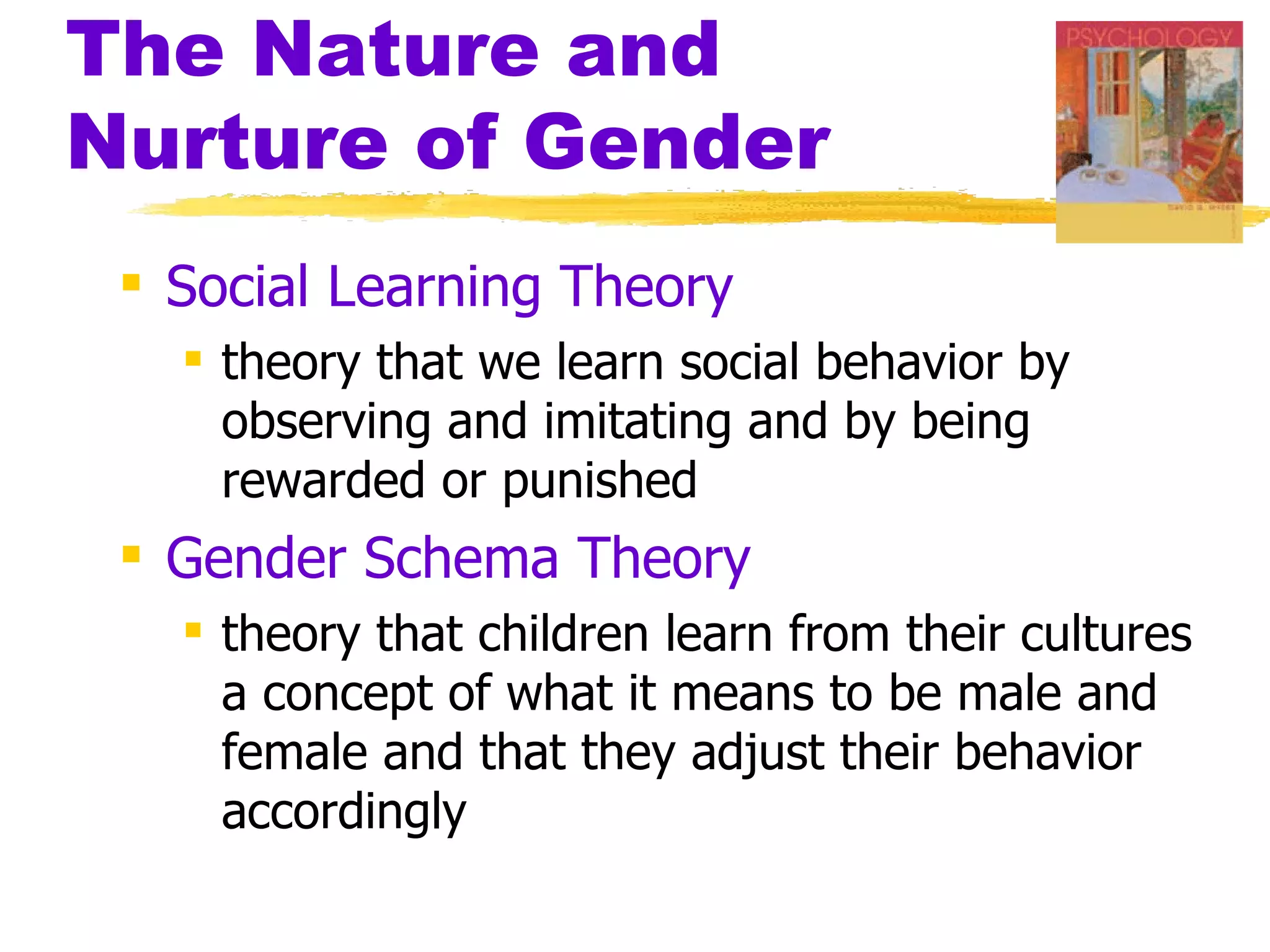
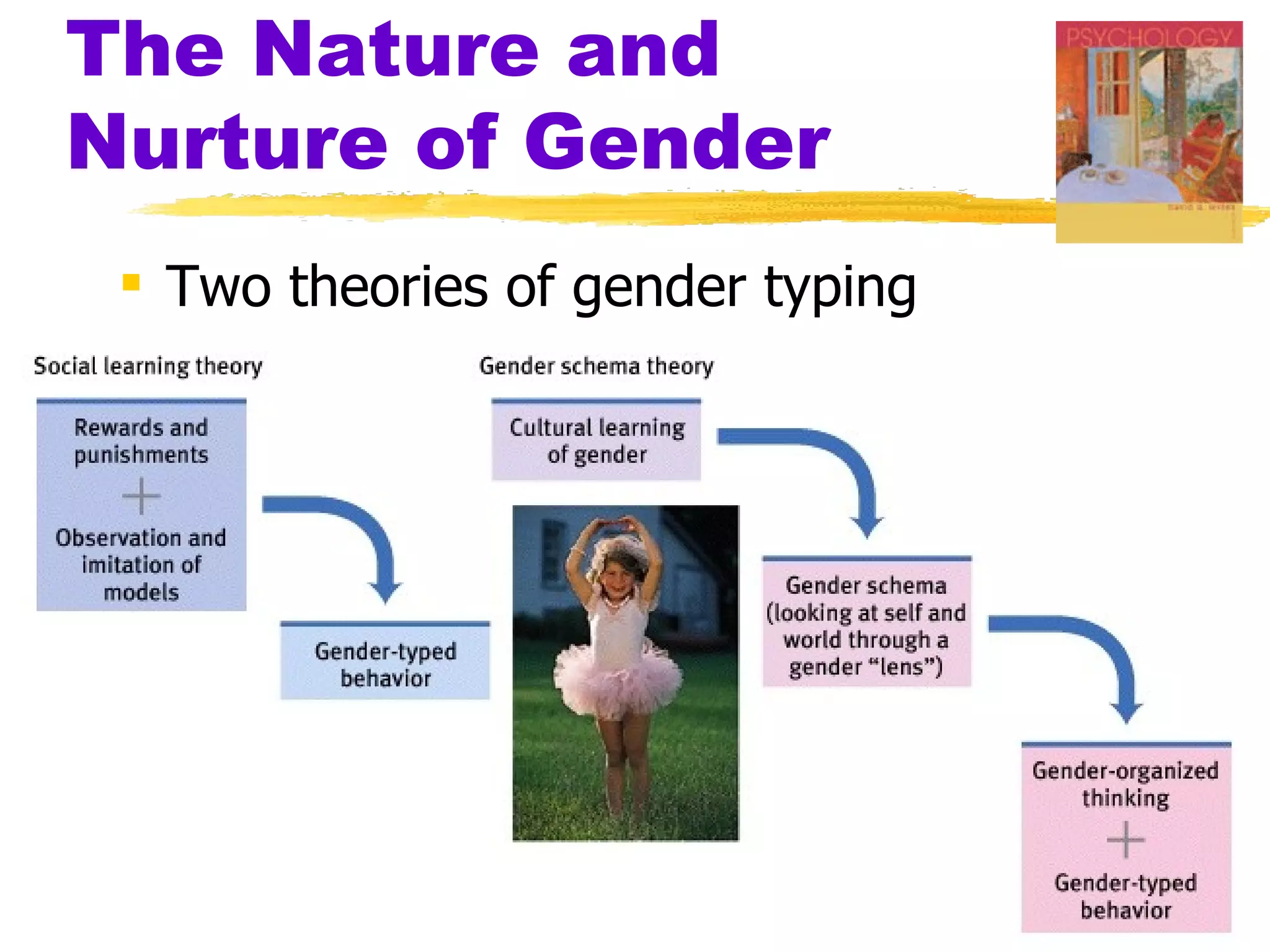
  Social Learning Theory
    theory that we learn social behavior by
     observing and imitating and by being
     rewarded or punished
  Gender Schema Theory
    theory that children learn from their cultures
     a concept of what it means to be male and
     female and that they adjust their behavior
     accordingly
The Nature and
Nurture of Gender
  Two theories of gender typing

Ch3 ppt

  • 1.
    Myers’ PSYCHOLOGY (7th Ed) Chapter 3 The Nature and Nurture Of Behavior James A. McCubbin, PhD Clemson University Worth Publishers
  • 2.
    Genes: Our Biological Blueprint Chromosomes  threadlike structures made of DNA that contain the genes  DNA (deoxyribonucleic acid)  complex molecule containing the genetic information that makes up the chromosomes  has two strands-forming a “double helix”--held together by bonds between pairs of nucleotides
  • 3.
    Genes: Our Biological Blueprint Genes  biochemical units of heredity that make up the chromosomes  a segment of DNA capable of synthesizing a protein  Genome  the complete instructions for making an organism  consisting of all the genetic material in its chromosomes
  • 4.
    Genes: Their Location andComposition Nucleus Chromosome Gene Cell DNA
  • 5.
    Evolutionary Psychology Natural Selection  the principle that, among the range of inherited trait variations, those that lead to increased reproduction and survival will most likely be passed on to succeeding generations  Mutations  random errors in gene replication that lead to a change in the sequence of nucleotides  the source of all genetic diversity
  • 6.
    Evolutionary Psychology  EvolutionaryPsychology  the study of the evolution of behavior and the mind, using the principles of natural selection  Gender  in psychology, the characteristics, whether biologically or socially influenced, by which people define male and female
  • 7.
    Evolutionary Psychology  Menpreferred attractive physical features suggesting youth and health  Women preferred resources and social status
  • 8.
    Behavior Genetics  BehaviorGenetics  study of the relative power and limits of genetic and environmental influences on behavior  Environment  every nongenetic influence, from prenatal nutrition to the people and things around us
  • 9.
    Behavior Genetics Identical twins Fraternal twins  Identical Twins  develop from a single fertilized egg that splits in two, creating two genetically identical organisms  Fraternal Twins  develop from separate eggs  genetically no closer than brothers and sisters, but they share the fetal Same Same or environment sex only opposite sex
  • 10.
    Behavior Genetics  Temperament  a person’s characteristic emotional reactivity and intensity  Heritability  the proportion of variation among individuals that we can attribute to genes  may vary, depending on the range of populations and environments studied
  • 11.
    Behavior Genetics  Interaction  the dependence of the effect of one factor (such as environment) on another factor (such as heredity)  Molecular Genetics  the subfield of biology that studies the molecular structure and function of genes
  • 12.
    Environmental Influence  Two placentalarrangements in identical twins
  • 13.
    Environmental Influence Experience affects brain development Impoverished Rat brain Enriched Rat brain environment cell environment cell
  • 14.
  • 15.
    Environmental Influence  Culture  the enduring behaviors, ideas, attitudes, and traditions shared by a large group of people and transmitted from one generation to the next  Norm  an understood rule for accepted and expected behavior
  • 16.
    Environmental Influence  Personal Space  the buffer zone we like to maintain around our bodies  Memes  self-replicating ideas, fashions, and innovations passed from person to person
  • 17.
    The Nature and Nurtureof Gender  X Chromosome  the sex chromosome found in both men and women  females have two; males have one  an X chromosome from each parent produces a female child  Y Chromosome  the sex chromosome found only in men  when paired with an X chromosome from the mother, it produces a male child
  • 18.
    The Nature and Nurtureof Gender  Testosterone  the most important of the male sex hormones  both males and females have it  additional testosterone in males stimulates  growth of male sex organs in the fetus  development of male sex characteristics during puberty  Role  a set of expectations (norms) about a social position  defining how those in the position ought to behave
  • 19.
    The Nature and Nurtureof Gender  Gender Role  a set of expected behaviors for males and females  Gender Identity  one’s sense of being male or female  Gender-typing  the acquisition of a traditional masculine or feminine role
  • 20.
    The Nature and Nurtureof Gender  Gender and Culture
  • 21.
  • 22.
    The Nature and Nurtureof Gender  Social Learning Theory  theory that we learn social behavior by observing and imitating and by being rewarded or punished  Gender Schema Theory  theory that children learn from their cultures a concept of what it means to be male and female and that they adjust their behavior accordingly
  • 23.
    The Nature and Nurtureof Gender  Two theories of gender typing