Compounds and
     Bonding
Introduction to Ionic Bonding
      The Periodic Table
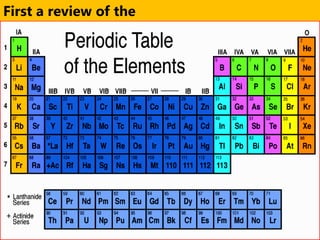
First a review of the
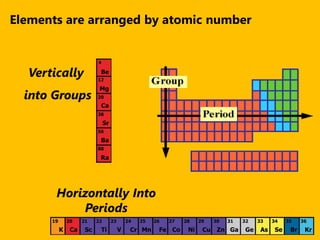
Elements are arranged by atomic number


  Vertically
  into Groups


       Horizontally Into
           Periods
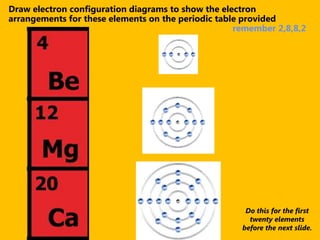
Draw electron configuration diagrams to show the electron
arrangements for these elements on the periodic table provided
                                                    remember 2,8,8,2


                                                      Do this for the first
                                                       twenty elements
                                                     before the next slide.
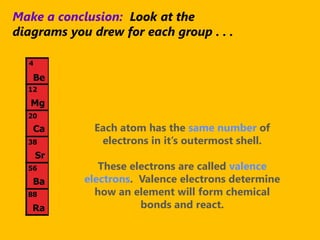
Make a conclusion: Look at the
diagrams you drew for each group . . .


              Each atom has the same number of
               electrons in it’s outermost shell.

               These electrons are called valence
            electrons. Valence electrons determine
              how an element will form chemical
                       bonds and react.
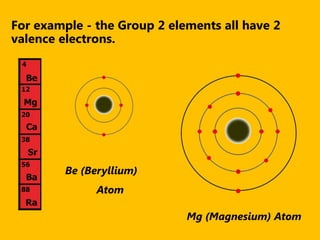
For example - the Group 2 elements all have 2
valence electrons.


         Be (Beryllium)
               Atom

                             Mg (Magnesium) Atom
• The number of outer or “valence” electrons in an
  atom effects the way an atom bonds.

• The way an atom bonds determines many properties
  of the element.

• This is why elements within a group usually have
  similar chemical properties.

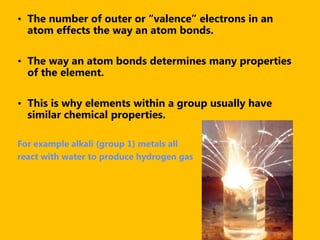
For example alkali (group 1) metals all
react with water to produce hydrogen gas
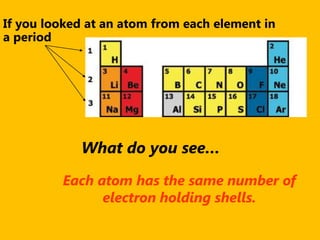
If you looked at an atom from each element in
a period


            What do you see…

         Each atom has the same number of
               electron holding shells.
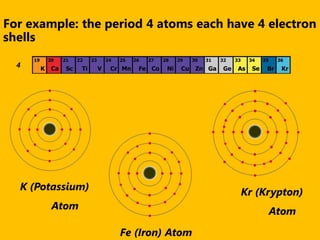
For example: the period 4 atoms each have 4 electron
shells

  4


  K (Potassium)                        Kr (Krypton)
       Atom                                 Atom
                   Fe (Iron) Atom
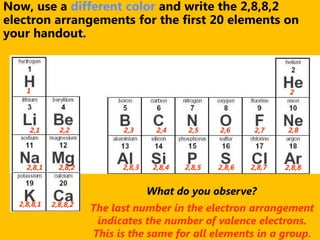
Now, use a different color and write the 2,8,8,2
electron arrangements for the first 20 elements on
your handout.


    1                                                                 2


     2,1      2,2           2,3       2,4     2,5    2,6      2,7     2,8


    2,8,1     2,8,2         2,8,3    2,8,4   2,8,5   2,8,6   2,8,7   2,8,8


                                    What do you observe?
  2,8,8,1   2,8,8,2
                      The last number in the electron arrangement
                       indicates the number of valence electrons.
                      This is the same for all elements in a group.
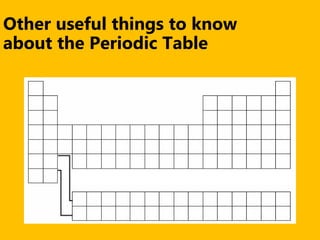
Other useful things to know
about the Periodic Table
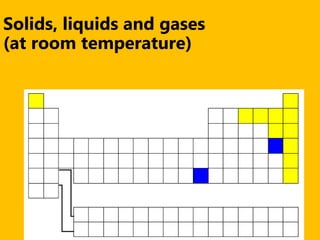
Solids, liquids and gases
(at room temperature)
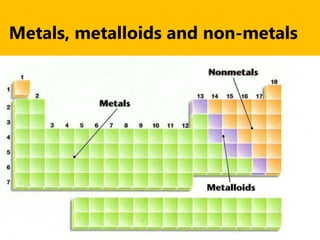
Metals, metalloids and non-metals
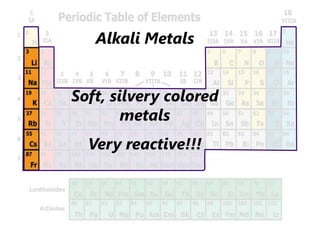
Alkali Metals


Soft, silvery colored
        metals
  Very reactive!!!
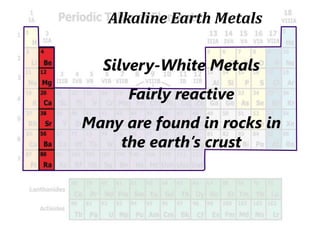
Alkaline Earth Metals

  Silvery-White Metals
      Fairly reactive
Many are found in rocks in
    the earth’s crust
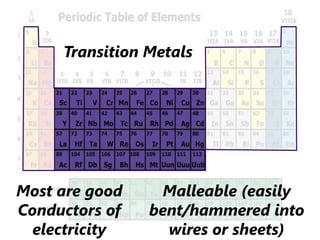
Transition Metals


Most are good    Malleable (easily
Conductors of   bent/hammered into
  electricity     wires or sheets)
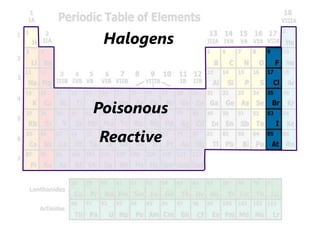
Halogens


Poisonous
Reactive
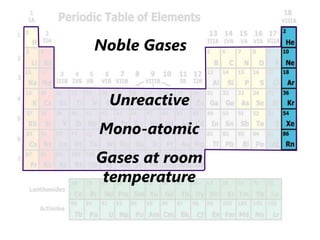
Noble Gases


 Unreactive
Mono-atomic
Gases at room
 temperature

Introduction to Periodic table

  • 1.
    Compounds and Bonding Introduction to Ionic Bonding The Periodic Table
  • 2.
  • 3.
    Elements are arrangedby atomic number Vertically into Groups Horizontally Into Periods
  • 4.
    Draw electron configurationdiagrams to show the electron arrangements for these elements on the periodic table provided remember 2,8,8,2 Do this for the first twenty elements before the next slide.
  • 5.
    Make a conclusion:Look at the diagrams you drew for each group . . . Each atom has the same number of electrons in it’s outermost shell. These electrons are called valence electrons. Valence electrons determine how an element will form chemical bonds and react.
  • 6.
    For example -the Group 2 elements all have 2 valence electrons. Be (Beryllium) Atom Mg (Magnesium) Atom
  • 7.
    • The numberof outer or “valence” electrons in an atom effects the way an atom bonds. • The way an atom bonds determines many properties of the element. • This is why elements within a group usually have similar chemical properties. For example alkali (group 1) metals all react with water to produce hydrogen gas
  • 8.
    If you lookedat an atom from each element in a period What do you see… Each atom has the same number of electron holding shells.
  • 9.
    For example: theperiod 4 atoms each have 4 electron shells 4 K (Potassium) Kr (Krypton) Atom Atom Fe (Iron) Atom
  • 10.
    Now, use adifferent color and write the 2,8,8,2 electron arrangements for the first 20 elements on your handout. 1 2 2,1 2,2 2,3 2,4 2,5 2,6 2,7 2,8 2,8,1 2,8,2 2,8,3 2,8,4 2,8,5 2,8,6 2,8,7 2,8,8 What do you observe? 2,8,8,1 2,8,8,2 The last number in the electron arrangement indicates the number of valence electrons. This is the same for all elements in a group.
  • 11.
    Other useful thingsto know about the Periodic Table
  • 12.
    Solids, liquids andgases (at room temperature)
  • 13.
  • 14.
    Alkali Metals Soft, silverycolored metals Very reactive!!!
  • 15.
    Alkaline Earth Metals Silvery-White Metals Fairly reactive Many are found in rocks in the earth’s crust
  • 16.
    Transition Metals Most aregood Malleable (easily Conductors of bent/hammered into electricity wires or sheets)
  • 17.
  • 18.