
Sound 
Physics Power Points 
Physics I 
Mr. Young 
www.pedagogics.ca
Basic facts about sound waves: 
Sound waves are caused by vibrations. 
The source of all sound waves is a vibrating object. 
For example: a speaker cone, a guitar string, a 
drum skin, an air column in a trumpet. 
Sound waves are longitudinal. 
Sound waves are mechanical waves. They 
require a medium to transfer energy. Sound can 
travel through solids, liquids and gases.
Sound waves are caused by vibrations 
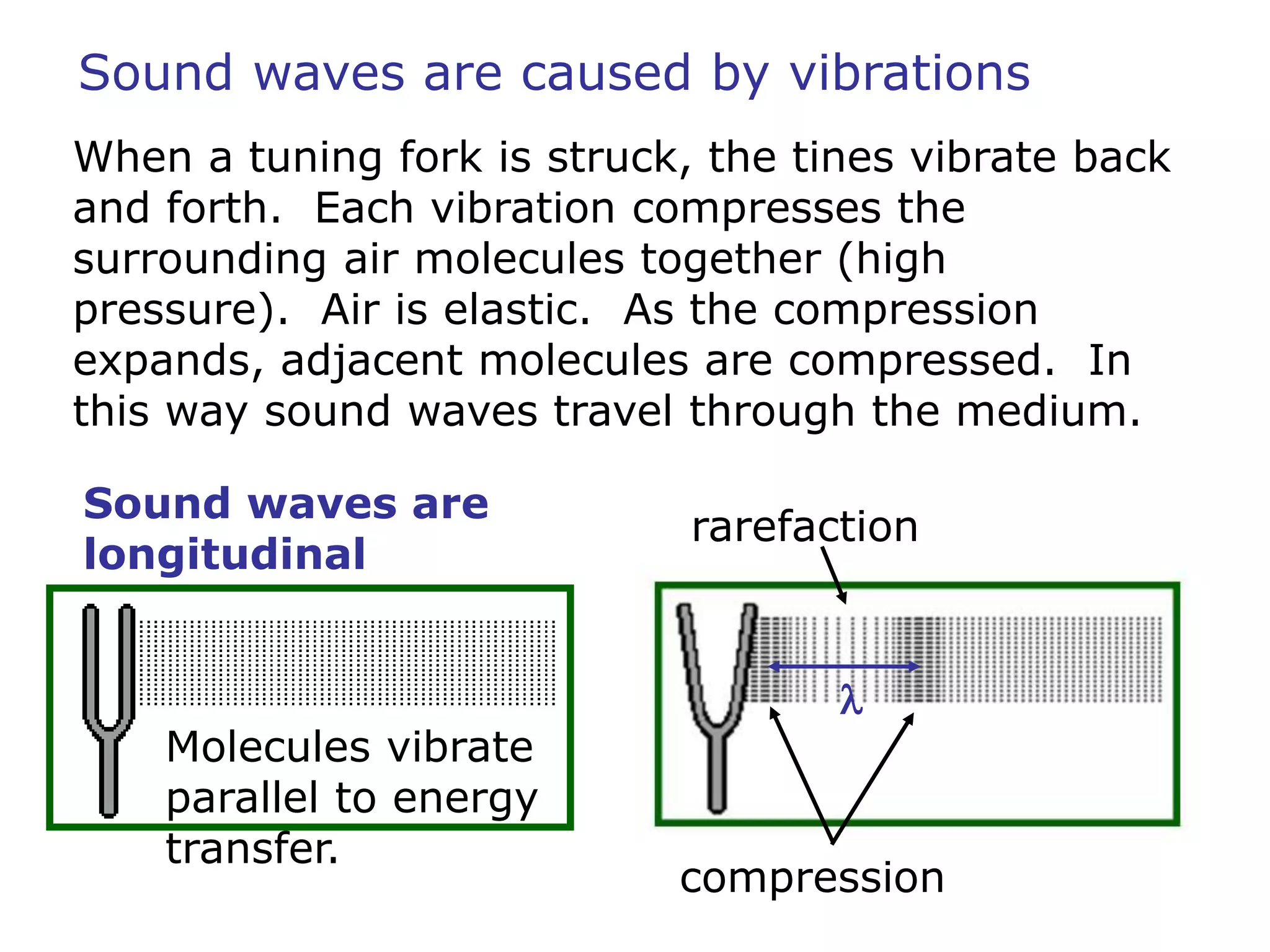
When a tuning fork is struck, the tines vibrate back 
and forth. Each vibration compresses the 
surrounding air molecules together (high 
pressure). Air is elastic. As the compression 
expands, adjacent molecules are compressed. In 
this way sound waves travel through the medium. 
rarefaction 
l 
compression 
Sound waves are 
longitudinal 
Molecules vibrate 
parallel to energy 
transfer.
Sound waves are mechanical waves
Sound waves are mechanical waves 
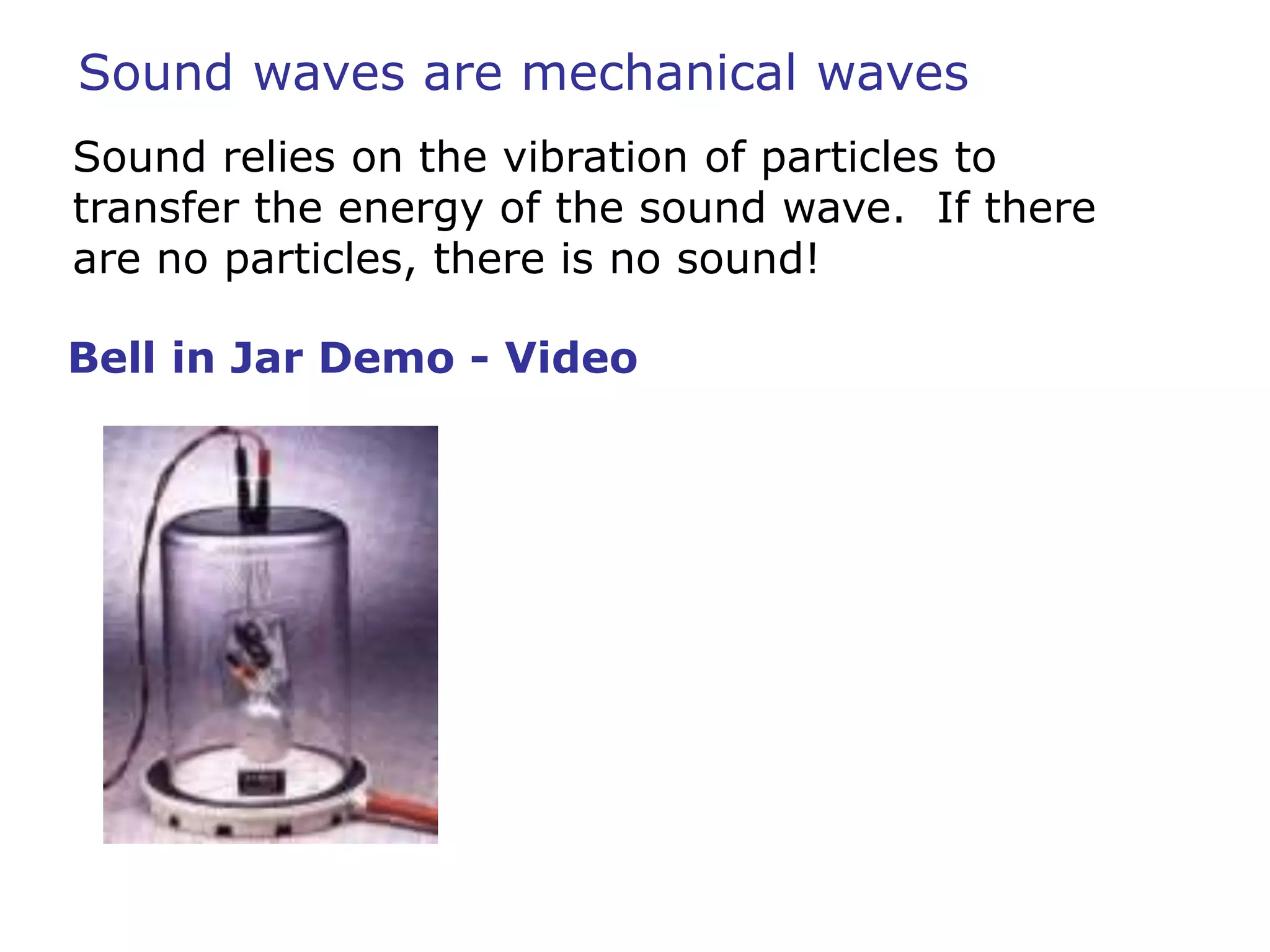
Sound relies on the vibration of particles to 
transfer the energy of the sound wave. If there 
are no particles, there is no sound! 
Bell in Jar Demo - Video
Frequency of Sound Waves 
The frequency of a sound wave is described as the 
pitch of a sound. The higher the frequency of the 
vibrating source, the higher the pitch. 
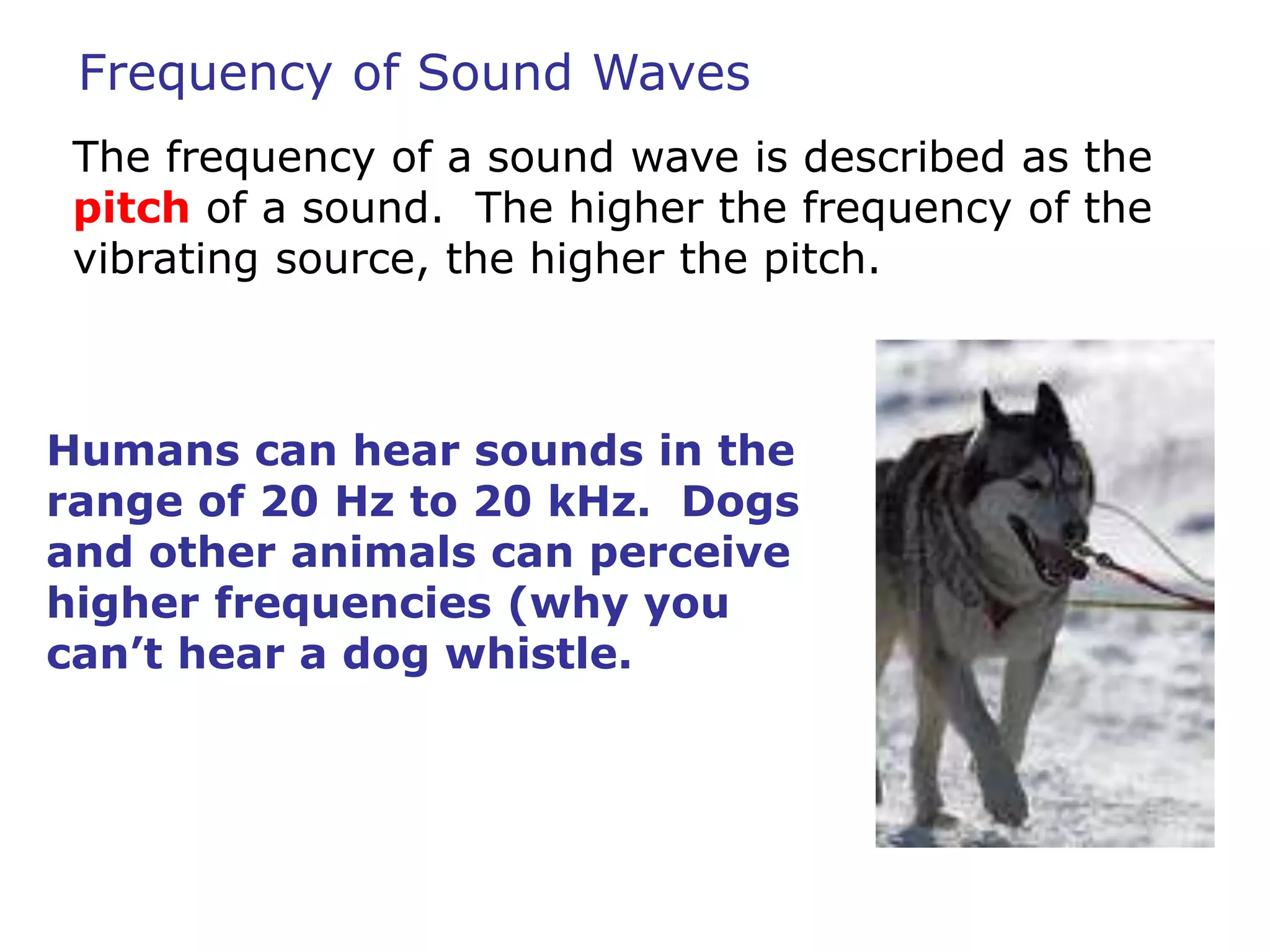
Humans can hear sounds in the 
range of 20 Hz to 20 kHz. Dogs 
and other animals can perceive 
higher frequencies (why you 
can’t hear a dog whistle.
Amplitude of Sound Waves 
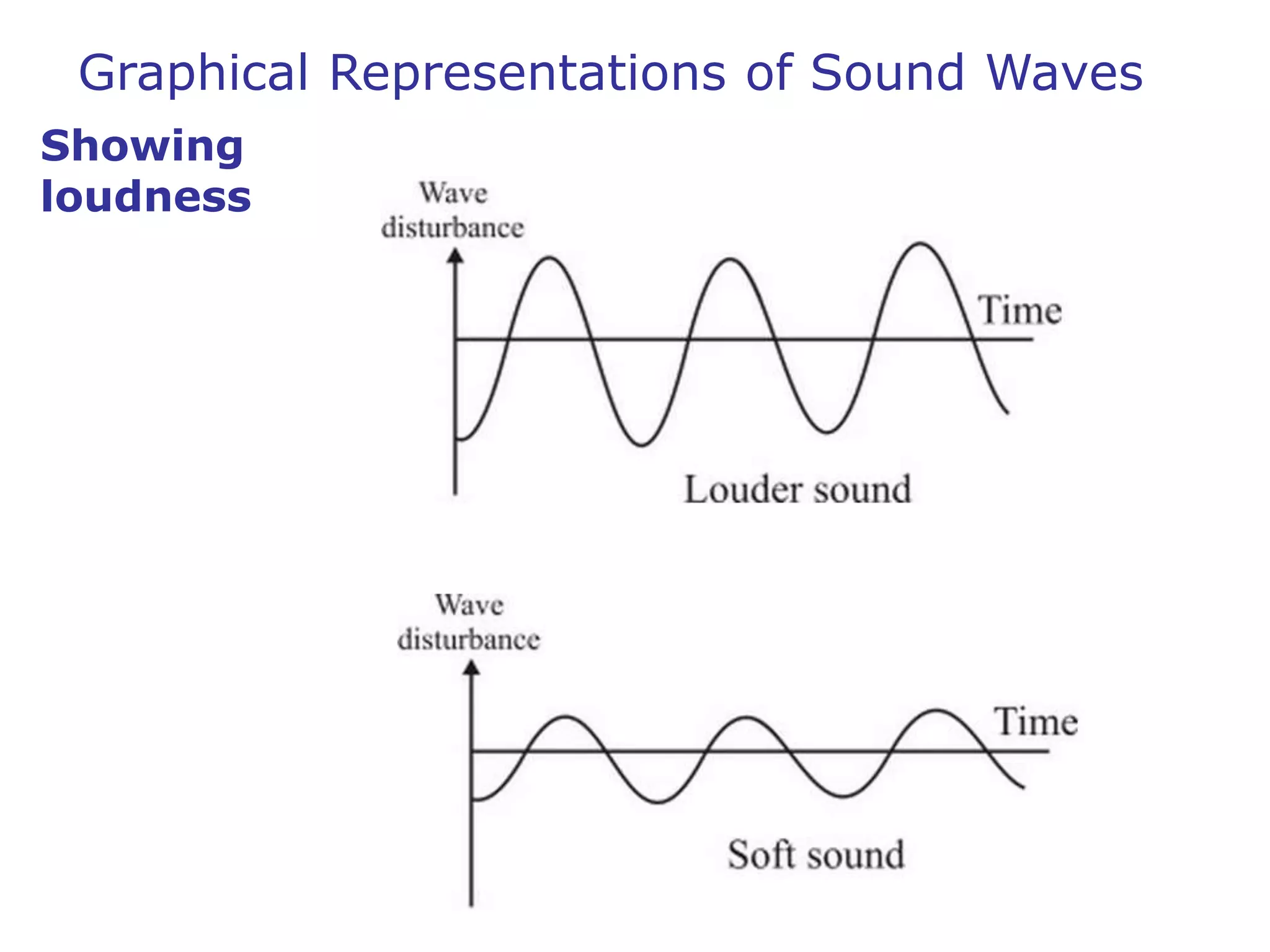
The amplitude of a sound wave is perceived as the 
loudness of a sound. The greater the amplitude 
of the vibrating source, the more energy the sound 
wave has and your hear a louder noise. 
Loudness is measured in decibels (dB). It is 
a logarithmic scale. 10 times more energy 
gives a +10 dB increase in loudness.
Graphical Representations of Sound Waves 
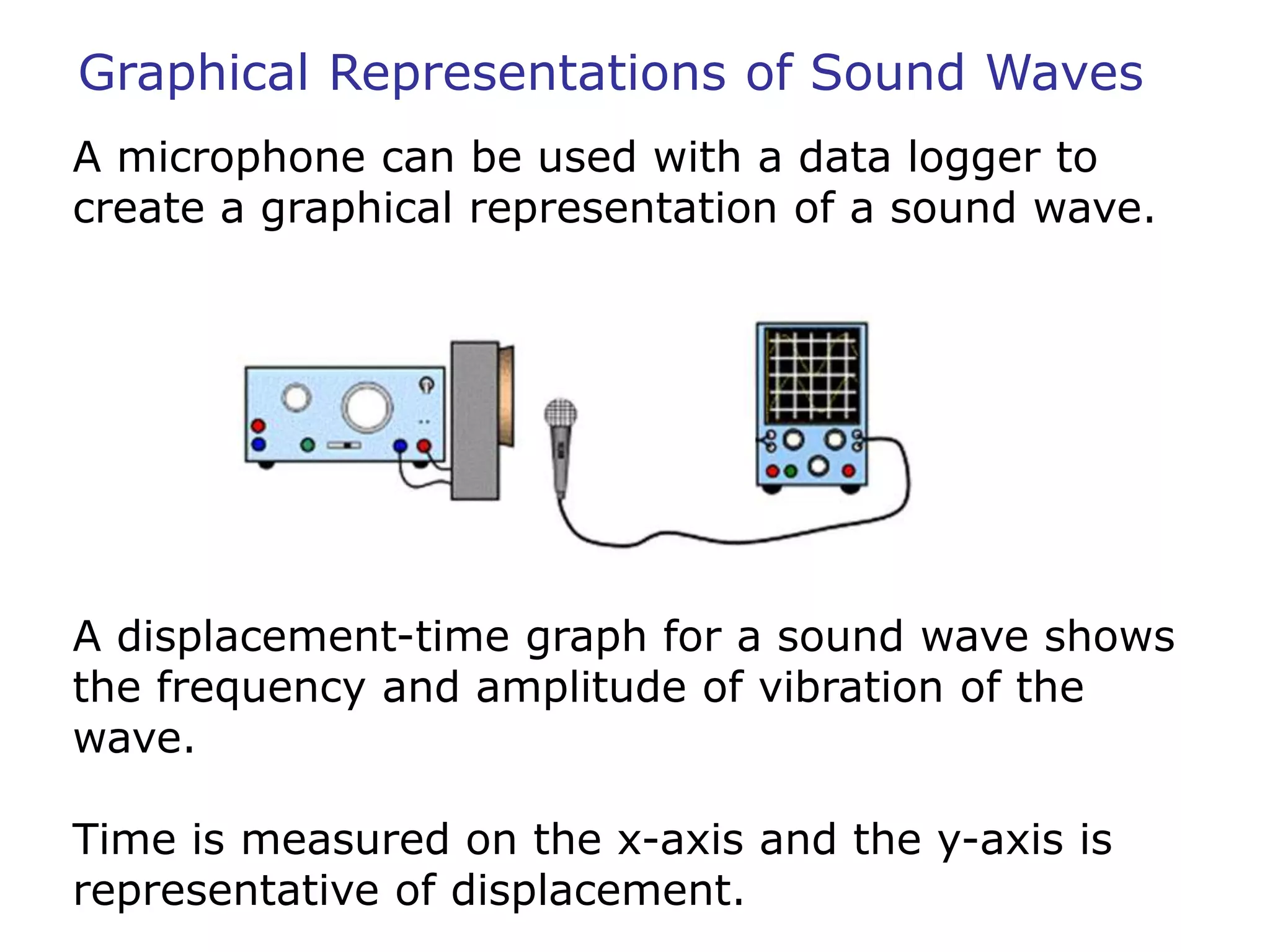
A microphone can be used with a data logger to 
create a graphical representation of a sound wave. 
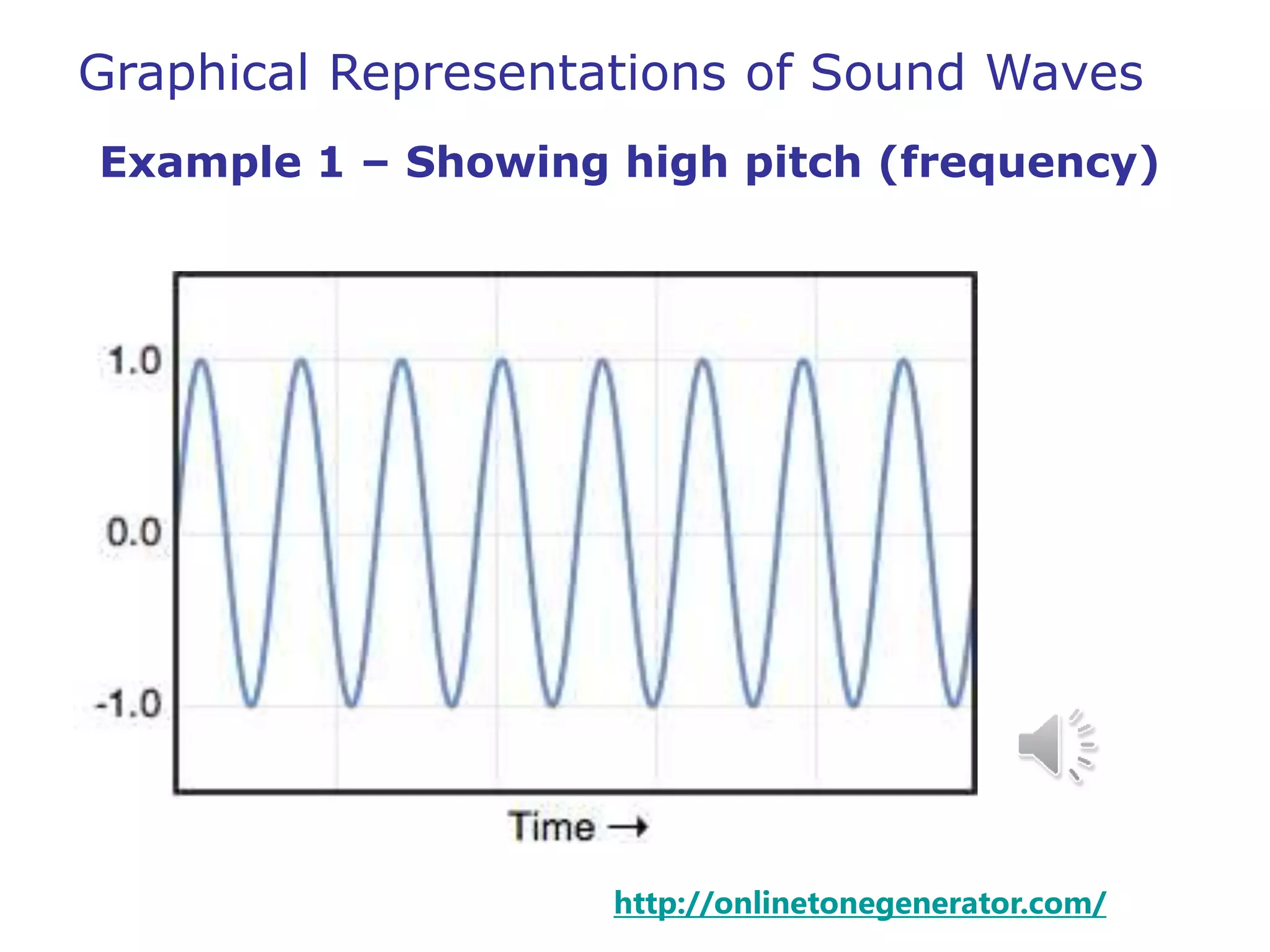
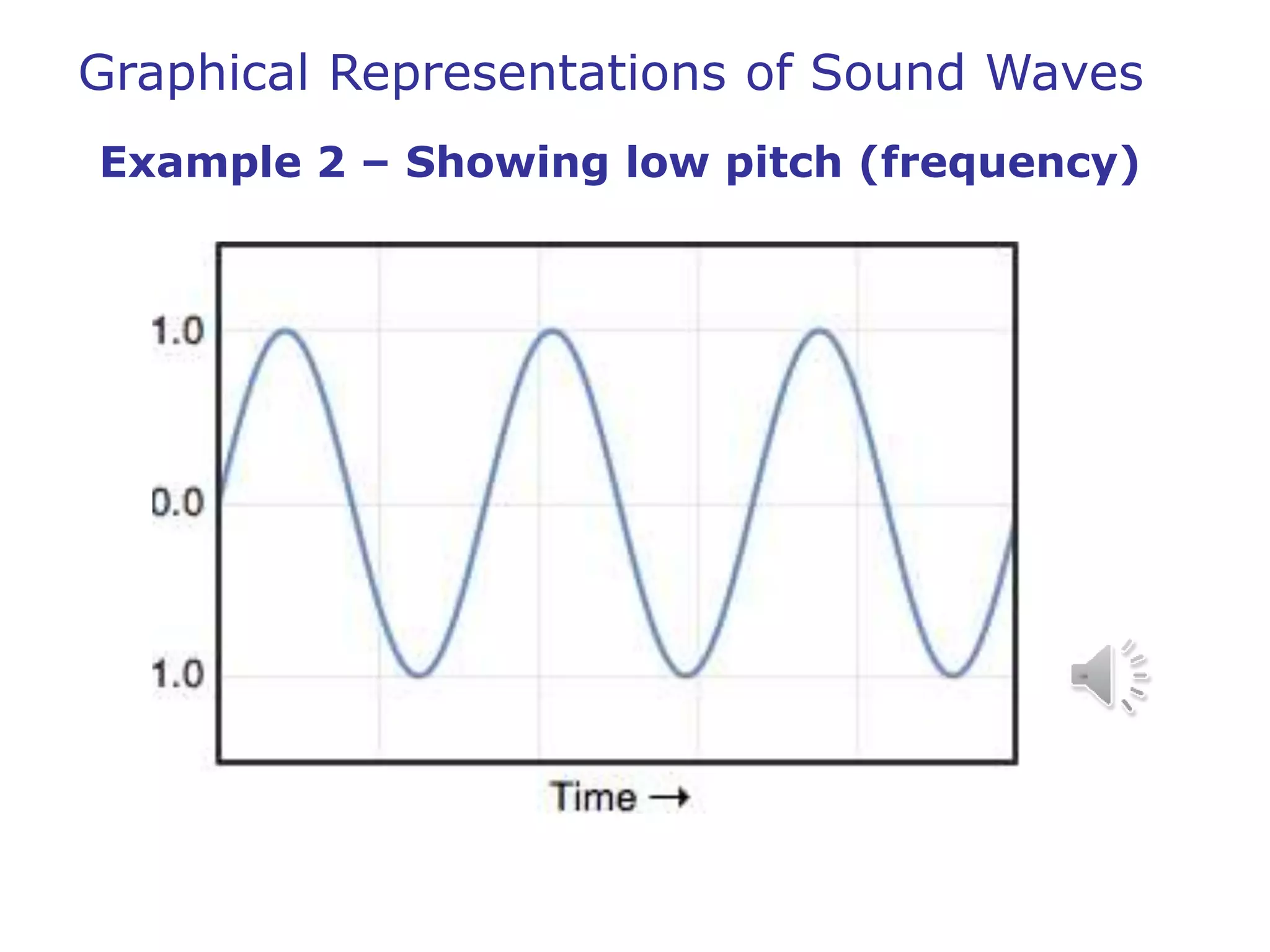
A displacement-time graph for a sound wave shows 
the frequency and amplitude of vibration of the 
wave. 
Time is measured on the x-axis and the y-axis is 
representative of displacement.
Graphical Representations of Sound Waves 
Example 1 – Showing high pitch (frequency) 
http://onlinetonegenerator.com/
Graphical Representations of Sound Waves 
Example 2 – Showing low pitch (frequency)
Graphical Representations of Sound Waves 
Showing 
loudness
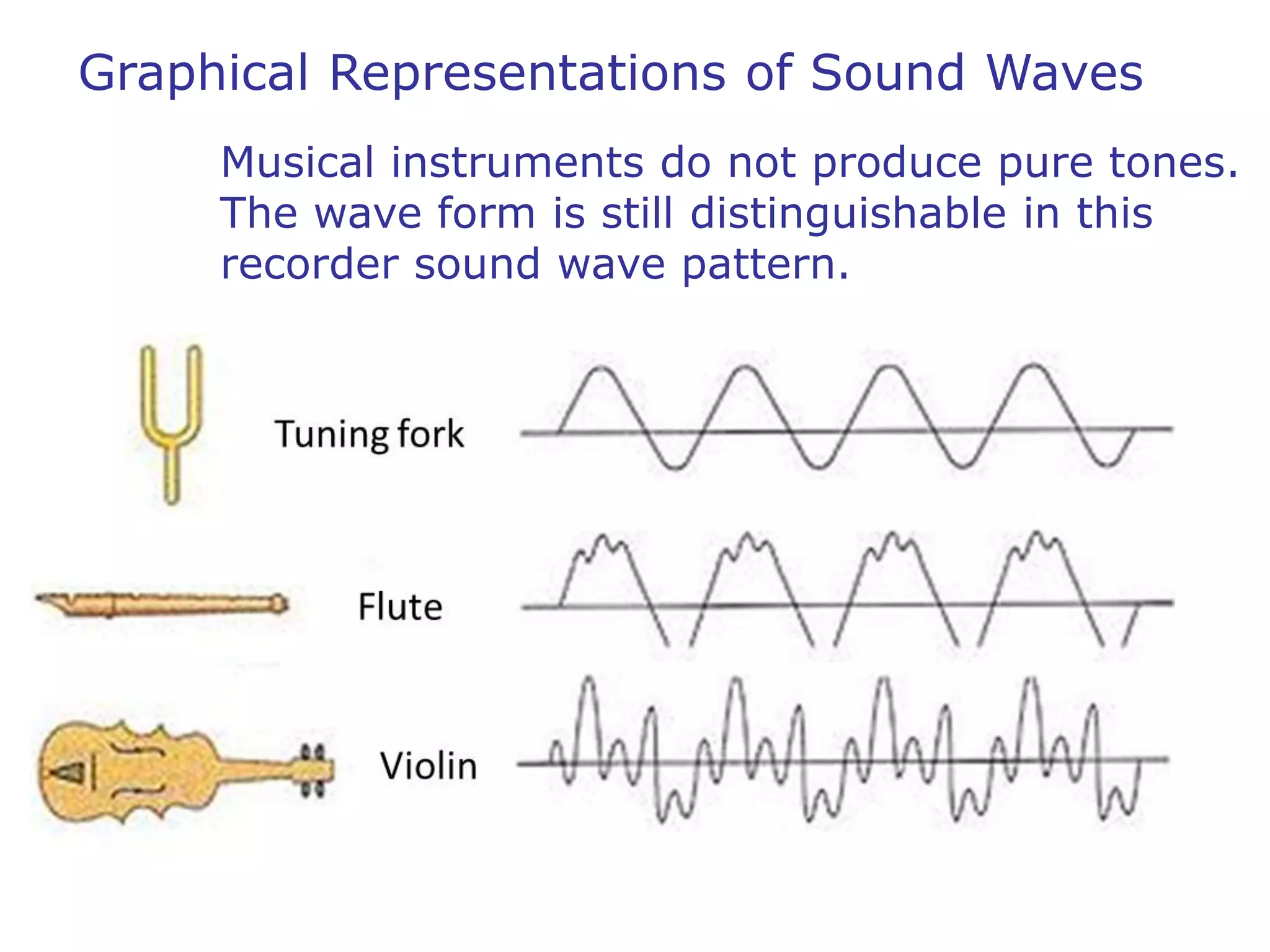
Graphical Representations of Sound Waves 
Musical instruments do not produce pure tones. 
The wave form is still distinguishable in this 
recorder sound wave pattern.
Speed of Sound 
The speed of sound depends on the medium that it 
is traveling through. In general: 
Vsolid > vliquid > vgas 
Specific properties of the medium will also affect 
the speed. For example, the speed of sound is 
slower in cold air than in warm air. Why is this?
Speed of Sound 
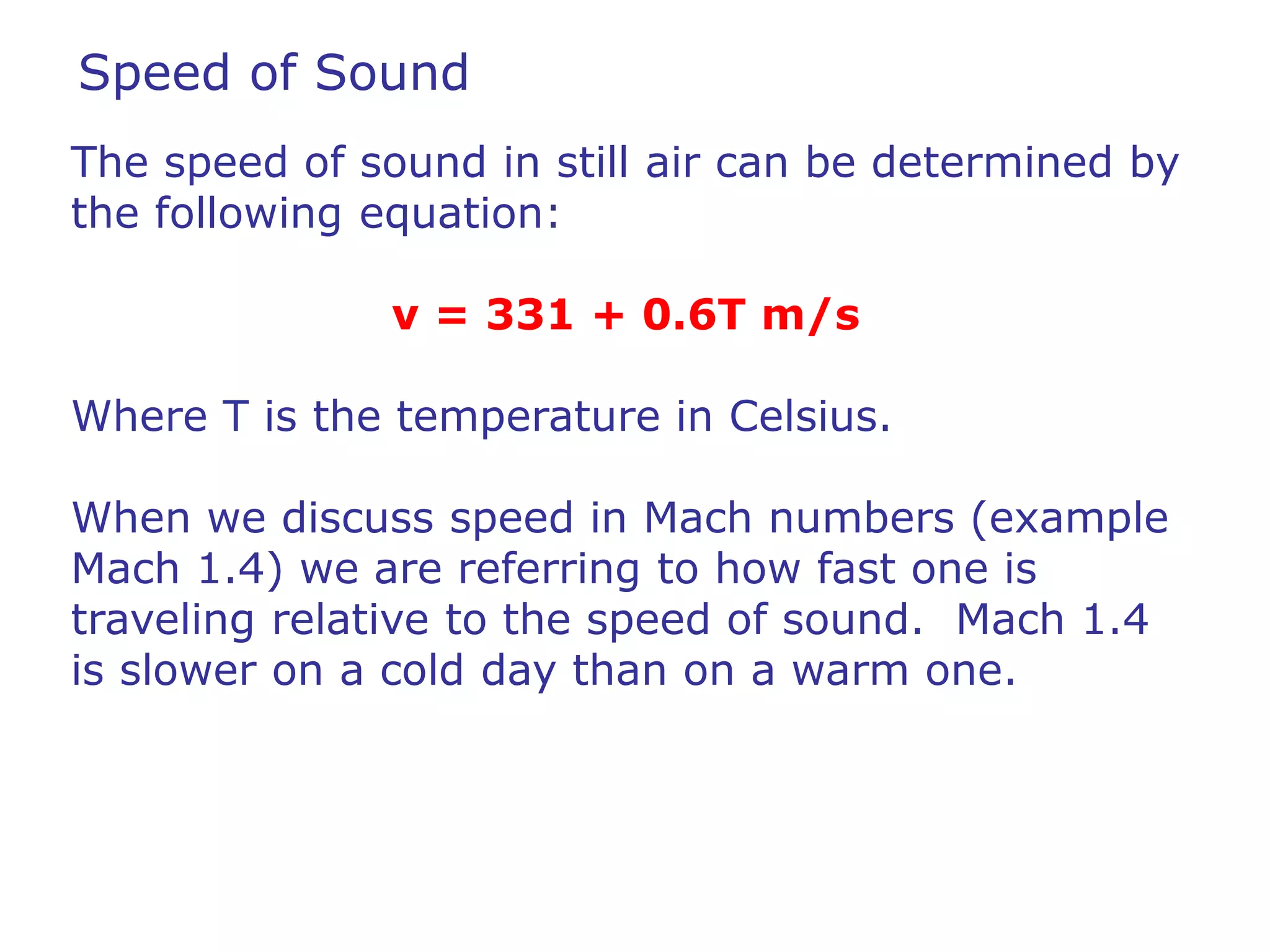
The speed of sound in still air can be determined by 
the following equation: 
v = 331 + 0.6T m/s 
Where T is the temperature in Celsius. 
When we discuss speed in Mach numbers (example 
Mach 1.4) we are referring to how fast one is 
traveling relative to the speed of sound. Mach 1.4 
is slower on a cold day than on a warm one.

Unit 4 2014 ppt sound

  • 1.
    Sound Physics PowerPoints Physics I Mr. Young www.pedagogics.ca
  • 2.
    Basic facts aboutsound waves: Sound waves are caused by vibrations. The source of all sound waves is a vibrating object. For example: a speaker cone, a guitar string, a drum skin, an air column in a trumpet. Sound waves are longitudinal. Sound waves are mechanical waves. They require a medium to transfer energy. Sound can travel through solids, liquids and gases.
  • 3.
    Sound waves arecaused by vibrations When a tuning fork is struck, the tines vibrate back and forth. Each vibration compresses the surrounding air molecules together (high pressure). Air is elastic. As the compression expands, adjacent molecules are compressed. In this way sound waves travel through the medium. rarefaction l compression Sound waves are longitudinal Molecules vibrate parallel to energy transfer.
  • 4.
    Sound waves aremechanical waves
  • 5.
    Sound waves aremechanical waves Sound relies on the vibration of particles to transfer the energy of the sound wave. If there are no particles, there is no sound! Bell in Jar Demo - Video
  • 6.
    Frequency of SoundWaves The frequency of a sound wave is described as the pitch of a sound. The higher the frequency of the vibrating source, the higher the pitch. Humans can hear sounds in the range of 20 Hz to 20 kHz. Dogs and other animals can perceive higher frequencies (why you can’t hear a dog whistle.
  • 7.
    Amplitude of SoundWaves The amplitude of a sound wave is perceived as the loudness of a sound. The greater the amplitude of the vibrating source, the more energy the sound wave has and your hear a louder noise. Loudness is measured in decibels (dB). It is a logarithmic scale. 10 times more energy gives a +10 dB increase in loudness.
  • 8.
    Graphical Representations ofSound Waves A microphone can be used with a data logger to create a graphical representation of a sound wave. A displacement-time graph for a sound wave shows the frequency and amplitude of vibration of the wave. Time is measured on the x-axis and the y-axis is representative of displacement.
  • 9.
    Graphical Representations ofSound Waves Example 1 – Showing high pitch (frequency) http://onlinetonegenerator.com/
  • 10.
    Graphical Representations ofSound Waves Example 2 – Showing low pitch (frequency)
  • 11.
    Graphical Representations ofSound Waves Showing loudness
  • 12.
    Graphical Representations ofSound Waves Musical instruments do not produce pure tones. The wave form is still distinguishable in this recorder sound wave pattern.
  • 13.
    Speed of Sound The speed of sound depends on the medium that it is traveling through. In general: Vsolid > vliquid > vgas Specific properties of the medium will also affect the speed. For example, the speed of sound is slower in cold air than in warm air. Why is this?
  • 14.
    Speed of Sound The speed of sound in still air can be determined by the following equation: v = 331 + 0.6T m/s Where T is the temperature in Celsius. When we discuss speed in Mach numbers (example Mach 1.4) we are referring to how fast one is traveling relative to the speed of sound. Mach 1.4 is slower on a cold day than on a warm one.