Development of bacterial resistance
to antimicrobials.
S. Parasuraman, M.Pharm., Ph.D.,
Senior Lecturer, Faculty of Pharmacy,
AIMST University
Resistance
• Unresponsiveness of a microorganism to an AMA, and is
similar to the phenomenon of drug tolerance.
– Natural resistance
– Acquired resistance
• Natural resistance: Some microbes have resistant to
certain AMAs. E.g.: Gram negative bacilli not affected by
penicillin G; M. tuberculosis insensitive to tetracyclines.
• Acquired resistance: Development of resistance by an
organism (which was sensitive before) due to the use of
AMA over a period of time. E.g.: Staphylococci, tubercle
bacilli develop resistance to penicillin (widespread use for
>50 yr). Gonococci quickly developed resistant to
sulfonamides in 30 yr.
Resistance
Cont.,
Development of resistance
• Resistance mainly developed by mutation or gene transfer.
• Mutation: Resistance developed by mutation is stable and
heritable genetic changes that occurs spontaneously and
randomly among microorganism (usually on plasmids).
• Mutation resistance may be single step or multistep.
– Single gene mutation may confer high degree of resistance. E.g.:
enterococci to streptomycin
– Multistep mutation may modify the more number of gene that will
decreases the sensitivity of AMAs to pathogens.
• Development of resistance
• Gene transfer (Infectious resistance): From one organism to
another organism.
– Conjugation
– Transduction
– Transformation
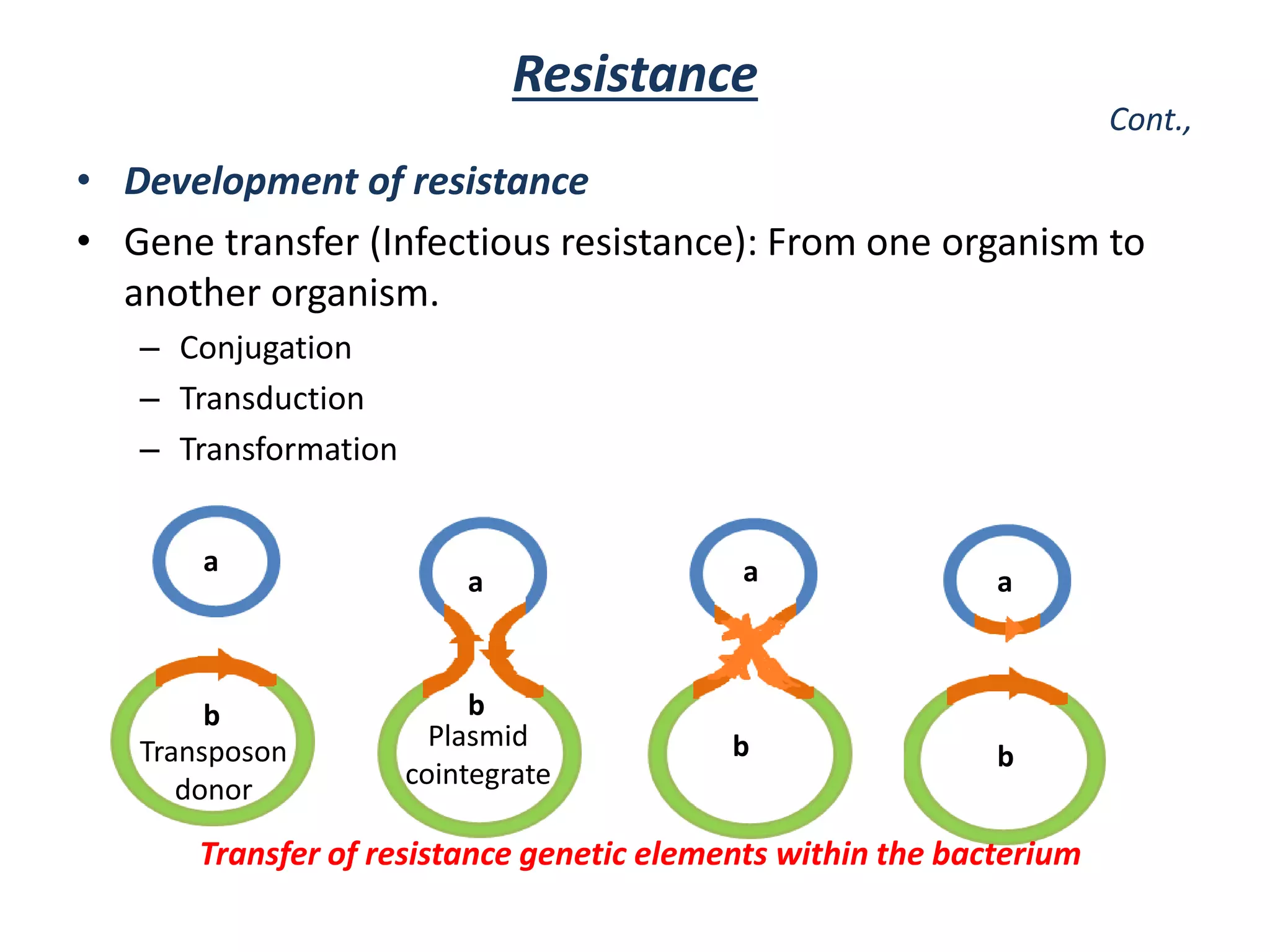
Transposon
donor
a
b
a a a
b
b b
Plasmid
cointegrate
Transfer of resistance genetic elements within the bacterium
Resistance
Cont.,
Development of resistance
Gene transfer - Conjugation:
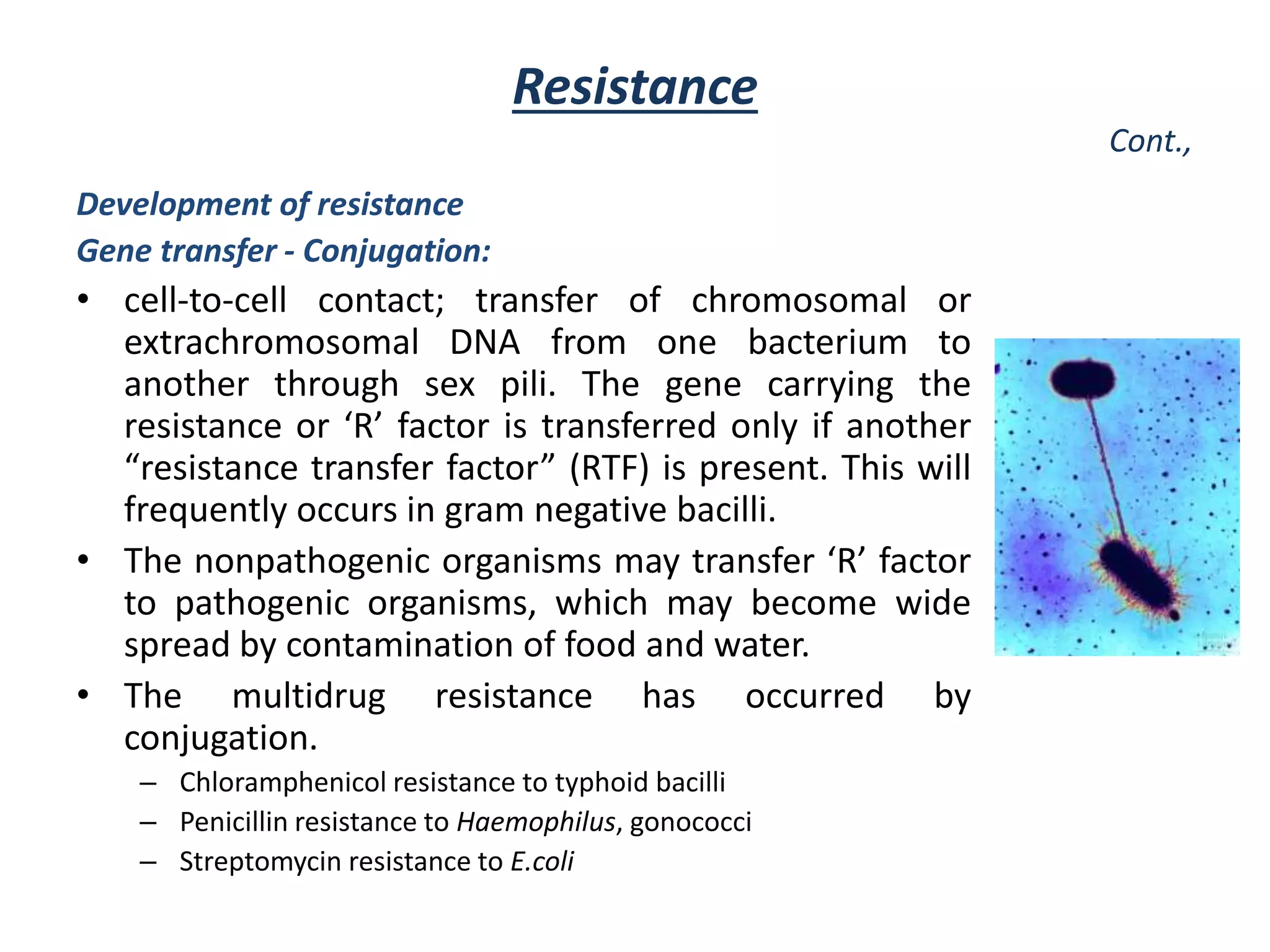
• cell-to-cell contact; transfer of chromosomal or
extrachromosomal DNA from one bacterium to
another through sex pili. The gene carrying the
resistance or ‘R’ factor is transferred only if another
“resistance transfer factor” (RTF) is present. This will
frequently occurs in gram negative bacilli.
• The nonpathogenic organisms may transfer ‘R’ factor
to pathogenic organisms, which may become wide
spread by contamination of food and water.
• The multidrug resistance has occurred by
conjugation.
– Chloramphenicol resistance to typhoid bacilli
– Penicillin resistance to Haemophilus, gonococci
– Streptomycin resistance to E.coli
Resistance
Cont.,
Development of resistance Gene
transfer- Transduction:
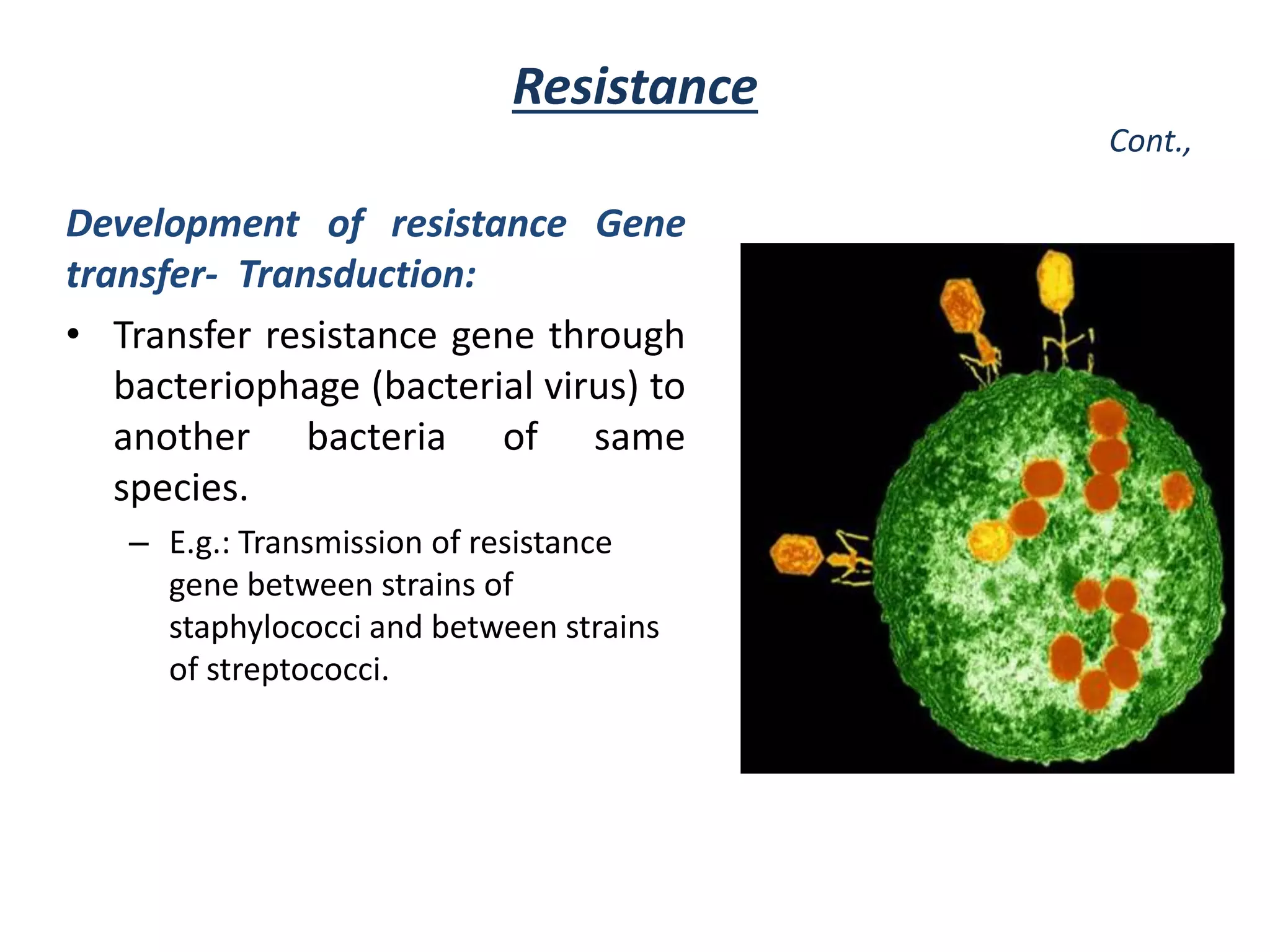
• Transfer resistance gene through
bacteriophage (bacterial virus) to
another bacteria of same
species.
– E.g.: Transmission of resistance
gene between strains of
staphylococci and between strains
of streptococci.
Resistance
Cont.,
Development of resistance
Gene transfer - Transformation:
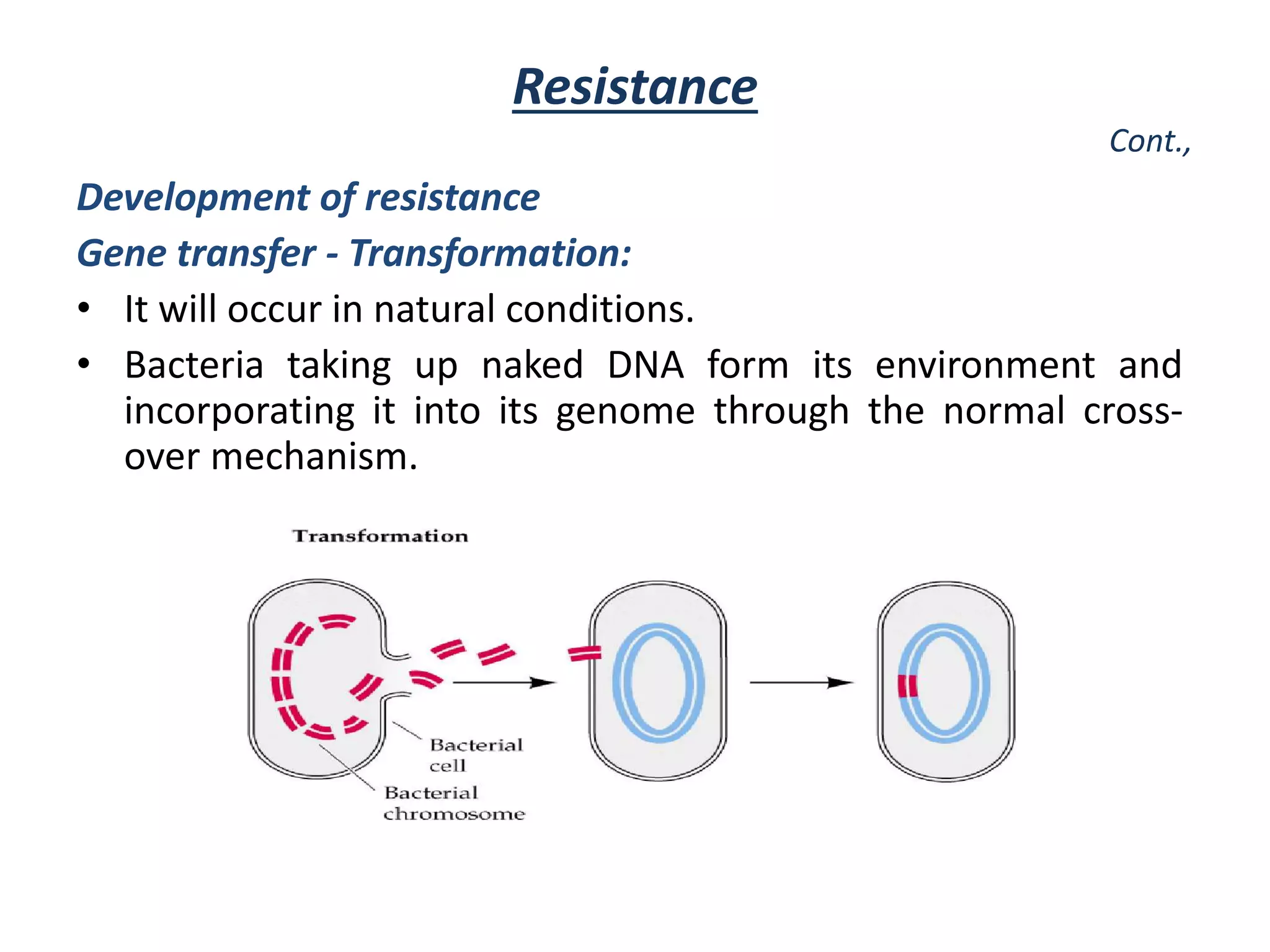
• It will occur in natural conditions.
• Bacteria taking up naked DNA form its environment and
incorporating it into its genome through the normal cross-
over mechanism.
Resistance
Cont.,

Introduction to development of bacterial resistance to antimicrobials

  • 1.
    Development of bacterialresistance to antimicrobials. S. Parasuraman, M.Pharm., Ph.D., Senior Lecturer, Faculty of Pharmacy, AIMST University
  • 2.
    Resistance • Unresponsiveness ofa microorganism to an AMA, and is similar to the phenomenon of drug tolerance. – Natural resistance – Acquired resistance • Natural resistance: Some microbes have resistant to certain AMAs. E.g.: Gram negative bacilli not affected by penicillin G; M. tuberculosis insensitive to tetracyclines. • Acquired resistance: Development of resistance by an organism (which was sensitive before) due to the use of AMA over a period of time. E.g.: Staphylococci, tubercle bacilli develop resistance to penicillin (widespread use for >50 yr). Gonococci quickly developed resistant to sulfonamides in 30 yr.
  • 3.
    Resistance Cont., Development of resistance •Resistance mainly developed by mutation or gene transfer. • Mutation: Resistance developed by mutation is stable and heritable genetic changes that occurs spontaneously and randomly among microorganism (usually on plasmids). • Mutation resistance may be single step or multistep. – Single gene mutation may confer high degree of resistance. E.g.: enterococci to streptomycin – Multistep mutation may modify the more number of gene that will decreases the sensitivity of AMAs to pathogens.
  • 4.
    • Development ofresistance • Gene transfer (Infectious resistance): From one organism to another organism. – Conjugation – Transduction – Transformation Transposon donor a b a a a b b b Plasmid cointegrate Transfer of resistance genetic elements within the bacterium Resistance Cont.,
  • 5.
    Development of resistance Genetransfer - Conjugation: • cell-to-cell contact; transfer of chromosomal or extrachromosomal DNA from one bacterium to another through sex pili. The gene carrying the resistance or ‘R’ factor is transferred only if another “resistance transfer factor” (RTF) is present. This will frequently occurs in gram negative bacilli. • The nonpathogenic organisms may transfer ‘R’ factor to pathogenic organisms, which may become wide spread by contamination of food and water. • The multidrug resistance has occurred by conjugation. – Chloramphenicol resistance to typhoid bacilli – Penicillin resistance to Haemophilus, gonococci – Streptomycin resistance to E.coli Resistance Cont.,
  • 6.
    Development of resistanceGene transfer- Transduction: • Transfer resistance gene through bacteriophage (bacterial virus) to another bacteria of same species. – E.g.: Transmission of resistance gene between strains of staphylococci and between strains of streptococci. Resistance Cont.,
  • 7.
    Development of resistance Genetransfer - Transformation: • It will occur in natural conditions. • Bacteria taking up naked DNA form its environment and incorporating it into its genome through the normal cross- over mechanism. Resistance Cont.,