By WONG PEI YIN (Charissa)
BSN, SRN
ORAL MEDICATION
ADMINISTRATION
OBJECTIVE
 Define oral medication administration.
 Describe the use of the ten rights of medication
administration.
 Discuss nursing responsibilities for oral
medication administration.
 Demonstrate the procedure for safe
administration of oral medications correctly.
 Maintain efficiency when performing the
procedure of oral medication administration.
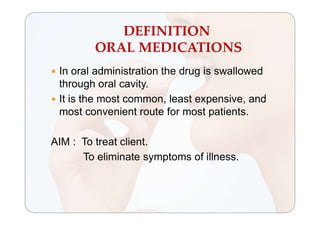
DEFINITION
ORAL MEDICATIONS
 In oral administration the drug is swallowed
through oral cavity.
 It is the most common, least expensive, and
most convenient route for most patients.
AIM : To treat client.
To eliminate symptoms of illness.
10 “RIGHTS” OF MEDICATION
ADMINISTRATION
Right Medication
Right Dose
Right Route
Right Time
Right Client
Right Assessment
Right Client Education
Right to Refuse
Right Documentation
Right Evaluation
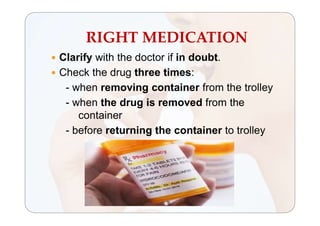
RIGHT MEDICATION
 Clarify with the doctor if in doubt.
 Check the drug three times:
- when removing container from the trolley
- when the drug is removed from the
container
- before returning the container to trolley
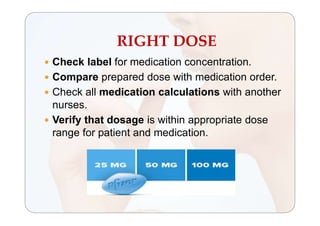
RIGHT DOSE
 Check label for medication concentration.
 Compare prepared dose with medication order.
 Check all medication calculations with another
nurses.
 Verify that dosage is within appropriate dose
range for patient and medication.
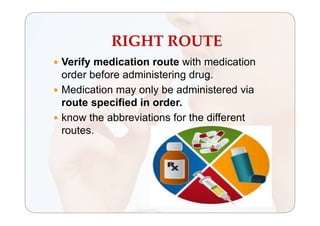
RIGHT ROUTE
 Verify medication route with medication
order before administering drug.
 Medication may only be administered via
route specified in order.
 know the abbreviations for the different
routes.
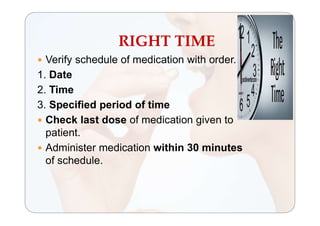
RIGHT TIME
 Verify schedule of medication with order.
1. Date
2. Time
3. Specified period of time
 Check last dose of medication given to
patient.
 Administer medication within 30 minutes
of schedule.
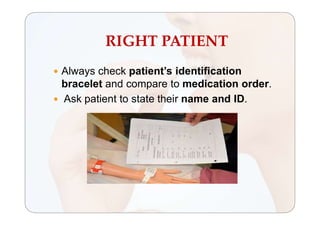
RIGHT PATIENT
 Always check patient’s identification
bracelet and compare to medication order.
 Ask patient to state their name and ID.
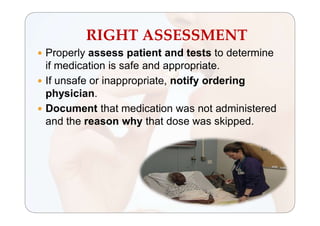
RIGHT ASSESSMENT
 Properly assess patient and tests to determine
if medication is safe and appropriate.
 If unsafe or inappropriate, notify ordering
physician.
 Document that medication was not administered
and the reason why that dose was skipped.
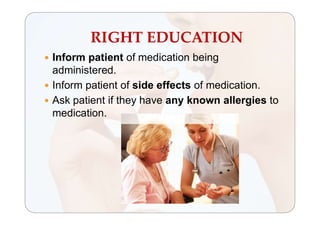
RIGHT EDUCATION
 Inform patient of medication being
administered.
 Inform patient of side effects of medication.
 Ask patient if they have any known allergies to
medication.
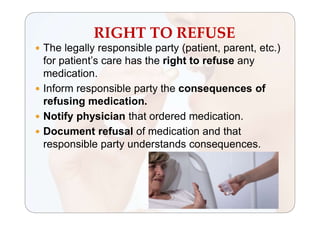
RIGHT TO REFUSE
 The legally responsible party (patient, parent, etc.)
for patient’s care has the right to refuse any
medication.
 Inform responsible party the consequences of
refusing medication.
 Notify physician that ordered medication.
 Document refusal of medication and that
responsible party understands consequences.
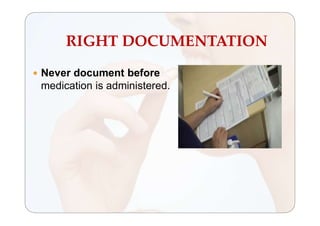
RIGHT DOCUMENTATION
 Never document before
medication is administered.
RIGHT EVALUATION
 Assess patient for any adverse effects.
 Assess patient for effectiveness of medication.
 Document patient’s response to medication.
NURSING RESPONSIBILITY OF
ORAL DRUG ADMINISTRATION
 Hand hygiene before drug administration.
 Ensure the patient is sitting up whenever possible to
facilitate swallowing.
 Administer medications which can irritate the stomach
mucosa with light snacks or after meal.
 Ensure patient takes the medication.
 Observe for adverse reaction from medication.
 Ensure patient fully understands the health education
so that there is no medication default.
MILD ALLERGIC REACTIONS
Skin rash: Pruritus:
Angioedema: Rhinitis:
REQUIREMENTS:
1. Medication trolley with drugs
2. Prescription chart/ medication administration record
3. Medicine cup
4. Ounce glass ( for liquid medicines)
5. Scissors
6. Tissues ( for liquid medication)
7. Pill cutter
8. Straw to administer medications that may discolour teeth
9. Glass of water/ juice/ milk
10. Stethoscope if necessary
11. Mortar and pestle (optional)
12. Pen (blue/ black)
13. MIMS for reference
PROCEDURE GUIDELINE FOR
ADMINISTER ORAL MEDICATION
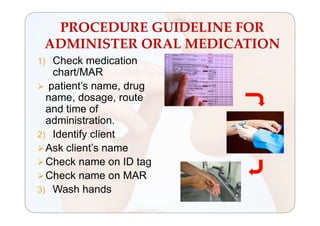
1) Check medication
chart/MAR
 patient’s name, drug
name, dosage, route
and time of
administration.
2) Identify client
Ask client’s name
Check name on ID tag
Check name on MAR
3) Wash hands
CONT…
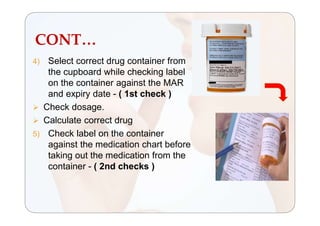
4) Select correct drug container from
the cupboard while checking label
on the container against the MAR
and expiry date - ( 1st check )
 Check dosage.
 Calculate correct drug
5) Check label on the container
against the medication chart before
taking out the medication from the
container - ( 2nd checks )
6) TABLETS / CAPSULE
 Pour tablet/ capsule on to the bottle cap, and then
transfer to the medication cup.
 Place all tablets to be given at the same time in one cup.
 Use pill cutter to break tablets if necessary
 Keep narcotic and medications that requires specific
assessment separate from others.
 Crush the tablet if client has difficulty swallowing. (Do
not crush enteric coated tablet)
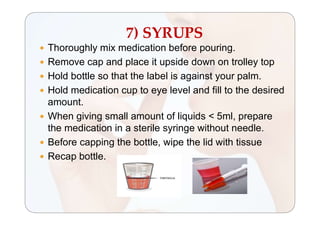
7) SYRUPS
 Thoroughly mix medication before pouring.
 Remove cap and place it upside down on trolley top
 Hold bottle so that the label is against your palm.
 Hold medication cup to eye level and fill to the desired
amount.
 When giving small amount of liquids < 5ml, prepare
the medication in a sterile syringe without needle.
 Before capping the bottle, wipe the lid with tissue
 Recap bottle.
CONT…
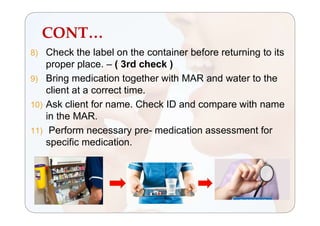
8) Check the label on the container before returning to its
proper place. – ( 3rd check )
9) Bring medication together with MAR and water to the
client at a correct time.
10) Ask client for name. Check ID and compare with name
in the MAR.
11) Perform necessary pre- medication assessment for
specific medication.
CONT…
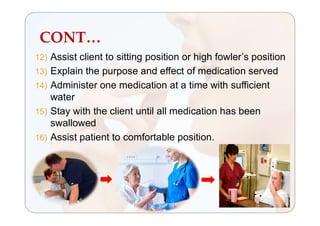
12) Assist client to sitting position or high fowler’s position
13) Explain the purpose and effect of medication served
14) Administer one medication at a time with sufficient
water
15) Stay with the client until all medication has been
swallowed
16) Assist patient to comfortable position.
CONT…
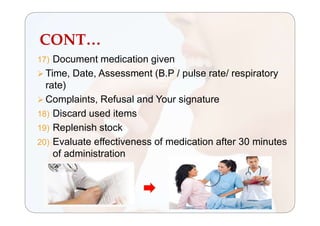
17) Document medication given
 Time, Date, Assessment (B.P / pulse rate/ respiratory
rate)
 Complaints, Refusal and Your signature
18) Discard used items
19) Replenish stock
20) Evaluate effectiveness of medication after 30 minutes
of administration
SUMMARY
 The nurse is responsible for ensuring that they have
the knowledge to ensure the correct administration of
drugs.
 Documentation must be completed accurately to
ensure that patients receive safe doses and prevent
medicolegal action.
THANK YOU

Oral Medication Administration

  • 1.
    By WONG PEIYIN (Charissa) BSN, SRN ORAL MEDICATION ADMINISTRATION
  • 2.
    OBJECTIVE  Define oralmedication administration.  Describe the use of the ten rights of medication administration.  Discuss nursing responsibilities for oral medication administration.  Demonstrate the procedure for safe administration of oral medications correctly.  Maintain efficiency when performing the procedure of oral medication administration.
  • 3.
    DEFINITION ORAL MEDICATIONS  Inoral administration the drug is swallowed through oral cavity.  It is the most common, least expensive, and most convenient route for most patients. AIM : To treat client. To eliminate symptoms of illness.
  • 4.
    10 “RIGHTS” OFMEDICATION ADMINISTRATION Right Medication Right Dose Right Route Right Time Right Client Right Assessment Right Client Education Right to Refuse Right Documentation Right Evaluation
  • 5.
    RIGHT MEDICATION  Clarifywith the doctor if in doubt.  Check the drug three times: - when removing container from the trolley - when the drug is removed from the container - before returning the container to trolley
  • 6.
    RIGHT DOSE  Checklabel for medication concentration.  Compare prepared dose with medication order.  Check all medication calculations with another nurses.  Verify that dosage is within appropriate dose range for patient and medication.
  • 7.
    RIGHT ROUTE  Verifymedication route with medication order before administering drug.  Medication may only be administered via route specified in order.  know the abbreviations for the different routes.
  • 8.
    RIGHT TIME  Verifyschedule of medication with order. 1. Date 2. Time 3. Specified period of time  Check last dose of medication given to patient.  Administer medication within 30 minutes of schedule.
  • 9.
    RIGHT PATIENT  Alwayscheck patient’s identification bracelet and compare to medication order.  Ask patient to state their name and ID.
  • 10.
    RIGHT ASSESSMENT  Properlyassess patient and tests to determine if medication is safe and appropriate.  If unsafe or inappropriate, notify ordering physician.  Document that medication was not administered and the reason why that dose was skipped.
  • 11.
    RIGHT EDUCATION  Informpatient of medication being administered.  Inform patient of side effects of medication.  Ask patient if they have any known allergies to medication.
  • 12.
    RIGHT TO REFUSE The legally responsible party (patient, parent, etc.) for patient’s care has the right to refuse any medication.  Inform responsible party the consequences of refusing medication.  Notify physician that ordered medication.  Document refusal of medication and that responsible party understands consequences.
  • 13.
    RIGHT DOCUMENTATION  Neverdocument before medication is administered.
  • 14.
    RIGHT EVALUATION  Assesspatient for any adverse effects.  Assess patient for effectiveness of medication.  Document patient’s response to medication.
  • 15.
    NURSING RESPONSIBILITY OF ORALDRUG ADMINISTRATION  Hand hygiene before drug administration.  Ensure the patient is sitting up whenever possible to facilitate swallowing.  Administer medications which can irritate the stomach mucosa with light snacks or after meal.  Ensure patient takes the medication.  Observe for adverse reaction from medication.  Ensure patient fully understands the health education so that there is no medication default.
  • 16.
    MILD ALLERGIC REACTIONS Skinrash: Pruritus: Angioedema: Rhinitis:
  • 17.
    REQUIREMENTS: 1. Medication trolleywith drugs 2. Prescription chart/ medication administration record 3. Medicine cup 4. Ounce glass ( for liquid medicines) 5. Scissors 6. Tissues ( for liquid medication) 7. Pill cutter 8. Straw to administer medications that may discolour teeth 9. Glass of water/ juice/ milk 10. Stethoscope if necessary 11. Mortar and pestle (optional) 12. Pen (blue/ black) 13. MIMS for reference
  • 18.
    PROCEDURE GUIDELINE FOR ADMINISTERORAL MEDICATION 1) Check medication chart/MAR  patient’s name, drug name, dosage, route and time of administration. 2) Identify client Ask client’s name Check name on ID tag Check name on MAR 3) Wash hands
  • 19.
    CONT… 4) Select correctdrug container from the cupboard while checking label on the container against the MAR and expiry date - ( 1st check )  Check dosage.  Calculate correct drug 5) Check label on the container against the medication chart before taking out the medication from the container - ( 2nd checks )
  • 20.
    6) TABLETS /CAPSULE  Pour tablet/ capsule on to the bottle cap, and then transfer to the medication cup.  Place all tablets to be given at the same time in one cup.  Use pill cutter to break tablets if necessary  Keep narcotic and medications that requires specific assessment separate from others.  Crush the tablet if client has difficulty swallowing. (Do not crush enteric coated tablet)
  • 21.
    7) SYRUPS  Thoroughlymix medication before pouring.  Remove cap and place it upside down on trolley top  Hold bottle so that the label is against your palm.  Hold medication cup to eye level and fill to the desired amount.  When giving small amount of liquids < 5ml, prepare the medication in a sterile syringe without needle.  Before capping the bottle, wipe the lid with tissue  Recap bottle.
  • 22.
    CONT… 8) Check thelabel on the container before returning to its proper place. – ( 3rd check ) 9) Bring medication together with MAR and water to the client at a correct time. 10) Ask client for name. Check ID and compare with name in the MAR. 11) Perform necessary pre- medication assessment for specific medication.
  • 23.
    CONT… 12) Assist clientto sitting position or high fowler’s position 13) Explain the purpose and effect of medication served 14) Administer one medication at a time with sufficient water 15) Stay with the client until all medication has been swallowed 16) Assist patient to comfortable position.
  • 24.
    CONT… 17) Document medicationgiven  Time, Date, Assessment (B.P / pulse rate/ respiratory rate)  Complaints, Refusal and Your signature 18) Discard used items 19) Replenish stock 20) Evaluate effectiveness of medication after 30 minutes of administration
  • 25.
    SUMMARY  The nurseis responsible for ensuring that they have the knowledge to ensure the correct administration of drugs.  Documentation must be completed accurately to ensure that patients receive safe doses and prevent medicolegal action.
  • 26.