Interpersonal Trust
What is Interpersonal Trust? Interpersonal Trust is the perception you have that other person will not do anything that harm your interest
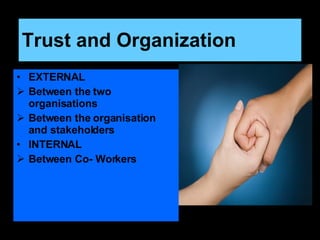
Trust and Organization EXTERNAL Between the two organisations Between the organisation and stakeholders INTERNAL Between Co- Workers
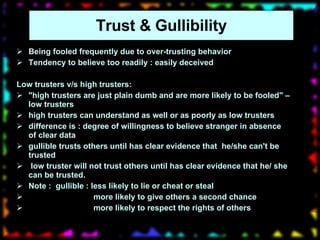
Trust & Gullibility Being fooled frequently due to over-trusting behavior Tendency to believe too readily : easily deceived Low trusters v/s high trusters: "high trusters are just plain dumb and are more likely to be fooled" – low trusters high trusters can understand as well or as poorly as low trusters difference is : degree of willingness to believe stranger in absence of clear data gullible trusts others until has clear evidence that  he/she can't be trusted low truster will not trust others until has clear evidence that he/ she can be trusted.  Note :  gullible : less likely to lie or cheat or steal more likely to give others a second chance  more likely to respect the rights of others
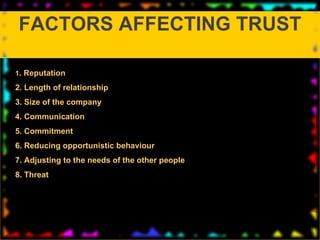
1 . Reputation 2. Length of relationship 3. Size of the company 4. Communication 5. Commitment 6. Reducing opportunistic behaviour 7. Adjusting to the needs of the other people 8. Threat  FACTORS AFFECTING TRUST
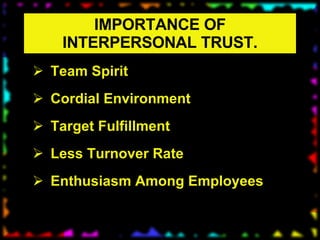
IMPORTANCE OF INTERPERSONAL TRUST. Team Spirit Cordial Environment Target Fulfillment Less Turnover Rate Enthusiasm Among Employees
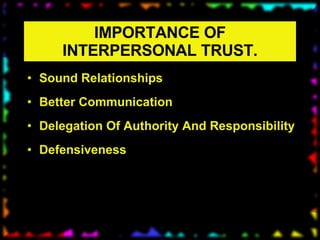
IMPORTANCE OF INTERPERSONAL TRUST. Sound Relationships Better Communication Delegation Of Authority And Responsibility Defensiveness
How to create Trust?? Keep the commitment and Promises Get involved Be confident Be accessible
Thank You

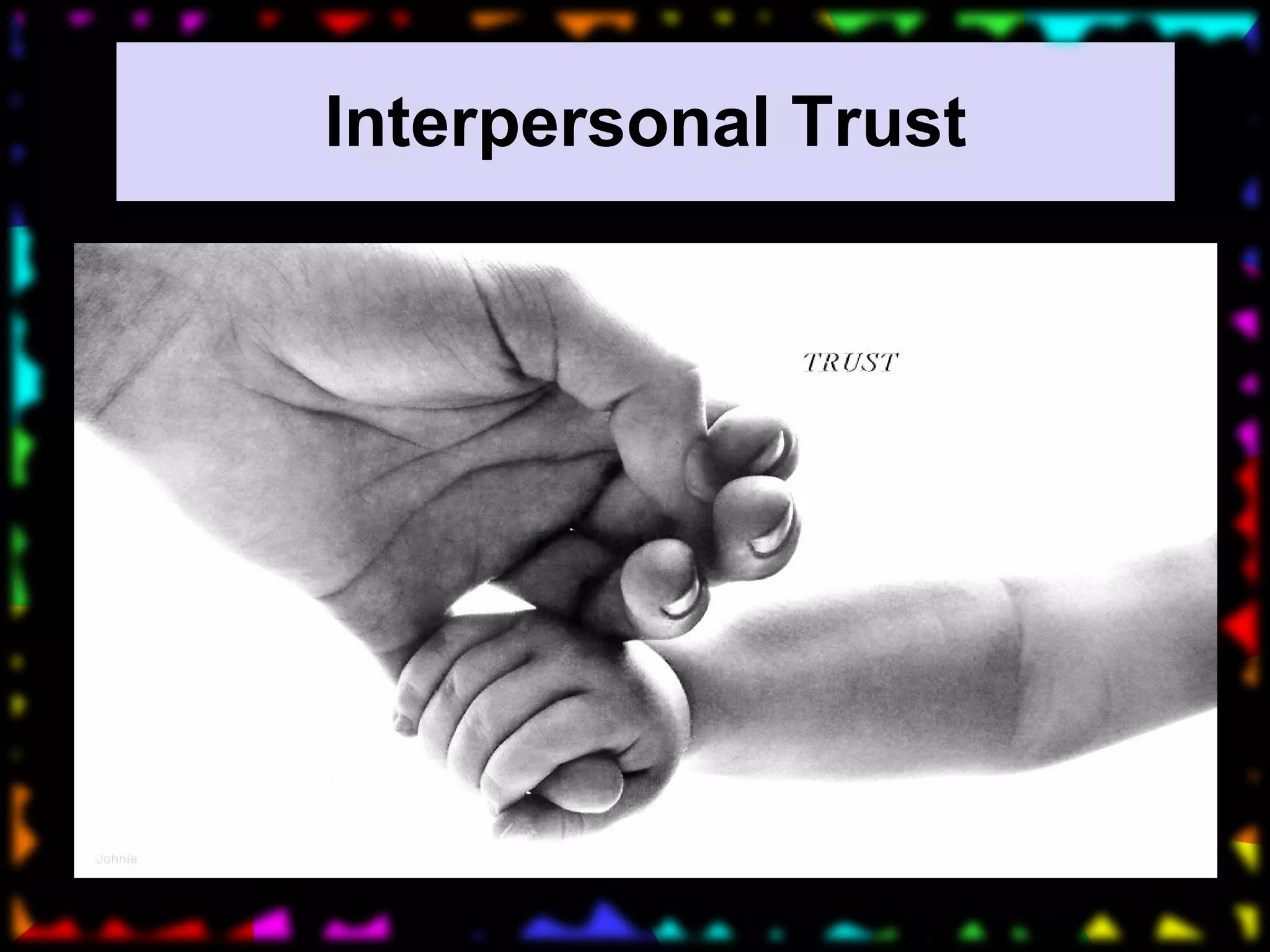
Interpersonal Trust

  • 1.
  • 2.
    What is InterpersonalTrust? Interpersonal Trust is the perception you have that other person will not do anything that harm your interest
  • 3.
    Trust and OrganizationEXTERNAL Between the two organisations Between the organisation and stakeholders INTERNAL Between Co- Workers
  • 4.
    Trust & GullibilityBeing fooled frequently due to over-trusting behavior Tendency to believe too readily : easily deceived Low trusters v/s high trusters: "high trusters are just plain dumb and are more likely to be fooled" – low trusters high trusters can understand as well or as poorly as low trusters difference is : degree of willingness to believe stranger in absence of clear data gullible trusts others until has clear evidence that he/she can't be trusted low truster will not trust others until has clear evidence that he/ she can be trusted. Note : gullible : less likely to lie or cheat or steal more likely to give others a second chance more likely to respect the rights of others
  • 5.
    1 . Reputation2. Length of relationship 3. Size of the company 4. Communication 5. Commitment 6. Reducing opportunistic behaviour 7. Adjusting to the needs of the other people 8. Threat FACTORS AFFECTING TRUST
  • 6.
    IMPORTANCE OF INTERPERSONALTRUST. Team Spirit Cordial Environment Target Fulfillment Less Turnover Rate Enthusiasm Among Employees
  • 7.
    IMPORTANCE OF INTERPERSONALTRUST. Sound Relationships Better Communication Delegation Of Authority And Responsibility Defensiveness
  • 8.
    How to createTrust?? Keep the commitment and Promises Get involved Be confident Be accessible
  • 9.