INTER-PERSONEL AWARENESS & FEEDBACK PROCESS Presented By BINAY & SANJEEV
Definition Interpersonal awareness  is the process of being aware of one’s true intrinsic qualities like behaviors, attitude, perception, skills, experience etc. by himself/herself or by the other members of the group.
A Johari window is a psychological tool created by Joseph Luft and Harry Ingham in 1955 in the United States.
It was developed while researching group dynamics. Today the JW model is especially relevant because of the modern emphasis on soft skills, behavior, empathy, cooperation, inter-group development and interpersonal development .  Interestingly, Luft and Ingham called their Johari Window model 'Johari' after combining their first names, Joseph and Harry .
The Johari Window Concept and communication model helps improve understanding between individuals within a team or in a group setting.  It can be used to improve a group's relationship with other groups.
 
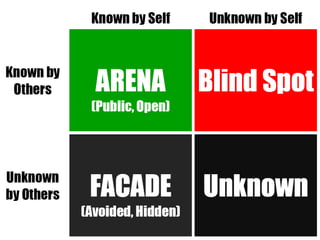
Arena . What is known by the person about him/herself and also known by others. Open area, open self, free area, free self or the arena Examples: your name, the color of your hair, the fact you own a dog.
Blind Spot . What is unknown by the person about him/herself but what others know. It is also called blind area, blind self. Examples: your own manners, the feelings of other persons about you.
Facade . What the person knows about him/herself that others do not know. It is called hidden area, hidden self, avoided area, avoided self. Such as: your secrets, your hopes, desires, what you like and what you dislike.
The Unknown . Traits unknown by the person about him/herself and also unknown by others. It is also called unknown area & unknown self. The unknown also has potential to influence the rest of the JW.
Applications Generally used for teaching and understanding: How individuals communicate with themselves and with others. How individuals present themselves to themselves and to others. How individuals perceive their place in the world .
WHAT IS FEEDBACK? “ THE PROCESS BY WHICH THE INFORMATION ABOUT THE RESULTS OF AN ACTION IS COMMUNICATED  TO THE SOURCE OF THE ACTION”
 
 
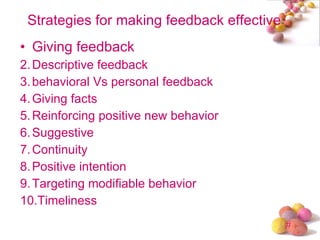
Strategies for making feedback effective Giving feedback Descriptive feedback behavioral Vs personal feedback Giving facts Reinforcing positive new behavior Suggestive Continuity Positive intention Targeting modifiable behavior Timeliness
Receiving feedback Denial verses owning  Rationalization vs self analysis Projection vs empathy Displacement vs exploration Quick acceptance vs data collection  Withdrawal vs expressing feelings Aggression vs help seeking Humor vs concern competition with the authority vs listening Cynicism vs positive critical attitude Intellectualization vs sharing concern Generalization vs experimentation Pairing vs relating to group
Function of feedback Giving feedback Provides verifiable data about behavior. Encourages colleting data from several sources. Suggests alternatives to be considered. Improves interpersonal communication. Establishes culture of openness. Promotes interpersonal trust. Facilities autonomy. Receiving feedback Helps in processing behavioral data. Increases self awareness. Increases sensitivity in picking up clues. Encourages experimenting with new behavior. Helps in building up an integrated self. Encourages openness. Develops mutuality.
Behavioral types in dealing with feedback Defensive behaviour Denial Rationalization Projection Displacement Quick acceptance Withdrawal Aggression with authority Humour Competition with authority Cynicism Intellectualization Generalization pairing Confronting behaviour Owning Self analysis Empathy Exploration Data collection Expressing feelings Seeking help Concern Listening Positive critical attitude Sharing concern Experimenting Relating to group
THANK YOU ANY QUERIES???

Interpersonel awareness and feedback process

  • 1.
    INTER-PERSONEL AWARENESS &FEEDBACK PROCESS Presented By BINAY & SANJEEV
  • 2.
    Definition Interpersonal awareness is the process of being aware of one’s true intrinsic qualities like behaviors, attitude, perception, skills, experience etc. by himself/herself or by the other members of the group.
  • 3.
    A Johari windowis a psychological tool created by Joseph Luft and Harry Ingham in 1955 in the United States.
  • 4.
    It was developedwhile researching group dynamics. Today the JW model is especially relevant because of the modern emphasis on soft skills, behavior, empathy, cooperation, inter-group development and interpersonal development . Interestingly, Luft and Ingham called their Johari Window model 'Johari' after combining their first names, Joseph and Harry .
  • 5.
    The Johari WindowConcept and communication model helps improve understanding between individuals within a team or in a group setting. It can be used to improve a group's relationship with other groups.
  • 6.
  • 7.
    Arena . Whatis known by the person about him/herself and also known by others. Open area, open self, free area, free self or the arena Examples: your name, the color of your hair, the fact you own a dog.
  • 8.
    Blind Spot .What is unknown by the person about him/herself but what others know. It is also called blind area, blind self. Examples: your own manners, the feelings of other persons about you.
  • 9.
    Facade . Whatthe person knows about him/herself that others do not know. It is called hidden area, hidden self, avoided area, avoided self. Such as: your secrets, your hopes, desires, what you like and what you dislike.
  • 10.
    The Unknown .Traits unknown by the person about him/herself and also unknown by others. It is also called unknown area & unknown self. The unknown also has potential to influence the rest of the JW.
  • 11.
    Applications Generally usedfor teaching and understanding: How individuals communicate with themselves and with others. How individuals present themselves to themselves and to others. How individuals perceive their place in the world .
  • 12.
    WHAT IS FEEDBACK?“ THE PROCESS BY WHICH THE INFORMATION ABOUT THE RESULTS OF AN ACTION IS COMMUNICATED TO THE SOURCE OF THE ACTION”
  • 13.
  • 14.
  • 15.
    Strategies for makingfeedback effective Giving feedback Descriptive feedback behavioral Vs personal feedback Giving facts Reinforcing positive new behavior Suggestive Continuity Positive intention Targeting modifiable behavior Timeliness
  • 16.
    Receiving feedback Denialverses owning Rationalization vs self analysis Projection vs empathy Displacement vs exploration Quick acceptance vs data collection Withdrawal vs expressing feelings Aggression vs help seeking Humor vs concern competition with the authority vs listening Cynicism vs positive critical attitude Intellectualization vs sharing concern Generalization vs experimentation Pairing vs relating to group
  • 17.
    Function of feedbackGiving feedback Provides verifiable data about behavior. Encourages colleting data from several sources. Suggests alternatives to be considered. Improves interpersonal communication. Establishes culture of openness. Promotes interpersonal trust. Facilities autonomy. Receiving feedback Helps in processing behavioral data. Increases self awareness. Increases sensitivity in picking up clues. Encourages experimenting with new behavior. Helps in building up an integrated self. Encourages openness. Develops mutuality.
  • 18.
    Behavioral types indealing with feedback Defensive behaviour Denial Rationalization Projection Displacement Quick acceptance Withdrawal Aggression with authority Humour Competition with authority Cynicism Intellectualization Generalization pairing Confronting behaviour Owning Self analysis Empathy Exploration Data collection Expressing feelings Seeking help Concern Listening Positive critical attitude Sharing concern Experimenting Relating to group
  • 19.
    THANK YOU ANYQUERIES???