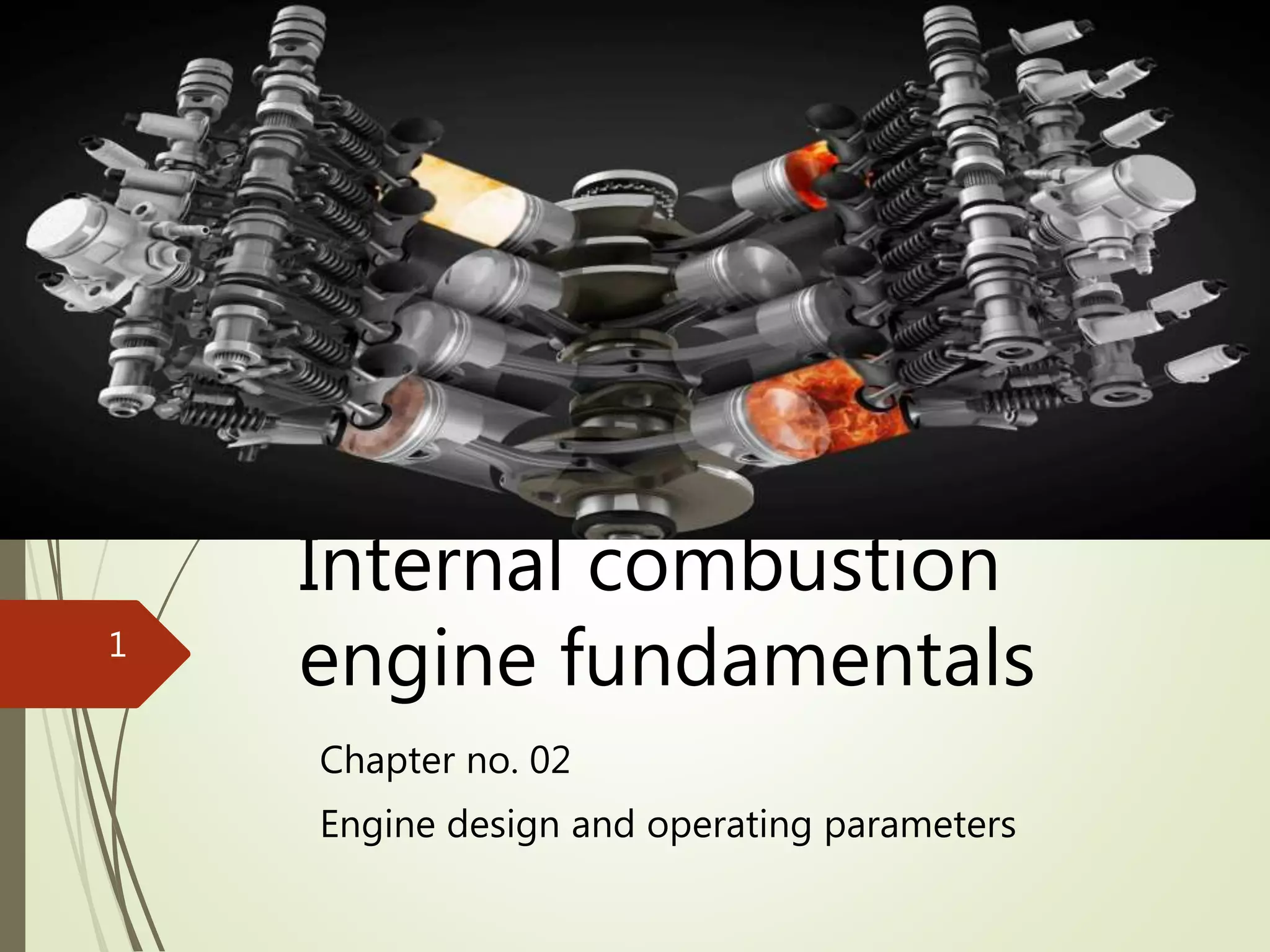
Internal combustion
engine fundamentals
Chapter no. 02
Engine design and operating parameters
1
 Presented by
Hassan Raza 2013-ME-310
M Ansar Alam 2013-ME-311
Zaighum Shabbiir 2013-ME-313
Soban Ahmad Sair 2013-ME-317
Junaid Khalid 2013-ME-311
 Presented to
Dr. Shahid Imran
2
Contents
 Performance Definitions
 Geometrical properties
 Torque and Power
 Engine performance parameters
 Design comparison
 Problems
3
Performance Definitions
 Maximum Rated Power: The maximum power
developed by an engine for short period of time.
 Normal Rated Power: The highest power an
engine is allowed to develop in continuous
operation
 Rated Speed: The crank shaft rotational speed at
which rated power is developed
4
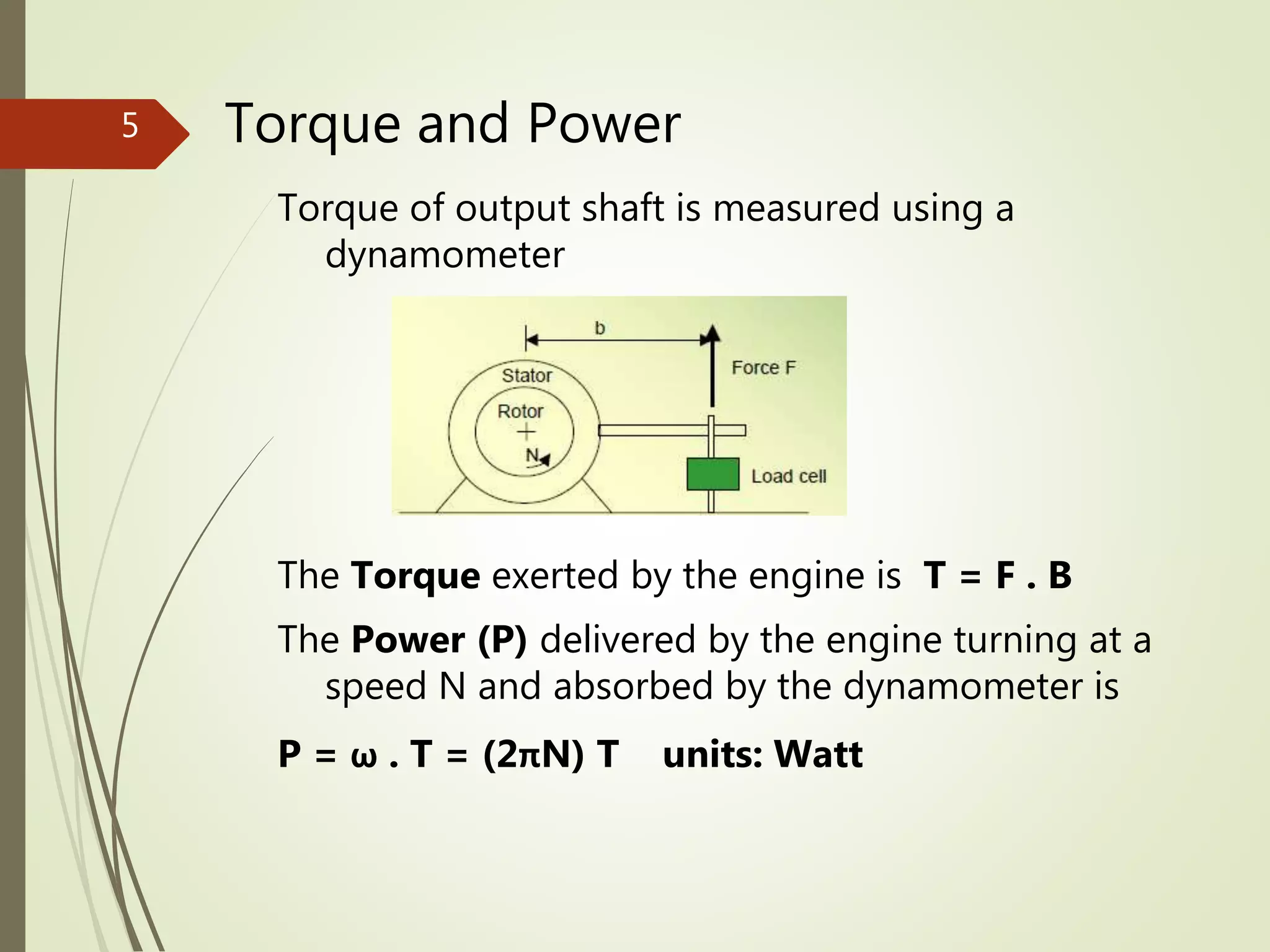
Torque and Power
Torque of output shaft is measured using a
dynamometer
The Torque exerted by the engine is T = F . B
The Power (P) delivered by the engine turning at a
speed N and absorbed by the dynamometer is
P = ω . T = (2πN) T units: Watt
5
Geometrical properties of reciprocating
engine
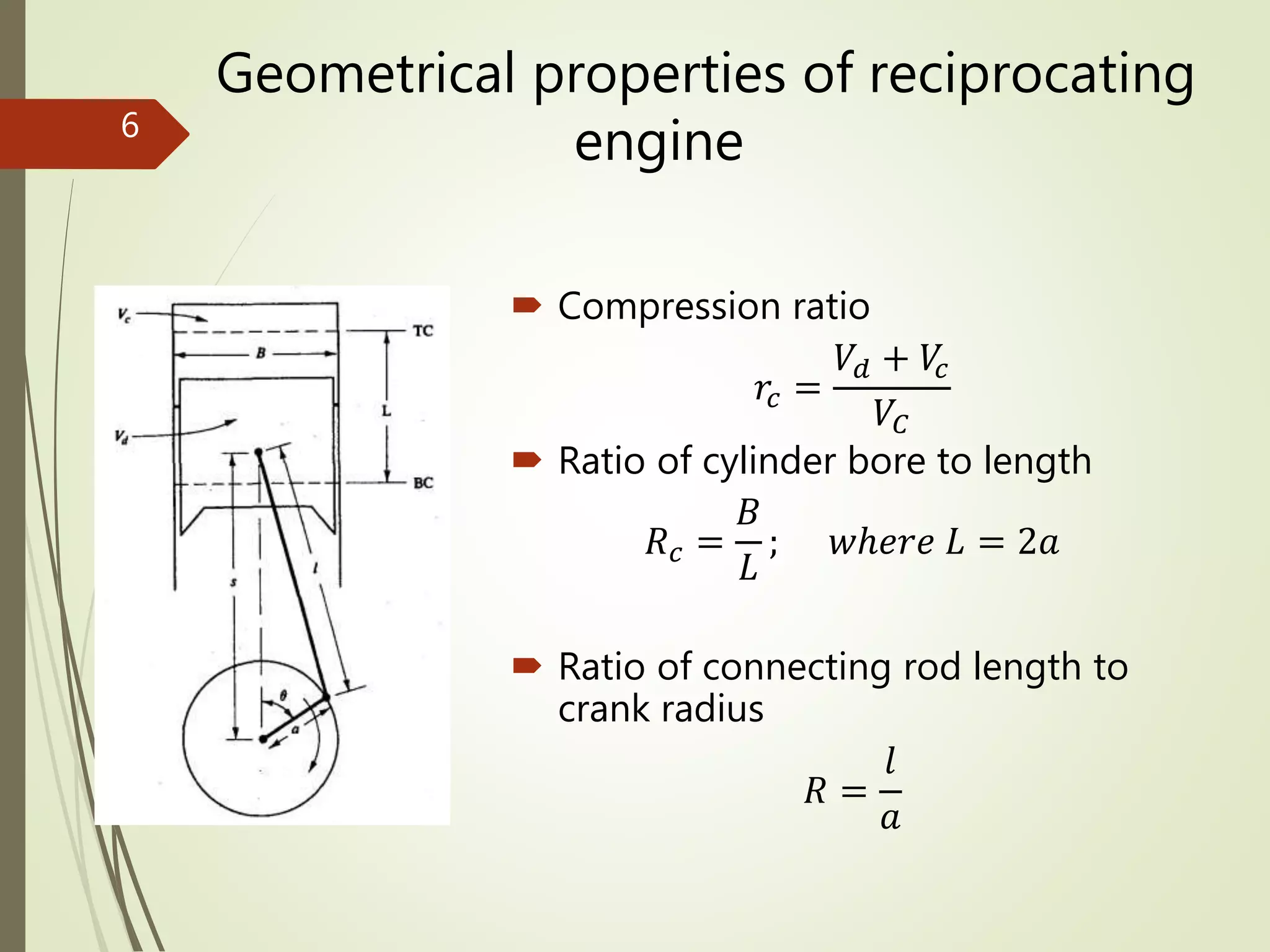
 Compression ratio
𝑟𝑐 =
𝑉𝑑 + 𝑉𝑐
𝑉𝐶
 Ratio of cylinder bore to length
𝑅 𝑐 =
𝐵
𝐿
; 𝑤ℎ𝑒𝑟𝑒 𝐿 = 2𝑎
 Ratio of connecting rod length to
crank radius
𝑅 =
𝑙
𝑎
6
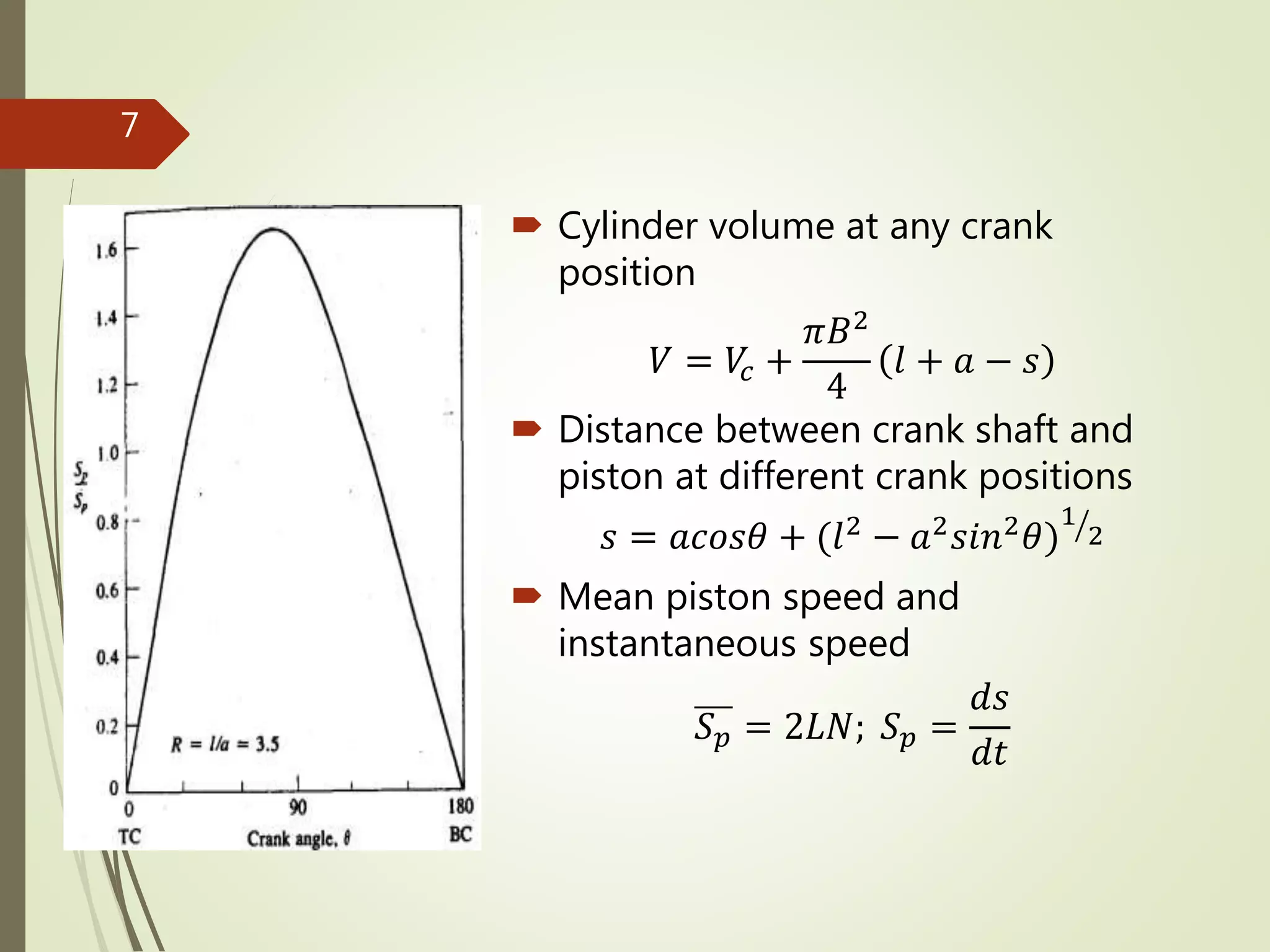
 Cylinder volume at any crank
position
𝑉 = 𝑉𝑐 +
𝜋𝐵2
4
𝑙 + 𝑎 − 𝑠
 Distance between crank shaft and
piston at different crank positions
𝑠 = 𝑎𝑐𝑜𝑠𝜃 + (𝑙2 − 𝑎2 𝑠𝑖𝑛2 𝜃)
1
2
 Mean piston speed and
instantaneous speed
𝑆 𝑝 = 2𝐿𝑁; 𝑆 𝑝 =
𝑑𝑠
𝑑𝑡
7
Engine performance parameters
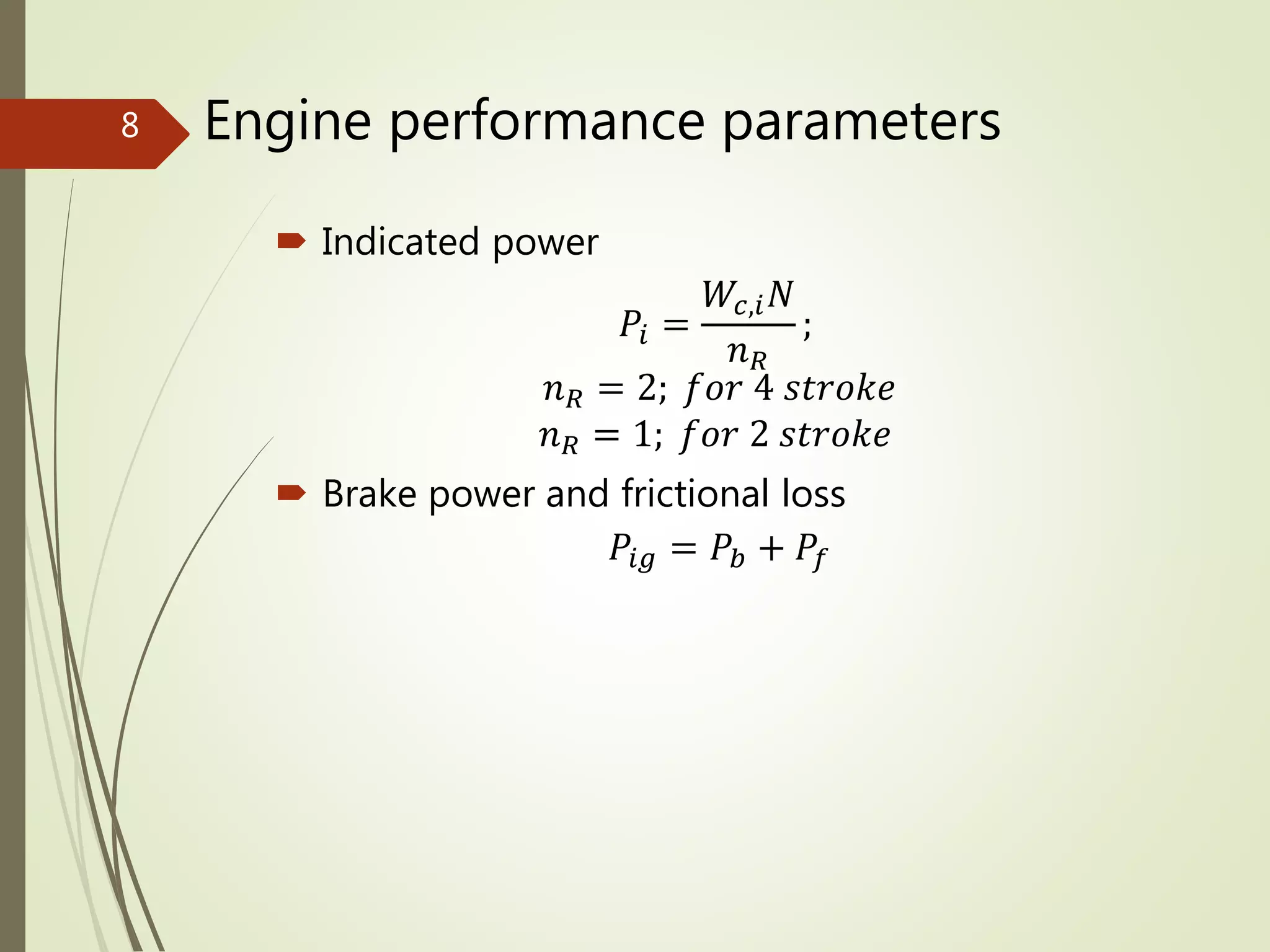
 Indicated power
𝑃𝑖 =
𝑊𝑐,𝑖 𝑁
𝑛 𝑅
;
𝑛 𝑅 = 2; 𝑓𝑜𝑟 4 𝑠𝑡𝑟𝑜𝑘𝑒
𝑛 𝑅 = 1; 𝑓𝑜𝑟 2 𝑠𝑡𝑟𝑜𝑘𝑒
 Brake power and frictional loss
𝑃𝑖𝑔 = 𝑃𝑏 + 𝑃𝑓
8

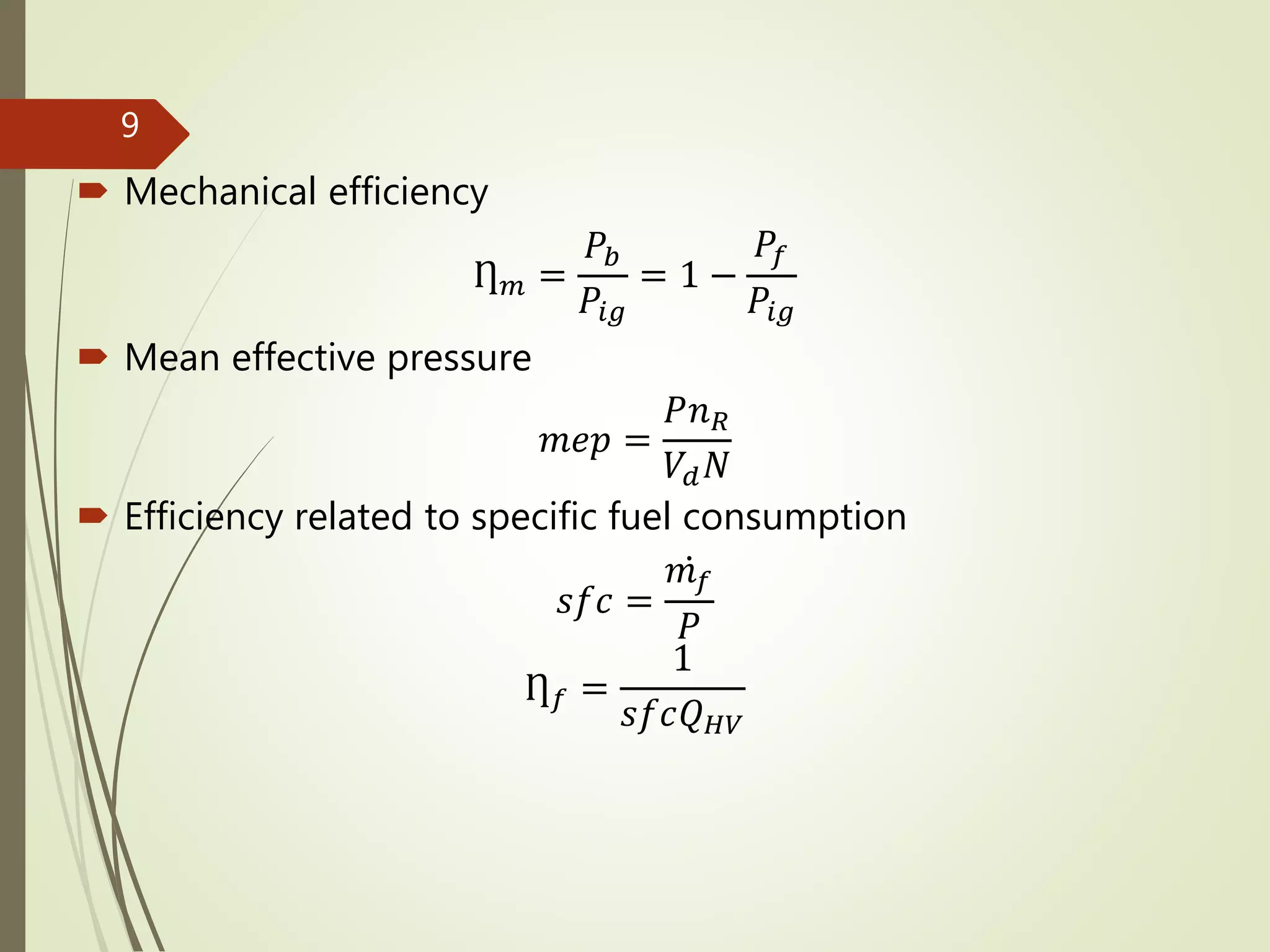
 Mechanical efficiency
Ƞ 𝑚 =
𝑃𝑏
𝑃𝑖𝑔
= 1 −
𝑃𝑓
𝑃𝑖𝑔
 Mean effective pressure
𝑚𝑒𝑝 =
𝑃𝑛 𝑅
𝑉𝑑 𝑁
 Efficiency related to specific fuel consumption
𝑠𝑓𝑐 =
𝑚 𝑓
𝑃
Ƞ 𝑓 =
1
𝑠𝑓𝑐𝑄 𝐻𝑉
9
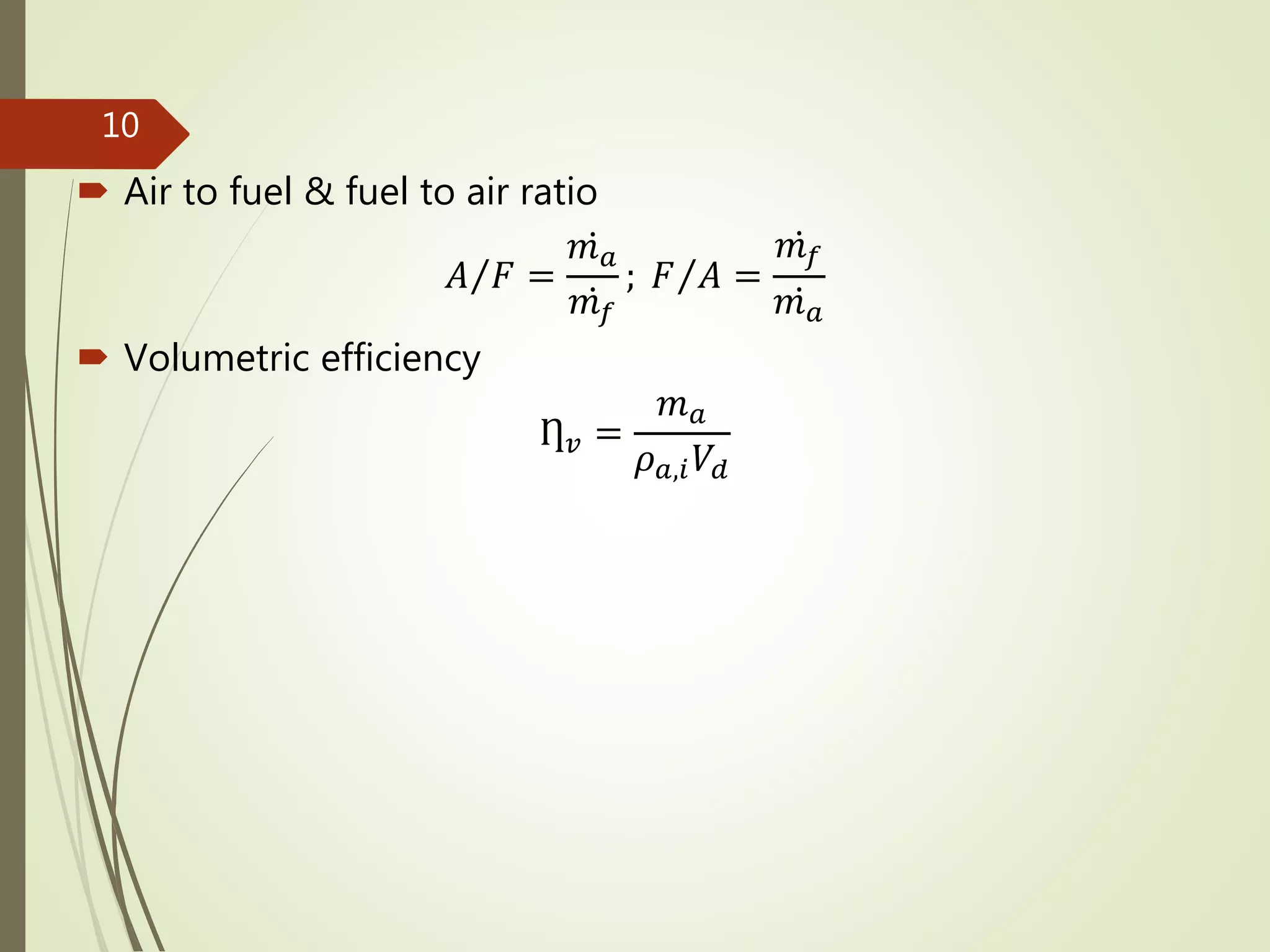
 Air to fuel & fuel to air ratio
𝐴 𝐹 =
𝑚 𝑎
𝑚 𝑓
; 𝐹 𝐴 =
𝑚 𝑓
𝑚 𝑎
 Volumetric efficiency
Ƞ 𝑣 =
𝑚 𝑎
𝜌 𝑎,𝑖 𝑉𝑑
10
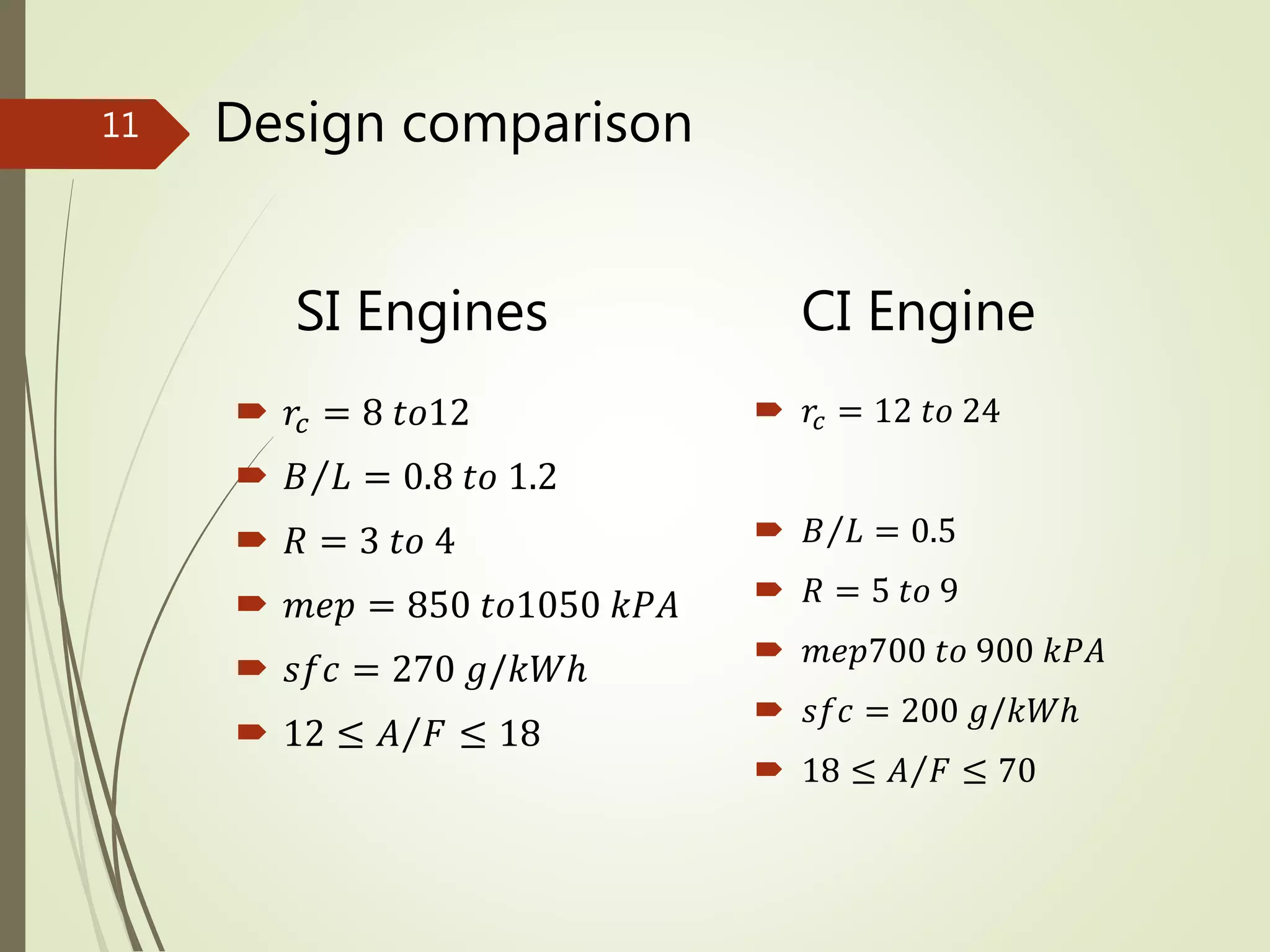
Design comparison
SI Engines
 𝑟𝑐 = 8 𝑡𝑜12
 𝐵 𝐿 = 0.8 𝑡𝑜 1.2
 𝑅 = 3 𝑡𝑜 4
 𝑚𝑒𝑝 = 850 𝑡𝑜1050 𝑘𝑃𝐴
 𝑠𝑓𝑐 = 270 𝑔/𝑘𝑊ℎ
 12 ≤ 𝐴 𝐹 ≤ 18
CI Engine
 𝑟𝑐 = 12 𝑡𝑜 24
 𝐵 𝐿 = 0.5
 𝑅 = 5 𝑡𝑜 9
 𝑚𝑒𝑝700 𝑡𝑜 900 𝑘𝑃𝐴
 𝑠𝑓𝑐 = 200 𝑔/𝑘𝑊ℎ
 18 ≤ 𝐴 𝐹 ≤ 70
11
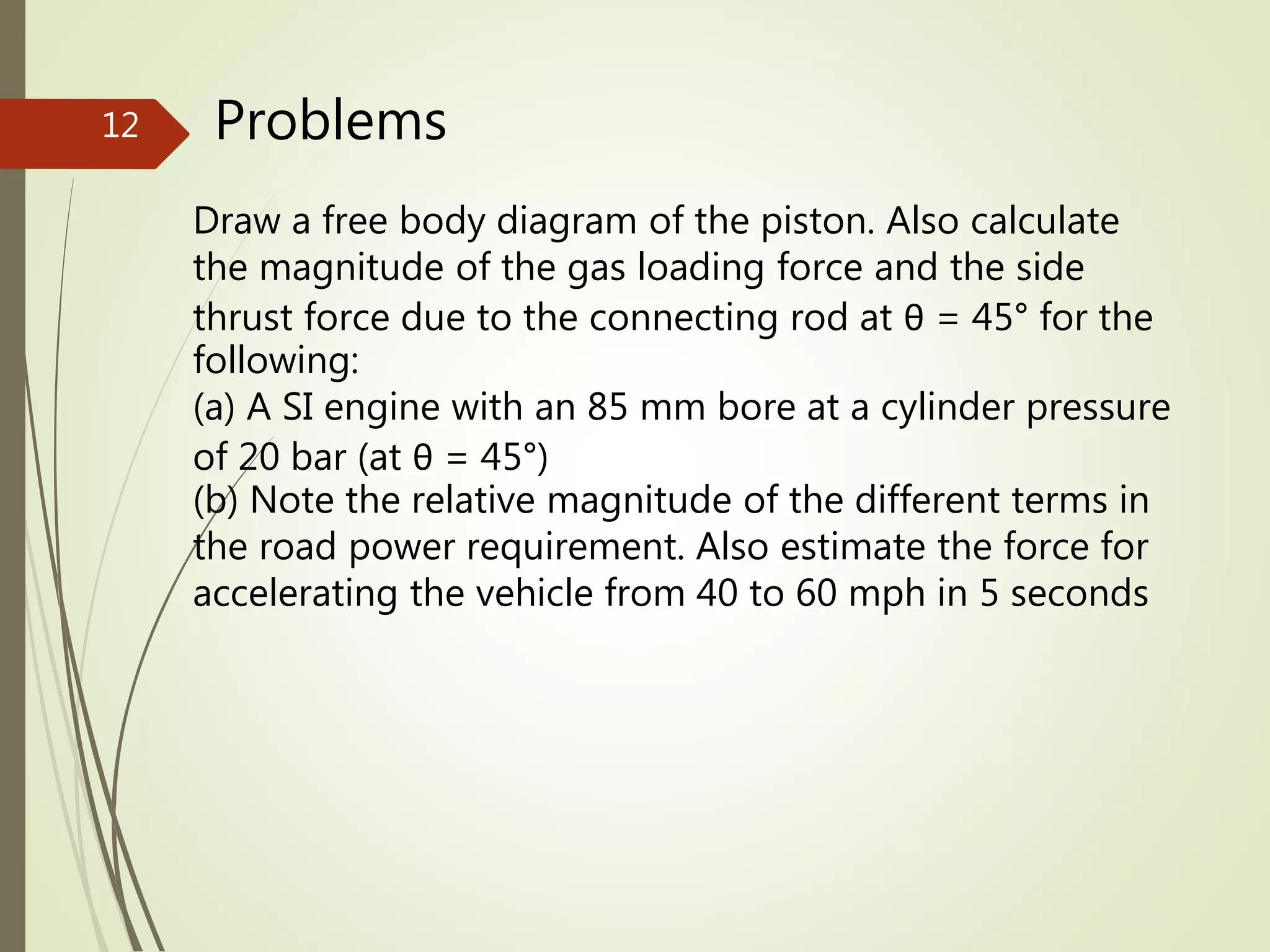
Problems
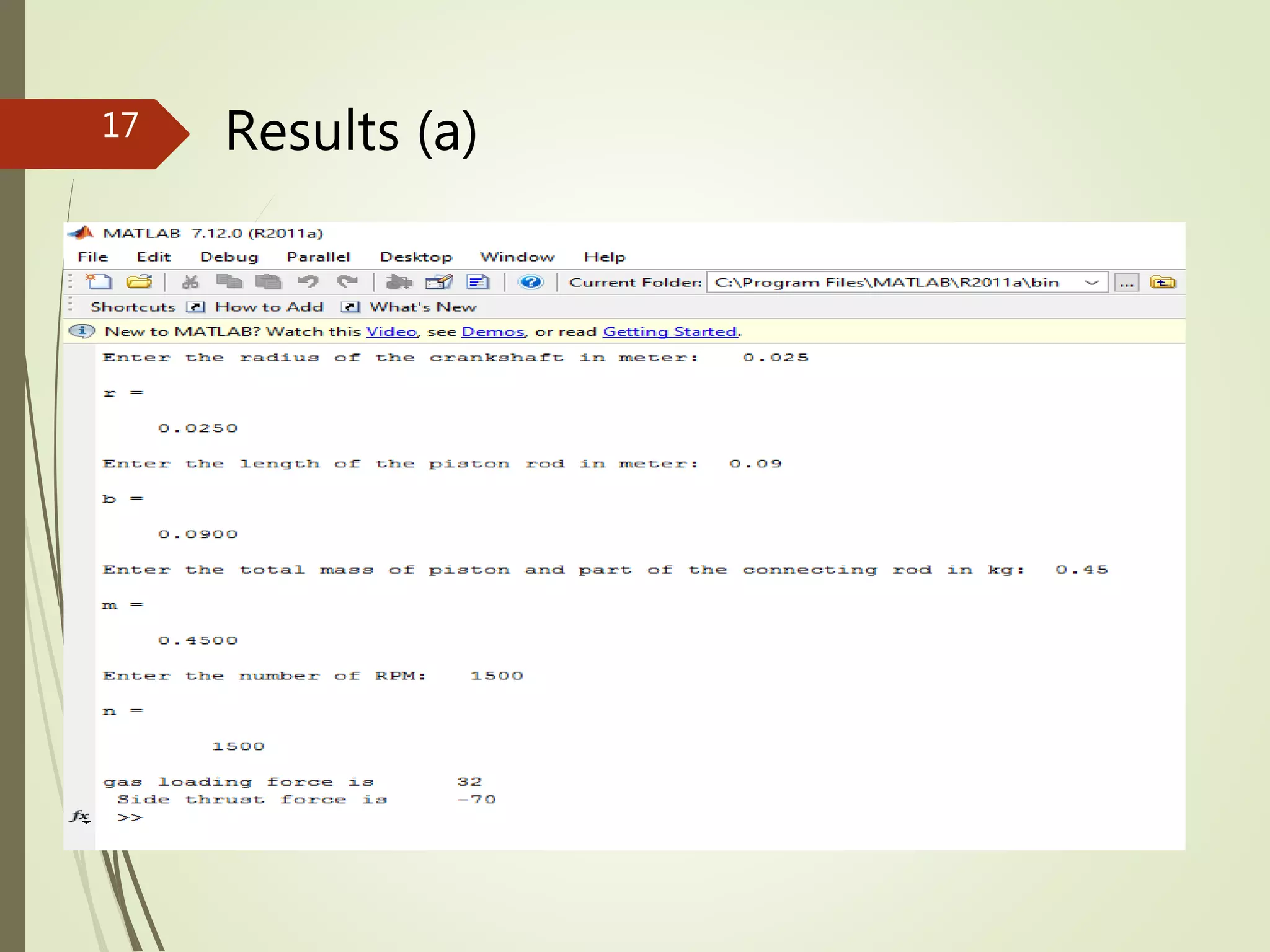
Draw a free body diagram of the piston. Also calculate
the magnitude of the gas loading force and the side
thrust force due to the connecting rod at θ = 45° for the
following:
(a) A SI engine with an 85 mm bore at a cylinder pressure
of 20 bar (at θ = 45°)
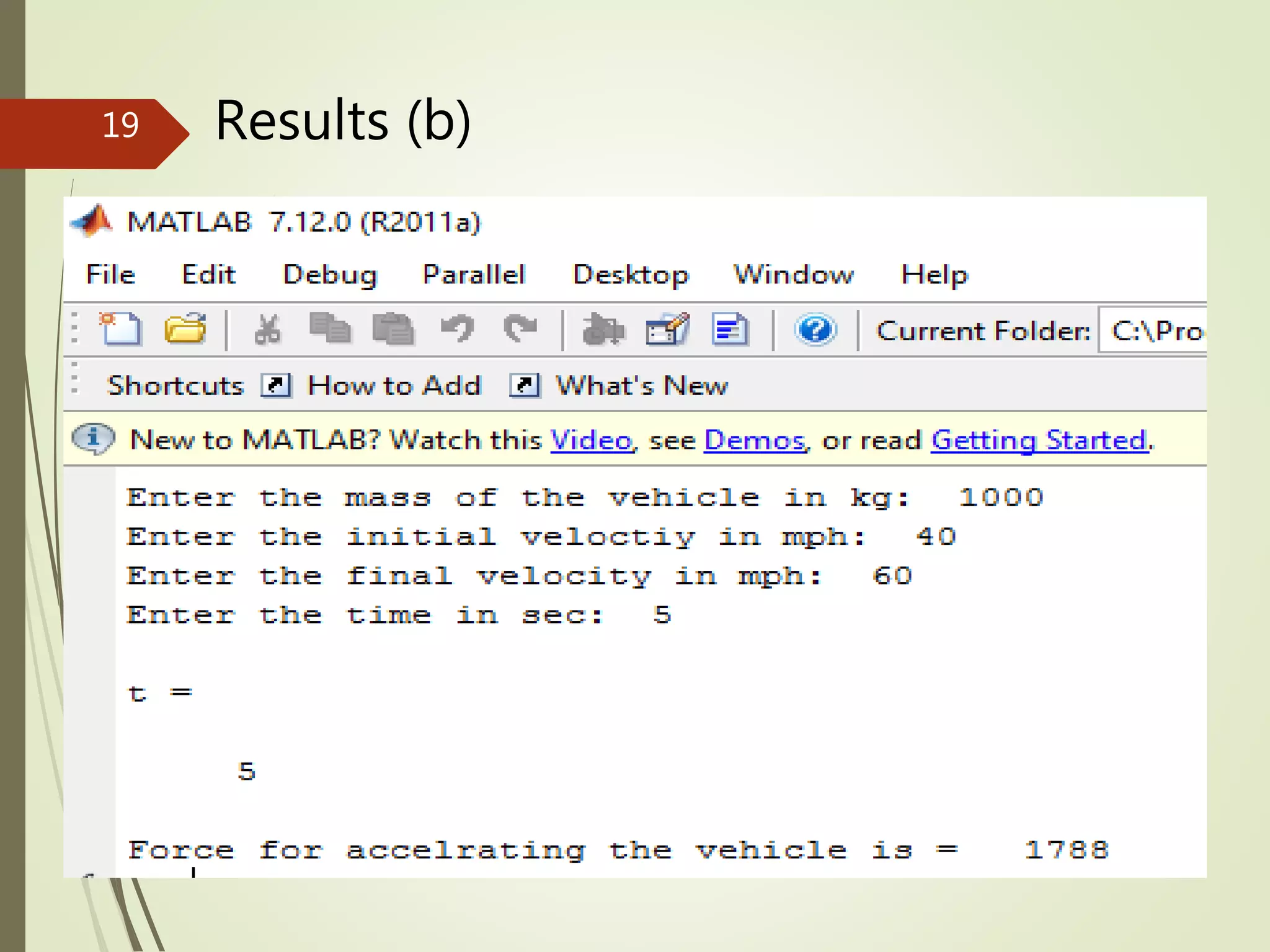
(b) Note the relative magnitude of the different terms in
the road power requirement. Also estimate the force for
accelerating the vehicle from 40 to 60 mph in 5 seconds
12
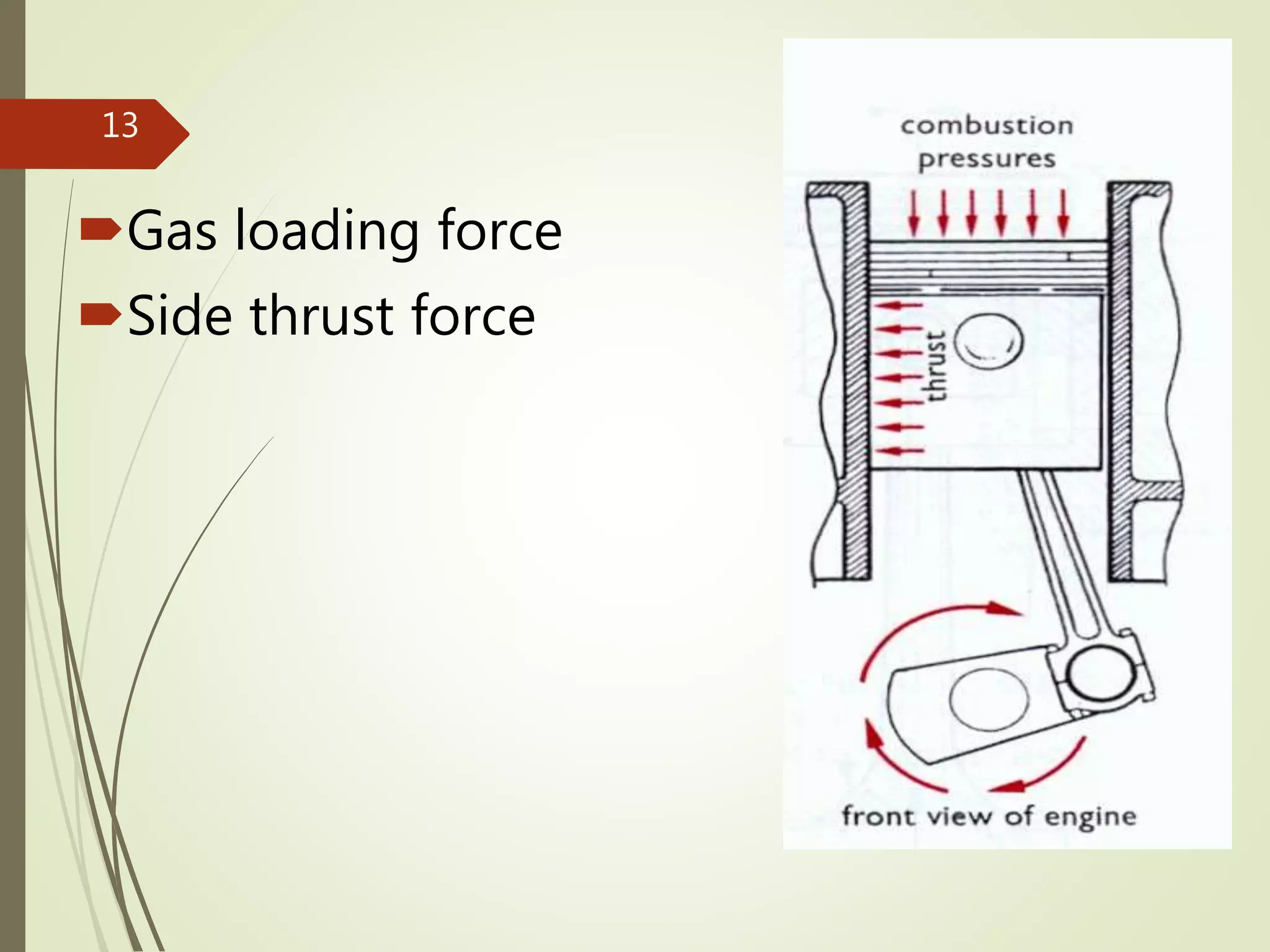
Gas loading force
Side thrust force
13
FBD of piston
 N =[ F*cos(α)/cos(φ)]- m*a - m*g
 F= P/ r* ω =P/(2πn/60)*r (N)
 Sin (φ) = r*sin(θ)/b => φ=sin–1 (r*sin(θ)/b)
 θ+ φ+ α = 90o
 α = 90o – [θ+ sin –1(r*sin(θ)/b)]
 m = piston + connecting rod
 a = r*ω2*[cos(θ)+cos(2* θ)/(2*b/r)]
 N= [F*cos{90o–[θ+ sin –1(r*sin(θ)/b)]}*
cos{ sin–1 (r*sin(θ)/b)}]-m*a-m*g
14
 F(thrust) = F*cos(α)*sin(φ)
 F(thrust)= F*cos{90o – [θ+ sin –1(r*sin(θ)/b)]}* r*sin(θ)/b
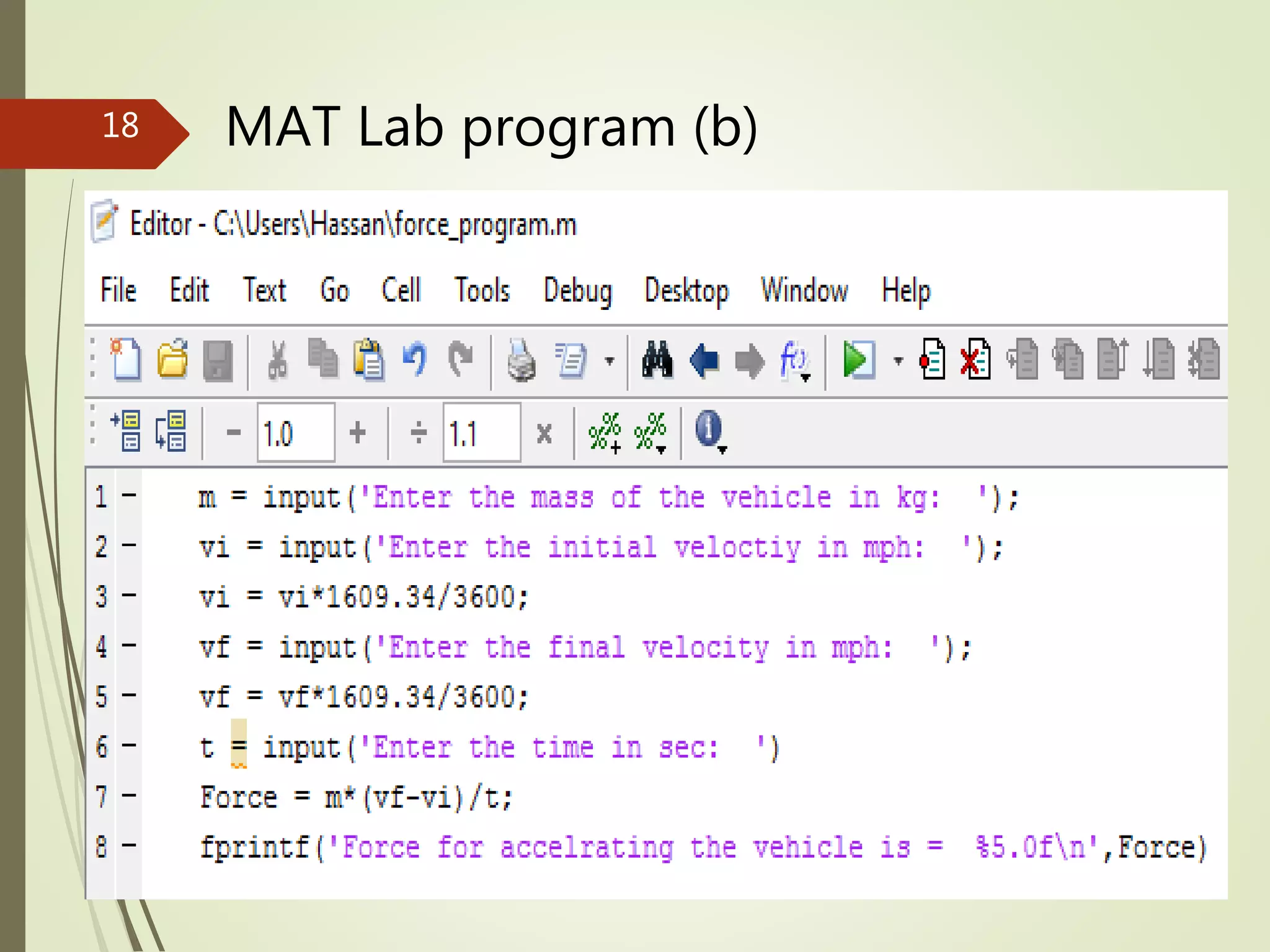
 Force for accelrating the piston
F=m*a=m*(vf-vi)/t
15
MAT Lab program (a)16
Results (a)17
MAT Lab program (b)18
Results (b)19
Thank you
Any question
20

Internal Combustion Engine Fundamental Concepts

  • 1.
    Internal combustion engine fundamentals Chapterno. 02 Engine design and operating parameters 1
  • 2.
     Presented by HassanRaza 2013-ME-310 M Ansar Alam 2013-ME-311 Zaighum Shabbiir 2013-ME-313 Soban Ahmad Sair 2013-ME-317 Junaid Khalid 2013-ME-311  Presented to Dr. Shahid Imran 2
  • 3.
    Contents  Performance Definitions Geometrical properties  Torque and Power  Engine performance parameters  Design comparison  Problems 3
  • 4.
    Performance Definitions  MaximumRated Power: The maximum power developed by an engine for short period of time.  Normal Rated Power: The highest power an engine is allowed to develop in continuous operation  Rated Speed: The crank shaft rotational speed at which rated power is developed 4
  • 5.
    Torque and Power Torqueof output shaft is measured using a dynamometer The Torque exerted by the engine is T = F . B The Power (P) delivered by the engine turning at a speed N and absorbed by the dynamometer is P = ω . T = (2πN) T units: Watt 5
  • 6.
    Geometrical properties ofreciprocating engine  Compression ratio 𝑟𝑐 = 𝑉𝑑 + 𝑉𝑐 𝑉𝐶  Ratio of cylinder bore to length 𝑅 𝑐 = 𝐵 𝐿 ; 𝑤ℎ𝑒𝑟𝑒 𝐿 = 2𝑎  Ratio of connecting rod length to crank radius 𝑅 = 𝑙 𝑎 6
  • 7.
     Cylinder volumeat any crank position 𝑉 = 𝑉𝑐 + 𝜋𝐵2 4 𝑙 + 𝑎 − 𝑠  Distance between crank shaft and piston at different crank positions 𝑠 = 𝑎𝑐𝑜𝑠𝜃 + (𝑙2 − 𝑎2 𝑠𝑖𝑛2 𝜃) 1 2  Mean piston speed and instantaneous speed 𝑆 𝑝 = 2𝐿𝑁; 𝑆 𝑝 = 𝑑𝑠 𝑑𝑡 7
  • 8.
    Engine performance parameters Indicated power 𝑃𝑖 = 𝑊𝑐,𝑖 𝑁 𝑛 𝑅 ; 𝑛 𝑅 = 2; 𝑓𝑜𝑟 4 𝑠𝑡𝑟𝑜𝑘𝑒 𝑛 𝑅 = 1; 𝑓𝑜𝑟 2 𝑠𝑡𝑟𝑜𝑘𝑒  Brake power and frictional loss 𝑃𝑖𝑔 = 𝑃𝑏 + 𝑃𝑓 8
  • 9.
      Mechanical efficiency Ƞ𝑚 = 𝑃𝑏 𝑃𝑖𝑔 = 1 − 𝑃𝑓 𝑃𝑖𝑔  Mean effective pressure 𝑚𝑒𝑝 = 𝑃𝑛 𝑅 𝑉𝑑 𝑁  Efficiency related to specific fuel consumption 𝑠𝑓𝑐 = 𝑚 𝑓 𝑃 Ƞ 𝑓 = 1 𝑠𝑓𝑐𝑄 𝐻𝑉 9
  • 10.
     Air tofuel & fuel to air ratio 𝐴 𝐹 = 𝑚 𝑎 𝑚 𝑓 ; 𝐹 𝐴 = 𝑚 𝑓 𝑚 𝑎  Volumetric efficiency Ƞ 𝑣 = 𝑚 𝑎 𝜌 𝑎,𝑖 𝑉𝑑 10
  • 11.
    Design comparison SI Engines 𝑟𝑐 = 8 𝑡𝑜12  𝐵 𝐿 = 0.8 𝑡𝑜 1.2  𝑅 = 3 𝑡𝑜 4  𝑚𝑒𝑝 = 850 𝑡𝑜1050 𝑘𝑃𝐴  𝑠𝑓𝑐 = 270 𝑔/𝑘𝑊ℎ  12 ≤ 𝐴 𝐹 ≤ 18 CI Engine  𝑟𝑐 = 12 𝑡𝑜 24  𝐵 𝐿 = 0.5  𝑅 = 5 𝑡𝑜 9  𝑚𝑒𝑝700 𝑡𝑜 900 𝑘𝑃𝐴  𝑠𝑓𝑐 = 200 𝑔/𝑘𝑊ℎ  18 ≤ 𝐴 𝐹 ≤ 70 11
  • 12.
    Problems Draw a freebody diagram of the piston. Also calculate the magnitude of the gas loading force and the side thrust force due to the connecting rod at θ = 45° for the following: (a) A SI engine with an 85 mm bore at a cylinder pressure of 20 bar (at θ = 45°) (b) Note the relative magnitude of the different terms in the road power requirement. Also estimate the force for accelerating the vehicle from 40 to 60 mph in 5 seconds 12
  • 13.
  • 14.
    FBD of piston N =[ F*cos(α)/cos(φ)]- m*a - m*g  F= P/ r* ω =P/(2πn/60)*r (N)  Sin (φ) = r*sin(θ)/b => φ=sin–1 (r*sin(θ)/b)  θ+ φ+ α = 90o  α = 90o – [θ+ sin –1(r*sin(θ)/b)]  m = piston + connecting rod  a = r*ω2*[cos(θ)+cos(2* θ)/(2*b/r)]  N= [F*cos{90o–[θ+ sin –1(r*sin(θ)/b)]}* cos{ sin–1 (r*sin(θ)/b)}]-m*a-m*g 14
  • 15.
     F(thrust) =F*cos(α)*sin(φ)  F(thrust)= F*cos{90o – [θ+ sin –1(r*sin(θ)/b)]}* r*sin(θ)/b  Force for accelrating the piston F=m*a=m*(vf-vi)/t 15
  • 16.
  • 17.
  • 18.
  • 19.
  • 20.