COMBUSTION AND ITS EFFECTS ON
ENGINE CYCLE
PRESENTED BY
Uzair Aslam (2014-ME-313)
Muhammad Talha Aziz (2014-ME-311)
Anees Ahmad Khan (2014-ME-340)
Khurram Ahmad (2014-ME-329)
COMBUSTION
 In an internal combustion engine the ignition and combustion of the fuel occurs within the engine
itself. The engine then partially converts the energy from the combustion to work
 Combustion controls
 Engine power
 Efficiency
 Emissions
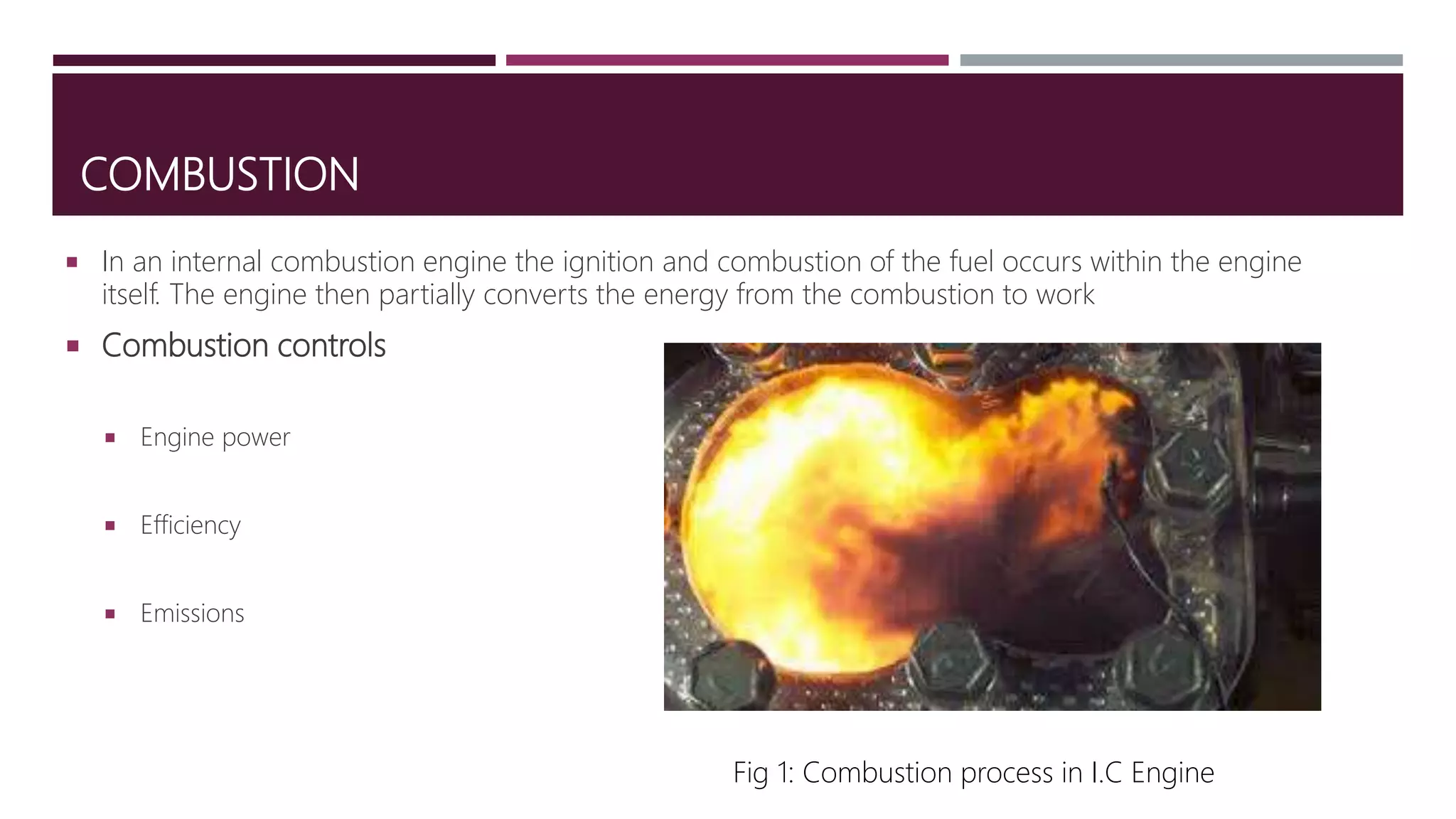
Fig 1: Combustion process in I.C Engine
TYPES OF COMBUSTION
 Normal combustion:
• Initiated solely by a timed spark
• in which the flame front moves completely across the combustion chamber in a uniform manner at a normal
velocity.
 Abnormal combustion:
• flame front is started by hot combustion-chamber surfaces
• either prior to or after spark ignition
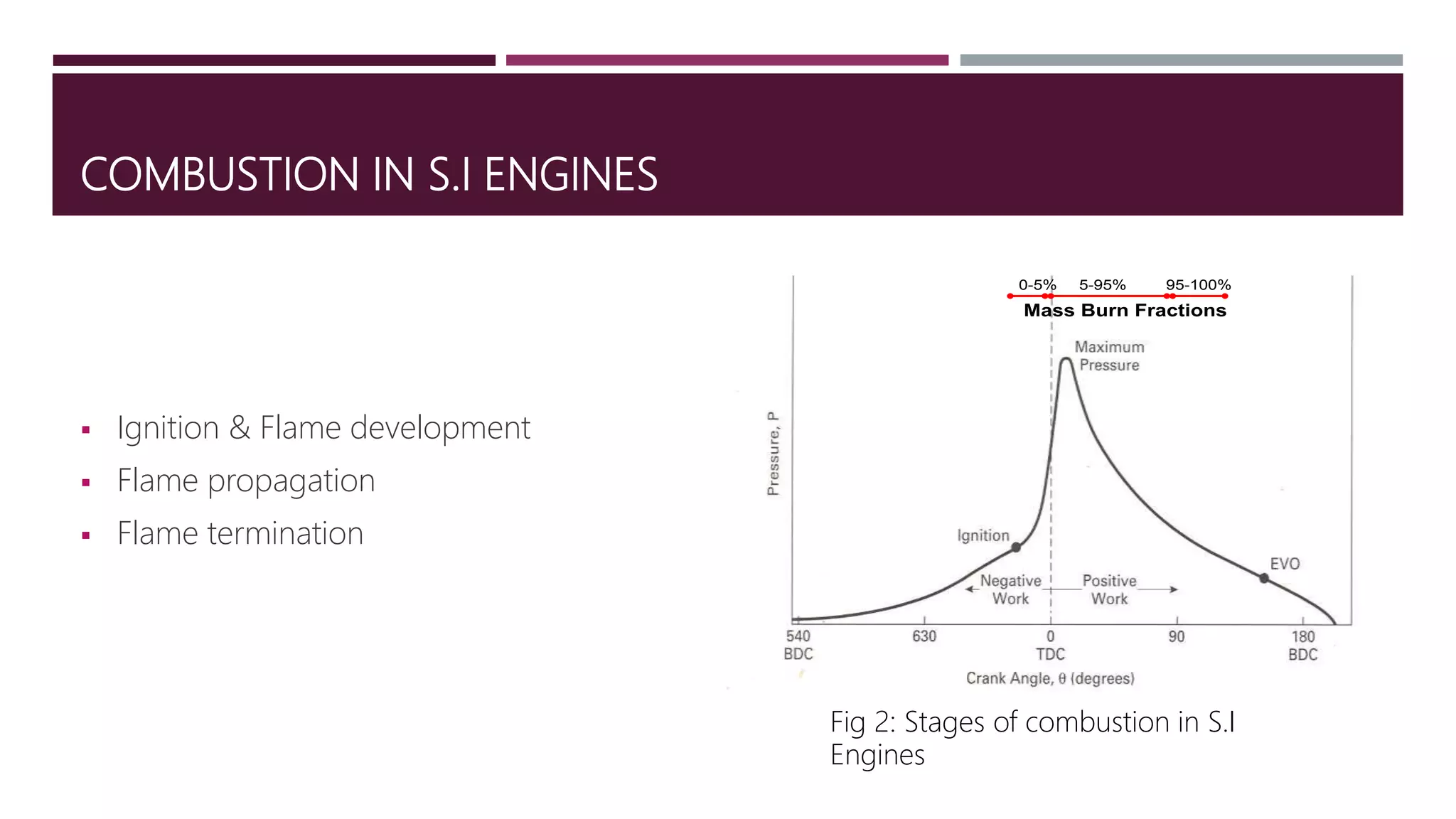
COMBUSTION IN S.I ENGINES
 Ignition & Flame development
 Flame propagation
 Flame termination
Mass Burn Fractions
0-5% 5-95% 95-100%
Mass Burn Fractions
0-5% 5-95% 95-100%
Fig 2: Stages of combustion in S.I
Engines
FACTORS AFFECTING COMBUSTION IN S.I ENGINES
 Rate of flame propagation affects the combustion process which further depends on
1. Air to Fuel ratio
2. Compression ratio
3. Engine load
4. Turbulence and engine speed
ABNORMAL COMBUSTION IN S.I ENGINES
 Knocking
 Surface ignition
 Partial burning
KNOCK
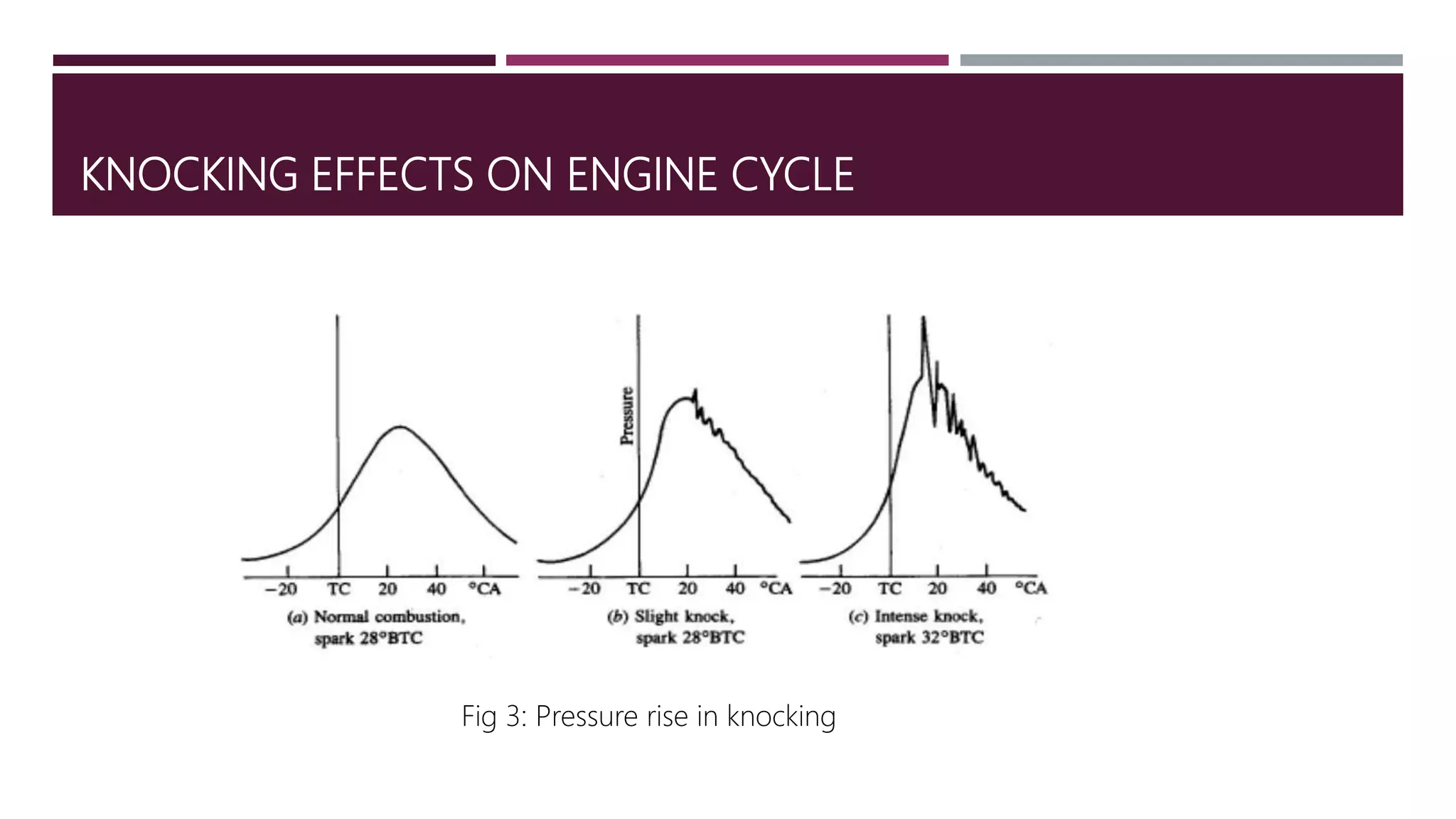
 Knock is the name given to the noise that results from the auto ignition of a portion of the
fuel, air, residual gas mixture ahead of the advancing flame.
 It creates local hot spots (Hot spots causes pre-ignition)
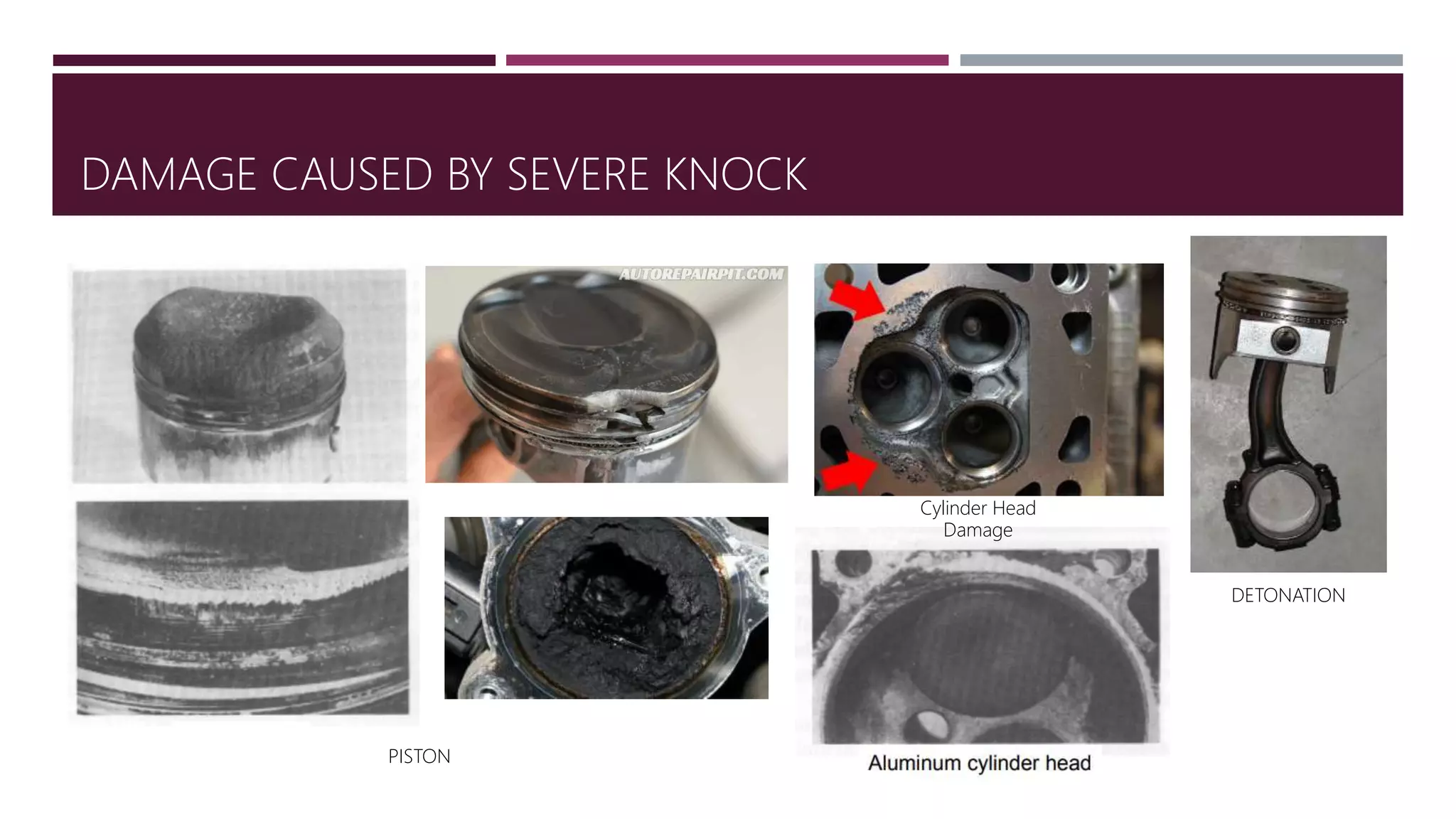
 It makes noisy, overheated, and inefficient engine, and perhaps eventual mechanical failure.
 The cylinder pressure rises beyond its design limits and if allowed to persist, it will damage or
destroy engine parts.
HOW TO CONTROL KNOCK IN ENGINE
 Fuel with higher octane rating.
 Increasing the amount of fuel injected
 Retardation of spark plug ignition
 Colder heat range spark plug (where the spark plug insulator has become a source of pre-
ignition leading to knock)
 Reduction of charge temperatures
KNOCKING EFFECTS ON ENGINE CYCLE
Fig 3: Pressure rise in knocking
DAMAGE CAUSED BY SEVERE KNOCK
PISTON
DETONATION
Cylinder Head
Damage
STEPS OF COMBUSTION IN C.I ENGINES
 After injection the fuel must go through a series of events to assure the proper combustion
process:
 Atomization
 Vaporization Mixing
 Self-Ignition
 Combustion
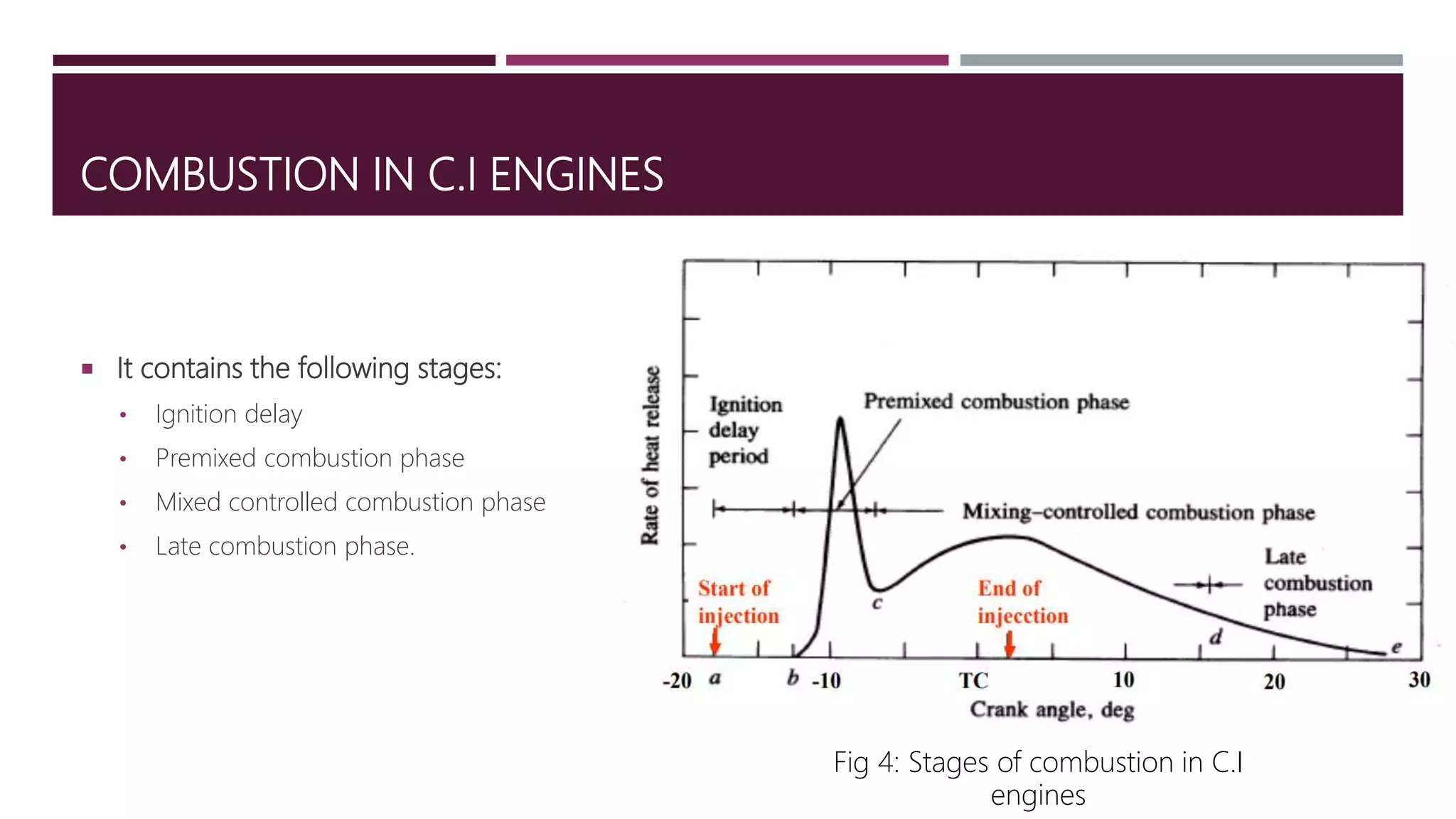
COMBUSTION IN C.I ENGINES
 It contains the following stages:
• Ignition delay
• Premixed combustion phase
• Mixed controlled combustion phase
• Late combustion phase.
Fig 4: Stages of combustion in C.I
engines
KNOCKING
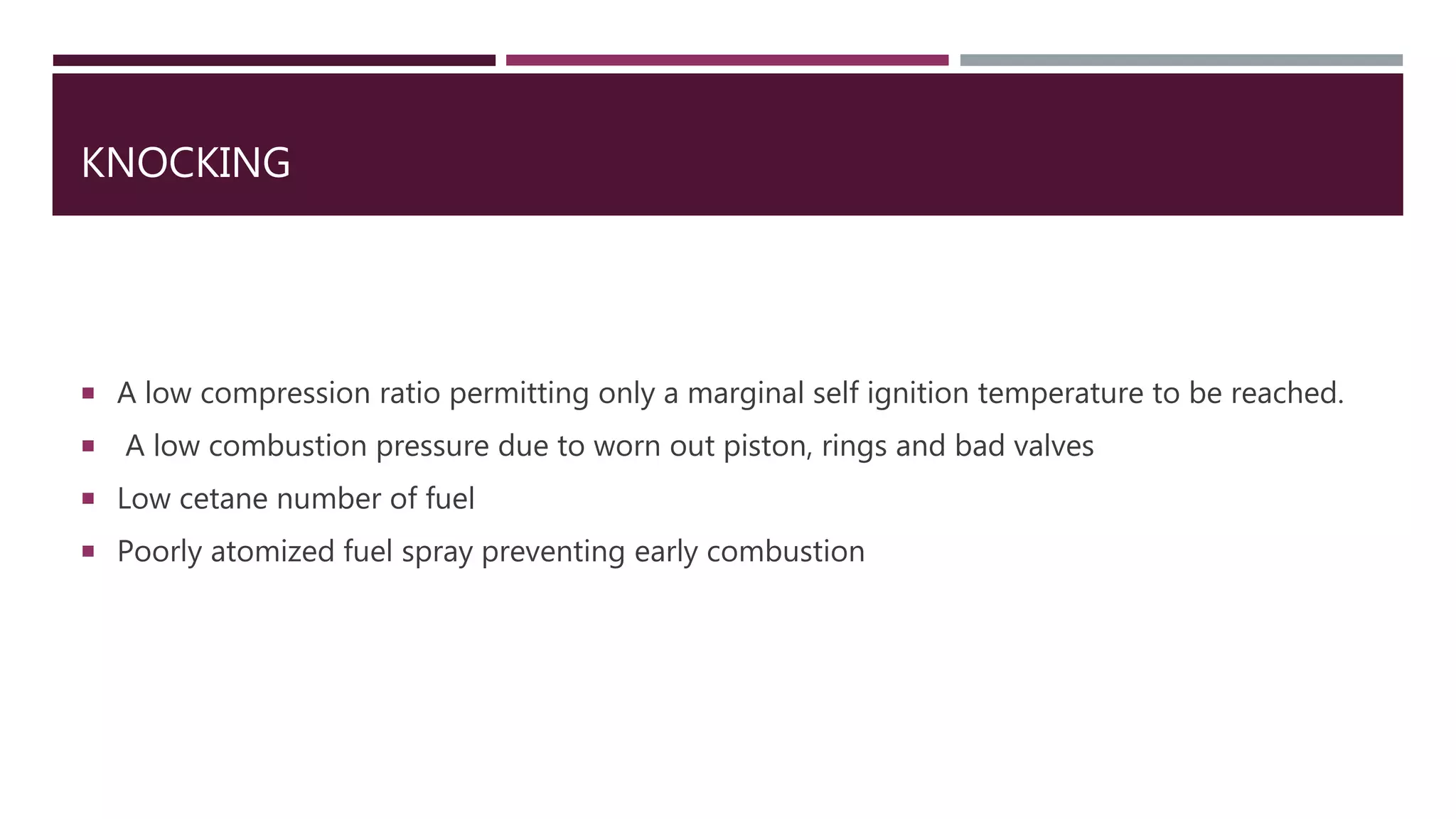
 A low compression ratio permitting only a marginal self ignition temperature to be reached.
 A low combustion pressure due to worn out piston, rings and bad valves
 Low cetane number of fuel
 Poorly atomized fuel spray preventing early combustion
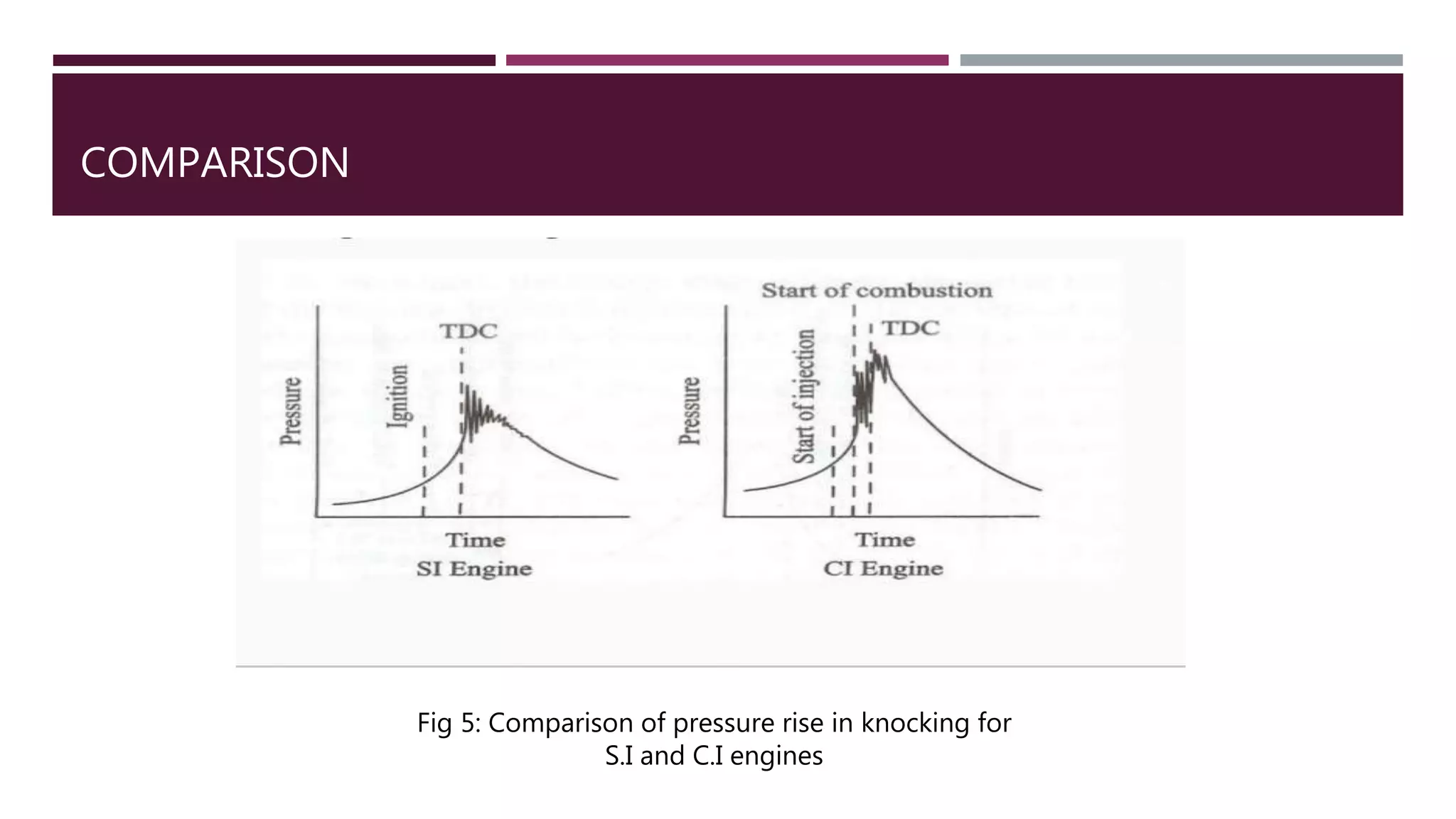
COMPARISON
Fig 5: Comparison of pressure rise in knocking for
S.I and C.I engines

Combustion and its effects on Engine Cycles

  • 1.
    COMBUSTION AND ITSEFFECTS ON ENGINE CYCLE PRESENTED BY Uzair Aslam (2014-ME-313) Muhammad Talha Aziz (2014-ME-311) Anees Ahmad Khan (2014-ME-340) Khurram Ahmad (2014-ME-329)
  • 2.
    COMBUSTION  In aninternal combustion engine the ignition and combustion of the fuel occurs within the engine itself. The engine then partially converts the energy from the combustion to work  Combustion controls  Engine power  Efficiency  Emissions Fig 1: Combustion process in I.C Engine
  • 3.
    TYPES OF COMBUSTION Normal combustion: • Initiated solely by a timed spark • in which the flame front moves completely across the combustion chamber in a uniform manner at a normal velocity.  Abnormal combustion: • flame front is started by hot combustion-chamber surfaces • either prior to or after spark ignition
  • 4.
    COMBUSTION IN S.IENGINES  Ignition & Flame development  Flame propagation  Flame termination Mass Burn Fractions 0-5% 5-95% 95-100% Mass Burn Fractions 0-5% 5-95% 95-100% Fig 2: Stages of combustion in S.I Engines
  • 5.
    FACTORS AFFECTING COMBUSTIONIN S.I ENGINES  Rate of flame propagation affects the combustion process which further depends on 1. Air to Fuel ratio 2. Compression ratio 3. Engine load 4. Turbulence and engine speed
  • 6.
    ABNORMAL COMBUSTION INS.I ENGINES  Knocking  Surface ignition  Partial burning
  • 7.
    KNOCK  Knock isthe name given to the noise that results from the auto ignition of a portion of the fuel, air, residual gas mixture ahead of the advancing flame.  It creates local hot spots (Hot spots causes pre-ignition)  It makes noisy, overheated, and inefficient engine, and perhaps eventual mechanical failure.  The cylinder pressure rises beyond its design limits and if allowed to persist, it will damage or destroy engine parts.
  • 8.
    HOW TO CONTROLKNOCK IN ENGINE  Fuel with higher octane rating.  Increasing the amount of fuel injected  Retardation of spark plug ignition  Colder heat range spark plug (where the spark plug insulator has become a source of pre- ignition leading to knock)  Reduction of charge temperatures
  • 9.
    KNOCKING EFFECTS ONENGINE CYCLE Fig 3: Pressure rise in knocking
  • 10.
    DAMAGE CAUSED BYSEVERE KNOCK PISTON DETONATION Cylinder Head Damage
  • 11.
    STEPS OF COMBUSTIONIN C.I ENGINES  After injection the fuel must go through a series of events to assure the proper combustion process:  Atomization  Vaporization Mixing  Self-Ignition  Combustion
  • 12.
    COMBUSTION IN C.IENGINES  It contains the following stages: • Ignition delay • Premixed combustion phase • Mixed controlled combustion phase • Late combustion phase. Fig 4: Stages of combustion in C.I engines
  • 13.
    KNOCKING  A lowcompression ratio permitting only a marginal self ignition temperature to be reached.  A low combustion pressure due to worn out piston, rings and bad valves  Low cetane number of fuel  Poorly atomized fuel spray preventing early combustion
  • 14.
    COMPARISON Fig 5: Comparisonof pressure rise in knocking for S.I and C.I engines