Insolation and Temperature
Chapter 4
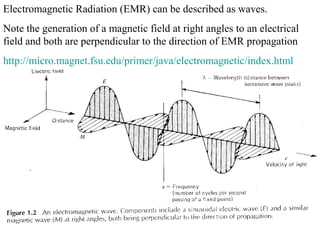
Electromagnetic Radiation (EMR) can be described as waves.
Note the generation of a magnetic field at right angles to an electrical
field and both are perpendicular to the direction of EMR propagation
http://micro.magnet.fsu.edu/primer/java/electromagnetic/index.html
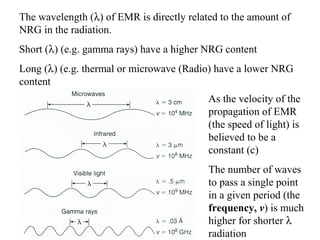
The wavelength (λ) of EMR is directly related to the amount of
NRG in the radiation.
Short (λ) (e.g. gamma rays) have a higher NRG content
Long (λ) (e.g. thermal or microwave (Radio) have a lower NRG
content
As the velocity of the
propagation of EMR
(the speed of light) is
believed to be a
constant (c)
The number of waves
to pass a single point
in a given period (the
frequency, v) is much
higher for shorter λ
radiation
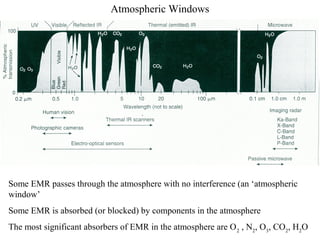
Atmospheric Windows
Some EMR passes through the atmosphere with no interference (an ‘atmospheric
window’
Some EMR is absorbed (or blocked) by components in the atmosphere
The most significant absorbers of EMR in the atmosphere are O2
, N2
, O3
, CO2
, H2
O
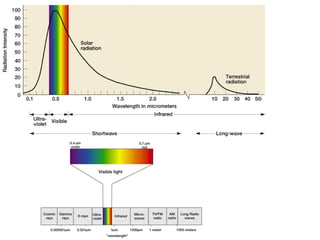
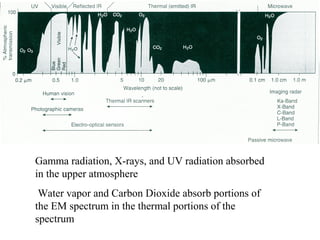
Gamma radiation, X-rays, and UV radiation absorbed
in the upper atmosphere
Water vapor and Carbon Dioxide absorb portions of
the EM spectrum in the thermal portions of the
spectrum
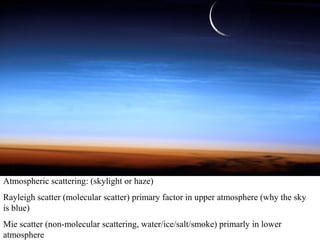
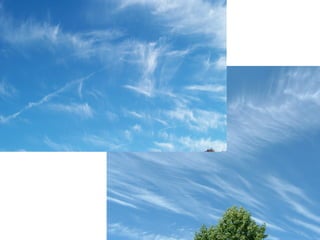
Atmospheric scattering: (skylight or haze)
Rayleigh scatter (molecular scatter) primary factor in upper atmosphere (why the sky
is blue)
Mie scatter (non-molecular scattering, water/ice/salt/smoke) primarly in lower
atmosphere
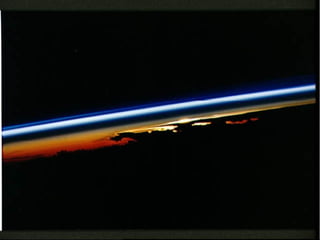
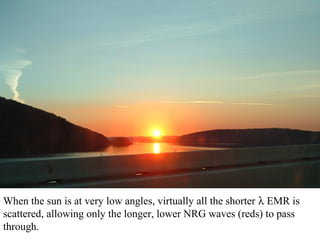
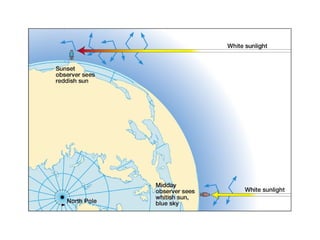
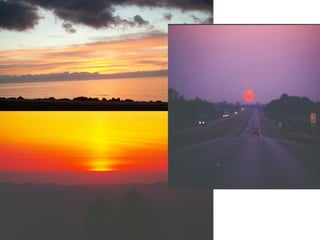
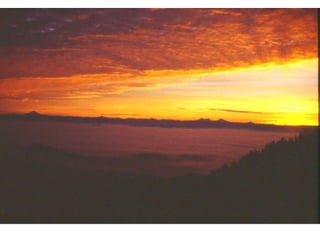
When the sun is at very low angles, virtually all the shorter λ EMR is
scattered, allowing only the longer, lower NRG waves (reds) to pass
through.
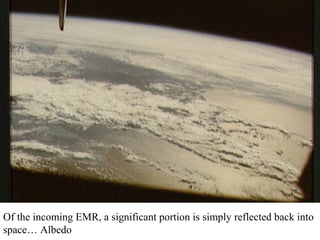
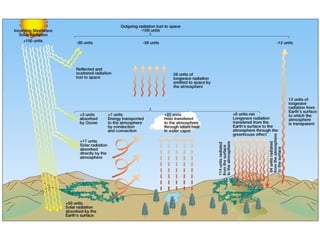
Of the incoming EMR, a significant portion is simply reflected back into
space… Albedo
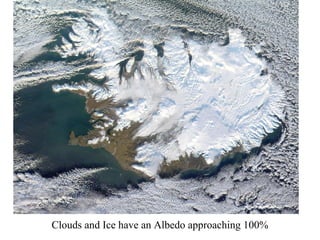
Clouds and Ice have an Albedo approaching 100%
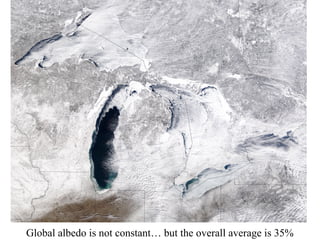
Global albedo is not constant… but the overall average is 35%
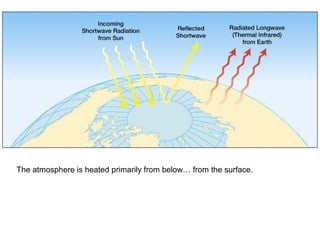
The atmosphere is heated primarily from below… from the surface.
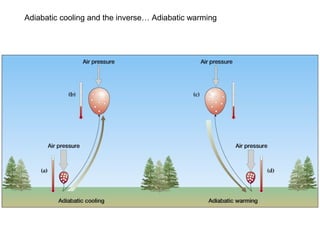
Adiabatic cooling and the inverse… Adiabatic warming
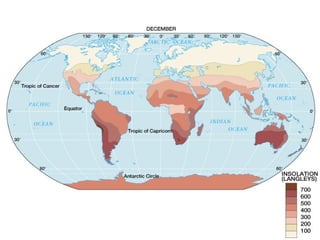
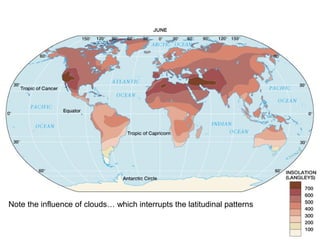
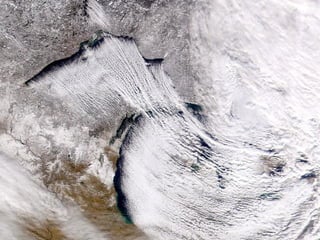
Note the influence of clouds… which interrupts the latitudinal patterns
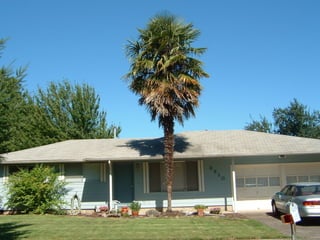
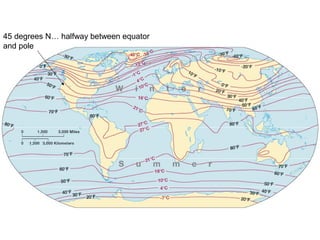
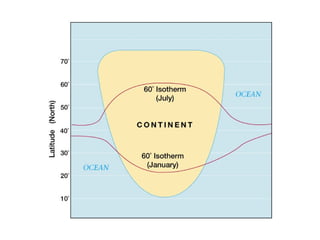
45 degrees N… halfway between equator
and pole
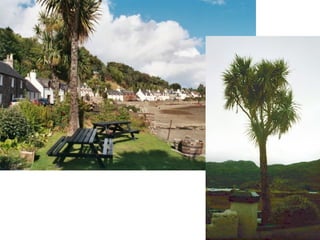
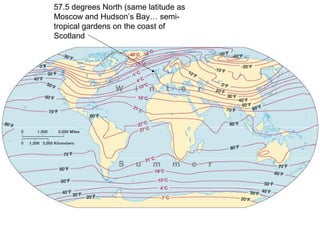
57.5 degrees North (same latitude as
Moscow and Hudson’s Bay… semi-
tropical gardens on the coast of
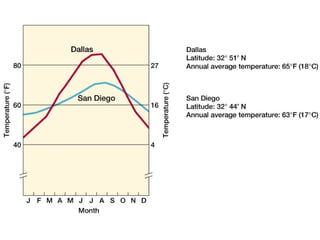
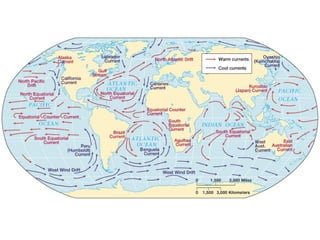
Scotland
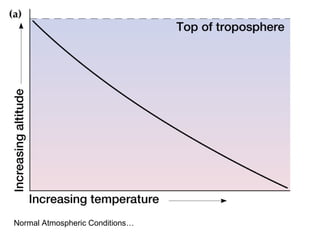
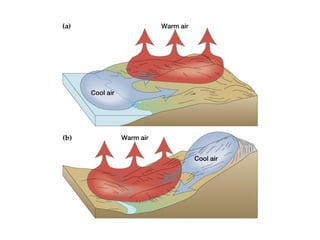
Normal Atmospheric Conditions…
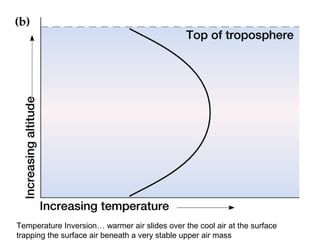
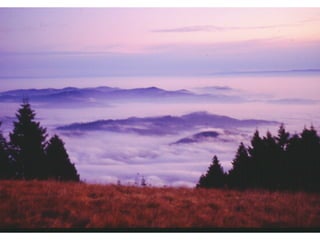
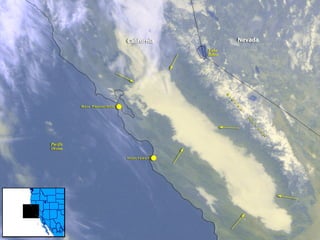
Temperature Inversion… warmer air slides over the cool air at the surface
trapping the surface air beneath a very stable upper air mass
Insolation and temperature

Insolation and temperature

  • 1.
  • 2.
    Electromagnetic Radiation (EMR)can be described as waves. Note the generation of a magnetic field at right angles to an electrical field and both are perpendicular to the direction of EMR propagation http://micro.magnet.fsu.edu/primer/java/electromagnetic/index.html
  • 3.
    The wavelength (λ)of EMR is directly related to the amount of NRG in the radiation. Short (λ) (e.g. gamma rays) have a higher NRG content Long (λ) (e.g. thermal or microwave (Radio) have a lower NRG content As the velocity of the propagation of EMR (the speed of light) is believed to be a constant (c) The number of waves to pass a single point in a given period (the frequency, v) is much higher for shorter λ radiation
  • 5.
    Atmospheric Windows Some EMRpasses through the atmosphere with no interference (an ‘atmospheric window’ Some EMR is absorbed (or blocked) by components in the atmosphere The most significant absorbers of EMR in the atmosphere are O2 , N2 , O3 , CO2 , H2 O
  • 6.
    Gamma radiation, X-rays,and UV radiation absorbed in the upper atmosphere Water vapor and Carbon Dioxide absorb portions of the EM spectrum in the thermal portions of the spectrum
  • 8.
    Atmospheric scattering: (skylightor haze) Rayleigh scatter (molecular scatter) primary factor in upper atmosphere (why the sky is blue) Mie scatter (non-molecular scattering, water/ice/salt/smoke) primarly in lower atmosphere
  • 10.
    When the sunis at very low angles, virtually all the shorter λ EMR is scattered, allowing only the longer, lower NRG waves (reds) to pass through.
  • 14.
    Of the incomingEMR, a significant portion is simply reflected back into space… Albedo
  • 15.
    Clouds and Icehave an Albedo approaching 100%
  • 16.
    Global albedo isnot constant… but the overall average is 35%
  • 17.
    The atmosphere isheated primarily from below… from the surface.
  • 19.
    Adiabatic cooling andthe inverse… Adiabatic warming
  • 22.
    Note the influenceof clouds… which interrupts the latitudinal patterns
  • 30.
    45 degrees N…halfway between equator and pole
  • 32.
    57.5 degrees North(same latitude as Moscow and Hudson’s Bay… semi- tropical gardens on the coast of Scotland
  • 34.
  • 35.
    Temperature Inversion… warmerair slides over the cool air at the surface trapping the surface air beneath a very stable upper air mass