© A. Weinberg
SOL 3.11 Energy Sources
By Ms. Weinberg
© A. Weinberg
Did you ever skip a meal and find that you were
too tired to do much of anything?
Why do our bodies need
food?
© A. Weinberg
We need food to give us energy.
People are alive, and all living things and
natural processes on Earth need energy.
The main source of almost all heat and
light energy on Earth is
the sun!
© A. Weinberg
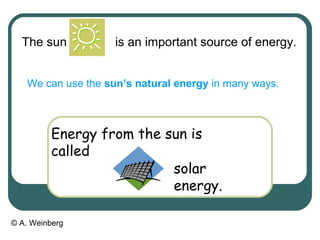
The sun is an important source of energy.
We can use the sun’s natural energy in many ways.
Energy from the sun is
called
solar
energy.
© A. Weinberg
Solar energy
is best used in
places that
receive a lot of
sunlight.
The energy is stored in solar
panels.
© A. Weinberg
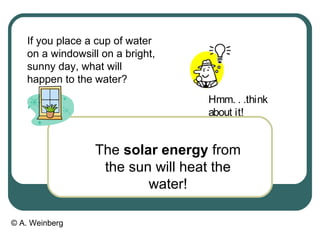
If you place a cup of water
on a windowsill on a bright,
sunny day, what will
happen to the water?
The solar energy from
the sun will heat the
water!
Hmm. . .think
about it!
© A. Weinberg
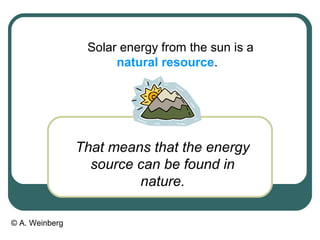
Solar energy from the sun is a
natural resource.
That means that the energy
source can be found in
nature.
© A. Weinberg
Solar energy is not the only natural
energy resource.
Wind and water are also found in nature.
They can be used to create energy.
Wind and water are natural resources.
© A. Weinberg
Wind energy is used to create
electricity.
Wind energy can only be
used in windy places, like on
mountains.
Wind is a natural resource. It is
found in nature.
© A. Weinberg
Water is also used to create
electricity.
Water power that is used to create
electricity is called hydroelectric
power.
© A. Weinberg
Dams use moving water to make
electricity in places where there
are large bodies of water.
Hydroelectric power can run
mills that produce energy.
Oops! Wrong kind of body!
© A. Weinberg
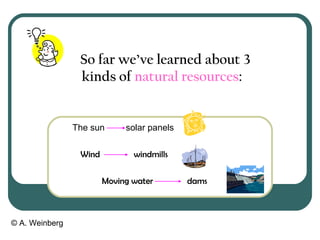
So far we’ve learned about 3
kinds of natural resources:
The sun solar panels
Wind windmills
Moving water dams
© A. Weinberg
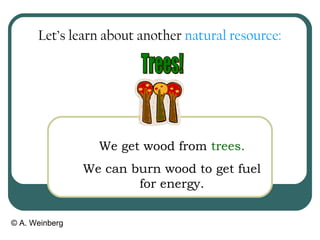
Let’s learn about another natural resource:
We get wood from trees.
We can burn wood to get fuel
for energy.
© A. Weinberg
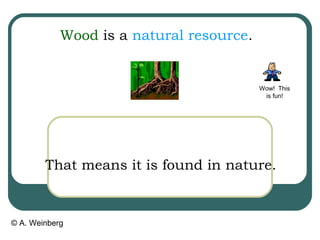
Wood is a natural resource.
That means it is found in nature.
Wow! This
is fun!
© A. Weinberg
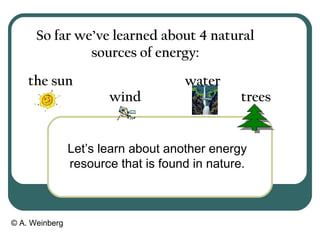
So far we’ve learned about 4 natural
sources of energy:
wind
the sun water
trees
Let’s learn about another energy
resource that is found in nature.
© A. Weinberg
Let’s learn about fossil fuels,
which are also natural
resources.
Fossil fuels are formed from
the remains of plants and
animals that lived and died
long ago.
© A. Weinberg
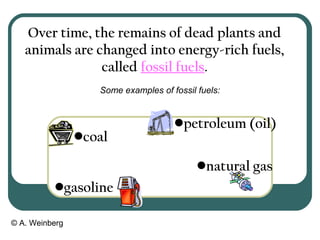
Over time, the remains of dead plants and
animals are changed into energy-rich fuels,
called fossil fuels.
Some examples of fossil fuels:
•petroleum (oil)
•coal
•natural gas
•gasoline
© A. Weinberg
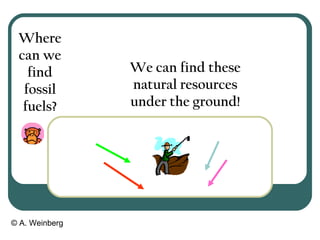
Where
can we
find
fossil
fuels?
We can find these
natural resources
under the ground!
© A. Weinberg
Now that we have
learned about different
kinds of natural
resources, let’s look at
resources a different
way.
© A. Weinberg
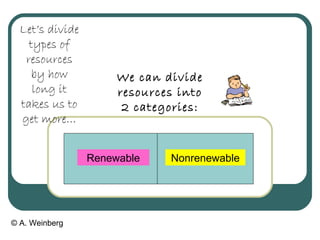
Let’s divide
types of
resources
by how
long it
takes us to
get more…
We can divide
resources into
2 categories:
Renewable Nonrenewable
© A. Weinberg
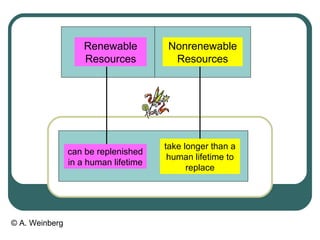
Renewable
Resources
Nonrenewable
Resources
can be replenished
in a human lifetime
take longer than a
human lifetime to
replace
© A. Weinberg
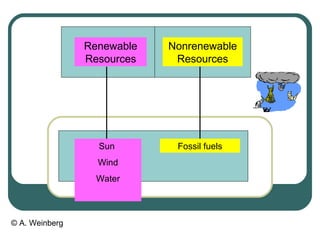
Renewable
Resources
Nonrenewable
Resources
Sun
Wind
Water
Fossil fuels
© A. Weinberg
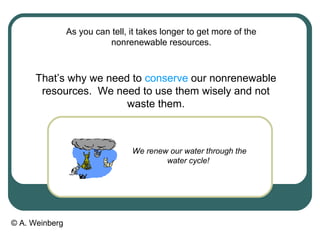
As you can tell, it takes longer to get more of the
nonrenewable resources.
That’s why we need to conserve our nonrenewable
resources. We need to use them wisely and not
waste them.
We renew our water through the
water cycle!
© A. Weinberg
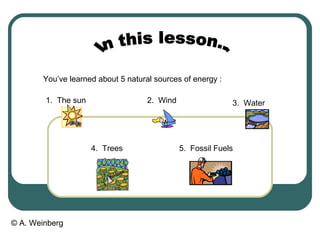
You’ve learned about 5 natural sources of energy :
1. The sun 2. Wind 3. Water
4. Trees 5. Fossil Fuels
© A. Weinberg
Those 5 sources are called
natural sources of energy
because they are found in
nature.
We can also look at energy sources a
different way.
© A. Weinberg
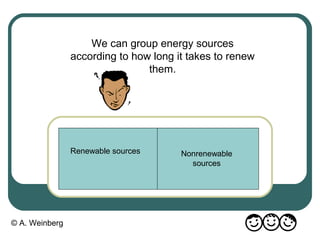
We can group energy sources
according to how long it takes to renew
them.
Renewable sources Nonrenewable
sources
© A. Weinberg
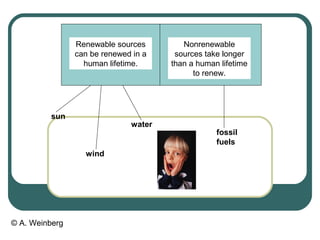
Renewable sources
can be renewed in a
human lifetime.
Nonrenewable
sources take longer
than a human lifetime
to renew.
sun
wind
water
fossil
fuels
So now you are an expert about natural energy sources!

Energy sources

  • 1.
    © A. Weinberg SOL3.11 Energy Sources By Ms. Weinberg
  • 2.
    © A. Weinberg Didyou ever skip a meal and find that you were too tired to do much of anything? Why do our bodies need food?
  • 3.
    © A. Weinberg Weneed food to give us energy. People are alive, and all living things and natural processes on Earth need energy. The main source of almost all heat and light energy on Earth is the sun!
  • 4.
    © A. Weinberg Thesun is an important source of energy. We can use the sun’s natural energy in many ways. Energy from the sun is called solar energy.
  • 5.
    © A. Weinberg Solarenergy is best used in places that receive a lot of sunlight. The energy is stored in solar panels.
  • 6.
    © A. Weinberg Ifyou place a cup of water on a windowsill on a bright, sunny day, what will happen to the water? The solar energy from the sun will heat the water! Hmm. . .think about it!
  • 7.
    © A. Weinberg Solarenergy from the sun is a natural resource. That means that the energy source can be found in nature.
  • 8.
    © A. Weinberg Solarenergy is not the only natural energy resource. Wind and water are also found in nature. They can be used to create energy. Wind and water are natural resources.
  • 9.
    © A. Weinberg Windenergy is used to create electricity. Wind energy can only be used in windy places, like on mountains. Wind is a natural resource. It is found in nature.
  • 10.
    © A. Weinberg Wateris also used to create electricity. Water power that is used to create electricity is called hydroelectric power.
  • 11.
    © A. Weinberg Damsuse moving water to make electricity in places where there are large bodies of water. Hydroelectric power can run mills that produce energy. Oops! Wrong kind of body!
  • 12.
    © A. Weinberg Sofar we’ve learned about 3 kinds of natural resources: The sun solar panels Wind windmills Moving water dams
  • 13.
    © A. Weinberg Let’slearn about another natural resource: We get wood from trees. We can burn wood to get fuel for energy.
  • 14.
    © A. Weinberg Woodis a natural resource. That means it is found in nature. Wow! This is fun!
  • 15.
    © A. Weinberg Sofar we’ve learned about 4 natural sources of energy: wind the sun water trees Let’s learn about another energy resource that is found in nature.
  • 16.
    © A. Weinberg Let’slearn about fossil fuels, which are also natural resources. Fossil fuels are formed from the remains of plants and animals that lived and died long ago.
  • 17.
    © A. Weinberg Overtime, the remains of dead plants and animals are changed into energy-rich fuels, called fossil fuels. Some examples of fossil fuels: •petroleum (oil) •coal •natural gas •gasoline
  • 18.
    © A. Weinberg Where canwe find fossil fuels? We can find these natural resources under the ground!
  • 19.
    © A. Weinberg Nowthat we have learned about different kinds of natural resources, let’s look at resources a different way.
  • 20.
    © A. Weinberg Let’sdivide types of resources by how long it takes us to get more… We can divide resources into 2 categories: Renewable Nonrenewable
  • 21.
    © A. Weinberg Renewable Resources Nonrenewable Resources canbe replenished in a human lifetime take longer than a human lifetime to replace
  • 22.
  • 23.
    © A. Weinberg Asyou can tell, it takes longer to get more of the nonrenewable resources. That’s why we need to conserve our nonrenewable resources. We need to use them wisely and not waste them. We renew our water through the water cycle!
  • 24.
    © A. Weinberg You’velearned about 5 natural sources of energy : 1. The sun 2. Wind 3. Water 4. Trees 5. Fossil Fuels
  • 25.
    © A. Weinberg Those5 sources are called natural sources of energy because they are found in nature. We can also look at energy sources a different way.
  • 26.
    © A. Weinberg Wecan group energy sources according to how long it takes to renew them. Renewable sources Nonrenewable sources
  • 27.
    © A. Weinberg Renewablesources can be renewed in a human lifetime. Nonrenewable sources take longer than a human lifetime to renew. sun wind water fossil fuels
  • 28.
    So now youare an expert about natural energy sources!