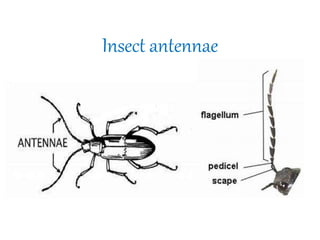
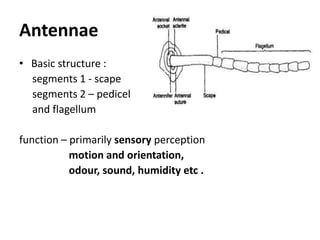
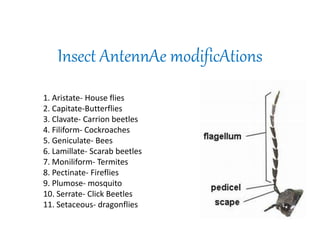
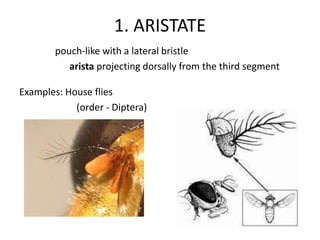
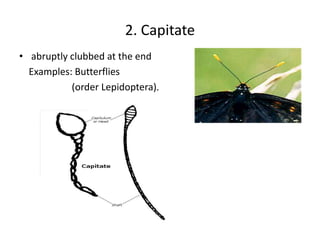
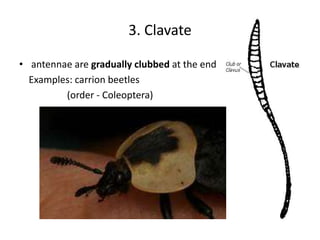
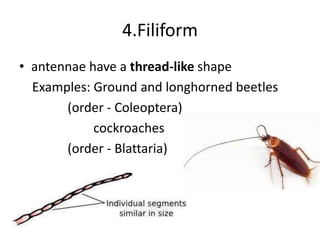
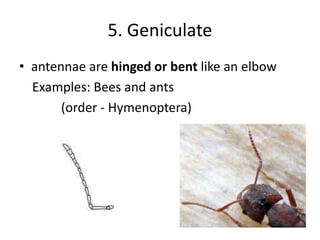
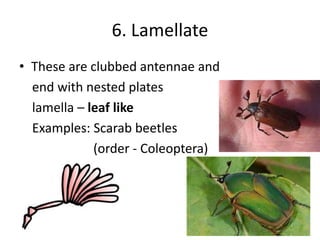
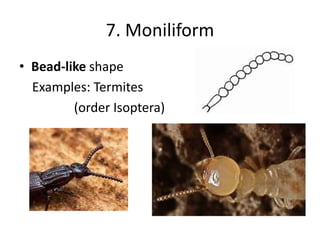
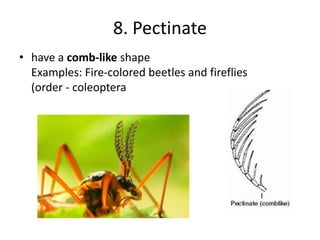
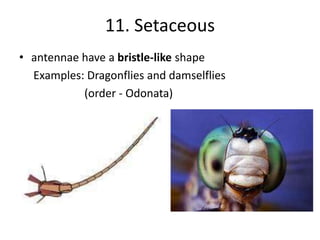
Insect antennae have basic segments and function primarily for sensory perception. They have evolved various modifications including aristate (pouch-like with bristle), capitate (clubbed at the end), clavate (gradually clubbed), filiform (thread-like), geniculate (bent like an elbow), lamellate (clubbed with nested plates), moniliform (bead-like), pectinate (comb-like), plumose (feather-like), serrate (saw-toothed), and setaceous (bristle-like). Examples of insects with these antenna modifications include house flies, butterflies, carrion beetles, cockroaches, bees, scar