Downloaded 129 times
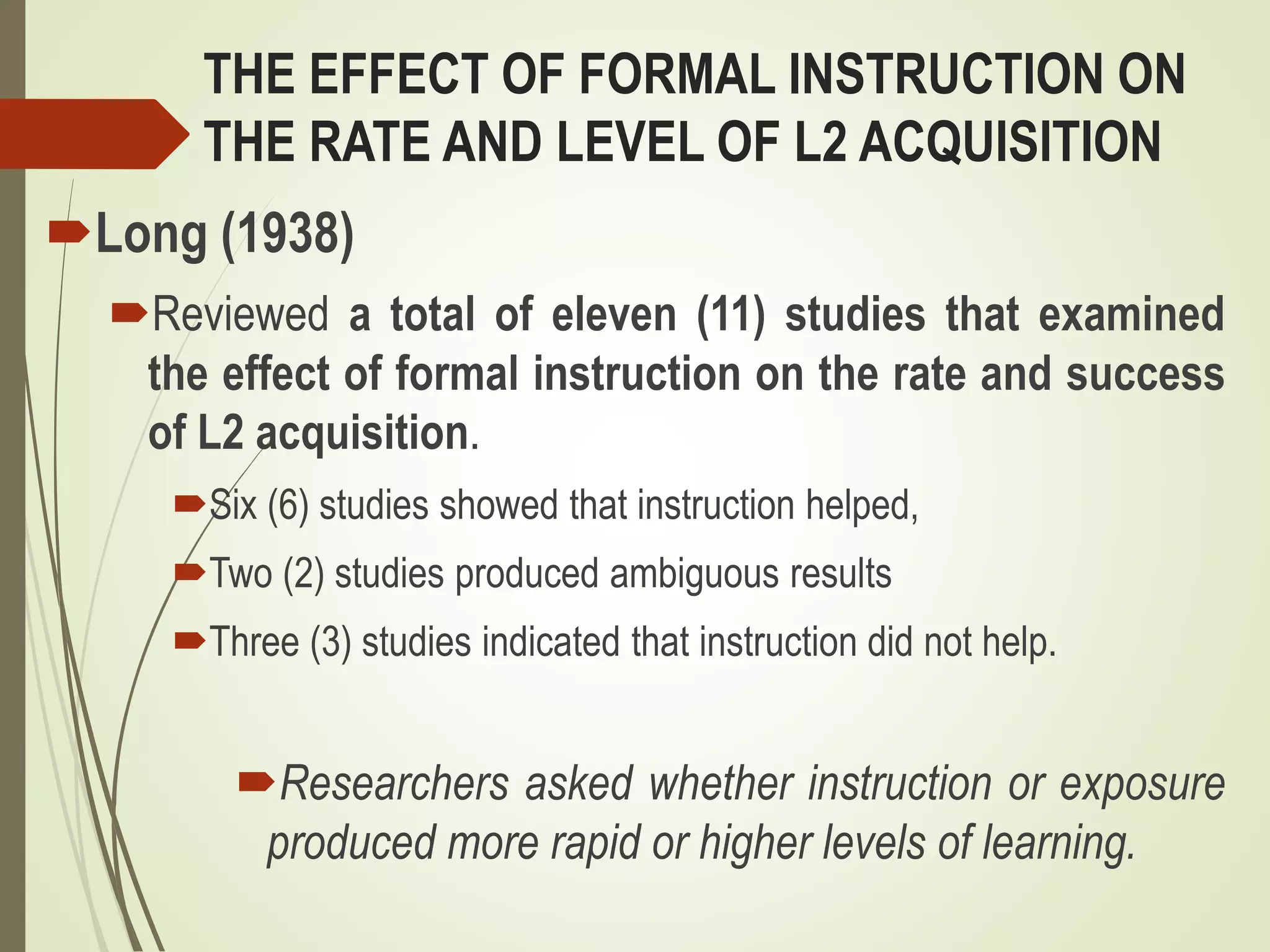
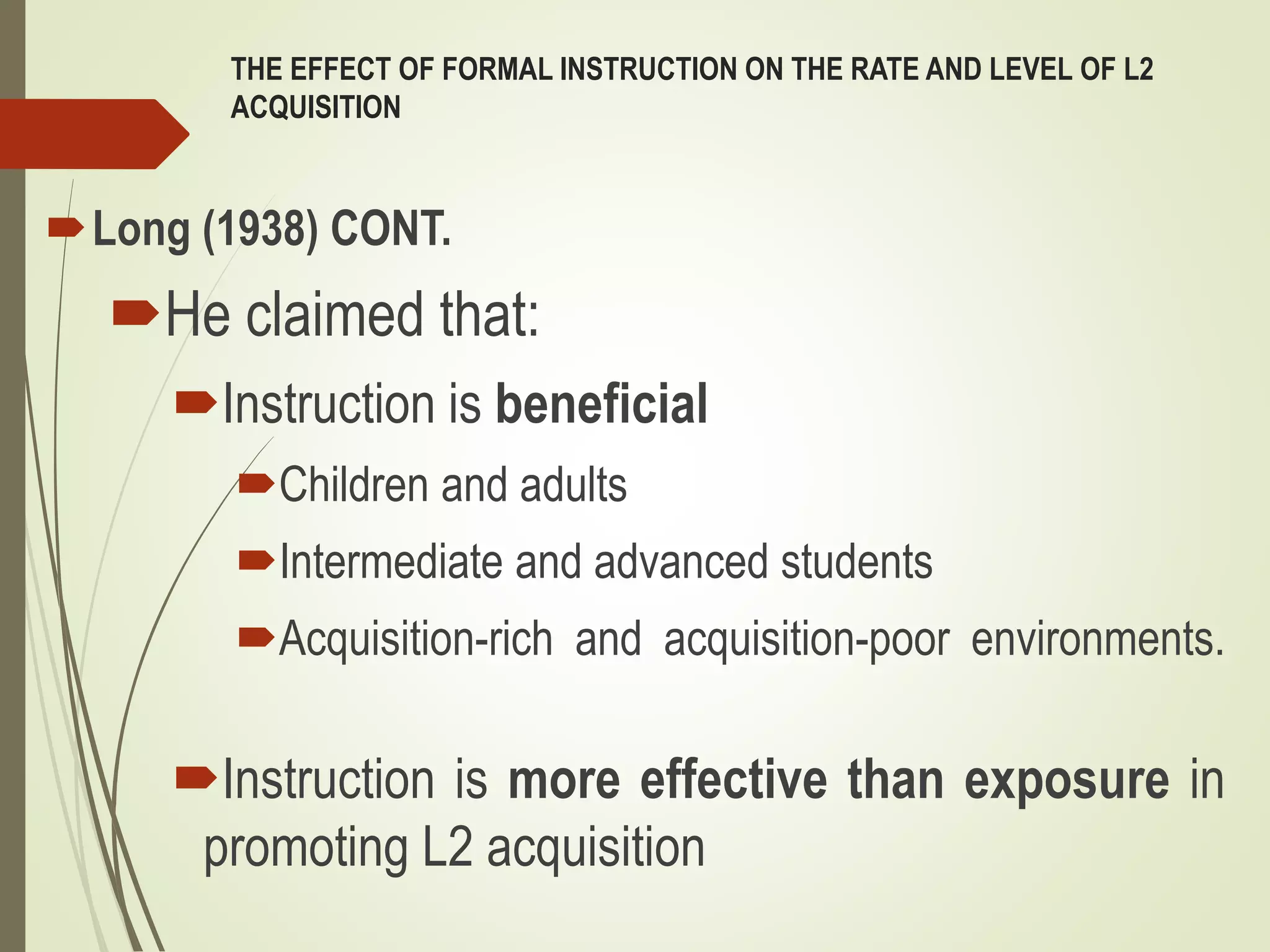
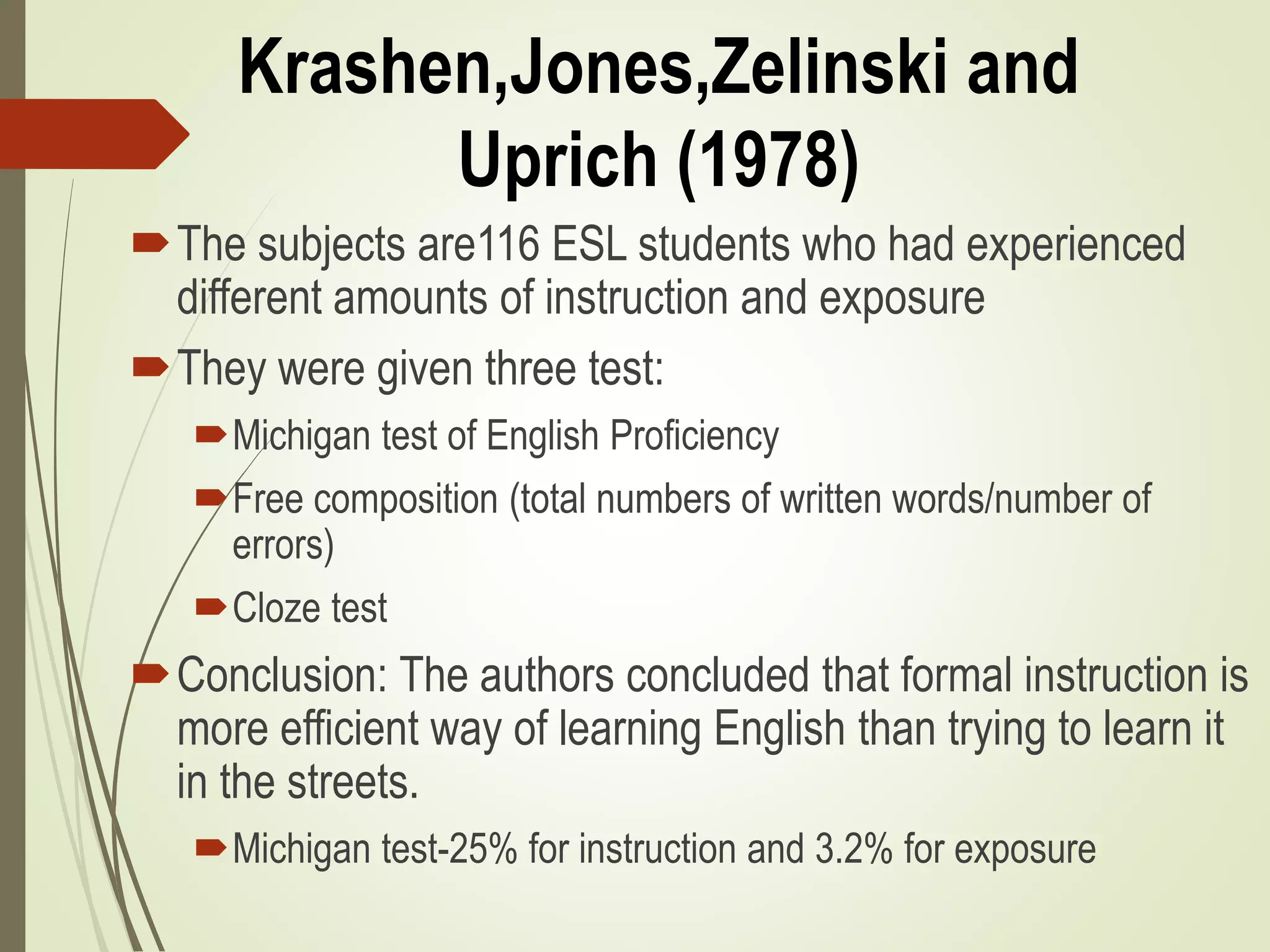
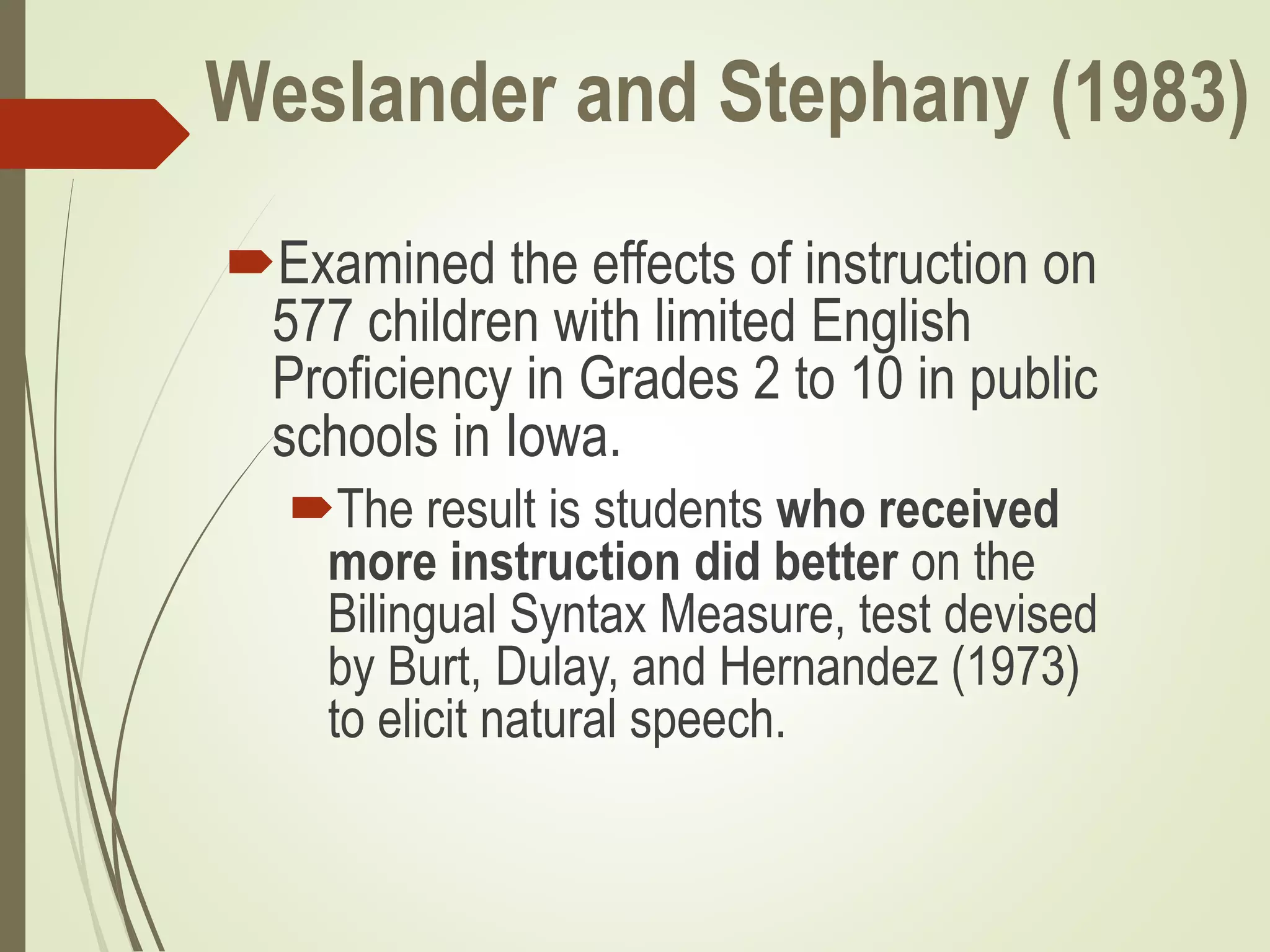
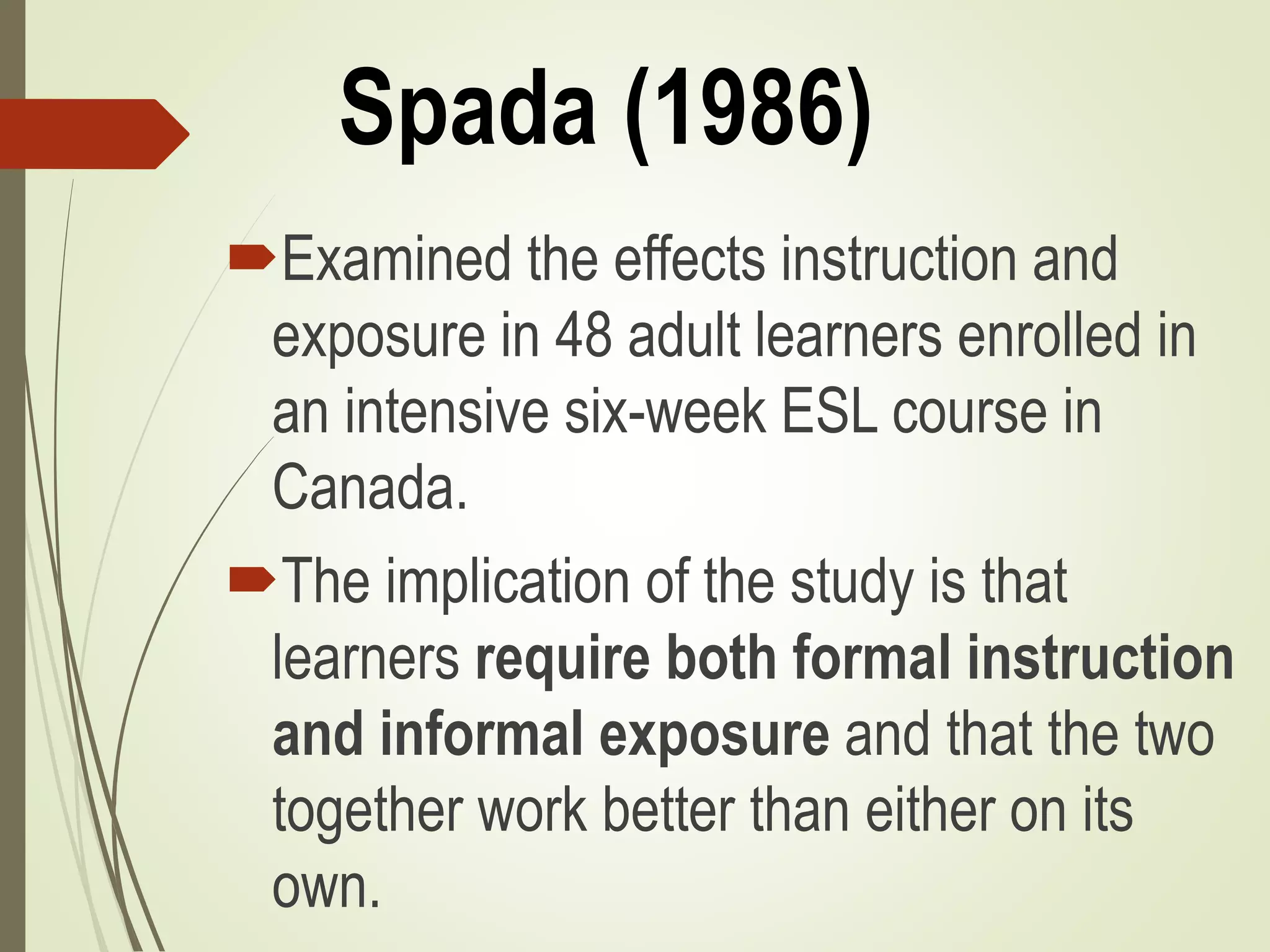
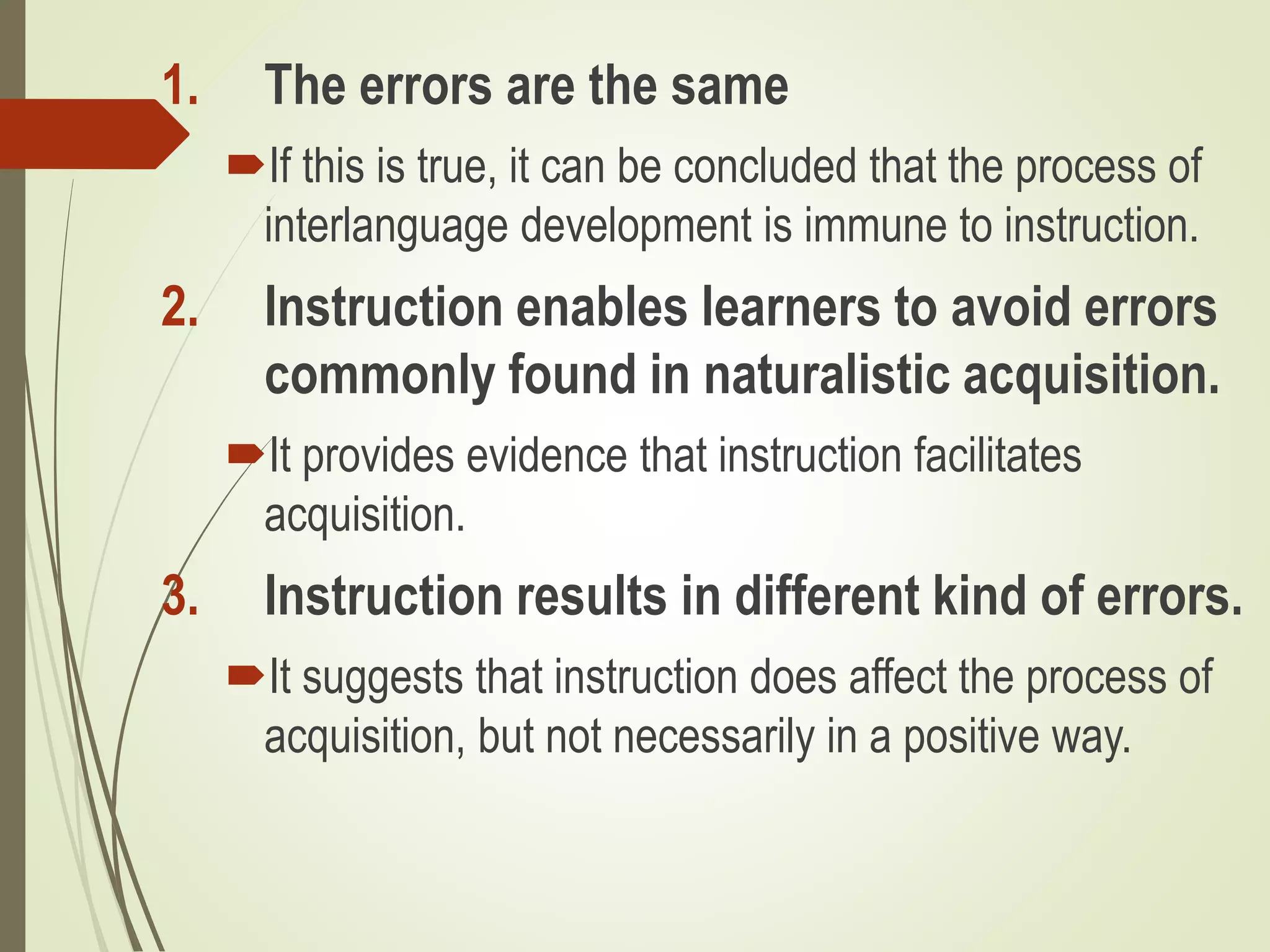
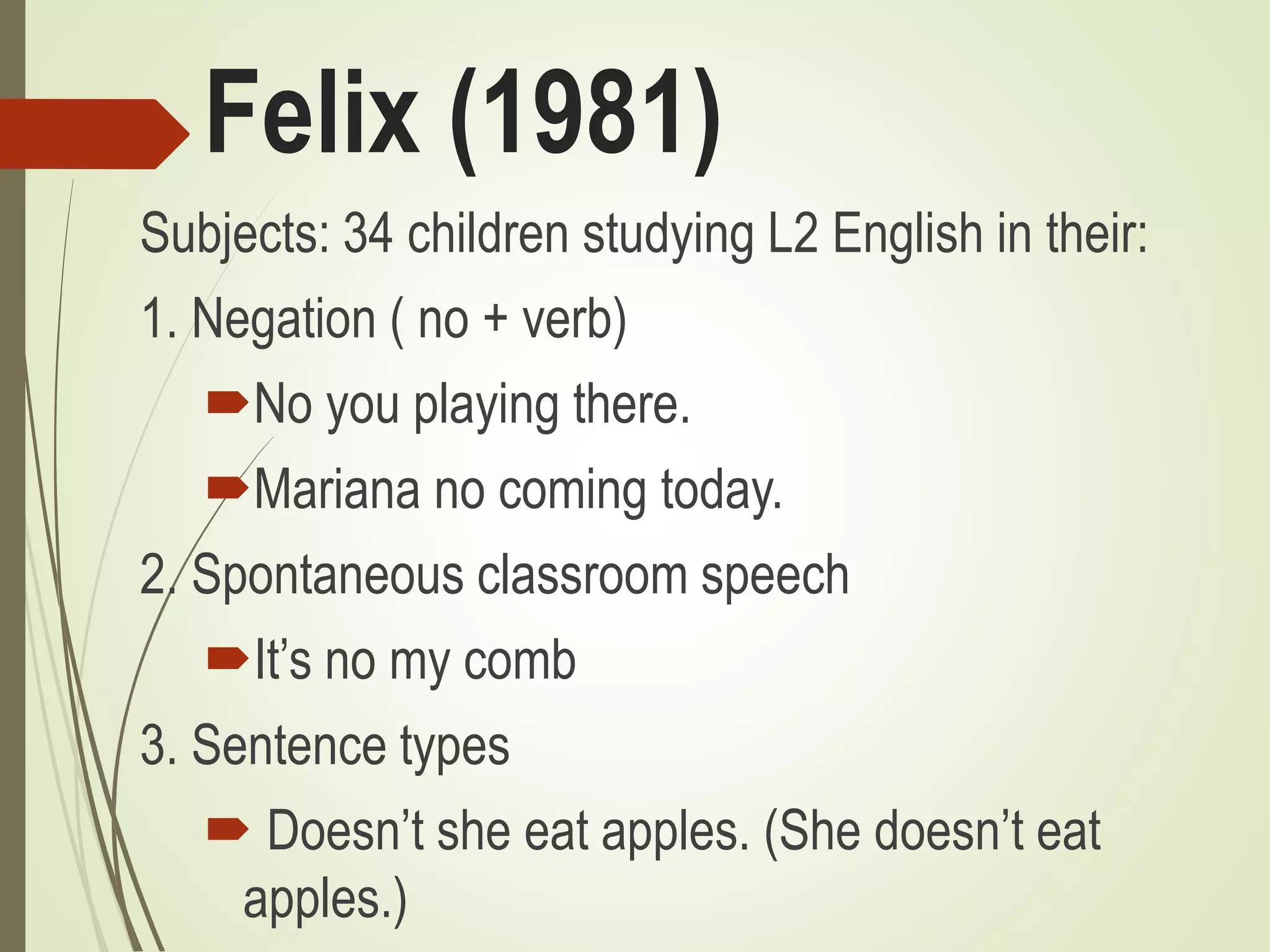

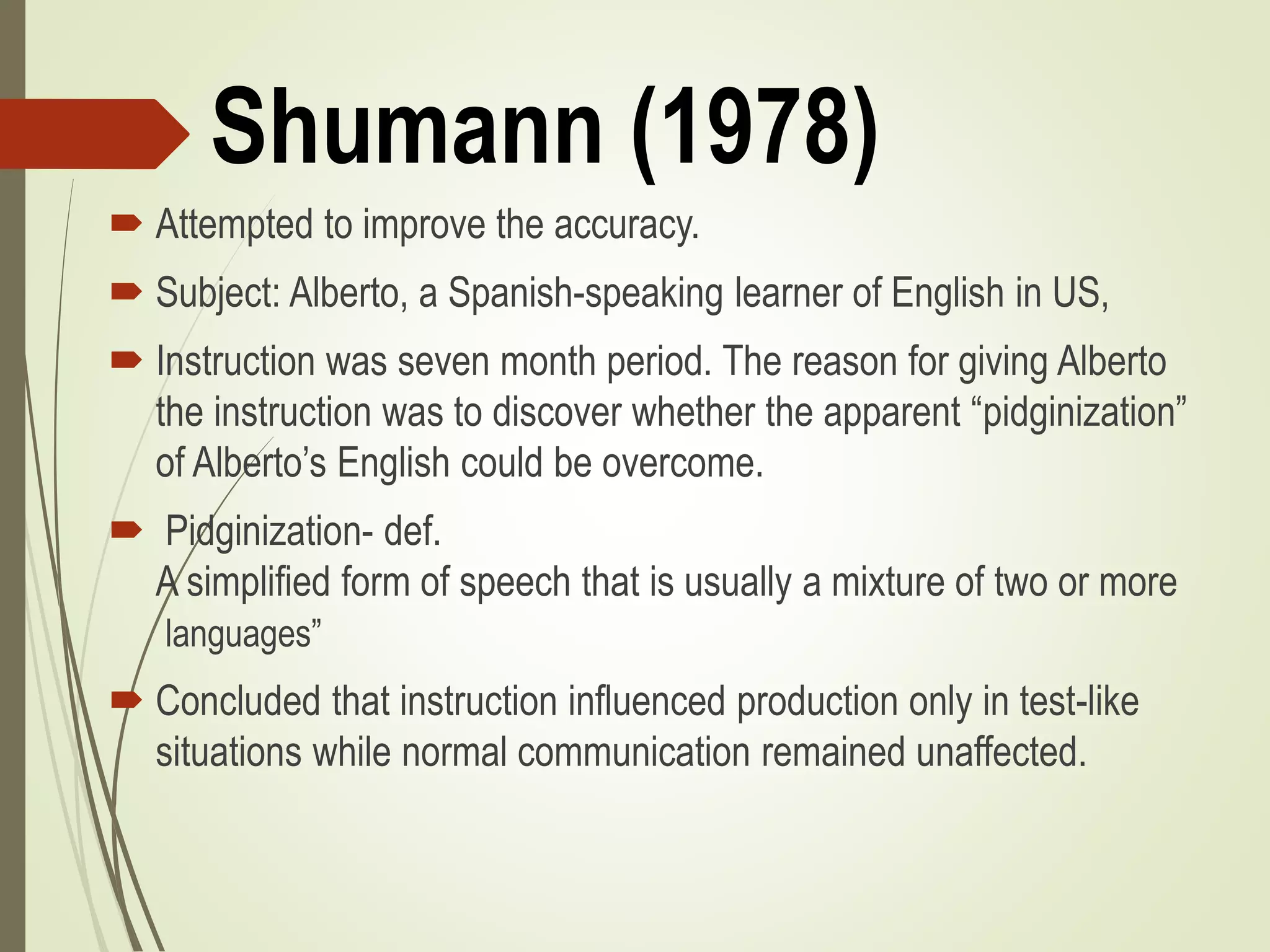
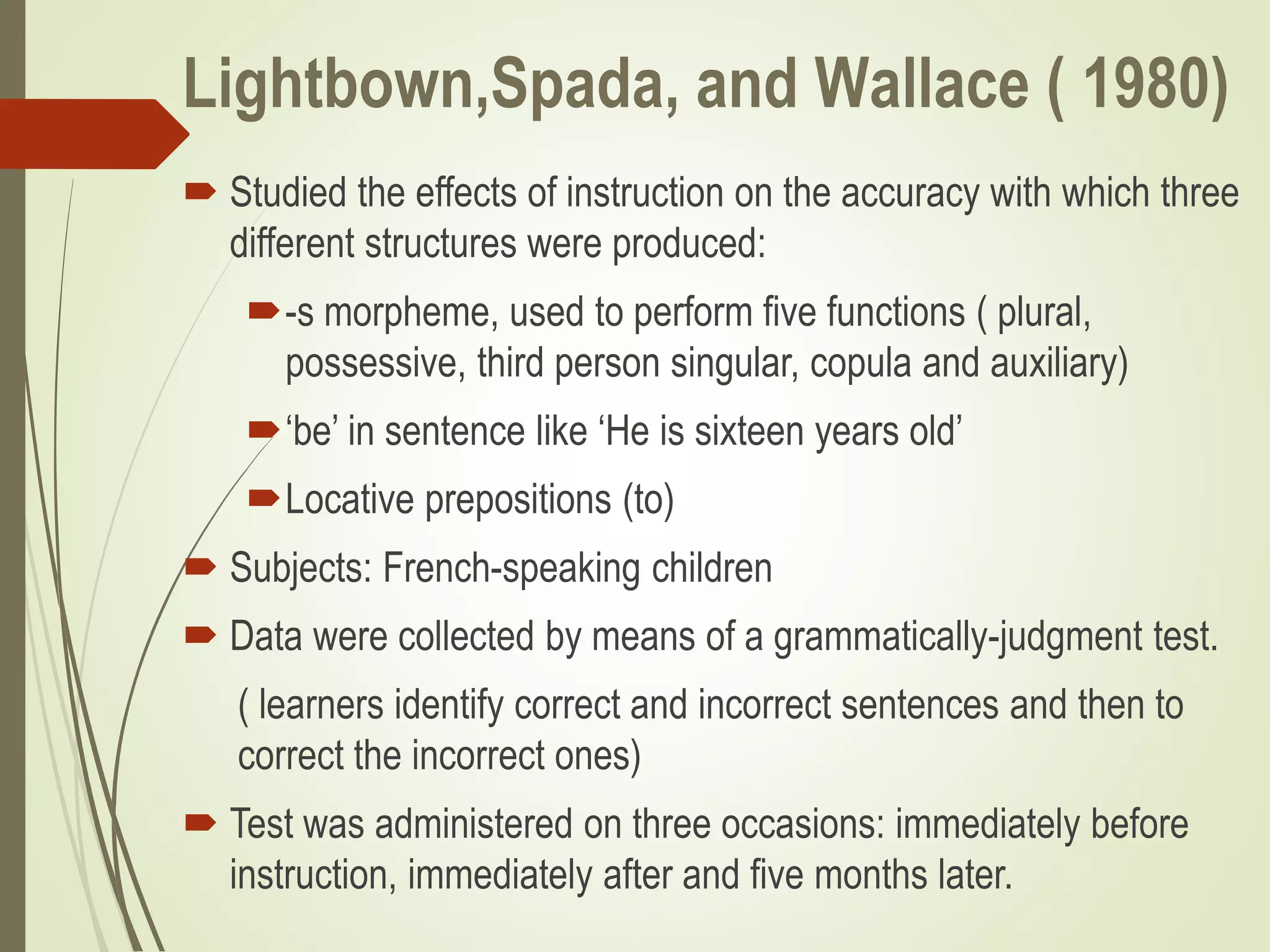
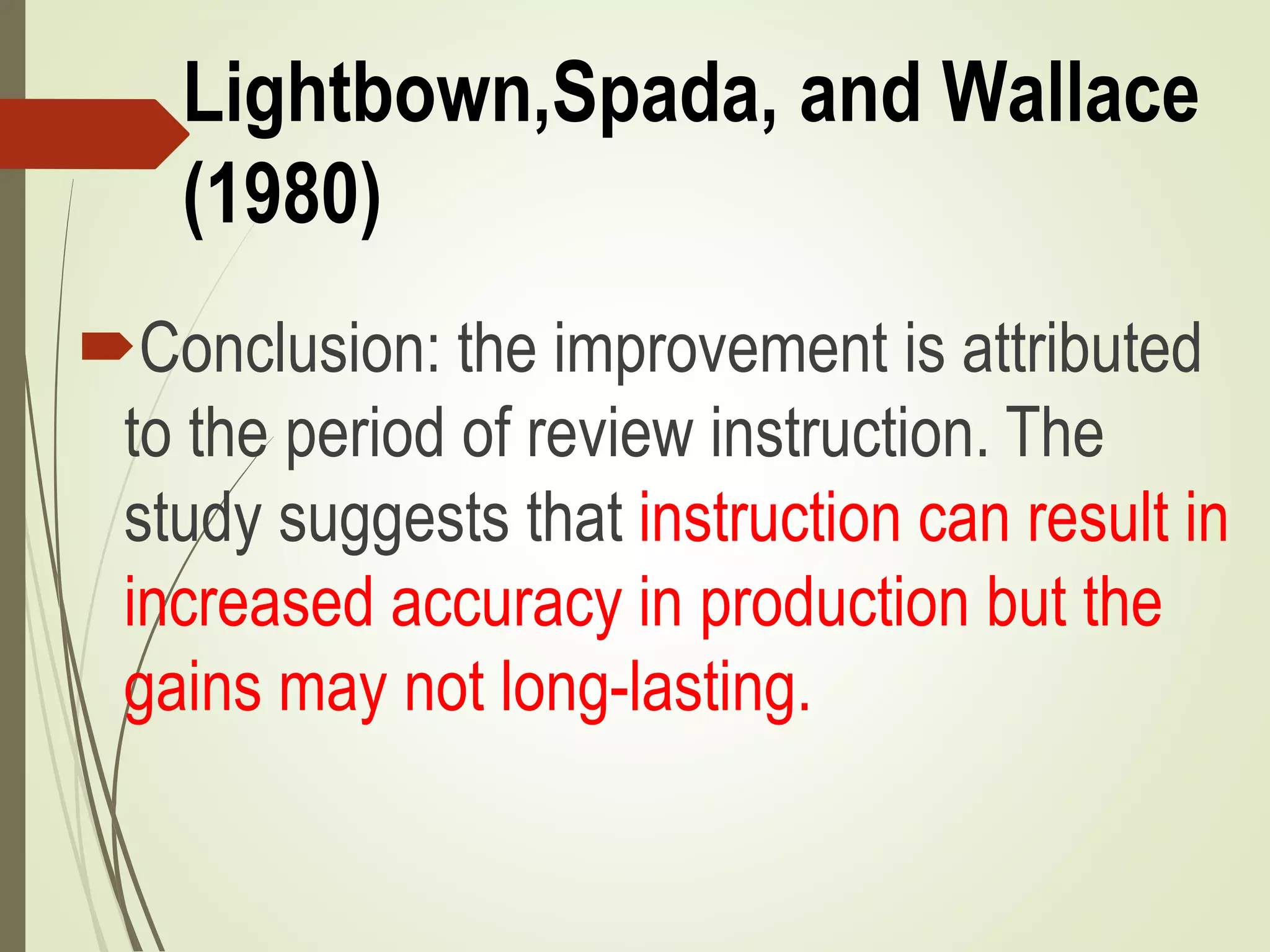
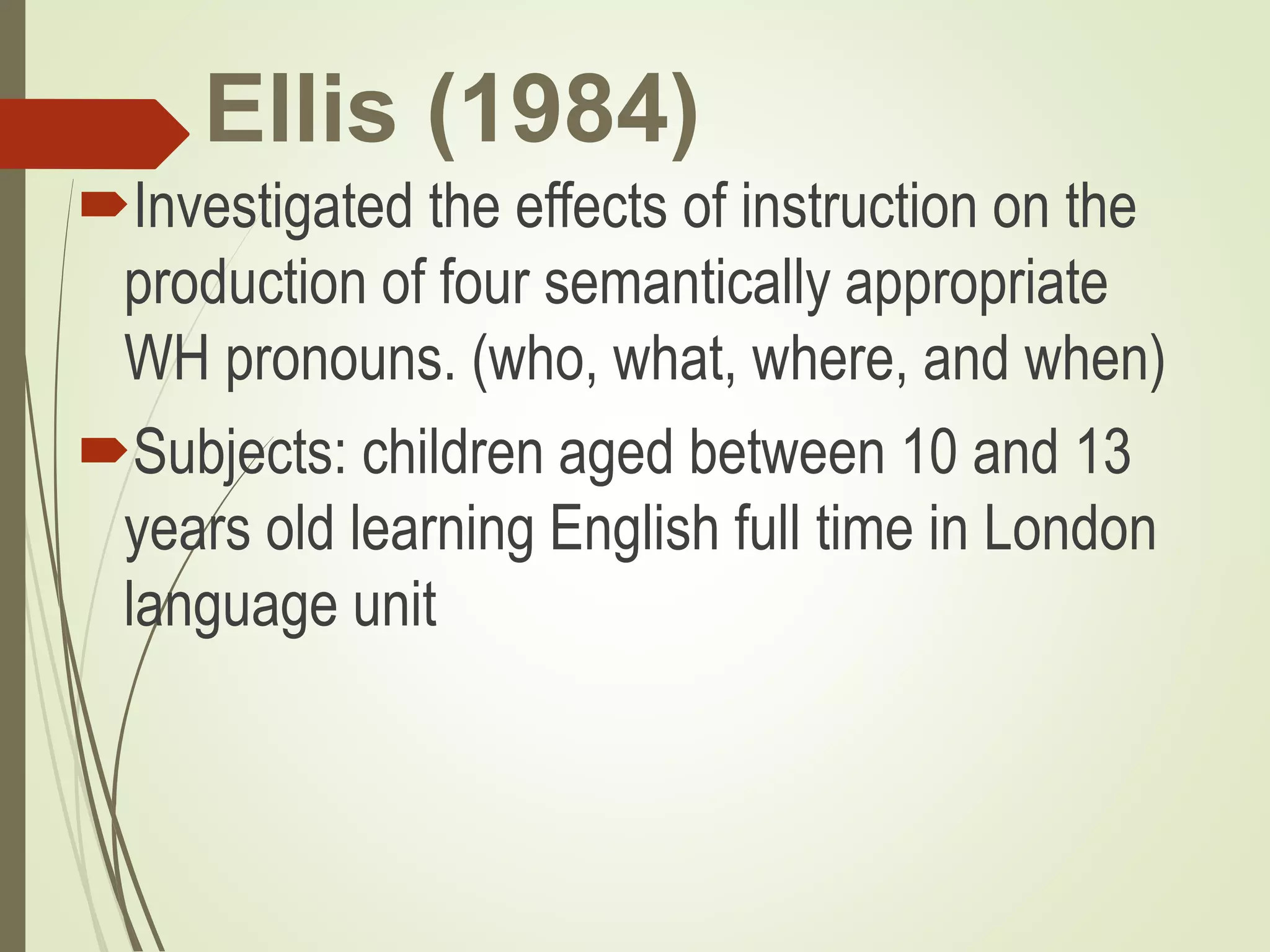

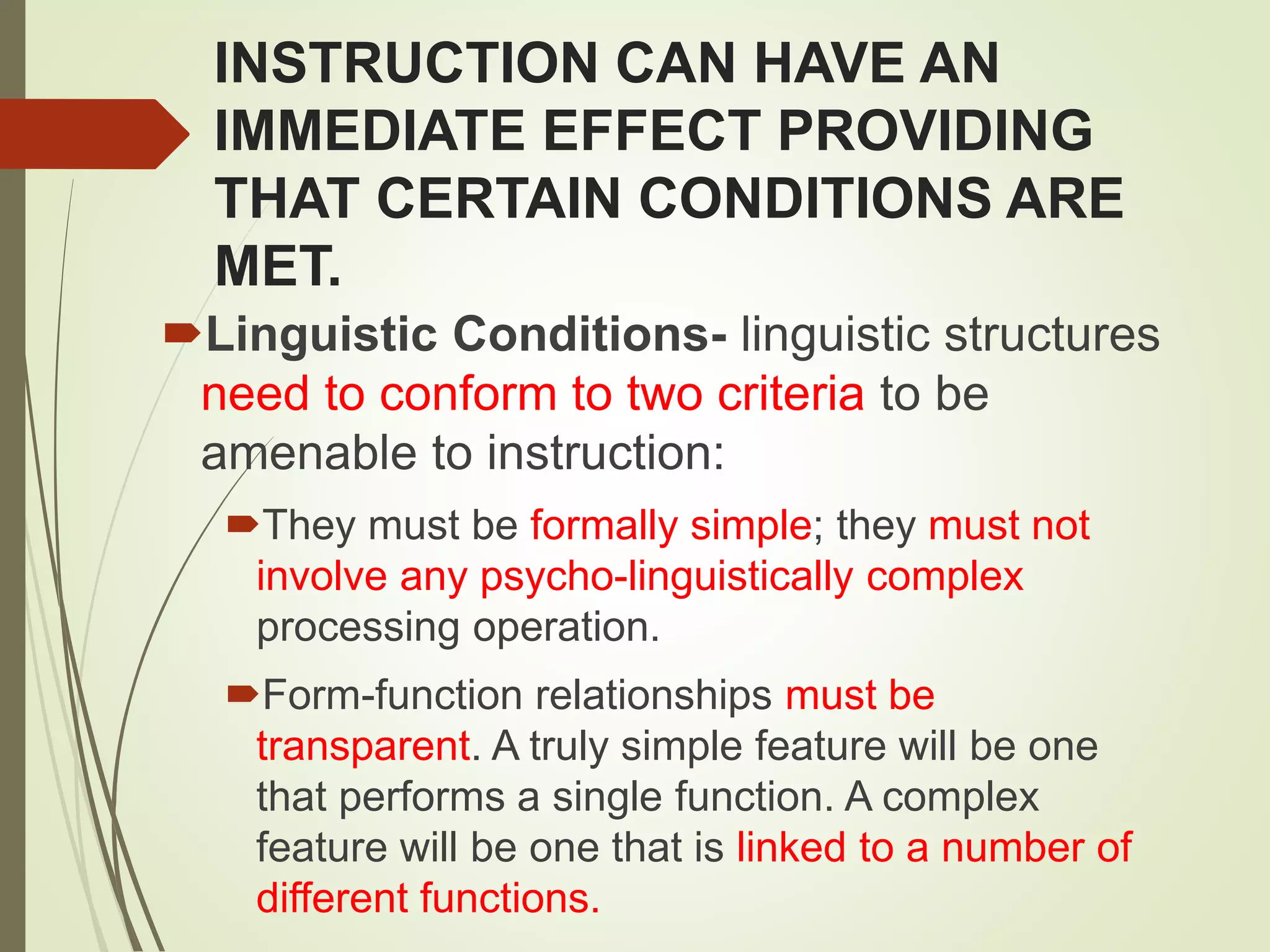
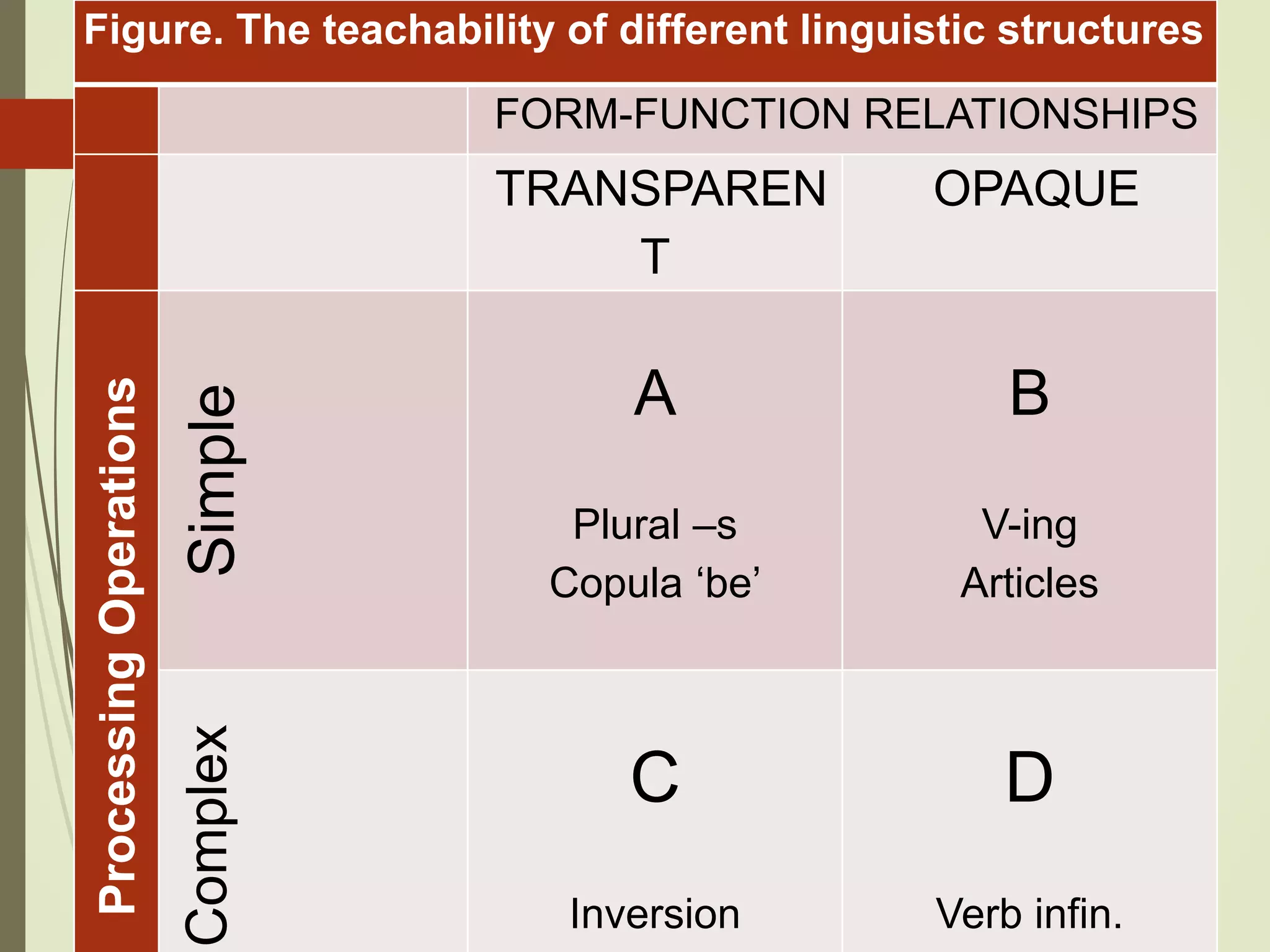
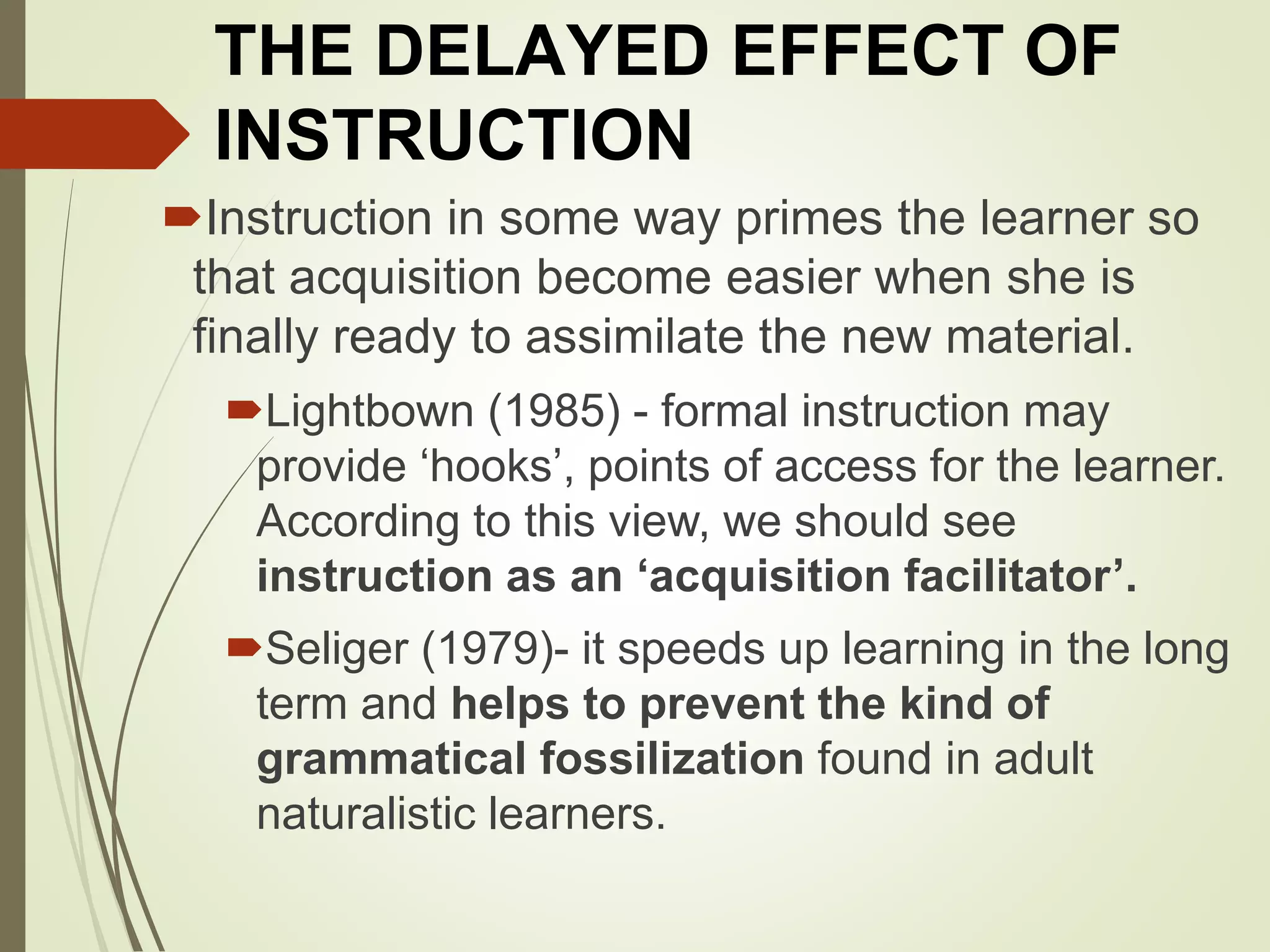



Formal instruction can have both immediate and delayed effects on second language acquisition according to research studies. Some key findings are that instruction is most effective for linguistically simple structures where form and function are transparent, and it can improve learners' controlled performance. However, gains from instruction may not persist in spontaneous speech over time. Instruction also appears to prime learners and facilitate later acquisition by making linguistic features more salient, even if it does not directly teach the rules of the language.


