IN THE NAME OF ALLAH, THE MOST
BENIFICENT,
THE MOST MERCIFUL
Larry Selinker’s
Concept of
INTERLANGUAGE
(A Mental System of
L2 Knowledge)
Larry Selinker
Larry Selinker is an American professor
emeritus of linguistics at the University of Michigan. The
concept of Interlanguage (1972) is generally credited to
him; his article "Interlanguage" appeared in the January
1972’s issue of the journal International Review of Applied
Linguistics in Language Teaching.
Definition of emeritus /ɪˈmerɪtəs/
: a person retired from professional life but permitted to
retain as an honorary title the rank of the last office held
DEFINING INTERLANGUAGE
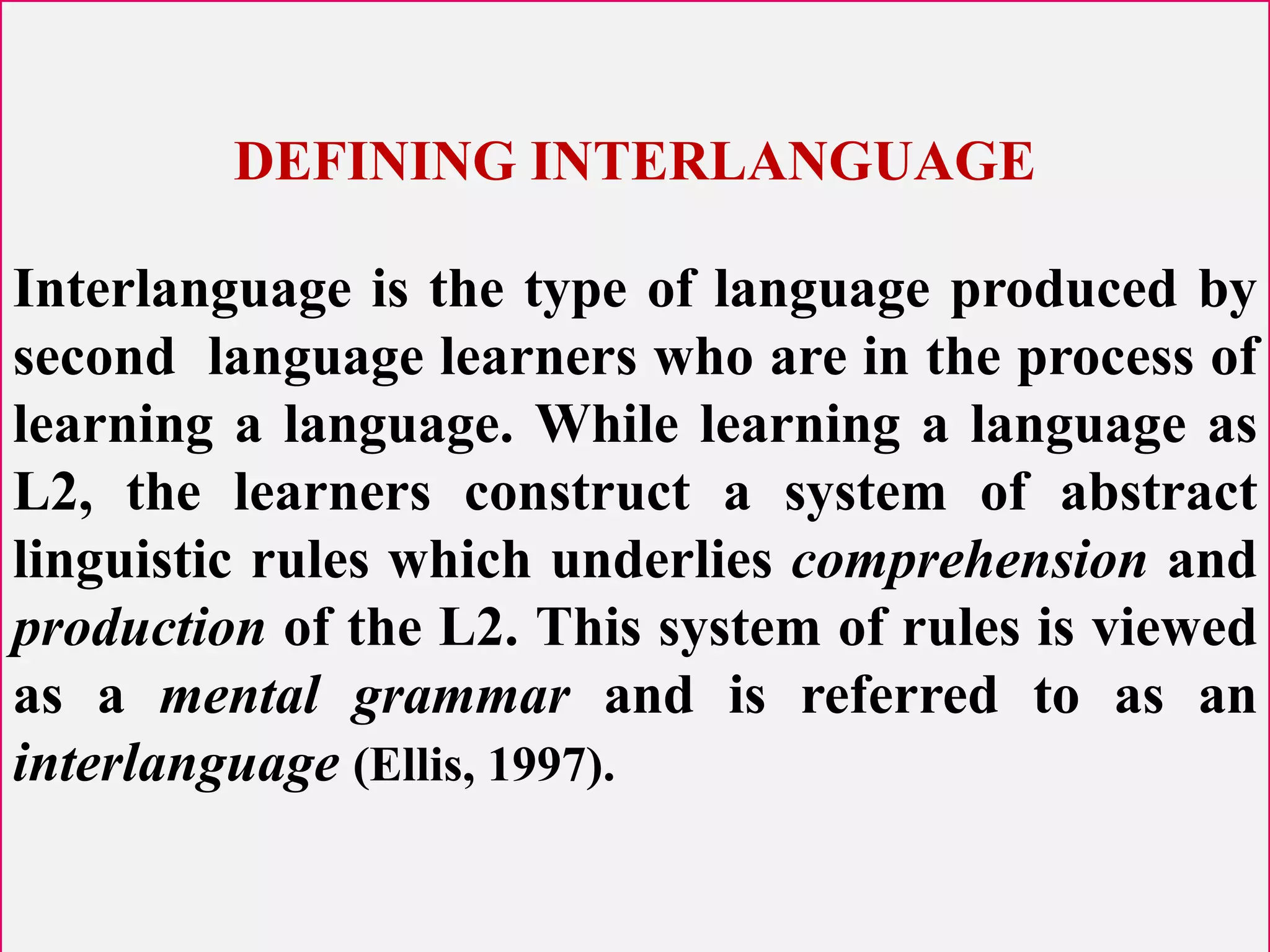
Interlanguage is the type of language produced by
second language learners who are in the process of
learning a language. While learning a language as
L2, the learners construct a system of abstract
linguistic rules which underlies comprehension and
production of the L2. This system of rules is viewed
as a mental grammar and is referred to as an
interlanguage (Ellis, 1997).
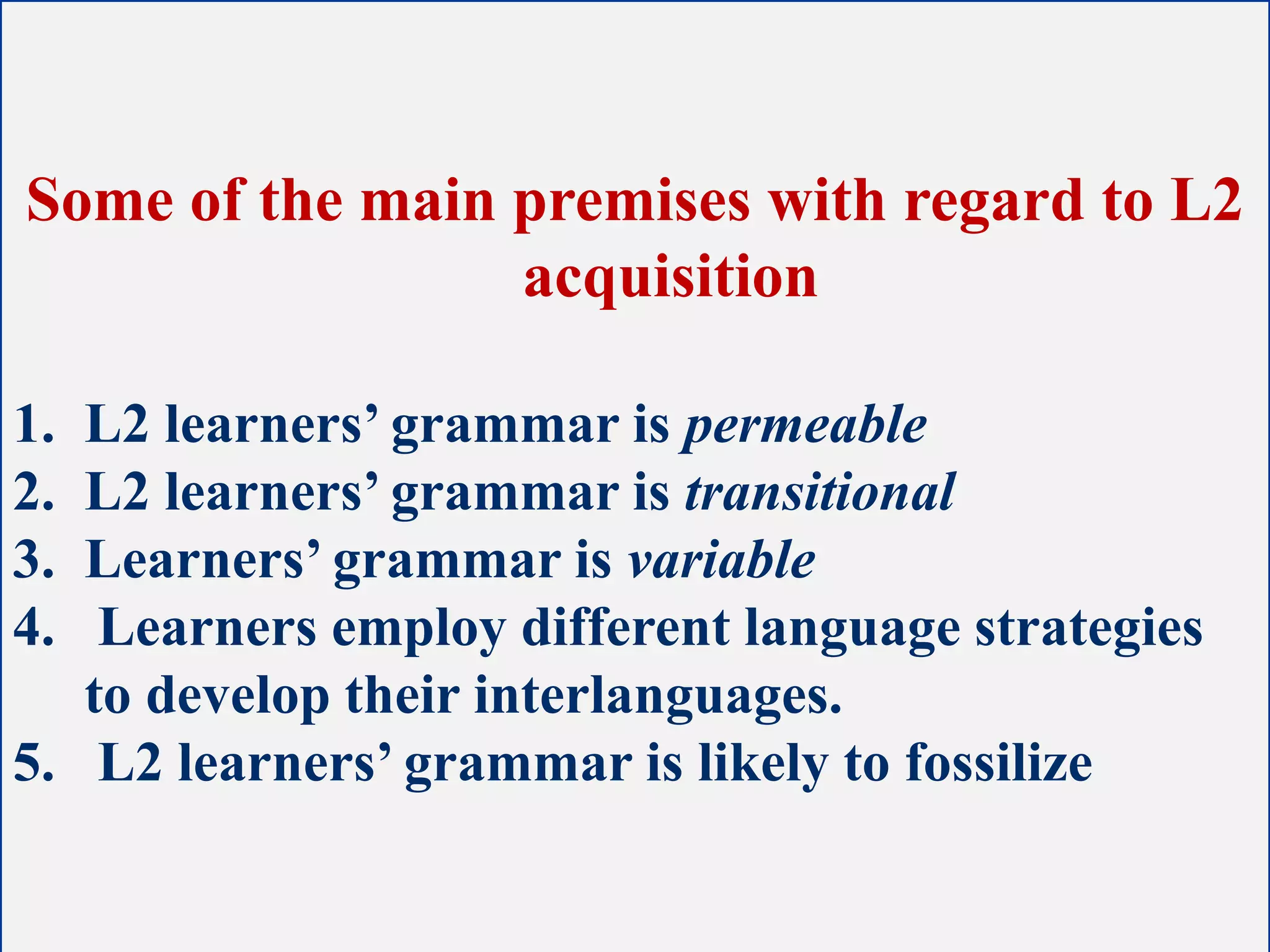
Some of the main premises with regard to L2
acquisition
1. L2 learners’ grammar is permeable
2. L2 learners’ grammar is transitional
3. Learners’ grammar is variable
4. Learners employ different language strategies
to develop their interlanguages.
5. L2 learners’ grammar is likely to fossilize
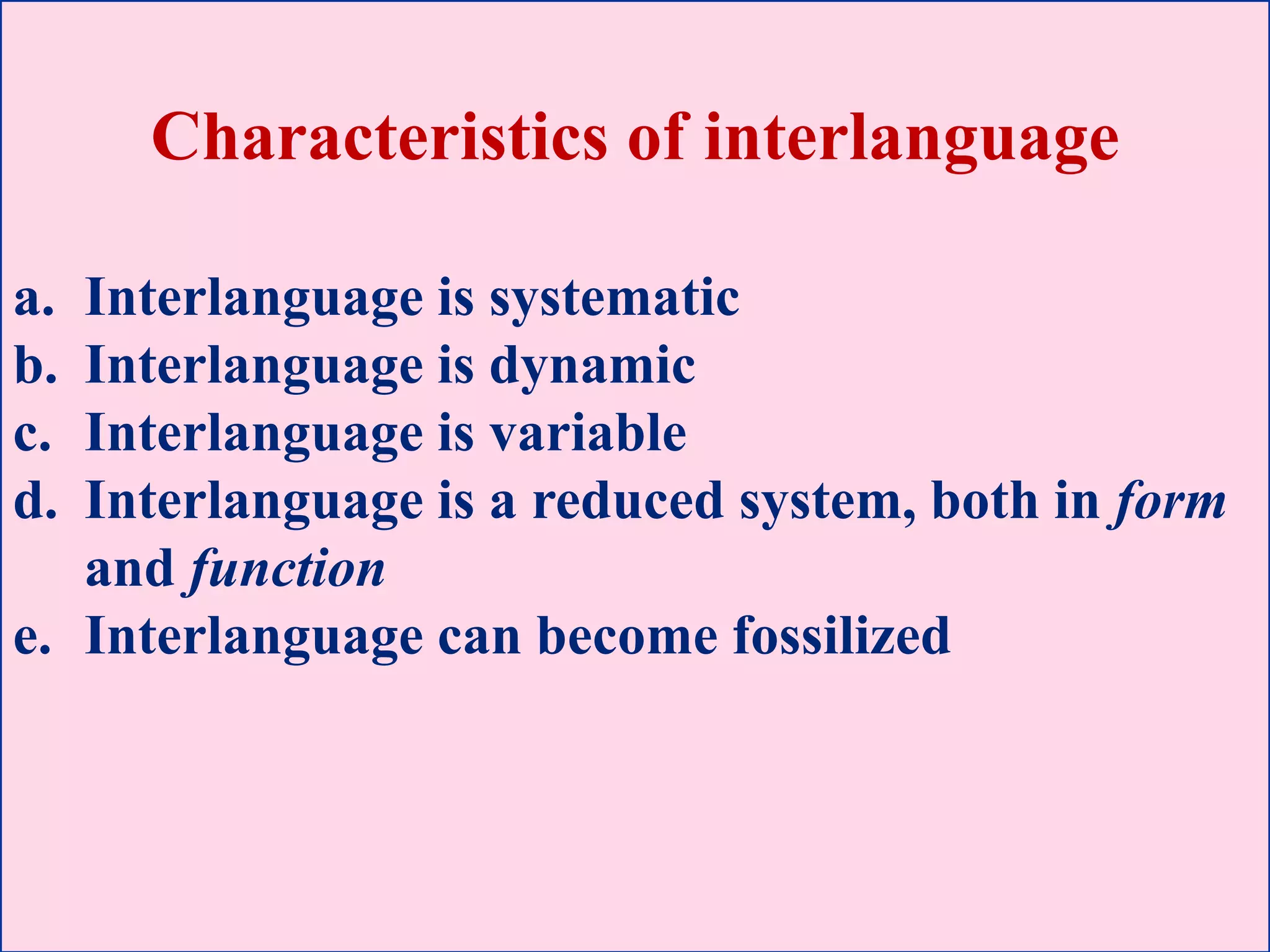
Characteristics of interlanguage
a. Interlanguage is systematic
b. Interlanguage is dynamic
c. Interlanguage is variable
d. Interlanguage is a reduced system, both in form
and function
e. Interlanguage can become fossilized
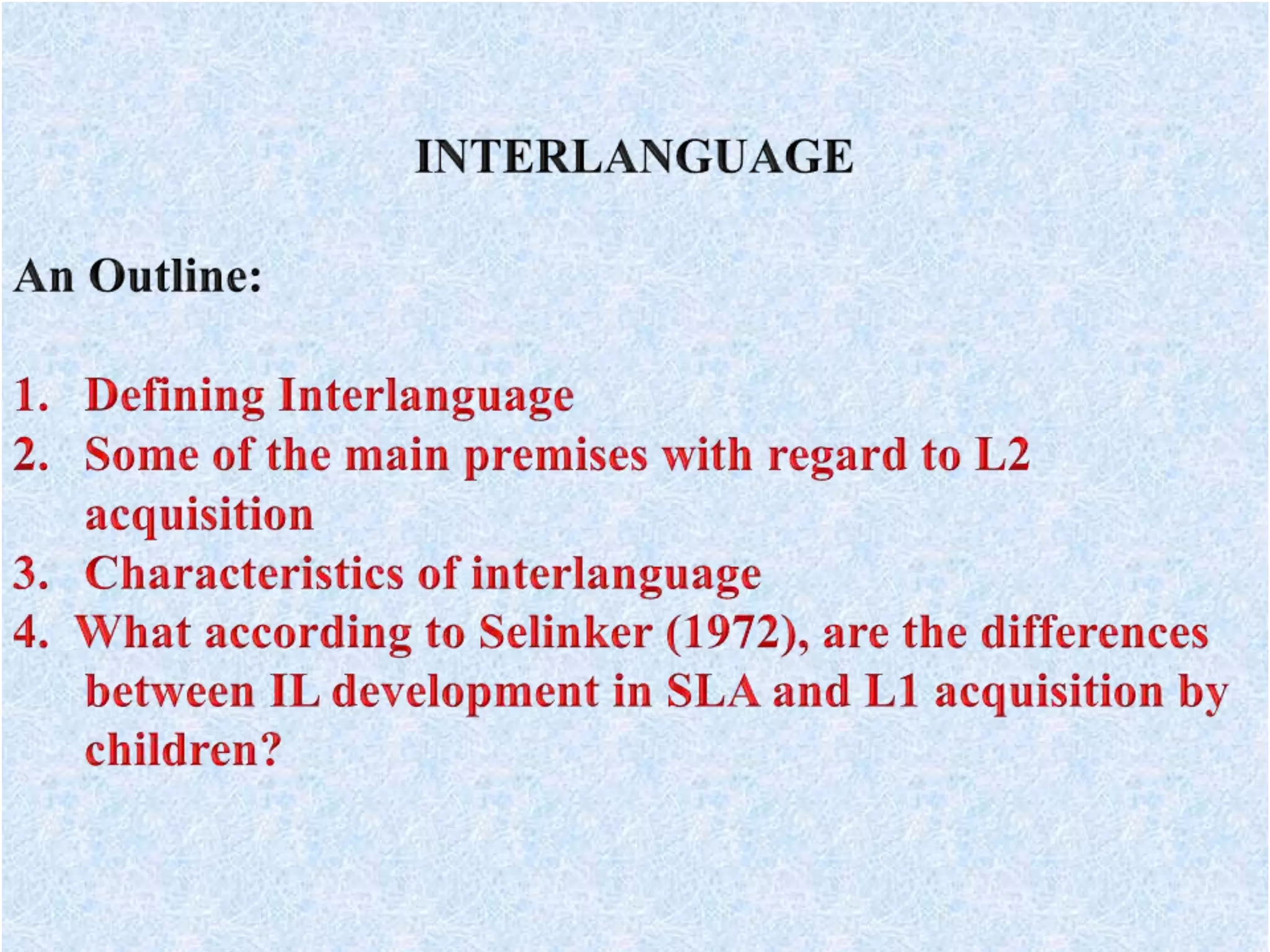
The differences between IL development in
SLA and L1 acquisition by children?
a. Language transfer from L1 to L2.
b. Transfer of training,
c. L2 learner’s strategies of communication,
d. Overgeneralization of the target language’s
linguistic material
e. The issue of fossilization
BIBLIOGRAPHY
Ausubel, D.P. (1968). Educational Psychology: A Cognitive View. New York, NY:
Holt.
Brown, H. D. (2002). Principles of Language Learning and Teaching. NY:
Longman.
Ellis, R. (1994). The study of second language acquisition. Oxford: Oxford
University Press.
Ellis, R. (1997). Second Language Acquisition. Oxford: Oxford University Press.
Ellis, R. (1999). Item versus system learning: explaining free variation. Applied
Linguistics . 20, 460-80.
Gass & Selinker (2008). Second Language Acquisition. London: Routledge.
Interlanguage . Retrieved from:
https://www.teachingenglish.org.uk/article/interlanguage
Troike, M. (2012). Introducing Second Language Acquisition. London: Cambridge
University Press.
Thank you:)

Larry selinker's interlanguage

  • 1.
    IN THE NAMEOF ALLAH, THE MOST BENIFICENT, THE MOST MERCIFUL
  • 2.
    Larry Selinker’s Concept of INTERLANGUAGE (AMental System of L2 Knowledge)
  • 3.
    Larry Selinker Larry Selinkeris an American professor emeritus of linguistics at the University of Michigan. The concept of Interlanguage (1972) is generally credited to him; his article "Interlanguage" appeared in the January 1972’s issue of the journal International Review of Applied Linguistics in Language Teaching. Definition of emeritus /ɪˈmerɪtəs/ : a person retired from professional life but permitted to retain as an honorary title the rank of the last office held
  • 5.
    DEFINING INTERLANGUAGE Interlanguage isthe type of language produced by second language learners who are in the process of learning a language. While learning a language as L2, the learners construct a system of abstract linguistic rules which underlies comprehension and production of the L2. This system of rules is viewed as a mental grammar and is referred to as an interlanguage (Ellis, 1997).
  • 6.
    Some of themain premises with regard to L2 acquisition 1. L2 learners’ grammar is permeable 2. L2 learners’ grammar is transitional 3. Learners’ grammar is variable 4. Learners employ different language strategies to develop their interlanguages. 5. L2 learners’ grammar is likely to fossilize
  • 7.
    Characteristics of interlanguage a.Interlanguage is systematic b. Interlanguage is dynamic c. Interlanguage is variable d. Interlanguage is a reduced system, both in form and function e. Interlanguage can become fossilized
  • 8.
    The differences betweenIL development in SLA and L1 acquisition by children? a. Language transfer from L1 to L2. b. Transfer of training, c. L2 learner’s strategies of communication, d. Overgeneralization of the target language’s linguistic material e. The issue of fossilization
  • 9.
    BIBLIOGRAPHY Ausubel, D.P. (1968).Educational Psychology: A Cognitive View. New York, NY: Holt. Brown, H. D. (2002). Principles of Language Learning and Teaching. NY: Longman. Ellis, R. (1994). The study of second language acquisition. Oxford: Oxford University Press. Ellis, R. (1997). Second Language Acquisition. Oxford: Oxford University Press. Ellis, R. (1999). Item versus system learning: explaining free variation. Applied Linguistics . 20, 460-80. Gass & Selinker (2008). Second Language Acquisition. London: Routledge. Interlanguage . Retrieved from: https://www.teachingenglish.org.uk/article/interlanguage Troike, M. (2012). Introducing Second Language Acquisition. London: Cambridge University Press.
  • 10.