Download as PDF, PPTX

















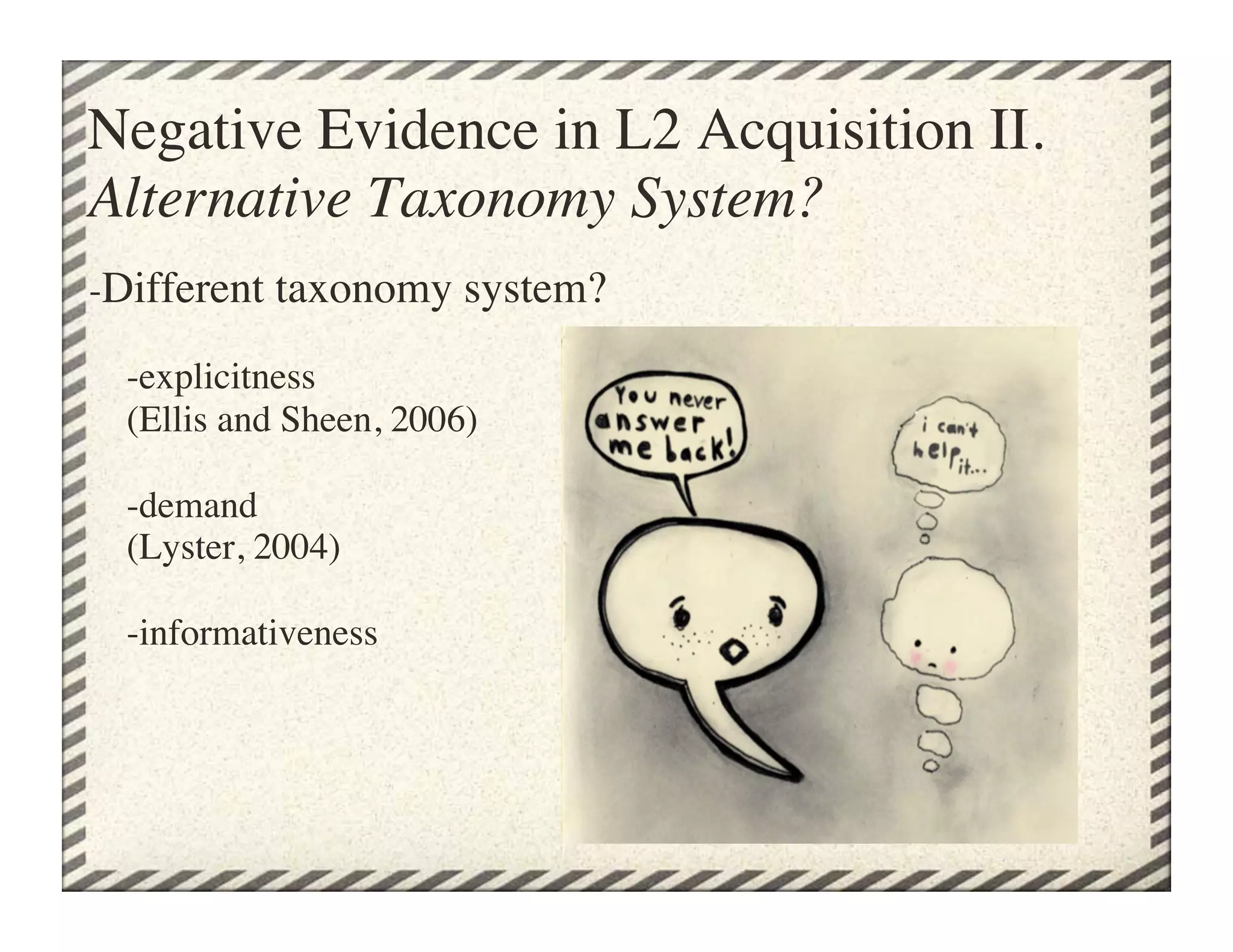



The document discusses the role of the linguistic environment in second language acquisition. It covers 5 key ingredients: attitude, input, interaction, output, and noticing. Input alone may not be enough for acquisition and learners need opportunities for output and interaction. Noticing gaps in their language is important for learning. The environment can provide positive evidence, negative evidence, and opportunities for negotiation of meaning to aid acquisition, but individual and social factors also influence the learning process.


