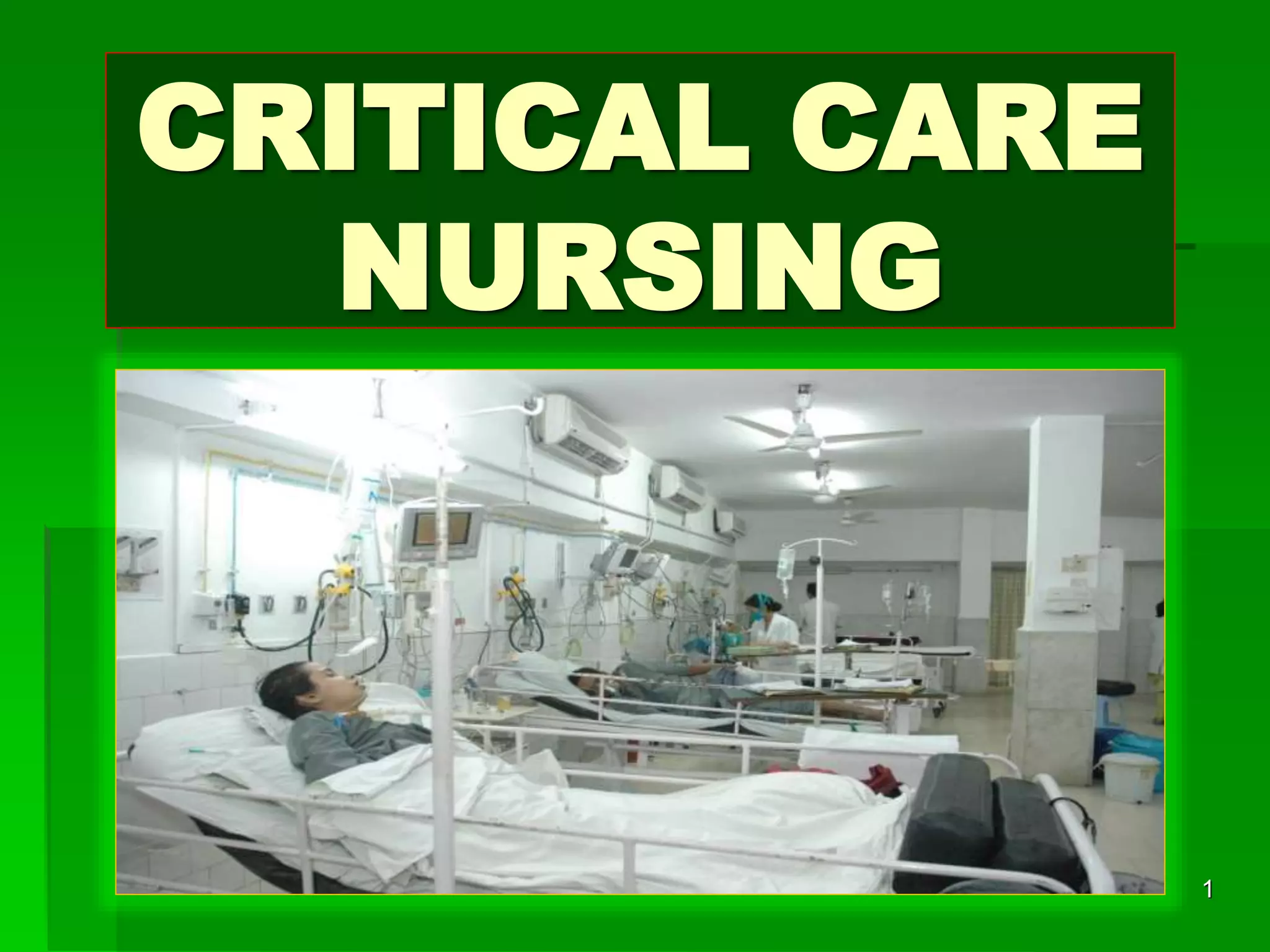
CRITICAL CARE
NURSING
1
CRITICAL
 Crucial
 Crisis
 Emergency
 Serious
 Requiring immediate action
 Thorough and constant observation
 Total dependent
(Oxford Dictionary)
2Prof. Dr. R S Mehta, BPKIHS
CRITICAL CARE NURSING
 The care of seriously ill clients from point
of injury or illness until discharge from
intensive care
 Deals with human responses to life
threatening problems -trauma /major
surgery
(Mary,L.S., Deborah, G.K. & Marthe, J.M. 2005)
3Prof. Dr. R S Mehta, BPKIHS
CRITICAL CARE NURSE
 care for clients who are very ill
 provide direct one to one care
 Responsible for making life-and death decision
 At high risk of injury or illness from possible
exposure to infections
 Communication skill is of optimal importance
4Prof. Dr. R S Mehta, BPKIHS
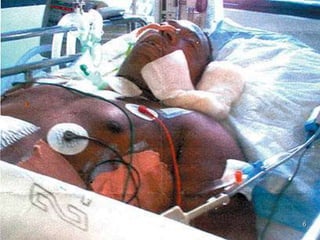
CRITICALLY ILL CLIENT
 At high risk for actual or potential life-
threatening health problems
 More ill
 Required more intensive and careful
nursing care
5Prof. Dr. R S Mehta, BPKIHS
6
DEFINITIONS
 CRITICAL CARE :
CRITICAL CARE IS A TERM USED
TO DESCRIBE AS THE CARE OF
PATIENTS WHO ARE EXTREMELY
ILL AND WHOSE CLINICAL
CONDITION IS UNSTABLE OR
POTENTIALLY UNSTABLE.
7Prof. Dr. R S Mehta, BPKIHS
 CRITICAL CARE UNIT :
IT IS DEFINED AS THE UNIT IN
WHICH COMPREHENSIVE CARE
OF A CRITICALLY ILL PATIENT
WHICH IS DEEMED TO
RECOVERABLE STAGE IS
CARRIED OUT.
8Prof. Dr. R S Mehta, BPKIHS
 CRITICAL CARE NURSING :
IT REFERS TO THOSE
COMPREHENSIVE, SPECIALIZED
AND INDIVIDUALIZED NURSING
CARE SERVICES WHICH ARE
RENDERED TO PATIENTS WITH
LIFE THREATENING CONDITIONS
AND THEIR FAMILIES.
9Prof. Dr. R S Mehta, BPKIHS
10
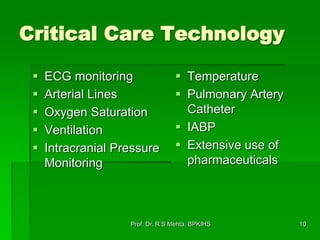
Critical Care Technology
 ECG monitoring
 Arterial Lines
 Oxygen Saturation
 Ventilation
 Intracranial Pressure
Monitoring
 Temperature
 Pulmonary Artery
Catheter
 IABP
 Extensive use of
pharmaceuticals
Prof. Dr. R S Mehta, BPKIHS
11
The Critical Care Nurse
 “Specialty dealing with human responses
to life-threatening problems”
 Requires Extensive Knowledge and a
Continual Desire to Learn
Prof. Dr. R S Mehta, BPKIHS
Economic Impact of ICU (1994)
* <10% of hospital beds
* 30% of acute care hospital cost
* >20% of hospital budget
* 1% of GNP expended for ICU care
With aging of the population
 Demand for critical care service will
increase 12Prof. Dr. R S Mehta, BPKIHS
Prof. Dr. R S Mehta, BPKIHS 13
Historical Background
World War II
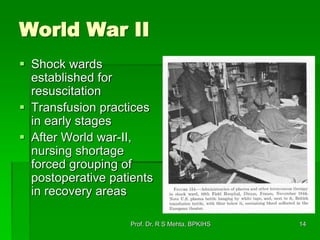
 Shock wards
established for
resuscitation
 Transfusion practices
in early stages
 After World war-II,
nursing shortage
forced grouping of
postoperative patients
in recovery areas
14Prof. Dr. R S Mehta, BPKIHS
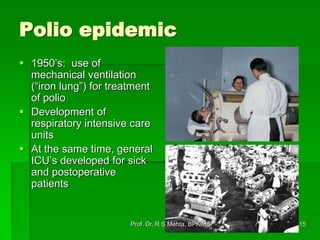
Polio epidemic
 1950’s: use of
mechanical ventilation
(“iron lung”) for treatment
of polio
 Development of
respiratory intensive care
units
 At the same time, general
ICU’s developed for sick
and postoperative
patients
15Prof. Dr. R S Mehta, BPKIHS
16
History Continued
 Collaboration between nurses and
physicians
 1950’s & 1960’s – CV Disease most
common diagnosis
 1960’s – 30-40% mortality rate for MI
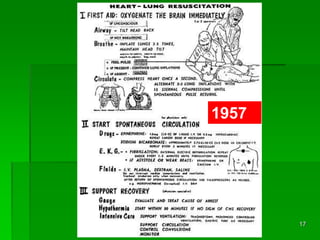
 1965 – 1st specialized ICU – The
Coronary Care Unit
 Emergence of Specialized ICU’s
Prof. Dr. R S Mehta, BPKIHS
1957
17
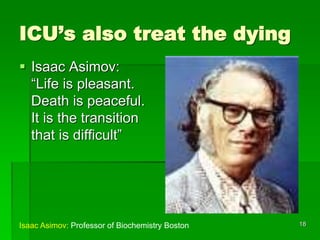
ICU’s also treat the dying
 Isaac Asimov:
“Life is pleasant.
Death is peaceful.
It is the transition
that is difficult”
Isaac Asimov: Professor of Biochemistry Boston 18
19
American Association of
Critical-Care Nurses - AACN
 1969
 Educational support
 Certification
 Largest professional
specialty nursing
organization
 Scholarships
 Research
 Publishes 2 journals
 Local chapters
 Political awareness
 Provides standards
of practice
Prof. Dr. R S Mehta, BPKIHS
An Ideal ICU
20Prof. Dr. R S Mehta, BPKIHS
Multidisciplinary & Collaborative
approach to ICU care
 Medical & nursing directors :
co-responsibility for ICU management
• a team approach :
doctors, nurses, R/T, pharmacist
• use of standard, protocol, guideline
consistent approach to all issues
• dedication to coordination and communication
for all aspects of ICU management
• emphasis on research, education, ethical
issues, patient advocacy
21Prof. Dr. R S Mehta, BPKIHS
Team Dynamics
 A multidisciplinary team to effectively
attain specified objective
 Physician team leader & critical care
nurse manager
22Prof. Dr. R S Mehta, BPKIHS
Critical Care Practice
Pattern
 Open
 Closed
 transitional
23Prof. Dr. R S Mehta, BPKIHS
Open Units
Definition :
any attending physician with hospital
admitting privileges can be the physician of
record and direct ICU care. (All other
physicians are consultants)
Disadvantage :
 lack of a cohesive plan
 Inconsistent night coverage
 Duplication of services
24Prof. Dr. R S Mehta, BPKIHS
Closed Units
 Definition:
An intensivist is the physician of record for
ICU patients. (other physicians are
consultants), All orders & procedures carried
out by ICU staff
• advantage:
• improved efficiency
• standardized protocol for care
• disadvantage:
• potential to lock out private physician
• increase physician conflict
25Prof. Dr. R S Mehta, BPKIHS
Transitional Units
Definition:
intensives are locally present shared co-
managed care between ICU staff and private
physician
ICU staff is a final common pathway for orders
and procedures
Advantage:
reduce physician conflict, standard policies and
procedures usually present
Disadvantage:
confusion and conflict regarding final authority &
responsibilities for patient care decision
26Prof. Dr. R S Mehta, BPKIHS
ICU Model Care
 Full-time intensivist model :
 patient care is provided by an intensivist
 Consultant intensivist model :
 an intensivist consults for another physician to
coordinate or assist in critical care, but dose not
have primary responsibility for care
 Multiple consultant model:
 multiple specialists are involved in the patient care,
(esp. R/T doctors for ventilators), but none is
designated especially as the consultant intensivist
 Single physician model :
 primary physician provides all ICU care
27Prof. Dr. R S Mehta, BPKIHS
A Good ICU
 Well organized
trust
coordinated care
• Full-time intensivist: daily round
• protocol & policies (eg: how to DC elective
operation when bed not available)
• bedside nurses (master degree)
• no intern
28Prof. Dr. R S Mehta, BPKIHS
A Good ICU
 A team:
doctors, nurses, R/T, pharmacists
• led by full time intensivists
critical care trained
available in a timely fashion (24hr/day)
no competiting clinical responsibilities
during duty
• closed units, if resources allow
29Prof. Dr. R S Mehta, BPKIHS
What are the conditions
considered as Critical?
1. ANY PERSON WITH LIFE
THREATENING CONDITION
2. PATIENTS WITH :
 ARF
 AMI
 CARDIAC TAMPONATE
 SEVERE SHOCK
30Prof. Dr. R S Mehta, BPKIHS
 HEART BLOCK
 ACUTE RENAL FAILURE
 POLY TRAUMA, MULTIPLE
ORGAN FAILURE AND ORGAN
DYSFUNCTION
 SEVERE BURNS
31Prof. Dr. R S Mehta, BPKIHS
NURSING ASSESSMENT
 IT IS THE FIRST STAGE OF NURSING
PROCESS IN WHICH THE NURSE
SHOULD CARRY OUT A COMPLETE
AND HOLISTIC NURSING ASSESS-
MENT OF EVERY PATIENT’S NEEDS,
REGARDLESS OF THE REASON FOR
THE ENCOUNTER.
32Prof. Dr. R S Mehta, BPKIHS
COMPONENTS OF
NURSING ASSESSMENT
1. NURSING HISTORY: Taking a nursing history prior to
the physical examination allows a nurse to establish a
rapport with the patient and family.
Elements of the history include –
 Health Status
 Cause of present illness including symptoms
 Current management of illness
 Past medical history including family’s medical history
33Prof. Dr. R S Mehta, BPKIHS
 Social history
 Perception of illness
2. Psychological and Social Examination-
 Client’s perception
 Emotional health
 Physical health
 Spiritual health
 Intellectual health
 3. Physical Examination : A nursing assessment
includes physical examination, where the
observation or measurement of signs, which can
be observed or measured, or symptoms such as
nausea or vertigo, which can be felt by the patient.
34
The techniques used may include Inspection,
Palpation, auscultation and Percussion in
addition to the vital signs like temperature, pulse,
respiration , BP and further examination of the
body systems such as the cardiovascular or
musculoskeletal systems.
 Documentation of Assessment: The
Assessment is documented in the patient’s
medical or nursing records, which may be on
paper or as part of the electronic medical record
which can be assessed by all members of the
health care team.
35Prof. Dr. R S Mehta, BPKIHS
CLASSIFICATION OF
CRITICAL CARE UNITS
 LEVEL - I :
PROVIDES MONITORING,
OBSERVATION AND SHORT
TERM VENTILATION. NURSE
PATIENT RATIO IS 1:3 AND THE
MEDICAL STAFF ARE NOT
PRESENT IN THE UNIT ALL THE
TIME. 36Prof. Dr. R S Mehta, BPKIHS
LEVEL - II :
PROVIDES OBSERVATION,
MONITORING AND LONG TERM
VENTILATION WITH RESIDENT
DOCTORS. THE NURSE-PATIENT
RATIO IS 1:2 AND JUNIOR
MEDICAL STAFF IS AVAILABLE IN
THE UNIT ALL THE TIME AND
CONSULTANT MEDICAL STAFF IS
AVAILABLE IF NEEDED. 37
 LEVEL - III :
PROVIDES ALL ASPECTS OF
INTENSIVE CARE INCLUDING
INVASIVE HAEMODYNAMIC
MONITORING AND DIALYSIS.
NURSE PATIENT RATIO IS 1:1
38Prof. Dr. R S Mehta, BPKIHS
CLASSIFICATION OF
CRITICAL CARE PATIENTS
 Level O : normal ward care
 Level 1: at risk of deteriorating , support
from critical care team
 Level 2 : more observation or
intervention, single failing organ or post
operative care
 Level 3; advanced respiratory support or
basic respiratory support ,multiorgan
failure 39Prof. Dr. R S Mehta, BPKIHS
HIGH DEPENDENCY CARE
 Coronary care units (CCU)
 Renal high dependency unit (HDU)
 Post-operative recovery room
 Accident and emergency departments
(A&E)
 Intensive care units (ICU)
40Prof. Dr. R S Mehta, BPKIHS
TYPES OF CRITICAL CARE
UNIT
 NEONATAL INTENSIVE UNIT
(NICU)
 SPECIAL CARE NURSERY (SCN)
 PAEDIATRIC INTENSIVE CARE
UNIT (PICU)
 PSYCHIATRIC INTENSIVE UNIT
(PICU)
41Prof. Dr. R S Mehta, BPKIHS
 CORONARY CARE UNIT (CCU)
 CARDIAC SURGERY INTENSIVE
CARE UNIT (CSICU)
 CARDIOVASCULAR INTENSIVE
CARE UNIT (CVICU)
 MEDICAL INTENSIVE CARE UNIT
(MICU)
 MEDICAL SURGICAL INTENSIVE
CARE UNIT (MSICU)
42Prof. Dr. R S Mehta, BPKIHS
 OVERNIGHT INTENSIVE
RECOVERY (OIR)
 NEUROSCIENCE /
NEUROTRAUMA INTENSIVE
CARE UNIT (NICU)
 NEURO INTENSIVE CARE UNIT
(NICU)
 BURN INTENSIVE CARE UNIT
(BNICU)
43Prof. Dr. R S Mehta, BPKIHS
 SURGICAL INTENSIVE CARE UNIT
(SICU)
 TRAUMA INTENSIVE CARE UNIT
(TICU)
 SHOCK TRAUMA INTENSIVE
CARE UNIT (STICU)
 TRAUMA – NEURO CRITICAL
CARE INTENSIVE CARE UNIT
(TNCC)
44Prof. Dr. R S Mehta, BPKIHS
 RESPIRATORY INTENSIVE CARE
UNIT (RICU)
 GERIATRIC INTENSIVE CARE
UNIT (GICU)
45Prof. Dr. R S Mehta, BPKIHS
Types of ICU
 General
 Medical Intensive Care Unit(MICU)
 Surgical Intensive Care Unit
 Medical Surgical Intensive Care Unit(MSICU)
 Specialized
 Neonatal Intensive Care Unit(NICU)
 Special Care Nursery(SCN)
 Paediatric Intensive Care Unit(PICU)
 Coronary Care Unit(CCU)
 Cardiac Surgery Intensive Care Unit(CSICU)
 Neuro Surgery Intensive Care Unit(NSICU)
 Burn Intensive Care Unit(BICU)
 Trauma Intensive Care Unit
46Prof. Dr. R S Mehta, BPKIHS
PRINCIPLES OF CRITICAL
CARE NURSING
ANTICIPATION : The first
principle in critical care is Anticipation.
One has to recognize the high risk
patients and anticipate the requirements,
complications and be prepared to meet
any emergency. Unit is properly
organized in which all necessary
equipments and supplies are mandatory
for smooth running of the unit.
47Prof. Dr. R S Mehta, BPKIHS
EARLY DETECTION AND
PROMPT ACTION :
 The prognosis of the patient depends on
the early detection of variation, prompt
and appropriate action to prevent or
combat complication. Monitoring of
cardiac respiratory function is of prime
importance in assessment.
Prof. Dr. R S Mehta, BPKIHS 48
 COLLABORATIVE PRACTICE :
Critical Care, which has originated as technical
sub-specialized body of knowledge has evolved
into a comprehensive discipline requiring a very
specialized body of knowledge for the physicians
and nurses working in the critical care unit fosters
a partnerships for decision making and ensures
quality and compassionate patient care.
Collaborate practice is more and more warranted
for critical care more than in any other field.
49Prof. Dr. R S Mehta, BPKIHS
COMMUNICATION :
 Intra professional, inter departmental and
inter personal communication has a
significant importance in the smooth
running of unit. Collaborative practice of
communication model
Prof. Dr. R S Mehta, BPKIHS 50
 Prevention of Infection : Nosocomial
infection cost a lot in the health care services.
Critically ill patients requiring intensive care are at
a greater risk than other patients due to the
immunocompromised state with the antibiotic
usage and stress, invasive lines, mechanical
ventilators, prolonged stay and severity of illness
and environment of the critical unit itself.
51Prof. Dr. R S Mehta, BPKIHS
 Crisis Intervention and Stress
Reduction : partnerships are formulated
during crisis. Bonds between nurses,
patients and families are stronger during
hospitalization. As patient advocates,
nurses assist the patient to express fear
and identify their grieving patttern and
provide avenues for positive coping.
52Prof. Dr. R S Mehta, BPKIHS
ORGANIZATION OF ICU
 DESIGN OF ICU :
1. Should be at a geographically distinct area
within the hospital, with controlled access.
2. There should be a single entry and exit.
However, it is required to have emergency exit
points in case of emergency and disaster.
3. There should not be any through traffic of
goods or hospital staff. Supply and professional
traffic should be separated from public/visitor
traffic. 53Prof. Dr. R S Mehta, BPKIHS
4. Safe, easy, fast transport of a critically sick pt
should be a priority in planning its location.
Therefore, the ICU should be located in close
proximity or ER, OT, trauma ward etc.
5. Corridors, lifts and ramps should be spacious
enough to provide easy movement of bed/trolley
of a critically sick patient.
6. Close, easy proximity is also desirable to
diagnostic facilities, blood bank, pharmacy etc.
 BED STRENGTH:
1. It is recommended that total bed strength in ICU
should be between 8-12 and not less than 6 or
not more than 24 in any case.
54Prof. Dr. R S Mehta, BPKIHS
2. 3-5 beds per 100 hospital beds for a Level III ICU
or 2 to 20% of the total no of hospital beds.
3. 1 isolation bed for every ICU beds.
 BED AND ITS SPACE:
1. 150-200 sq.ft per open bed with 8 ft in between
beds.
2. 225-250 sq.ft per bed if in a single room.
3. Beds should be adjustable, no head board, with
side rails and wheels.
4. Keep bed 2 ft away from head wall.
55Prof. Dr. R S Mehta, BPKIHS
 ACCESSORIES:
1. 3 O2 outlets, 3 suction outlets (gastric, tracheal
and underwater seal), 2 compressed air outlets
and 16 power outlets per bed.
2. Storage by each bedside.
3. Hand rinse solution by each bedside.
4. Equipment shelf at the head end.
5. Hooks and devices to hang infusions/ blood
bags, extended from the ceiling with a sliding rail
to position.
6. Infusion pumps to be mounted on stand or poles.
7. Level II ICUs may require multi channel invasive
monitors. 56Prof. Dr. R S Mehta, BPKIHS
8. ventilators, infusion pumps, portable X ray unit,
fluid and bed warmers, portable light,
defibrillators, anaesthesia machines and difficult
airway management equipments are necessary.
 STAFFING :
1. Medical Staff – the best senior medical staff to
be appointed as an Intensive Care Director or
Intensivist. Less preferred are other specialists
from anaesthesia / medicine who has clinical
commitment elsewhere. Junior staff are intensive
care trainers and trainees on deputation from
other disciplines.
2. Nursing staff – The major teaching tertiary care
ICU requires trained nurses in critical care. 57
The no of nurses ideally required for such unit is
1:1 ratio, however it might not be possible to have
such members in our set up. So 1 nurse for 2
patients is acceptable. The no of trained nurses
should also be worked out by the type of ICU, the
workload and work statistics and type of patient
load.
3.Allied Services – Respiratory services,
Nutritionist, Physiotherapist, Biomedical engineer,
technicians, computer programmer, clinical
pharmacist, social worker / counsellor and other
support staff, guards and grade IV workers.
58Prof. Dr. R S Mehta, BPKIHS
CRITICAL CARE NURSE
Factors to be considered in recruiting
Critical Care Nurses are:
1. Intra and interpersonal factors
2. Technical Qualifications.
3. Educational background
4. Clinical Experience.
59Prof. Dr. R S Mehta, BPKIHS
 Continuous monitoring
 Keep ready emergency trolley / crash
Cart
 Efficient Individualized Care.
 Counseling and information to family.
 Application of policies and procedures
 Proper records of all activities
 Maintain infection control principles.
 Keep update with advance
information. 60
QUICK REFERENCE PROTOCOL FOR
MANAGING EMERGENCY IN ICU
 Quickly review the patient - Identity,
History , Physical Exam.
 Be with the patient, ask for help.
 Place the patient in a suitable position.
 Attach the cardiac monitor and call for
crash cart.
 Maintain ABC Along with expert team
 Introduce IV, CV line
61Prof. Dr. R S Mehta, BPKIHS
 Administer medication as needed.
 Carry on Investigations - ABG, ECG,
Urea, Creatinine, Blood Sugar,
Cardiac enzymes.
 Maintain Fluid and Electrolytes .
 Record right things at right time
rightly.
62Prof. Dr. R S Mehta, BPKIHS
Core Competencies
 Patient Care
 Medical Knowledge
 Professionalism & Ethics
 Interpersonal Communication Skills
 Practice-based Learning and
Improvement
 Systems-based Practice
63Prof. Dr. R S Mehta, BPKIHS
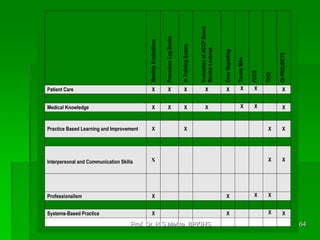
MonthlyEvaluations
ProcedureLogBooks
InTrainingExams
EvaluationofACCPBoard
ReviewLectures
ErrorReporting
TaumaMAn
FCCS
THCI
QIPROJECTS
Patient Care X X X X X X X X
Medical Knowledge X X X X X X X
Practice Based Learning and Improvement X X X X
Interpersonal and Communication Skills X X X
Professionalism X X X X
Systems-Based Practice X X X X
64Prof. Dr. R S Mehta, BPKIHS
65
Family Need of the Critical
Care Patient
 Information – major source of anxiety and
litigation (legal issues)
 Reassurance – can reassure care is
being given
 Convenience – access to the patient
Prof. Dr. R S Mehta, BPKIHS
Job description
 Patient care
 Multidisciplinary rounds
 Bed allocation/triage
 Infection control
 Protocol development
 Quality control/assurance
 Education
 Residents, fellows, med students, nurses, respiratory therapists,
nurse practitioners
 Research
 Quality assurance projects
 Clinical trials
 Database-driven projects
66Prof. Dr. R S Mehta, BPKIHS
General Concept, Setting and
Principle of Critical Care Nursing
67Prof. Dr. R S Mehta, BPKIHS
Who are critically ill patient?
68Prof. Dr. R S Mehta, BPKIHS
Critical illness are grouped by the system of
the body;
A. Cardiac System
1. Acute myocardial infarction with complications
2. Cardiogenic shock
3. Complex arrhythmias requiring close monitoring and intervention
4. Acute congestive heart failure with respiratory failure and/or
requiring hemodynamic support
5. Hypertensive emergencies
6. Unstable angina, particularly with dysrhythmias, hemodynamic
instability, or persistent chest pain
8. Cardiac tamponade or constriction with hemodynamic instability
9. Dissecting aortic aneurysms
10. Complete heart block
69
Prof. Dr. R S Mehta, BPKIHS
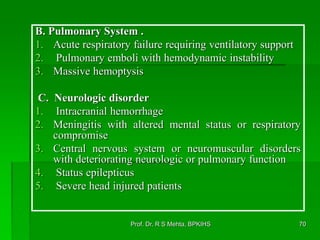
B. Pulmonary System .
1. Acute respiratory failure requiring ventilatory support
2. Pulmonary emboli with hemodynamic instability
3. Massive hemoptysis
C. Neurologic disorder
1. Intracranial hemorrhage
2. Meningitis with altered mental status or respiratory
compromise
3. Central nervous system or neuromuscular disorders
with deteriorating neurologic or pulmonary function
4. Status epilepticus
5. Severe head injured patients
70Prof. Dr. R S Mehta, BPKIHS
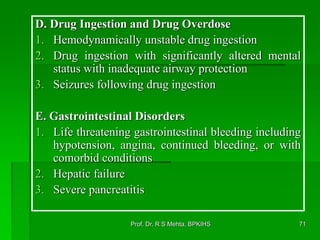
D. Drug Ingestion and Drug Overdose
1. Hemodynamically unstable drug ingestion
2. Drug ingestion with significantly altered mental
status with inadequate airway protection
3. Seizures following drug ingestion
E. Gastrointestinal Disorders
1. Life threatening gastrointestinal bleeding including
hypotension, angina, continued bleeding, or with
comorbid conditions
2. Hepatic failure
3. Severe pancreatitis
71Prof. Dr. R S Mehta, BPKIHS
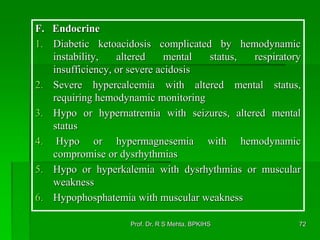
F. Endocrine
1. Diabetic ketoacidosis complicated by hemodynamic
instability, altered mental status, respiratory
insufficiency, or severe acidosis
2. Severe hypercalcemia with altered mental status,
requiring hemodynamic monitoring
3. Hypo or hypernatremia with seizures, altered mental
status
4. Hypo or hypermagnesemia with hemodynamic
compromise or dysrhythmias
5. Hypo or hyperkalemia with dysrhythmias or muscular
weakness
6. Hypophosphatemia with muscular weakness
72Prof. Dr. R S Mehta, BPKIHS
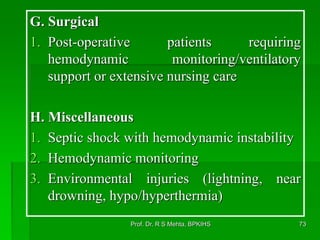
G. Surgical
1. Post-operative patients requiring
hemodynamic monitoring/ventilatory
support or extensive nursing care
H. Miscellaneous
1. Septic shock with hemodynamic instability
2. Hemodynamic monitoring
3. Environmental injuries (lightning, near
drowning, hypo/hyperthermia)
73Prof. Dr. R S Mehta, BPKIHS
Admission Criteria in ICU
 The ICU admission decision may be based on
several models utilizing prioritization, diagnosis,
and objective parameters models.
A. Prioritization Model
This system defines those that will benefit most
from the ICU (Priority 1) to those that will not
benefit at all (Priority 4) from ICU admission.
74Prof. Dr. R S Mehta, BPKIHS
Priority 1:
 These are critically ill, unstable patients in need of
intensive treatment and monitoring that cannot be
provided outside of the ICU. Usually, these
treatments include ventilator support, continuous
vasoactive drug infusions. Examples of these patients
may include post-operative or acute respiratory
failure patients requiring mechanical ventilatory
support and shock or hemodynamically unstable
patients receiving invasive monitoring and/or
vasoactive drugs.
Prof. Dr. R S Mehta, BPKIHS 75
Priority 2:
 These patients require intensive monitoring
and may potentially need immediate
intervention. Examples include patients with
chronic comorbid conditions who develop
acute severe medical or surgical illness.
Prof. Dr. R S Mehta, BPKIHS 76
 Priority 3: These unstable patients are critically
ill but have a reduced likelihood of recovery
because of underlying disease or nature of their
acute illness. Examples include patients with
metastatic malignancy complicated by infection,
cardiac tamponade, or airway obstruction.
Priority 4: These are patients who are generally
not appropriate for ICU admission. Admission of
these patients should be on an individual basis,
under unusual circumstances and at the
discretion of the ICU Director. These patients
can be placed in the following categories:
77Prof. Dr. R S Mehta, BPKIHS
B. Diagnosis Model
This model uses specific conditions or
diseases to determine appropriateness of
ICU admission.
(described above in critically ill patient)
78Prof. Dr. R S Mehta, BPKIHS
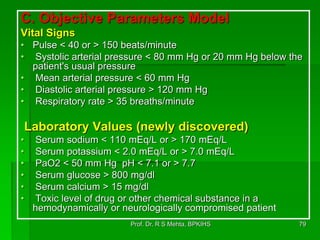
C. Objective Parameters Model
Vital Signs
• Pulse < 40 or > 150 beats/minute
• Systolic arterial pressure < 80 mm Hg or 20 mm Hg below the
patient's usual pressure
• Mean arterial pressure < 60 mm Hg
• Diastolic arterial pressure > 120 mm Hg
• Respiratory rate > 35 breaths/minute
Laboratory Values (newly discovered)
• Serum sodium < 110 mEq/L or > 170 mEq/L
• Serum potassium < 2.0 mEq/L or > 7.0 mEq/L
• PaO2 < 50 mm Hg pH < 7.1 or > 7.7
• Serum glucose > 800 mg/dl
• Serum calcium > 15 mg/dl
• Toxic level of drug or other chemical substance in a
hemodynamically or neurologically compromised patient
79Prof. Dr. R S Mehta, BPKIHS
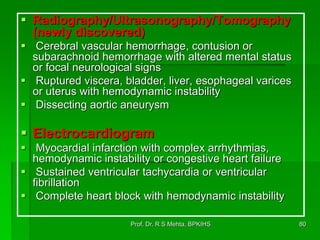
 Radiography/Ultrasonography/Tomography
(newly discovered)
 Cerebral vascular hemorrhage, contusion or
subarachnoid hemorrhage with altered mental status
or focal neurological signs
 Ruptured viscera, bladder, liver, esophageal varices
or uterus with hemodynamic instability
 Dissecting aortic aneurysm
 Electrocardiogram
 Myocardial infarction with complex arrhythmias,
hemodynamic instability or congestive heart failure
 Sustained ventricular tachycardia or ventricular
fibrillation
 Complete heart block with hemodynamic instability
80Prof. Dr. R S Mehta, BPKIHS
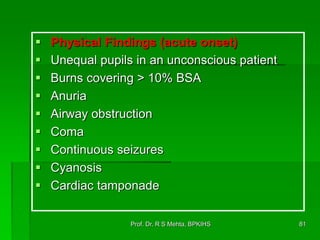
 Physical Findings (acute onset)
 Unequal pupils in an unconscious patient
 Burns covering > 10% BSA
 Anuria
 Airway obstruction
 Coma
 Continuous seizures
 Cyanosis
 Cardiac tamponade
81Prof. Dr. R S Mehta, BPKIHS
Team of Critical Care Unit
 Physicians.
The Most Responsible Physician (MRP) is the physician in charge of the patient’s
care during the current hospitalization. He or she communicates with other members
of the team on a daily basis.
 Nurses
Intensive Care nurses are the minute-to-minute critical care providers. They not only
help to provide, but also coordinate most aspects of care delivery. They have received
specialized training in caring for critically ill patients.
 Respiratory Therapists
Respiratory therapists have special training and experience in caring for patients with
breathing problems. They work closely with the physician to develop a plan to
support a patient’s breathing. They set up, monitor and maintain the breathing
machines (mechanical ventilators), and they adjust these machines minute by minute
and hour by hour to best meet the patient's needs.
82
 Pharmacists
Pharmacists consult with the physician in selecting the right
medicines at the correct dose for patients and also in monitoring
drug levels in the body. Pharmacists also help to decrease
medication side effects and provide valuable information to the team
members.
 Physical Therapist
They help prevent disabilities and facilitate rehabilitation as soon as
possible.
 Dieticians
Dieticians calculate the nutritional needs of the critically ill patient
and consult with the physician to provide the patient with the best
possible diet, whether orally or through a feeding tube.
 Medical Radiation Technologist
 Medical Laboratory Technologist
83Prof. Dr. R S Mehta, BPKIHS
 Trauma Coordinator
The Trauma Coordinator reviews the plan of care for each trauma patient and in
consultation with the ICU Care Team, makes suggestions regarding patient needs.
She also works closely with the patient and family, and provides teaching and
information to the patient and family about the patient’s progress and expected
outcomes.
 Social Worker
Social workers provide professional assistance with the needs of patients and families.
They can help to assess and determine what resources patients and families might be
lacking, providing them with information on agencies to assist with various needs
and generally assisting with other family difficulties.
 Clinical Educator
Clinical Educators are nurses who provide ongoing education for ICU nurses on new
practices, protocols and on new equipment. They are up-to-date with the best
practices in ICU and communicate with the Manager and with ICU nurses about all
aspects of nursing practice and education. As an important part of their role, they
provide a comprehensive orientation to nurses new to the ICU Care Team as well as
providing continuing advice, support and education for all nurses in ICU.
84
 Ward Clerk
ICU Ward Clerks help with communication by answering the phones,
processing physician orders and coordinating some of the patient activities
in the ICU.
 Pastoral Care
Chaplains are available to minister to the spiritual needs of patients and
families.
Manager
Nurse Managers are nurses with additional experience and education, who
are responsible for the day to day operations of the ICU. In addition to
managing the ICU nursing staff, the ICU Nurse Manager is responsible for
the ICU budget and nursing practices. Nurse Managers are responsible for
ensuring that the care in the ICU is safe. She/he hires ICU nurses and
ensures that all nursing staff members meet the standards established for
their performance. She is also there to assist family members with their
needs.
85Prof. Dr. R S Mehta, BPKIHS
Thank you
86Prof. Dr. R S Mehta, BPKIHS
ICU & CCU Service of
BPKIHS
Nursing Care and Protocols
87Prof. Dr. R S Mehta, BPKIHS
Critical Care
Considerations
 F=Feeding/fluid
 A=Analgesics
 S=Sedation
 T=Thrombolytic agents
 H=Head elevation
 U=Ulcer – bed sore
 G=Glucose monitoring
88Prof. Dr. R S Mehta, BPKIHS
Feeding and Fluids
 It includes
 Enteral feeding
o Oro - gastric and Naso - gastric feeding
o Churn diet
o Dairy and poultry products (Milk, egg,
youghort)
o High protein liquid diet
o Medications
89Prof. Dr. R S Mehta, BPKIHS
 Oral feeding
o Hospital diet
o Bland diet
o Normal diet
o Liquid intake
90Prof. Dr. R S Mehta, BPKIHS
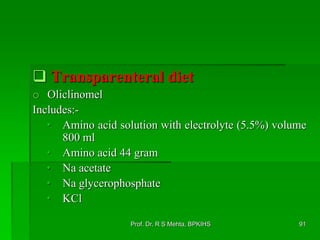
 Transparenteral diet
o Oliclinomel
Includes:-
• Amino acid solution with electrolyte (5.5%) volume
800 ml
• Amino acid 44 gram
• Na acetate
• Na glycerophosphate
• KCl
91Prof. Dr. R S Mehta, BPKIHS
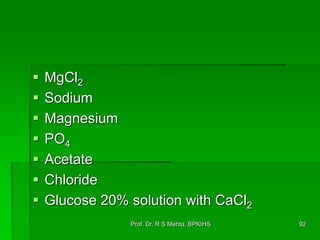
 MgCl2
 Sodium
 Magnesium
 PO4
 Acetate
 Chloride
 Glucose 20% solution with CaCl2
92Prof. Dr. R S Mehta, BPKIHS
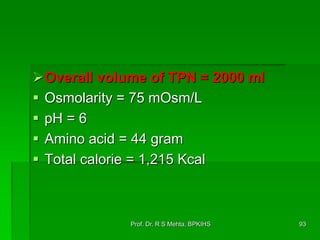
Overall volume of TPN = 2000 ml
 Osmolarity = 75 mOsm/L
 pH = 6
 Amino acid = 44 gram
 Total calorie = 1,215 Kcal
93Prof. Dr. R S Mehta, BPKIHS
 Fluids
 IV fluids like NS, RL, 5% D, 10% D, DNS
94Prof. Dr. R S Mehta, BPKIHS
Analgesics
 Fentanyl
o It works 600 times more effectively than
Morphine and reduces the pain and
increases the pain threshold
o Used in moderate and severe pain
o In ICU 50 – 100 µg per Kg
o Antidote Naloxone 0.05 mg/ Kg
95Prof. Dr. R S Mehta, BPKIHS
 Morphine
o Reduces pain
o Chiefly used in MI
o 2-4 mg dissolved in 10 ml NS
o Antidote: Naloxone
o Supplied by hospital.
96Prof. Dr. R S Mehta, BPKIHS
 Acetaminophen and NSAIDs
o Often more effective than opioids in reducing
pain from pleural or pericardial rubs, a pain that
responds poorly to opioids.
o particularly effective in reducing muscular and
skeletal pain
o Tab form: 500mg OD
97Prof. Dr. R S Mehta, BPKIHS
Sedatives
 Benzodiazepines
1. Midazolam
oShort acting sedatives and hypnotics
oIn intubated patients
oDose 0.01- 0.05 mg/Kg for several hours
98Prof. Dr. R S Mehta, BPKIHS
Benzodiazepines…
2. Diazepam
• Adult dose = 0.2 – 0.5 mg/ Kg
• Not given in MI patients
99Prof. Dr. R S Mehta, BPKIHS
Dissociative Anaesthesia
 Ketamine
 Adult dose= 1 – 3 mg/kg IV
100Prof. Dr. R S Mehta, BPKIHS
Propofol
o Arousal is rapid 10- 15 min
o Used in neuro cases and those with
increased ICP, during tracheostomy
procedure
101Prof. Dr. R S Mehta, BPKIHS
Inotropes
 Dopamine
 Dobutamine
 Nor- adrenaline
102Prof. Dr. R S Mehta, BPKIHS
Thrombolytic agents
 TEDS compressive stocking
 SCD (Systematic Compressive Device)
 LMWX
 Heparin flush
103Prof. Dr. R S Mehta, BPKIHS
Head elevation
 Head is elevated to 30 degree.
104Prof. Dr. R S Mehta, BPKIHS
Ulcer
 Two hourly position change
 Back care in each shift
 Oxygen therapy
 Each shift dressing of pressure sore
 Air mattresses
105Prof. Dr. R S Mehta, BPKIHS
Glucose monitoring
 RBS as prescribed
 Insulin therapy
 Careful monitoring of signs of
Hypoglycemia
(trembling, clammy skin, palpitations,
anxiety, sweating, hunger, and irritability)
106Prof. Dr. R S Mehta, BPKIHS
Infection control
 Hand washing before, during and after the procedure
 Sterility maintenance during procedures
 Use of disinfectants
 Weekly high wash
 Monthly culture test of health personnel, equipments
and infrastructures
 Regular inspection by infection control team
 Each shift CVP dressing
107Prof. Dr. R S Mehta, BPKIHS
Specific equipments used in
ICU and CCU
 Ventilators
 Infusion pumps
 Cardiac monitors
 Defibrillator
 ABG machine
 ECG machine
108Prof. Dr. R S Mehta, BPKIHS
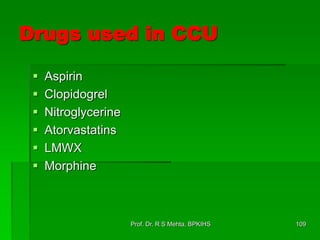
Drugs used in CCU
 Aspirin
 Clopidogrel
 Nitroglycerine
 Atorvastatins
 LMWX
 Morphine
109Prof. Dr. R S Mehta, BPKIHS
Sedation score in ICU is
done by RASS
110Prof. Dr. R S Mehta, BPKIHS
(Richmond Agitation Sedation Scale = RASS)
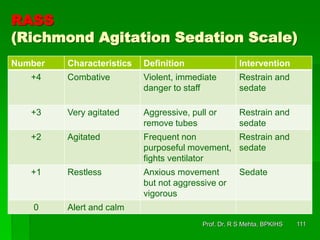
RASS
(Richmond Agitation Sedation Scale)
Number Characteristics Definition Intervention
+4 Combative Violent, immediate
danger to staff
Restrain and
sedate
+3 Very agitated Aggressive, pull or
remove tubes
Restrain and
sedate
+2 Agitated Frequent non
purposeful movement,
fights ventilator
Restrain and
sedate
+1 Restless Anxious movement
but not aggressive or
vigorous
Sedate
0 Alert and calm
111Prof. Dr. R S Mehta, BPKIHS
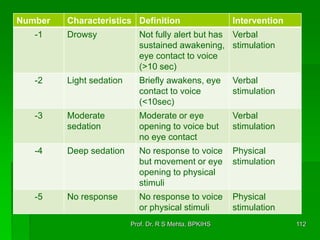
Number Characteristics Definition Intervention
-1 Drowsy Not fully alert but has
sustained awakening,
eye contact to voice
(>10 sec)
Verbal
stimulation
-2 Light sedation Briefly awakens, eye
contact to voice
(<10sec)
Verbal
stimulation
-3 Moderate
sedation
Moderate or eye
opening to voice but
no eye contact
Verbal
stimulation
-4 Deep sedation No response to voice
but movement or eye
opening to physical
stimuli
Physical
stimulation
-5 No response No response to voice
or physical stimuli
Physical
stimulation
112Prof. Dr. R S Mehta, BPKIHS
“It may seem a
strange principle to
enunciate (articulate)
as the very first
requirement in a
Hospital that it should
do the sick no harm.”
[1859]
113Prof. Dr. R S Mehta, BPKIHS
Thank you…!!!
114Prof. Dr. R S Mehta, BPKIHS

1. critical care

  • 1.
  • 2.
    CRITICAL  Crucial  Crisis Emergency  Serious  Requiring immediate action  Thorough and constant observation  Total dependent (Oxford Dictionary) 2Prof. Dr. R S Mehta, BPKIHS
  • 3.
    CRITICAL CARE NURSING The care of seriously ill clients from point of injury or illness until discharge from intensive care  Deals with human responses to life threatening problems -trauma /major surgery (Mary,L.S., Deborah, G.K. & Marthe, J.M. 2005) 3Prof. Dr. R S Mehta, BPKIHS
  • 4.
    CRITICAL CARE NURSE care for clients who are very ill  provide direct one to one care  Responsible for making life-and death decision  At high risk of injury or illness from possible exposure to infections  Communication skill is of optimal importance 4Prof. Dr. R S Mehta, BPKIHS
  • 5.
    CRITICALLY ILL CLIENT At high risk for actual or potential life- threatening health problems  More ill  Required more intensive and careful nursing care 5Prof. Dr. R S Mehta, BPKIHS
  • 6.
  • 7.
    DEFINITIONS  CRITICAL CARE: CRITICAL CARE IS A TERM USED TO DESCRIBE AS THE CARE OF PATIENTS WHO ARE EXTREMELY ILL AND WHOSE CLINICAL CONDITION IS UNSTABLE OR POTENTIALLY UNSTABLE. 7Prof. Dr. R S Mehta, BPKIHS
  • 8.
     CRITICAL CAREUNIT : IT IS DEFINED AS THE UNIT IN WHICH COMPREHENSIVE CARE OF A CRITICALLY ILL PATIENT WHICH IS DEEMED TO RECOVERABLE STAGE IS CARRIED OUT. 8Prof. Dr. R S Mehta, BPKIHS
  • 9.
     CRITICAL CARENURSING : IT REFERS TO THOSE COMPREHENSIVE, SPECIALIZED AND INDIVIDUALIZED NURSING CARE SERVICES WHICH ARE RENDERED TO PATIENTS WITH LIFE THREATENING CONDITIONS AND THEIR FAMILIES. 9Prof. Dr. R S Mehta, BPKIHS
  • 10.
    10 Critical Care Technology ECG monitoring  Arterial Lines  Oxygen Saturation  Ventilation  Intracranial Pressure Monitoring  Temperature  Pulmonary Artery Catheter  IABP  Extensive use of pharmaceuticals Prof. Dr. R S Mehta, BPKIHS
  • 11.
    11 The Critical CareNurse  “Specialty dealing with human responses to life-threatening problems”  Requires Extensive Knowledge and a Continual Desire to Learn Prof. Dr. R S Mehta, BPKIHS
  • 12.
    Economic Impact ofICU (1994) * <10% of hospital beds * 30% of acute care hospital cost * >20% of hospital budget * 1% of GNP expended for ICU care With aging of the population  Demand for critical care service will increase 12Prof. Dr. R S Mehta, BPKIHS
  • 13.
    Prof. Dr. RS Mehta, BPKIHS 13 Historical Background
  • 14.
    World War II Shock wards established for resuscitation  Transfusion practices in early stages  After World war-II, nursing shortage forced grouping of postoperative patients in recovery areas 14Prof. Dr. R S Mehta, BPKIHS
  • 15.
    Polio epidemic  1950’s:use of mechanical ventilation (“iron lung”) for treatment of polio  Development of respiratory intensive care units  At the same time, general ICU’s developed for sick and postoperative patients 15Prof. Dr. R S Mehta, BPKIHS
  • 16.
    16 History Continued  Collaborationbetween nurses and physicians  1950’s & 1960’s – CV Disease most common diagnosis  1960’s – 30-40% mortality rate for MI  1965 – 1st specialized ICU – The Coronary Care Unit  Emergence of Specialized ICU’s Prof. Dr. R S Mehta, BPKIHS
  • 17.
  • 18.
    ICU’s also treatthe dying  Isaac Asimov: “Life is pleasant. Death is peaceful. It is the transition that is difficult” Isaac Asimov: Professor of Biochemistry Boston 18
  • 19.
    19 American Association of Critical-CareNurses - AACN  1969  Educational support  Certification  Largest professional specialty nursing organization  Scholarships  Research  Publishes 2 journals  Local chapters  Political awareness  Provides standards of practice Prof. Dr. R S Mehta, BPKIHS
  • 20.
    An Ideal ICU 20Prof.Dr. R S Mehta, BPKIHS
  • 21.
    Multidisciplinary & Collaborative approachto ICU care  Medical & nursing directors : co-responsibility for ICU management • a team approach : doctors, nurses, R/T, pharmacist • use of standard, protocol, guideline consistent approach to all issues • dedication to coordination and communication for all aspects of ICU management • emphasis on research, education, ethical issues, patient advocacy 21Prof. Dr. R S Mehta, BPKIHS
  • 22.
    Team Dynamics  Amultidisciplinary team to effectively attain specified objective  Physician team leader & critical care nurse manager 22Prof. Dr. R S Mehta, BPKIHS
  • 23.
    Critical Care Practice Pattern Open  Closed  transitional 23Prof. Dr. R S Mehta, BPKIHS
  • 24.
    Open Units Definition : anyattending physician with hospital admitting privileges can be the physician of record and direct ICU care. (All other physicians are consultants) Disadvantage :  lack of a cohesive plan  Inconsistent night coverage  Duplication of services 24Prof. Dr. R S Mehta, BPKIHS
  • 25.
    Closed Units  Definition: Anintensivist is the physician of record for ICU patients. (other physicians are consultants), All orders & procedures carried out by ICU staff • advantage: • improved efficiency • standardized protocol for care • disadvantage: • potential to lock out private physician • increase physician conflict 25Prof. Dr. R S Mehta, BPKIHS
  • 26.
    Transitional Units Definition: intensives arelocally present shared co- managed care between ICU staff and private physician ICU staff is a final common pathway for orders and procedures Advantage: reduce physician conflict, standard policies and procedures usually present Disadvantage: confusion and conflict regarding final authority & responsibilities for patient care decision 26Prof. Dr. R S Mehta, BPKIHS
  • 27.
    ICU Model Care Full-time intensivist model :  patient care is provided by an intensivist  Consultant intensivist model :  an intensivist consults for another physician to coordinate or assist in critical care, but dose not have primary responsibility for care  Multiple consultant model:  multiple specialists are involved in the patient care, (esp. R/T doctors for ventilators), but none is designated especially as the consultant intensivist  Single physician model :  primary physician provides all ICU care 27Prof. Dr. R S Mehta, BPKIHS
  • 28.
    A Good ICU Well organized trust coordinated care • Full-time intensivist: daily round • protocol & policies (eg: how to DC elective operation when bed not available) • bedside nurses (master degree) • no intern 28Prof. Dr. R S Mehta, BPKIHS
  • 29.
    A Good ICU A team: doctors, nurses, R/T, pharmacists • led by full time intensivists critical care trained available in a timely fashion (24hr/day) no competiting clinical responsibilities during duty • closed units, if resources allow 29Prof. Dr. R S Mehta, BPKIHS
  • 30.
    What are theconditions considered as Critical? 1. ANY PERSON WITH LIFE THREATENING CONDITION 2. PATIENTS WITH :  ARF  AMI  CARDIAC TAMPONATE  SEVERE SHOCK 30Prof. Dr. R S Mehta, BPKIHS
  • 31.
     HEART BLOCK ACUTE RENAL FAILURE  POLY TRAUMA, MULTIPLE ORGAN FAILURE AND ORGAN DYSFUNCTION  SEVERE BURNS 31Prof. Dr. R S Mehta, BPKIHS
  • 32.
    NURSING ASSESSMENT  ITIS THE FIRST STAGE OF NURSING PROCESS IN WHICH THE NURSE SHOULD CARRY OUT A COMPLETE AND HOLISTIC NURSING ASSESS- MENT OF EVERY PATIENT’S NEEDS, REGARDLESS OF THE REASON FOR THE ENCOUNTER. 32Prof. Dr. R S Mehta, BPKIHS
  • 33.
    COMPONENTS OF NURSING ASSESSMENT 1.NURSING HISTORY: Taking a nursing history prior to the physical examination allows a nurse to establish a rapport with the patient and family. Elements of the history include –  Health Status  Cause of present illness including symptoms  Current management of illness  Past medical history including family’s medical history 33Prof. Dr. R S Mehta, BPKIHS
  • 34.
     Social history Perception of illness 2. Psychological and Social Examination-  Client’s perception  Emotional health  Physical health  Spiritual health  Intellectual health  3. Physical Examination : A nursing assessment includes physical examination, where the observation or measurement of signs, which can be observed or measured, or symptoms such as nausea or vertigo, which can be felt by the patient. 34
  • 35.
    The techniques usedmay include Inspection, Palpation, auscultation and Percussion in addition to the vital signs like temperature, pulse, respiration , BP and further examination of the body systems such as the cardiovascular or musculoskeletal systems.  Documentation of Assessment: The Assessment is documented in the patient’s medical or nursing records, which may be on paper or as part of the electronic medical record which can be assessed by all members of the health care team. 35Prof. Dr. R S Mehta, BPKIHS
  • 36.
    CLASSIFICATION OF CRITICAL CAREUNITS  LEVEL - I : PROVIDES MONITORING, OBSERVATION AND SHORT TERM VENTILATION. NURSE PATIENT RATIO IS 1:3 AND THE MEDICAL STAFF ARE NOT PRESENT IN THE UNIT ALL THE TIME. 36Prof. Dr. R S Mehta, BPKIHS
  • 37.
    LEVEL - II: PROVIDES OBSERVATION, MONITORING AND LONG TERM VENTILATION WITH RESIDENT DOCTORS. THE NURSE-PATIENT RATIO IS 1:2 AND JUNIOR MEDICAL STAFF IS AVAILABLE IN THE UNIT ALL THE TIME AND CONSULTANT MEDICAL STAFF IS AVAILABLE IF NEEDED. 37
  • 38.
     LEVEL -III : PROVIDES ALL ASPECTS OF INTENSIVE CARE INCLUDING INVASIVE HAEMODYNAMIC MONITORING AND DIALYSIS. NURSE PATIENT RATIO IS 1:1 38Prof. Dr. R S Mehta, BPKIHS
  • 39.
    CLASSIFICATION OF CRITICAL CAREPATIENTS  Level O : normal ward care  Level 1: at risk of deteriorating , support from critical care team  Level 2 : more observation or intervention, single failing organ or post operative care  Level 3; advanced respiratory support or basic respiratory support ,multiorgan failure 39Prof. Dr. R S Mehta, BPKIHS
  • 40.
    HIGH DEPENDENCY CARE Coronary care units (CCU)  Renal high dependency unit (HDU)  Post-operative recovery room  Accident and emergency departments (A&E)  Intensive care units (ICU) 40Prof. Dr. R S Mehta, BPKIHS
  • 41.
    TYPES OF CRITICALCARE UNIT  NEONATAL INTENSIVE UNIT (NICU)  SPECIAL CARE NURSERY (SCN)  PAEDIATRIC INTENSIVE CARE UNIT (PICU)  PSYCHIATRIC INTENSIVE UNIT (PICU) 41Prof. Dr. R S Mehta, BPKIHS
  • 42.
     CORONARY CAREUNIT (CCU)  CARDIAC SURGERY INTENSIVE CARE UNIT (CSICU)  CARDIOVASCULAR INTENSIVE CARE UNIT (CVICU)  MEDICAL INTENSIVE CARE UNIT (MICU)  MEDICAL SURGICAL INTENSIVE CARE UNIT (MSICU) 42Prof. Dr. R S Mehta, BPKIHS
  • 43.
     OVERNIGHT INTENSIVE RECOVERY(OIR)  NEUROSCIENCE / NEUROTRAUMA INTENSIVE CARE UNIT (NICU)  NEURO INTENSIVE CARE UNIT (NICU)  BURN INTENSIVE CARE UNIT (BNICU) 43Prof. Dr. R S Mehta, BPKIHS
  • 44.
     SURGICAL INTENSIVECARE UNIT (SICU)  TRAUMA INTENSIVE CARE UNIT (TICU)  SHOCK TRAUMA INTENSIVE CARE UNIT (STICU)  TRAUMA – NEURO CRITICAL CARE INTENSIVE CARE UNIT (TNCC) 44Prof. Dr. R S Mehta, BPKIHS
  • 45.
     RESPIRATORY INTENSIVECARE UNIT (RICU)  GERIATRIC INTENSIVE CARE UNIT (GICU) 45Prof. Dr. R S Mehta, BPKIHS
  • 46.
    Types of ICU General  Medical Intensive Care Unit(MICU)  Surgical Intensive Care Unit  Medical Surgical Intensive Care Unit(MSICU)  Specialized  Neonatal Intensive Care Unit(NICU)  Special Care Nursery(SCN)  Paediatric Intensive Care Unit(PICU)  Coronary Care Unit(CCU)  Cardiac Surgery Intensive Care Unit(CSICU)  Neuro Surgery Intensive Care Unit(NSICU)  Burn Intensive Care Unit(BICU)  Trauma Intensive Care Unit 46Prof. Dr. R S Mehta, BPKIHS
  • 47.
    PRINCIPLES OF CRITICAL CARENURSING ANTICIPATION : The first principle in critical care is Anticipation. One has to recognize the high risk patients and anticipate the requirements, complications and be prepared to meet any emergency. Unit is properly organized in which all necessary equipments and supplies are mandatory for smooth running of the unit. 47Prof. Dr. R S Mehta, BPKIHS
  • 48.
    EARLY DETECTION AND PROMPTACTION :  The prognosis of the patient depends on the early detection of variation, prompt and appropriate action to prevent or combat complication. Monitoring of cardiac respiratory function is of prime importance in assessment. Prof. Dr. R S Mehta, BPKIHS 48
  • 49.
     COLLABORATIVE PRACTICE: Critical Care, which has originated as technical sub-specialized body of knowledge has evolved into a comprehensive discipline requiring a very specialized body of knowledge for the physicians and nurses working in the critical care unit fosters a partnerships for decision making and ensures quality and compassionate patient care. Collaborate practice is more and more warranted for critical care more than in any other field. 49Prof. Dr. R S Mehta, BPKIHS
  • 50.
    COMMUNICATION :  Intraprofessional, inter departmental and inter personal communication has a significant importance in the smooth running of unit. Collaborative practice of communication model Prof. Dr. R S Mehta, BPKIHS 50
  • 51.
     Prevention ofInfection : Nosocomial infection cost a lot in the health care services. Critically ill patients requiring intensive care are at a greater risk than other patients due to the immunocompromised state with the antibiotic usage and stress, invasive lines, mechanical ventilators, prolonged stay and severity of illness and environment of the critical unit itself. 51Prof. Dr. R S Mehta, BPKIHS
  • 52.
     Crisis Interventionand Stress Reduction : partnerships are formulated during crisis. Bonds between nurses, patients and families are stronger during hospitalization. As patient advocates, nurses assist the patient to express fear and identify their grieving patttern and provide avenues for positive coping. 52Prof. Dr. R S Mehta, BPKIHS
  • 53.
    ORGANIZATION OF ICU DESIGN OF ICU : 1. Should be at a geographically distinct area within the hospital, with controlled access. 2. There should be a single entry and exit. However, it is required to have emergency exit points in case of emergency and disaster. 3. There should not be any through traffic of goods or hospital staff. Supply and professional traffic should be separated from public/visitor traffic. 53Prof. Dr. R S Mehta, BPKIHS
  • 54.
    4. Safe, easy,fast transport of a critically sick pt should be a priority in planning its location. Therefore, the ICU should be located in close proximity or ER, OT, trauma ward etc. 5. Corridors, lifts and ramps should be spacious enough to provide easy movement of bed/trolley of a critically sick patient. 6. Close, easy proximity is also desirable to diagnostic facilities, blood bank, pharmacy etc.  BED STRENGTH: 1. It is recommended that total bed strength in ICU should be between 8-12 and not less than 6 or not more than 24 in any case. 54Prof. Dr. R S Mehta, BPKIHS
  • 55.
    2. 3-5 bedsper 100 hospital beds for a Level III ICU or 2 to 20% of the total no of hospital beds. 3. 1 isolation bed for every ICU beds.  BED AND ITS SPACE: 1. 150-200 sq.ft per open bed with 8 ft in between beds. 2. 225-250 sq.ft per bed if in a single room. 3. Beds should be adjustable, no head board, with side rails and wheels. 4. Keep bed 2 ft away from head wall. 55Prof. Dr. R S Mehta, BPKIHS
  • 56.
     ACCESSORIES: 1. 3O2 outlets, 3 suction outlets (gastric, tracheal and underwater seal), 2 compressed air outlets and 16 power outlets per bed. 2. Storage by each bedside. 3. Hand rinse solution by each bedside. 4. Equipment shelf at the head end. 5. Hooks and devices to hang infusions/ blood bags, extended from the ceiling with a sliding rail to position. 6. Infusion pumps to be mounted on stand or poles. 7. Level II ICUs may require multi channel invasive monitors. 56Prof. Dr. R S Mehta, BPKIHS
  • 57.
    8. ventilators, infusionpumps, portable X ray unit, fluid and bed warmers, portable light, defibrillators, anaesthesia machines and difficult airway management equipments are necessary.  STAFFING : 1. Medical Staff – the best senior medical staff to be appointed as an Intensive Care Director or Intensivist. Less preferred are other specialists from anaesthesia / medicine who has clinical commitment elsewhere. Junior staff are intensive care trainers and trainees on deputation from other disciplines. 2. Nursing staff – The major teaching tertiary care ICU requires trained nurses in critical care. 57
  • 58.
    The no ofnurses ideally required for such unit is 1:1 ratio, however it might not be possible to have such members in our set up. So 1 nurse for 2 patients is acceptable. The no of trained nurses should also be worked out by the type of ICU, the workload and work statistics and type of patient load. 3.Allied Services – Respiratory services, Nutritionist, Physiotherapist, Biomedical engineer, technicians, computer programmer, clinical pharmacist, social worker / counsellor and other support staff, guards and grade IV workers. 58Prof. Dr. R S Mehta, BPKIHS
  • 59.
    CRITICAL CARE NURSE Factorsto be considered in recruiting Critical Care Nurses are: 1. Intra and interpersonal factors 2. Technical Qualifications. 3. Educational background 4. Clinical Experience. 59Prof. Dr. R S Mehta, BPKIHS
  • 60.
     Continuous monitoring Keep ready emergency trolley / crash Cart  Efficient Individualized Care.  Counseling and information to family.  Application of policies and procedures  Proper records of all activities  Maintain infection control principles.  Keep update with advance information. 60
  • 61.
    QUICK REFERENCE PROTOCOLFOR MANAGING EMERGENCY IN ICU  Quickly review the patient - Identity, History , Physical Exam.  Be with the patient, ask for help.  Place the patient in a suitable position.  Attach the cardiac monitor and call for crash cart.  Maintain ABC Along with expert team  Introduce IV, CV line 61Prof. Dr. R S Mehta, BPKIHS
  • 62.
     Administer medicationas needed.  Carry on Investigations - ABG, ECG, Urea, Creatinine, Blood Sugar, Cardiac enzymes.  Maintain Fluid and Electrolytes .  Record right things at right time rightly. 62Prof. Dr. R S Mehta, BPKIHS
  • 63.
    Core Competencies  PatientCare  Medical Knowledge  Professionalism & Ethics  Interpersonal Communication Skills  Practice-based Learning and Improvement  Systems-based Practice 63Prof. Dr. R S Mehta, BPKIHS
  • 64.
    MonthlyEvaluations ProcedureLogBooks InTrainingExams EvaluationofACCPBoard ReviewLectures ErrorReporting TaumaMAn FCCS THCI QIPROJECTS Patient Care XX X X X X X X Medical Knowledge X X X X X X X Practice Based Learning and Improvement X X X X Interpersonal and Communication Skills X X X Professionalism X X X X Systems-Based Practice X X X X 64Prof. Dr. R S Mehta, BPKIHS
  • 65.
    65 Family Need ofthe Critical Care Patient  Information – major source of anxiety and litigation (legal issues)  Reassurance – can reassure care is being given  Convenience – access to the patient Prof. Dr. R S Mehta, BPKIHS
  • 66.
    Job description  Patientcare  Multidisciplinary rounds  Bed allocation/triage  Infection control  Protocol development  Quality control/assurance  Education  Residents, fellows, med students, nurses, respiratory therapists, nurse practitioners  Research  Quality assurance projects  Clinical trials  Database-driven projects 66Prof. Dr. R S Mehta, BPKIHS
  • 67.
    General Concept, Settingand Principle of Critical Care Nursing 67Prof. Dr. R S Mehta, BPKIHS
  • 68.
    Who are criticallyill patient? 68Prof. Dr. R S Mehta, BPKIHS
  • 69.
    Critical illness aregrouped by the system of the body; A. Cardiac System 1. Acute myocardial infarction with complications 2. Cardiogenic shock 3. Complex arrhythmias requiring close monitoring and intervention 4. Acute congestive heart failure with respiratory failure and/or requiring hemodynamic support 5. Hypertensive emergencies 6. Unstable angina, particularly with dysrhythmias, hemodynamic instability, or persistent chest pain 8. Cardiac tamponade or constriction with hemodynamic instability 9. Dissecting aortic aneurysms 10. Complete heart block 69 Prof. Dr. R S Mehta, BPKIHS
  • 70.
    B. Pulmonary System. 1. Acute respiratory failure requiring ventilatory support 2. Pulmonary emboli with hemodynamic instability 3. Massive hemoptysis C. Neurologic disorder 1. Intracranial hemorrhage 2. Meningitis with altered mental status or respiratory compromise 3. Central nervous system or neuromuscular disorders with deteriorating neurologic or pulmonary function 4. Status epilepticus 5. Severe head injured patients 70Prof. Dr. R S Mehta, BPKIHS
  • 71.
    D. Drug Ingestionand Drug Overdose 1. Hemodynamically unstable drug ingestion 2. Drug ingestion with significantly altered mental status with inadequate airway protection 3. Seizures following drug ingestion E. Gastrointestinal Disorders 1. Life threatening gastrointestinal bleeding including hypotension, angina, continued bleeding, or with comorbid conditions 2. Hepatic failure 3. Severe pancreatitis 71Prof. Dr. R S Mehta, BPKIHS
  • 72.
    F. Endocrine 1. Diabeticketoacidosis complicated by hemodynamic instability, altered mental status, respiratory insufficiency, or severe acidosis 2. Severe hypercalcemia with altered mental status, requiring hemodynamic monitoring 3. Hypo or hypernatremia with seizures, altered mental status 4. Hypo or hypermagnesemia with hemodynamic compromise or dysrhythmias 5. Hypo or hyperkalemia with dysrhythmias or muscular weakness 6. Hypophosphatemia with muscular weakness 72Prof. Dr. R S Mehta, BPKIHS
  • 73.
    G. Surgical 1. Post-operativepatients requiring hemodynamic monitoring/ventilatory support or extensive nursing care H. Miscellaneous 1. Septic shock with hemodynamic instability 2. Hemodynamic monitoring 3. Environmental injuries (lightning, near drowning, hypo/hyperthermia) 73Prof. Dr. R S Mehta, BPKIHS
  • 74.
    Admission Criteria inICU  The ICU admission decision may be based on several models utilizing prioritization, diagnosis, and objective parameters models. A. Prioritization Model This system defines those that will benefit most from the ICU (Priority 1) to those that will not benefit at all (Priority 4) from ICU admission. 74Prof. Dr. R S Mehta, BPKIHS
  • 75.
    Priority 1:  Theseare critically ill, unstable patients in need of intensive treatment and monitoring that cannot be provided outside of the ICU. Usually, these treatments include ventilator support, continuous vasoactive drug infusions. Examples of these patients may include post-operative or acute respiratory failure patients requiring mechanical ventilatory support and shock or hemodynamically unstable patients receiving invasive monitoring and/or vasoactive drugs. Prof. Dr. R S Mehta, BPKIHS 75
  • 76.
    Priority 2:  Thesepatients require intensive monitoring and may potentially need immediate intervention. Examples include patients with chronic comorbid conditions who develop acute severe medical or surgical illness. Prof. Dr. R S Mehta, BPKIHS 76
  • 77.
     Priority 3:These unstable patients are critically ill but have a reduced likelihood of recovery because of underlying disease or nature of their acute illness. Examples include patients with metastatic malignancy complicated by infection, cardiac tamponade, or airway obstruction. Priority 4: These are patients who are generally not appropriate for ICU admission. Admission of these patients should be on an individual basis, under unusual circumstances and at the discretion of the ICU Director. These patients can be placed in the following categories: 77Prof. Dr. R S Mehta, BPKIHS
  • 78.
    B. Diagnosis Model Thismodel uses specific conditions or diseases to determine appropriateness of ICU admission. (described above in critically ill patient) 78Prof. Dr. R S Mehta, BPKIHS
  • 79.
    C. Objective ParametersModel Vital Signs • Pulse < 40 or > 150 beats/minute • Systolic arterial pressure < 80 mm Hg or 20 mm Hg below the patient's usual pressure • Mean arterial pressure < 60 mm Hg • Diastolic arterial pressure > 120 mm Hg • Respiratory rate > 35 breaths/minute Laboratory Values (newly discovered) • Serum sodium < 110 mEq/L or > 170 mEq/L • Serum potassium < 2.0 mEq/L or > 7.0 mEq/L • PaO2 < 50 mm Hg pH < 7.1 or > 7.7 • Serum glucose > 800 mg/dl • Serum calcium > 15 mg/dl • Toxic level of drug or other chemical substance in a hemodynamically or neurologically compromised patient 79Prof. Dr. R S Mehta, BPKIHS
  • 80.
     Radiography/Ultrasonography/Tomography (newly discovered) Cerebral vascular hemorrhage, contusion or subarachnoid hemorrhage with altered mental status or focal neurological signs  Ruptured viscera, bladder, liver, esophageal varices or uterus with hemodynamic instability  Dissecting aortic aneurysm  Electrocardiogram  Myocardial infarction with complex arrhythmias, hemodynamic instability or congestive heart failure  Sustained ventricular tachycardia or ventricular fibrillation  Complete heart block with hemodynamic instability 80Prof. Dr. R S Mehta, BPKIHS
  • 81.
     Physical Findings(acute onset)  Unequal pupils in an unconscious patient  Burns covering > 10% BSA  Anuria  Airway obstruction  Coma  Continuous seizures  Cyanosis  Cardiac tamponade 81Prof. Dr. R S Mehta, BPKIHS
  • 82.
    Team of CriticalCare Unit  Physicians. The Most Responsible Physician (MRP) is the physician in charge of the patient’s care during the current hospitalization. He or she communicates with other members of the team on a daily basis.  Nurses Intensive Care nurses are the minute-to-minute critical care providers. They not only help to provide, but also coordinate most aspects of care delivery. They have received specialized training in caring for critically ill patients.  Respiratory Therapists Respiratory therapists have special training and experience in caring for patients with breathing problems. They work closely with the physician to develop a plan to support a patient’s breathing. They set up, monitor and maintain the breathing machines (mechanical ventilators), and they adjust these machines minute by minute and hour by hour to best meet the patient's needs. 82
  • 83.
     Pharmacists Pharmacists consultwith the physician in selecting the right medicines at the correct dose for patients and also in monitoring drug levels in the body. Pharmacists also help to decrease medication side effects and provide valuable information to the team members.  Physical Therapist They help prevent disabilities and facilitate rehabilitation as soon as possible.  Dieticians Dieticians calculate the nutritional needs of the critically ill patient and consult with the physician to provide the patient with the best possible diet, whether orally or through a feeding tube.  Medical Radiation Technologist  Medical Laboratory Technologist 83Prof. Dr. R S Mehta, BPKIHS
  • 84.
     Trauma Coordinator TheTrauma Coordinator reviews the plan of care for each trauma patient and in consultation with the ICU Care Team, makes suggestions regarding patient needs. She also works closely with the patient and family, and provides teaching and information to the patient and family about the patient’s progress and expected outcomes.  Social Worker Social workers provide professional assistance with the needs of patients and families. They can help to assess and determine what resources patients and families might be lacking, providing them with information on agencies to assist with various needs and generally assisting with other family difficulties.  Clinical Educator Clinical Educators are nurses who provide ongoing education for ICU nurses on new practices, protocols and on new equipment. They are up-to-date with the best practices in ICU and communicate with the Manager and with ICU nurses about all aspects of nursing practice and education. As an important part of their role, they provide a comprehensive orientation to nurses new to the ICU Care Team as well as providing continuing advice, support and education for all nurses in ICU. 84
  • 85.
     Ward Clerk ICUWard Clerks help with communication by answering the phones, processing physician orders and coordinating some of the patient activities in the ICU.  Pastoral Care Chaplains are available to minister to the spiritual needs of patients and families. Manager Nurse Managers are nurses with additional experience and education, who are responsible for the day to day operations of the ICU. In addition to managing the ICU nursing staff, the ICU Nurse Manager is responsible for the ICU budget and nursing practices. Nurse Managers are responsible for ensuring that the care in the ICU is safe. She/he hires ICU nurses and ensures that all nursing staff members meet the standards established for their performance. She is also there to assist family members with their needs. 85Prof. Dr. R S Mehta, BPKIHS
  • 86.
    Thank you 86Prof. Dr.R S Mehta, BPKIHS
  • 87.
    ICU & CCUService of BPKIHS Nursing Care and Protocols 87Prof. Dr. R S Mehta, BPKIHS
  • 88.
    Critical Care Considerations  F=Feeding/fluid A=Analgesics  S=Sedation  T=Thrombolytic agents  H=Head elevation  U=Ulcer – bed sore  G=Glucose monitoring 88Prof. Dr. R S Mehta, BPKIHS
  • 89.
    Feeding and Fluids It includes  Enteral feeding o Oro - gastric and Naso - gastric feeding o Churn diet o Dairy and poultry products (Milk, egg, youghort) o High protein liquid diet o Medications 89Prof. Dr. R S Mehta, BPKIHS
  • 90.
     Oral feeding oHospital diet o Bland diet o Normal diet o Liquid intake 90Prof. Dr. R S Mehta, BPKIHS
  • 91.
     Transparenteral diet oOliclinomel Includes:- • Amino acid solution with electrolyte (5.5%) volume 800 ml • Amino acid 44 gram • Na acetate • Na glycerophosphate • KCl 91Prof. Dr. R S Mehta, BPKIHS
  • 92.
     MgCl2  Sodium Magnesium  PO4  Acetate  Chloride  Glucose 20% solution with CaCl2 92Prof. Dr. R S Mehta, BPKIHS
  • 93.
    Overall volume ofTPN = 2000 ml  Osmolarity = 75 mOsm/L  pH = 6  Amino acid = 44 gram  Total calorie = 1,215 Kcal 93Prof. Dr. R S Mehta, BPKIHS
  • 94.
     Fluids  IVfluids like NS, RL, 5% D, 10% D, DNS 94Prof. Dr. R S Mehta, BPKIHS
  • 95.
    Analgesics  Fentanyl o Itworks 600 times more effectively than Morphine and reduces the pain and increases the pain threshold o Used in moderate and severe pain o In ICU 50 – 100 µg per Kg o Antidote Naloxone 0.05 mg/ Kg 95Prof. Dr. R S Mehta, BPKIHS
  • 96.
     Morphine o Reducespain o Chiefly used in MI o 2-4 mg dissolved in 10 ml NS o Antidote: Naloxone o Supplied by hospital. 96Prof. Dr. R S Mehta, BPKIHS
  • 97.
     Acetaminophen andNSAIDs o Often more effective than opioids in reducing pain from pleural or pericardial rubs, a pain that responds poorly to opioids. o particularly effective in reducing muscular and skeletal pain o Tab form: 500mg OD 97Prof. Dr. R S Mehta, BPKIHS
  • 98.
    Sedatives  Benzodiazepines 1. Midazolam oShortacting sedatives and hypnotics oIn intubated patients oDose 0.01- 0.05 mg/Kg for several hours 98Prof. Dr. R S Mehta, BPKIHS
  • 99.
    Benzodiazepines… 2. Diazepam • Adultdose = 0.2 – 0.5 mg/ Kg • Not given in MI patients 99Prof. Dr. R S Mehta, BPKIHS
  • 100.
    Dissociative Anaesthesia  Ketamine Adult dose= 1 – 3 mg/kg IV 100Prof. Dr. R S Mehta, BPKIHS
  • 101.
    Propofol o Arousal israpid 10- 15 min o Used in neuro cases and those with increased ICP, during tracheostomy procedure 101Prof. Dr. R S Mehta, BPKIHS
  • 102.
    Inotropes  Dopamine  Dobutamine Nor- adrenaline 102Prof. Dr. R S Mehta, BPKIHS
  • 103.
    Thrombolytic agents  TEDScompressive stocking  SCD (Systematic Compressive Device)  LMWX  Heparin flush 103Prof. Dr. R S Mehta, BPKIHS
  • 104.
    Head elevation  Headis elevated to 30 degree. 104Prof. Dr. R S Mehta, BPKIHS
  • 105.
    Ulcer  Two hourlyposition change  Back care in each shift  Oxygen therapy  Each shift dressing of pressure sore  Air mattresses 105Prof. Dr. R S Mehta, BPKIHS
  • 106.
    Glucose monitoring  RBSas prescribed  Insulin therapy  Careful monitoring of signs of Hypoglycemia (trembling, clammy skin, palpitations, anxiety, sweating, hunger, and irritability) 106Prof. Dr. R S Mehta, BPKIHS
  • 107.
    Infection control  Handwashing before, during and after the procedure  Sterility maintenance during procedures  Use of disinfectants  Weekly high wash  Monthly culture test of health personnel, equipments and infrastructures  Regular inspection by infection control team  Each shift CVP dressing 107Prof. Dr. R S Mehta, BPKIHS
  • 108.
    Specific equipments usedin ICU and CCU  Ventilators  Infusion pumps  Cardiac monitors  Defibrillator  ABG machine  ECG machine 108Prof. Dr. R S Mehta, BPKIHS
  • 109.
    Drugs used inCCU  Aspirin  Clopidogrel  Nitroglycerine  Atorvastatins  LMWX  Morphine 109Prof. Dr. R S Mehta, BPKIHS
  • 110.
    Sedation score inICU is done by RASS 110Prof. Dr. R S Mehta, BPKIHS (Richmond Agitation Sedation Scale = RASS)
  • 111.
    RASS (Richmond Agitation SedationScale) Number Characteristics Definition Intervention +4 Combative Violent, immediate danger to staff Restrain and sedate +3 Very agitated Aggressive, pull or remove tubes Restrain and sedate +2 Agitated Frequent non purposeful movement, fights ventilator Restrain and sedate +1 Restless Anxious movement but not aggressive or vigorous Sedate 0 Alert and calm 111Prof. Dr. R S Mehta, BPKIHS
  • 112.
    Number Characteristics DefinitionIntervention -1 Drowsy Not fully alert but has sustained awakening, eye contact to voice (>10 sec) Verbal stimulation -2 Light sedation Briefly awakens, eye contact to voice (<10sec) Verbal stimulation -3 Moderate sedation Moderate or eye opening to voice but no eye contact Verbal stimulation -4 Deep sedation No response to voice but movement or eye opening to physical stimuli Physical stimulation -5 No response No response to voice or physical stimuli Physical stimulation 112Prof. Dr. R S Mehta, BPKIHS
  • 113.
    “It may seema strange principle to enunciate (articulate) as the very first requirement in a Hospital that it should do the sick no harm.” [1859] 113Prof. Dr. R S Mehta, BPKIHS
  • 114.