Dr. Virendra Kumar Gupta
MD Pediatrics
Fellowship In pediatric Gastroentero-Hepatology & Liver
Transplantation
Assistant Professor
Department Of pediatrics
NIMS Medical College & Hospital , Jaipur
 IBD is an idiopathic disease , probably involving an
immune reaction of the body to its own intestinal
tract
 Crohn’s disease (CD)
 Ulcerative colitis (UC)
 Both are chronic inflammatory disorders of the GI tract
that currently have no real cure.
 disorders of unknown cause involving genetic and
immunological influence on the gastrointestinal tract's
ability to distinguish foreign from self-antigens.
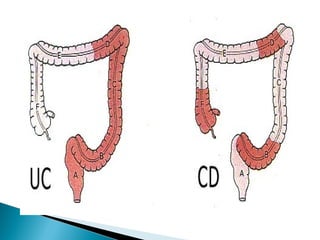
 CD is a condition of chronic granulomatous
inflammation potentially involving any location of the
GIT from mouth to anus.
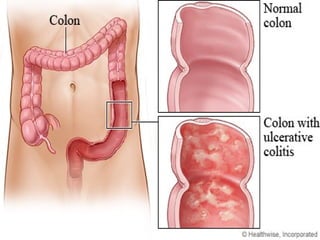
 UC is an non granulomatous inflammatory disorder
that affects the rectum and extends proximally to
affect variable extent of the colon.
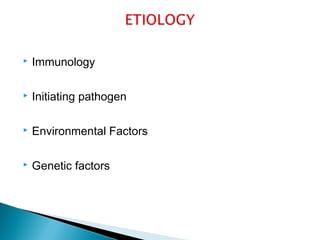
 Immunology
 Initiating pathogen
 Environmental Factors
 Genetic factors
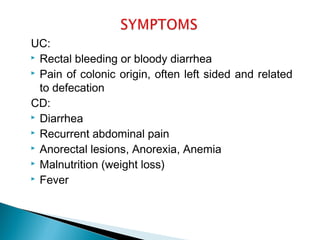
UC:
 Rectal bleeding or bloody diarrhea
 Pain of colonic origin, often left sided and related
to defecation
CD:
 Diarrhea
 Recurrent abdominal pain
 Anorectal lesions, Anorexia, Anemia
 Malnutrition (weight loss)
 Fever
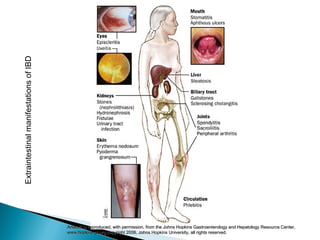
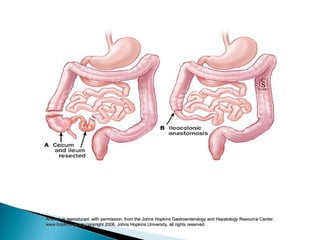
Artwork is reproduced, with permission, from the Johns Hopkins Gastroenterology and Hepatology Resource Center,Artwork is reproduced, with permission, from the Johns Hopkins Gastroenterology and Hepatology Resource Center,
www.hopkins-gi.org,copyright 2006, Johns Hopkins University, all rights reserved.www.hopkins-gi.org,copyright 2006, Johns Hopkins University, all rights reserved.
ExtraintestinalmanifestationsofIBD
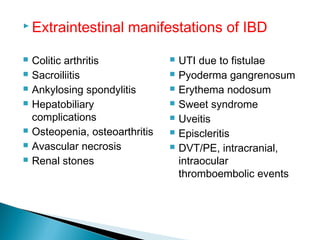
 Colitic arthritis
 Sacroiliitis
 Ankylosing spondylitis
 Hepatobiliary
complications
 Osteopenia, osteoarthritis
 Avascular necrosis
 Renal stones
 UTI due to fistulae
 Pyoderma gangrenosum
 Erythema nodosum
 Sweet syndrome
 Uveitis
 Episcleritis
 DVT/PE, intracranial,
intraocular
thromboembolic events
 Extraintestinal manifestations of IBD
 Endoscopy
 Colonoscopy
 Histopathology
 Radiology
 Hematological tests and microbiological stool
test for infection
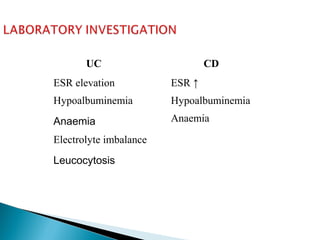
UC CD
ESR elevation
Hypoalbuminemia
Anaemia
Electrolyte imbalance
Leucocytosis
ESR ↑
Hypoalbuminemia
Anaemia
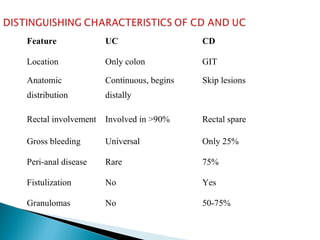
Feature UC CD
Location Only colon GIT
Anatomic
distribution
Continuous, begins
distally
Skip lesions
Rectal involvement Involved in >90% Rectal spare
Gross bleeding Universal Only 25%
Peri-anal disease Rare 75%
Fistulization No Yes
Granulomas No 50-75%
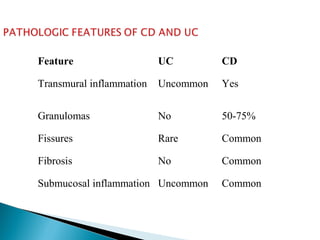
Feature UC
Transmural inflammation Uncommon
Granulomas No
Fissures Rare
Fibrosis No
Submucosal inflammation Uncommon
CD
Yes
50-75%
Common
Common
Common
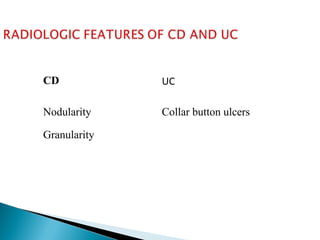
CD UC
Nodularity
Granularity
Collar button ulcers
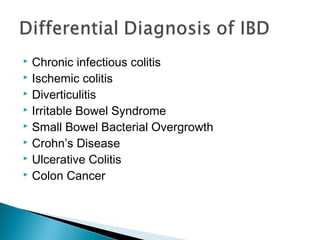
 Chronic infectious colitis
 Ischemic colitis
 Diverticulitis
 Irritable Bowel Syndrome
 Small Bowel Bacterial Overgrowth
 Crohn’s Disease
 Ulcerative Colitis
 Colon Cancer
Non-pharmacological
 Nutrition
 Initial tretment is nonoperative Stop Smoking
(for crohn’s disease)
 Aminosalicilates (5-ASA):
sulfasalazine, mesalazine, olsalazine
 Corticosteroids :
Budesonide, presnisolone, methylprednisolone
 Immunosuppressants:
azathioprine , 6-mercaptopurine
 Antibiotics :
metronidazole, ciprofloxacin
 Anti diarrhoals :
loperamide, Diphenoxylate & atropine
 Antispasmodic agent : Dicyclomine
 Immunoglobulin : İnfliximab
 Miscellaneous :
Total or supplementary parenteral
nutrition, fish oils, sodium cromoglycate, lidocaine,
nicotine trans dermally
 Surgical management
 Indications:
◦ Failure of medical therapy
◦ Recurrent obstruction
◦ Perforation
◦ Fistula
◦ Abcess
◦ Hemorrhage
◦ Growth retardation (children)
◦ carcinoma
Artwork is reproduced, with permission, from the Johns Hopkins Gastroenterology and Hepatology Resource Center,Artwork is reproduced, with permission, from the Johns Hopkins Gastroenterology and Hepatology Resource Center,
www.hopkins-gi.org,copyright 2006, Johns Hopkins University, all rights reserved.www.hopkins-gi.org,copyright 2006, Johns Hopkins University, all rights reserved.
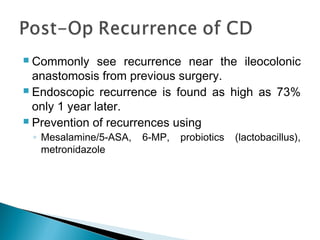
 Commonly see recurrence near the ileocolonic
anastomosis from previous surgery.
 Endoscopic recurrence is found as high as 73%
only 1 year later.
 Prevention of recurrences using
◦ Mesalamine/5-ASA, 6-MP, probiotics (lactobacillus),
metronidazole
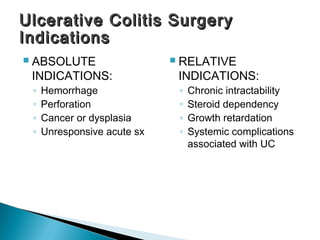
 ABSOLUTE
INDICATIONS:
◦ Hemorrhage
◦ Perforation
◦ Cancer or dysplasia
◦ Unresponsive acute sx
 RELATIVE
INDICATIONS:
◦ Chronic intractability
◦ Steroid dependency
◦ Growth retardation
◦ Systemic complications
associated with UC
Ulcerative Colitis SurgeryUlcerative Colitis Surgery
IndicationsIndications
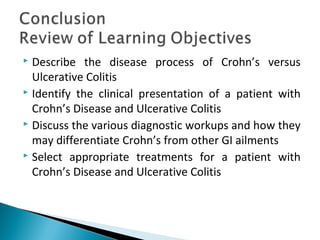
 Describe the disease process of Crohn’s versus
Ulcerative Colitis
 Identify the clinical presentation of a patient with
Crohn’s Disease and Ulcerative Colitis
 Discuss the various diagnostic workups and how they
may differentiate Crohn’s from other GI ailments
 Select appropriate treatments for a patient with
Crohn’s Disease and Ulcerative Colitis
25

Inflamatory bowel disease, IBD

  • 1.
    Dr. Virendra KumarGupta MD Pediatrics Fellowship In pediatric Gastroentero-Hepatology & Liver Transplantation Assistant Professor Department Of pediatrics NIMS Medical College & Hospital , Jaipur
  • 2.
     IBD isan idiopathic disease , probably involving an immune reaction of the body to its own intestinal tract  Crohn’s disease (CD)  Ulcerative colitis (UC)
  • 3.
     Both arechronic inflammatory disorders of the GI tract that currently have no real cure.  disorders of unknown cause involving genetic and immunological influence on the gastrointestinal tract's ability to distinguish foreign from self-antigens.
  • 4.
     CD isa condition of chronic granulomatous inflammation potentially involving any location of the GIT from mouth to anus.  UC is an non granulomatous inflammatory disorder that affects the rectum and extends proximally to affect variable extent of the colon.
  • 6.
     Immunology  Initiatingpathogen  Environmental Factors  Genetic factors
  • 7.
    UC:  Rectal bleedingor bloody diarrhea  Pain of colonic origin, often left sided and related to defecation CD:  Diarrhea  Recurrent abdominal pain  Anorectal lesions, Anorexia, Anemia  Malnutrition (weight loss)  Fever
  • 9.
    Artwork is reproduced,with permission, from the Johns Hopkins Gastroenterology and Hepatology Resource Center,Artwork is reproduced, with permission, from the Johns Hopkins Gastroenterology and Hepatology Resource Center, www.hopkins-gi.org,copyright 2006, Johns Hopkins University, all rights reserved.www.hopkins-gi.org,copyright 2006, Johns Hopkins University, all rights reserved. ExtraintestinalmanifestationsofIBD
  • 10.
     Colitic arthritis Sacroiliitis  Ankylosing spondylitis  Hepatobiliary complications  Osteopenia, osteoarthritis  Avascular necrosis  Renal stones  UTI due to fistulae  Pyoderma gangrenosum  Erythema nodosum  Sweet syndrome  Uveitis  Episcleritis  DVT/PE, intracranial, intraocular thromboembolic events  Extraintestinal manifestations of IBD
  • 11.
     Endoscopy  Colonoscopy Histopathology  Radiology  Hematological tests and microbiological stool test for infection
  • 12.
    UC CD ESR elevation Hypoalbuminemia Anaemia Electrolyteimbalance Leucocytosis ESR ↑ Hypoalbuminemia Anaemia
  • 13.
    Feature UC CD LocationOnly colon GIT Anatomic distribution Continuous, begins distally Skip lesions Rectal involvement Involved in >90% Rectal spare Gross bleeding Universal Only 25% Peri-anal disease Rare 75% Fistulization No Yes Granulomas No 50-75%
  • 14.
    Feature UC Transmural inflammationUncommon Granulomas No Fissures Rare Fibrosis No Submucosal inflammation Uncommon CD Yes 50-75% Common Common Common
  • 15.
  • 16.
     Chronic infectiouscolitis  Ischemic colitis  Diverticulitis  Irritable Bowel Syndrome  Small Bowel Bacterial Overgrowth  Crohn’s Disease  Ulcerative Colitis  Colon Cancer
  • 17.
    Non-pharmacological  Nutrition  Initialtretment is nonoperative Stop Smoking (for crohn’s disease)
  • 18.
     Aminosalicilates (5-ASA): sulfasalazine,mesalazine, olsalazine  Corticosteroids : Budesonide, presnisolone, methylprednisolone  Immunosuppressants: azathioprine , 6-mercaptopurine  Antibiotics : metronidazole, ciprofloxacin  Anti diarrhoals : loperamide, Diphenoxylate & atropine
  • 19.
     Antispasmodic agent: Dicyclomine  Immunoglobulin : İnfliximab  Miscellaneous : Total or supplementary parenteral nutrition, fish oils, sodium cromoglycate, lidocaine, nicotine trans dermally  Surgical management
  • 20.
     Indications: ◦ Failureof medical therapy ◦ Recurrent obstruction ◦ Perforation ◦ Fistula ◦ Abcess ◦ Hemorrhage ◦ Growth retardation (children) ◦ carcinoma
  • 21.
    Artwork is reproduced,with permission, from the Johns Hopkins Gastroenterology and Hepatology Resource Center,Artwork is reproduced, with permission, from the Johns Hopkins Gastroenterology and Hepatology Resource Center, www.hopkins-gi.org,copyright 2006, Johns Hopkins University, all rights reserved.www.hopkins-gi.org,copyright 2006, Johns Hopkins University, all rights reserved.
  • 22.
     Commonly seerecurrence near the ileocolonic anastomosis from previous surgery.  Endoscopic recurrence is found as high as 73% only 1 year later.  Prevention of recurrences using ◦ Mesalamine/5-ASA, 6-MP, probiotics (lactobacillus), metronidazole
  • 23.
     ABSOLUTE INDICATIONS: ◦ Hemorrhage ◦Perforation ◦ Cancer or dysplasia ◦ Unresponsive acute sx  RELATIVE INDICATIONS: ◦ Chronic intractability ◦ Steroid dependency ◦ Growth retardation ◦ Systemic complications associated with UC Ulcerative Colitis SurgeryUlcerative Colitis Surgery IndicationsIndications
  • 24.
     Describe thedisease process of Crohn’s versus Ulcerative Colitis  Identify the clinical presentation of a patient with Crohn’s Disease and Ulcerative Colitis  Discuss the various diagnostic workups and how they may differentiate Crohn’s from other GI ailments  Select appropriate treatments for a patient with Crohn’s Disease and Ulcerative Colitis
  • 25.