Inflammatory Bowel Disease
IBD
• The large intestine, or the large bowel, is the last part of
the gastrointestinal tract
• The colon is much wider than the small intestine, but is also much
shorter
• The large intestine is about 5 feet (1.5 m) in length and 2.5 inches (6-7
cm) in diameter
• Divided into:
 the ascending colon (including the cecum and appendix)
 Cecum ( first part of large intestine )
 Appendix ( accumulation of lymphatic tissue )
 the transverse colon
 the descending colon
 the sigmoid colon
 Rectum
 Anus
 Anatomy
Function
The 4 major functions of the large intestine are:
• reabsorption of water and mineral ions such as sodium
and chloride
• formation and temporary storage of faeces
• maintaining a resident population of over 500 species
of bacteria
• bacterial fermentation of indigestible materials.
Absorbs vitamins that are created by the colonic bacteria,
such as vitamin K, vitamin B12, thiamine
(B2) and riboflavin (B1)
Histology
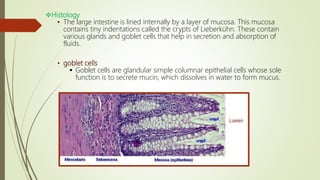
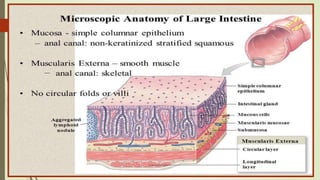
• The large intestine is lined internally by a layer of mucosa. This mucosa
contains tiny indentations called the crypts of Lieberkühn. These contain
various glands and goblet cells that help in secretion and absorption of
fluids.
• goblet cells
 Goblet cells are glandular simple columnar epithelial cells whose sole
function is to secrete mucin, which dissolves in water to form mucus.
IBD
 Definition
A group of chronic intestinal diseases characterized by
inflammation of the bowel. The most common types of
inflammatory bowel disease (IBD) are ulcerative colitis and Crohn’s
disease.
Ulcerative colitis: is an inflammatory bowel disease that causes
long-lasting inflammation and sores (ulcers) in the innermost lining
of your large intestine (colon) and rectum.
Crohn's disease: is an inflammation of the lining of your digestive
tract. In Crohn's disease, inflammation often spreads deep into
affected tissues. The inflammation can involve different areas of the
digestive tract, The large intestine, small intestine or both.
 Pathogenesis:
 IBD is characterized by an exaggerated and destructive mucosal
immune response
 Inflammation is the final common pathway for the pathogenesis of
IBD
 Both the clinical manifestations and the morphologic changes of
IBD are the result of activation of inflammatory cells:
o Initially, neutrophils
o later in the course, mononuclear cells
 Ulcerative colitis
 It is an ulceroinflammatory disease
affecting the colon, which is limited to
the mucosa and submucosa
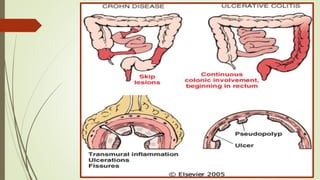
 It begins in the rectum and extends
proximally in a continuous fashion
 The disease may arise at any age, with
peak incidence between ages 20 and
years
 Ulcerative colitis involves the rectum
and sigmoid and may involve the
colon
 With severe active disease, there is
extensive and broad-based ulceration
of the mucosa
 Crohn’s disease
 This disease may affect any level of the
alimentary tract
 It most commonly located at the terminal ileum
 It occurs at any age but the peak age of
detection is the second and third decades of life
 There is involvement of the small intestine alone
in 30% of cases, of small intestine and colon in
40%, and of the colon alone in 30%
 The disease is characterized by:
 Sharply defined transmural involvement of the
bowel by an inflammatory process with mucosal
damage
 Fissuring with formation of fistulae
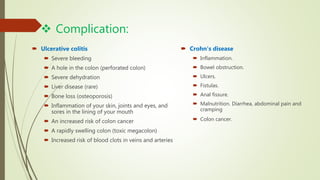
 Complication:
 Ulcerative colitis
 Severe bleeding
 A hole in the colon (perforated colon)
 Severe dehydration
 Liver disease (rare)
 Bone loss (osteoporosis)
 Inflammation of your skin, joints and eyes, and
sores in the lining of your mouth
 An increased risk of colon cancer
 A rapidly swelling colon (toxic megacolon)
 Increased risk of blood clots in veins and arteries
 Crohn's disease
 Inflammation.
 Bowel obstruction.
 Ulcers.
 Fistulas.
 Anal fissure.
 Malnutrition. Diarrhea, abdominal pain and
cramping
 Colon cancer.
 Treatment:
 Anti-inflammatory drugs
 Anti-inflammatory drugs are often the first step in the treatment of inflammatory bowel disease.
 Aminosalicylates
 Corticosteroids
 Immune system suppressors
 These drugs also reduce inflammation, but they target your immune system rather than directly treating
inflammation. Instead, they suppress the immune response that releases inflammation-inducing chemicals
the intestinal lining. For some people, a combination of these drugs works better than one drug alone
 Azathioprine and mercaptopurine
 Cyclosporine
 Antibiotics
 People with ulcerative colitis who run fevers will likely be given antibiotics to help prevent or
control infection. Antibiotics can reduce the amount of drainage and sometimes heal fistulas
abscesses in people with Crohn's disease.
Metronidazole
Ciprofloxacin
 Surgery
 Surgery for Crohn's disease
 During surgery, the doctor removes a
damaged portion of the digestive tract and
then reconnects the healthy sections.
 Surgery may also be used to close fistulas and
drain abscesses.
 A common procedure for Crohn's disease is
strictureplasty, which widens a segment of the
intestine that has become too narrow.
 Surgery for ulcerative colitis.
 Surgery can often eliminate ulcerative colitis,
but that usually means removing your entire
colon and rectum (proctocolectomy). In most
cases, this involves a procedure called ileoanal
anastomosis that eliminates the need to wear
a bag to collect stool. The surgeon constructs
a pouch from the end of the patient small
intestine. The pouch is then attached directly
to the anus, allowing the patient to expel
waste relatively normally.
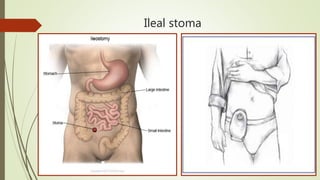
 In some cases, a pouch is not possible.
Instead, surgeons create a permanent opening
in the abdomen (ileal stoma) through which
stool is passed for collection in an attached
bag.
Ileal stoma

IBD - presentation

  • 1.
  • 2.
    • The largeintestine, or the large bowel, is the last part of the gastrointestinal tract • The colon is much wider than the small intestine, but is also much shorter • The large intestine is about 5 feet (1.5 m) in length and 2.5 inches (6-7 cm) in diameter • Divided into:  the ascending colon (including the cecum and appendix)  Cecum ( first part of large intestine )  Appendix ( accumulation of lymphatic tissue )  the transverse colon  the descending colon  the sigmoid colon  Rectum  Anus  Anatomy
  • 3.
    Function The 4 majorfunctions of the large intestine are: • reabsorption of water and mineral ions such as sodium and chloride • formation and temporary storage of faeces • maintaining a resident population of over 500 species of bacteria • bacterial fermentation of indigestible materials. Absorbs vitamins that are created by the colonic bacteria, such as vitamin K, vitamin B12, thiamine (B2) and riboflavin (B1)
  • 4.
    Histology • The largeintestine is lined internally by a layer of mucosa. This mucosa contains tiny indentations called the crypts of Lieberkühn. These contain various glands and goblet cells that help in secretion and absorption of fluids. • goblet cells  Goblet cells are glandular simple columnar epithelial cells whose sole function is to secrete mucin, which dissolves in water to form mucus.
  • 6.
    IBD  Definition A groupof chronic intestinal diseases characterized by inflammation of the bowel. The most common types of inflammatory bowel disease (IBD) are ulcerative colitis and Crohn’s disease. Ulcerative colitis: is an inflammatory bowel disease that causes long-lasting inflammation and sores (ulcers) in the innermost lining of your large intestine (colon) and rectum. Crohn's disease: is an inflammation of the lining of your digestive tract. In Crohn's disease, inflammation often spreads deep into affected tissues. The inflammation can involve different areas of the digestive tract, The large intestine, small intestine or both.
  • 7.
     Pathogenesis:  IBDis characterized by an exaggerated and destructive mucosal immune response  Inflammation is the final common pathway for the pathogenesis of IBD  Both the clinical manifestations and the morphologic changes of IBD are the result of activation of inflammatory cells: o Initially, neutrophils o later in the course, mononuclear cells
  • 8.
     Ulcerative colitis It is an ulceroinflammatory disease affecting the colon, which is limited to the mucosa and submucosa  It begins in the rectum and extends proximally in a continuous fashion  The disease may arise at any age, with peak incidence between ages 20 and years  Ulcerative colitis involves the rectum and sigmoid and may involve the colon  With severe active disease, there is extensive and broad-based ulceration of the mucosa  Crohn’s disease  This disease may affect any level of the alimentary tract  It most commonly located at the terminal ileum  It occurs at any age but the peak age of detection is the second and third decades of life  There is involvement of the small intestine alone in 30% of cases, of small intestine and colon in 40%, and of the colon alone in 30%  The disease is characterized by:  Sharply defined transmural involvement of the bowel by an inflammatory process with mucosal damage  Fissuring with formation of fistulae
  • 10.
     Complication:  Ulcerativecolitis  Severe bleeding  A hole in the colon (perforated colon)  Severe dehydration  Liver disease (rare)  Bone loss (osteoporosis)  Inflammation of your skin, joints and eyes, and sores in the lining of your mouth  An increased risk of colon cancer  A rapidly swelling colon (toxic megacolon)  Increased risk of blood clots in veins and arteries  Crohn's disease  Inflammation.  Bowel obstruction.  Ulcers.  Fistulas.  Anal fissure.  Malnutrition. Diarrhea, abdominal pain and cramping  Colon cancer.
  • 11.
  • 12.
     Anti-inflammatory drugs Anti-inflammatory drugs are often the first step in the treatment of inflammatory bowel disease.  Aminosalicylates  Corticosteroids  Immune system suppressors  These drugs also reduce inflammation, but they target your immune system rather than directly treating inflammation. Instead, they suppress the immune response that releases inflammation-inducing chemicals the intestinal lining. For some people, a combination of these drugs works better than one drug alone  Azathioprine and mercaptopurine  Cyclosporine  Antibiotics  People with ulcerative colitis who run fevers will likely be given antibiotics to help prevent or control infection. Antibiotics can reduce the amount of drainage and sometimes heal fistulas abscesses in people with Crohn's disease. Metronidazole Ciprofloxacin
  • 13.
  • 14.
     Surgery forCrohn's disease  During surgery, the doctor removes a damaged portion of the digestive tract and then reconnects the healthy sections.  Surgery may also be used to close fistulas and drain abscesses.  A common procedure for Crohn's disease is strictureplasty, which widens a segment of the intestine that has become too narrow.  Surgery for ulcerative colitis.  Surgery can often eliminate ulcerative colitis, but that usually means removing your entire colon and rectum (proctocolectomy). In most cases, this involves a procedure called ileoanal anastomosis that eliminates the need to wear a bag to collect stool. The surgeon constructs a pouch from the end of the patient small intestine. The pouch is then attached directly to the anus, allowing the patient to expel waste relatively normally.  In some cases, a pouch is not possible. Instead, surgeons create a permanent opening in the abdomen (ileal stoma) through which stool is passed for collection in an attached bag.
  • 15.

Editor's Notes

  • #9 involving the whole thickness of a wall