Melaku Yitbarek(M.D)
Internal Medicine Unit
March,2018
Lecture Outline
 Definition
 Gastric physiology
 H.Pylori
 NSAID Induced PUD
 Clinical features
 Complications
 Diagnostic Evaluation
 Treatment
Definition
 Burning epigastric pain exacerbated by fasting and
improved with meals is a symptom complex associated
with peptic ulcer disease (PUD)
 An ulcer is defined as disruption of the mucosa
integrity of the stomach and/or duodenum leading to
a local defect or excavation due to active
inflammation.
 Ulcers occur within the stomach and/ or duodenum
and are often chronic in nature
Gastric physiology
 The gastric epithelium is under constant assault by a series
of endogenous noxious factors, including hydrochloricacid
(HCl), pepsinogen/pepsin, and bile salts.
 In addition,asteady flow of exogenous substances such as
medications, alcohol, and bacteria encounter the gastric
mucosa.
 Ahighly intricate biologic system is In place to provide
defense from mucosal Injury And to repair any injury that
may occur.
Physiology…
 The mucosal defense system can be envisioned as a three-level
barrier, composed of preepithelial, epithelial, and subepithelial
elements
 The first line of defense is a mucus-bicarbonate phospholipid
layer
 Surface epithelial cells provide the next line of defense through
several factors, including mucus production, epithelial cell ionic
transporters that maintain intracellular pH and bicarbonate
production,and intracellular tightjunctions
 An elaborate microvascular system within the gastric
submucosal layer is the key component of the subepithelial
defense/repair system,providing HCO, which neutralizes the
acid generated by the parietal cell.
Physiology
 Prostaglandins play a central role in gastric epithelial
defense/repair
 The gastric mucosa contains abundant levels of
prostaglandins that regulate the release of mucosal
bicarbonate and mucus, inhibit parietal cell secretion,
and are important in maintaining mucosal blood flow
and epithelial cell restitution.
Physiology
 Hydrochloric acid and pepsinogen are the two
principal gastric secretory products capable of
inducing mucosal injury.
 Gastric acid and pepsinogen play a physiologic role in
protein digestion; absorption of iron, calcium,
magnesium, and vitamin B12; and killing ingested
bacteria
Pathophysiology
Duodenal ulcer:
 H. pylori and NSAID-induced injury account for the
majority of DUs.
 Many acid secretory abnormalities have been
described in DU patients
Gastric ulcer:
 As in DUs, the majority of GUs can be attributed to
either H. pylori or NSAID-induced mucosal damage
Helicobacter Pylori( H. Pylori)
 A gram-negative microaerophilic rod found most
commonly in the deeper portions of the mucous gel
coating the gastric mucosa or between the mucous
layer and the gastric epithelium
 The first step in infection by H. pylori is dependent on
the bacteria’s motility and its ability to produce urease
 Two factors that predispose to higher colonization
rates include poor socioeconomic status and less
education
 Transmission of H. pylori occurs from person to
person, following an oral-oral or fecal-oral route
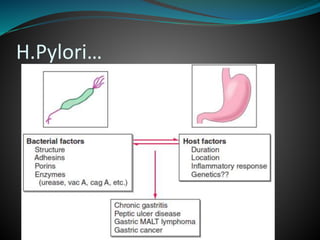
H.Pylori…
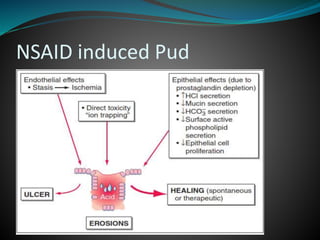
NSAID induced Pud
Clinical features
History:
 Abdominal pain is common to many GI disorders, including DU
and GU, but has a poor predictive value for the presence of either
DU or GU
 Epigastric pain described as a burning or gnawing discomfort
can be present in both DU and GU.
 The discomfort is also described as an ill-defined, aching
sensation or as hunger pain.
 The typical pain pattern in DU occurs 90 minutes to 3 hours
after a meal and is frequently relieved by antacids or food.
 The pain pattern in GU patients may be different from that in
DU patients, where discomfort may actually be precipitated by
food.
 Nausea and weightloss occur more commonly in GU patients.
Clinical…
History…
 Sudden onset of severe, generalized abdominal pain
may indicate perforation.
 Pain worsening with meals, nausea, and vomiting of
undigested food suggest gastric outlet obstruction.
 Tarry stools or coffee-ground emesis indicate bleeding
Clinical…
Physical Examination:
 Epigastric tenderness is the most frequent finding in
patients with GU or DU
 Tachycardia and orthostasis suggest dehydration
secondary to vomiting or active GI blood loss
 A severely tender, board-like abdomen suggests a
perforation.
 Presence of a succussion splash indicates retained
fluid in the stomach, suggesting gastric outlet
obstruction
Complications
 Gastrointestinal bleeding:
 is the most common complication observed in PUD
 Bleeding and complications of ulcer disease occur more
often in individuals >60 years of age
 Perforation
 Gastric outlet obstruction(GOO)
Differential Diagnosis
 The list of GI and non-GI disorders that can mimic ulceration of the
stomach or duodenum is quite extensive.
 The most commonly encountered diagnosis among patients seen for
upper abdominal discomfort is NUD.
 NUD, also known as functional dyspepsia or essential dyspepsia,refers
to a group of heterogeneous disorders typified by upper abdominal
pain without the presence of an ulcer.
 Several additional disease processes that may present with “ulcerlike”
symptoms include proximal GI tumors,gastroesophageal reflux,
vascular disease,pancreaticobiliarydisease( biliarycolic,chronic
pancreatitis),and gastroduodenal Crohn’s disease.
Diagnostic Evaluation
 Barium study
 Upper GI endoscopy
 H.Pylori testing(include serologic testing, the 13C- or
14C-urea breath test, and the fecal H. pylori (Hp)
antigen test)
Treatment
 Therapy/prevention of NSAID-induced disease
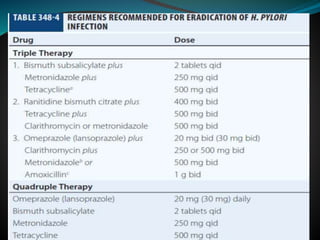
 Eradication of H.Pylori
Referrences
 Harrison’s Principles of Internal Medicine,19th Edition
 Uptodate 21.6
Thank You…

Peptic ulcer disease(PUD)

  • 1.
  • 2.
    Lecture Outline  Definition Gastric physiology  H.Pylori  NSAID Induced PUD  Clinical features  Complications  Diagnostic Evaluation  Treatment
  • 3.
    Definition  Burning epigastricpain exacerbated by fasting and improved with meals is a symptom complex associated with peptic ulcer disease (PUD)  An ulcer is defined as disruption of the mucosa integrity of the stomach and/or duodenum leading to a local defect or excavation due to active inflammation.  Ulcers occur within the stomach and/ or duodenum and are often chronic in nature
  • 4.
    Gastric physiology  Thegastric epithelium is under constant assault by a series of endogenous noxious factors, including hydrochloricacid (HCl), pepsinogen/pepsin, and bile salts.  In addition,asteady flow of exogenous substances such as medications, alcohol, and bacteria encounter the gastric mucosa.  Ahighly intricate biologic system is In place to provide defense from mucosal Injury And to repair any injury that may occur.
  • 5.
    Physiology…  The mucosaldefense system can be envisioned as a three-level barrier, composed of preepithelial, epithelial, and subepithelial elements  The first line of defense is a mucus-bicarbonate phospholipid layer  Surface epithelial cells provide the next line of defense through several factors, including mucus production, epithelial cell ionic transporters that maintain intracellular pH and bicarbonate production,and intracellular tightjunctions  An elaborate microvascular system within the gastric submucosal layer is the key component of the subepithelial defense/repair system,providing HCO, which neutralizes the acid generated by the parietal cell.
  • 6.
    Physiology  Prostaglandins playa central role in gastric epithelial defense/repair  The gastric mucosa contains abundant levels of prostaglandins that regulate the release of mucosal bicarbonate and mucus, inhibit parietal cell secretion, and are important in maintaining mucosal blood flow and epithelial cell restitution.
  • 7.
    Physiology  Hydrochloric acidand pepsinogen are the two principal gastric secretory products capable of inducing mucosal injury.  Gastric acid and pepsinogen play a physiologic role in protein digestion; absorption of iron, calcium, magnesium, and vitamin B12; and killing ingested bacteria
  • 8.
    Pathophysiology Duodenal ulcer:  H.pylori and NSAID-induced injury account for the majority of DUs.  Many acid secretory abnormalities have been described in DU patients Gastric ulcer:  As in DUs, the majority of GUs can be attributed to either H. pylori or NSAID-induced mucosal damage
  • 9.
    Helicobacter Pylori( H.Pylori)  A gram-negative microaerophilic rod found most commonly in the deeper portions of the mucous gel coating the gastric mucosa or between the mucous layer and the gastric epithelium  The first step in infection by H. pylori is dependent on the bacteria’s motility and its ability to produce urease  Two factors that predispose to higher colonization rates include poor socioeconomic status and less education  Transmission of H. pylori occurs from person to person, following an oral-oral or fecal-oral route
  • 10.
  • 11.
  • 12.
    Clinical features History:  Abdominalpain is common to many GI disorders, including DU and GU, but has a poor predictive value for the presence of either DU or GU  Epigastric pain described as a burning or gnawing discomfort can be present in both DU and GU.  The discomfort is also described as an ill-defined, aching sensation or as hunger pain.  The typical pain pattern in DU occurs 90 minutes to 3 hours after a meal and is frequently relieved by antacids or food.  The pain pattern in GU patients may be different from that in DU patients, where discomfort may actually be precipitated by food.  Nausea and weightloss occur more commonly in GU patients.
  • 13.
    Clinical… History…  Sudden onsetof severe, generalized abdominal pain may indicate perforation.  Pain worsening with meals, nausea, and vomiting of undigested food suggest gastric outlet obstruction.  Tarry stools or coffee-ground emesis indicate bleeding
  • 14.
    Clinical… Physical Examination:  Epigastrictenderness is the most frequent finding in patients with GU or DU  Tachycardia and orthostasis suggest dehydration secondary to vomiting or active GI blood loss  A severely tender, board-like abdomen suggests a perforation.  Presence of a succussion splash indicates retained fluid in the stomach, suggesting gastric outlet obstruction
  • 15.
    Complications  Gastrointestinal bleeding: is the most common complication observed in PUD  Bleeding and complications of ulcer disease occur more often in individuals >60 years of age  Perforation  Gastric outlet obstruction(GOO)
  • 16.
    Differential Diagnosis  Thelist of GI and non-GI disorders that can mimic ulceration of the stomach or duodenum is quite extensive.  The most commonly encountered diagnosis among patients seen for upper abdominal discomfort is NUD.  NUD, also known as functional dyspepsia or essential dyspepsia,refers to a group of heterogeneous disorders typified by upper abdominal pain without the presence of an ulcer.  Several additional disease processes that may present with “ulcerlike” symptoms include proximal GI tumors,gastroesophageal reflux, vascular disease,pancreaticobiliarydisease( biliarycolic,chronic pancreatitis),and gastroduodenal Crohn’s disease.
  • 17.
    Diagnostic Evaluation  Bariumstudy  Upper GI endoscopy  H.Pylori testing(include serologic testing, the 13C- or 14C-urea breath test, and the fecal H. pylori (Hp) antigen test)
  • 18.
    Treatment  Therapy/prevention ofNSAID-induced disease  Eradication of H.Pylori
  • 20.
    Referrences  Harrison’s Principlesof Internal Medicine,19th Edition  Uptodate 21.6
  • 21.