
Peer feedback in second
language writing: potentials
and challenges
Professor David Carless,
Taipei, March 17, 2018
The University of Hong Kong
The University of Hong KongThe University of Hong Kong
Overview
1. Feedback processes
2. Peer feedback rationales
3. Our recent research
4. Challenges & Implications
The University of Hong Kong
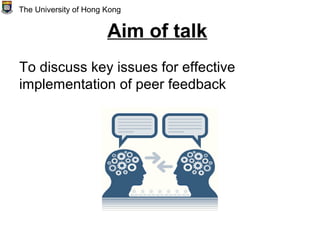
Aim of talk
To discuss key issues for effective
implementation of peer feedback
The University of Hong Kong
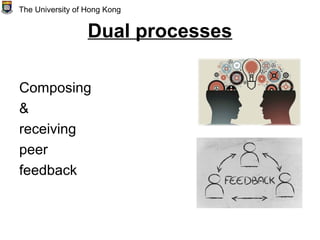
Dual processes
Composing
&
receiving
peer
feedback
The University of Hong Kong
SITUATING FEEDBACK
The University of Hong Kong
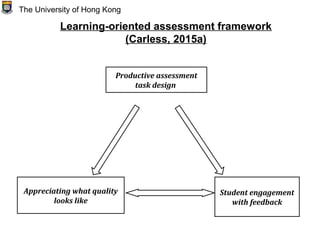
Productive assessment
task design
Appreciating what quality
looks like
Student engagement
with feedback
Learning-oriented assessment framework
(Carless, 2015a)
Dialogic feedback
Feedback needs to generate dialogue
The University of Hong Kong
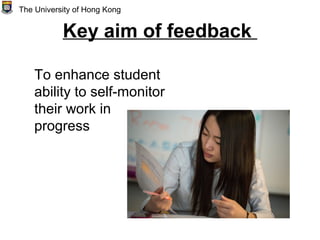
Key aim of feedback
To enhance student
ability to self-monitor
their work in
progress
The University of Hong Kong
Sustainable feedback
Students generating & using feedback from
peers, self (or teachers) as part of self-
regulated learning (Carless et al., 2011)
The University of Hong Kong
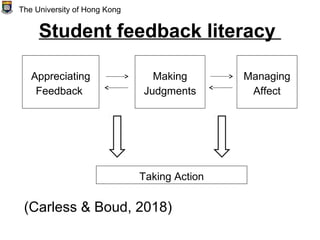
Student feedback literacy
The University of Hong Kong
Making
Judgments
Appreciating
Feedback
Managing
Affect
Taking Action
(Carless & Boud, 2018)
INTRODUCING
PEER FEEDBACK
The University of Hong Kong
Defining peer feedback (PF)
“A communication process through which
learners enter into dialogues related to
performance & standards” (Liu & Carless,
2006, p. 280)
peer response (Liu & Hansen, 2002)
The University of Hong Kong
A key point
Learners often gain more from composing
PF than from receiving it
(Lundstrom & Baker, 2009; Yu & Lee, 2015)
The University of Hong Kong
RATIONALE FOR PEER
FEEDBACK
The University of Hong Kong
Key Rationales
Involve students in dialogue
around the quality of work
Inform student self-evaluation
Potentially timely &
sustainable
The University of Hong Kong
Technology-enabled PF
LMS
PeerMark
Web 2.0
The University of Hong Kong
THREE KEY STUDIES
The University of Hong Kong
To give is better than to receive
Students taught to give PF, improved writing
more than students taught to use PF
Explanation: You review in your own ZPD
but may not receive in your ZPD
(Lundstrom & Baker, 2009)
The University of Hong Kong
Varying response to PF
Not all students buy in to PF
Gains from reading others’ texts
Passive involvement
(Yu & Lee, 2015)
The University of Hong Kong
Students need training
1. Used sample essay to model feedback
2. Implemented two cycles of peer feedback
3. Coached students in improving peer
feedback
The University of Hong Kong
OUR RECENT RESEARCH
(Zhu & Carless, 2018)
The University of Hong Kong
Qiyun Zhu (Judy)
The University of Hong Kong
Context
Year 1 university EFL class
200 students, 5 teachers
Peer review of writing
Sustained observations, interviews
The University of Hong Kong
Preparation
No or minimal training
PF sheet / guiding questions
The University of Hong Kong
Selected positive findings
• Written peer feedback then
oral dialogue
• Timeliness, immediacy,
negotiation
The University of Hong Kong
Selected negative findings
• Partner not enthusiastic, perfunctory
• Comments were vague & general
• Teacher should provide more training and
support
The University of Hong Kong
Implications
Importance of dialogue between peers
Role of teacher to model
& coach
The University of Hong Kong
PEER FEEDBACK CHALLENGES
The University of Hong Kong
Main challenges
• Students don’t take it seriously
• Poor quality PF
• Students prefer teacher feedback
• Lack of teacher assessment &
feedback literacy
The University of Hong Kong
Implications
The University of Hong Kong
Communication
Rationales
The University of Hong Kong
Potential benefits
Processes
Tackling challenges
The role of trust
Feedback is a social and relational act:
Importance of trust
The University of Hong Kong
Recommended PF practice
• Sell rationale & benefits to students
• Communicate gains for ‘giver’
• Provide training, modeling & support
• Encourage collaborative climate
The University of Hong Kong
References
Carless, D. (2015a). Exploring learning-oriented assessment processes. Higher Education, 69(6), 963-976.
Carless, D. (2015b). Excellence in University Assessment: learning from award-winning teachers. London:
Routledge.
Carless, D. & Boud, D. (2018). The development of student feedback literacy: Enabling uptake of feedback.
Manuscript under review.
Carless, D., Salter, D., Yang, M., & Lam, J. (2011). Developing sustainable feedback practices. Studies in Higher
Education, 36 (4) 395-407.
Liu, J., & Hansen, J. G. (2002). Peer response in second language writing classrooms. Michigan: University of
Michigan Press.
Liu, N.F. & Carless, D. (2006) Peer feedback: the learning element of peer assessment, Teaching in Higher Education,
11 (3), 279-290.
Lundstrom, K., & Baker, K. (2009). To give is better than to receive: The benefits of peer review to the reviewer’s
own writing. Journal of Second Language Writing, 18(1), 30-43.
Min, H.-T. (2006). The Effects of Trained Peer Review on EFL Students’ Revision Types and Writing Quality. Journal
of Second Language Writing 15 (2): 118-141.
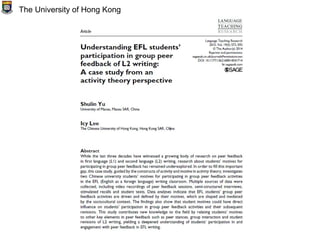
Yu, S., & Lee, I. (2015). Understanding EFL students’ participation in group peer feedback of L2 writing: A case study
from an activity theory perspective. Language Teaching Research, 19(5), 572-593.
Zhu, Q. & Carless, D. (2018). Dialogue within peer feedback processes: Clarification and negotiation of meaning.
Higher Education Research & Development https://doi.org/10.1080/07294360.2018.1446417
The University of Hong Kong
QUESTIONS
COMMENTS
The University of Hong Kong

Implementing Peer Feedback

  • 1.
    Peer feedback insecond language writing: potentials and challenges Professor David Carless, Taipei, March 17, 2018 The University of Hong Kong
  • 2.
    The University ofHong KongThe University of Hong Kong
  • 3.
    Overview 1. Feedback processes 2.Peer feedback rationales 3. Our recent research 4. Challenges & Implications The University of Hong Kong
  • 4.
    Aim of talk Todiscuss key issues for effective implementation of peer feedback The University of Hong Kong
  • 5.
  • 6.
  • 7.
    The University ofHong Kong Productive assessment task design Appreciating what quality looks like Student engagement with feedback Learning-oriented assessment framework (Carless, 2015a)
  • 8.
    Dialogic feedback Feedback needsto generate dialogue The University of Hong Kong
  • 9.
    Key aim offeedback To enhance student ability to self-monitor their work in progress The University of Hong Kong
  • 10.
    Sustainable feedback Students generating& using feedback from peers, self (or teachers) as part of self- regulated learning (Carless et al., 2011) The University of Hong Kong
  • 11.
    Student feedback literacy TheUniversity of Hong Kong Making Judgments Appreciating Feedback Managing Affect Taking Action (Carless & Boud, 2018)
  • 12.
  • 13.
  • 14.
    Defining peer feedback(PF) “A communication process through which learners enter into dialogues related to performance & standards” (Liu & Carless, 2006, p. 280) peer response (Liu & Hansen, 2002) The University of Hong Kong
  • 15.
    A key point Learnersoften gain more from composing PF than from receiving it (Lundstrom & Baker, 2009; Yu & Lee, 2015) The University of Hong Kong
  • 16.
    RATIONALE FOR PEER FEEDBACK TheUniversity of Hong Kong
  • 17.
    Key Rationales Involve studentsin dialogue around the quality of work Inform student self-evaluation Potentially timely & sustainable The University of Hong Kong
  • 18.
  • 19.
    THREE KEY STUDIES TheUniversity of Hong Kong
  • 20.
  • 21.
    To give isbetter than to receive Students taught to give PF, improved writing more than students taught to use PF Explanation: You review in your own ZPD but may not receive in your ZPD (Lundstrom & Baker, 2009) The University of Hong Kong
  • 22.
  • 23.
    Varying response toPF Not all students buy in to PF Gains from reading others’ texts Passive involvement (Yu & Lee, 2015) The University of Hong Kong
  • 24.
  • 25.
    Students need training 1.Used sample essay to model feedback 2. Implemented two cycles of peer feedback 3. Coached students in improving peer feedback The University of Hong Kong
  • 26.
    OUR RECENT RESEARCH (Zhu& Carless, 2018) The University of Hong Kong
  • 27.
    Qiyun Zhu (Judy) TheUniversity of Hong Kong
  • 28.
    Context Year 1 universityEFL class 200 students, 5 teachers Peer review of writing Sustained observations, interviews The University of Hong Kong
  • 29.
    Preparation No or minimaltraining PF sheet / guiding questions The University of Hong Kong
  • 30.
    Selected positive findings •Written peer feedback then oral dialogue • Timeliness, immediacy, negotiation The University of Hong Kong
  • 31.
    Selected negative findings •Partner not enthusiastic, perfunctory • Comments were vague & general • Teacher should provide more training and support The University of Hong Kong
  • 32.
    Implications Importance of dialoguebetween peers Role of teacher to model & coach The University of Hong Kong
  • 33.
    PEER FEEDBACK CHALLENGES TheUniversity of Hong Kong
  • 34.
    Main challenges • Studentsdon’t take it seriously • Poor quality PF • Students prefer teacher feedback • Lack of teacher assessment & feedback literacy The University of Hong Kong
  • 35.
  • 36.
    Communication Rationales The University ofHong Kong Potential benefits Processes Tackling challenges
  • 37.
    The role oftrust Feedback is a social and relational act: Importance of trust The University of Hong Kong
  • 38.
    Recommended PF practice •Sell rationale & benefits to students • Communicate gains for ‘giver’ • Provide training, modeling & support • Encourage collaborative climate The University of Hong Kong
  • 40.
    References Carless, D. (2015a).Exploring learning-oriented assessment processes. Higher Education, 69(6), 963-976. Carless, D. (2015b). Excellence in University Assessment: learning from award-winning teachers. London: Routledge. Carless, D. & Boud, D. (2018). The development of student feedback literacy: Enabling uptake of feedback. Manuscript under review. Carless, D., Salter, D., Yang, M., & Lam, J. (2011). Developing sustainable feedback practices. Studies in Higher Education, 36 (4) 395-407. Liu, J., & Hansen, J. G. (2002). Peer response in second language writing classrooms. Michigan: University of Michigan Press. Liu, N.F. & Carless, D. (2006) Peer feedback: the learning element of peer assessment, Teaching in Higher Education, 11 (3), 279-290. Lundstrom, K., & Baker, K. (2009). To give is better than to receive: The benefits of peer review to the reviewer’s own writing. Journal of Second Language Writing, 18(1), 30-43. Min, H.-T. (2006). The Effects of Trained Peer Review on EFL Students’ Revision Types and Writing Quality. Journal of Second Language Writing 15 (2): 118-141. Yu, S., & Lee, I. (2015). Understanding EFL students’ participation in group peer feedback of L2 writing: A case study from an activity theory perspective. Language Teaching Research, 19(5), 572-593. Zhu, Q. & Carless, D. (2018). Dialogue within peer feedback processes: Clarification and negotiation of meaning. Higher Education Research & Development https://doi.org/10.1080/07294360.2018.1446417 The University of Hong Kong
  • 41.