Laboratory Diagnosis of
Syphilis
Dr Y Sri Harsha
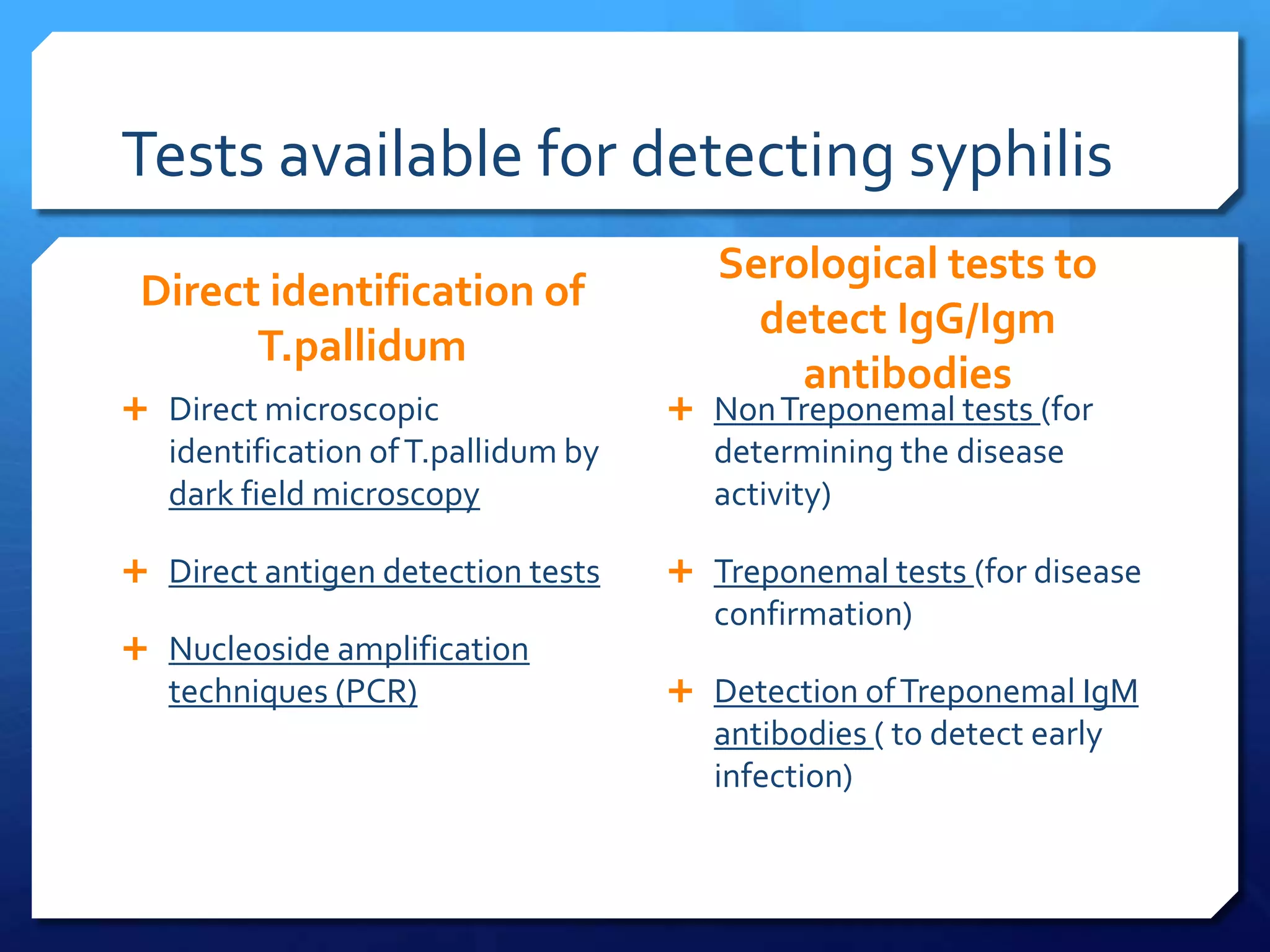
Tests available for detecting syphilis
Direct identification of
T.pallidum
 Direct microscopic

identification of T.pallidum by
dark field microscopy
 Direct antigen detection tests
 Nucleoside amplification

techniques (PCR)

Serological tests to
detect IgG/Igm
antibodies

 Non Treponemal tests (for

determining the disease
activity)
 Treponemal tests (for disease

confirmation)
 Detection of Treponemal IgM

antibodies ( to detect early
infection)
Dark Field Microscopy
 This method is traditionally used to demonstrate T.pallidum

in the exudate from mucocutaneous lesions in early acquired
and early congenital syphilis
 One of the most specific and easiest method for diagnosis of

infectious syphilis when lesions are present
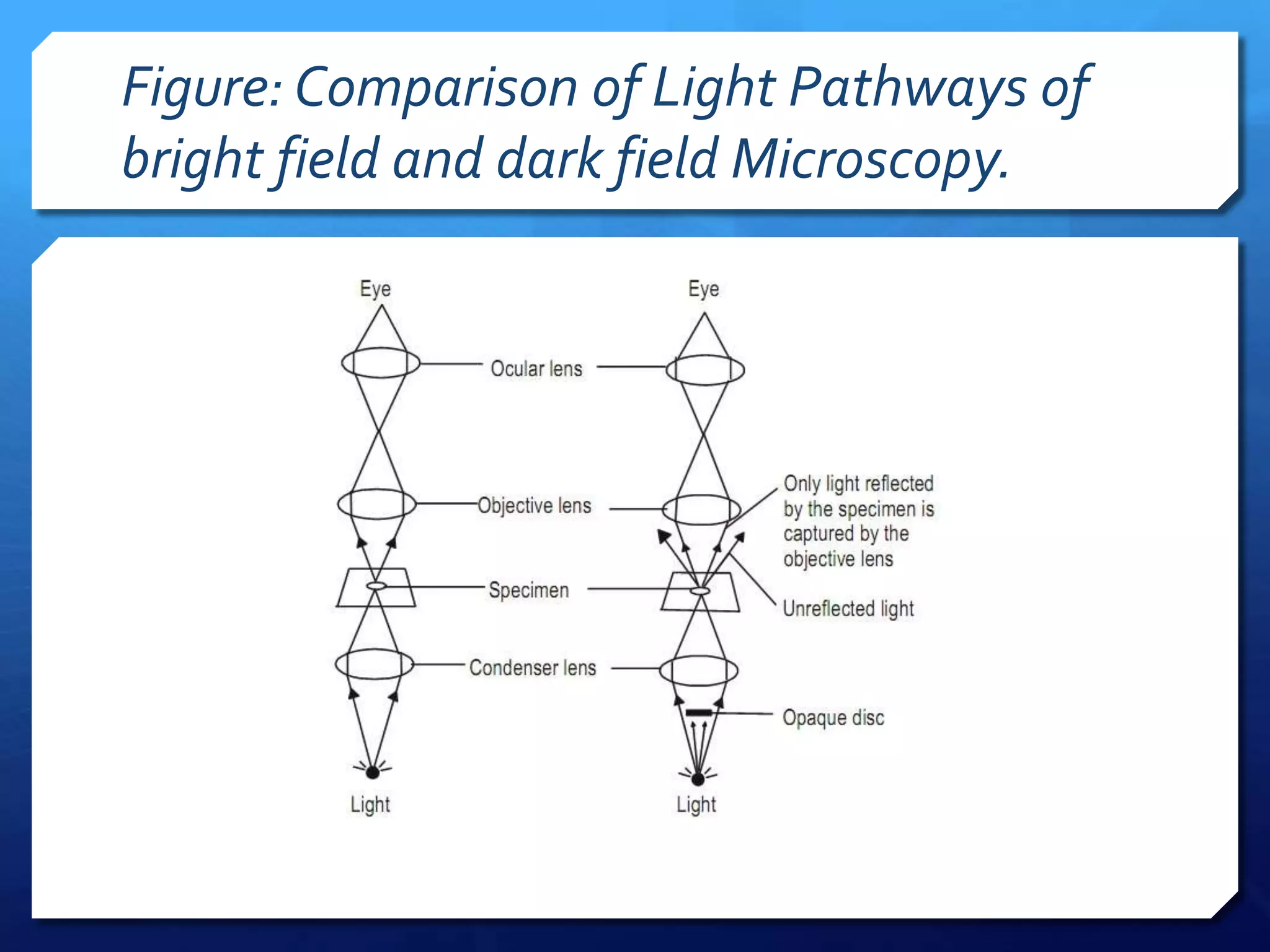
Figure: Comparison of Light Pathways of
bright field and dark field Microscopy.
Procedure
 Clean the lesion with a saline soaked gauze and squeeze it

between the index finger and the thumb to produce a serous
exudate.( avoid contamination with blood)
 The exudate is then transferred onto a glass slide by directly

pressing it on the lesion
 Normal saline can be added to the exudate to make the

material homogenous
 The specimen should immediately be examined as delay in

examination reduces the motility of the treponemes
Results
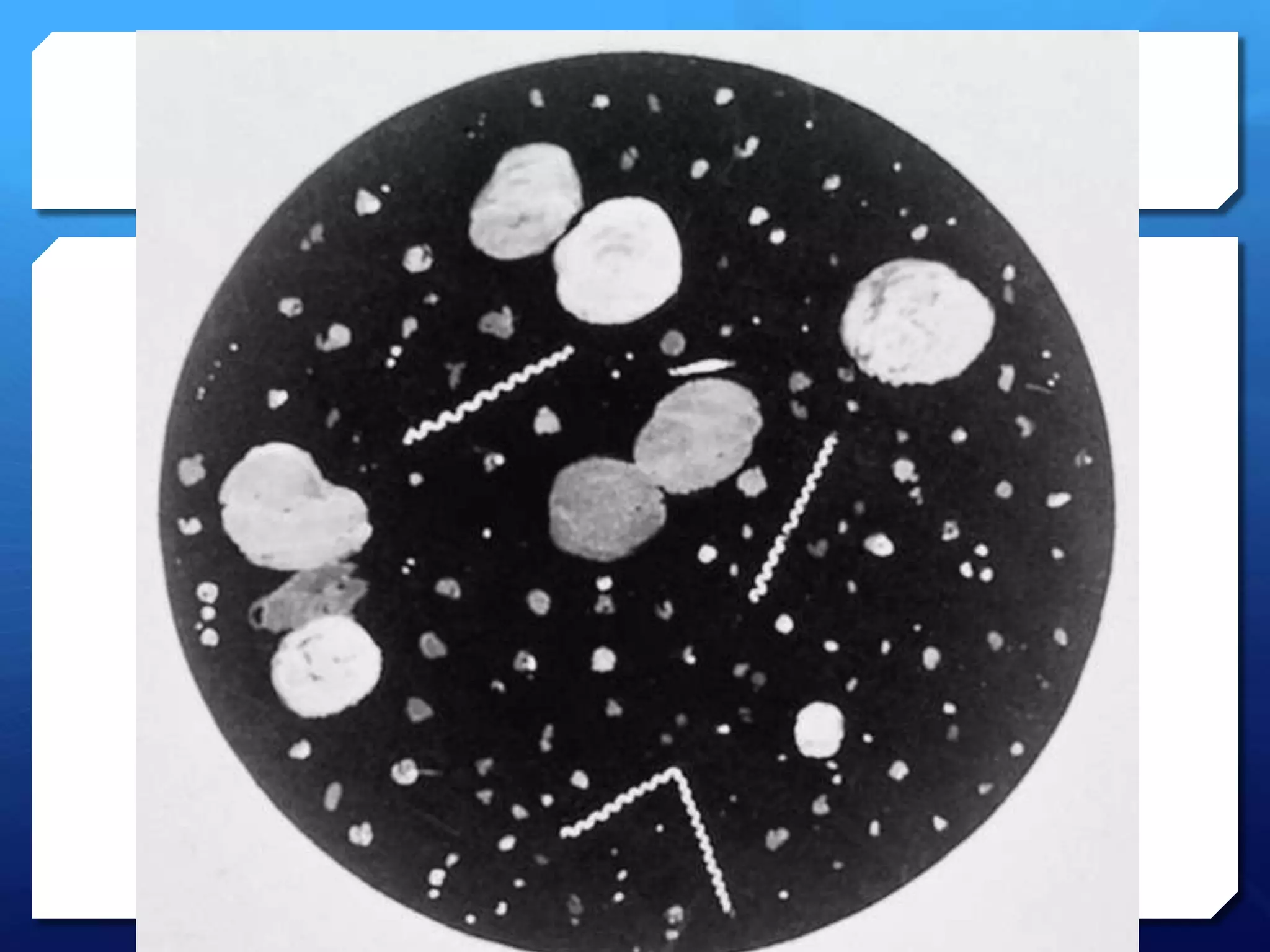
 T.pallidum in dark field microscopy is identified by its typical

morphology and characteristic movements
 T.pallidum is differentiated from the other treponemes by
the tightness of spirals and characteristic cork screw
movements
T pallidum

Other non pathogenic treponemes

Has 6-14 regularly wounded coils

Irregularly wounded coils
And may be longer & thicker

Shows a slow, deliberate forward &
backward movement, rotating on its long
axis, soft bending and twisting from side to
side

Lack a characteristic mobility
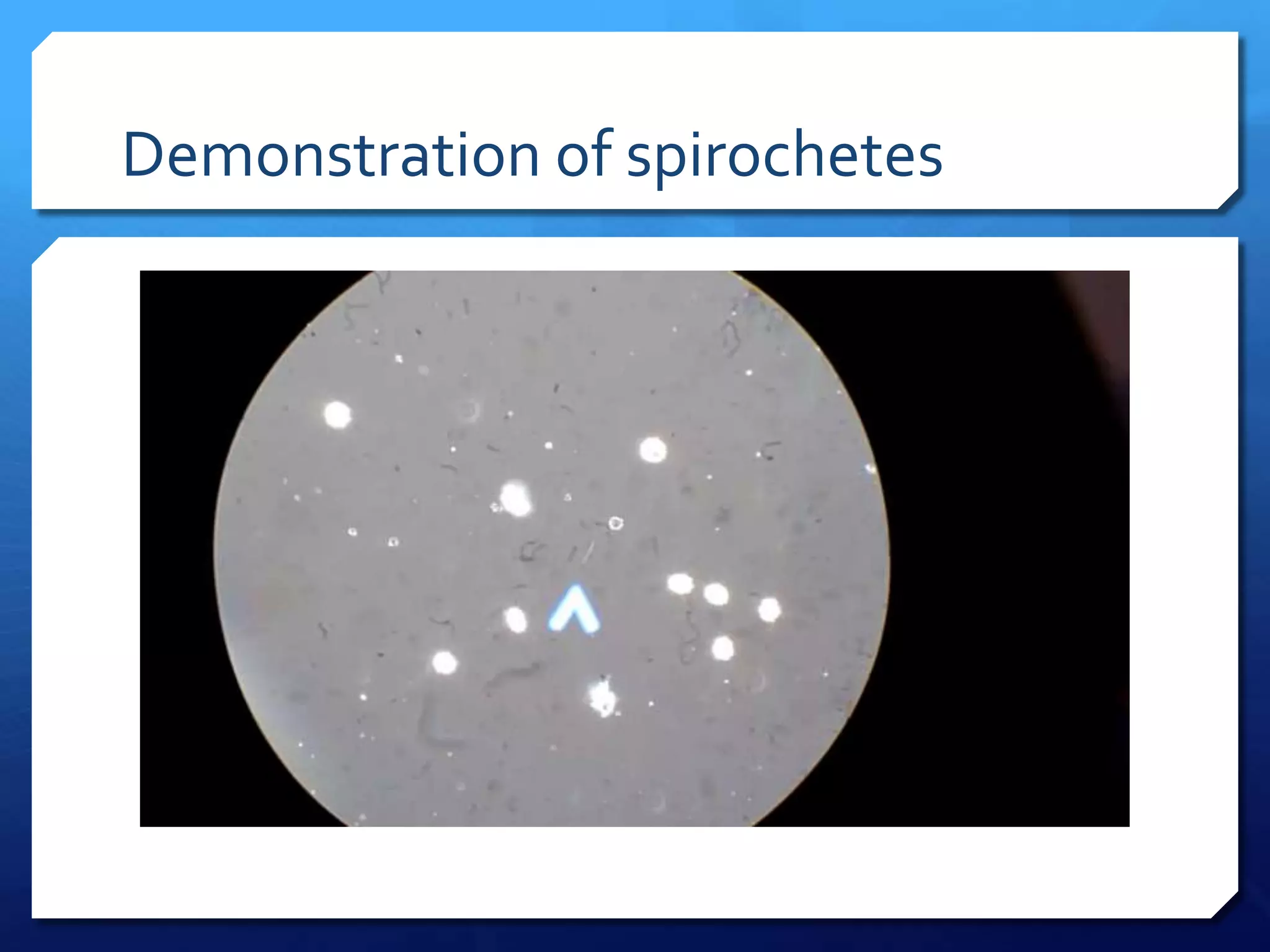
Demonstration of spirochetes
Advantages
 Easy to do
 Most specific method to

confirm the diagnosis in early
syphilis

disadvantages
 Time consuming
 Needs operator expertise
 needs well maintained

specialist equipment

 Cannot differentiate T.pallidum

from other pathogenic
treponemes

 Not recommended for oral

cavity lesions
Direct fluorescent antibody-T.pallidum
(DFA-TP)
It is a practical alternative to dark field examination

Advantages
 More sensitive and specific

than dark field microscopy
 Samples from oral mucosa

can also be examined
 Slides need not be examined

immediately

Disadvantages
 This test cannot differentiate

T.pallidum subsp pallidum
from other sub species of
T.pallidum
Method
 The specimen collection is same as that of dark field

microscopy
 The slide is air dried and fixed with either acetone for 10 min

or 100% methanol for 10 sec
 The smear is stained with fluorescein- labeled anti T. pallidum

globulin and examined under the fluorescent microscope
Polymerase chain Reaction
 Is increasingly becoming the investigation of choice for

identifying T.pallidum from the early lesions of syphilis
 A number of well-preserved DNA sequences have been

identified that are specific for T.pallidum and do not appear
to be found in other treponemes
 Assays based on these primers have been shown to be

sensitive and specific in the diagnosis of early syphilis
SEROLOGICAL TESTS
 Useful in the latent stage of the disease as treponemes are not readily

sustainable in culture and lesions are usually absent

 An ideal serological test
1.

should have high specificity & sensitivity

2.

should be suitable for treatment monitoring

3.

should give a negative result on successful therapy to give a clear cut
diagnosis of reinfection

However by using the different but complementary characteristics of
various specific and non specific treponemal tests, a diagnosis of syphilis
and a serological assessment of disease activity, treatment response and
reinfection can be made
Principle:
• T.pallidum infection produces antibodies to more than 20 different
polypeptide antigens.

• The antibodies are of two types:
1. Non specific antibodies (reagins): directed against lipoidal antigen of
T.pallidum as well as mitochondrial & nuclear membranes of human
cells
2. Specific anti-treponemal antibodies: directed against T.pallidum
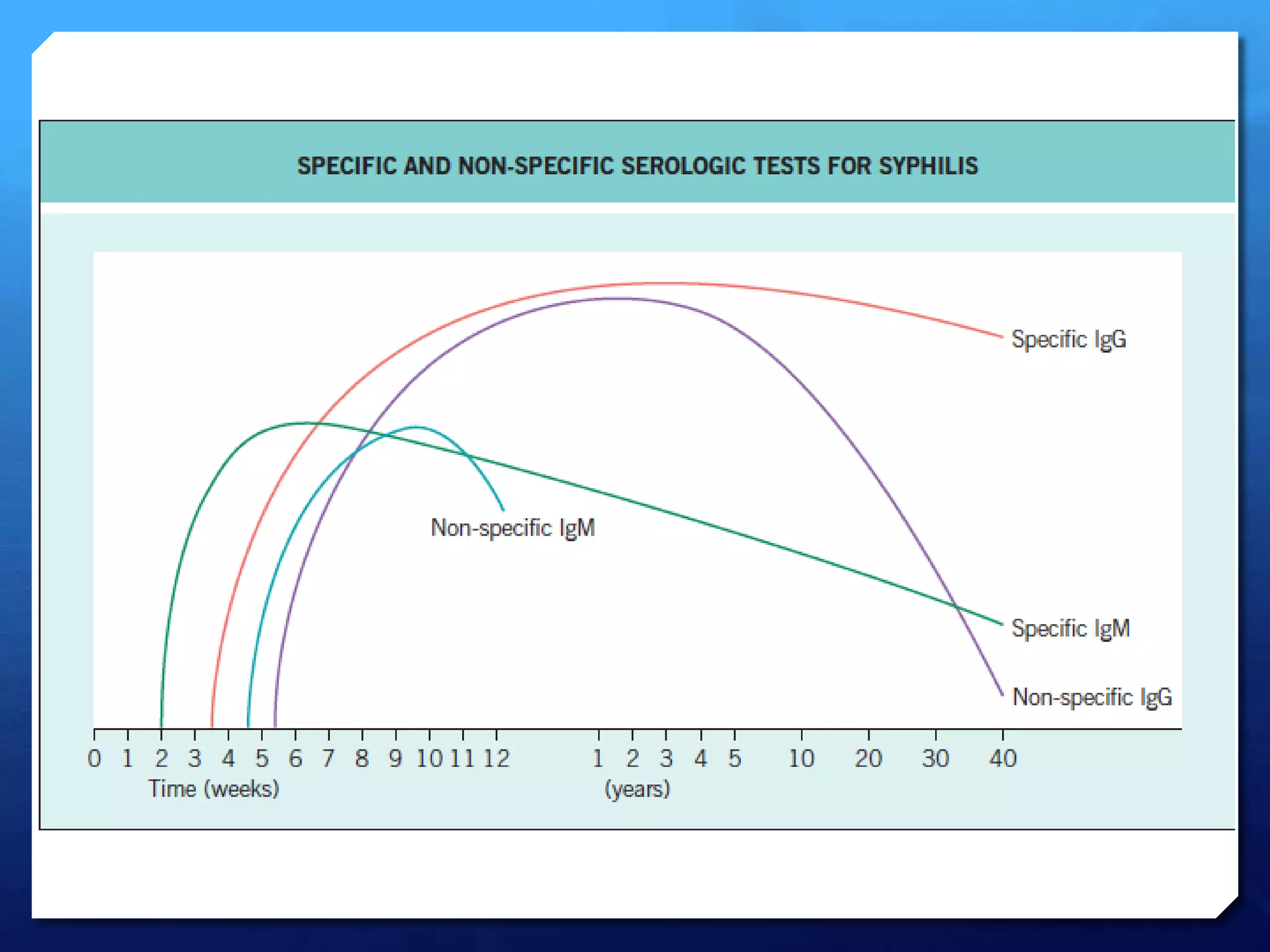
• Specific anti T.pallidum IgM antibodies develop during the second
week of infection
• IgG antibody response begins around the fourth week after infection
and usually persists
• Treatment causes generalized loss of antibodies. However, IgG
antibodies may persist at a low detectable level
Non Treponemal Tests
 All these non treponemal tests measure anti lipoidal IgM and IgG

antibodies

 These tests are used for initial screening and for follow up after

treatment

 They can be performed as a:

1.

Qualitative test ( to check for presence or absence of antibodies)

2.

Quantitative test (to check the amount of antibodies present in
the serum)

 Except for VDRL & RPR tests, most lipoidal antigen tests are not

used
VDRL
 Venereal Disease Research Laboratory (VDRL) Test is a slide

flocculation test employed in the diagnosis of syphilis.
 Since the antigen used in this test is cardiolipin, which is a

lipoidal extracted from beef heart, it is not a specific test.
 The antibodies reacting with cardiolipin antibodies have been

traditionally (but incorrectly) termed “regain”.

17
VDRL- Principle
 Patients suffering from syphilis produce antibodies that

react with cardiolipin antigen in a slide flocculation
test, which are read using a microscope. It is not known if the
antibodies that react with cardiolipin are produced against
some lipid component of Treponema pallidum or as a result
of tissue injury following infection
VDRL- Test Requirements
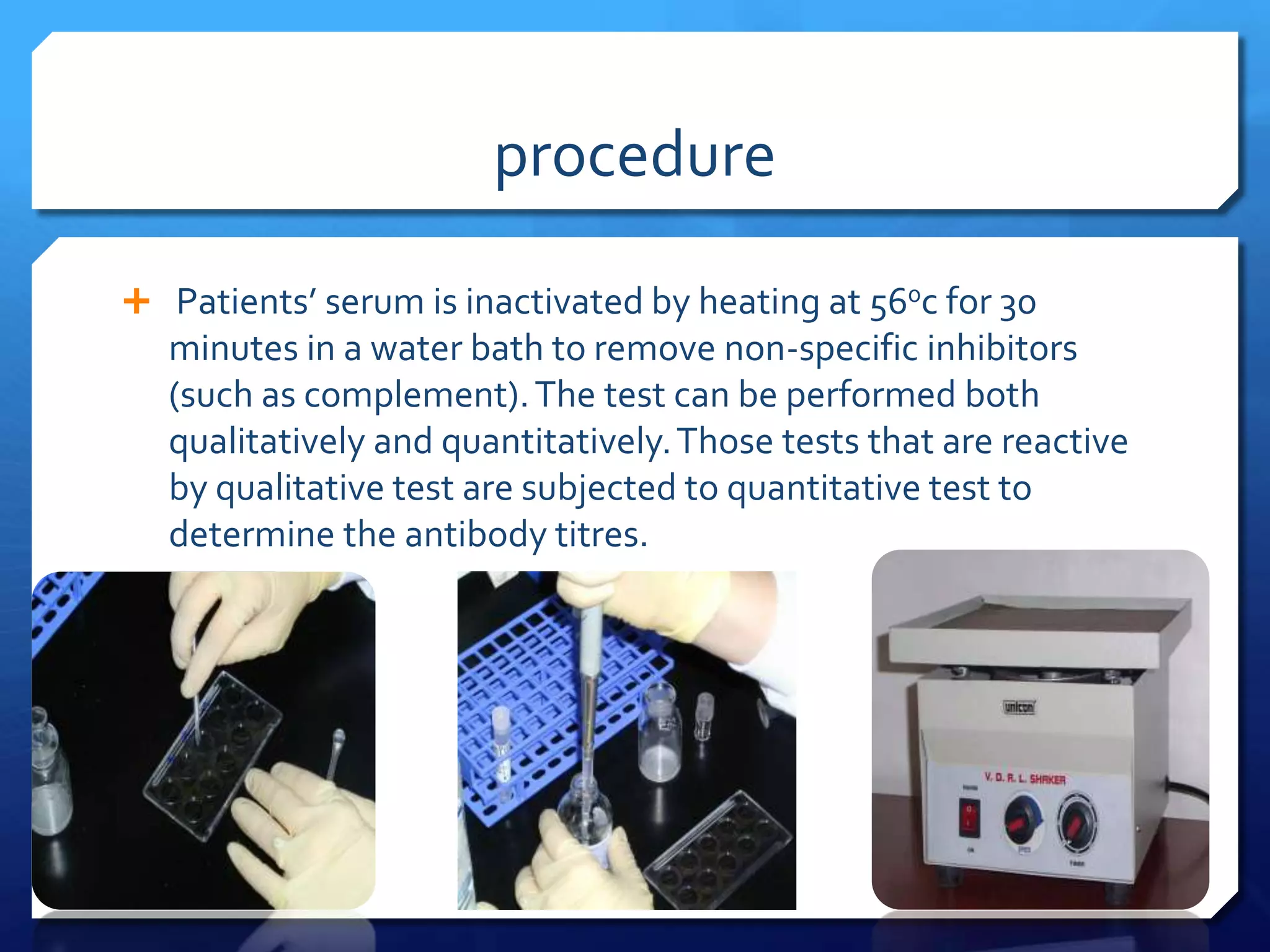
 Patient’s serum, water bath, freshly prepared cardiolipin antigen, VDRL

slide, mechanical rotator, pipettes, hypodermic syringe with unbeveled
needle and microscope. Known reactive and non-reactive serum controls
are also required.
 VDRL antigen: The cardiolipin antigen is an alcoholic solution composed of

0.03% cardiolipin, 0.21% lecithin and 0.9% cholesterol. The cardiolipin
antigen must be freshly constituted each day of test. The working antigen
is a buffered saline suspension of cardiolipin.
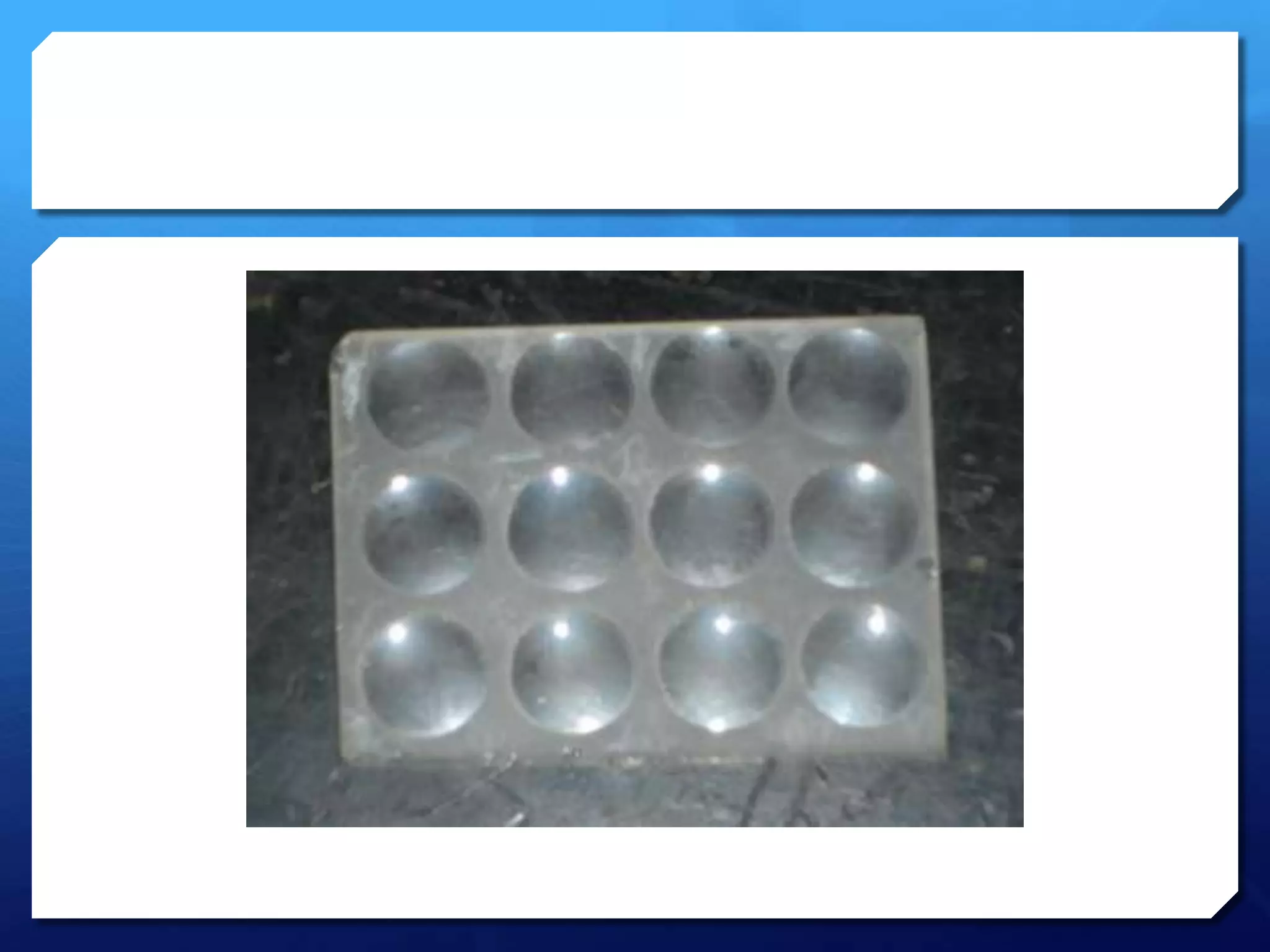
 VDRL slide: This is a glass slide measuring 2 X 3 inch with 12 concave

depressions, each measuring 16 mm in diameter and 1.75 mm deep.
procedure
 Patients’ serum is inactivated by heating at 560c for 30

minutes in a water bath to remove non-specific inhibitors
(such as complement). The test can be performed both
qualitatively and quantitatively. Those tests that are reactive
by qualitative test are subjected to quantitative test to
determine the antibody titres.
 Qualitative test:
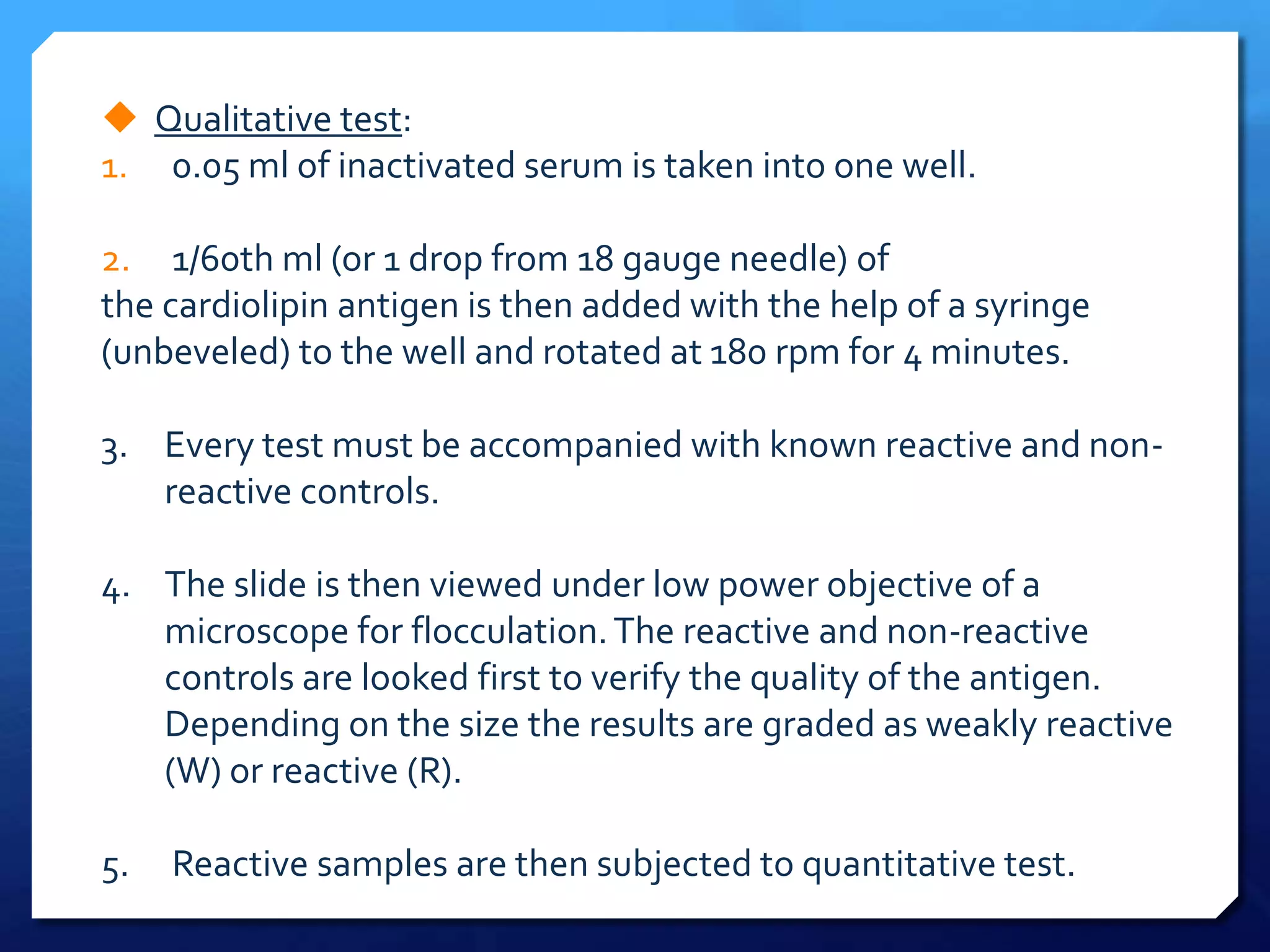
1. 0.05 ml of inactivated serum is taken into one well.
2. 1/60th ml (or 1 drop from 18 gauge needle) of
the cardiolipin antigen is then added with the help of a syringe
(unbeveled) to the well and rotated at 180 rpm for 4 minutes.
3. Every test must be accompanied with known reactive and nonreactive controls.
4. The slide is then viewed under low power objective of a
microscope for flocculation. The reactive and non-reactive
controls are looked first to verify the quality of the antigen.
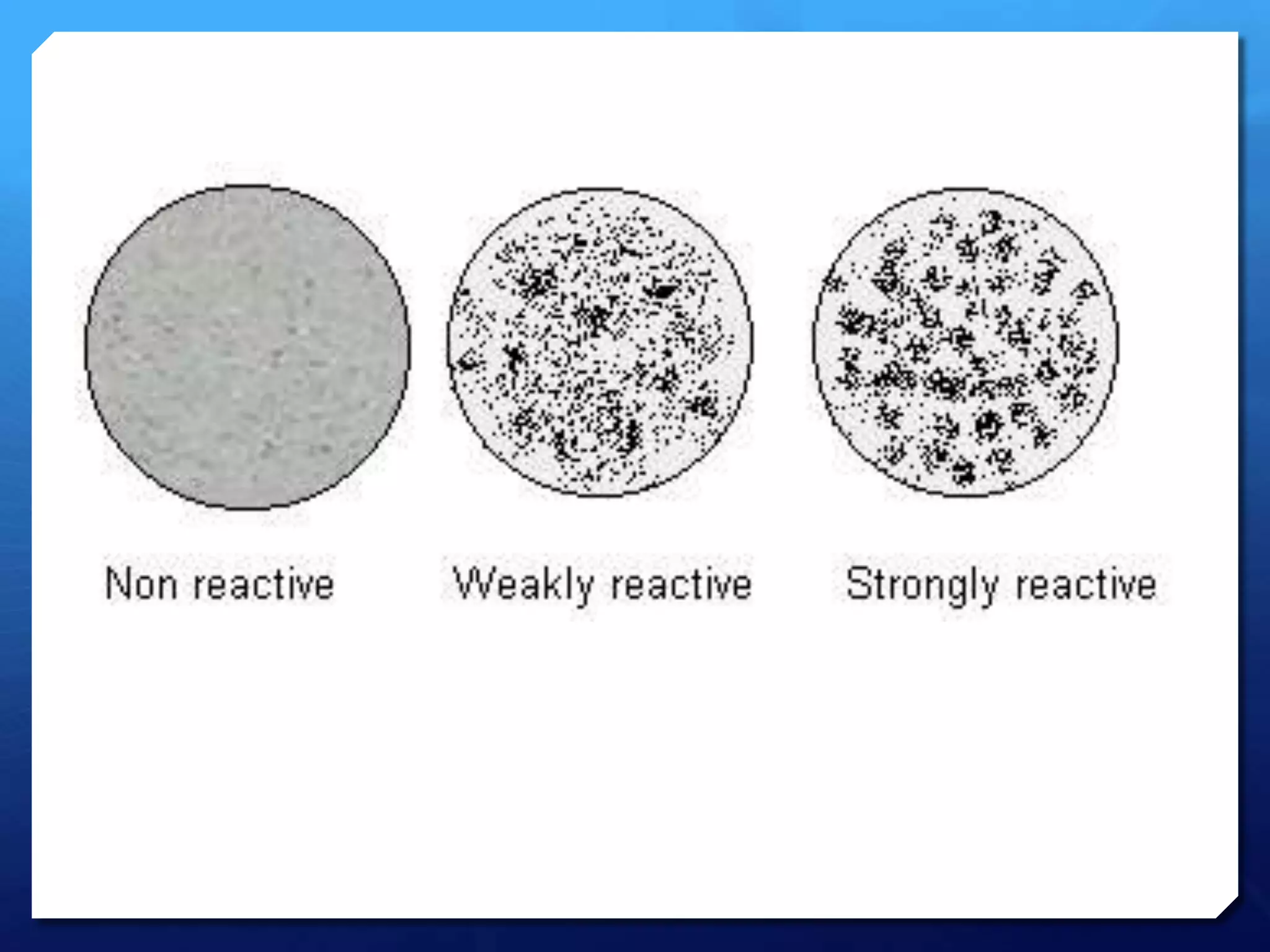
Depending on the size the results are graded as weakly reactive
(W) or reactive (R).
5.

Reactive samples are then subjected to quantitative test.
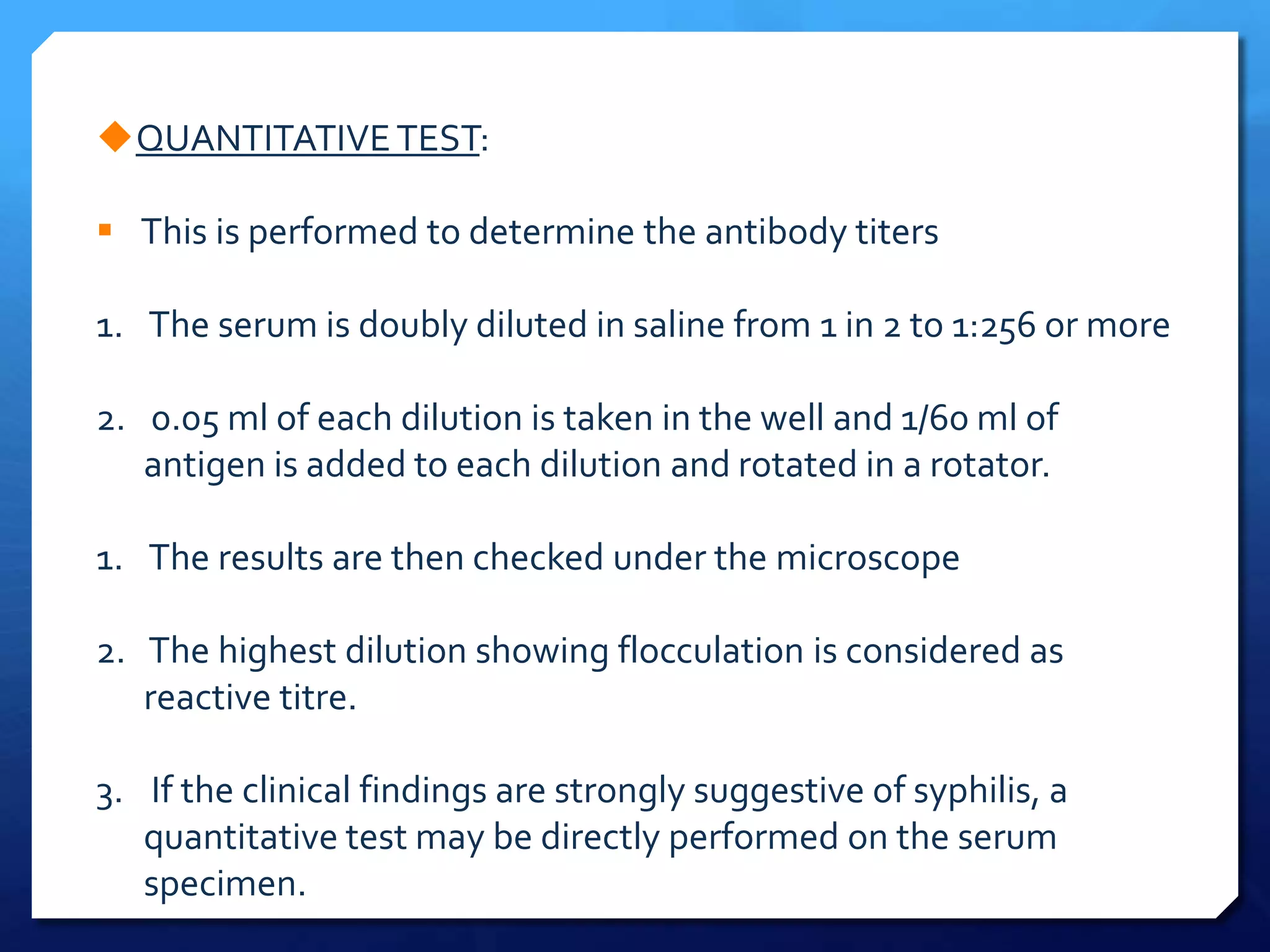
QUANTITATIVE TEST:
 This is performed to determine the antibody titers
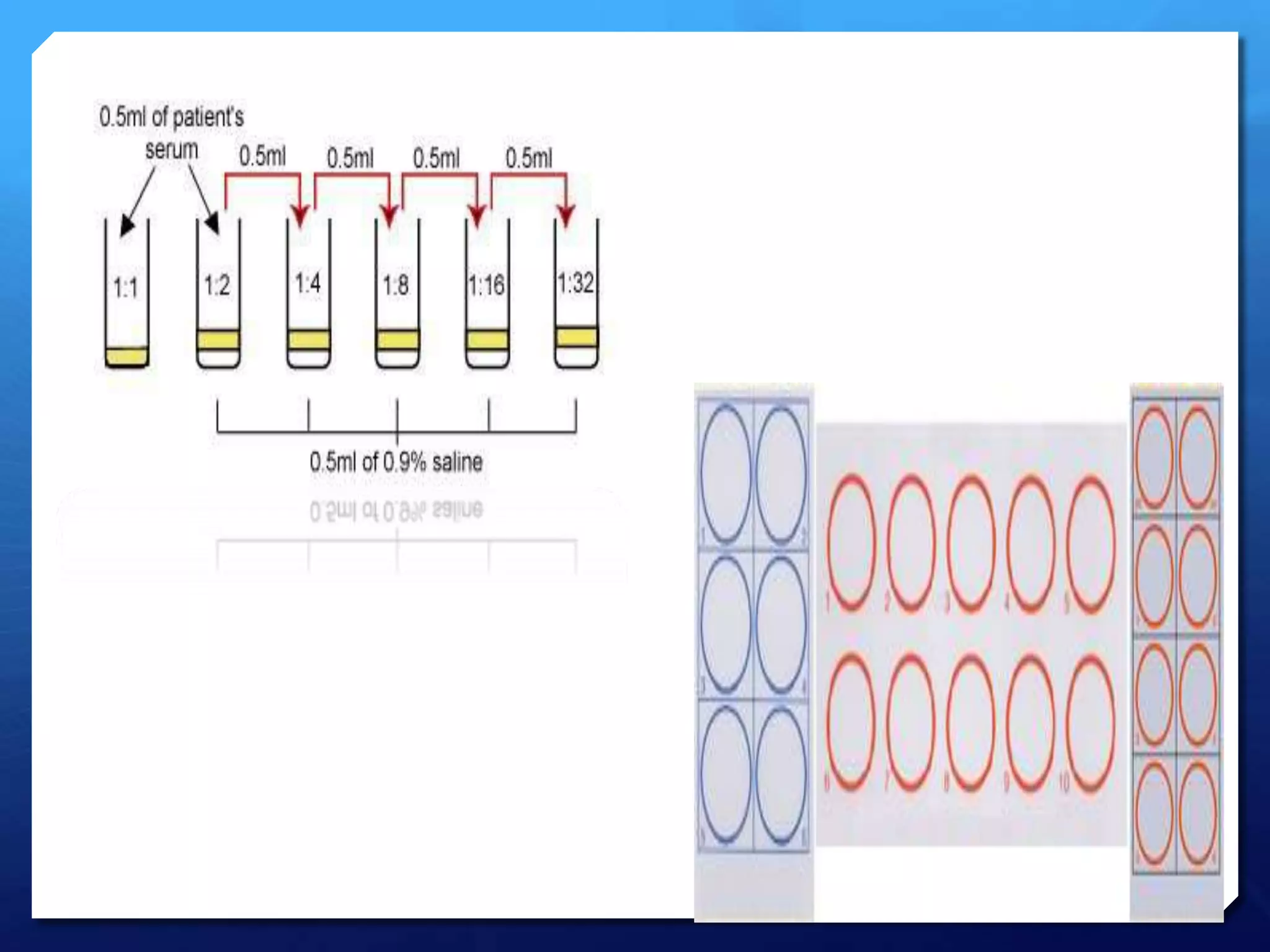
1. The serum is doubly diluted in saline from 1 in 2 to 1:256 or more

2. 0.05 ml of each dilution is taken in the well and 1/60 ml of
antigen is added to each dilution and rotated in a rotator.
1. The results are then checked under the microscope
2. The highest dilution showing flocculation is considered as
reactive titre.
3. If the clinical findings are strongly suggestive of syphilis, a
quantitative test may be directly performed on the serum
specimen.
VDRL for CSF
 VDRL test may also be performed on CSF samples in the

diagnosis of neurosyphilis
 Quantitative VDRL is the test of choice on CSF specimens.
 However, there are some variations in this test. The antigen

is diluted in equal volumes with 10% saline, CSF must not be
heated (or inactivated), the volume of antigen solution taken
is 0.01 ml (or 1 drop from 21 gauge needle) and rotation time
is 8 minutes.
 Rest of the procedure remains same
Reporting of the results
 Results of the test are reported as:
1.

REACTIVE: past/ present infection with a pathogenic
T.pallidum, which is either treated or untreated (or) a false
positive reaction

2.

NON REACTIVE: no current infection (or) an effectively
treated infection , but it does not rule out syphilis which can
be in its incubation period

3.

WEAKLY REACTIVE :
A four fold rise in titer  infection
reinfection
treatment failure
 A four fold decrease in titer 

effective therapy

 When a non treponemal test shows a persistent reactivity with no
signs of decline in titer after 6 months of adequate therapy (or)
fails to show a four fold decrease of an initial high titer within 1
year , it is considered as SERORESISTANCE ( SEROFAST)
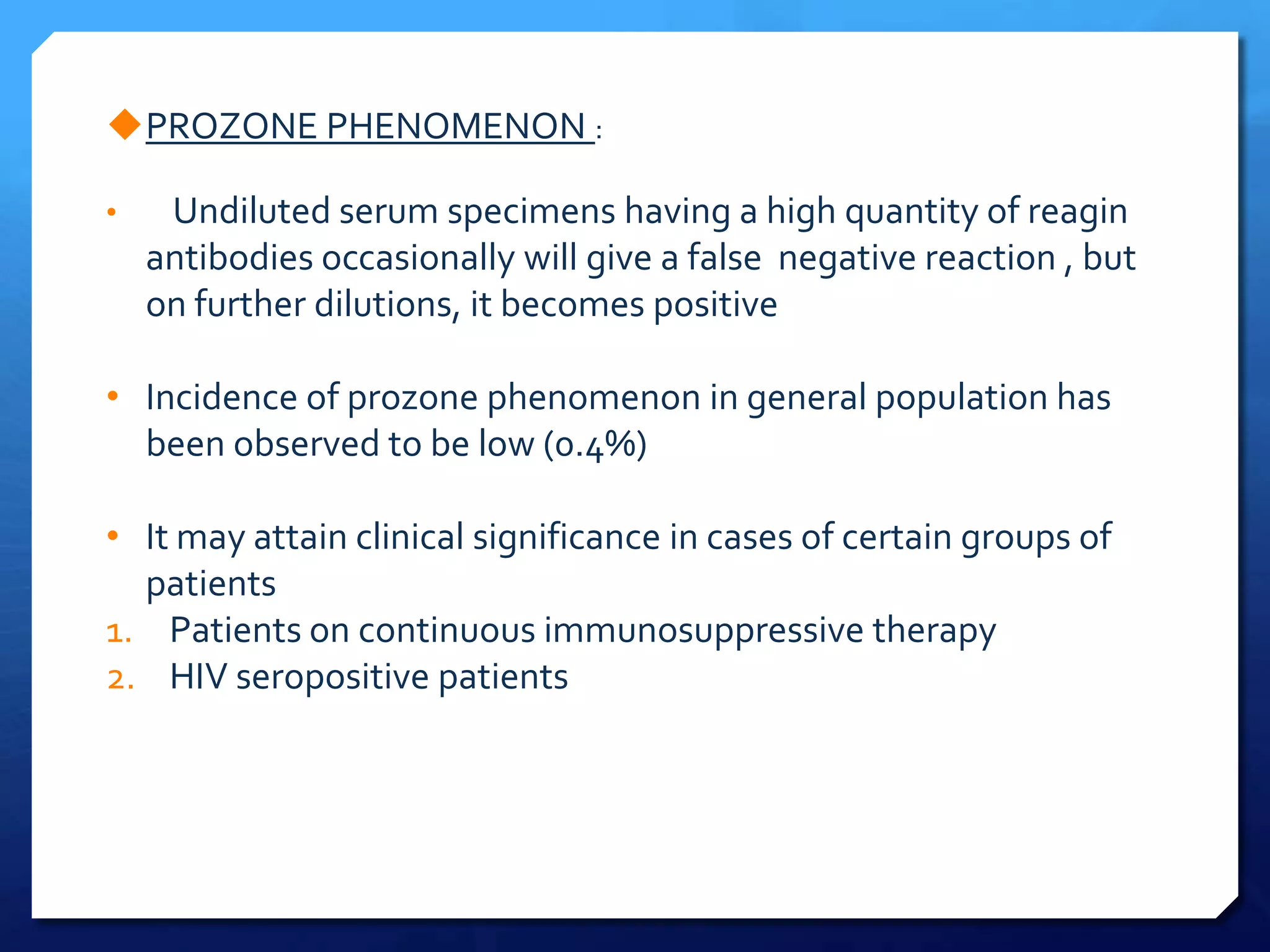
PROZONE PHENOMENON :
•

Undiluted serum specimens having a high quantity of reagin
antibodies occasionally will give a false negative reaction , but
on further dilutions, it becomes positive

• Incidence of prozone phenomenon in general population has
been observed to be low (0.4%)
• It may attain clinical significance in cases of certain groups of
patients
1. Patients on continuous immunosuppressive therapy
2. HIV seropositive patients
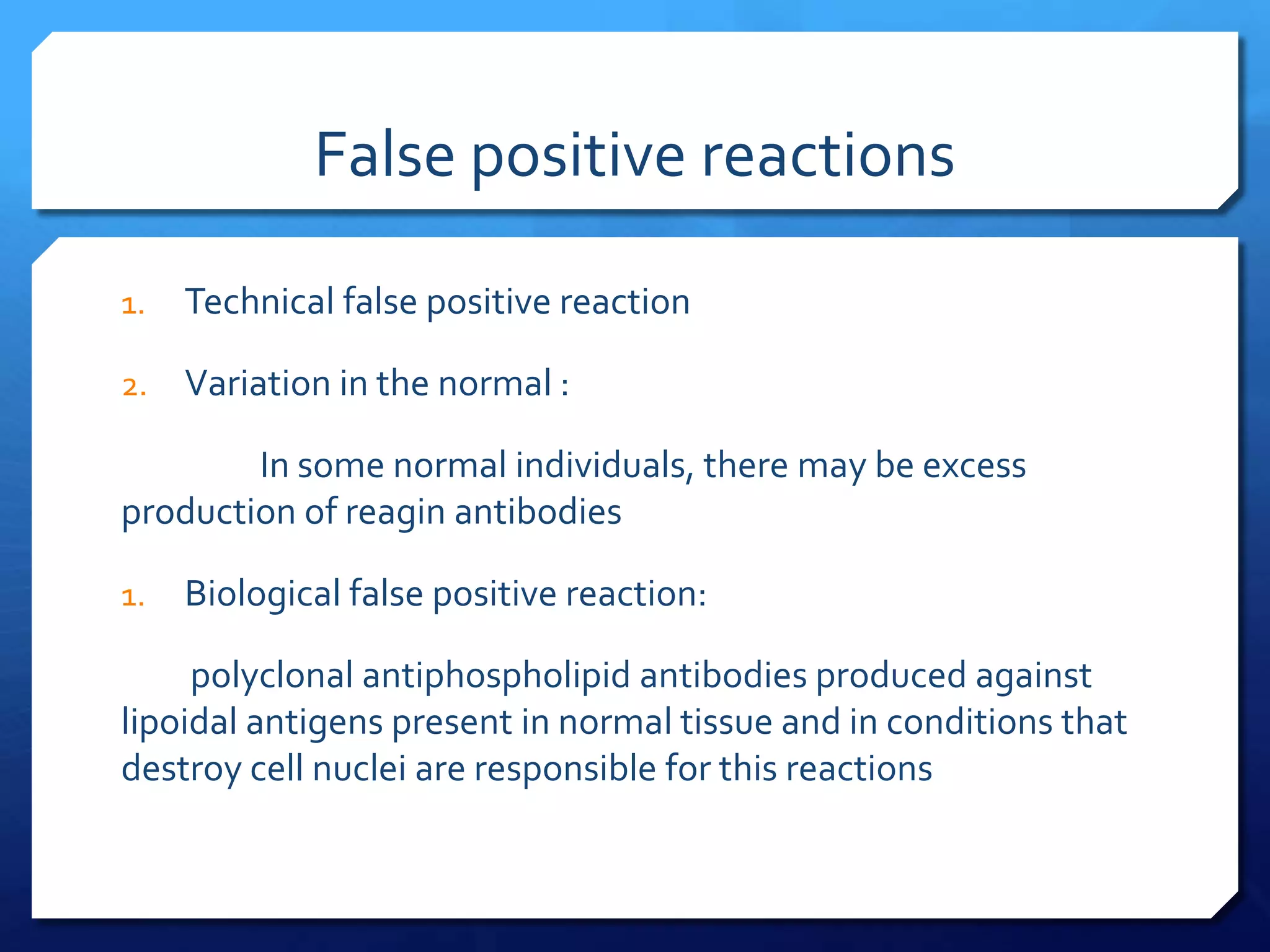
False positive reactions
1.

Technical false positive reaction

2.

Variation in the normal :

In some normal individuals, there may be excess
production of reagin antibodies
1.

Biological false positive reaction:

polyclonal antiphospholipid antibodies produced against
lipoidal antigens present in normal tissue and in conditions that
destroy cell nuclei are responsible for this reactions
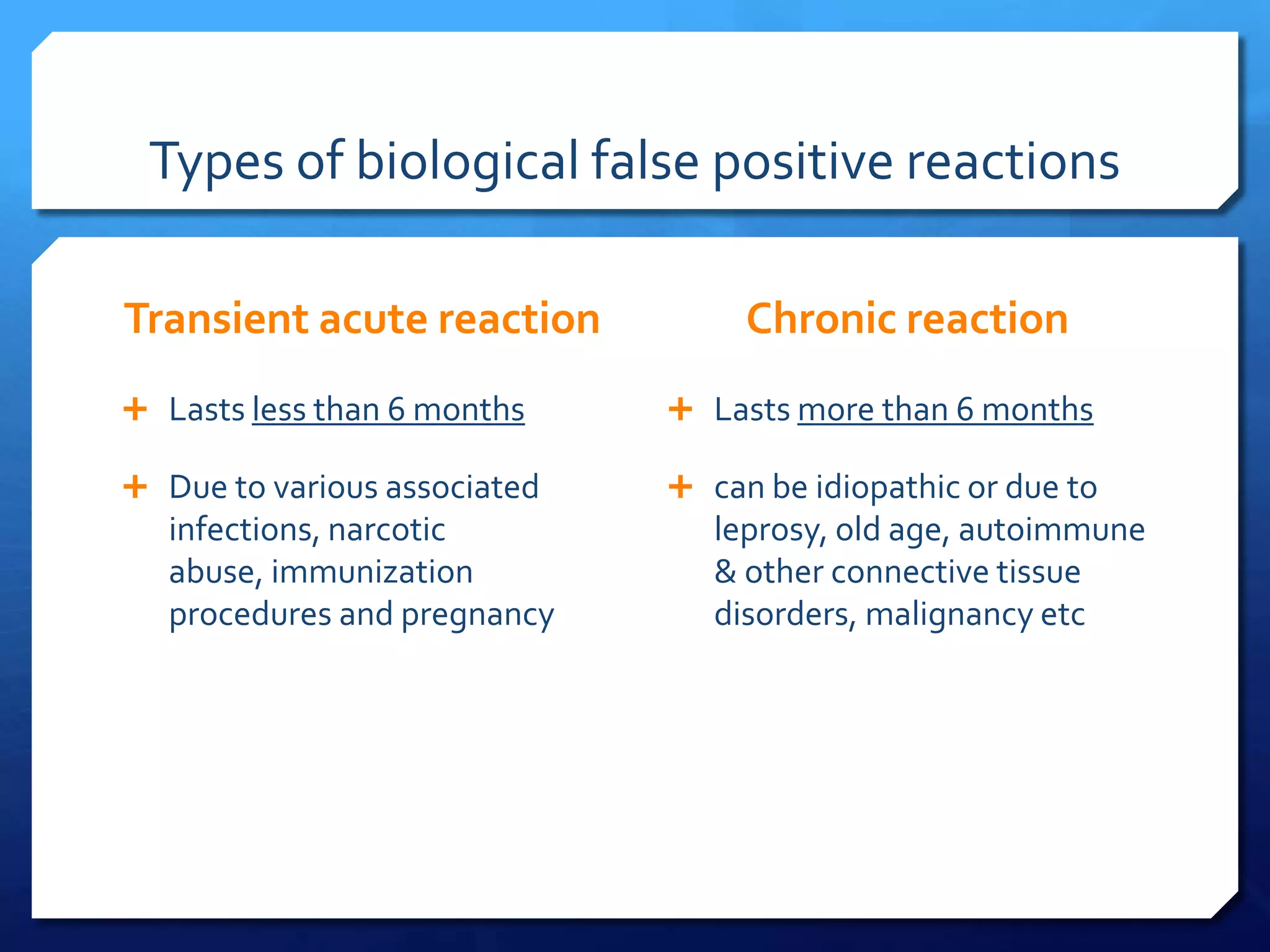
Types of biological false positive reactions
Transient acute reaction

Chronic reaction

 Lasts less than 6 months

 Lasts more than 6 months

 Due to various associated

 can be idiopathic or due to

infections, narcotic
abuse, immunization
procedures and pregnancy

leprosy, old age, autoimmune
& other connective tissue
disorders, malignancy etc
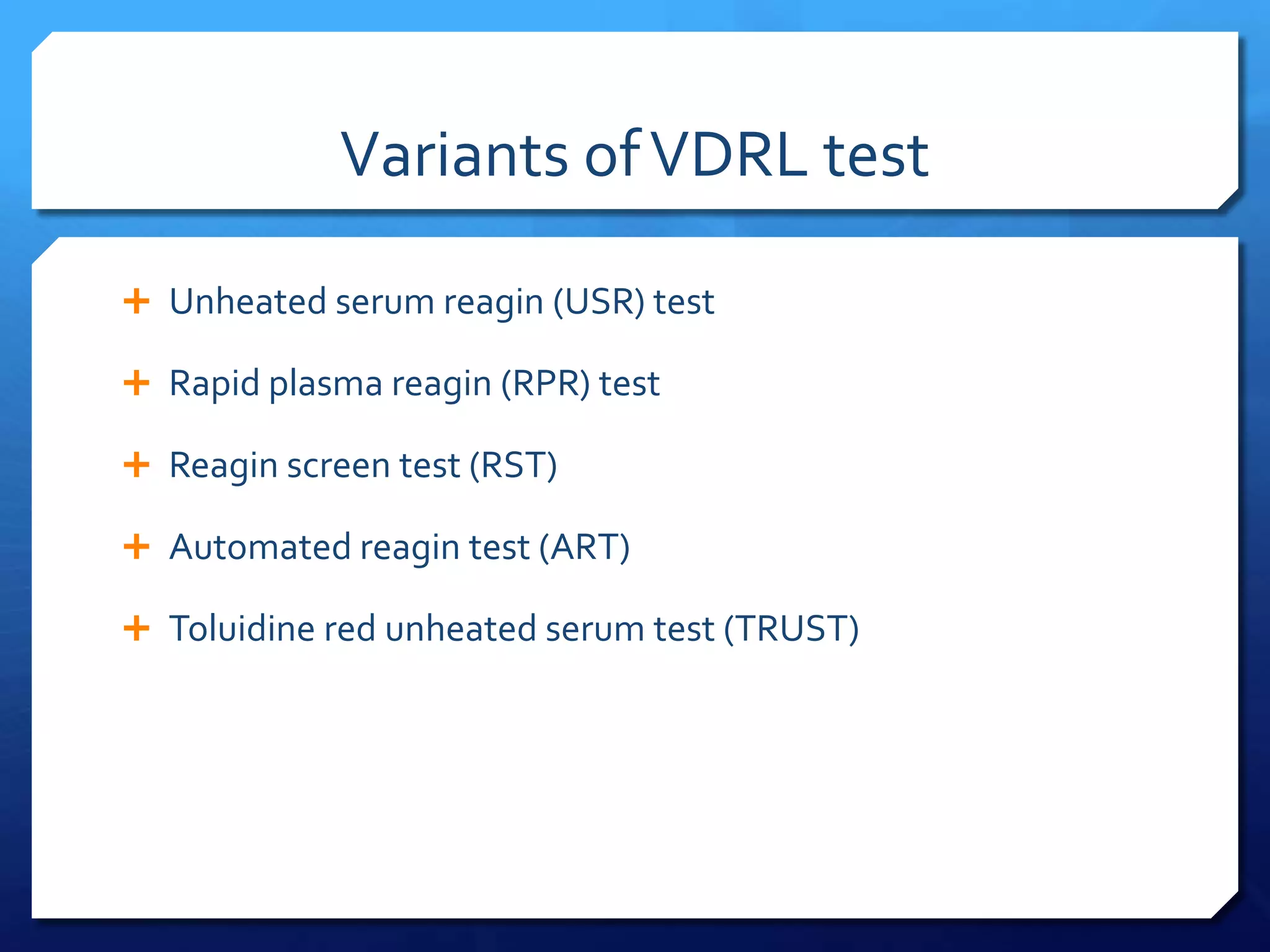
Variants of VDRL test
 Unheated serum reagin (USR) test
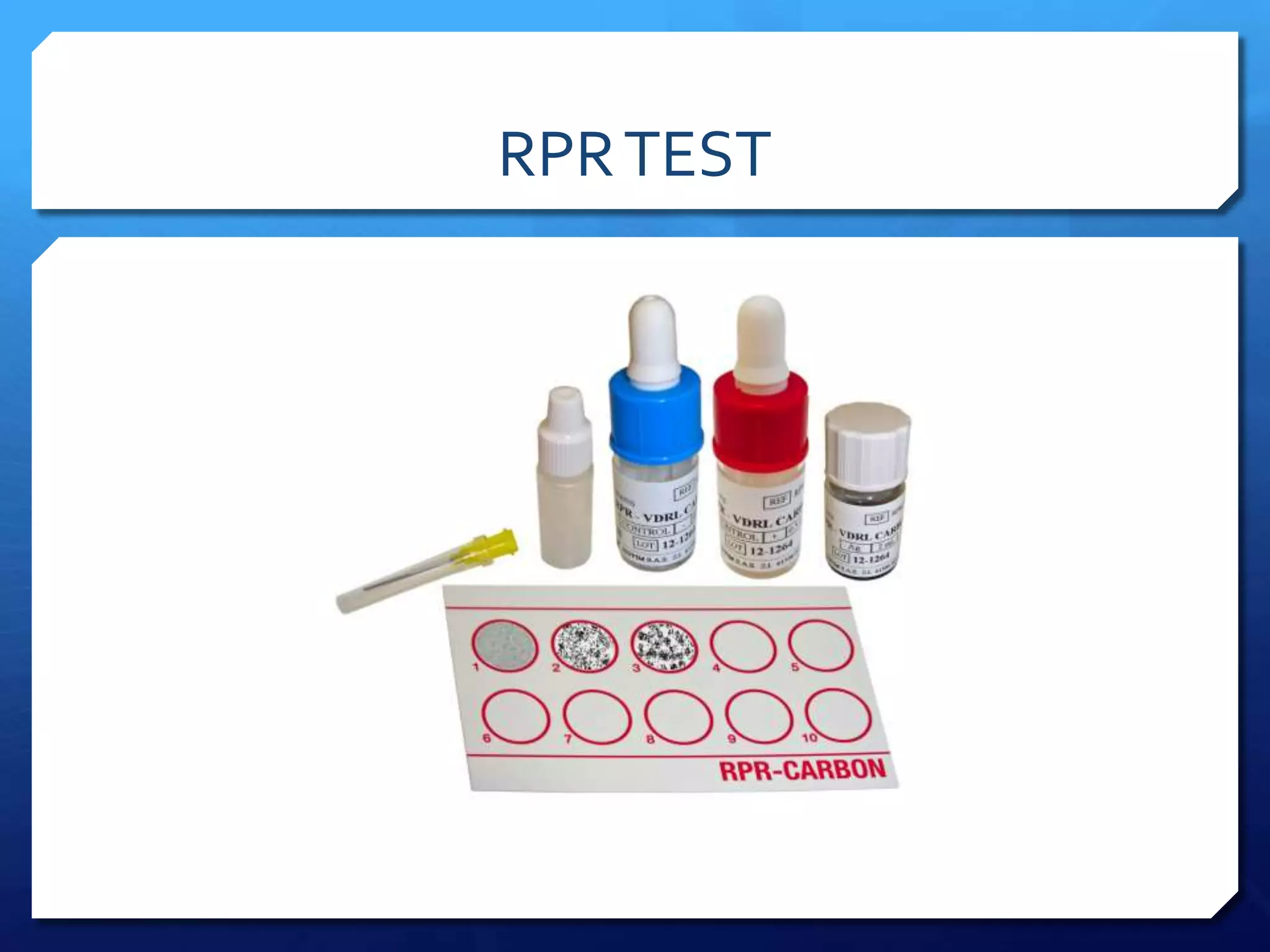
 Rapid plasma reagin (RPR) test
 Reagin screen test (RST)
 Automated reagin test (ART)
 Toluidine red unheated serum test (TRUST)
RPR TEST
Treponemal Tests
 In these tests, entire T.pallidum or its fragments are used as

the antigen to detect antibodies directed against treponemal
cellular components
 These tests are used for confirmation of the disease activity

 Treponemal tests become reactive before non treponemal

tests but unlike non treponemal tests they remain positive
for many years even after adequate therapy
Commonly used Treponemal tests
 Fluorescent Treponemal Antibody Absorption (FTA-Abs) test
 Fluorescent Treponemal Antibody Absorption double

staining (FTA-Abs-DS) test
 Treponema pallidum Haemagglutination Assay (TPHA)
 Treponemal Enzyme Immunoassay (EIA)
Fluorescent Treponemal Antibody
Absorption (FTA-Abs) test
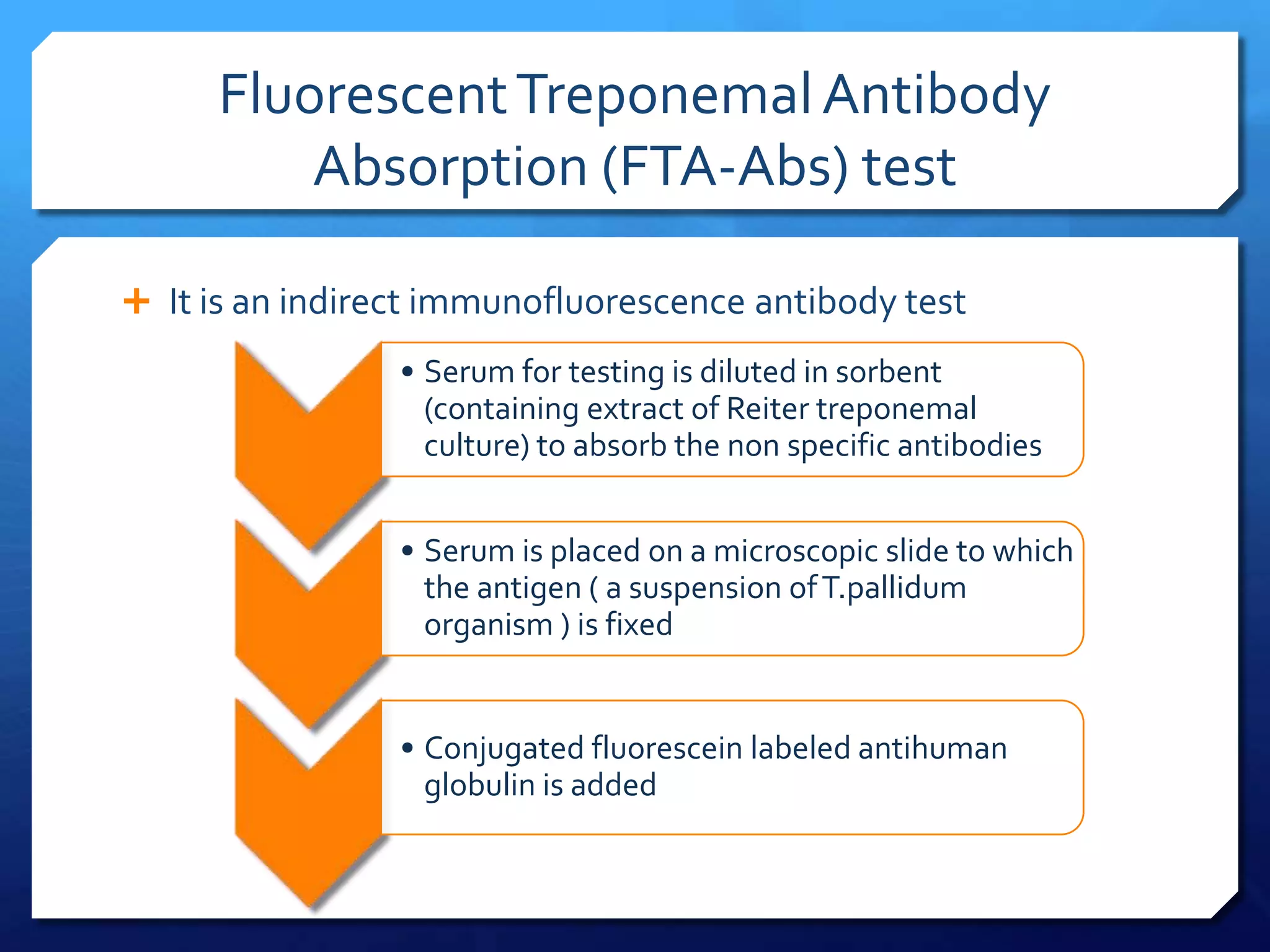
 It is an indirect immunofluorescence antibody test
• Serum for testing is diluted in sorbent
(containing extract of Reiter treponemal
culture) to absorb the non specific antibodies
• Serum is placed on a microscopic slide to which
the antigen ( a suspension of T.pallidum
organism ) is fixed

• Conjugated fluorescein labeled antihuman
globulin is added
 The intensity of fluorescence is reported as REACTIVE, BORDERLINE, NON
REACTIVE.
 False positives and negatives may occur
 It is the most sensitive serological test in early stages of syphilis at present
ADVANTAGES
1. High specificity &
sensitivity
2. Can detect recent
infection 1-2 weeks
before other assays

DISADVANTAGES
1. Expensive
2. Time consuming
3. Reading the test is
tiresome
4. Well trained
personnel is
required
Fluorescent Treponemal Antibody Absorption
double staining (FTA-Abs-DS) test
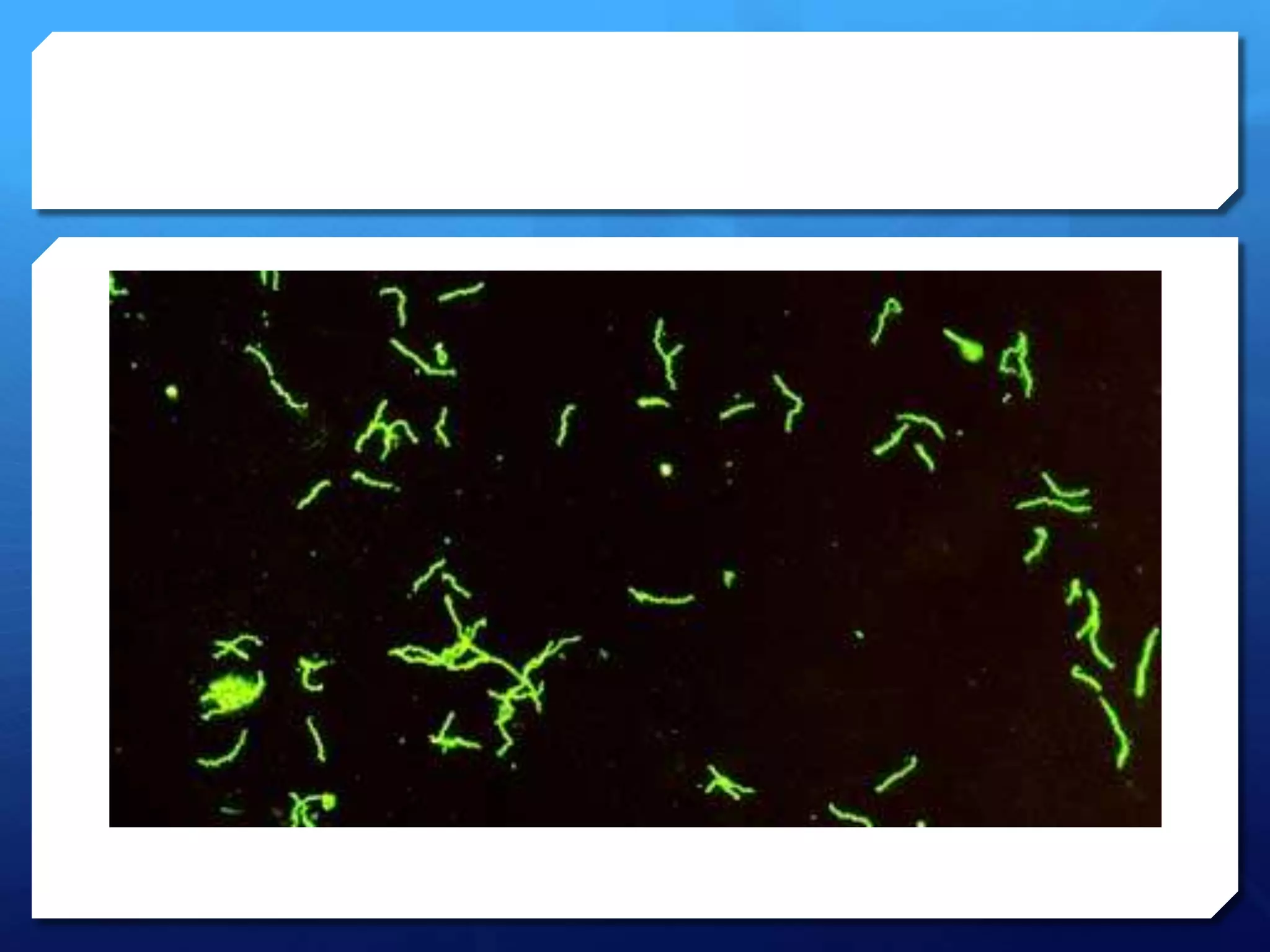
 The fluorescent treponemal antibody absorption double staining (FTA ABS

DS) test is an indirect fluorescent antibody technique used as a
confirmatory test for syphilis.
 the patient's serum, which has been diluted 1:5 in sorbent (an extract from

cultures of Treponema phagedenis, Reiter treponeme), is layered on a
microscope slide to which T. pallidum subspecies pallidum has been fixed.
 Class - specific tetramethylrhodamine isothiocyanate (TMRITC) –labeled

antihuman immunoglobulin G (IgG) is then added; this reagent combines
with the patient's antibodies which are adhering to T. pallidum and results
in a visible test reaction (fluorescing treponemes) when examined by
fluorescence microscopy with the rhodamine filter in place
 Finally, a counterstain, fluorescein isothiocyanate (FITC)-labeled anti-

treponemal globulin, is added to locate T. pallidum when the slide is
examined with the FITC filter.
Treponema pallidum Haemagglutination
Assay (TPHA)
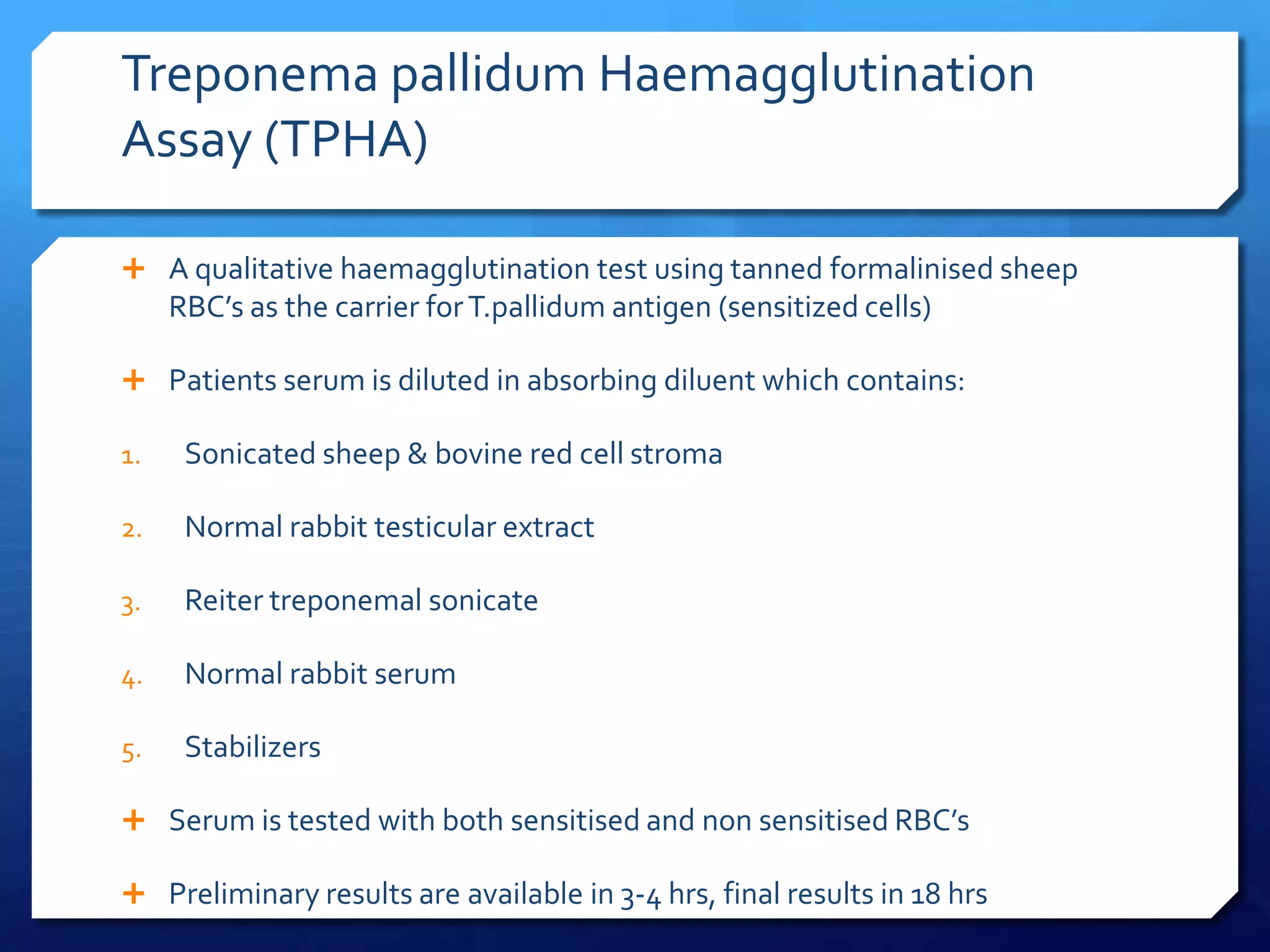
 A qualitative haemagglutination test using tanned formalinised sheep

RBC’s as the carrier for T.pallidum antigen (sensitized cells)
 Patients serum is diluted in absorbing diluent which contains:
1.

Sonicated sheep & bovine red cell stroma

2.

Normal rabbit testicular extract

3.

Reiter treponemal sonicate

4.

Normal rabbit serum

5.

Stabilizers

 Serum is tested with both sensitised and non sensitised RBC’s

 Preliminary results are available in 3-4 hrs, final results in 18 hrs
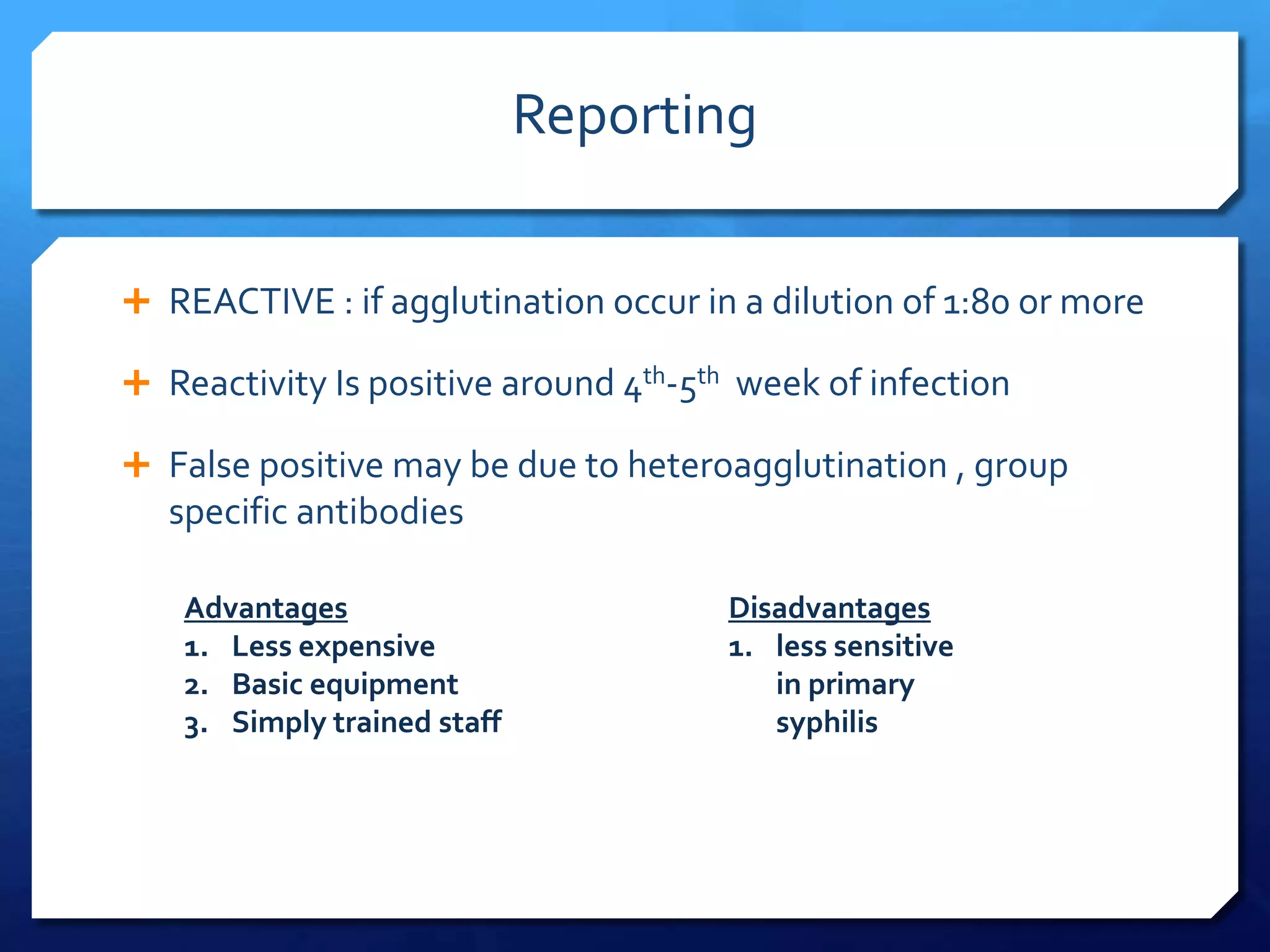
Reporting
 REACTIVE : if agglutination occur in a dilution of 1:80 or more
 Reactivity Is positive around 4th-5th week of infection
 False positive may be due to heteroagglutination , group

specific antibodies
Advantages
1. Less expensive
2. Basic equipment
3. Simply trained staff

Disadvantages
1. less sensitive
in primary
syphilis
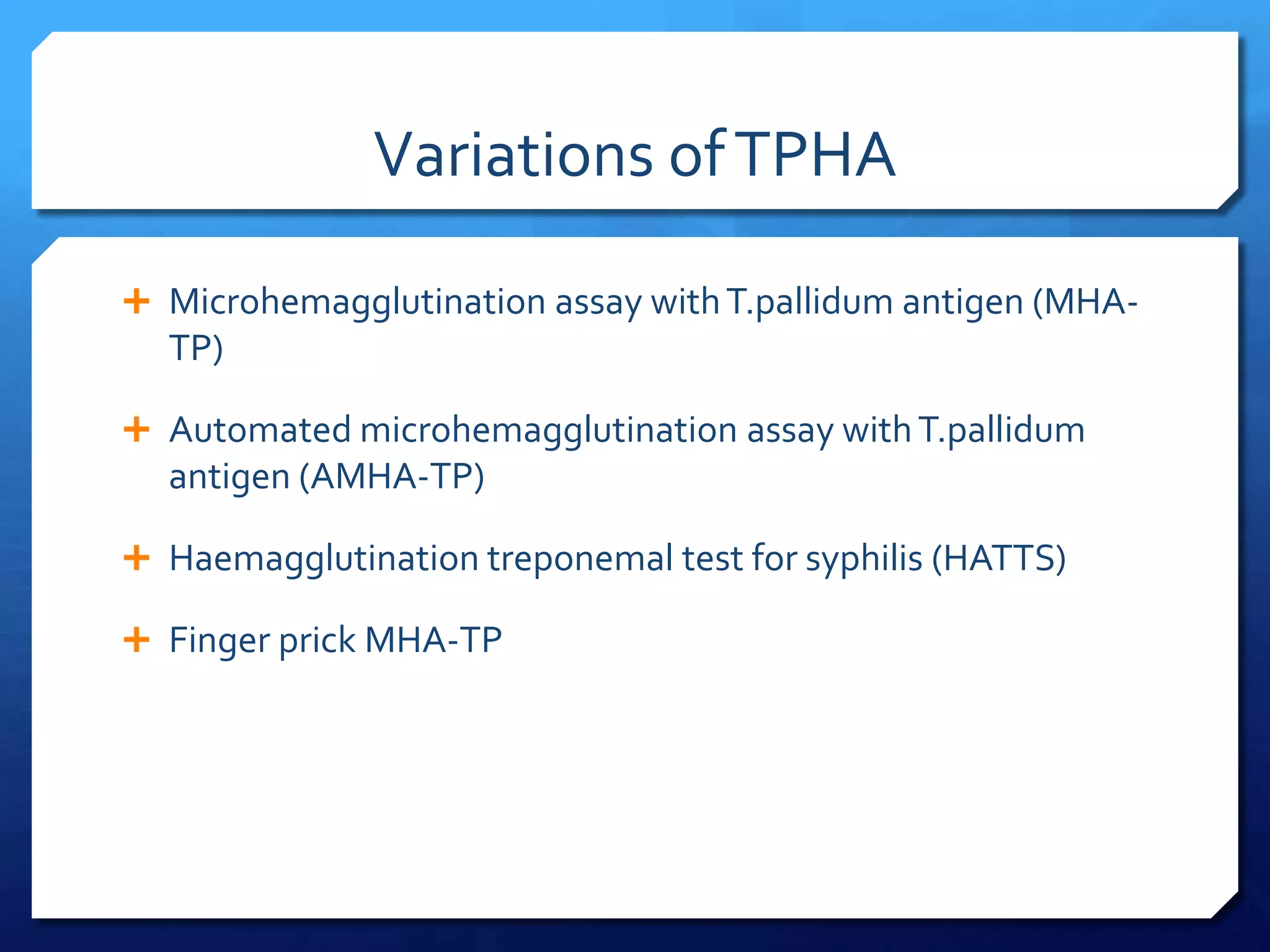
Variations of TPHA
 Microhemagglutination assay with T.pallidum antigen (MHA-

TP)
 Automated microhemagglutination assay with T.pallidum

antigen (AMHA-TP)
 Haemagglutination treponemal test for syphilis (HATTS)
 Finger prick MHA-TP
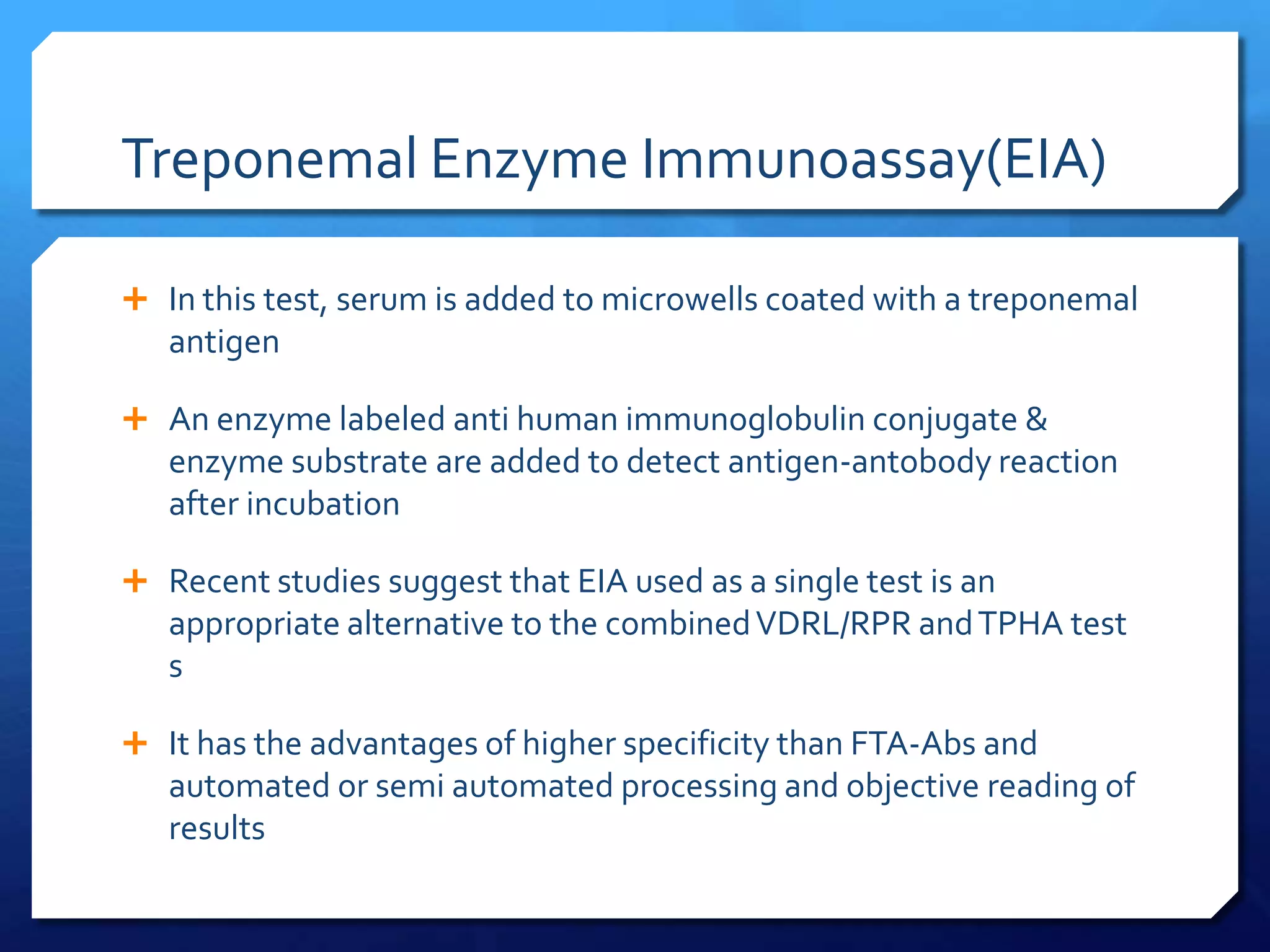
Treponemal Enzyme Immunoassay(EIA)
 In this test, serum is added to microwells coated with a treponemal

antigen
 An enzyme labeled anti human immunoglobulin conjugate &

enzyme substrate are added to detect antigen-antobody reaction
after incubation
 Recent studies suggest that EIA used as a single test is an

appropriate alternative to the combined VDRL/RPR and TPHA test
s
 It has the advantages of higher specificity than FTA-Abs and

automated or semi automated processing and objective reading of
results
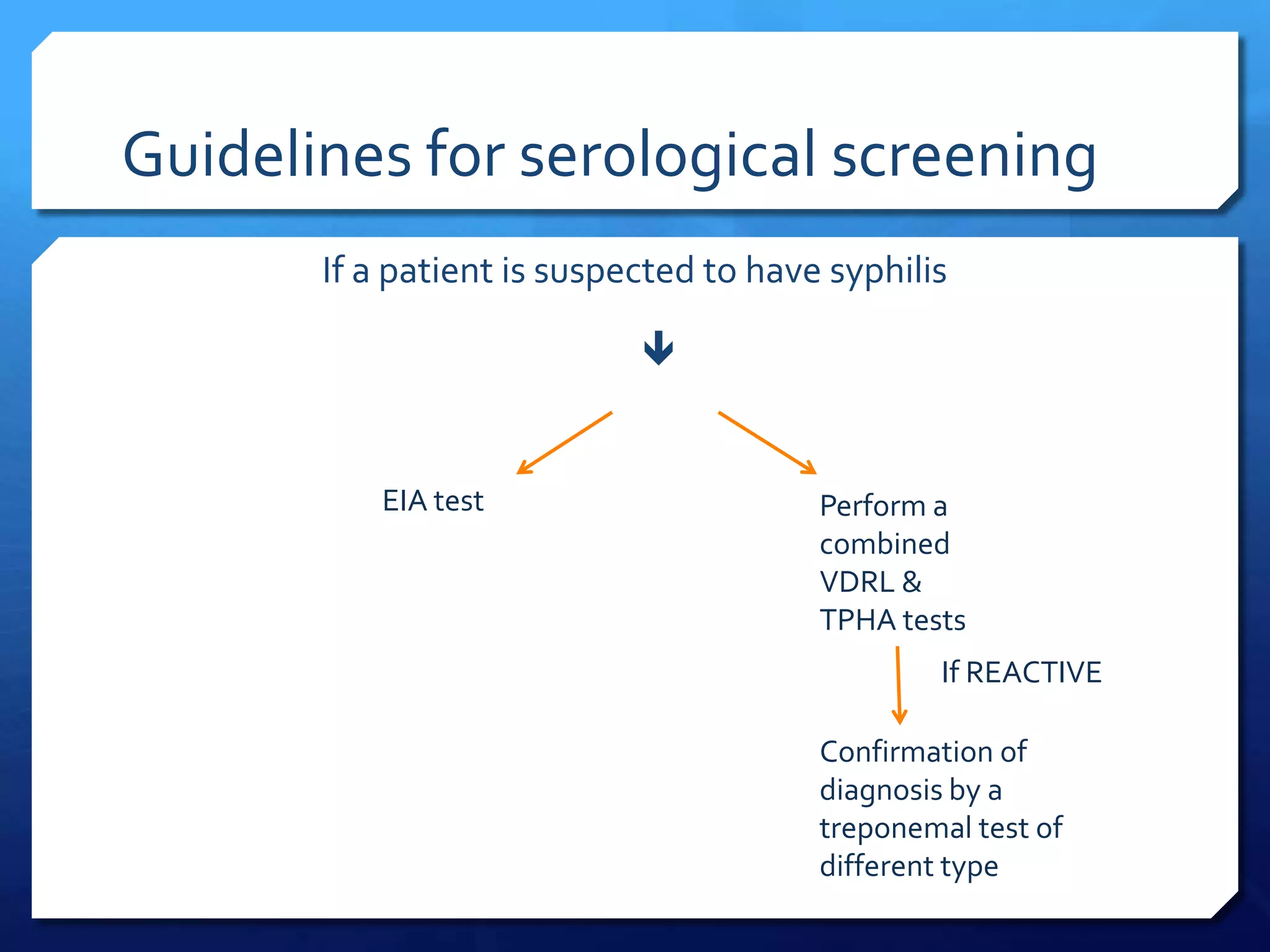
Guidelines for serological screening
If a patient is suspected to have syphilis


EIA test

Perform a
combined
VDRL &
TPHA tests

If REACTIVE
Confirmation of
diagnosis by a
treponemal test of
different type
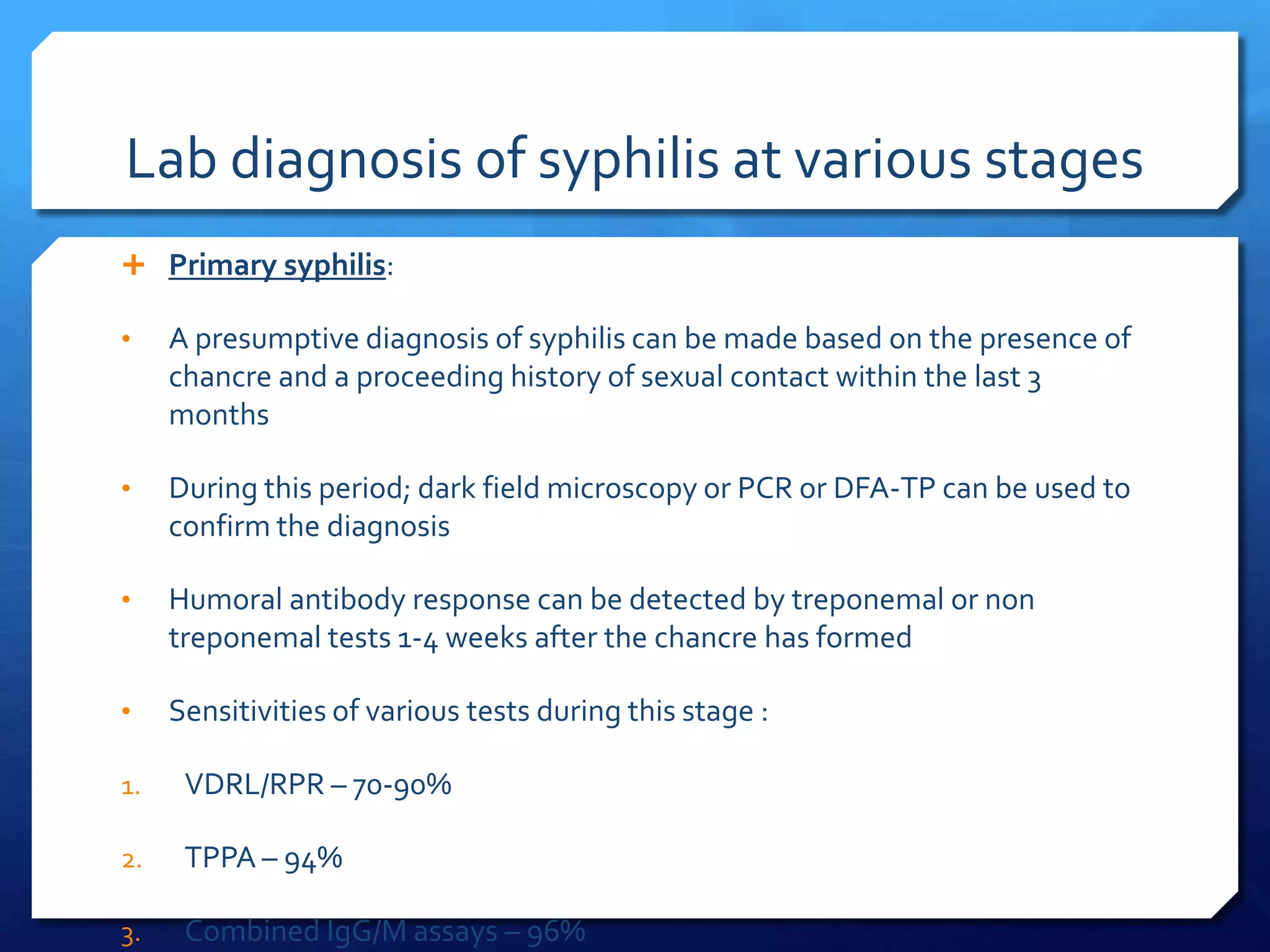
Lab diagnosis of syphilis at various stages
 Primary syphilis:
•

A presumptive diagnosis of syphilis can be made based on the presence of
chancre and a proceeding history of sexual contact within the last 3
months

•

During this period; dark field microscopy or PCR or DFA-TP can be used to
confirm the diagnosis

•

Humoral antibody response can be detected by treponemal or non
treponemal tests 1-4 weeks after the chancre has formed

•

Sensitivities of various tests during this stage :

1.

VDRL/RPR – 70-90%

2.

TPPA – 94%

3.

Combined IgG/M assays – 96%
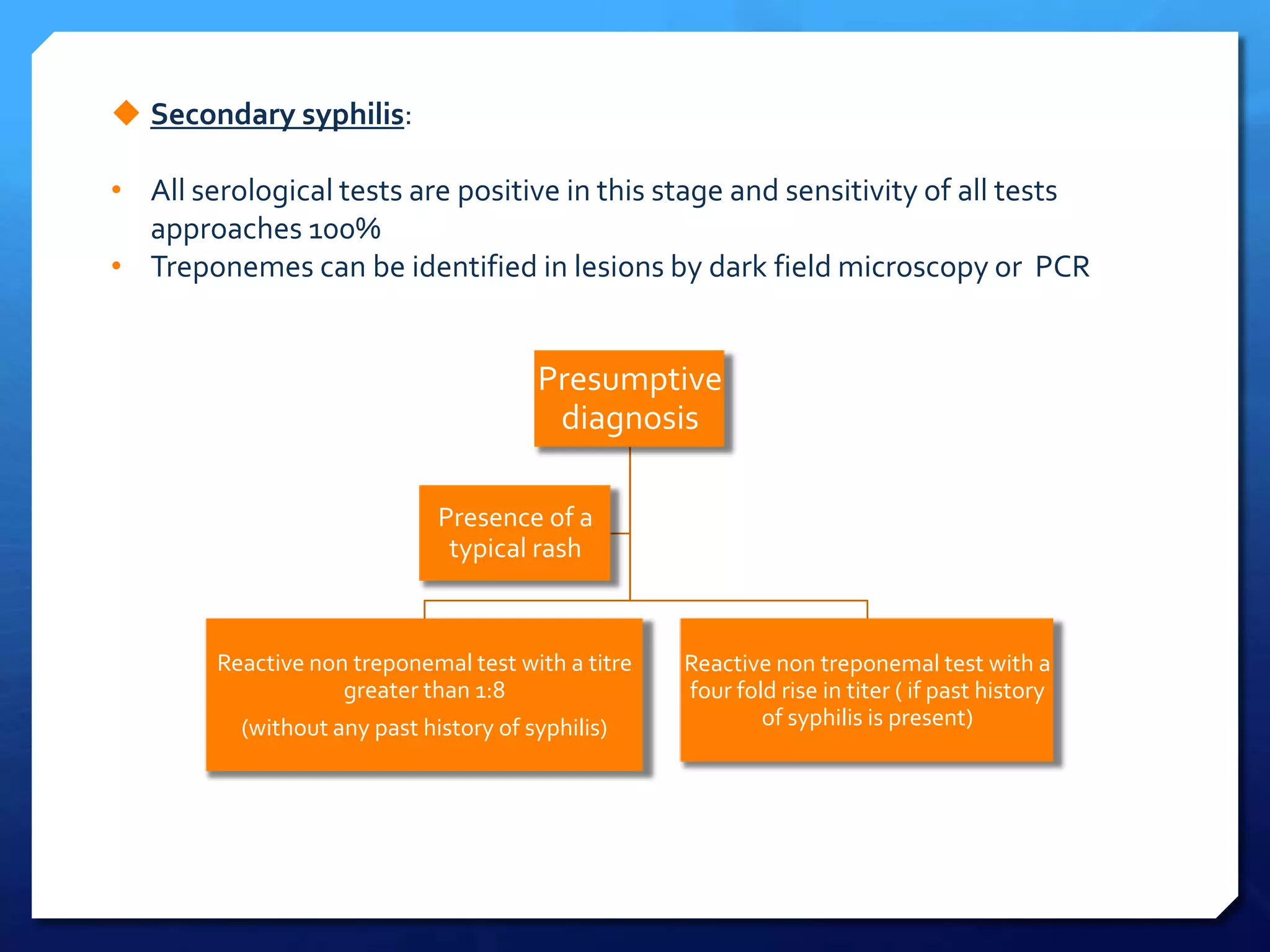
 Secondary syphilis:

• All serological tests are positive in this stage and sensitivity of all tests
approaches 100%
• Treponemes can be identified in lesions by dark field microscopy or PCR

Presumptive
diagnosis
Presence of a
typical rash

Reactive non treponemal test with a titre
greater than 1:8
(without any past history of syphilis)

Reactive non treponemal test with a
four fold rise in titer ( if past history
of syphilis is present)
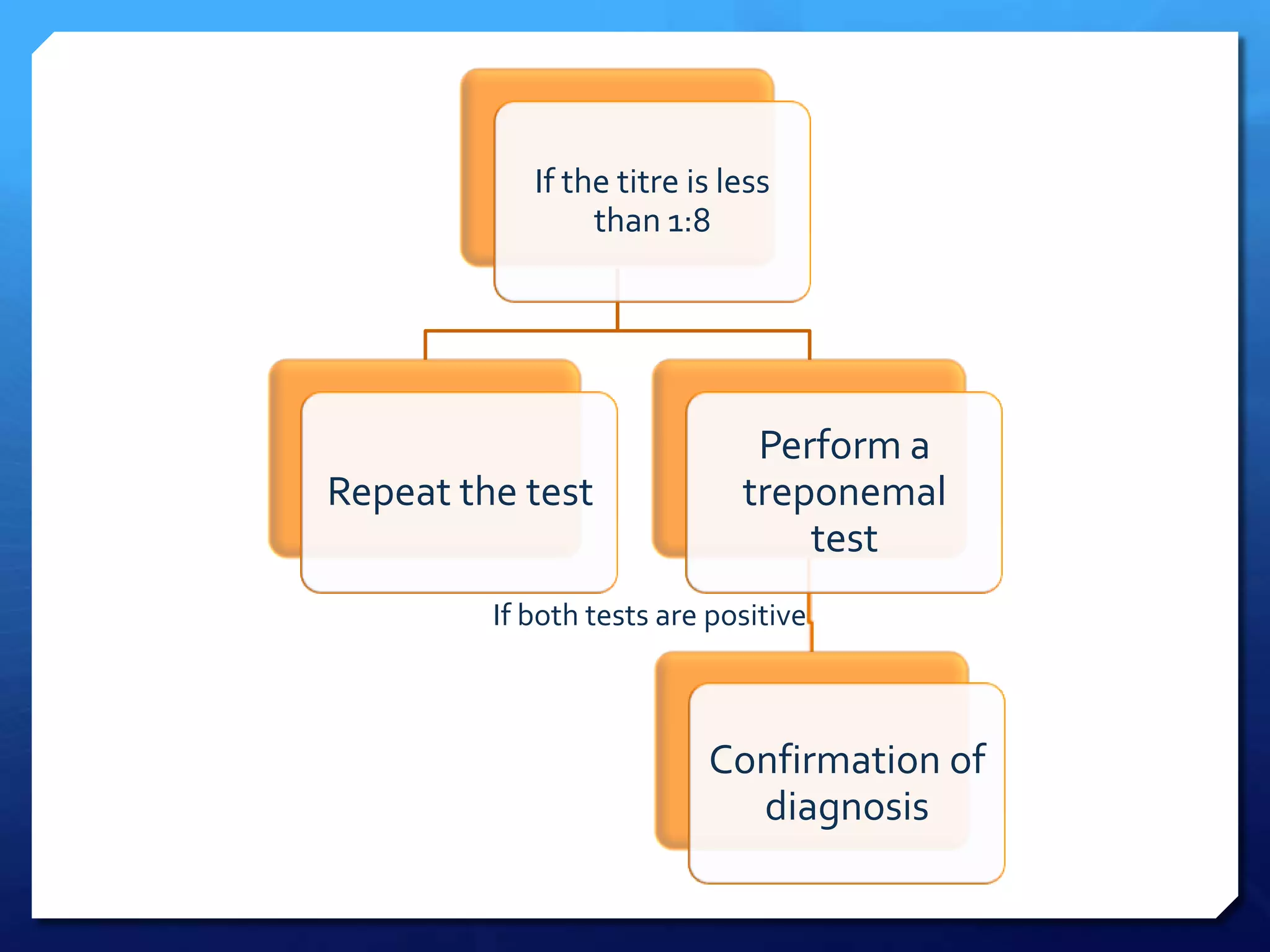
If the titre is less
than 1:8

Repeat the test

Perform a
treponemal
test

If both tests are positive

Confirmation of
diagnosis
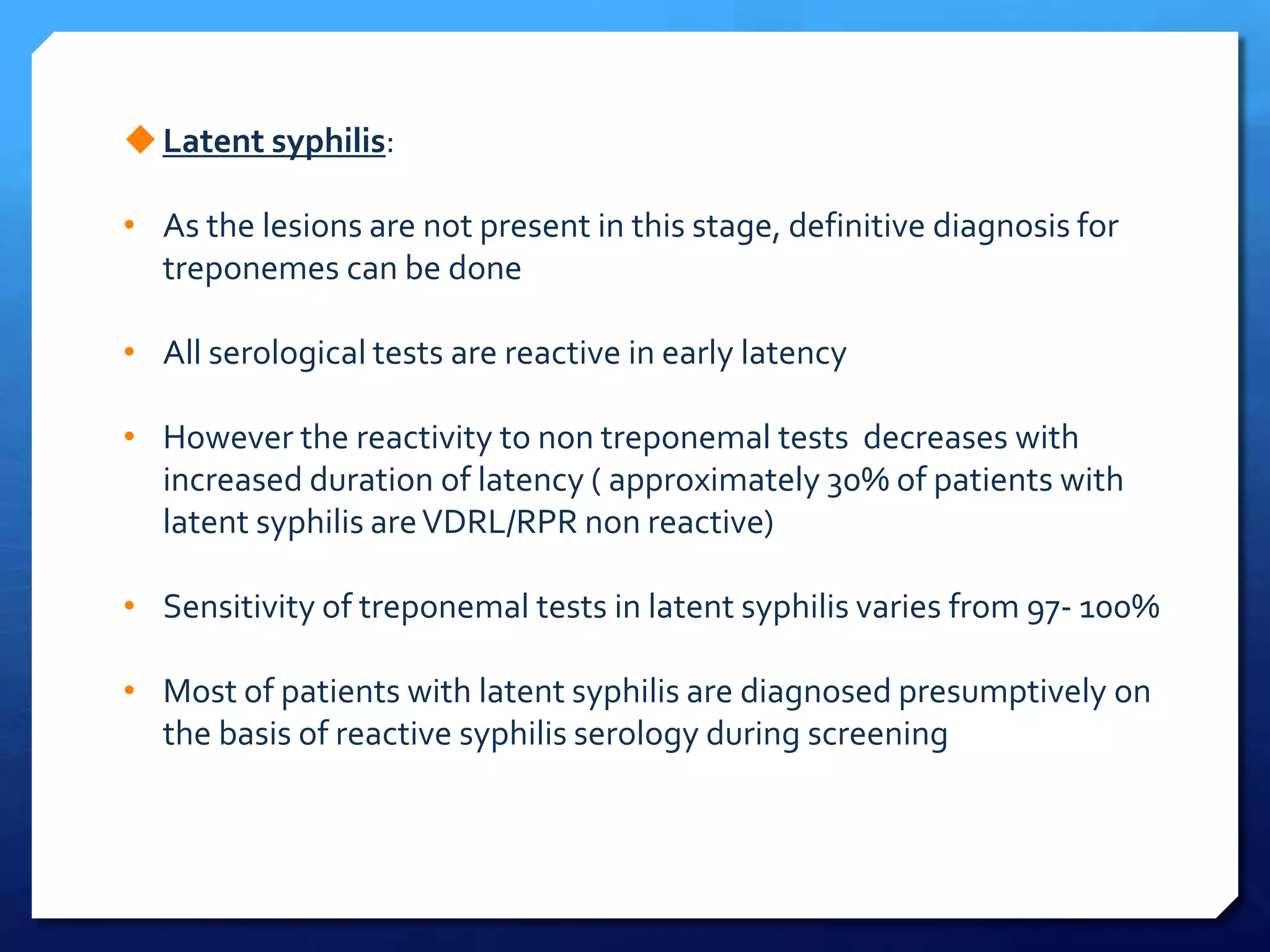
 Latent syphilis:
• As the lesions are not present in this stage, definitive diagnosis for
treponemes can be done
• All serological tests are reactive in early latency
• However the reactivity to non treponemal tests decreases with
increased duration of latency ( approximately 30% of patients with
latent syphilis are VDRL/RPR non reactive)
• Sensitivity of treponemal tests in latent syphilis varies from 97- 100%
• Most of patients with latent syphilis are diagnosed presumptively on
the basis of reactive syphilis serology during screening
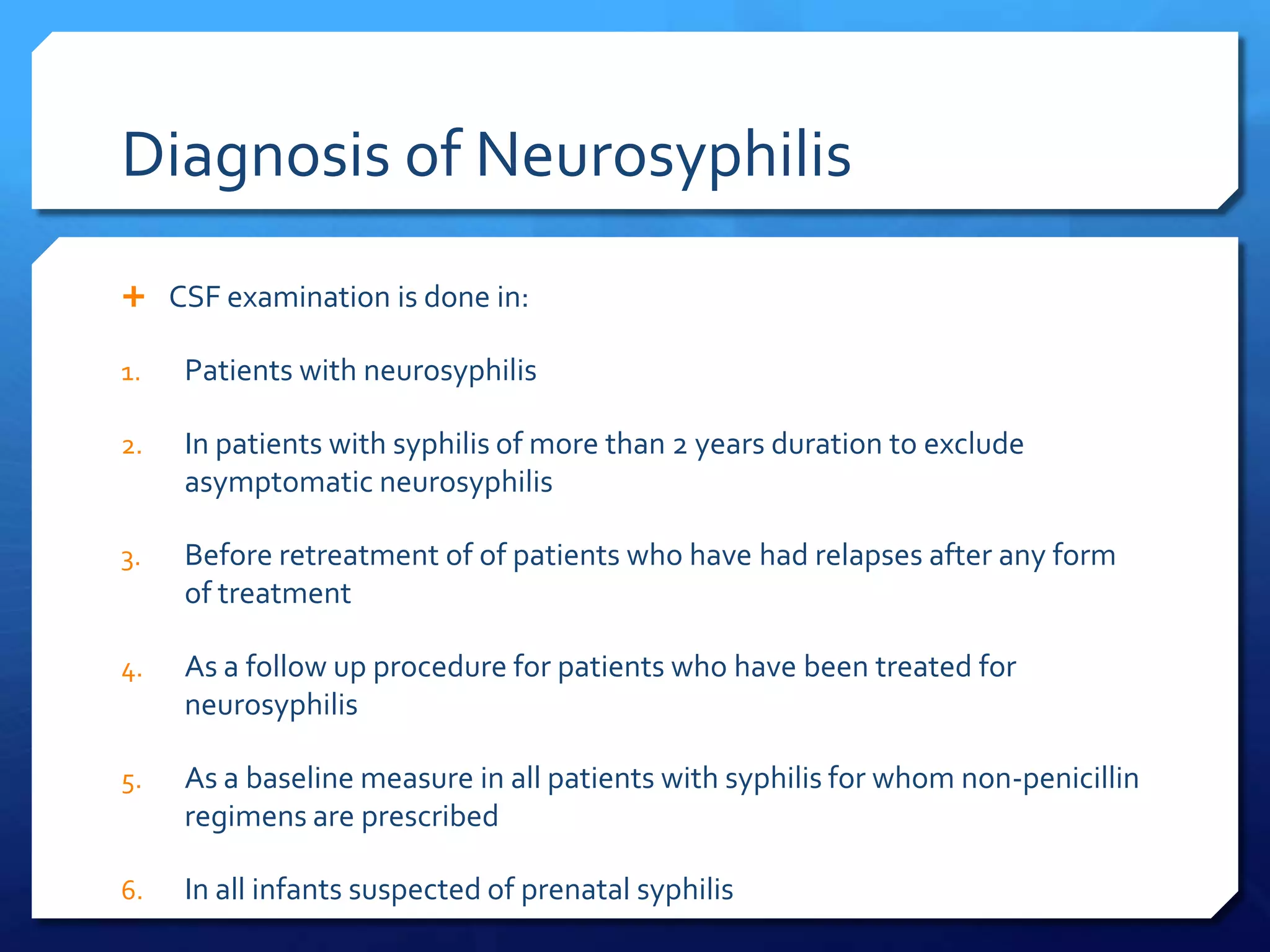
Diagnosis of Neurosyphilis
 CSF examination is done in:
1.

Patients with neurosyphilis

2.

In patients with syphilis of more than 2 years duration to exclude
asymptomatic neurosyphilis

3.

Before retreatment of of patients who have had relapses after any form
of treatment

4.

As a follow up procedure for patients who have been treated for
neurosyphilis

5.

As a baseline measure in all patients with syphilis for whom non-penicillin
regimens are prescribed

6.

In all infants suspected of prenatal syphilis
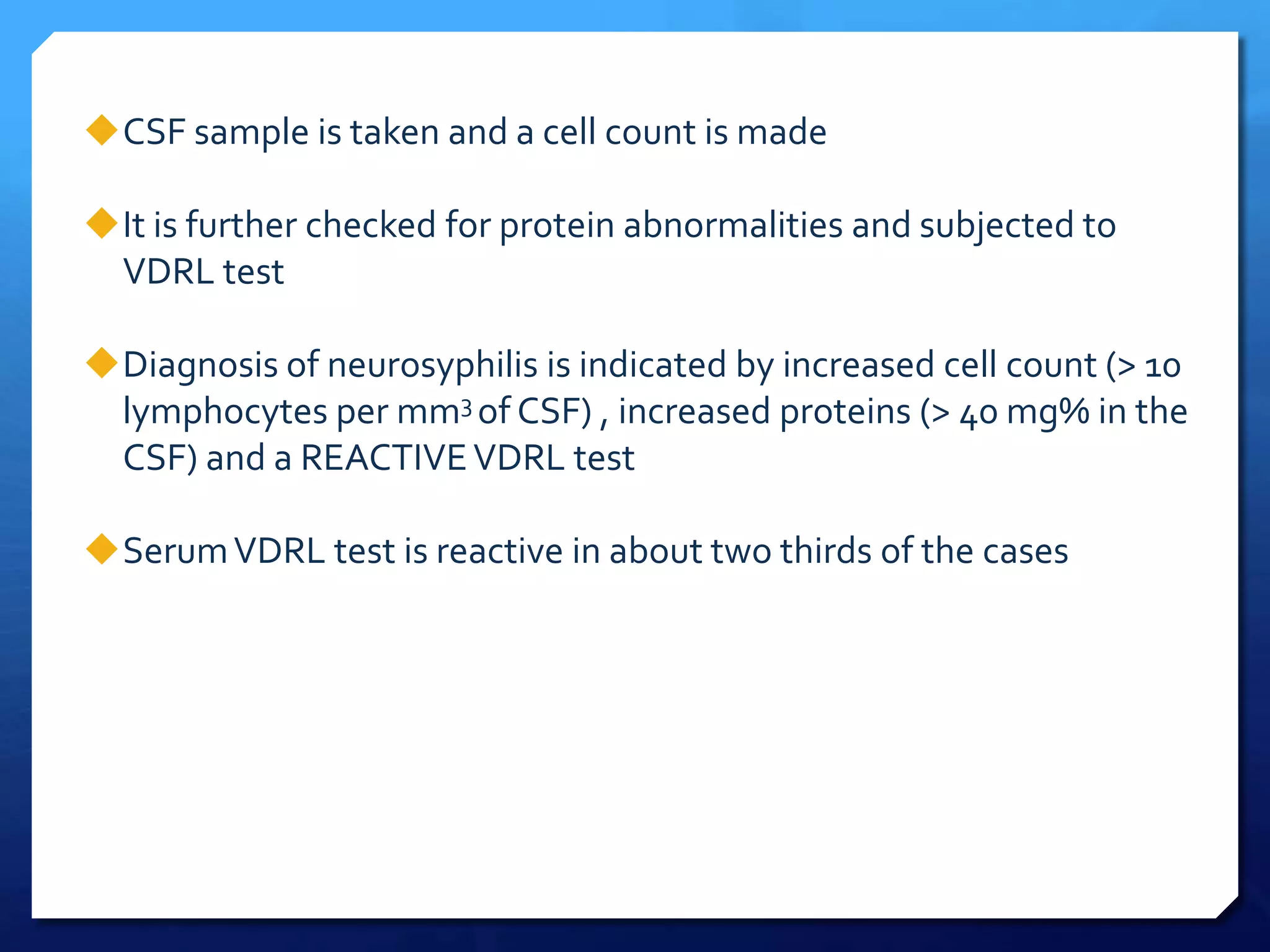
CSF sample is taken and a cell count is made
It is further checked for protein abnormalities and subjected to
VDRL test
Diagnosis of neurosyphilis is indicated by increased cell count (> 10
lymphocytes per mm3 of CSF) , increased proteins (> 40 mg% in the
CSF) and a REACTIVE VDRL test
Serum VDRL test is reactive in about two thirds of the cases
Diagnosis of Cardiovascular syphilis
 Non treponemal tests are reactive in most of the patients
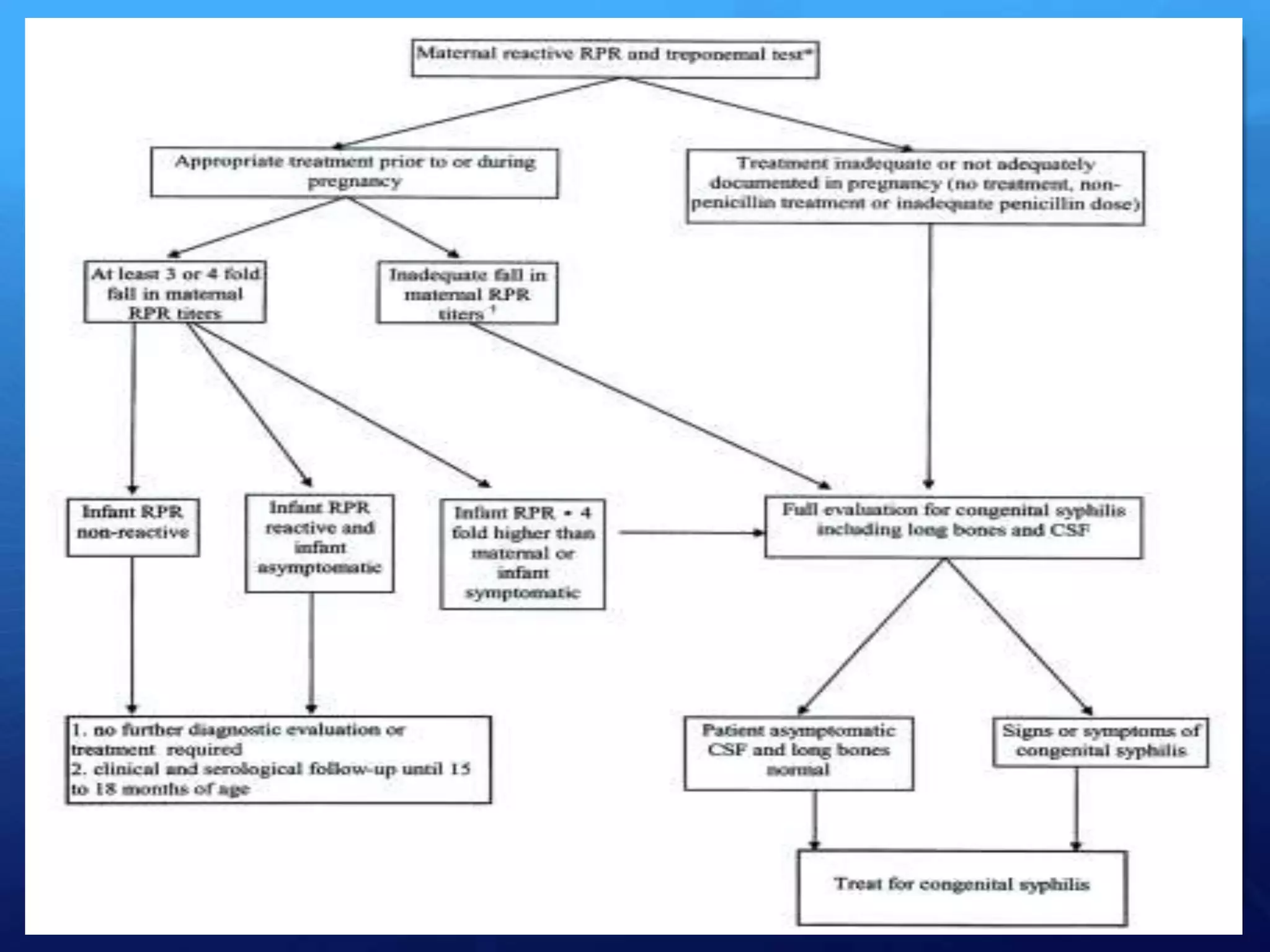
Diagnosis of Syphilis in Pregnancy
 All women should be screened serologically for syphilis during the early

stages of pregnancy
 Antepartum screening by nontreponemal antibody testing is

typical, but in some settings, treponemal antibody testing is being
used.
 For patients at high risk, serologic testing should be performed twice

during the third trimester, at 28 to 32 weeks’ gestation and at delivery
 Expectant mothers should be treated when non-treponemal &

treponemal tests are reactive if on thorough evaluation the cause of a
possible false positive result cannot be ensured
 Post natal screening for pre natal syphilis in infants born to high risk

mothers at 4-8 weeks of age is appropriate
Diagnosis of Syphilis in HIV
 Unusual serologic responses have been observed among HIV-infected

persons who have syphilis
 The majority of reports have involved serologic titers that were higher than

expected, but false-negative serologic test results and delayed appearance
of seroreactivity also have been reported
 majority of specialists believe that both treponemal and nontreponemal

serologic tests for syphilis can be interpreted in the usual manner for the
majority of patients who are coinfected with T. pallidum and HIV.
 When clinical findings are suggestive of syphilis but serologic tests are

nonreactive or their interpretation is unclear, alternative tests (e.g., biopsy
of a lesion, dark field examination, or DFA staining of lesion material)
might be useful for diagnosis
 Neurosyphilis should be considered in the differential diagnosis of

neurologic disease in HIV-infected persons.

Lab diagnosis of syphilis

  • 1.
  • 2.
    Tests available fordetecting syphilis Direct identification of T.pallidum  Direct microscopic identification of T.pallidum by dark field microscopy  Direct antigen detection tests  Nucleoside amplification techniques (PCR) Serological tests to detect IgG/Igm antibodies  Non Treponemal tests (for determining the disease activity)  Treponemal tests (for disease confirmation)  Detection of Treponemal IgM antibodies ( to detect early infection)
  • 3.
    Dark Field Microscopy This method is traditionally used to demonstrate T.pallidum in the exudate from mucocutaneous lesions in early acquired and early congenital syphilis  One of the most specific and easiest method for diagnosis of infectious syphilis when lesions are present
  • 4.
    Figure: Comparison ofLight Pathways of bright field and dark field Microscopy.
  • 5.
    Procedure  Clean thelesion with a saline soaked gauze and squeeze it between the index finger and the thumb to produce a serous exudate.( avoid contamination with blood)  The exudate is then transferred onto a glass slide by directly pressing it on the lesion  Normal saline can be added to the exudate to make the material homogenous  The specimen should immediately be examined as delay in examination reduces the motility of the treponemes
  • 6.
    Results  T.pallidum indark field microscopy is identified by its typical morphology and characteristic movements  T.pallidum is differentiated from the other treponemes by the tightness of spirals and characteristic cork screw movements T pallidum Other non pathogenic treponemes Has 6-14 regularly wounded coils Irregularly wounded coils And may be longer & thicker Shows a slow, deliberate forward & backward movement, rotating on its long axis, soft bending and twisting from side to side Lack a characteristic mobility
  • 7.
  • 9.
    Advantages  Easy todo  Most specific method to confirm the diagnosis in early syphilis disadvantages  Time consuming  Needs operator expertise  needs well maintained specialist equipment  Cannot differentiate T.pallidum from other pathogenic treponemes  Not recommended for oral cavity lesions
  • 10.
    Direct fluorescent antibody-T.pallidum (DFA-TP) Itis a practical alternative to dark field examination Advantages  More sensitive and specific than dark field microscopy  Samples from oral mucosa can also be examined  Slides need not be examined immediately Disadvantages  This test cannot differentiate T.pallidum subsp pallidum from other sub species of T.pallidum
  • 11.
    Method  The specimencollection is same as that of dark field microscopy  The slide is air dried and fixed with either acetone for 10 min or 100% methanol for 10 sec  The smear is stained with fluorescein- labeled anti T. pallidum globulin and examined under the fluorescent microscope
  • 12.
    Polymerase chain Reaction Is increasingly becoming the investigation of choice for identifying T.pallidum from the early lesions of syphilis  A number of well-preserved DNA sequences have been identified that are specific for T.pallidum and do not appear to be found in other treponemes  Assays based on these primers have been shown to be sensitive and specific in the diagnosis of early syphilis
  • 13.
    SEROLOGICAL TESTS  Usefulin the latent stage of the disease as treponemes are not readily sustainable in culture and lesions are usually absent  An ideal serological test 1. should have high specificity & sensitivity 2. should be suitable for treatment monitoring 3. should give a negative result on successful therapy to give a clear cut diagnosis of reinfection However by using the different but complementary characteristics of various specific and non specific treponemal tests, a diagnosis of syphilis and a serological assessment of disease activity, treatment response and reinfection can be made
  • 14.
    Principle: • T.pallidum infectionproduces antibodies to more than 20 different polypeptide antigens. • The antibodies are of two types: 1. Non specific antibodies (reagins): directed against lipoidal antigen of T.pallidum as well as mitochondrial & nuclear membranes of human cells 2. Specific anti-treponemal antibodies: directed against T.pallidum • Specific anti T.pallidum IgM antibodies develop during the second week of infection • IgG antibody response begins around the fourth week after infection and usually persists • Treatment causes generalized loss of antibodies. However, IgG antibodies may persist at a low detectable level
  • 16.
    Non Treponemal Tests All these non treponemal tests measure anti lipoidal IgM and IgG antibodies  These tests are used for initial screening and for follow up after treatment  They can be performed as a: 1. Qualitative test ( to check for presence or absence of antibodies) 2. Quantitative test (to check the amount of antibodies present in the serum)  Except for VDRL & RPR tests, most lipoidal antigen tests are not used
  • 17.
    VDRL  Venereal DiseaseResearch Laboratory (VDRL) Test is a slide flocculation test employed in the diagnosis of syphilis.  Since the antigen used in this test is cardiolipin, which is a lipoidal extracted from beef heart, it is not a specific test.  The antibodies reacting with cardiolipin antibodies have been traditionally (but incorrectly) termed “regain”. 17
  • 18.
    VDRL- Principle  Patientssuffering from syphilis produce antibodies that react with cardiolipin antigen in a slide flocculation test, which are read using a microscope. It is not known if the antibodies that react with cardiolipin are produced against some lipid component of Treponema pallidum or as a result of tissue injury following infection
  • 19.
    VDRL- Test Requirements Patient’s serum, water bath, freshly prepared cardiolipin antigen, VDRL slide, mechanical rotator, pipettes, hypodermic syringe with unbeveled needle and microscope. Known reactive and non-reactive serum controls are also required.  VDRL antigen: The cardiolipin antigen is an alcoholic solution composed of 0.03% cardiolipin, 0.21% lecithin and 0.9% cholesterol. The cardiolipin antigen must be freshly constituted each day of test. The working antigen is a buffered saline suspension of cardiolipin.  VDRL slide: This is a glass slide measuring 2 X 3 inch with 12 concave depressions, each measuring 16 mm in diameter and 1.75 mm deep.
  • 21.
    procedure  Patients’ serumis inactivated by heating at 560c for 30 minutes in a water bath to remove non-specific inhibitors (such as complement). The test can be performed both qualitatively and quantitatively. Those tests that are reactive by qualitative test are subjected to quantitative test to determine the antibody titres.
  • 22.
     Qualitative test: 1.0.05 ml of inactivated serum is taken into one well. 2. 1/60th ml (or 1 drop from 18 gauge needle) of the cardiolipin antigen is then added with the help of a syringe (unbeveled) to the well and rotated at 180 rpm for 4 minutes. 3. Every test must be accompanied with known reactive and nonreactive controls. 4. The slide is then viewed under low power objective of a microscope for flocculation. The reactive and non-reactive controls are looked first to verify the quality of the antigen. Depending on the size the results are graded as weakly reactive (W) or reactive (R). 5. Reactive samples are then subjected to quantitative test.
  • 23.
    QUANTITATIVE TEST:  Thisis performed to determine the antibody titers 1. The serum is doubly diluted in saline from 1 in 2 to 1:256 or more 2. 0.05 ml of each dilution is taken in the well and 1/60 ml of antigen is added to each dilution and rotated in a rotator. 1. The results are then checked under the microscope 2. The highest dilution showing flocculation is considered as reactive titre. 3. If the clinical findings are strongly suggestive of syphilis, a quantitative test may be directly performed on the serum specimen.
  • 25.
    VDRL for CSF VDRL test may also be performed on CSF samples in the diagnosis of neurosyphilis  Quantitative VDRL is the test of choice on CSF specimens.  However, there are some variations in this test. The antigen is diluted in equal volumes with 10% saline, CSF must not be heated (or inactivated), the volume of antigen solution taken is 0.01 ml (or 1 drop from 21 gauge needle) and rotation time is 8 minutes.  Rest of the procedure remains same
  • 26.
    Reporting of theresults  Results of the test are reported as: 1. REACTIVE: past/ present infection with a pathogenic T.pallidum, which is either treated or untreated (or) a false positive reaction 2. NON REACTIVE: no current infection (or) an effectively treated infection , but it does not rule out syphilis which can be in its incubation period 3. WEAKLY REACTIVE :
  • 28.
    A four foldrise in titer  infection reinfection treatment failure  A four fold decrease in titer  effective therapy  When a non treponemal test shows a persistent reactivity with no signs of decline in titer after 6 months of adequate therapy (or) fails to show a four fold decrease of an initial high titer within 1 year , it is considered as SERORESISTANCE ( SEROFAST)
  • 29.
    PROZONE PHENOMENON : • Undilutedserum specimens having a high quantity of reagin antibodies occasionally will give a false negative reaction , but on further dilutions, it becomes positive • Incidence of prozone phenomenon in general population has been observed to be low (0.4%) • It may attain clinical significance in cases of certain groups of patients 1. Patients on continuous immunosuppressive therapy 2. HIV seropositive patients
  • 30.
    False positive reactions 1. Technicalfalse positive reaction 2. Variation in the normal : In some normal individuals, there may be excess production of reagin antibodies 1. Biological false positive reaction: polyclonal antiphospholipid antibodies produced against lipoidal antigens present in normal tissue and in conditions that destroy cell nuclei are responsible for this reactions
  • 31.
    Types of biologicalfalse positive reactions Transient acute reaction Chronic reaction  Lasts less than 6 months  Lasts more than 6 months  Due to various associated  can be idiopathic or due to infections, narcotic abuse, immunization procedures and pregnancy leprosy, old age, autoimmune & other connective tissue disorders, malignancy etc
  • 32.
    Variants of VDRLtest  Unheated serum reagin (USR) test  Rapid plasma reagin (RPR) test  Reagin screen test (RST)  Automated reagin test (ART)  Toluidine red unheated serum test (TRUST)
  • 33.
  • 34.
    Treponemal Tests  Inthese tests, entire T.pallidum or its fragments are used as the antigen to detect antibodies directed against treponemal cellular components  These tests are used for confirmation of the disease activity  Treponemal tests become reactive before non treponemal tests but unlike non treponemal tests they remain positive for many years even after adequate therapy
  • 35.
    Commonly used Treponemaltests  Fluorescent Treponemal Antibody Absorption (FTA-Abs) test  Fluorescent Treponemal Antibody Absorption double staining (FTA-Abs-DS) test  Treponema pallidum Haemagglutination Assay (TPHA)  Treponemal Enzyme Immunoassay (EIA)
  • 36.
    Fluorescent Treponemal Antibody Absorption(FTA-Abs) test  It is an indirect immunofluorescence antibody test • Serum for testing is diluted in sorbent (containing extract of Reiter treponemal culture) to absorb the non specific antibodies • Serum is placed on a microscopic slide to which the antigen ( a suspension of T.pallidum organism ) is fixed • Conjugated fluorescein labeled antihuman globulin is added
  • 37.
     The intensityof fluorescence is reported as REACTIVE, BORDERLINE, NON REACTIVE.  False positives and negatives may occur  It is the most sensitive serological test in early stages of syphilis at present ADVANTAGES 1. High specificity & sensitivity 2. Can detect recent infection 1-2 weeks before other assays DISADVANTAGES 1. Expensive 2. Time consuming 3. Reading the test is tiresome 4. Well trained personnel is required
  • 39.
    Fluorescent Treponemal AntibodyAbsorption double staining (FTA-Abs-DS) test  The fluorescent treponemal antibody absorption double staining (FTA ABS DS) test is an indirect fluorescent antibody technique used as a confirmatory test for syphilis.  the patient's serum, which has been diluted 1:5 in sorbent (an extract from cultures of Treponema phagedenis, Reiter treponeme), is layered on a microscope slide to which T. pallidum subspecies pallidum has been fixed.  Class - specific tetramethylrhodamine isothiocyanate (TMRITC) –labeled antihuman immunoglobulin G (IgG) is then added; this reagent combines with the patient's antibodies which are adhering to T. pallidum and results in a visible test reaction (fluorescing treponemes) when examined by fluorescence microscopy with the rhodamine filter in place  Finally, a counterstain, fluorescein isothiocyanate (FITC)-labeled anti- treponemal globulin, is added to locate T. pallidum when the slide is examined with the FITC filter.
  • 40.
    Treponema pallidum Haemagglutination Assay(TPHA)  A qualitative haemagglutination test using tanned formalinised sheep RBC’s as the carrier for T.pallidum antigen (sensitized cells)  Patients serum is diluted in absorbing diluent which contains: 1. Sonicated sheep & bovine red cell stroma 2. Normal rabbit testicular extract 3. Reiter treponemal sonicate 4. Normal rabbit serum 5. Stabilizers  Serum is tested with both sensitised and non sensitised RBC’s  Preliminary results are available in 3-4 hrs, final results in 18 hrs
  • 41.
    Reporting  REACTIVE :if agglutination occur in a dilution of 1:80 or more  Reactivity Is positive around 4th-5th week of infection  False positive may be due to heteroagglutination , group specific antibodies Advantages 1. Less expensive 2. Basic equipment 3. Simply trained staff Disadvantages 1. less sensitive in primary syphilis
  • 42.
    Variations of TPHA Microhemagglutination assay with T.pallidum antigen (MHA- TP)  Automated microhemagglutination assay with T.pallidum antigen (AMHA-TP)  Haemagglutination treponemal test for syphilis (HATTS)  Finger prick MHA-TP
  • 43.
    Treponemal Enzyme Immunoassay(EIA) In this test, serum is added to microwells coated with a treponemal antigen  An enzyme labeled anti human immunoglobulin conjugate & enzyme substrate are added to detect antigen-antobody reaction after incubation  Recent studies suggest that EIA used as a single test is an appropriate alternative to the combined VDRL/RPR and TPHA test s  It has the advantages of higher specificity than FTA-Abs and automated or semi automated processing and objective reading of results
  • 44.
    Guidelines for serologicalscreening If a patient is suspected to have syphilis  EIA test Perform a combined VDRL & TPHA tests If REACTIVE Confirmation of diagnosis by a treponemal test of different type
  • 45.
    Lab diagnosis ofsyphilis at various stages  Primary syphilis: • A presumptive diagnosis of syphilis can be made based on the presence of chancre and a proceeding history of sexual contact within the last 3 months • During this period; dark field microscopy or PCR or DFA-TP can be used to confirm the diagnosis • Humoral antibody response can be detected by treponemal or non treponemal tests 1-4 weeks after the chancre has formed • Sensitivities of various tests during this stage : 1. VDRL/RPR – 70-90% 2. TPPA – 94% 3. Combined IgG/M assays – 96%
  • 46.
     Secondary syphilis: •All serological tests are positive in this stage and sensitivity of all tests approaches 100% • Treponemes can be identified in lesions by dark field microscopy or PCR Presumptive diagnosis Presence of a typical rash Reactive non treponemal test with a titre greater than 1:8 (without any past history of syphilis) Reactive non treponemal test with a four fold rise in titer ( if past history of syphilis is present)
  • 47.
    If the titreis less than 1:8 Repeat the test Perform a treponemal test If both tests are positive Confirmation of diagnosis
  • 48.
     Latent syphilis: •As the lesions are not present in this stage, definitive diagnosis for treponemes can be done • All serological tests are reactive in early latency • However the reactivity to non treponemal tests decreases with increased duration of latency ( approximately 30% of patients with latent syphilis are VDRL/RPR non reactive) • Sensitivity of treponemal tests in latent syphilis varies from 97- 100% • Most of patients with latent syphilis are diagnosed presumptively on the basis of reactive syphilis serology during screening
  • 49.
    Diagnosis of Neurosyphilis CSF examination is done in: 1. Patients with neurosyphilis 2. In patients with syphilis of more than 2 years duration to exclude asymptomatic neurosyphilis 3. Before retreatment of of patients who have had relapses after any form of treatment 4. As a follow up procedure for patients who have been treated for neurosyphilis 5. As a baseline measure in all patients with syphilis for whom non-penicillin regimens are prescribed 6. In all infants suspected of prenatal syphilis
  • 50.
    CSF sample istaken and a cell count is made It is further checked for protein abnormalities and subjected to VDRL test Diagnosis of neurosyphilis is indicated by increased cell count (> 10 lymphocytes per mm3 of CSF) , increased proteins (> 40 mg% in the CSF) and a REACTIVE VDRL test Serum VDRL test is reactive in about two thirds of the cases
  • 51.
    Diagnosis of Cardiovascularsyphilis  Non treponemal tests are reactive in most of the patients
  • 52.
    Diagnosis of Syphilisin Pregnancy  All women should be screened serologically for syphilis during the early stages of pregnancy  Antepartum screening by nontreponemal antibody testing is typical, but in some settings, treponemal antibody testing is being used.  For patients at high risk, serologic testing should be performed twice during the third trimester, at 28 to 32 weeks’ gestation and at delivery  Expectant mothers should be treated when non-treponemal & treponemal tests are reactive if on thorough evaluation the cause of a possible false positive result cannot be ensured  Post natal screening for pre natal syphilis in infants born to high risk mothers at 4-8 weeks of age is appropriate
  • 54.
    Diagnosis of Syphilisin HIV  Unusual serologic responses have been observed among HIV-infected persons who have syphilis  The majority of reports have involved serologic titers that were higher than expected, but false-negative serologic test results and delayed appearance of seroreactivity also have been reported  majority of specialists believe that both treponemal and nontreponemal serologic tests for syphilis can be interpreted in the usual manner for the majority of patients who are coinfected with T. pallidum and HIV.  When clinical findings are suggestive of syphilis but serologic tests are nonreactive or their interpretation is unclear, alternative tests (e.g., biopsy of a lesion, dark field examination, or DFA staining of lesion material) might be useful for diagnosis  Neurosyphilis should be considered in the differential diagnosis of neurologic disease in HIV-infected persons.